


14 Results
Form:
books
books
Title:
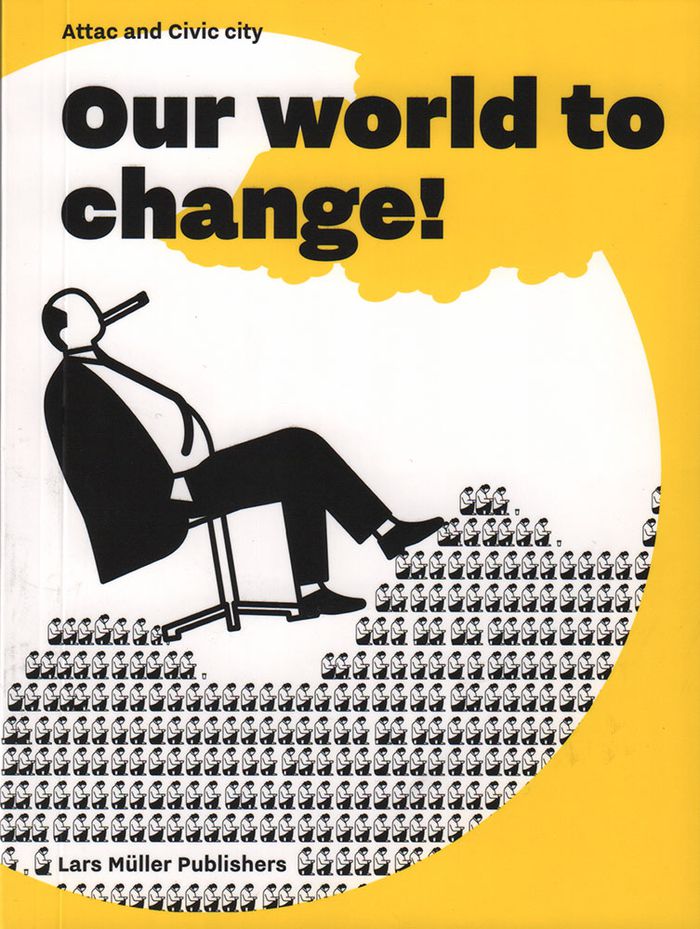
Our world to change!
Our world to change!
Actions:
Price:
$20.00
(available to order)
Summary:
What are the central global issues humanity is facing today? How dire is the future really going to be? And what are possible ways to turn this world into a better one? These are the questions that the book "Our world to change!" adresses. This publication does not only explain figures related to economics, finance, ecology, nutrition and immigration, but also presents(...)
Title:
Our world to change!
Actions:
Price:
$20.00
(available to order)
Summary:
What are the central global issues humanity is facing today? How dire is the future really going to be? And what are possible ways to turn this world into a better one? These are the questions that the book "Our world to change!" adresses. This publication does not only explain figures related to economics, finance, ecology, nutrition and immigration, but also presents suggestions and alternatives from specialists in these fields – a book that every informed citizen should keep under their pillow. The overall goal of "Our world to change!" ! is to visualize the state of our world and possible ways to change it. For this mission the Intégral Ruedi Baur graphic design studio teamed up with the globalization-critical organization Attac, which provided the necessary data. By visualizing facts that concern each and everyone of us, "Our world to change!" ! makes pressing topics visible. This is necessary since issues like inequality and climate change are often viewed as complex, abstract topics.Our World to Change! is a formal homage to the sociologist Otto Neurath and the graphic designer Gerd Arntz, who created the Isotype – an international education system by typographical images – in the 1920s. Graphic designer Ruedi Baur, who also co-founded the institute for critical design research Civic city together with Vera Baur, revived Otto Neuraths iconic Isotype figures to visualize the state of the world today. While these figurines were already part of last years' art biennial Manifesta 11, controversially themed "What people do for money", in "Our world to change!" they take a more radical stance in critizising global inequality.
Form:
books
books
Publication:
January 2017
January 2017
Subject:
Graphic Design and Typography
Graphic Design and Typography
Form:
books
books

Title:
Notre monde à changer
Notre monde à changer
Actions:
Price:
$20.00
(available to order)
Summary:
Notre monde change, mais pas dans la bonne direction. Le fossé ne cesse de s'élargir entre riches et pauvres, entre puissants et précaires. Le climat et la nature se dérèglent chaque année davantage sous l'avalanche des pollutions. Avec la politique de la peur et les attentats terroristes, les démagogues désignent de faux coupables (les étrangers, les musulmans...) et(...)
Title:
Notre monde à changer
Actions:
Price:
$20.00
(available to order)
Summary:
Notre monde change, mais pas dans la bonne direction. Le fossé ne cesse de s'élargir entre riches et pauvres, entre puissants et précaires. Le climat et la nature se dérèglent chaque année davantage sous l'avalanche des pollutions. Avec la politique de la peur et les attentats terroristes, les démagogues désignent de faux coupables (les étrangers, les musulmans...) et gagnent même des élections. Mais se lamenter ne sert à rien. Ce dont nous avons besoin, c'est, tout d'abord, d'une vision nouvelle pour un avenir désirable. Un mouvement citoyen et un institut de recherche en design, Attac et Civic city, ont uni leurs forces pour raconter ce vieux monde qui va si mal et dessiner les propositions innovantes qui pourraient nous en sortir. Des propositions déjà portées par des milliers d'initiatives citoyennes dans le monde entier. Alors on y va ?
Form:
books
books
Publication:
January 2017
January 2017
Subject:
Graphic Design and Typography
Graphic Design and Typography
Form:
books
books
Actions:
Price:
$44.95
(available in store)
Summary:
Designers, graphic artists, architects, and urban planners are now confronted with the tasks of signage, route management, and information and orientation systems. With this book they can profit from a broad view of phenomena related to disorientation-disorientation in scientific disciplines, in our environments, and in expressive presentations. On the one hand, this(...)
Title:
Dés-orientation, dis-orientation, des-orientierung
Actions:
Price:
$44.95
(available in store)
Summary:
Designers, graphic artists, architects, and urban planners are now confronted with the tasks of signage, route management, and information and orientation systems. With this book they can profit from a broad view of phenomena related to disorientation-disorientation in scientific disciplines, in our environments, and in expressive presentations. On the one hand, this should make it possible for designers to benefit from attitudes to the topic derived from experience and to move from confusion to visual reflection. On the other, it will enable scholarly disciplines to explore the formation of categories that can move things forward. This visual study is accompanied by heterogeneous brief texts. Images and texts are thus placed in a relationship of mutual reflections rather than confronted with one another in a commentary or illustration.
Form:
books
books
Publication:
October 2008, Baden
October 2008, Baden
Subject:
Signage
Signage
Form:
books
books
Actions:
Price:
$28.00
(available to order)
Summary:
Daily bad news about climate change, shrinking resources, global health crises, species extinction and growing inequalities cause tremendous anxiety and insecurity, especially since the COVID pandemic. The ambition of this book is to explain in simple but precise terms, by means of concise illustrations, what ''finance'' is, and how its most innovative form, sustainable(...)
Title:
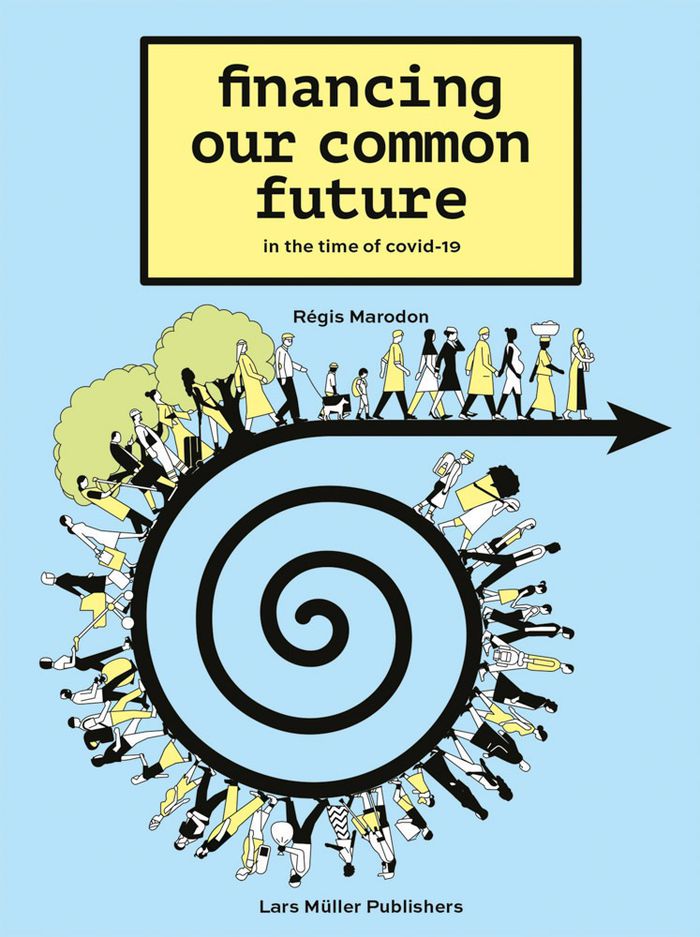
Financing our common future, in the time of COVID-19
Actions:
Price:
$28.00
(available to order)
Summary:
Daily bad news about climate change, shrinking resources, global health crises, species extinction and growing inequalities cause tremendous anxiety and insecurity, especially since the COVID pandemic. The ambition of this book is to explain in simple but precise terms, by means of concise illustrations, what ''finance'' is, and how its most innovative form, sustainable finance, can reconcile the well-being of mankind with the capacities of our planet. Is there a way to convince society that a fundamental transition is necessary—or even more, that it is possible? Can sustainable finance help? ''Financing our common future'' offers encouraging perspectives by showing how little-known groups of financial stakeholders, such as development banks, are actively working to make sustainable finance happen. The book invites you to enjoy a journey through a multitude of situations, to question our preconceptions and to open our mindset so we can envision better ways of moving forward.
Form:
books
books
Publication:
January 2021
January 2021
Subject:
Social
Social


