


13 Results
Form:
books
books
Actions:
Price:
$16.95
(available in store)
Summary:
This 53rd issue of The Funambulist mostly consists of translations into thirty "non-hegemonic" languages of a text Indigenous Mixe writer Yásnaya Elena Aguilar Gil wrote for the magazine. Entitled "Languages and Nation-States" and originally written in Ayuujk, it was then translated into Spanish, English, and French to serve as vehicles towards these thirty translations(...)
$16.95
(available in store)
Summary:
This 53rd issue of The Funambulist mostly consists of translations into thirty "non-hegemonic" languages of a text Indigenous Mixe writer Yásnaya Elena Aguilar Gil wrote for the magazine. Entitled "Languages and Nation-States" and originally written in Ayuujk, it was then translated into Spanish, English, and French to serve as vehicles towards these thirty translations(...)
Title:
The Funambulist 53 : Thread of translation
Actions:
Price:
$16.95
(available in store)
Summary:
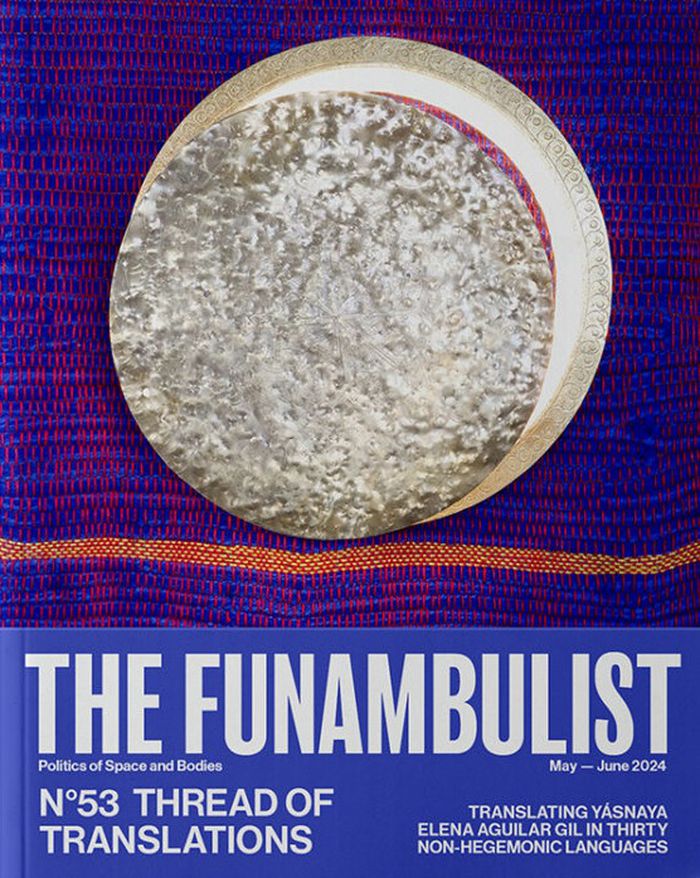
This 53rd issue of The Funambulist mostly consists of translations into thirty "non-hegemonic" languages of a text Indigenous Mixe writer Yásnaya Elena Aguilar Gil wrote for the magazine. Entitled "Languages and Nation-States" and originally written in Ayuujk, it was then translated into Spanish, English, and French to serve as vehicles towards these thirty translations into Albanian, Armenian, Bahasa Indonesia, Bambara, Basque, Bosnian, Guyanese Creole, Haitian Creole, Hausa, Hawaiian, Inuktitut, Irish, Kashmiri (Koshur), Kikongo, Kurdish, Lao, Mapuche, Mauritian Creole, Maya, Mongolian, Quechua, Rroma, Shona, Somali, Swahili, Tagalog, Tamazight, Tamil, and Uzbek. The translations are accompanied by details of the weave Eclipse (also featured on the cover) by Bolivian artist Kenia Almaraz Murillo. This issue concludes with a text entitled “Black Plumes, White Ink" by Malagasy author Marie Ranjanoro.
The Funambulist 53 : Thread of translation
Actions:
Price:
$16.95
(available in store)
Summary:
This 53rd issue of The Funambulist mostly consists of translations into thirty "non-hegemonic" languages of a text Indigenous Mixe writer Yásnaya Elena Aguilar Gil wrote for the magazine. Entitled "Languages and Nation-States" and originally written in Ayuujk, it was then translated into Spanish, English, and French to serve as vehicles towards these thirty translations into Albanian, Armenian, Bahasa Indonesia, Bambara, Basque, Bosnian, Guyanese Creole, Haitian Creole, Hausa, Hawaiian, Inuktitut, Irish, Kashmiri (Koshur), Kikongo, Kurdish, Lao, Mapuche, Mauritian Creole, Maya, Mongolian, Quechua, Rroma, Shona, Somali, Swahili, Tagalog, Tamazight, Tamil, and Uzbek. The translations are accompanied by details of the weave Eclipse (also featured on the cover) by Bolivian artist Kenia Almaraz Murillo. This issue concludes with a text entitled “Black Plumes, White Ink" by Malagasy author Marie Ranjanoro.
Form:
books
books
Publication:
May 2024
May 2024
Subject:
Magazines
Magazines
Form:
books
books
Actions:
Price:
$16.95
(available in store)
Summary:
On August 13, 2015, in the e-flux headquarters in New York’s Lower East Side, Léopold, alongside contributors and friends Sadia Shirazi, geunsaeng ahn, and Minh-Ha T. Pham, launched The Funambulist magazine, after five years of existence of The Funambulist as a blog (and later, a podcast). Ten years later, we propose an issue to celebrate this anniversary and take a pause(...)
$16.95
(available in store)
Summary:
On August 13, 2015, in the e-flux headquarters in New York’s Lower East Side, Léopold, alongside contributors and friends Sadia Shirazi, geunsaeng ahn, and Minh-Ha T. Pham, launched The Funambulist magazine, after five years of existence of The Funambulist as a blog (and later, a podcast). Ten years later, we propose an issue to celebrate this anniversary and take a pause(...)
Title:
The Funambulist no.61: Ten years of the Funambulist
Actions:
Price:
$16.95
(available in store)
Summary:
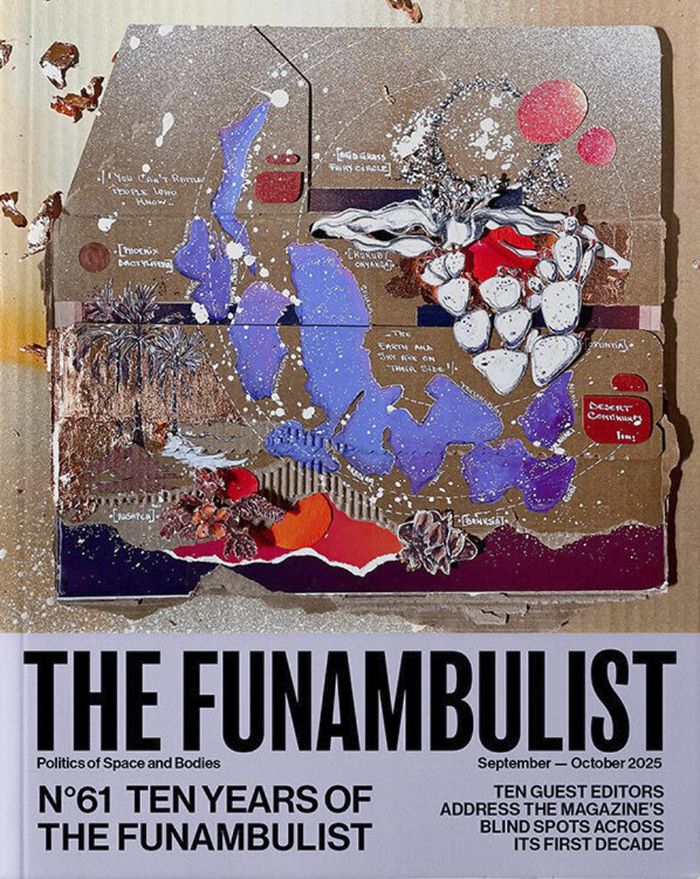
On August 13, 2015, in the e-flux headquarters in New York’s Lower East Side, Léopold, alongside contributors and friends Sadia Shirazi, geunsaeng ahn, and Minh-Ha T. Pham, launched The Funambulist magazine, after five years of existence of The Funambulist as a blog (and later, a podcast). Ten years later, we propose an issue to celebrate this anniversary and take a pause to reflect on our trajectory. Rather than engaging in a self-congratulatory exercise, this September-October 2025 issue favors an introspective one, insisting on what we could have done better this past decade. This is how we asked ten loyal readers (some of whom are also contributors to the magazine) to play the role of editors in this issue, and commission a piece on a topic they feel has been remarkably missing from our first 60 issues’ editorial line.
The Funambulist no.61: Ten years of the Funambulist
Actions:
Price:
$16.95
(available in store)
Summary:
On August 13, 2015, in the e-flux headquarters in New York’s Lower East Side, Léopold, alongside contributors and friends Sadia Shirazi, geunsaeng ahn, and Minh-Ha T. Pham, launched The Funambulist magazine, after five years of existence of The Funambulist as a blog (and later, a podcast). Ten years later, we propose an issue to celebrate this anniversary and take a pause to reflect on our trajectory. Rather than engaging in a self-congratulatory exercise, this September-October 2025 issue favors an introspective one, insisting on what we could have done better this past decade. This is how we asked ten loyal readers (some of whom are also contributors to the magazine) to play the role of editors in this issue, and commission a piece on a topic they feel has been remarkably missing from our first 60 issues’ editorial line.
Form:
books
books
Publication:
September 2025
September 2025
Subject:
Magazines
Magazines
Form:
books
books
Actions:
Price:
$16.95
(available in store)
Summary:
« Bâtir des communautés trans » est une invitation à aborder les identités et luttes trans à travers le monde sous deux angles : leur dimension collective et leur évasion permanente des définitions essentialisantes, en particulier celles issues de l’Occident. Les contributions comprennent des réflexions à propos/depuis la Colombie (La Liga de Salud Trans), Casablanca et(...)
$16.95
(available in store)
Summary:
« Bâtir des communautés trans » est une invitation à aborder les identités et luttes trans à travers le monde sous deux angles : leur dimension collective et leur évasion permanente des définitions essentialisantes, en particulier celles issues de l’Occident. Les contributions comprennent des réflexions à propos/depuis la Colombie (La Liga de Salud Trans), Casablanca et(...)
Title:
The Funambulist no.62 FR : Bâtir des communautés trans
Actions:
Price:
$16.95
(available in store)
Summary:
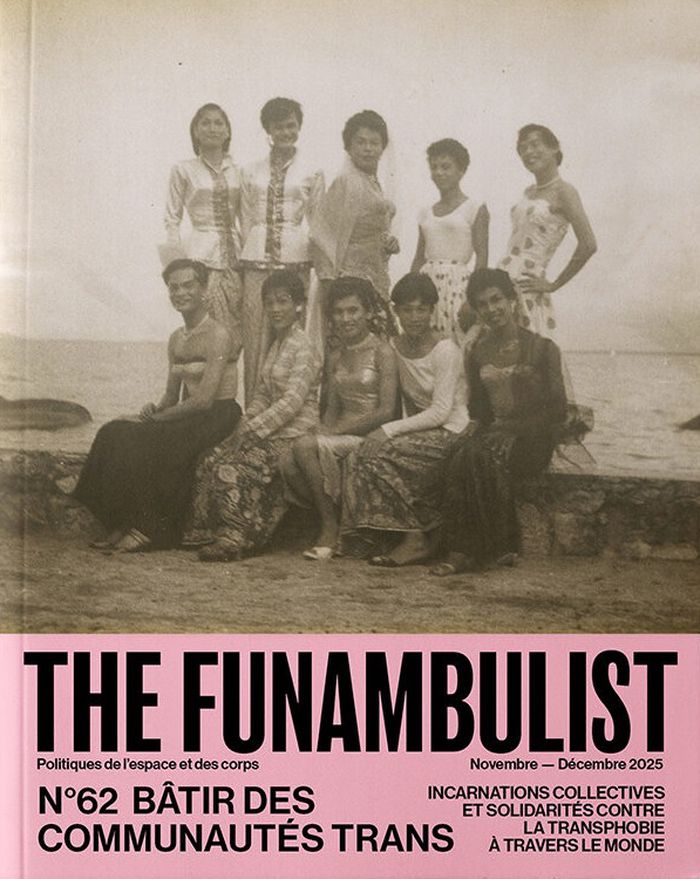
« Bâtir des communautés trans » est une invitation à aborder les identités et luttes trans à travers le monde sous deux angles : leur dimension collective et leur évasion permanente des définitions essentialisantes, en particulier celles issues de l’Occident. Les contributions comprennent des réflexions à propos/depuis la Colombie (La Liga de Salud Trans), Casablanca et Le Caire colonisés (Beshouy Botros), la Grande-Bretagne (Mijke van der Drift et Nat Raha), l’Inde (Shripad Sinnakaar), la Malaisie nouvellement indépendante (Hoo Fan Chon et William Tham), le Mexique (Mikaelah Drullard) et les États-Unis (Dean Spade et Ohan Breiding).
The Funambulist no.62 FR : Bâtir des communautés trans
Actions:
Price:
$16.95
(available in store)
Summary:
« Bâtir des communautés trans » est une invitation à aborder les identités et luttes trans à travers le monde sous deux angles : leur dimension collective et leur évasion permanente des définitions essentialisantes, en particulier celles issues de l’Occident. Les contributions comprennent des réflexions à propos/depuis la Colombie (La Liga de Salud Trans), Casablanca et Le Caire colonisés (Beshouy Botros), la Grande-Bretagne (Mijke van der Drift et Nat Raha), l’Inde (Shripad Sinnakaar), la Malaisie nouvellement indépendante (Hoo Fan Chon et William Tham), le Mexique (Mikaelah Drullard) et les États-Unis (Dean Spade et Ohan Breiding).
Form:
books
books
Publication:
November 2025
November 2025
Subject:
Magazines
Magazines
Form:
journals and magazines
journals and magazines
Actions:
Price:
$16.95
(available in store)
Summary:
Pour ce 63e numéro de The Funambulist, nous nous sommes associé·es à Myriam Amri, anthropologue et artiste tunisienne avec qui nous « Suivons l’Argent ». Nous nous immérgeons dans les méandres du système capitaliste et remontons à ses nœuds centraux : la propriété, la terre, le capital et la classe. Nous analysons comment l’argent est au cœur des projets coloniaux et(...)
$16.95
(available in store)
Summary:
Pour ce 63e numéro de The Funambulist, nous nous sommes associé·es à Myriam Amri, anthropologue et artiste tunisienne avec qui nous « Suivons l’Argent ». Nous nous immérgeons dans les méandres du système capitaliste et remontons à ses nœuds centraux : la propriété, la terre, le capital et la classe. Nous analysons comment l’argent est au cœur des projets coloniaux et(...)
Title:
The Funambulist n.63 : Suivons l'argent
Actions:
Price:
$16.95
(available in store)
Summary:
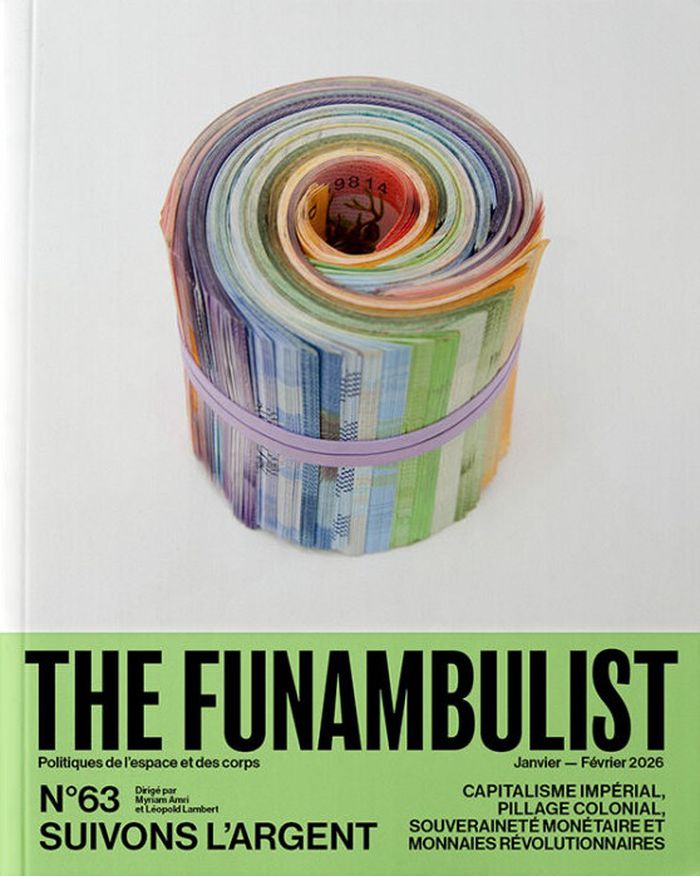
Pour ce 63e numéro de The Funambulist, nous nous sommes associé·es à Myriam Amri, anthropologue et artiste tunisienne avec qui nous « Suivons l’Argent ». Nous nous immérgeons dans les méandres du système capitaliste et remontons à ses nœuds centraux : la propriété, la terre, le capital et la classe. Nous analysons comment l’argent est au cœur des projets coloniaux et impériaux, mais aussi comment la souveraineté et la libération de notre imaginaire monétaire peuvent être des outils d’émancipation.
The Funambulist n.63 : Suivons l'argent
Actions:
Price:
$16.95
(available in store)
Summary:
Pour ce 63e numéro de The Funambulist, nous nous sommes associé·es à Myriam Amri, anthropologue et artiste tunisienne avec qui nous « Suivons l’Argent ». Nous nous immérgeons dans les méandres du système capitaliste et remontons à ses nœuds centraux : la propriété, la terre, le capital et la classe. Nous analysons comment l’argent est au cœur des projets coloniaux et impériaux, mais aussi comment la souveraineté et la libération de notre imaginaire monétaire peuvent être des outils d’émancipation.
Form:
journals and magazines
journals and magazines
Publication:
January 2026
January 2026
Subject:
Magazines
Magazines
Form:
journals and magazines
journals and magazines
Actions:
Price:
$16.95
(available in store)
Summary:
Au cours de l’été 2025, neuf États occidentaux ont officiellement reconnu l’État de Palestine. Cette reconnaissance par les États et la résurrection de la « solution à deux États » moribonde, s’accompagnent d’une criminalisation des appels à la libération de la Palestine « du Jourdain à la Mer ». Ce numéro pose la question suivante : la libération peut-elle prendre la(...)
$16.95
(available in store)
Summary:
Au cours de l’été 2025, neuf États occidentaux ont officiellement reconnu l’État de Palestine. Cette reconnaissance par les États et la résurrection de la « solution à deux États » moribonde, s’accompagnent d’une criminalisation des appels à la libération de la Palestine « du Jourdain à la Mer ». Ce numéro pose la question suivante : la libération peut-elle prendre la(...)
Title:
The Funambulist No. 64 FR : La solution sans état
Actions:
Price:
$16.95
(available in store)
Summary:
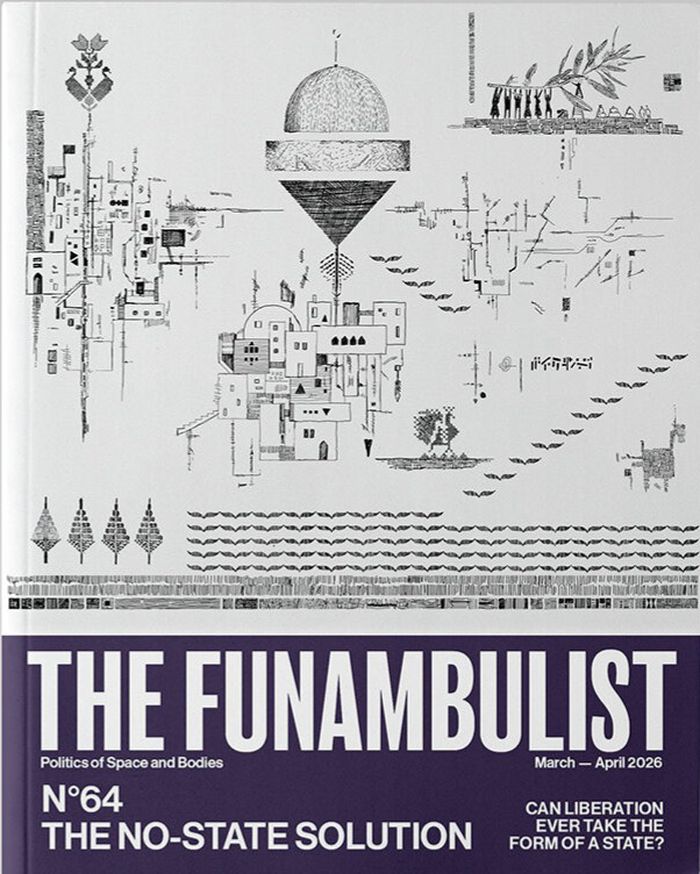
Au cours de l’été 2025, neuf États occidentaux ont officiellement reconnu l’État de Palestine. Cette reconnaissance par les États et la résurrection de la « solution à deux États » moribonde, s’accompagnent d’une criminalisation des appels à la libération de la Palestine « du Jourdain à la Mer ». Ce numéro pose la question suivante : la libération peut-elle prendre la forme d’un État ? Reprenant une expression que Sophia Azeb a utilisée à plusieurs reprises dans l’histoire du Funambulist (depuis notre première conversation en 2014), « La Solution Sans État » entend revisiter ce concept dans le contexte palestinien en remettant en question l’idée même de « solution » (Sophia Azeb & Rebecca Gross), mais aussi dans d’autres luttes de libération telles que celles des peuples kurdes (Havin Guneser) et des Zapatista (Linda Quiquivix). Il nous met en garde contre les rêves étatiques, tels que ceux mis en œuvre en Sierra Leone et au Liberia (ce que William C. Anderson appelle le « sionisme noir » dans sa contribution), et s’interroge sur les différences entre les formes de gouvernance étatiques et celles communautaires, en particulier en matière de santé, comme le montrent les exemples de Cuba et du Venezuela (Lisbeth Moya González). Enfin, il envisage ce à quoi pourrait ressembler des futurs sans frontières et sans États à Aotearoa-Nouvelle Zélande (Kai-rui Cheng) et en Kanaky (Florenda Nirikani). Quant à l’illustration de la couverture, il s’agit d’une création originale de Samir Harb.
The Funambulist No. 64 FR : La solution sans état
Actions:
Price:
$16.95
(available in store)
Summary:
Au cours de l’été 2025, neuf États occidentaux ont officiellement reconnu l’État de Palestine. Cette reconnaissance par les États et la résurrection de la « solution à deux États » moribonde, s’accompagnent d’une criminalisation des appels à la libération de la Palestine « du Jourdain à la Mer ». Ce numéro pose la question suivante : la libération peut-elle prendre la forme d’un État ? Reprenant une expression que Sophia Azeb a utilisée à plusieurs reprises dans l’histoire du Funambulist (depuis notre première conversation en 2014), « La Solution Sans État » entend revisiter ce concept dans le contexte palestinien en remettant en question l’idée même de « solution » (Sophia Azeb & Rebecca Gross), mais aussi dans d’autres luttes de libération telles que celles des peuples kurdes (Havin Guneser) et des Zapatista (Linda Quiquivix). Il nous met en garde contre les rêves étatiques, tels que ceux mis en œuvre en Sierra Leone et au Liberia (ce que William C. Anderson appelle le « sionisme noir » dans sa contribution), et s’interroge sur les différences entre les formes de gouvernance étatiques et celles communautaires, en particulier en matière de santé, comme le montrent les exemples de Cuba et du Venezuela (Lisbeth Moya González). Enfin, il envisage ce à quoi pourrait ressembler des futurs sans frontières et sans États à Aotearoa-Nouvelle Zélande (Kai-rui Cheng) et en Kanaky (Florenda Nirikani). Quant à l’illustration de la couverture, il s’agit d’une création originale de Samir Harb.
Form:
journals and magazines
journals and magazines
Publication:
February 2026
February 2026
Subject:
Magazines
Magazines
Form:
journals and magazines
journals and magazines
Actions:
Price:
$16.95
(available in store)
Summary:
Dans ce numéro, le Funambuliste propose une critique de leur propre cadre de production des connaissances. Ils ont constaté à quel point le concept de « Sud global » s’est transformé en un terme commode permettant de désigner sans plus de réflexion les deux tiers de la superficie terrestre et 90 % de la population mondiale, effaçant ainsi les millions de spécificités qui(...)
$16.95
(available in store)
Summary:
Dans ce numéro, le Funambuliste propose une critique de leur propre cadre de production des connaissances. Ils ont constaté à quel point le concept de « Sud global » s’est transformé en un terme commode permettant de désigner sans plus de réflexion les deux tiers de la superficie terrestre et 90 % de la population mondiale, effaçant ainsi les millions de spécificités qui(...)
Title:
The Funambulist 66 : Au-delà du sud global
Actions:
Price:
$16.95
(available in store)
Summary:
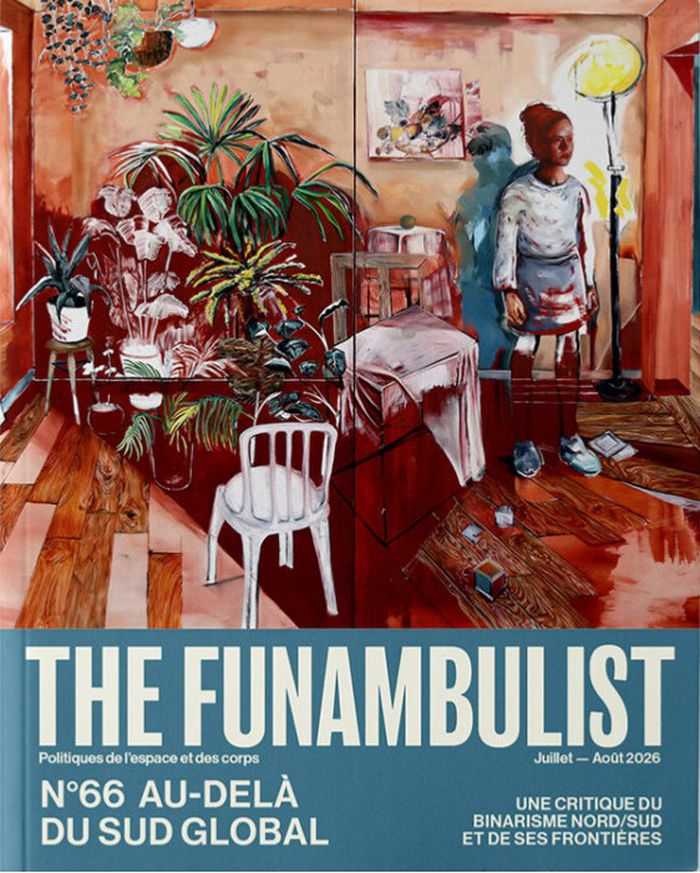
Dans ce numéro, le Funambuliste propose une critique de leur propre cadre de production des connaissances. Ils ont constaté à quel point le concept de « Sud global » s’est transformé en un terme commode permettant de désigner sans plus de réflexion les deux tiers de la superficie terrestre et 90 % de la population mondiale, effaçant ainsi les millions de spécificités qui caractérisent ce regroupement. Il incarne également souvent une entité qui n’existe qu’en dépendance de son alter ego, le Nord global. À ce titre, il nie toute forme d’agentivité aux peuples désignés comme « le Sud » indépendamment de leur relation au « Nord », comme nous l’examinons dans le cas de la guerre dans l’est du Congo (Josaphat Musamba). Le binarisme Sud/Nord désigne également les frontières comme des lignes (plutôt que comme des régimes opérant de part et d’autre de ces lignes) et essentialise la différence entre les deux côtés. Peut-on appréhender la noirceur et l’autochtonie en Abya Yala sans une scission fondamentale au niveau de la ligne coloniale qui sépare l’Amérique du Nord de l’Amérique centrale et du Sud (Ashley Ngozi Agbasoga) ? L’histoire de la Corée du 20e siècle peut-elle nous montrer que la ligne qui sépare actuellement le Nord (généralement présenté comme faisant partie du Sud global) et le Sud (généralement présenté comme faisant partie du Nord global) illustre particulièrement le manque de complexité du cadre Nord/Sud (Lina Eunji Chang et Andrei-Sergei Kim) ? Quel type de violence coloniale le Mouvement des pays non alignés rend-il invisible en Papouasie occidentale (Quito Swan), au Cachemire (Choakkeladd) ou au Sahara occidental (Buhari Lehbib) et, à l’inverse, quel type de solidarités a-t-il permis depuis la Yougoslavie (Dubravka Sekulic et Sanja Horvatincic) ? Et, surtout, comment pouvons-nous rendre justice à la complexité de nos politiques en étant capables de concilier deux vérités contradictoires, comme nous le rappelle Micol Meghnagi dans le contexte de la Libye de Kadhafi et du panarabisme ? Quant à l’illustration de couverture, il s’agit d’une peinture de l’artiste parisienne guyanaise Johanna Mirabel.
The Funambulist 66 : Au-delà du sud global
Actions:
Price:
$16.95
(available in store)
Summary:
Dans ce numéro, le Funambuliste propose une critique de leur propre cadre de production des connaissances. Ils ont constaté à quel point le concept de « Sud global » s’est transformé en un terme commode permettant de désigner sans plus de réflexion les deux tiers de la superficie terrestre et 90 % de la population mondiale, effaçant ainsi les millions de spécificités qui caractérisent ce regroupement. Il incarne également souvent une entité qui n’existe qu’en dépendance de son alter ego, le Nord global. À ce titre, il nie toute forme d’agentivité aux peuples désignés comme « le Sud » indépendamment de leur relation au « Nord », comme nous l’examinons dans le cas de la guerre dans l’est du Congo (Josaphat Musamba). Le binarisme Sud/Nord désigne également les frontières comme des lignes (plutôt que comme des régimes opérant de part et d’autre de ces lignes) et essentialise la différence entre les deux côtés. Peut-on appréhender la noirceur et l’autochtonie en Abya Yala sans une scission fondamentale au niveau de la ligne coloniale qui sépare l’Amérique du Nord de l’Amérique centrale et du Sud (Ashley Ngozi Agbasoga) ? L’histoire de la Corée du 20e siècle peut-elle nous montrer que la ligne qui sépare actuellement le Nord (généralement présenté comme faisant partie du Sud global) et le Sud (généralement présenté comme faisant partie du Nord global) illustre particulièrement le manque de complexité du cadre Nord/Sud (Lina Eunji Chang et Andrei-Sergei Kim) ? Quel type de violence coloniale le Mouvement des pays non alignés rend-il invisible en Papouasie occidentale (Quito Swan), au Cachemire (Choakkeladd) ou au Sahara occidental (Buhari Lehbib) et, à l’inverse, quel type de solidarités a-t-il permis depuis la Yougoslavie (Dubravka Sekulic et Sanja Horvatincic) ? Et, surtout, comment pouvons-nous rendre justice à la complexité de nos politiques en étant capables de concilier deux vérités contradictoires, comme nous le rappelle Micol Meghnagi dans le contexte de la Libye de Kadhafi et du panarabisme ? Quant à l’illustration de couverture, il s’agit d’une peinture de l’artiste parisienne guyanaise Johanna Mirabel.
Form:
journals and magazines
journals and magazines
Publication:
July 2026
July 2026
Subject:
Magazines
Magazines
Form:
journals and magazines
journals and magazines
Actions:
Price:
$16.95
(available in store)
Summary:
With this issue, the funambulist offers a critique of their own framework of knowledge production. The concept of “Global South” has been turned into a handy word to lazily designate two-thirds of the world’s earthly area and 90% of its population, thus flattening the millions of specificities that characterize this grouping. It also often embodies an entity that only(...)
$16.95
(available in store)
Summary:
With this issue, the funambulist offers a critique of their own framework of knowledge production. The concept of “Global South” has been turned into a handy word to lazily designate two-thirds of the world’s earthly area and 90% of its population, thus flattening the millions of specificities that characterize this grouping. It also often embodies an entity that only(...)
Title:
The Funambulist 66: Beyond the global South
Actions:
Price:
$16.95
(available in store)
Summary:
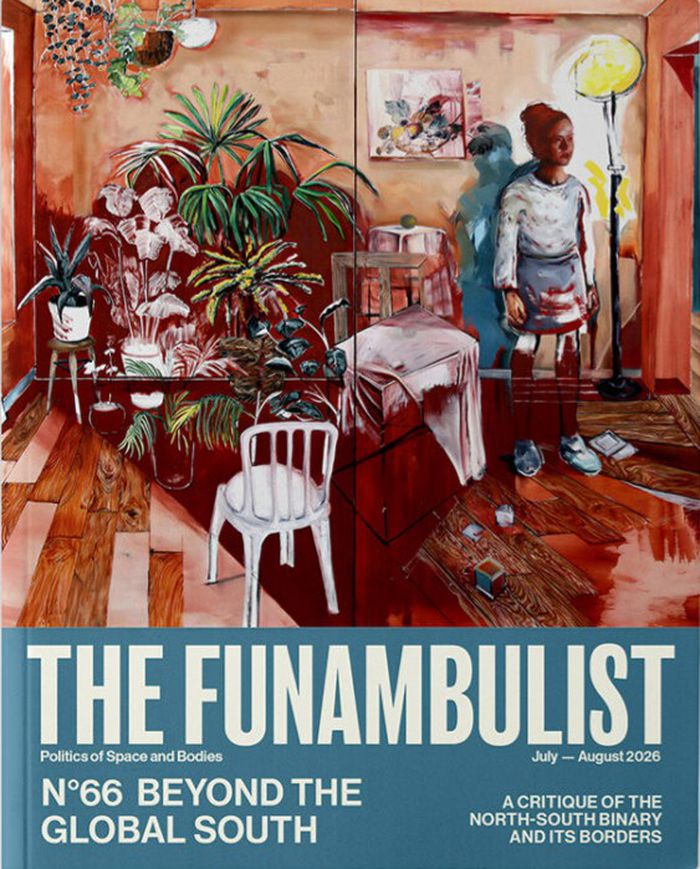
With this issue, the funambulist offers a critique of their own framework of knowledge production. The concept of “Global South” has been turned into a handy word to lazily designate two-thirds of the world’s earthly area and 90% of its population, thus flattening the millions of specificities that characterize this grouping. It also often embodies an entity that only exists dependent on its alter ego, the Global North. As such, it denies any form of agency to the peoples designated as “the South” independently from their relationship to the “North,” as we examine in the case of the war in the eastern Congo (Josaphat Musamba). The South/North binary also designates borders as lines (rather than as regimes operating on both sides of these lines) and essentializes the difference between sides. Can Blackness and Indigeneity in Abya Yala be read without a fundamental split at the settler colonial line that separates North and Central-South Americas (Ashley Ngozi Agbasoga)? Can 20th century Korea’s history show us that the line that currently separates the north (usually presented as part of the Global South) and the south (usually presented as part of the Global North) particularly illustrates the North/South framework’s lack of complexity (Lina Eunji Chang and Andrei-Sergei Kim)? What kind of colonial violence the Non-Aligned Movement invisibilizes in West Papua (Quito Swan), in Kashmir (Choakkeladd) or Western Sahara (Buhari Lehbib) and, in contrast, what kind of solidarities it allowed from Yugoslavia (Dubravka Sekulic and Sanja Horvatincic)? And, crucially, how can we honor the complexity of politics by being able to hold two contradictory truths together as Micol Meghnagi reminds us in the context of Gaddafi’s Libya and Pan-Arabism.
The Funambulist 66: Beyond the global South
Actions:
Price:
$16.95
(available in store)
Summary:
With this issue, the funambulist offers a critique of their own framework of knowledge production. The concept of “Global South” has been turned into a handy word to lazily designate two-thirds of the world’s earthly area and 90% of its population, thus flattening the millions of specificities that characterize this grouping. It also often embodies an entity that only exists dependent on its alter ego, the Global North. As such, it denies any form of agency to the peoples designated as “the South” independently from their relationship to the “North,” as we examine in the case of the war in the eastern Congo (Josaphat Musamba). The South/North binary also designates borders as lines (rather than as regimes operating on both sides of these lines) and essentializes the difference between sides. Can Blackness and Indigeneity in Abya Yala be read without a fundamental split at the settler colonial line that separates North and Central-South Americas (Ashley Ngozi Agbasoga)? Can 20th century Korea’s history show us that the line that currently separates the north (usually presented as part of the Global South) and the south (usually presented as part of the Global North) particularly illustrates the North/South framework’s lack of complexity (Lina Eunji Chang and Andrei-Sergei Kim)? What kind of colonial violence the Non-Aligned Movement invisibilizes in West Papua (Quito Swan), in Kashmir (Choakkeladd) or Western Sahara (Buhari Lehbib) and, in contrast, what kind of solidarities it allowed from Yugoslavia (Dubravka Sekulic and Sanja Horvatincic)? And, crucially, how can we honor the complexity of politics by being able to hold two contradictory truths together as Micol Meghnagi reminds us in the context of Gaddafi’s Libya and Pan-Arabism.
Form:
journals and magazines
journals and magazines
Publication:
July 2026
July 2026
Subject:
Magazines
Magazines
Form:
journals and magazines
journals and magazines
Actions:
Price:
$15.95
(available to order)
Summary:
For this book commissionned by the Chicago Architecture Biennial 2019, The Funambulist have invited 20 regular readers (many of whom are also contributors) to pick, among the many texts published in the magazine's 22 first issues, the one that appeared to them as the most politically useful.
$15.95
(available to order)
Summary:
For this book commissionned by the Chicago Architecture Biennial 2019, The Funambulist have invited 20 regular readers (many of whom are also contributors) to pick, among the many texts published in the magazine's 22 first issues, the one that appeared to them as the most politically useful.
Title:
The Funambulist by its readers: political geographies from Chicago and elsewhere
Actions:
Price:
$15.95
(available to order)
Summary:
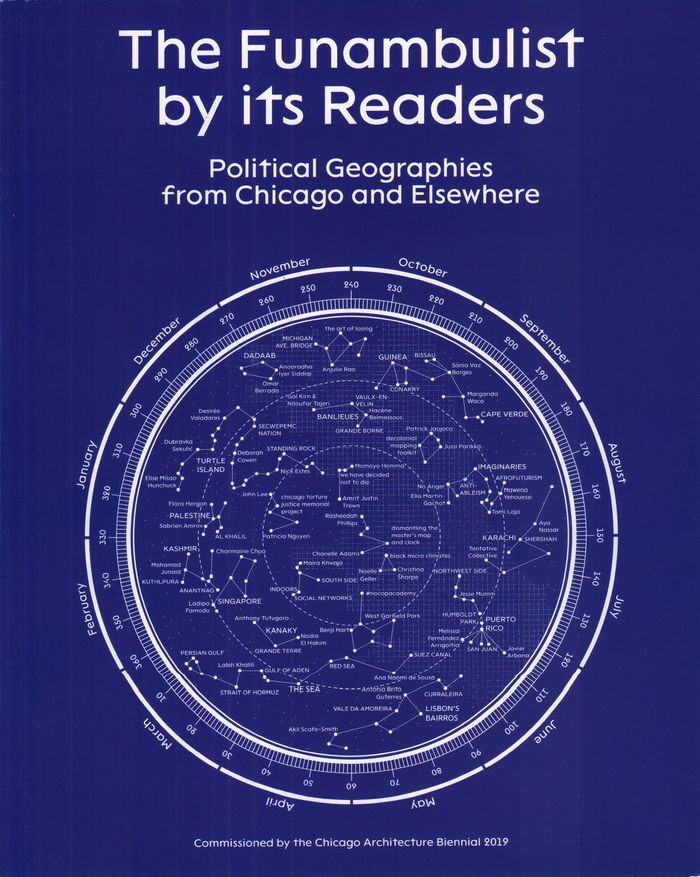
For this book commissionned by the Chicago Architecture Biennial 2019, The Funambulist have invited 20 regular readers (many of whom are also contributors) to pick, among the many texts published in the magazine's 22 first issues, the one that appeared to them as the most politically useful.
The Funambulist by its readers: political geographies from Chicago and elsewhere
Actions:
Price:
$15.95
(available to order)
Summary:
For this book commissionned by the Chicago Architecture Biennial 2019, The Funambulist have invited 20 regular readers (many of whom are also contributors) to pick, among the many texts published in the magazine's 22 first issues, the one that appeared to them as the most politically useful.
Form:
journals and magazines
journals and magazines
Publication:
November 2019
November 2019
Subject:
Magazines
Magazines
Form:
journals and magazines
journals and magazines
Actions:
Price:
$19.95
(available in store)
Summary:
''Welcome to the 32nd issue of The Funambulist. For once, we curated and coordinated its editorial line amongst the three of us (Caroline Honorien, Margarida Waco, and Léopold Lambert) in order to combine our perspectives on the topic. Pan-Africanism is an issue dedicated to a political project that 'maps onto Blackness' (Denise Ferreira da Silva) between the African(...)
$19.95
(available in store)
Summary:
''Welcome to the 32nd issue of The Funambulist. For once, we curated and coordinated its editorial line amongst the three of us (Caroline Honorien, Margarida Waco, and Léopold Lambert) in order to combine our perspectives on the topic. Pan-Africanism is an issue dedicated to a political project that 'maps onto Blackness' (Denise Ferreira da Silva) between the African(...)
Title:
The Funambulist 32: Pan-Africanism, November - December 2020
Actions:
Price:
$19.95
(available in store)
Summary:
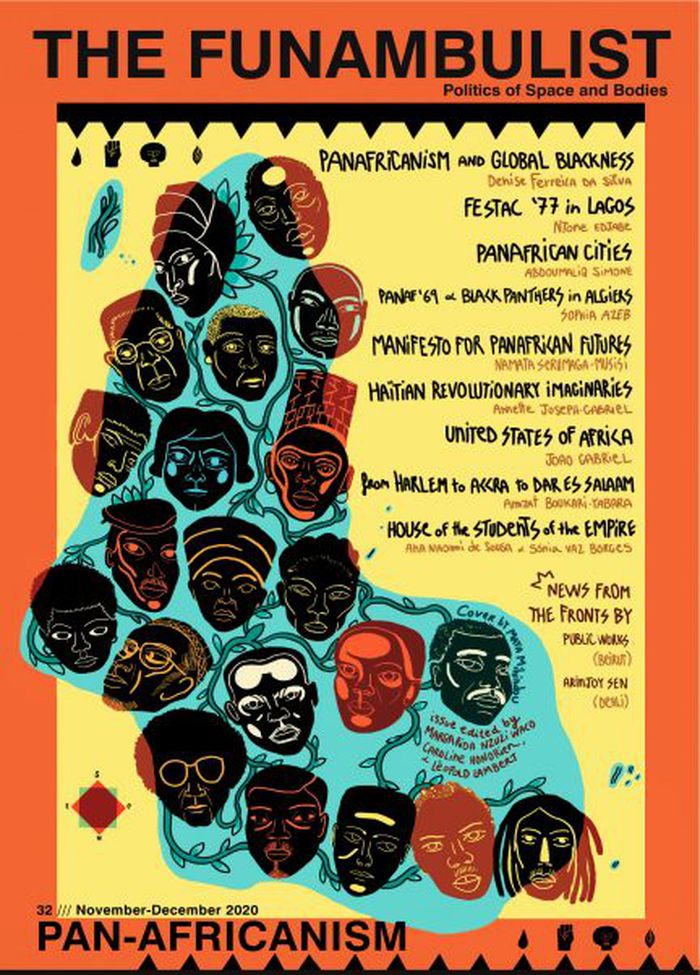
''Welcome to the 32nd issue of The Funambulist. For once, we curated and coordinated its editorial line amongst the three of us (Caroline Honorien, Margarida Waco, and Léopold Lambert) in order to combine our perspectives on the topic. Pan-Africanism is an issue dedicated to a political project that 'maps onto Blackness' (Denise Ferreira da Silva) between the African Continent, the Afro Diaspora, and beyond; a project that can serve as a force and a reference for all people struggling against colonialism or neocolonialism.''
The Funambulist 32: Pan-Africanism, November - December 2020
Actions:
Price:
$19.95
(available in store)
Summary:
''Welcome to the 32nd issue of The Funambulist. For once, we curated and coordinated its editorial line amongst the three of us (Caroline Honorien, Margarida Waco, and Léopold Lambert) in order to combine our perspectives on the topic. Pan-Africanism is an issue dedicated to a political project that 'maps onto Blackness' (Denise Ferreira da Silva) between the African Continent, the Afro Diaspora, and beyond; a project that can serve as a force and a reference for all people struggling against colonialism or neocolonialism.''
Form:
journals and magazines
journals and magazines
Publication:
November 2020
November 2020
Subject:
Magazines
Magazines
Form:
journals and magazines
journals and magazines
Actions:
Price:
$19.95
(available in store)
Summary:
The latest issue is now available at the bookstore.
$19.95
(available in store)
Summary:
The latest issue is now available at the bookstore.
Title:
The Funambulist 33 : January/February 2021, spaces of labor
Actions:
Price:
$19.95
(available in store)
Summary:
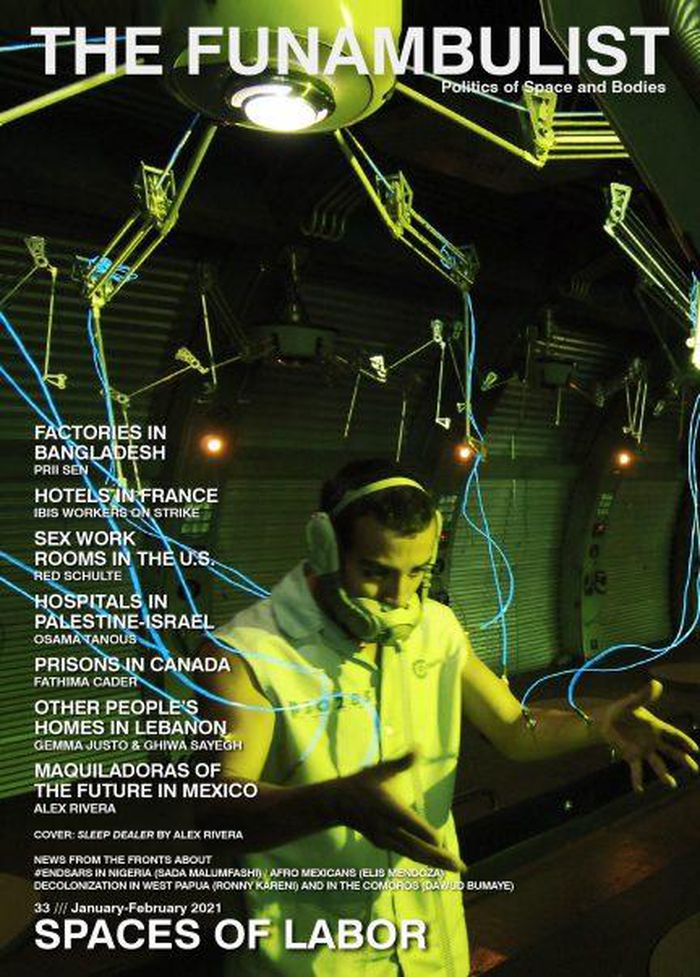
The latest issue is now available at the bookstore.
The Funambulist 33 : January/February 2021, spaces of labor
Actions:
Price:
$19.95
(available in store)
Summary:
The latest issue is now available at the bookstore.
Form:
journals and magazines
journals and magazines
Publication:
January 2021
January 2021
Subject:
Magazines
Magazines


