


2227 Results
Form:
books
books
Actions:
Price:
$24.95
(available to order)
Summary:
In this new book, Salvatore Settis traces the ways in which we have related to our "classical" past, starting with post-modern American skyscrapers and working his way back through our cultural history to the attitudes of the Greeks and Romans themselves. Settis argues that this obsession with cultural decay, ruins and a "classical" past is specifically European and the(...)
Subject:
Architectural Theory
Architectural Theory
Publication:
August 2006, Cambridge, Malden (MA)
August 2006, Cambridge, Malden (MA)
Title:
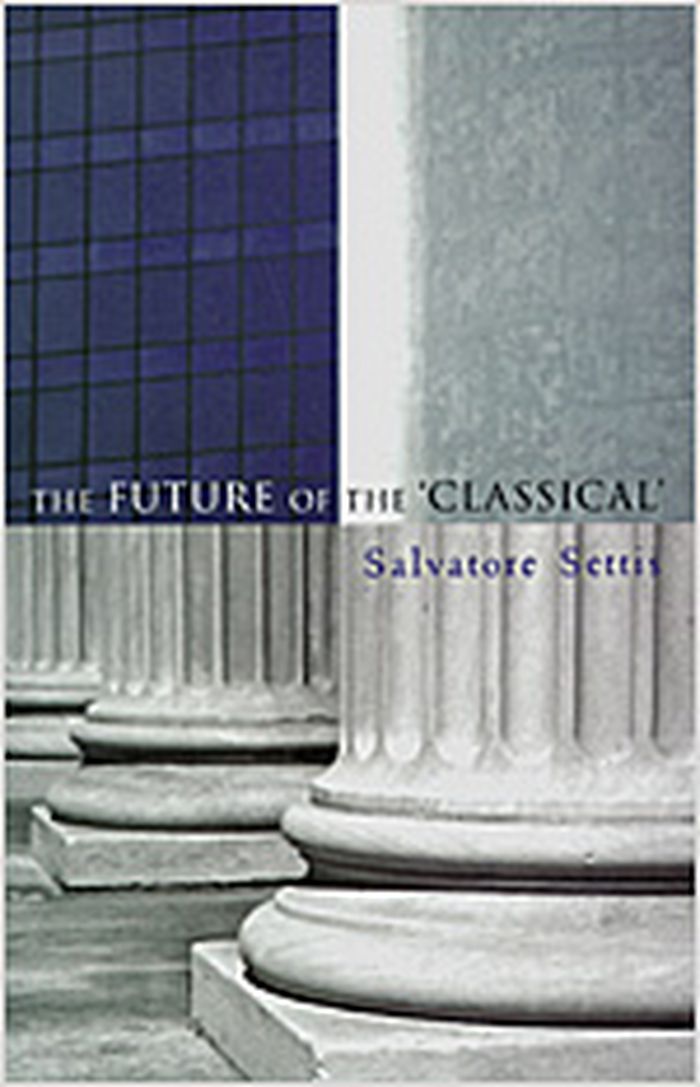
The future of the 'Classical'
Actions:
Price:
$24.95
(available to order)
Summary:
In this new book, Salvatore Settis traces the ways in which we have related to our "classical" past, starting with post-modern American skyscrapers and working his way back through our cultural history to the attitudes of the Greeks and Romans themselves. Settis argues that this obsession with cultural decay, ruins and a "classical" past is specifically European and the product of a collective cultural trauma following the collapse of the Roman Empire. He demonstrates how the idea of the "classical" has changed over the centuries through an unrelenting decay of "classicism" and its equally unrelenting rebirth in an altered form. In the Modern Era this emulation of the "ancients" by the "moderns" was accompanied by new trends: the increasing belief that the former had now been surpassed by the latter, and an increasing preference for the Greek over the Roman. These conflicting interpretations were as much about the future as they were about the past. No civilization can invent itself if it does not have other societies in other times and other places to act as benchmarks. Settis argues that we will be better equipped to mould new generations for the future once we understand that the "classical" is not a dead culture we inherited and for which we can take no credit, but something startling that has to be re-created every day and is a powerful spur to understanding the "other".
Form:
books
books
Publication:
August 2006, Cambridge, Malden (MA)
August 2006, Cambridge, Malden (MA)
Subject:
Architectural Theory
Architectural Theory
Form:
books
books
Price:
$24.95
(available to order)
Summary:
L'idéologie mondialiste voudrait que, tôt ou tard, nul n'échappe à habiter de la même manière, à satisfaire des besoins identiques et à construire des villes similaires. Or, sous réserve d'y prêter quelque attention, les vécus et représentations s'avèrent bien plus complexes. Mieux ils résistent à l'homogénéisation rampante. C 'est «un changement d'échelle qui rend,(...)
Subject:
Architectural Theory
Architectural Theory
Publication:
December 2006, Paris
December 2006, Paris
Title:
Chez nous : territoires et identités dans les mondes contemporains
Actions:
Price:
$24.95
(available to order)
Summary:
L'idéologie mondialiste voudrait que, tôt ou tard, nul n'échappe à habiter de la même manière, à satisfaire des besoins identiques et à construire des villes similaires. Or, sous réserve d'y prêter quelque attention, les vécus et représentations s'avèrent bien plus complexes. Mieux ils résistent à l'homogénéisation rampante. C 'est «un changement d'échelle qui rend, précise Marc Augé, très difficile l'analyse, l'interprétation de l'histoire et même le comportement». Ainsi s'explique le dilemme contemporain : des territoires différents préfigurent-ils des identités distinctes, et réciproquement des identités distinctes appellent-elles des territoires spécifiques ? Interrogeant le monde ou des contrées imaginaires, dans une approche volontairement interdisciplinaire, architectes, anthropologues, géographes, urbanistes, sociologues et politologues ont réfléchi aux relations entre identités et territoires, en scrutant leurs effets sur l'architecture et l'urbanisme, sur la notion de frontières matérielles et symboliques ou, plus généralement, sur la conception d'un «chez nous» se déclinant à plusieurs échelles sociales et géographiques. Malgré certains constats d'uniformisation, ou d'ethnicisation, ces travaux laissent émerger une intelligence humaine, assez rusée pour fuir les extrêmes et penser le «chez nous» de manière plurielle, flexible et contextuelle.
Form:
books
books
Publication:
December 2006, Paris
December 2006, Paris
Subject:
Architectural Theory
Architectural Theory
Form:
books
books
Actions:
Price:
$51.95
(available to order)
Summary:
The average lifespan of a house is somewhere around 100 years. During that time it will see many mutations in household make-up and the associated spatial rituals. So designers are faced with the task of giving form to something that is constantly subject to change. Many studies into flexibility focus on the changeable, on movable partitions and variation in the internal(...)
Title:
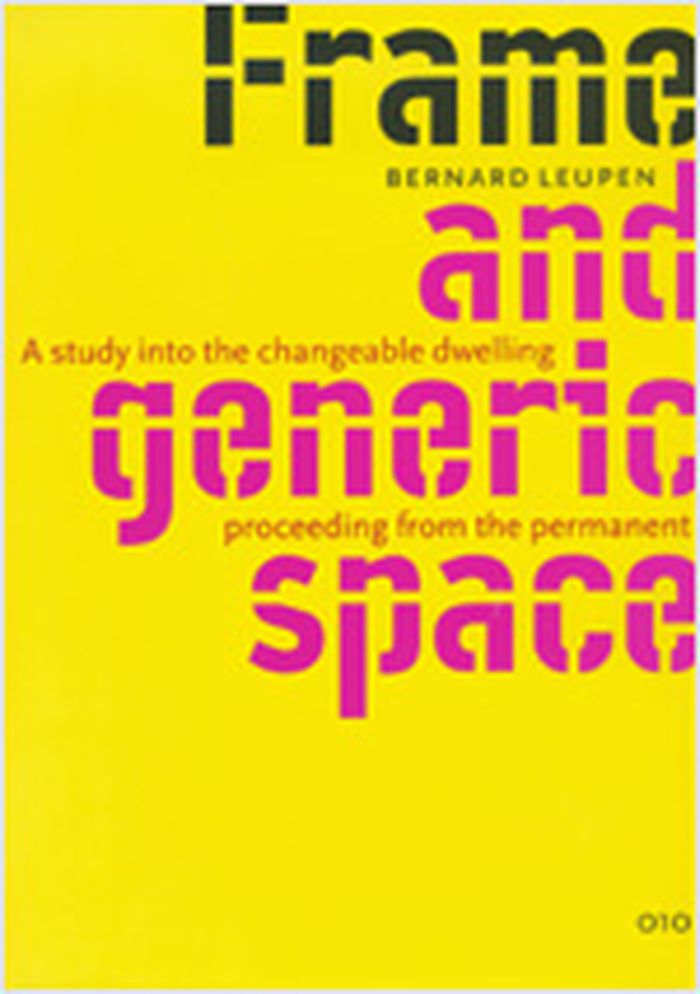
Frame and generic space : a study into the changeable dwelling proceeding from the permanent
Actions:
Price:
$51.95
(available to order)
Summary:
The average lifespan of a house is somewhere around 100 years. During that time it will see many mutations in household make-up and the associated spatial rituals. So designers are faced with the task of giving form to something that is constantly subject to change. Many studies into flexibility focus on the changeable, on movable partitions and variation in the internal layout. The present study takes not the changeable but the permanent as its departure-point. The permanent, meaning the more durable component of the house or building, constitutes the frame within which change can take place. The frame defines the generic space, the space in which change can occur. Design by Piet Gerards.
Form:
books
books
Publication:
April 2006, Rotterdam
April 2006, Rotterdam
Subject:
Architectural Theory
Architectural Theory
Form:
books
books
Actions:
Price:
$42.95
(available to order)
Summary:
Manifeste autant qu'analyse, cet ouvrage constitue un plaidoyer pour la nécessité d'un superflu. S'élevant contre les excès du fonctionalisme ambiant, Robert Venturi montre, à l'aide de quelques deux cents exemples puisés dans le patrimoine commun des civilisations occidentales qu'une œuvre architecturale répond à plusieurs fins : il démontre qu'il est possible d'assurer(...)
Title:
De l'ambiguité en architecture
Actions:
Price:
$42.95
(available to order)
Summary:
Manifeste autant qu'analyse, cet ouvrage constitue un plaidoyer pour la nécessité d'un superflu. S'élevant contre les excès du fonctionalisme ambiant, Robert Venturi montre, à l'aide de quelques deux cents exemples puisés dans le patrimoine commun des civilisations occidentales qu'une œuvre architecturale répond à plusieurs fins : il démontre qu'il est possible d'assurer la complexité et la contradiction et, sans nuire à la fonction, de doter l'œuvre d'une ambiguïté enrichissante.
Form:
books
books
Publication:
January 2005, Paris
January 2005, Paris
Subject:
Architectural Theory
Architectural Theory
Form:
books
books
Price:
$25.95
(available to order)
Summary:
From the Gothic to the contemporary, glass has transformed the structural, formal, and philosophical principles of architecture. In "The glass state", Annette Fierro views the many meanings of transparency in architecture. Specifically, she analyzes the transparent monumental buildings that were built in Paris between 1981 and 1998 as part of Francois Mitterrand's program(...)
Publication:
April 2009
April 2009
Title:
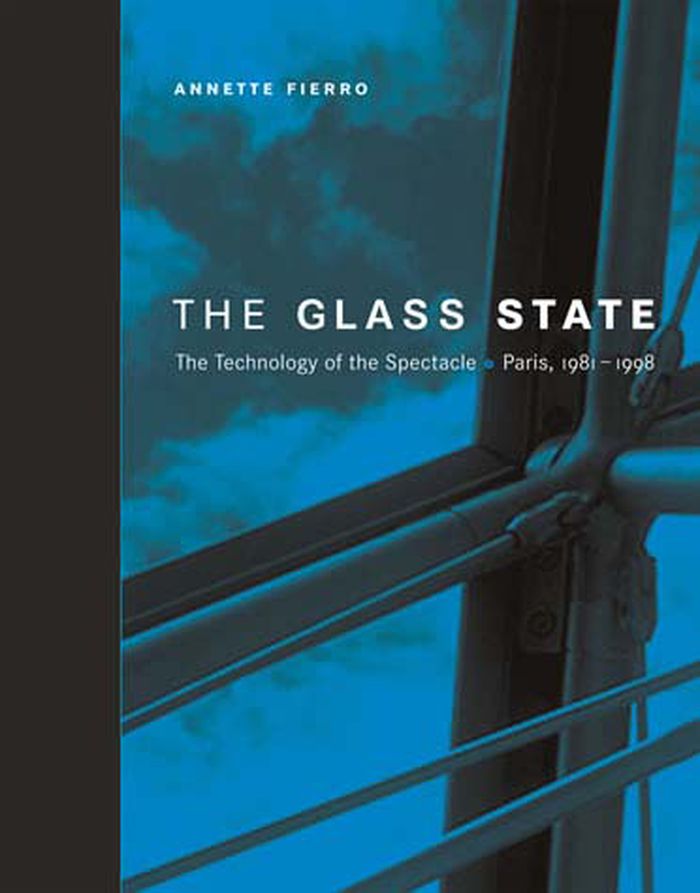
The glass state: the technology of the spectacle, Paris 1981-1998
Actions:
Price:
$25.95
(available to order)
Summary:
From the Gothic to the contemporary, glass has transformed the structural, formal, and philosophical principles of architecture. In "The glass state", Annette Fierro views the many meanings of transparency in architecture. Specifically, she analyzes the transparent monumental buildings that were built in Paris between 1981 and 1998 as part of Francois Mitterrand's program of Grands Projets. The Grands Projets provide a rare opportunity to study a finite set of buildings constructed of similar materials, in the same time period, in a specific urban landscape, and with related ideological missions. Fierro employs a "discourse of the detail," in which the smallest architectural detail manifests the political, theoretical, and urban contexts of the building's design and construction. She examines the paradox of the most pared down architectural configurations being used to support the most complex meanings. Intrinsic to Mitterrand's glass buildings in Paris, for example, is a political concept: the metaphor of accessibility as a means of breaking open cultural institutions previously closed to the public. In addition to the structures of the Grands Projets - the Institut du Monde Arabe, the Grande and Petite Pyramides du Louvre, the glass greenhouses at utopian park projects at La Villette and André Citroën and the Bibliotheque nationale de France - Fierro discusses the Fondation Cartier and two precedent structures, the Centre Georges Pompidou and the Eiffel Tower.
Form:
books
books
Publication:
April 2009
April 2009
Form:
books
books
Actions:
Price:
$31.50
(available to order)
Summary:
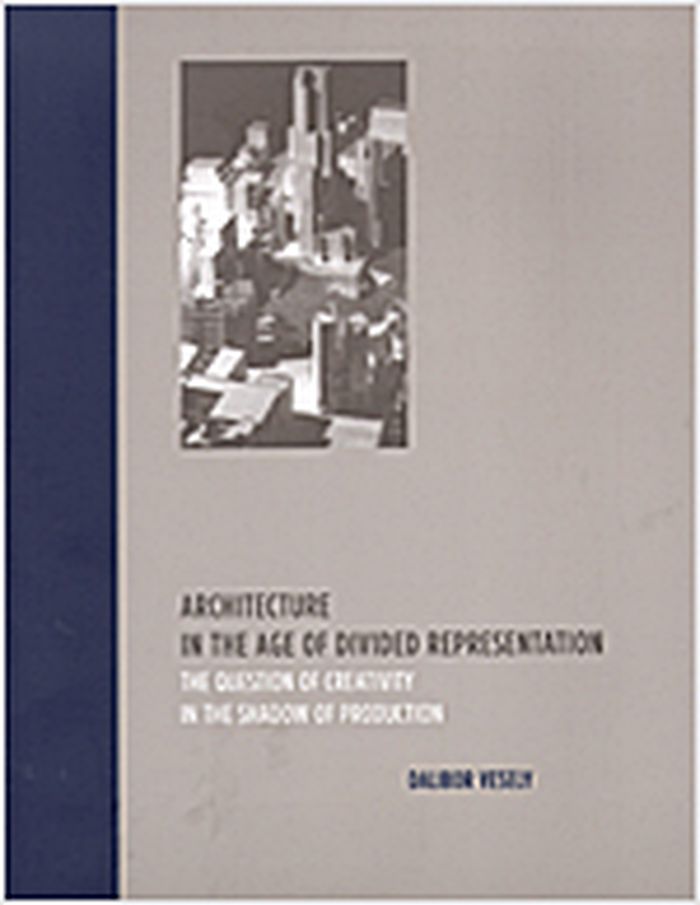
In this long-awaited work, Dalibor Vesely proposes an alternative to the narrow vision of contemporary architecture as a discipline that can be treated as an instrument or commodity. In doing so, he offers an account of the ontological and cultural foundations of modern architecture and, consequently, of the nature and cultural role of architecture through history.(...)
Subject:
Architectural Theory
Architectural Theory
Publication:
October 2006, Cambridge (MA), London
October 2006, Cambridge (MA), London
Title:
Architecture in the age of divided representation : the question of creativity in the shadow of production
Actions:
Price:
$31.50
(available to order)
Summary:
In this long-awaited work, Dalibor Vesely proposes an alternative to the narrow vision of contemporary architecture as a discipline that can be treated as an instrument or commodity. In doing so, he offers an account of the ontological and cultural foundations of modern architecture and, consequently, of the nature and cultural role of architecture through history. Vesely's argument, structured as a critical dialogue, discovers the first plausible anticipation of modernity in the formation of Renaissance perspective. Understanding this notion of perspective against the background of the medieval philosophy of light, he argues, leads to an understanding of architectural space as formed by typical human situations and by light before it is structured geometrically. The central part of the book addresses the question of divided representation - the tension between the instrumental and the communicative roles of architecture - in the period of the baroque, when architectural thinking was seriously challenged by the emergence of modern science. Vesely argues that to resolve the dilemma of modernity - reconciling the inventions and achievements of modern technology with the human condition and the natural world - we can turn to architecture and its latent capacity to reconcile different levels of reality, its ability to relate abstract ideas and conceptual structures to the concrete situations of everyday life. Vesely sees the restoration of this communicative role of architecture as the key to the restoration of architecture as the topological and corporeal foundation of culture; what the book is to our literacy, he argues, architecture is to culture as a whole. He concludes by proposing a new poetics of architecture that will serve as a framework for the restoration of the humanistic role of architecture in the age of technology.
Form:
books
books
Publication:
October 2006, Cambridge (MA), London
October 2006, Cambridge (MA), London
Subject:
Architectural Theory
Architectural Theory
Form:
books
books
Title:
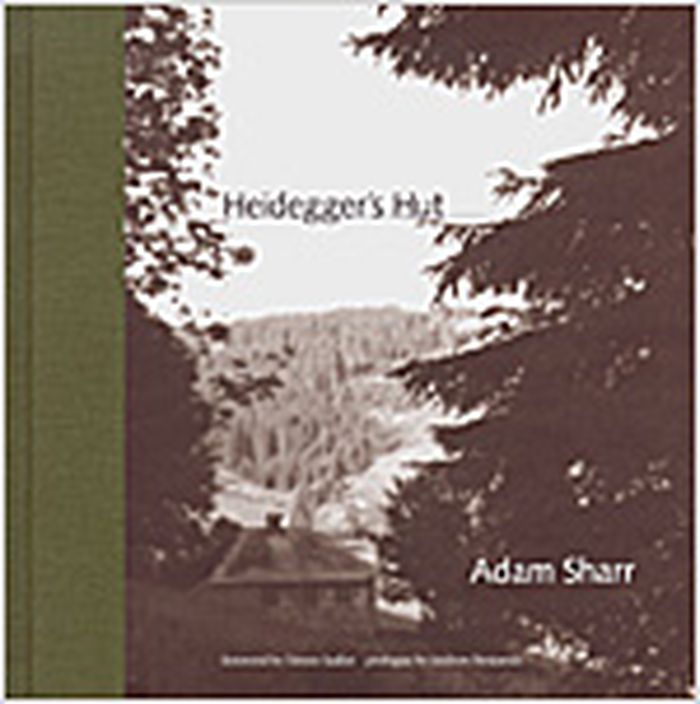
Heidegger's hut
Heidegger's hut
Actions:
Price:
$32.95
(available to order)
Summary:
"This is the most thorough architectural 'crit' of a hut ever set down, the justification for which is that the hut was the setting in which Martin Heidegger wrote phenomenological texts that became touchstones for late-twentieth-century architectural theory." --from the foreword by Simon Sadler Beginning in the summer of 1922, philosopher Martin Heidegger(...)
Subject:
Architectural Theory
Architectural Theory
Publication:
October 2006, Cambridge / London
October 2006, Cambridge / London
Title:
Heidegger's hut
Actions:
Price:
$32.95
(available to order)
Summary:
"This is the most thorough architectural 'crit' of a hut ever set down, the justification for which is that the hut was the setting in which Martin Heidegger wrote phenomenological texts that became touchstones for late-twentieth-century architectural theory." --from the foreword by Simon Sadler Beginning in the summer of 1922, philosopher Martin Heidegger (1889-1976) occupied a small, three-room cabin in the Black Forest Mountains of southern Germany. He called it "die Hütte" ("the hut"). Over the years, Heidegger worked on many of his most famous writings in this cabin, from his early lectures to his last enigmatic texts. He claimed an intellectual and emotional intimacy with the building and its surroundings, and even suggested that the landscape expressed itself through him, almost without agency. In Heidegger's Hut, Adam Sharr explores this intense relationship of thought, place, and person. Heidegger's mountain hut has been an object of fascination for many, including architects interested in his writings about "dwelling" and "place." Sharr's account--the first substantive investigation of the building and Heidegger's life there--reminds us that, in approaching Heidegger's writings, it is important to consider the circumstances in which the philosopher, as he himself said, felt "transported" into the work's "own rhythm." Indeed, Heidegger's apparent abdication of agency and tendency toward romanticism seem especially significant in light of his troubling involvement with the Nazi regime in the early 1930s. Sharr draws on original research, including interviews with Heidegger's relatives, as well as on written accounts of the hut by Heidegger and his visitors. The book's evocative photographs include scenic and architectural views taken by the author and many remarkable images of a septuagenarian Heidegger in the hut taken by the photojournalist Digne Meller-Markovicz. There are many ways to interpret Heidegger's hut--as the site of heroic confrontation between philosopher and existence; as the petit bourgeois escape of a misguided romantic; as a place overshadowed by fascism; or as an entirely unremarkable little building. Heidegger's Hut does not argue for any one reading, but guides readers toward their own possible interpretations of the importance of "die Hütte."
Form:
books
books
Publication:
October 2006, Cambridge / London
October 2006, Cambridge / London
Subject:
Architectural Theory
Architectural Theory
Form:
books
books
Price:
$49.95
(available to order)
Summary:
"The Earth that modernism built" traces the rise of planetary design to an imperialist discourse about the influence of the earthly environment on humanity. Kenny Cupers argues that to understand how the earth became an object of design, we need to radically shift the terms of analysis. Rather than describing how new design ideas and practices traveled and transformed(...)
Title:
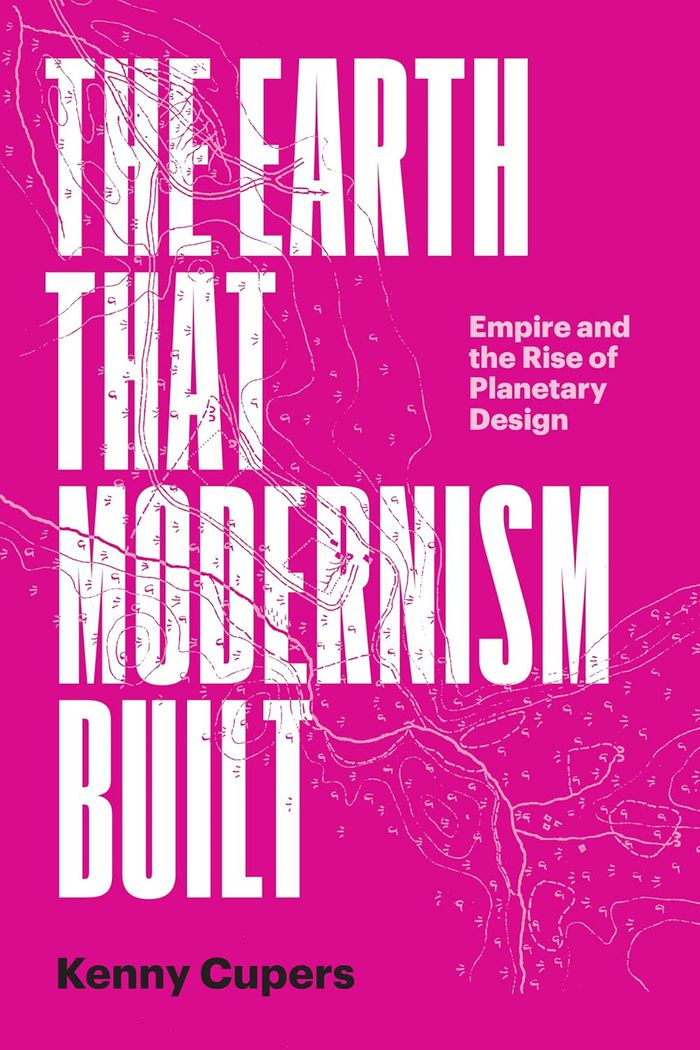
The earth that modernism built: Empire and the rise of Planetary Design
Actions:
Price:
$49.95
(available to order)
Summary:
"The Earth that modernism built" traces the rise of planetary design to an imperialist discourse about the influence of the earthly environment on humanity. Kenny Cupers argues that to understand how the earth became an object of design, we need to radically shift the terms of analysis. Rather than describing how new design ideas and practices traveled and transformed people and places across the globe, this book interrogates the politics of life and earth underpinning this process. It demonstrates how approaches to modern housing, landscape design, and infrastructure planning are indebted to an understanding of planetary and human ecology fueled by settler colonialism and imperial ambition.
Form:
books
books
Publication:
December 2024
December 2024
Subject:
Architectural Theory
Architectural Theory
Form:
books
books
Price:
$72.95
(available to order)
Summary:
''Architecture and Social Change'' is a timely, and urgently needed, survey of social and environmental justice advocacy in architecture. Spotlighting contemporary design and research practitioners who are creatively leveraging their expertise for social change, this book features interviews with fifteen influential design leaders who are at the forefront of their(...)
Title:
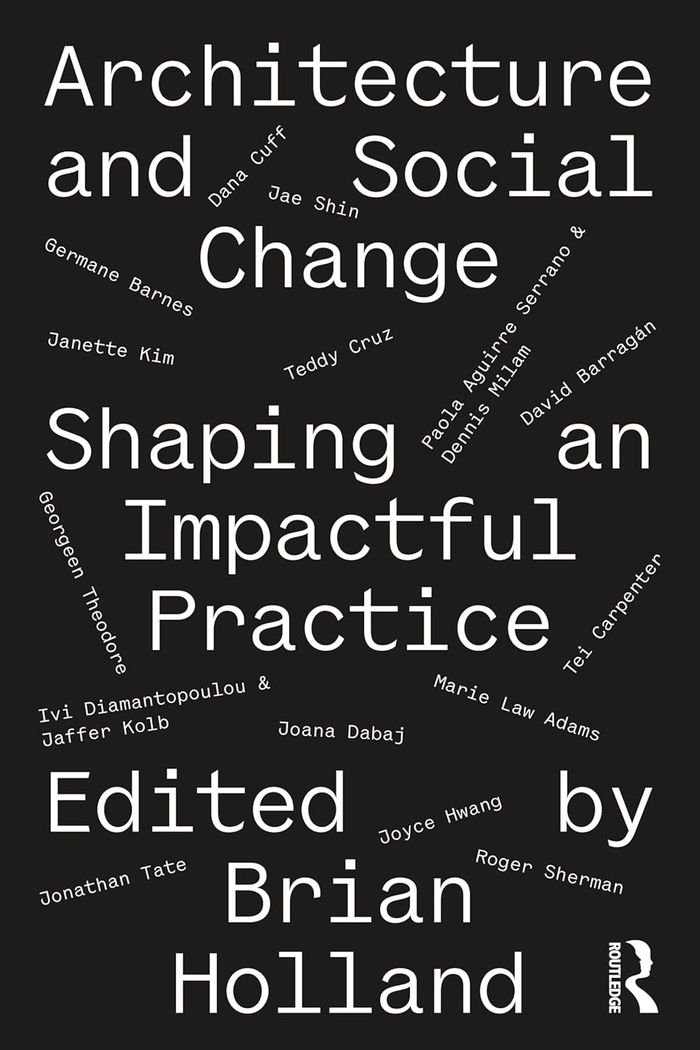
Architecture and social change: Shaping an impactful practice
Actions:
Price:
$72.95
(available to order)
Summary:
''Architecture and Social Change'' is a timely, and urgently needed, survey of social and environmental justice advocacy in architecture. Spotlighting contemporary design and research practitioners who are creatively leveraging their expertise for social change, this book features interviews with fifteen influential design leaders who are at the forefront of their profession’s efforts to confront pressing challenges like housing insecurity, racial and economic inequality, environmental degradation, and architectural waste. Among the interviewees are Dana Cuff, who, as director of cityLAB, is helping to reshape housing policy in California; Joana Dabaj, cofounder of the design charity CatalyticAction, which empowers refugee children from the Syrian civil war to act as “co-designers” of playgrounds and public spaces in Lebanon; and Ivi Diamantopoulou and Jaffer Kolb of New York City–based New Affiliates, who repurpose, through lively recontextualization, the architectural byproducts of their city’s museum exhibitions and building-performance mockups. These insightful student-led interviews compellingly capture the current moment of soul-searching in both the profession and the academy.
Form:
books
books
Publication:
May 2025
May 2025
Subject:
Architectural Theory
Architectural Theory
Form:
books
books
Actions:
Price:
$73.95
(available to order)
Summary:
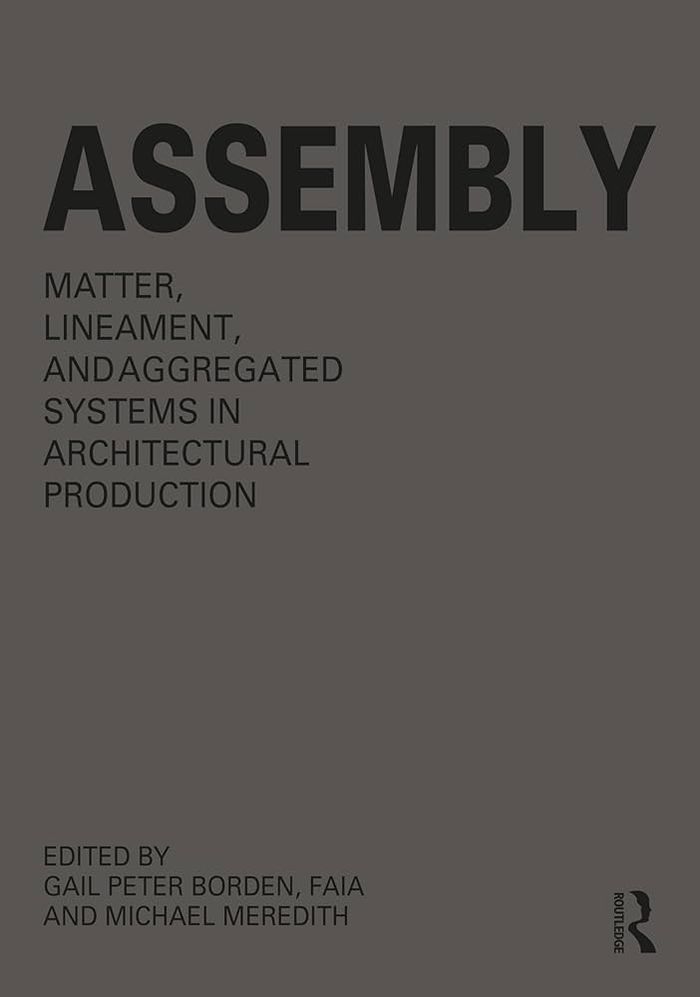
Part-to-part relationships and the approach to governing their sensibilities is at the root of all architecture. The need for engaging in a dialogue around these systems is essential to contemporary architectural discourse and practice. ''Assembly'' builds on and extends the investigations of materials and representation techniques in the editors’ previous books, ''Matter(...)
Title:
Assembly: Matter, lineament, and aggregated systems in architectural production
Actions:
Price:
$73.95
(available to order)
Summary:
Part-to-part relationships and the approach to governing their sensibilities is at the root of all architecture. The need for engaging in a dialogue around these systems is essential to contemporary architectural discourse and practice. ''Assembly'' builds on and extends the investigations of materials and representation techniques in the editors’ previous books, ''Matter and Lineament''. This book uses a collection of detailed case studies, explained by first-person authors, about experimental and innovative takes on assembling architecture. Bridging theory and practice, 17 projects and their principled approaches each demonstrate an important vein of inquiry within the topic. Essays probe issues such as latent and overt geometry, fabrication and technology, part-to-part elements, joinery and representation, material vernacular geometries, labor and place-based contextual assemblies, detailing, and pedagogical examinations. This text articulates the traditions and trends of material as the defining premise in the contemporary making of architecture. Its outcomes are applicable to beginning students of architecture and advanced practitioners alike.
Form:
books
books
Publication:
January 2025
January 2025
Subject:
Architectural Theory
Architectural Theory


