


2227 Results
Form:
books
books
Price:
$66.00
(available to order)
Summary:
Although patents existed in Renaissance Italy and even in Confucian thought, it was not until the middle third of the nineteenth century that architects embraced the practice of patenting in significant numbers. Patents could ensure, as they did for architects' engineering brethren, the economic and cultural benefits afforded by exclusive intellectual property rights. But(...)
Title:
Prior art: Patents and the nature of invention in architecture
Actions:
Price:
$66.00
(available to order)
Summary:
Although patents existed in Renaissance Italy and even in Confucian thought, it was not until the middle third of the nineteenth century that architects embraced the practice of patenting in significant numbers. Patents could ensure, as they did for architects' engineering brethren, the economic and cultural benefits afforded by exclusive intellectual property rights. But patent culture was never directly translatable to the field of architecture, which tended to negotiate issues of technological innovation in the context of the more abstract issues of artistic influence and formal expression. In "Prior art," scholar Peter Christensen offers the first full-scale monographic treatment of this complex relationship between art and invention.
Form:
books
books
Publication:
May 2024
May 2024
Subject:
Architectural Theory
Architectural Theory
Form:
books
books
Actions:
Price:
$65.00
(available in store)
Summary:
During the Holocaust, approximately 50,000 Jews survived in occupied Poland and Ukraine by seeking shelter in unlikely hiding spots. Driven by necessity, they were forced to take refuge in unexpected and inhospitable spaces such as tree hollows, closets, basements or sewers—remaining there for hours, days and sometimes even months. Architect, scholar and artist Natalia(...)
Subject:
Architectural Theory
Architectural Theory
Publication:
April 2024
April 2024
Title:
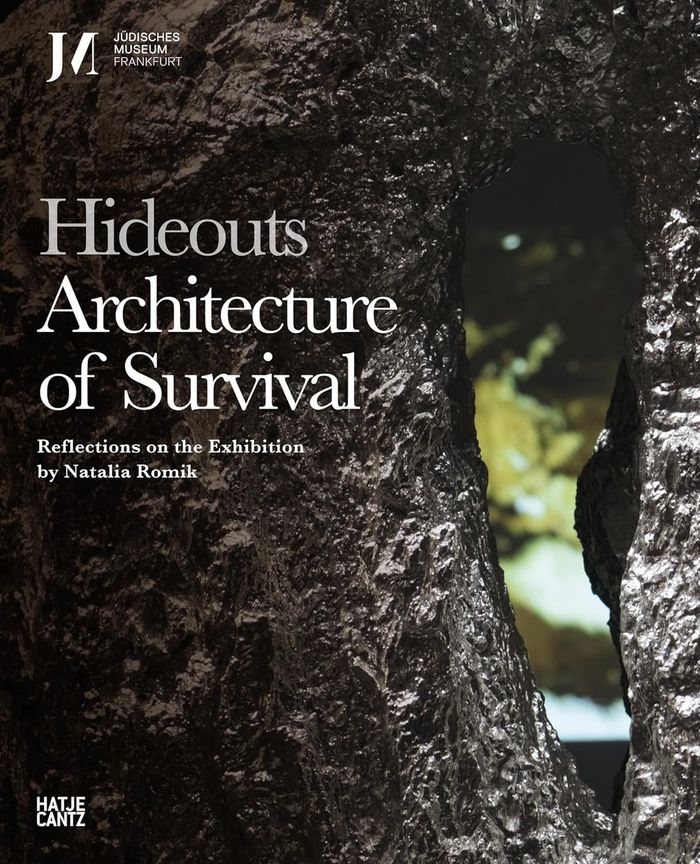
Hideouts: Architecture of survival
Actions:
Price:
$65.00
(available in store)
Summary:
During the Holocaust, approximately 50,000 Jews survived in occupied Poland and Ukraine by seeking shelter in unlikely hiding spots. Driven by necessity, they were forced to take refuge in unexpected and inhospitable spaces such as tree hollows, closets, basements or sewers—remaining there for hours, days and sometimes even months. Architect, scholar and artist Natalia Romik has identified and studied several such hideouts that still exist today. Her research accentuates the material and spatial dimensions of living in hiding, gathering the evidence of vernacular architectural creativity employed under life-threatening conditions. Romik views hideouts as concealed monuments to the ingenuity of Holocaust survivors and their helpers. This interdisciplinary catalog makes tangible the fragile physical reality of these places and addresses the fundamental question of the function of architecture in relation to the history of violence and our culture of commemoration.
Form:
books
books
Publication:
April 2024
April 2024
Subject:
Architectural Theory
Architectural Theory
Form:
books
books
Price:
$58.95
(available in store)
Summary:
Afin de faire face à l'évolution du métier et de ses enjeux, l'architecte et théoricien prône une relecture des textes fondateurs de la discipline au premier rang desquels De re aedificatoria d'Alberti, traité majeur pour l'architecture de la Renaissance. Sont examinées trois notions interdépendantes et clés d'Alberti, la région, l'aire et la partition, et leurs usages à(...)
Title:
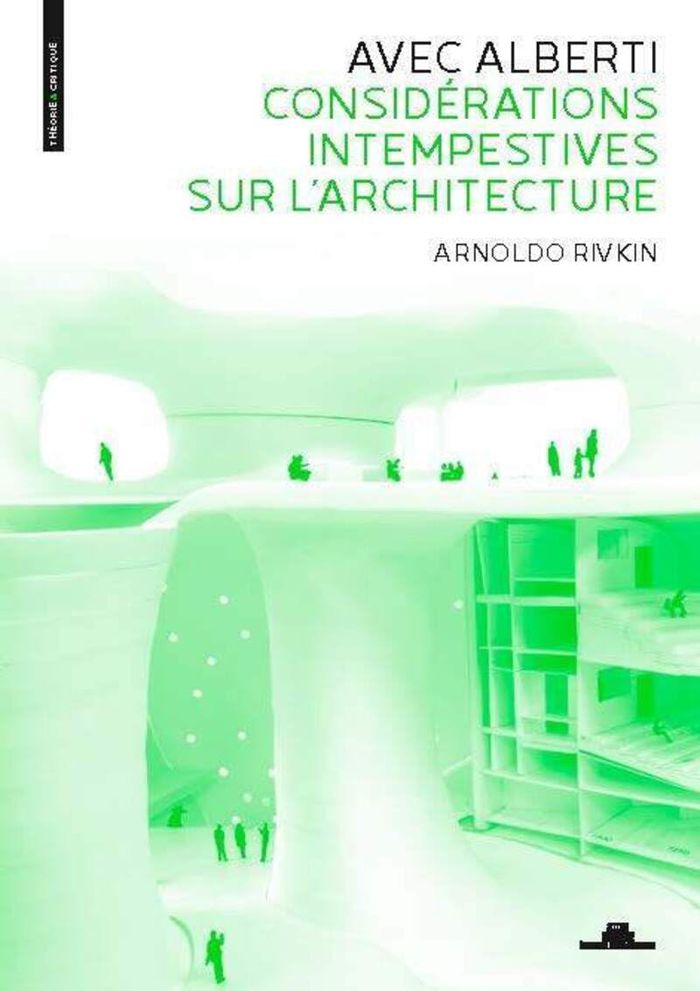
Avec Alberti : Considérations intempestives sur l'architecture
Actions:
Price:
$58.95
(available in store)
Summary:
Afin de faire face à l'évolution du métier et de ses enjeux, l'architecte et théoricien prône une relecture des textes fondateurs de la discipline au premier rang desquels De re aedificatoria d'Alberti, traité majeur pour l'architecture de la Renaissance. Sont examinées trois notions interdépendantes et clés d'Alberti, la région, l'aire et la partition, et leurs usages à travers les siècles.
Form:
books
books
Publication:
February 2024
February 2024
Subject:
Architectural Theory
Architectural Theory
Form:
books
books
Actions:
Price:
$134.99
(available in store)
Summary:
Since the era of pre-industrial religious pilgrimages, architecture has beckoned travellers. This book charts the relationship, and even the entanglement, between architecture and tourism. It reveals how architecture is always tied to its physical site, yet is transportable in our imagination—and into the virtual spheres of social media and armchair travel. Illustrated(...)
Title:
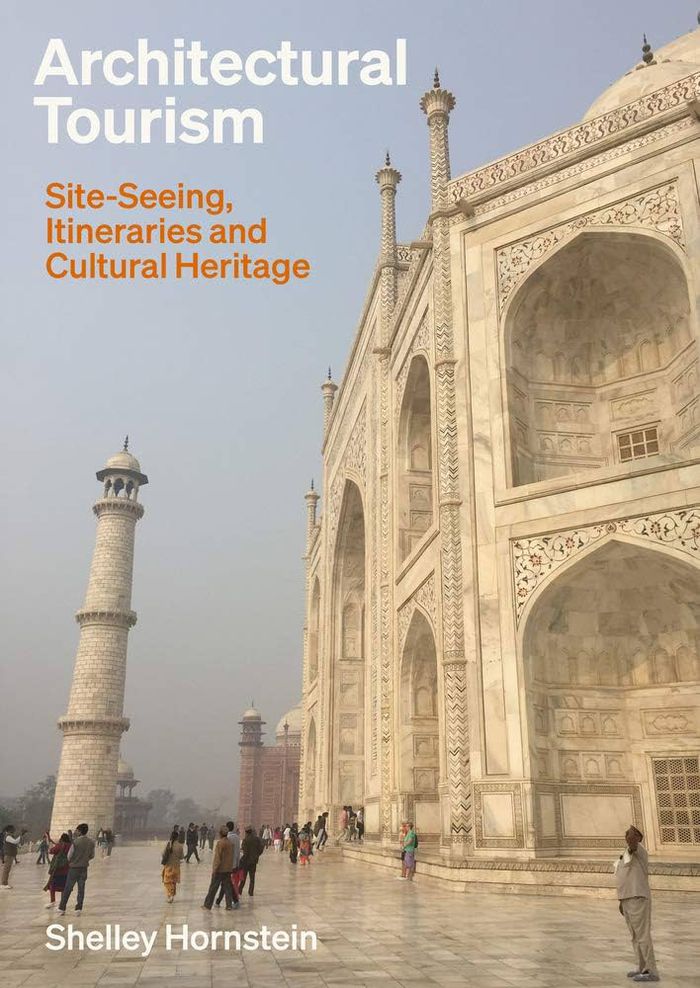
Architectural tourism: Monumental Itineraries, Cultural Heritage, and Sites of memory
Actions:
Price:
$134.99
(available in store)
Summary:
Since the era of pre-industrial religious pilgrimages, architecture has beckoned travellers. This book charts the relationship, and even the entanglement, between architecture and tourism. It reveals how architecture is always tied to its physical site, yet is transportable in our imagination—and into the virtual spheres of social media and armchair travel. Illustrated with a range of studies of key buildings from history and the present-day, the book engagingly sheds light on topics such as the culture of ruins, the evolution of how tourists capture images of places, the rise of the designer museum, and architecture on television, film, and in other media. It asks why architectural monuments and buildings attract and compel us to visit, why we feel the need to understand cities through architectural sites such as museums, historic sites, and monuments, and how national identity is galvanised through its architecture and tourism. Sightseeing is, whether virtual or actual, site-seeing.
Form:
books
books
Publication:
March 2021
March 2021
Subject:
Architectural Theory
Architectural Theory
Form:
books
books
Title:
New York global: Critical writings and proposals 1970-2020. Housing, infrastructure, pedagogy
New York global: Critical writings and proposals 1970-2020. Housing, infrastructure, pedagogy
Actions:
Price:
$64.00
(available to order)
Summary:
Framed by the period of the Great Acceleration, these writings and projects represent a critical commentary on the state of architecture and urbanism and their causal role in global metamorphosis. On the eve of Plunz’s status as Emeritus at Columbia University, "New York global" bridges five decades of his pedagogical commitment to question the cannons of the design(...)
Title:
New York global: Critical writings and proposals 1970-2020. Housing, infrastructure, pedagogy
Actions:
Price:
$64.00
(available to order)
Summary:
Framed by the period of the Great Acceleration, these writings and projects represent a critical commentary on the state of architecture and urbanism and their causal role in global metamorphosis. On the eve of Plunz’s status as Emeritus at Columbia University, "New York global" bridges five decades of his pedagogical commitment to question the cannons of the design and urbanism fields and their relationship to the contemporary built environment. Global urbanization serves as a backdrop for a heightened consideration of the intermingling of housing, infrastructure, and pedagogy, as he negotiates the evolution of mainstream theory and praxis in architecture and planning. Through interviews, syllabi excerpts, essays, discussions, and projects, New York City is projected as a lens for understanding the potential for metropolises everywhere to serve as firewalls against dystopic social inequities and ecological adversity. In questioning the discourse surrounding urban research and action, Plunz engages with the primordial question of "urban" itself. This book is not a cautionary tale, but rather an assemblage of timestamped evidence toward understanding our current condition. Closely studying the very tools that have fostered today’s environmental and societal consequences, each segment contributes to understanding engagement with a post-accelerated future.
Form:
books
books
Publication:
February 2024
February 2024
Subject:
Architectural Theory
Architectural Theory
Form:
books
books
Actions:
Price:
$61.95
(available to order)
Summary:
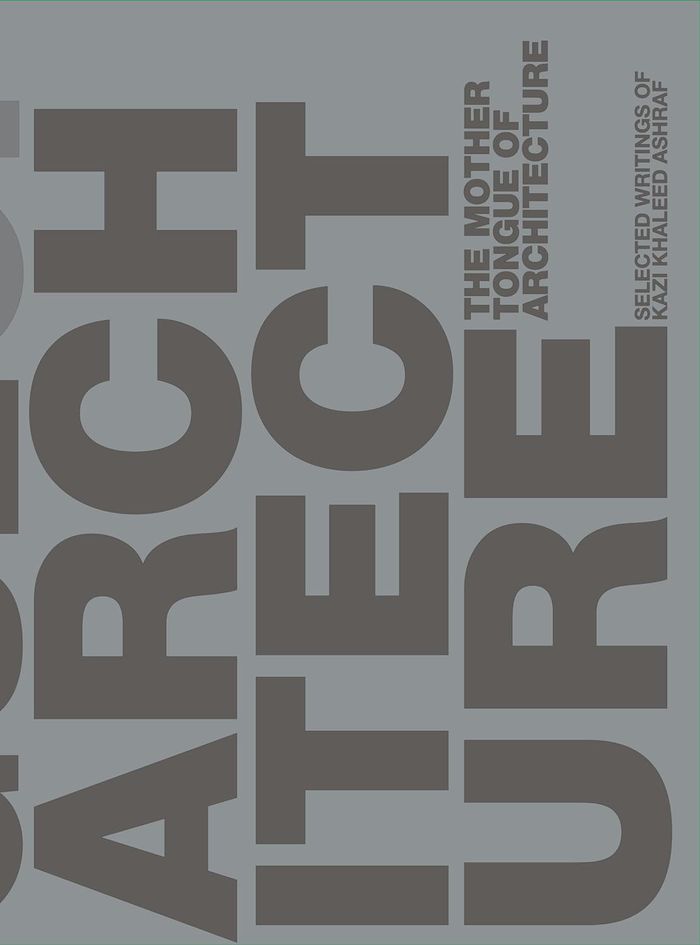
"The mother tongue of architecture" is a collection of critical essays on abiding and compelling topics in architecture and the culture of architecture. Range of topics is diverse: an architectural phenomenology of water, relationship of architecture and landscape rethought, ancient Greece to India, the Buddha’s house to the modern house in India, the architecture and(...)
Title:
The mother tongue of architecture: Selected writing from Kazi Khaleed Ashraf
Actions:
Price:
$61.95
(available to order)
Summary:
"The mother tongue of architecture" is a collection of critical essays on abiding and compelling topics in architecture and the culture of architecture. Range of topics is diverse: an architectural phenomenology of water, relationship of architecture and landscape rethought, ancient Greece to India, the Buddha’s house to the modern house in India, the architecture and landscapes of Louis Kahn, Le Corbusier in India, the architecture of Balkrishna Doshi, and other original topics such as the destruction of buildings as a ritual necessity.
Form:
books
books
Publication:
June 2024
June 2024
Subject:
Architectural Theory
Architectural Theory
Form:
books
books
Actions:
Price:
$32.00
(available to order)
Summary:
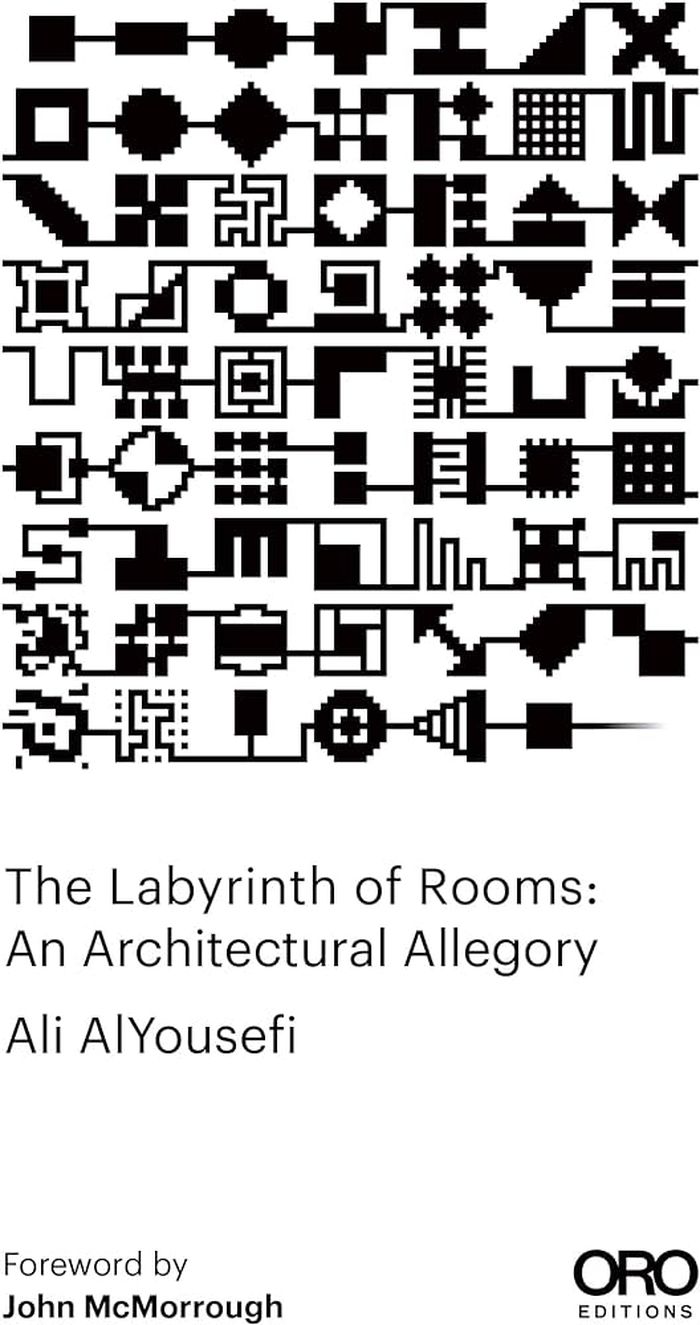
"The labyrinth of rooms" is a story about how the shape of architecture can change the way we think, and how the shape of our thoughts can change the way we see architecture. Stated otherwise, the story conceives of the human life as a series of settings that stage the coevolution of mental space and physical space. Human, the story’s protagonist, can be any one of us,(...)
Title:
The labyrinth of rooms: An architectural allegory
Actions:
Price:
$32.00
(available to order)
Summary:
"The labyrinth of rooms" is a story about how the shape of architecture can change the way we think, and how the shape of our thoughts can change the way we see architecture. Stated otherwise, the story conceives of the human life as a series of settings that stage the coevolution of mental space and physical space. Human, the story’s protagonist, can be any one of us, and their journey from the first room to the last room is the journey of a lifetime: it has its ups and downs, moments of clarity and moments of confusion, but overall it bends toward greater knowledge and wisdom.
Form:
books
books
Publication:
March 2024
March 2024
Subject:
Architectural Theory
Architectural Theory
Form:
journals and magazines
journals and magazines

Actions:
Price:
$16.00
(available in store)
Summary:
Si notre aujourd’hui est bien un temps de ruines, ces dernières ont une saveur nouvelle. « Ce que peuvent les ruines » fait l’hypothèse d’un devenir ruine comme projet. Il ne s’agit pas d’esthétiser la destruction. Nous souhaitons dépasser la tentation romantique de la contemplation d’un monde finissant et le tragique vaniteux de la célébration des ruines comme formes.(...)
Subject:
Architectural Theory
Architectural Theory
Publication:
April 2023
April 2023
Title:
Plan L**** 205: Ce que peuvent les ruines
Actions:
Price:
$16.00
(available in store)
Summary:
Si notre aujourd’hui est bien un temps de ruines, ces dernières ont une saveur nouvelle. « Ce que peuvent les ruines » fait l’hypothèse d’un devenir ruine comme projet. Il ne s’agit pas d’esthétiser la destruction. Nous souhaitons dépasser la tentation romantique de la contemplation d’un monde finissant et le tragique vaniteux de la célébration des ruines comme formes. Des ruines de quoi ? Des ruines de Rien, s’étonne Bouvard face à la construction faussement détruite de Pécuchet. La ruine, pensée comme une structure qui se déforce et qui, dans un équilibre précaire, laisse advenir l’imprévu, l’indéterminé, se tourne alors vers un avenir radieux. L’architecture y est instable et de second plan. Les ruines de ce numéro, comme les ruines de nos quotidiens, sont examinées pour leur capacité d’agir, ou de laisser agir.
Form:
journals and magazines
journals and magazines
Publication:
April 2023
April 2023
Subject:
Architectural Theory
Architectural Theory
Form:
books
books
Actions:
Price:
$58.95
(available in store)
Summary:
Cet édito est le deux-centième. Édité depuis plus de vingt ans par la Maison de l’Architecture Occitanie—Pyrénées, le journal est né de la nécessité de créer des outils pour informer et diffuser la culture architecturale, de mettre en valeur les pratiques locales. Numéro après numéro, Plan Libre a éprouvé sa capacité à grandir, à se remettre en question, à se renouveler.(...)
Publication:
December 2023
December 2023
Title:
200 Plan Libre : Anatomie d'un journal d'architecture
Actions:
Price:
$58.95
(available in store)
Summary:
Cet édito est le deux-centième. Édité depuis plus de vingt ans par la Maison de l’Architecture Occitanie—Pyrénées, le journal est né de la nécessité de créer des outils pour informer et diffuser la culture architecturale, de mettre en valeur les pratiques locales. Numéro après numéro, Plan Libre a éprouvé sa capacité à grandir, à se remettre en question, à se renouveler. Aujourd’hui, sa détermination et son existence marquent encore la véracité de l’hypothèse initiale : si l’architecture est de plus en plus présente et partagée, elle reste paradoxalement toujours méconnue. L’architecture a toujours besoin des tribunes qui permettent de donner du sens à l’environnement construit.
Form:
books
books
Publication:
December 2023
December 2023
Form:
books
books
Price:
$28.00
(available to order)
Summary:
Aggressively rebounding after recessions and the pandemic, sprawling landscapes of tourism in the Mediterranean continue to build upon the iconic spatial typology of sea & sun vacationing: the beach. But behind the leisurely scattered bodies and the quiescent summer shores, beachfronts are assembled as intensely ordered infrastructures for the heavy machineries of(...)
Subject:
Architectural Theory
Architectural Theory
Publication:
October 2022
October 2022
Title:
The beach machine: Making and operating the Mediterranean coastline
Actions:
Price:
$28.00
(available to order)
Summary:
Aggressively rebounding after recessions and the pandemic, sprawling landscapes of tourism in the Mediterranean continue to build upon the iconic spatial typology of sea & sun vacationing: the beach. But behind the leisurely scattered bodies and the quiescent summer shores, beachfronts are assembled as intensely ordered infrastructures for the heavy machineries of tourism. Approaching the beach as an operational socio-technical landscape, this book unpacks stories of construction, programming, and maintenance: from traces of moving sands in Lefkada island to mirror postwar developments in Delos and Mykonos islands, and from historic and bodily excursions to workings of the Athenian riviera to rituals of eco-certification under Blue Flags. The texts frame the beach as a machine, one with protocols of function and metabolic needs, studying how it directs the capture of land and bodies, while establishing forms of environmental control.
Form:
books
books
Publication:
October 2022
October 2022
Subject:
Architectural Theory
Architectural Theory


