


2227 Results
Form:
books
books
Actions:
Price:
$18.50
(available to order)
Summary:
An essential toolkit for understanding architecture as both art form and the setting for our everyday lives We spend most of our days and nights in buildings, living and working and sometimes playing. Architecture is both the setting for our everyday lives and a public art form - but it remains mysterious to most of us. In "How architecture works", Witold Rybczynski, (...)
Title:
How architecture works: a humanist's toolkit
Actions:
Price:
$18.50
(available to order)
Summary:
An essential toolkit for understanding architecture as both art form and the setting for our everyday lives We spend most of our days and nights in buildings, living and working and sometimes playing. Architecture is both the setting for our everyday lives and a public art form - but it remains mysterious to most of us. In "How architecture works", Witold Rybczynski, answers our most fundamental questions about how good - and not so good - buildings are designed and constructed. Introducing the reader to the rich and varied world of modern architecture, he reveals how architects as diverse as Frank Gehry, Renzo Piano, and Robert A. M. Stern envision and create their designs. He teaches us how to read" plans, how buildingsrespond to their settings, and how the smallest detail - of a stair balustrade, for instance - can convey an architect's vision. How Architecture Works explains the central elements that make up good building design, ranging from a war memorial in London to an opera house in Saint Petersburg, from the National Museum of African American History and Culture in Washington, D.C., to a famous architect's private retreat in Princeton, New Jersey. It is an enlightening humanist's toolkit for thinking about the built environment and seeing it afresh.
Form:
books
books
Publication:
October 2014
October 2014
Subject:
Architectural Theory
Architectural Theory
Form:
books
books
Actions:
Price:
$18.95
(available to order)
Summary:
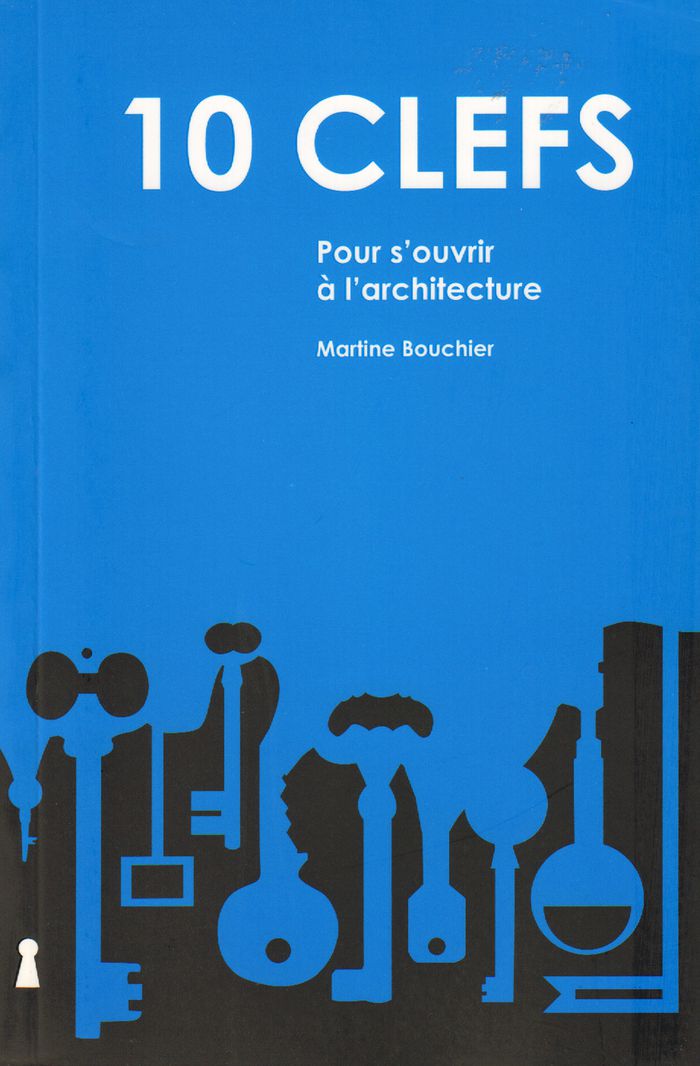
Ces 10 clefs abordent l'architecture non par une accroche spectaculaire, mais par une voie plus subjective. Elles tentent d'éviter l'écueil consistant à présenter ce domaine aux yeux du grand public comme une valeur culturelle fondée soit sur la dimension patrimoniale, soit sur les prouesses techniques des grands ouvrages d'art, ou encore sur la dimension événementielle(...)
Publication:
January 2017
January 2017
Title:
10 clefs pour s'ouvrir à l'architecture
Actions:
Price:
$18.95
(available to order)
Summary:
Ces 10 clefs abordent l'architecture non par une accroche spectaculaire, mais par une voie plus subjective. Elles tentent d'éviter l'écueil consistant à présenter ce domaine aux yeux du grand public comme une valeur culturelle fondée soit sur la dimension patrimoniale, soit sur les prouesses techniques des grands ouvrages d'art, ou encore sur la dimension événementielle de certaines réalisations qui se prêtent aux jeux des caméras et deviennent de parfaits décors pour le fond d'écran des journaux télévisés. Ce texte est destiné à initier une démarche personnelle, à stimuler la curiosité du lecteur en introduisant l'architecture par son versant sensible et émotionnel. Il s'adresse aux curieux, amoureux des villes, des parcs et des jardins, à ceux qui aiment le paysage, ceux qui n'hésitent pas à quitter leur espace domestique pour se perdre dans l'espace urbain.
Form:
books
books
Publication:
January 2017
January 2017
Form:
books
books

Actions:
Price:
$26.95
(available to order)
Summary:
Il est enfin admis ouvertement que Le Corbusier était un fasciste bon teint. On tolère ses mensonges et sa mégalomanie. On sourit en le voyant mépriser ses (riches) clients. Un observateur impartial découvrira vite qu’il n’a rien inventé, gommant les auteurs dont il s’est attribué les idées. La seule réelle compétence de Le Corbusier fut la promotion de son image publique(...)
Title:
Misère de l'espace moderne: la production de Le Corbusier et ses conséquences
Actions:
Price:
$26.95
(available to order)
Summary:
Il est enfin admis ouvertement que Le Corbusier était un fasciste bon teint. On tolère ses mensonges et sa mégalomanie. On sourit en le voyant mépriser ses (riches) clients. Un observateur impartial découvrira vite qu’il n’a rien inventé, gommant les auteurs dont il s’est attribué les idées. La seule réelle compétence de Le Corbusier fut la promotion de son image publique au détriment de la qualité de son œuvre construite – catastrophique. Mais de tout cela on ne tire aucune conséquence, la plupart des critiques refusant de voir le monde cauchemardesque qu’il voulait édifier. Ce qui n’aurait aucune importance si Le Corbusier n’était devenu le modèle pour les architectes de l’après-guerre qui ont couvert la France de barres et tours en béton. Et si, aujourd’hui, ses théories ne faisaient les affaires des bureaucrates de Chine et de Russie.
Form:
books
books
Publication:
January 2017
January 2017
Subject:
Architectural Theory
Architectural Theory
Form:
books
books

Price:
$41.95
(available to order)
Summary:
The topics that Friedman and his interviewees discuss illuminate five overarching themes: the functions and meanings of home; history, tradition, and change in residential architecture; activism, sustainability, and the environment; cities, suburbs, and regions; and technology, innovation, and materials. Friedman frames the interviews with an extended introduction that(...)
Title:
The American idea of home: conversations about architecture and design
Actions:
Price:
$41.95
(available to order)
Summary:
The topics that Friedman and his interviewees discuss illuminate five overarching themes: the functions and meanings of home; history, tradition, and change in residential architecture; activism, sustainability, and the environment; cities, suburbs, and regions; and technology, innovation, and materials. Friedman frames the interviews with an extended introduction that highlights these themes and helps readers appreciate the common concerns that underlie projects as disparate as Katrina cottages and Frank Lloyd Wright Usonian houses.
Form:
books
books
Publication:
May 2017
May 2017
Subject:
Architectural Theory
Architectural Theory
Form:
books
books
Actions:
Price:
$48.95
(available to order)
Summary:
Werner Blaser is among the most respected architectural critics of recent decades, who has interacted with virtually all of the major architects, including Mies, Foster, Piano, and Calatrava. In Synthesis, he tells the story of his encounters with architects and architecture. In addition, he is also the creator of collages that make apparent aesthetic connections between(...)
Title:
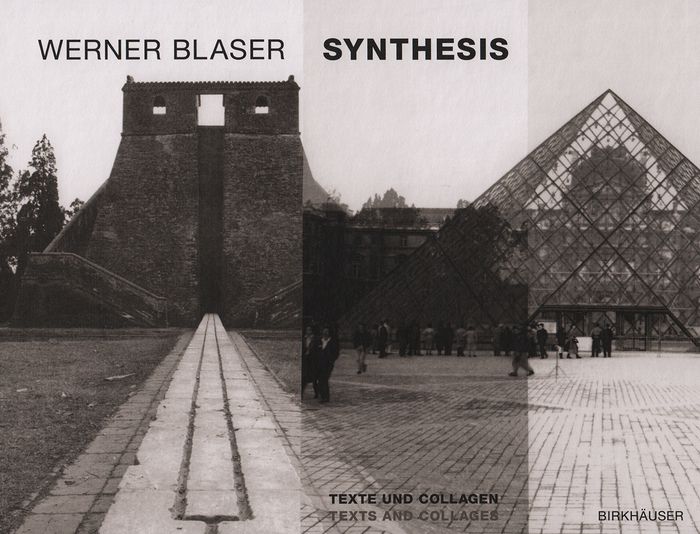
Synthesis: texts and collages
Actions:
Price:
$48.95
(available to order)
Summary:
Werner Blaser is among the most respected architectural critics of recent decades, who has interacted with virtually all of the major architects, including Mies, Foster, Piano, and Calatrava. In Synthesis, he tells the story of his encounters with architects and architecture. In addition, he is also the creator of collages that make apparent aesthetic connections between the East and West, and between traditional and contemporary architecture.
Form:
books
books
Publication:
March 2017
March 2017
Subject:
Architectural Theory
Architectural Theory
Form:
books
books
Actions:
Price:
$48.95
(available to order)
Summary:
With Design is Invisible, Lucius Burckhardt was one of the first to point out that factors that are invisible can be integrated – they determine the use of objects and should be part of the design. What is the use of the most attractive tramway if it does not operate at night? Burckhardt expands on the meaning of design, in this case by including the timetable, which can(...)
Subject:
Architectural Theory
Architectural Theory
Publication:
April 2017
April 2017
Title:
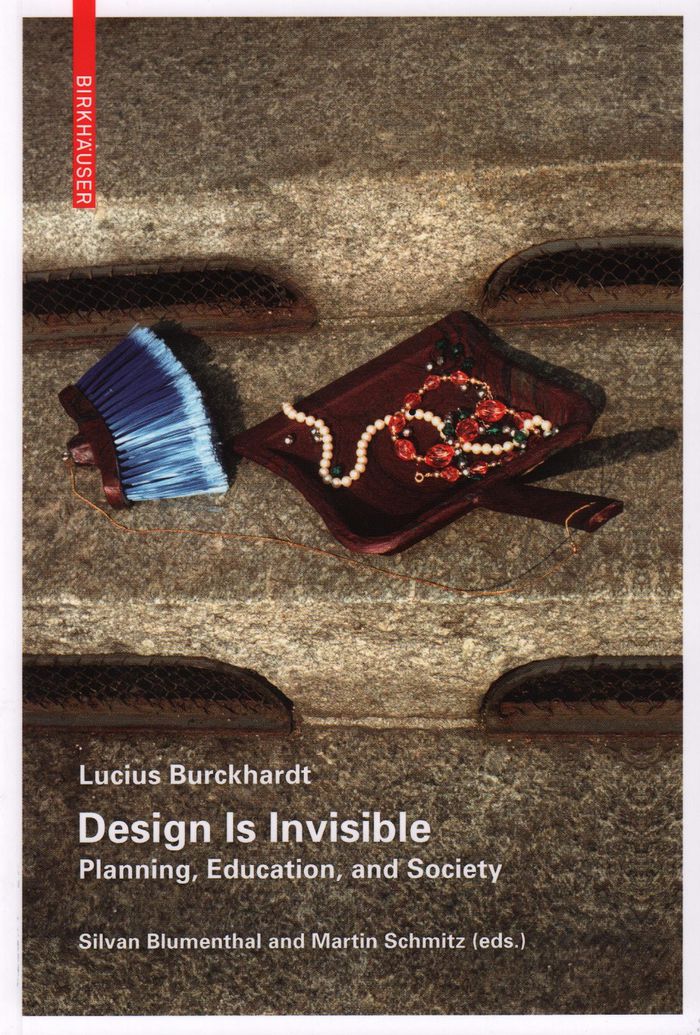
Design is invisible: planning, education and society
Actions:
Price:
$48.95
(available to order)
Summary:
With Design is Invisible, Lucius Burckhardt was one of the first to point out that factors that are invisible can be integrated – they determine the use of objects and should be part of the design. What is the use of the most attractive tramway if it does not operate at night? Burckhardt expands on the meaning of design, in this case by including the timetable, which can also be optimized. The relevance of these articles dating from between 1965 and 1999 can be appreciated today in the current debate on architecture. Problems arising from social polarization, rural depopulation, and migration can only be resolved on an interdisciplinary basis. The articles, for the first time available in English, finally allow access to key source texts for the purpose of international debate.
Form:
books
books
Publication:
April 2017
April 2017
Subject:
Architectural Theory
Architectural Theory
Form:
books
books
Price:
$54.95
(available to order)
Summary:
Focusing on German cultural and architectural theorist Walter Benjamin’s “constellation of awakening,” TU Delft’s Footprint 18 investigates Benjamin’s conceptualization of “dialectical images,” his use of montage, his refusal of notions of both progress and decline, and his effort to demonstrate how images belong not only to a particular time but attain legibility only at(...)
Title:
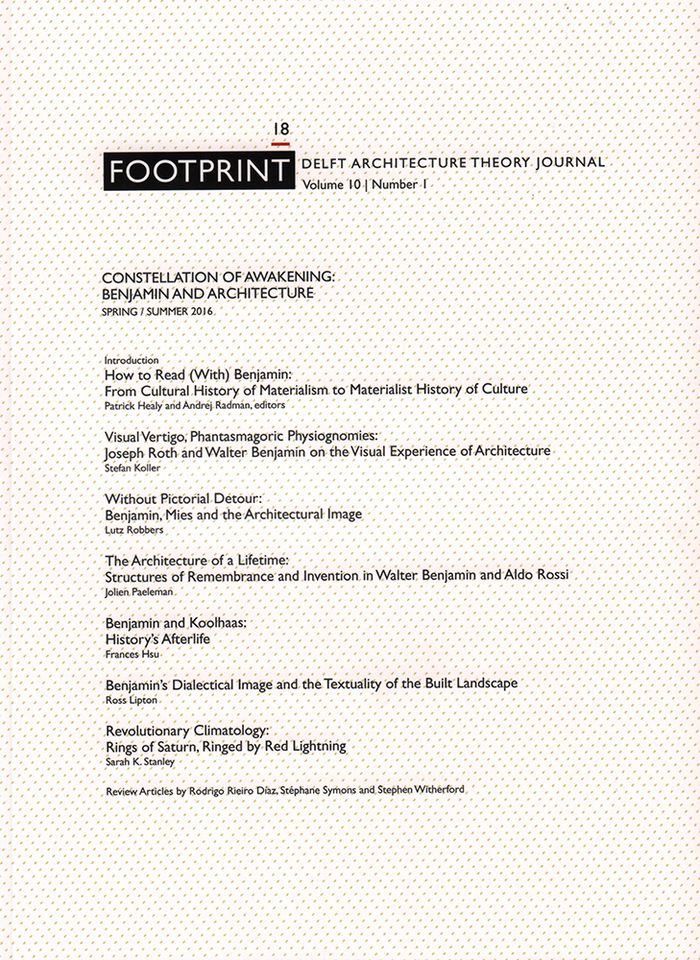
Footprint 18: constellation of awakening. Benjamin and architecture
Actions:
Price:
$54.95
(available to order)
Summary:
Focusing on German cultural and architectural theorist Walter Benjamin’s “constellation of awakening,” TU Delft’s Footprint 18 investigates Benjamin’s conceptualization of “dialectical images,” his use of montage, his refusal of notions of both progress and decline, and his effort to demonstrate how images belong not only to a particular time but attain legibility only at a particular time.
Form:
books
books
Publication:
October 2016
October 2016
Subject:
Architectural Theory
Architectural Theory
Form:
books
books
Actions:
Price:
$54.95
(available in store)
Summary:
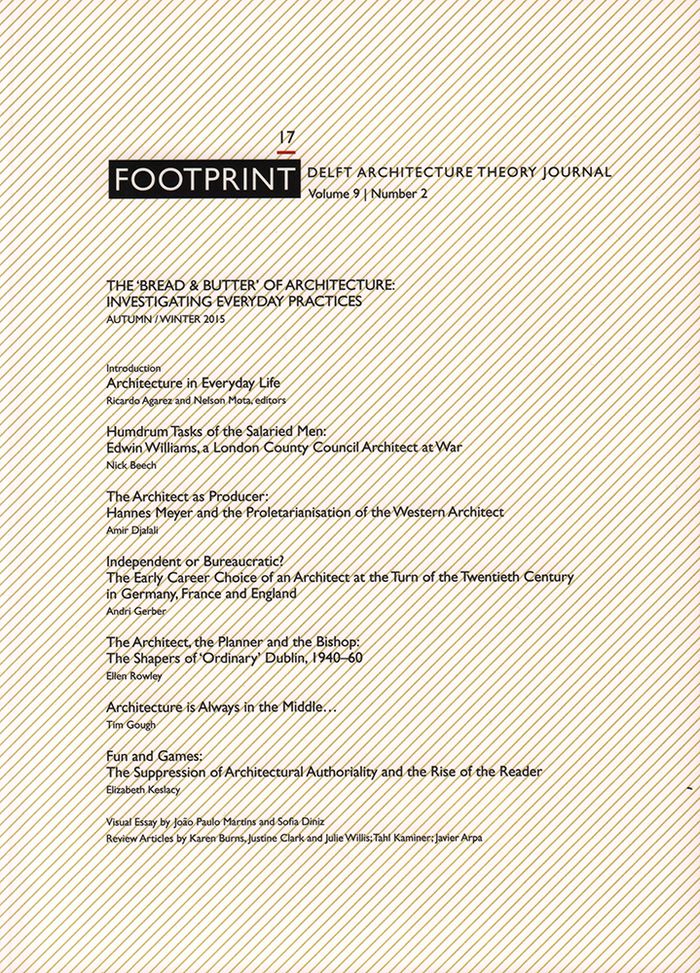
'Footprint 17' addresses the architectural production of those in inconspicuous offices and unexciting departments who contribute their insights and experience to the making of architecture, the formulation of architectural history, and the politics of architectural design and theory. Footprint 17 explores the intellectual frameworks, didactic practices, research methods(...)
Title:
Footprint 17: the 'bread and butter' of architecture: investigating everyday practices
Actions:
Price:
$54.95
(available in store)
Summary:
'Footprint 17' addresses the architectural production of those in inconspicuous offices and unexciting departments who contribute their insights and experience to the making of architecture, the formulation of architectural history, and the politics of architectural design and theory. Footprint 17 explores the intellectual frameworks, didactic practices, research methods and analytical instruments that develop the disciplinary focus beyond the work of the “prime mover,” and the relevance of salaried architects and institutional agencies in shaping the spatial and social practices of the everyday.
Form:
books
books
Publication:
July 2016
July 2016
Subject:
Architectural Theory
Architectural Theory
Form:
books
books
Actions:
Price:
$19.95
(available to order)
Summary:
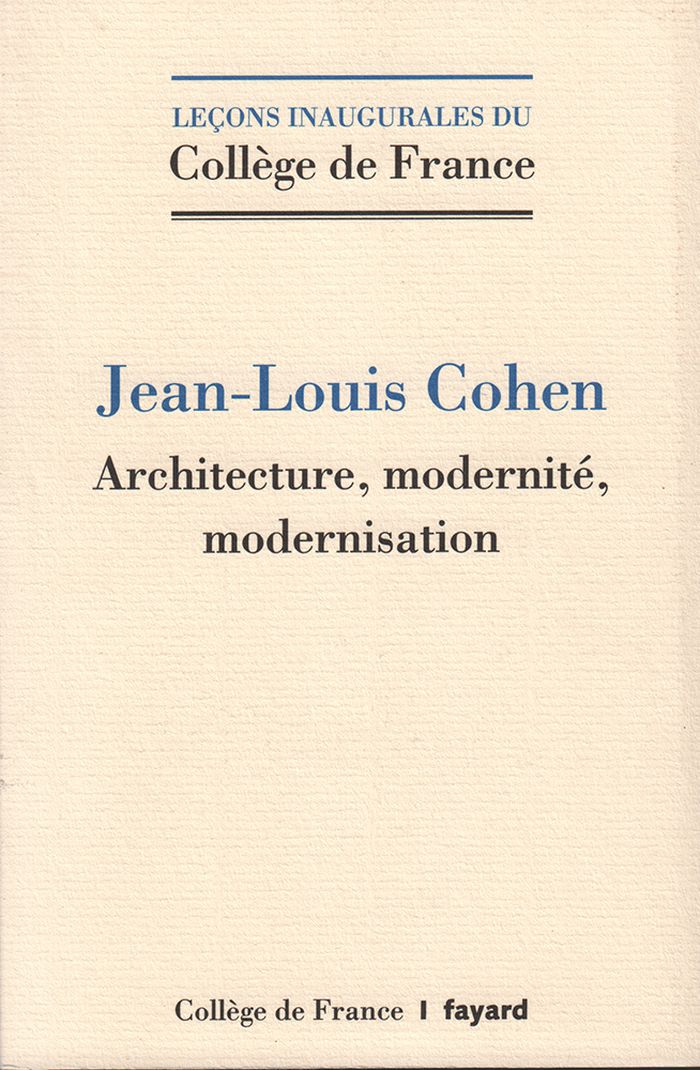
L’histoire de l’architecture ne cesse de conjuguer deux regards : celui, panoramique, portant sur les ensembles urbains, révélant les politiques sociales ou techniques, et celui sur les édifices et leurs intérieurs, vus en gros plan, qui reflète les idéaux et l’engagement de leurs auteurs et de leurs habitants. Faisant dialoguer théoriciens, philosophes et écrivains avec(...)
Publication:
February 2017
February 2017
Title:
Architecture, modernité et modernisation
Actions:
Price:
$19.95
(available to order)
Summary:
L’histoire de l’architecture ne cesse de conjuguer deux regards : celui, panoramique, portant sur les ensembles urbains, révélant les politiques sociales ou techniques, et celui sur les édifices et leurs intérieurs, vus en gros plan, qui reflète les idéaux et l’engagement de leurs auteurs et de leurs habitants. Faisant dialoguer théoriciens, philosophes et écrivains avec les architectes du xxe siècle (Mies van der Rohe, Wright ou Le Corbusier), Jean-Louis Cohen suggère une approche renouvelée, ancrée dans l’histoire culturelle et dans l’humain, de l’architecture comme questionnement et comme pratique.
Form:
books
books
Publication:
February 2017
February 2017
Form:
books
books

Actions:
Price:
$28.00
(available in store)
Summary:
Quand Jean Prouvé, président du jury du concours d'idée international, proclame, le 15 juillet 1971, le nom des lauréats du Centre Beaubourg, il en sait aussi peu sur eux que ce que nous avons oublié depuis leurs incroyables carrières. Car que savons-nous des circonstances de la toute première association entre Richard Rogers (1933-, Pritzker 2007) et Renzo Piano (1937-,(...)
Title:
De Beaubourg à Pompidou I: les architectes (1968-1971)
Actions:
Price:
$28.00
(available in store)
Summary:
Quand Jean Prouvé, président du jury du concours d'idée international, proclame, le 15 juillet 1971, le nom des lauréats du Centre Beaubourg, il en sait aussi peu sur eux que ce que nous avons oublié depuis leurs incroyables carrières. Car que savons-nous des circonstances de la toute première association entre Richard Rogers (1933-, Pritzker 2007) et Renzo Piano (1937-, Pritzker 1998) ? Que ce serait-il passé si Rogers n'avait pas mis fin au Team 4 (1963-1967) formé avec Norman Foster (1935-, Pritzker 1999) ? Si son enseignement à l'Architectural Association (1969-1971) avec Renzo Piano n'avait abouti à la création d'une agence commune ? Si le bureau d'ingénieurs Ove Arup ne leur avait indiqué fin 1970 l'existence de la compétition ?
Form:
books
books
Publication:
February 2017
February 2017
Subject:
Architectural Theory
Architectural Theory


