


2227 Results
Form:
books
books
Title:
Les lieux et la poussière
Les lieux et la poussière
Actions:
Price:
$17.95
(available to order)
Summary:
Ce livre est un essai en douze chapitres sur la beauté et la fragilité. La beauté de notre monde périssable, la fragilité des choses et des vies, la nostalgie qui habite les objets et les lieux. Roberto Peregalli voit les façades des maisons comme des visages. Il regarde le blanc, le verre, ou la lumière des temples, des cathédrales, de la pyramide du Louvre. Il dénonce(...)
$17.95
(available to order)
Summary:
Ce livre est un essai en douze chapitres sur la beauté et la fragilité. La beauté de notre monde périssable, la fragilité des choses et des vies, la nostalgie qui habite les objets et les lieux. Roberto Peregalli voit les façades des maisons comme des visages. Il regarde le blanc, le verre, ou la lumière des temples, des cathédrales, de la pyramide du Louvre. Il dénonce(...)
Title:
Les lieux et la poussière
Actions:
Price:
$17.95
(available to order)
Summary:
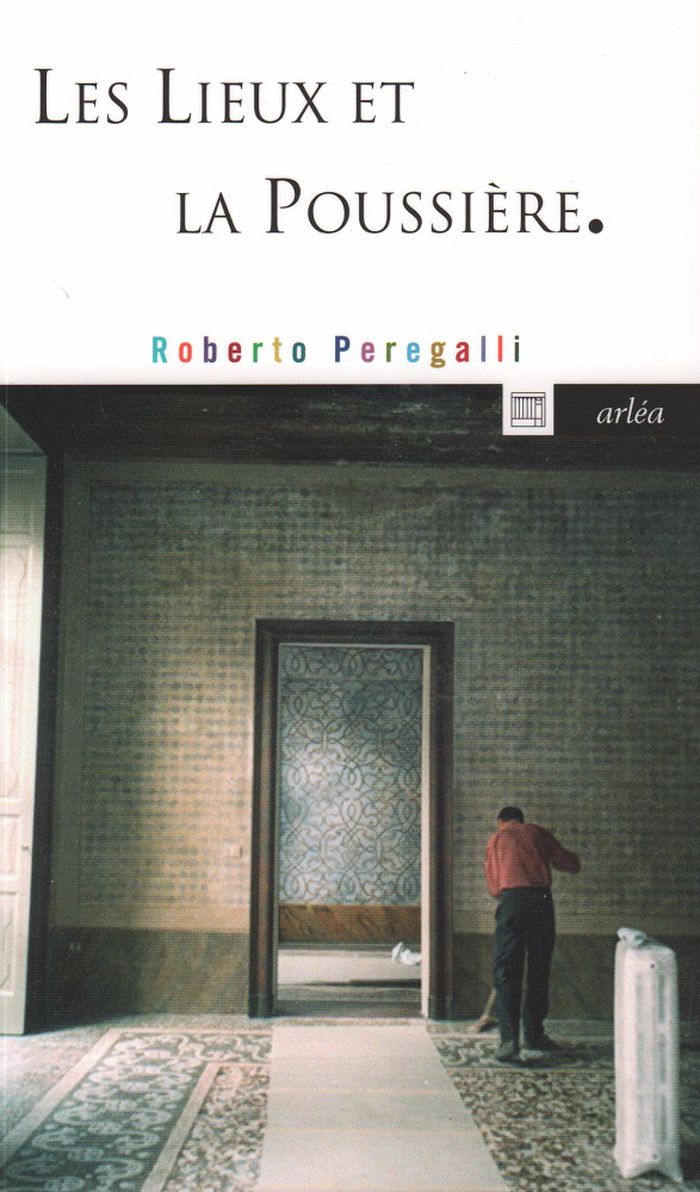
Ce livre est un essai en douze chapitres sur la beauté et la fragilité. La beauté de notre monde périssable, la fragilité des choses et des vies, la nostalgie qui habite les objets et les lieux. Roberto Peregalli voit les façades des maisons comme des visages. Il regarde le blanc, le verre, ou la lumière des temples, des cathédrales, de la pyramide du Louvre. Il dénonce l'effroi provoqué par le gigantisme et l'inadaptation de l'architecture moderne, la violence de la technologie. Il s'attarde sur le langage et la splendeur des ruines, de la patine et et de la pénombre. Il dénonce l'incurie de l'homme quant à son destin. Roberto Peregalli nous renvoie à notre condition de mortel. Il nous rappelle combien tout est fragile dans notre être et notre façon d'être. À la façon de Tanizaki, dans Éloge de l'ombre, il dévoile avec sensibilité et intelligence l'effondrement de valeurs qui sont les nôtres et qui méritent d'être en permanence repensées et préservées.
Les lieux et la poussière
Actions:
Price:
$17.95
(available to order)
Summary:
Ce livre est un essai en douze chapitres sur la beauté et la fragilité. La beauté de notre monde périssable, la fragilité des choses et des vies, la nostalgie qui habite les objets et les lieux. Roberto Peregalli voit les façades des maisons comme des visages. Il regarde le blanc, le verre, ou la lumière des temples, des cathédrales, de la pyramide du Louvre. Il dénonce l'effroi provoqué par le gigantisme et l'inadaptation de l'architecture moderne, la violence de la technologie. Il s'attarde sur le langage et la splendeur des ruines, de la patine et et de la pénombre. Il dénonce l'incurie de l'homme quant à son destin. Roberto Peregalli nous renvoie à notre condition de mortel. Il nous rappelle combien tout est fragile dans notre être et notre façon d'être. À la façon de Tanizaki, dans Éloge de l'ombre, il dévoile avec sensibilité et intelligence l'effondrement de valeurs qui sont les nôtres et qui méritent d'être en permanence repensées et préservées.
Form:
books
books
Publication:
March 2017
March 2017
Subject:
Architectural Theory
Architectural Theory
Form:
books
books
Price:
$42.00
(available to order)
Summary:
This book is about enlarging the ways designers think about design, doing so by learning more about the maturing sciences of human life-evolution, ecology, and the neurosciences-the sciences that explore how you or I actually experience the places being built for us and why we respond the ways we do. The new insights are as revolutionary in their way as the re-discovery(...)
$42.00
(available to order)
Summary:
This book is about enlarging the ways designers think about design, doing so by learning more about the maturing sciences of human life-evolution, ecology, and the neurosciences-the sciences that explore how you or I actually experience the places being built for us and why we respond the ways we do. The new insights are as revolutionary in their way as the re-discovery(...)
Title:
A new look at humanism: in architecture, landscapes and urban design
Actions:
Price:
$42.00
(available to order)
Summary:
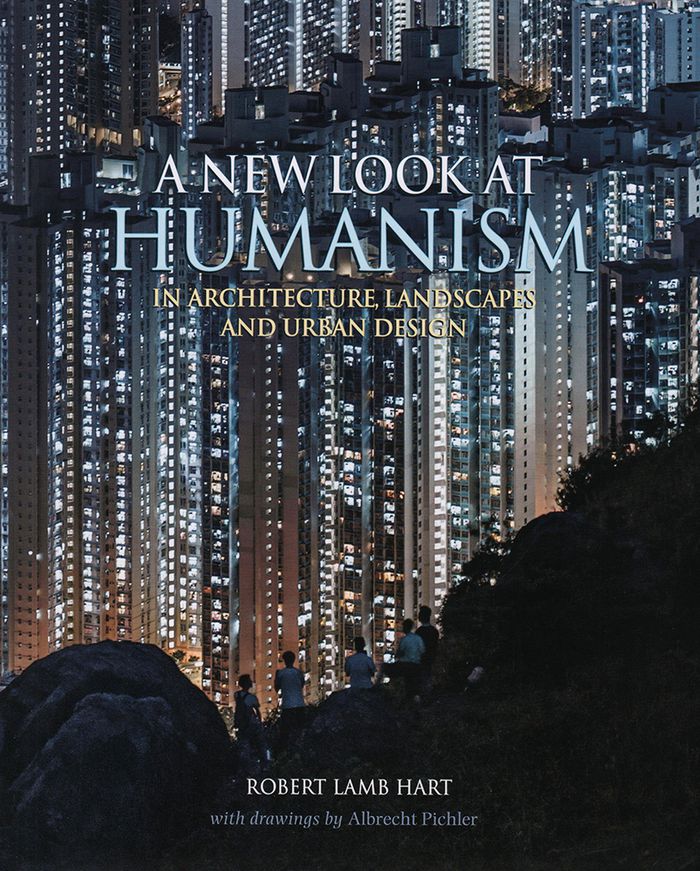
This book is about enlarging the ways designers think about design, doing so by learning more about the maturing sciences of human life-evolution, ecology, and the neurosciences-the sciences that explore how you or I actually experience the places being built for us and why we respond the ways we do. The new insights are as revolutionary in their way as the re-discovery of ancient Greece and Rome by humanists in the Renaissance. That was a time of dazzling creativity, with new ways of thinking about human nature. We're facing that kind of opportunity again. The book starts with our "Origins" as we evolved, immersed in the natural world. Then our actual experience is explored in "The mind that encounters architecture" and "The body that responds." And then "the languages of humanism" applies these ideas to design and the role of aesthetic experience.
A new look at humanism: in architecture, landscapes and urban design
Actions:
Price:
$42.00
(available to order)
Summary:
This book is about enlarging the ways designers think about design, doing so by learning more about the maturing sciences of human life-evolution, ecology, and the neurosciences-the sciences that explore how you or I actually experience the places being built for us and why we respond the ways we do. The new insights are as revolutionary in their way as the re-discovery of ancient Greece and Rome by humanists in the Renaissance. That was a time of dazzling creativity, with new ways of thinking about human nature. We're facing that kind of opportunity again. The book starts with our "Origins" as we evolved, immersed in the natural world. Then our actual experience is explored in "The mind that encounters architecture" and "The body that responds." And then "the languages of humanism" applies these ideas to design and the role of aesthetic experience.
Form:
books
books
Publication:
June 2016
June 2016
Subject:
Architectural Theory
Architectural Theory
Form:
books
books
Actions:
Price:
$72.00
(available to order)
Summary:
Unknown Fields is a nomadic design studio that ventures out on expeditions into the shadows cast by the contemporary city, to uncover the industrial ecologies and precarious wilderness its technology and culture set in motion. "Tales from the dark side of the city" is a book series that forms an atlas to the territories and stories of a city that stretches across the(...)
$72.00
(available to order)
Summary:
Unknown Fields is a nomadic design studio that ventures out on expeditions into the shadows cast by the contemporary city, to uncover the industrial ecologies and precarious wilderness its technology and culture set in motion. "Tales from the dark side of the city" is a book series that forms an atlas to the territories and stories of a city that stretches across the(...)
Title:
Tales from the dark side of the city, box set
Actions:
Price:
$72.00
(available to order)
Summary:
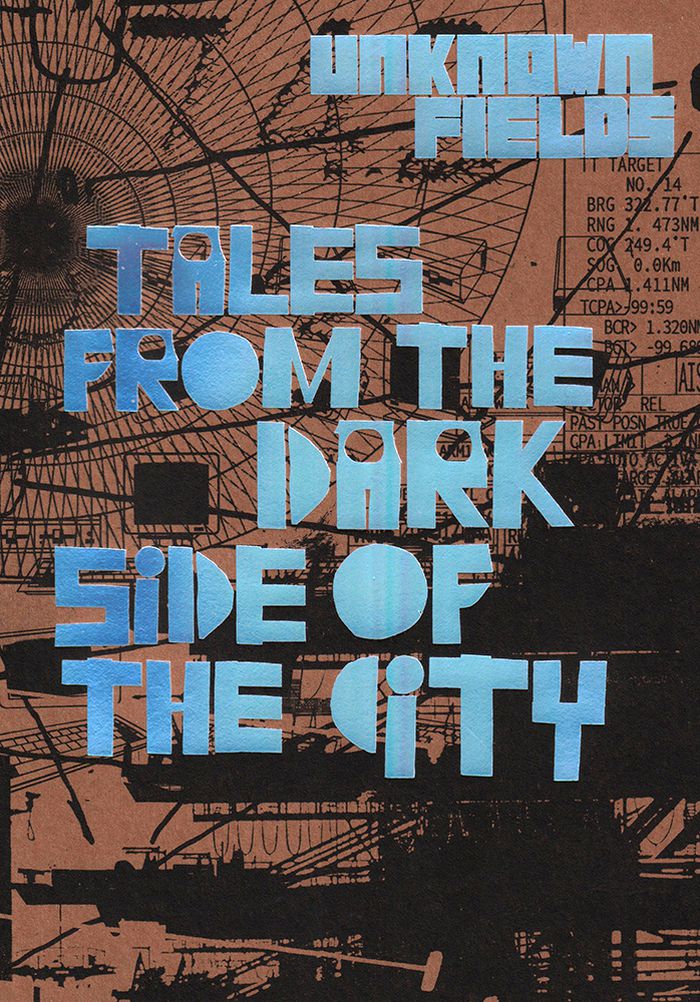
Unknown Fields is a nomadic design studio that ventures out on expeditions into the shadows cast by the contemporary city, to uncover the industrial ecologies and precarious wilderness its technology and culture set in motion. "Tales from the dark side of the city" is a book series that forms an atlas to the territories and stories of a city that stretches across the entire planet, a city that sits between documentary and fiction, a city of dislocated sites, of drone footage and hidden-camera investigations, of interviews and speculative narratives, of toxic objects and distributed matter from distant grounds. They are a collection of tales from the constellation of elsewheres that are conjured into being by the city’s wants and needs, fears and dreams. The series includes stories developed from expeditions through Bolivia and the Atacama Desert, the Western Australian Outback, the South China Sea and Inner Mongolia, the gemfields of Madagascar, Far North Alaska and the black sites of the United States.
Tales from the dark side of the city, box set
Actions:
Price:
$72.00
(available to order)
Summary:
Unknown Fields is a nomadic design studio that ventures out on expeditions into the shadows cast by the contemporary city, to uncover the industrial ecologies and precarious wilderness its technology and culture set in motion. "Tales from the dark side of the city" is a book series that forms an atlas to the territories and stories of a city that stretches across the entire planet, a city that sits between documentary and fiction, a city of dislocated sites, of drone footage and hidden-camera investigations, of interviews and speculative narratives, of toxic objects and distributed matter from distant grounds. They are a collection of tales from the constellation of elsewheres that are conjured into being by the city’s wants and needs, fears and dreams. The series includes stories developed from expeditions through Bolivia and the Atacama Desert, the Western Australian Outback, the South China Sea and Inner Mongolia, the gemfields of Madagascar, Far North Alaska and the black sites of the United States.
Form:
books
books
Publication:
November 2016
November 2016
Form:
books
books
Actions:
Price:
$69.95
(available to order)
Summary:
From 1970–1990, architecture experienced a revision as part of the post-modern movement. The critical attitude to the functionalistic Moderne style and the influence of semiotics and philosophical trends, such as phenomenology, on architectural theory led to an increased interest in its history, expression, perception, and context. In addition, architectural heritage and(...)
$69.95
(available to order)
Summary:
From 1970–1990, architecture experienced a revision as part of the post-modern movement. The critical attitude to the functionalistic Moderne style and the influence of semiotics and philosophical trends, such as phenomenology, on architectural theory led to an increased interest in its history, expression, perception, and context. In addition, architectural heritage and(...)
Title:
Re-framing identities: Architecture's turn to history, 1970-1990. East-West central, vol. 3
Actions:
Price:
$69.95
(available to order)
Summary:
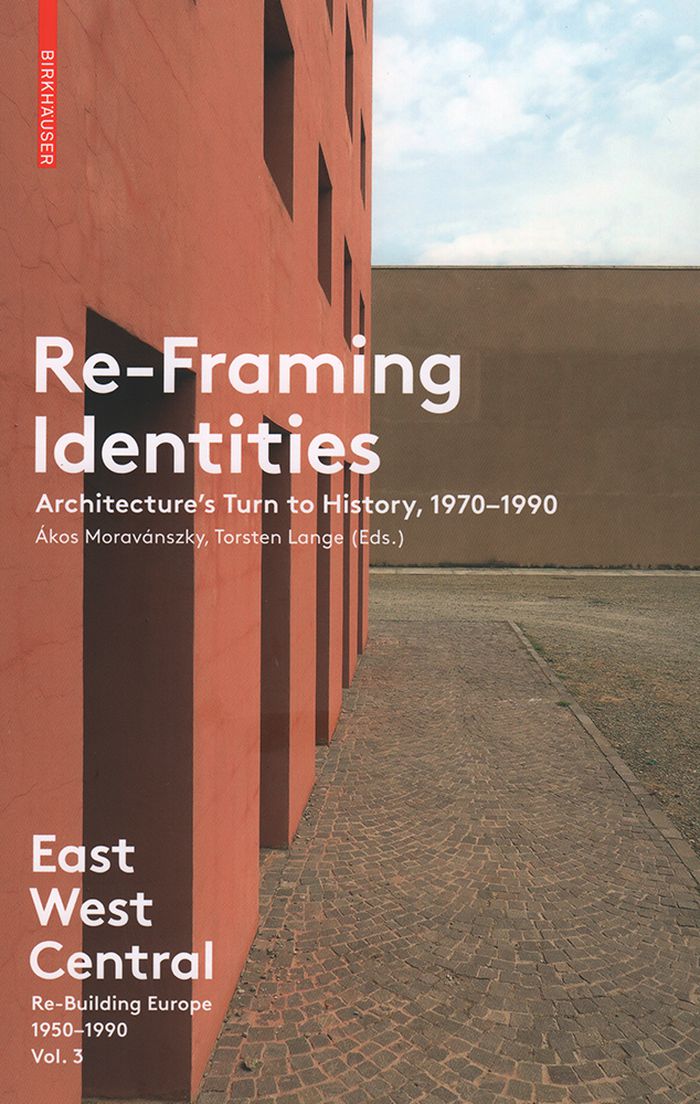
From 1970–1990, architecture experienced a revision as part of the post-modern movement. The critical attitude to the functionalistic Moderne style and the influence of semiotics and philosophical trends, such as phenomenology, on architectural theory led to an increased interest in its history, expression, perception, and context. In addition, architectural heritage and the care of architectural monuments gained importance. This development also increasingly challenged the ideologically based division between East and West. Instead of emphasizing the differences, the search was for a joint cultural heritage. The contributions in this volume question terms such as "Moderne" and "post-modern", and show how architecture could again represent local, regional, and national identity.
Re-framing identities: Architecture's turn to history, 1970-1990. East-West central, vol. 3
Actions:
Price:
$69.95
(available to order)
Summary:
From 1970–1990, architecture experienced a revision as part of the post-modern movement. The critical attitude to the functionalistic Moderne style and the influence of semiotics and philosophical trends, such as phenomenology, on architectural theory led to an increased interest in its history, expression, perception, and context. In addition, architectural heritage and the care of architectural monuments gained importance. This development also increasingly challenged the ideologically based division between East and West. Instead of emphasizing the differences, the search was for a joint cultural heritage. The contributions in this volume question terms such as "Moderne" and "post-modern", and show how architecture could again represent local, regional, and national identity.
Form:
books
books
Publication:
December 2016
December 2016
Subject:
Architectural Theory
Architectural Theory
Form:
books
books
Actions:
Price:
$69.95
(available to order)
Summary:
From 1960–1980, both eastern and western Europe experienced a construction boom of new dimensions. Cybernetics, the science of planning, and sociology, as well as the new possibilities offered by technology and production, paved the way to large-scale processes and systems in architecture and urban design, which favored technocratic and utopian concepts. Increasingly,(...)
$69.95
(available to order)
Summary:
From 1960–1980, both eastern and western Europe experienced a construction boom of new dimensions. Cybernetics, the science of planning, and sociology, as well as the new possibilities offered by technology and production, paved the way to large-scale processes and systems in architecture and urban design, which favored technocratic and utopian concepts. Increasingly,(...)
Title:
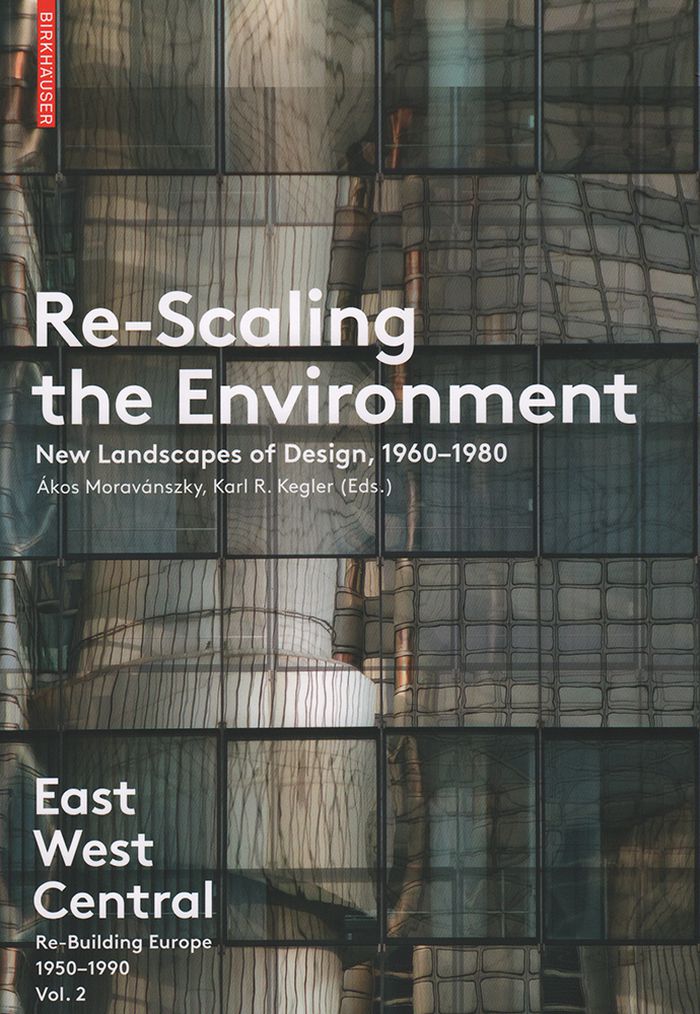
Re-scaling the environment: New landscapes of design, 1960-1980. East-West central, Vol. 2
Actions:
Price:
$69.95
(available to order)
Summary:
From 1960–1980, both eastern and western Europe experienced a construction boom of new dimensions. Cybernetics, the science of planning, and sociology, as well as the new possibilities offered by technology and production, paved the way to large-scale processes and systems in architecture and urban design, which favored technocratic and utopian concepts. Increasingly, architects and planners saw themselves as designers of comprehensive infrastructure and mega-structures in a technology-focused world. The authors assesses these developments on the back of a knowledge transfer between East and West. It confirms a change in attitude that can still be felt today – recession, social changes, and environmental problems led to criticism of the then contemporary concepts of modernity.
Re-scaling the environment: New landscapes of design, 1960-1980. East-West central, Vol. 2
Actions:
Price:
$69.95
(available to order)
Summary:
From 1960–1980, both eastern and western Europe experienced a construction boom of new dimensions. Cybernetics, the science of planning, and sociology, as well as the new possibilities offered by technology and production, paved the way to large-scale processes and systems in architecture and urban design, which favored technocratic and utopian concepts. Increasingly, architects and planners saw themselves as designers of comprehensive infrastructure and mega-structures in a technology-focused world. The authors assesses these developments on the back of a knowledge transfer between East and West. It confirms a change in attitude that can still be felt today – recession, social changes, and environmental problems led to criticism of the then contemporary concepts of modernity.
Form:
books
books
Publication:
December 2016
December 2016
Subject:
Architectural Theory
Architectural Theory
Form:
books
books
Title:
Utopies réalisables
Utopies réalisables
Actions:
Price:
$15.95
(available in store)
Summary:
"L'analyse de certaines utopies sociales présentées dans ce livre, implique, en sous-entendu, l'acte d'accusation et la critique des deux "méchants" de notre époque que sont : "l'Etat mafia" et la "mafia des médias" (presse, radio, télévision, etc). L'existence d'un "Etat mafia" est la conséquence de l'impossibilité du maintien de l'Etat démocratique classique dès que les(...)
$15.95
(available in store)
Summary:
"L'analyse de certaines utopies sociales présentées dans ce livre, implique, en sous-entendu, l'acte d'accusation et la critique des deux "méchants" de notre époque que sont : "l'Etat mafia" et la "mafia des médias" (presse, radio, télévision, etc). L'existence d'un "Etat mafia" est la conséquence de l'impossibilité du maintien de l'Etat démocratique classique dès que les(...)
Title:
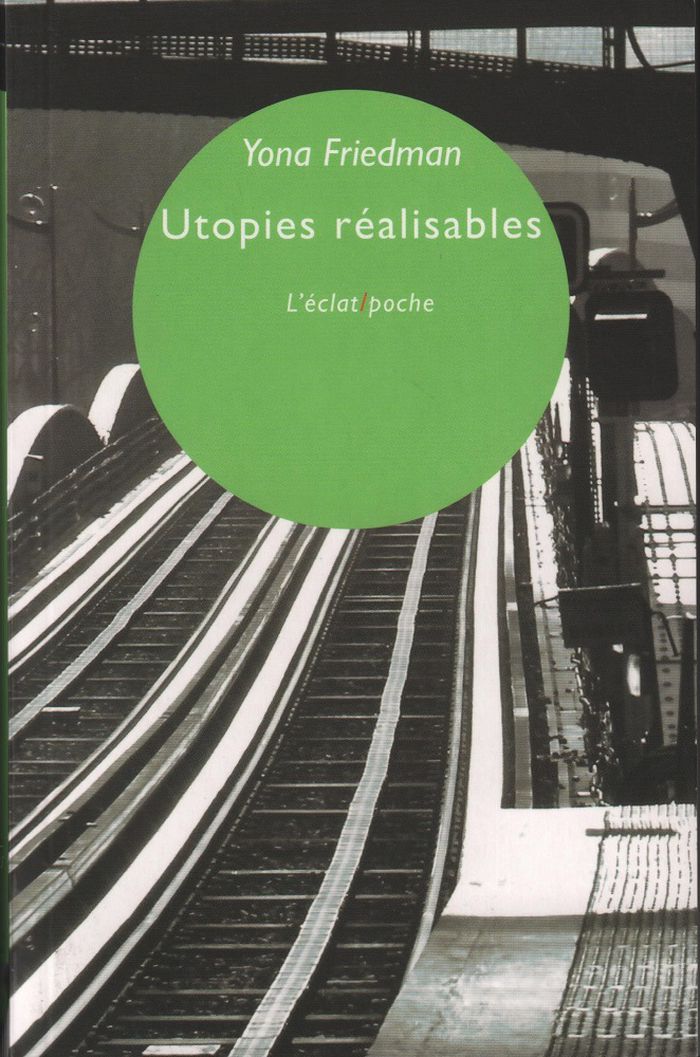
Utopies réalisables
Actions:
Price:
$15.95
(available in store)
Summary:
"L'analyse de certaines utopies sociales présentées dans ce livre, implique, en sous-entendu, l'acte d'accusation et la critique des deux "méchants" de notre époque que sont : "l'Etat mafia" et la "mafia des médias" (presse, radio, télévision, etc). L'existence d'un "Etat mafia" est la conséquence de l'impossibilité du maintien de l'Etat démocratique classique dès que les dimensions de l'Etat dépassent certaines limites ; et la "mafia des médias" en découle directement, par suite de l'impossibilité de la communication globale. L'échec de ces deux utopies généreuses, la démocratie et la "communication globale" entre les hommes, entraîne logiquement la formation de ces mafias qui agissent en notre nom et contre nos intérêts".
Utopies réalisables
Actions:
Price:
$15.95
(available in store)
Summary:
"L'analyse de certaines utopies sociales présentées dans ce livre, implique, en sous-entendu, l'acte d'accusation et la critique des deux "méchants" de notre époque que sont : "l'Etat mafia" et la "mafia des médias" (presse, radio, télévision, etc). L'existence d'un "Etat mafia" est la conséquence de l'impossibilité du maintien de l'Etat démocratique classique dès que les dimensions de l'Etat dépassent certaines limites ; et la "mafia des médias" en découle directement, par suite de l'impossibilité de la communication globale. L'échec de ces deux utopies généreuses, la démocratie et la "communication globale" entre les hommes, entraîne logiquement la formation de ces mafias qui agissent en notre nom et contre nos intérêts".
Form:
books
books
Publication:
September 2015
September 2015
Subject:
Architectural Theory
Architectural Theory
Form:
books
books
Price:
$35.95
(available to order)
Summary:
"Worldmaking as Techné: Participatory Art, Music, and Architecture" outlines a practice that challenges the World and how it could be through a kind of future-making, and/or other world making, by creating alternate realties as artworks that are simultaneously ontological propositions. In simplified terms the concept of techné is concerned with the art and craft of(...)
$35.95
(available to order)
Summary:
"Worldmaking as Techné: Participatory Art, Music, and Architecture" outlines a practice that challenges the World and how it could be through a kind of future-making, and/or other world making, by creating alternate realties as artworks that are simultaneously ontological propositions. In simplified terms the concept of techné is concerned with the art and craft of(...)
Subject:
Architectural Theory
Architectural Theory
Publication:
June 2018
June 2018
Title:
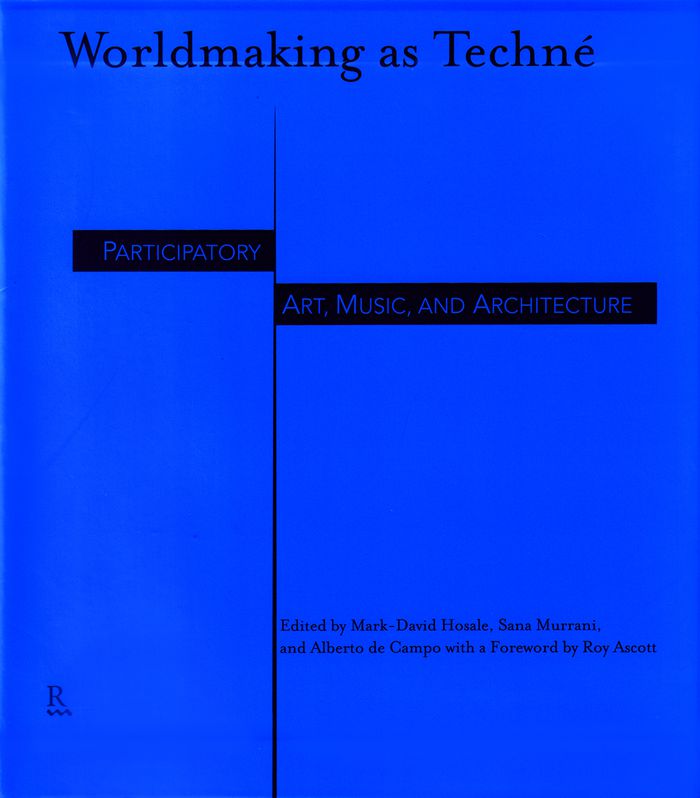
Worldmaking as techné: participatory art, music and architecture
Actions:
Price:
$35.95
(available to order)
Summary:
"Worldmaking as Techné: Participatory Art, Music, and Architecture" outlines a practice that challenges the World and how it could be through a kind of future-making, and/or other world making, by creating alternate realties as artworks that are simultaneously ontological propositions. In simplified terms the concept of techné is concerned with the art and craft of making. In particular a kind of practice that embodies the enactment of theoretical approach that helps determine the significance of the work, how it was made, and why. By positioning worldmaking as a kind of techné, we seek to create a discourse of art making as an enframing of the world that results in the expression of ontological propositions through the creation of art-worlds.
Worldmaking as techné: participatory art, music and architecture
Actions:
Price:
$35.95
(available to order)
Summary:
"Worldmaking as Techné: Participatory Art, Music, and Architecture" outlines a practice that challenges the World and how it could be through a kind of future-making, and/or other world making, by creating alternate realties as artworks that are simultaneously ontological propositions. In simplified terms the concept of techné is concerned with the art and craft of making. In particular a kind of practice that embodies the enactment of theoretical approach that helps determine the significance of the work, how it was made, and why. By positioning worldmaking as a kind of techné, we seek to create a discourse of art making as an enframing of the world that results in the expression of ontological propositions through the creation of art-worlds.
Form:
books
books
Publication:
June 2018
June 2018
Subject:
Architectural Theory
Architectural Theory
Form:
books
books
Title:
Towards an articulated phenomenological interpretation of architecture: phenomenal phenomenology
Towards an articulated phenomenological interpretation of architecture: phenomenal phenomenology
Actions:
Price:
$74.10
(available to order)
Summary:
This book sheds light on the contemporary status of phenomenological discourse in architecture and investigates its current scholastic as well as practical position. Starting with a concise introduction to the philosophical grounds of phenomenology from the points of view of Husserl, Merleau-Ponty and Heidegger, it presents a critical reading of the works of some leading(...)
$74.10
(available to order)
Summary:
This book sheds light on the contemporary status of phenomenological discourse in architecture and investigates its current scholastic as well as practical position. Starting with a concise introduction to the philosophical grounds of phenomenology from the points of view of Husserl, Merleau-Ponty and Heidegger, it presents a critical reading of the works of some leading(...)
Title:
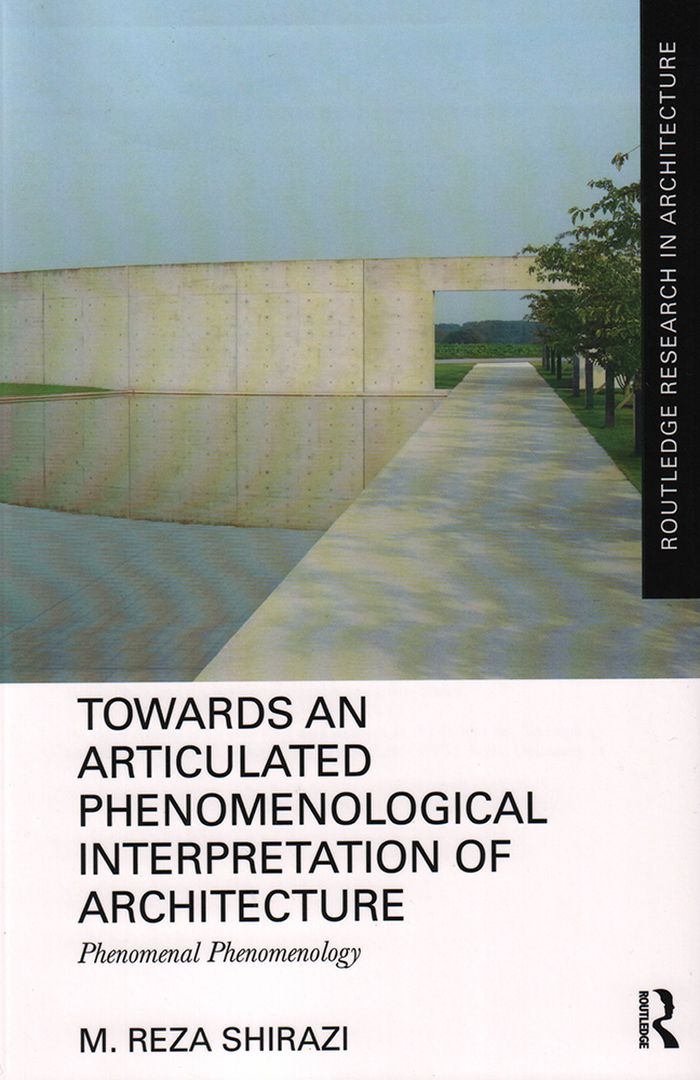
Towards an articulated phenomenological interpretation of architecture: phenomenal phenomenology
Actions:
Price:
$74.10
(available to order)
Summary:
This book sheds light on the contemporary status of phenomenological discourse in architecture and investigates its current scholastic as well as practical position. Starting with a concise introduction to the philosophical grounds of phenomenology from the points of view of Husserl, Merleau-Ponty and Heidegger, it presents a critical reading of the works of some leading figures of architectural phenomenology in both theory and practice, such as Christian Norberg-Schultz, Kenneth Frampton, Juhani Pallasmaa, and Steven Holl. Highlighting the main challenges of the current phenomenological discourse in architecture, this book formulates a more articulated method of 'phenomenological interpretation' – dubbed 'phenomenal phenomenology' - as a new and innovative method of interpreting the built environment. Finally, using Tadao Ando's Langen Foundation Museum as a case study, it investigates the architect's contribution to phenomenological discourse, interprets and analyzes the Museum building using the new heuristic method, and thus provides a clear example of its applicability.
Towards an articulated phenomenological interpretation of architecture: phenomenal phenomenology
Actions:
Price:
$74.10
(available to order)
Summary:
This book sheds light on the contemporary status of phenomenological discourse in architecture and investigates its current scholastic as well as practical position. Starting with a concise introduction to the philosophical grounds of phenomenology from the points of view of Husserl, Merleau-Ponty and Heidegger, it presents a critical reading of the works of some leading figures of architectural phenomenology in both theory and practice, such as Christian Norberg-Schultz, Kenneth Frampton, Juhani Pallasmaa, and Steven Holl. Highlighting the main challenges of the current phenomenological discourse in architecture, this book formulates a more articulated method of 'phenomenological interpretation' – dubbed 'phenomenal phenomenology' - as a new and innovative method of interpreting the built environment. Finally, using Tadao Ando's Langen Foundation Museum as a case study, it investigates the architect's contribution to phenomenological discourse, interprets and analyzes the Museum building using the new heuristic method, and thus provides a clear example of its applicability.
Form:
books
books
Publication:
October 2016
October 2016
Subject:
Architectural Theory
Architectural Theory
Form:
books
books
Title:
Architecture is all over
Architecture is all over
Actions:
Price:
$36.95
(available to order)
Summary:
"Architecture is all over" investigates architecture's simultaneous diminishment and ubiquity in the early twenty-first century. As a diagnostic and tactical guide, this collection features original texts and design proposals from emerging and established scholars and practitioners in the fields of architecture, art, the history of science, media studies, and philosophy.(...)
$36.95
(available to order)
Summary:
"Architecture is all over" investigates architecture's simultaneous diminishment and ubiquity in the early twenty-first century. As a diagnostic and tactical guide, this collection features original texts and design proposals from emerging and established scholars and practitioners in the fields of architecture, art, the history of science, media studies, and philosophy.(...)
Title:
Architecture is all over
Actions:
Price:
$36.95
(available to order)
Summary:
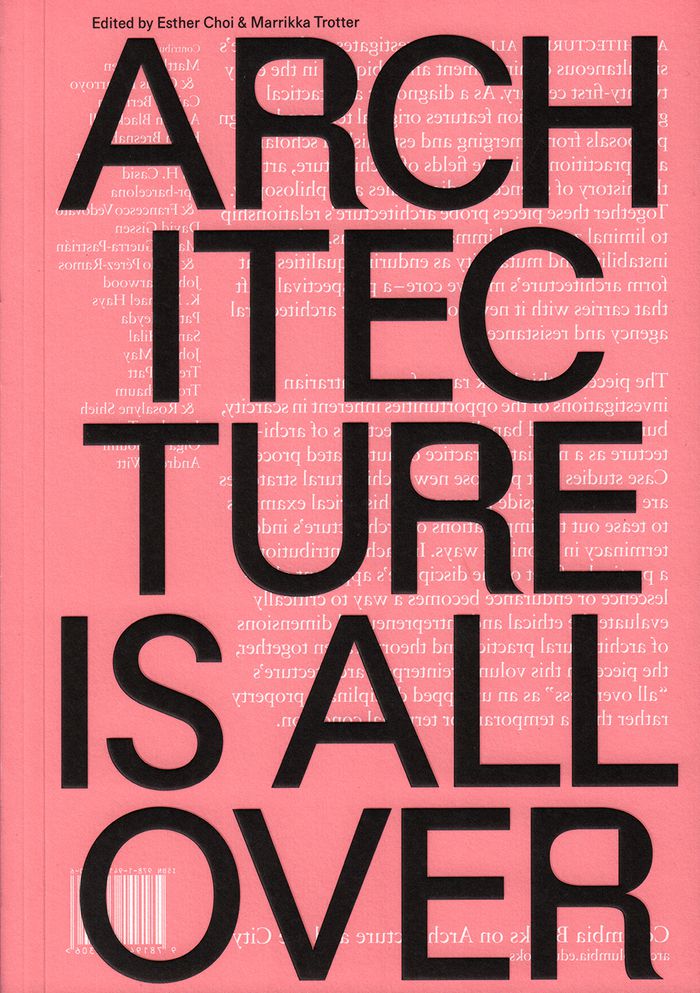
"Architecture is all over" investigates architecture's simultaneous diminishment and ubiquity in the early twenty-first century. As a diagnostic and tactical guide, this collection features original texts and design proposals from emerging and established scholars and practitioners in the fields of architecture, art, the history of science, media studies, and philosophy. Together these pieces probe architecture's relationship to liminal zones and immaterial systems, reframing instability and mutability as enduring qualities that form architecture's motive core—a perspectival shift that carries with it new possibilities for architectural agency and resistance.
Architecture is all over
Actions:
Price:
$36.95
(available to order)
Summary:
"Architecture is all over" investigates architecture's simultaneous diminishment and ubiquity in the early twenty-first century. As a diagnostic and tactical guide, this collection features original texts and design proposals from emerging and established scholars and practitioners in the fields of architecture, art, the history of science, media studies, and philosophy. Together these pieces probe architecture's relationship to liminal zones and immaterial systems, reframing instability and mutability as enduring qualities that form architecture's motive core—a perspectival shift that carries with it new possibilities for architectural agency and resistance.
Form:
books
books
Publication:
September 2017
September 2017
Subject:
Architectural Theory
Architectural Theory
Form:
books
books
Actions:
Price:
$37.70
(available in store)
Summary:
"Five ways to make architecture political" presents an innovative pragmatist agenda that will inspire new thinking about the politics of design and architectural practice. Moving beyond conventional conversations about design and politics, the book shows how recent developments in political philosophy can transform our understanding of the role of the architect. It asks:(...)
$37.70
(available in store)
Summary:
"Five ways to make architecture political" presents an innovative pragmatist agenda that will inspire new thinking about the politics of design and architectural practice. Moving beyond conventional conversations about design and politics, the book shows how recent developments in political philosophy can transform our understanding of the role of the architect. It asks:(...)
Title:
Five ways to make architecture political: An introduction to the politics of design practice
Actions:
Price:
$37.70
(available in store)
Summary:
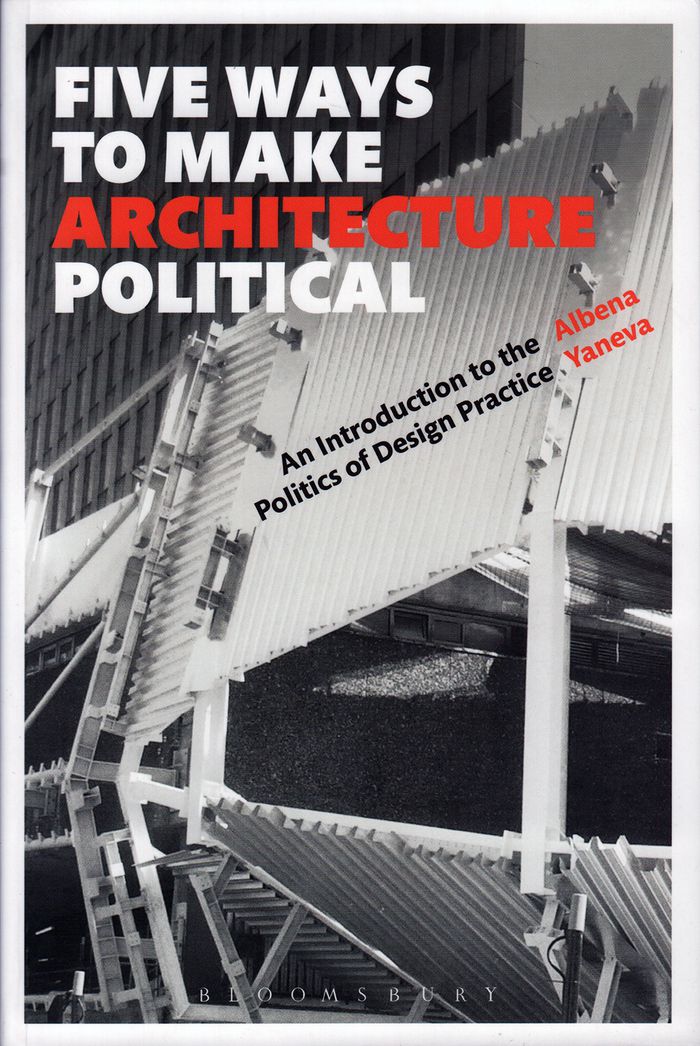
"Five ways to make architecture political" presents an innovative pragmatist agenda that will inspire new thinking about the politics of design and architectural practice. Moving beyond conventional conversations about design and politics, the book shows how recent developments in political philosophy can transform our understanding of the role of the architect. It asks: how, when, and under what circumstances can design practice generate political relations? How can architectural design become more 'political'? Five central chapters, which can be read alone or in sequence, explore the answers to these questions. Powerfully pragmatic in approach, each presents one of the 'five ways to make architecture political', and each is illustrated by case studies from a range of contemporary situations around the world. We see how politics happens in architectural practice, learn how different design technologies have political effects, and follow how architects reach different publics, trigger reactions and affect different communities worldwide.
Five ways to make architecture political: An introduction to the politics of design practice
Actions:
Price:
$37.70
(available in store)
Summary:
"Five ways to make architecture political" presents an innovative pragmatist agenda that will inspire new thinking about the politics of design and architectural practice. Moving beyond conventional conversations about design and politics, the book shows how recent developments in political philosophy can transform our understanding of the role of the architect. It asks: how, when, and under what circumstances can design practice generate political relations? How can architectural design become more 'political'? Five central chapters, which can be read alone or in sequence, explore the answers to these questions. Powerfully pragmatic in approach, each presents one of the 'five ways to make architecture political', and each is illustrated by case studies from a range of contemporary situations around the world. We see how politics happens in architectural practice, learn how different design technologies have political effects, and follow how architects reach different publics, trigger reactions and affect different communities worldwide.
Form:
books
books
Publication:
May 2017
May 2017
Subject:
Architectural Theory
Architectural Theory


