


2227 Results
Form:
books
books

Actions:
Price:
$23.00
(available in store)
Summary:
Interroger le discours de la Modernité, la manière dont en lui se sont noués trois regards sur l’architecture, trois disciplines : l’art, l’histoire, la technologie — tel est l’objet des essais qui composent ce livre. Critiques, ils ne prétendent pas échapper au projet moderne, comme si ses effets ne se faisaient plus ressentir aujourd’hui, mais l’interrogent depuis(...)
Title:
Modernités architecturales : indisciplinarités
Actions:
Price:
$23.00
(available in store)
Summary:
Interroger le discours de la Modernité, la manière dont en lui se sont noués trois regards sur l’architecture, trois disciplines : l’art, l’histoire, la technologie — tel est l’objet des essais qui composent ce livre. Critiques, ils ne prétendent pas échapper au projet moderne, comme si ses effets ne se faisaient plus ressentir aujourd’hui, mais l’interrogent depuis lui-même. Non pour l’invalider, mais pour porter une nouvelle lumière sur ses virtualités. Ce qu’il s’agit d’écrire, c’est une histoire indisciplinée des formes architecturales et urbaines, de leurs modes de production et de réception, mais aussi de leurs capacités d’action et de transformation.
Form:
books
books
Publication:
June 2016
June 2016
Subject:
Architectural Theory
Architectural Theory
Form:
books
books

Title:
The Berlage Affair
The Berlage Affair
Actions:
Price:
$46.95
(available to order)
Summary:
The Berlage Affair is an anthology of critical essays, reviews, and interviews cataloguing 20+ years of work and insight from architectural educator, Vedran. Kenneth Frampton once called Vedran Mimica, “the spiritual leader of the Berlage Institute.” The Berlage Affair is a book that investigates the educational legacy of that institution, and in the process, explores new(...)
Title:
The Berlage Affair
Actions:
Price:
$46.95
(available to order)
Summary:
The Berlage Affair is an anthology of critical essays, reviews, and interviews cataloguing 20+ years of work and insight from architectural educator, Vedran. Kenneth Frampton once called Vedran Mimica, “the spiritual leader of the Berlage Institute.” The Berlage Affair is a book that investigates the educational legacy of that institution, and in the process, explores new ways to research and project new models of global urbanization. Through this multilayered book of diverse views, the essays, studies, reviews, and interviews within all share an intellectual origin from the Berlage, where Mimica worked for 22 years alongside contemporaries such as Herman Hertzberger, Wiel Arets, Alejandro Zaera-Polo, Kenneth Frampton, Rem Koolhaas, and Elia Zenghel, as well as many leading architects and students from all over the world.
Form:
books
books
Publication:
November 2017
November 2017
Subject:
Architectural Theory
Architectural Theory
Form:
books
books
Title:
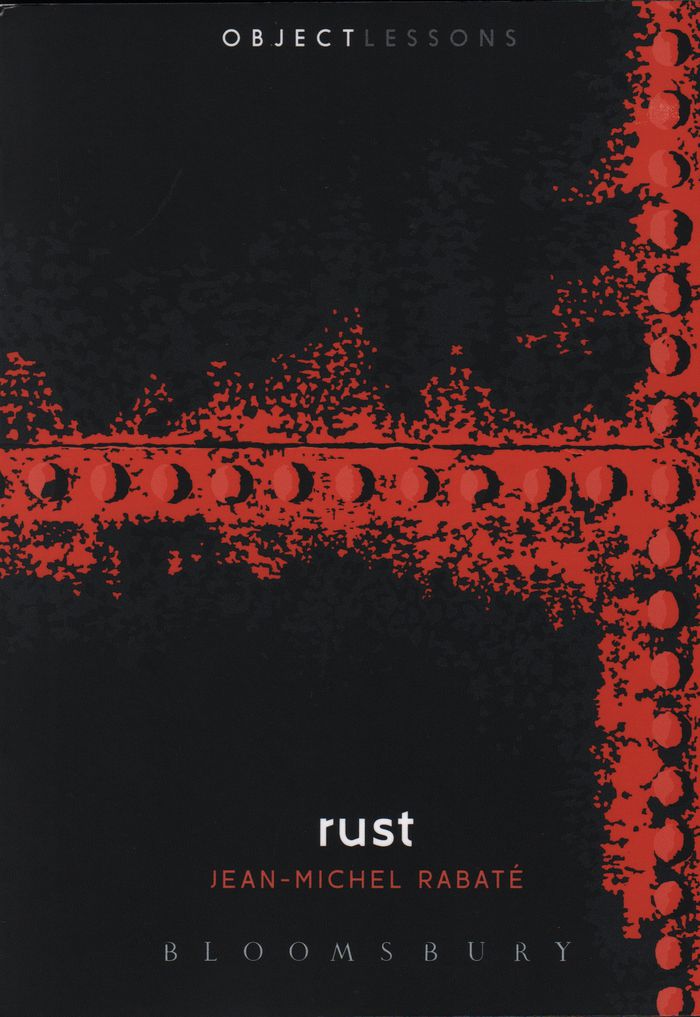
Rust. Object Lessons series
Rust. Object Lessons series
Actions:
Price:
$21.95
(available in store)
Summary:
It's happening all the time, all around us. We cover it up. We ignore it. « Rust » takes on the many meanings of this oxidized substance, showing how technology bleeds into biology and ecology. Jean-Michel Rabate´ combines art, science, and autobiography to share his fascination with peeling paints and rusty metal sheets. Rust, he concludes, is a place where things(...)
Subject:
Architectural Theory
Architectural Theory
Publication:
August 2018
August 2018
Title:
Rust. Object Lessons series
Actions:
Price:
$21.95
(available in store)
Summary:
It's happening all the time, all around us. We cover it up. We ignore it. « Rust » takes on the many meanings of this oxidized substance, showing how technology bleeds into biology and ecology. Jean-Michel Rabate´ combines art, science, and autobiography to share his fascination with peeling paints and rusty metal sheets. Rust, he concludes, is a place where things living, built, and remembered commingle.
Form:
books
books
Publication:
August 2018
August 2018
Subject:
Architectural Theory
Architectural Theory
Form:
books
books

Price:
$75.00
(available to order)
Summary:
In this publication, Alberto Pérez-Gómez calls for an architecture that can enhance our human values and capacities, an architecture that is connected -- attuned -- to its location and its inhabitants. Architecture, Pérez-Gómez explains, operates as a communicative setting for societies; its beauty and its meaning lie in its connection to human health and self-understanding.
Title:
Attunement: Architectural Meaning after the Crisis of Modern Science
Actions:
Price:
$75.00
(available to order)
Summary:
In this publication, Alberto Pérez-Gómez calls for an architecture that can enhance our human values and capacities, an architecture that is connected -- attuned -- to its location and its inhabitants. Architecture, Pérez-Gómez explains, operates as a communicative setting for societies; its beauty and its meaning lie in its connection to human health and self-understanding.
Form:
books
books
Publication:
February 2016
February 2016
Subject:
Architectural Theory
Architectural Theory
Form:
books
books

Actions:
Price:
$45.95
(available to order)
Summary:
.Damisch examines the origin of architecture and then its structural development from the nineteenth through the twenty-first centuries. He leads the reader from Jean-François Blondel to Eugène Viollet-le-Duc to Mies van der Rohe to Diller + Scofidio, with stops along the way at the Temple of Jerusalem, Vitruvius's De Architectura, and the Louvre. In the title essay,(...)
Title:
Noah's Ark; Essays on Architecture
Actions:
Price:
$45.95
(available to order)
Summary:
.Damisch examines the origin of architecture and then its structural development from the nineteenth through the twenty-first centuries. He leads the reader from Jean-François Blondel to Eugène Viollet-le-Duc to Mies van der Rohe to Diller + Scofidio, with stops along the way at the Temple of Jerusalem, Vitruvius's De Architectura, and the Louvre. In the title essay, Damisch moves easily from Diderot's Encylopédie to Noah's Ark (discussing the provisioning, access, floor plan) to the Pan American Building to Le Corbusier to Ground Zero. Noah's Ark marks the origin of construction, and thus of architecture itself. Diderot's Encylopédie entry on architecture followed his entry on Noah's Ark; architecture could only find its way after the Flood.
Form:
books
books
Publication:
February 2016
February 2016
Subject:
Architectural Theory
Architectural Theory
Form:
books
books
Actions:
Price:
$56.95
(available to order)
Summary:
In Outlaw Territories, Felicity Scott traces the relation of architecture and urbanism to human unsettlement and territorial insecurity during the 1960s and 1970s. Investigating a set of responses to the growing urban unrest in the developed and developing worlds, Scott revisits an era when the discipline of architecture staked out a role in global environmental(...)
Title:
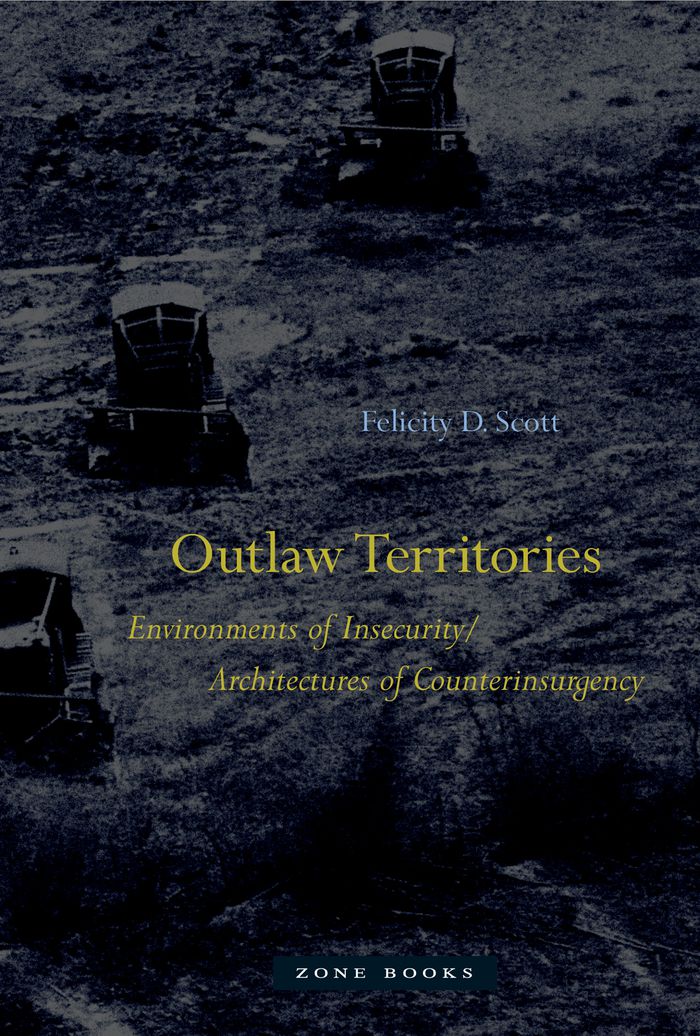
Outlaw Territories: Environments of Insecurity/ Architectures of Counterinsurgency
Actions:
Price:
$56.95
(available to order)
Summary:
In Outlaw Territories, Felicity Scott traces the relation of architecture and urbanism to human unsettlement and territorial insecurity during the 1960s and 1970s. Investigating a set of responses to the growing urban unrest in the developed and developing worlds, Scott revisits an era when the discipline of architecture staked out a role in global environmental governance and the biopolitical management of populations. She describes architecture’s response to the displacement of persons brought on by migration, urbanization, environmental catastrophe, and warfare, and she traces architecture’s relationship to the material, environmental, psychological, and geopolitical transformations brought on by postindustrial technologies and neoliberal capitalism after World War II. At the height of the U.S.-led war in Vietnam and Cambodia, with ongoing decolonization struggles in many parts of the world, architecture not only emerged as a target of political agitation because of its inherent normativity but also became heavily enmeshed with military, legal, and humanitarian apparatuses, participating in scientific and technological research dedicated to questions of international management and security. Once architecture became aligned with a global matrix of forces concerned with the environment, economic development, migration, genocide, and war, its role shifted at times toward providing strategic expertise for institutions born of neoliberal capitalism. Scott investigates this nexus and questions how and to what ends architecture and the environment came to be intimately connected to the expanded exercise of power within the shifting geopolitical frameworks at this time.
Form:
books
books
Publication:
February 2016
February 2016
Subject:
Architectural Theory
Architectural Theory
Form:
books
books

Title:
Architecture | Concordia 1
Architecture | Concordia 1
Actions:
Price:
$15.00
(available to order)
Summary:
Architecture | Concordia's annual publication from 2014-2015.
$15.00
(available to order)
Summary:
Architecture | Concordia's annual publication from 2014-2015.
Title:
Architecture | Concordia 1
Actions:
Price:
$15.00
(available to order)
Summary:
Architecture | Concordia's annual publication from 2014-2015.
Architecture | Concordia 1
Actions:
Price:
$15.00
(available to order)
Summary:
Architecture | Concordia's annual publication from 2014-2015.
Form:
books
books
Publication:
February 2016
February 2016
Form:
books
books

Actions:
Price:
$46.95
(available to order)
Summary:
Concerned with "development as art," this book is written by Roger Zogolovitch, founder of Solidspace. Zogolovitch studied at the Architectural Association in London between 1965 and 1971, and has seen the business of architecture since then from all sides: as architect, client and developer. He set up Solidspace as a vehicle to develop interstitial sites not otherwise(...)
Title:
Shouldn't we all be developers?
Actions:
Price:
$46.95
(available to order)
Summary:
Concerned with "development as art," this book is written by Roger Zogolovitch, founder of Solidspace. Zogolovitch studied at the Architectural Association in London between 1965 and 1971, and has seen the business of architecture since then from all sides: as architect, client and developer. He set up Solidspace as a vehicle to develop interstitial sites not otherwise recognised as suitable for inner city development. ''Shouldn’t we all be developers?'' is written in the first person, as a manifesto for an approach to contemporary development and architecture.
Form:
books
books
Publication:
March 2016
March 2016
Subject:
Architectural Theory
Architectural Theory
Form:
books
books
Price:
$67.95
(available to order)
Summary:
Le Corbusier (1887–1965) is one the most influential architects of the twentieth century. In the Scandinavian countries, his influence is arguably most pronounced in the writings and art of the Danish experimentalist Asger Jorn (1914–1973). Their collaboration on Le Corbusier’s pavilion for the 1937 Paris World Exhibition sparked Jorn’s lifelong fascination with the great(...)
Title:
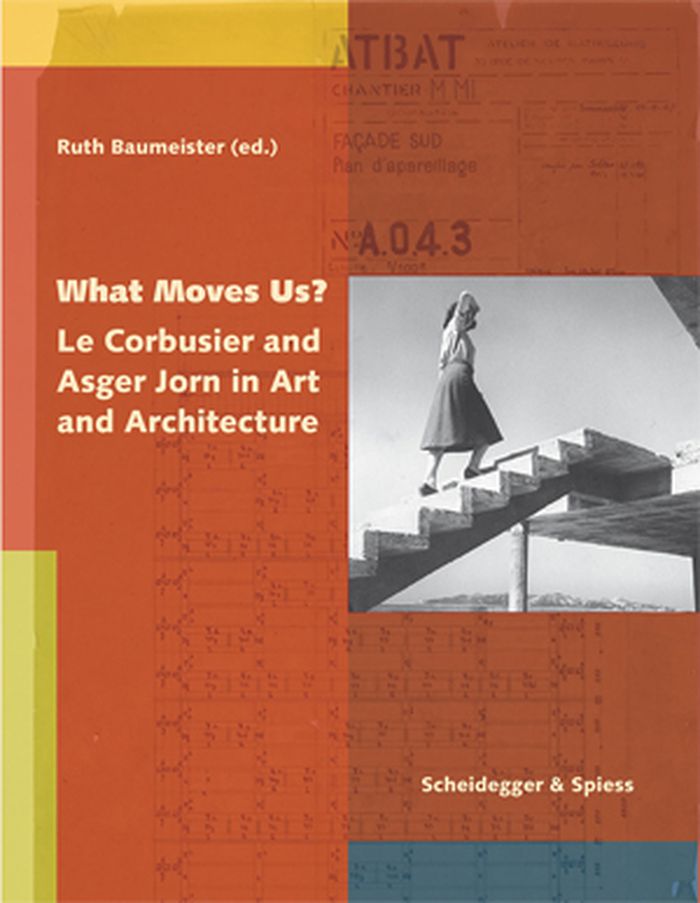
What Moves Us? : Le Corbusier and Asger Jorn in art and architecture
Actions:
Price:
$67.95
(available to order)
Summary:
Le Corbusier (1887–1965) is one the most influential architects of the twentieth century. In the Scandinavian countries, his influence is arguably most pronounced in the writings and art of the Danish experimentalist Asger Jorn (1914–1973). Their collaboration on Le Corbusier’s pavilion for the 1937 Paris World Exhibition sparked Jorn’s lifelong fascination with the great architect and with architecture more broadly as an inherently public form of art. At the same time, Le Corbusier started working in the visual arts and began to move from a rational, technological approach to architecture towards a more poetic, materialist approach. Published in collaboration with the Museum Jorn, Silkeborg, What Moves Us? focuses specifically on the reception of Le Corbusier in Scandinavia, with the relationship between Jorn and Le Corbusier as a thematic thread. The book first highlights the architect’s change of direction and subsequently takes readers through his influence on the young artist. The book’s distinguished contributors explore the relationships that emerged among their artistic theories and practices, including Jorn’s later critique of Le Corbusier. Essays also explore the wider influence of Le Corbusier on Scandinavian architecture and urbanization and consider Le Corbusier alongside the Danish architect Jørn Oberg Utzon and the Aarhus Brutalism movement.
Form:
books
books
Publication:
March 2016
March 2016
Subject:
Architectural Theory
Architectural Theory
Form:
books
books
Actions:
Price:
$50.00
(available to order)
Summary:
In our architectural pursuits, we often seem to be in search of something newer, grander, or more efficient—and this phenomenon is not novel. In the spring of 1910 hundreds of workers labored day and night to demolish the Gillender Building in New York, once the loftiest office tower in the world, in order to make way for a taller skyscraper. The New York Times puzzled(...)
Title:
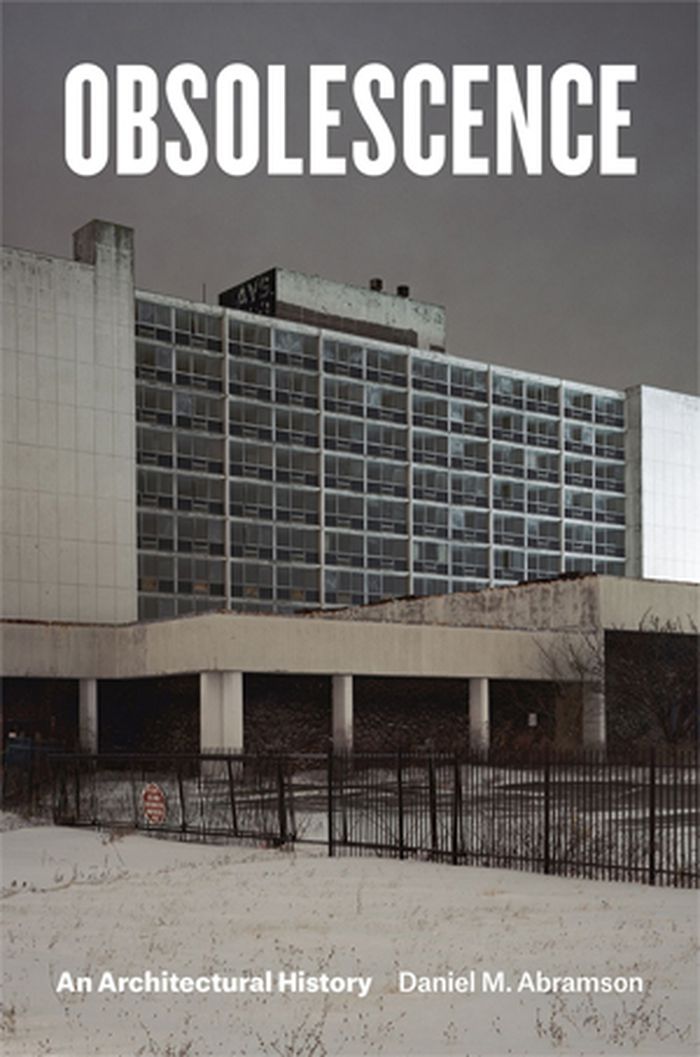
Obsolescence: an architectural history
Actions:
Price:
$50.00
(available to order)
Summary:
In our architectural pursuits, we often seem to be in search of something newer, grander, or more efficient—and this phenomenon is not novel. In the spring of 1910 hundreds of workers labored day and night to demolish the Gillender Building in New York, once the loftiest office tower in the world, in order to make way for a taller skyscraper. The New York Times puzzled over those who would sacrifice the thirteen-year-old structure, “as ruthlessly as though it were some ancient shack.” In New York alone, the Gillender joined the original Grand Central Terminal, the Plaza Hotel, the Western Union Building, and the Tower Building on the list of just one generation’s razed metropolitan monuments.
Form:
books
books
Publication:
March 2016
March 2016
Subject:
Architectural Theory
Architectural Theory


