


2227 Results
Form:
books
books

Price:
$39.95
(available to order)
Summary:
This revised edition of an essential work by Professor Sir Colin St John Wilson, architect of the British Library and one of the most eminent voices in architectural theory and practice of the last 50 years, is here made available to a new readership. The book is a re-edition, updated and with new design and illustrations, of a seminal work, first published in 1995 and(...)
Title:
The other tradition of modern architecture: the uncompleted project
Actions:
Price:
$39.95
(available to order)
Summary:
This revised edition of an essential work by Professor Sir Colin St John Wilson, architect of the British Library and one of the most eminent voices in architectural theory and practice of the last 50 years, is here made available to a new readership. The book is a re-edition, updated and with new design and illustrations, of a seminal work, first published in 1995 and now out of print. With an introduction by Ellis Woodman, Buildings Editor for Building Design magazine. This new edition presents the book in a redesigned format which will be accessible and appealing to the general reader, and priced specifically with a student readership.
Form:
books
books
Publication:
March 2007, London
March 2007, London
Subject:
Architectural Theory
Architectural Theory
Form:
books
books
Actions:
Price:
$18.95
(available to order)
Summary:
In this pithy and provocative book, the noted economist Daniel Cohen offers his analysis of the global shift to a post-industrial era. If it was once natural to speak of industrial society, Cohen writes, it is more difficult to speak meaningfully of post-industrial "society." The solidarity that once characterized industrial society no longer exists. The different(...)
Title:
Three lectures on post-industrial society
Actions:
Price:
$18.95
(available to order)
Summary:
In this pithy and provocative book, the noted economist Daniel Cohen offers his analysis of the global shift to a post-industrial era. If it was once natural to speak of industrial society, Cohen writes, it is more difficult to speak meaningfully of post-industrial "society." The solidarity that once characterized industrial society no longer exists. The different components of large industrial enterprises have been systematically disassembled: tasks considered nonessential are assigned to subcontractors; engineers are grouped together in research sites, distant from the workers. Employees are left exposed and shareholders act to protect themselves. Never has the awareness that we all live in the same world been so strong—and never have the social conditions of existence been so unequal.
Form:
books
books
Publication:
November 2008, Cambridge
November 2008, Cambridge
Subject:
Architectural Theory
Architectural Theory
Form:
books
books
Price:
$18.95
(available to order)
Summary:
Artifacts (including works of architecture) play dual roles; they simultaneously perform functions and carry meaning. Columns support roofs, but while the sturdy Tuscan and Doric types traditionally signify masculinity, the slim and elegant Ionic and Corinthian kinds read as feminine. Words are often inscribed on objects. (On a door: "push" or "pull.") Today, information(...)
Title:
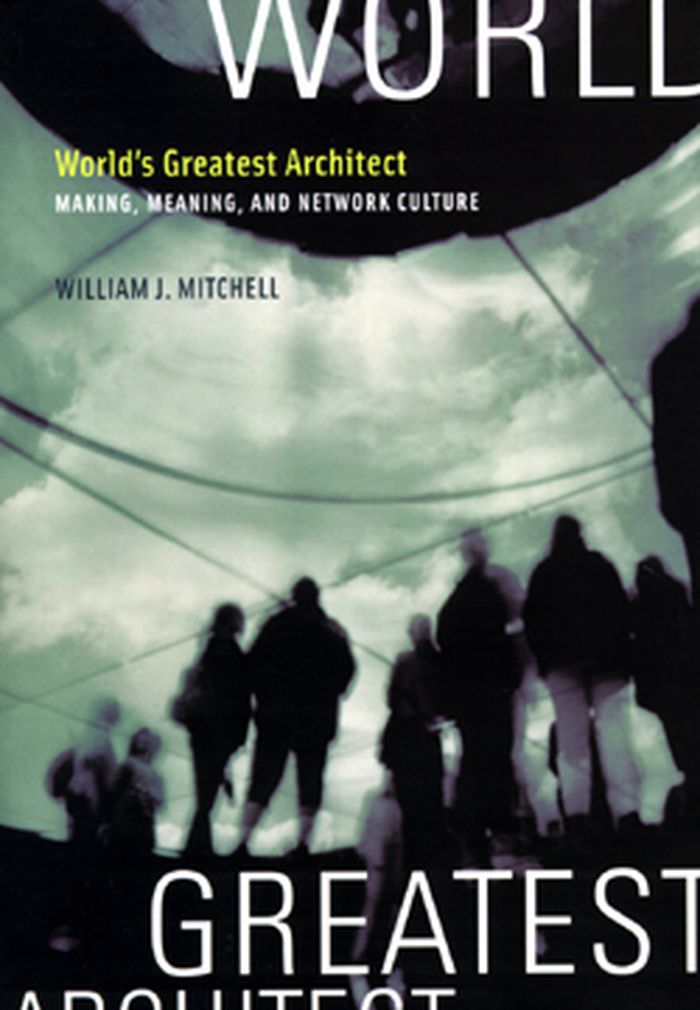
World's greatest architect: making, meaning, and network culture: 0
Actions:
Price:
$18.95
(available to order)
Summary:
Artifacts (including works of architecture) play dual roles; they simultaneously perform functions and carry meaning. Columns support roofs, but while the sturdy Tuscan and Doric types traditionally signify masculinity, the slim and elegant Ionic and Corinthian kinds read as feminine. Words are often inscribed on objects. (On a door: "push" or "pull.") Today, information is digitally encoded (dematerialized) and displayed (rematerialized) to become part of many different objects, at one moment appearing on a laptop screen and at another, perhaps, on a building facade (as in Times Square). Well-designed artifacts succeed in being both useful and meaningful. In "World's Greatest Architect", William Mitchell offers a series of snapshots - short essays and analyses - that examine the systems of function and meaning currently operating in our buildings, cities, and global networks.In his writing, Mitchell makes connections that aren't necessarily obvious but are always illuminating, moving in one essay from Bush-Cheney's abuse of language to Robert Venturi's argument against rigid ideology and in favor of graceful pragmatism. He traces the evolution of Las Vegas from Sin/Sign City to family-friendly resort and residential real estate boomtown. A purchase of chips leads not only to a complementary purchase of beer but to thoughts of Eames chairs (like Pringles) and Gehry (fun to imitate with tortilla chips in refried beans). As for who the world's greatest architect might be, here's a hint: he's also the oldest.
Form:
books
books
Publication:
September 2008, Boston
September 2008, Boston
Subject:
Architectural Theory
Architectural Theory
Form:
books
books

Actions:
Price:
$66.00
(available to order)
Summary:
A milestone in modern thought, Space, Time and Architecture has been reissued many times since its first publication in 1941 and translated into half a dozen languages. In this revised edition of Mr. Giedion's classic work, major sections have been added and there are 81 new illustrations.
Title:
Space, time & architecture: the growth of a new tradition
Actions:
Price:
$66.00
(available to order)
Summary:
A milestone in modern thought, Space, Time and Architecture has been reissued many times since its first publication in 1941 and translated into half a dozen languages. In this revised edition of Mr. Giedion's classic work, major sections have been added and there are 81 new illustrations.
Form:
books
books
Publication:
October 2008, Cambridge, London
October 2008, Cambridge, London
Subject:
Architectural Theory
Architectural Theory
Form:
books
books

Price:
$32.00
(available to order)
Summary:
Born in Tokyo, educated in Japan and the United States, and principal of an internationally acclaimed architectural practice, celebrated architect Fumihiko Maki brings to his writings on architecture a perspective that is both global and uniquely Japanese. Influenced by post-Bauhaus internationalism, sympathetic to the radical urban architectural vision of Team X, and a(...)
Subject:
Architectural Theory
Architectural Theory
Publication:
September 2008, Cambridge, London
September 2008, Cambridge, London
Title:
Nurturing dreams: collected essays on architecture and the city
Actions:
Price:
$32.00
(available to order)
Summary:
Born in Tokyo, educated in Japan and the United States, and principal of an internationally acclaimed architectural practice, celebrated architect Fumihiko Maki brings to his writings on architecture a perspective that is both global and uniquely Japanese. Influenced by post-Bauhaus internationalism, sympathetic to the radical urban architectural vision of Team X, and a participant in the avant-garde movement Metabolism, Maki has been at the forefront of his profession for decades. This collection of essays documents the evolution of architectural modernism and Maki's own fifty-year intellectual journey during a critical period of architectural and urban history.
Form:
books
books
Publication:
September 2008, Cambridge, London
September 2008, Cambridge, London
Subject:
Architectural Theory
Architectural Theory
Form:
books
books

Title:
Lignes secondaires
Lignes secondaires
Actions:
Price:
$24.95
(available to order)
Summary:
Qu'est-ce qu'un lieu ? Un lieu, c'est là où l'on se pose et se repose, se refait. Un répit dans un voyage ou après un trajet. Autour de ce motif, nous est ici proposé un voyage éthno-poétique. Des lieux d'enfance de l'auteur, de ses terrains d'enquête à ceux, fictifs, d'un arpenteurs, des Pyrénées à la Lozère, d'Ardèche en Creuse, reliés entre eux par le tracé improbable(...)
Title:
Lignes secondaires
Actions:
Price:
$24.95
(available to order)
Summary:
Qu'est-ce qu'un lieu ? Un lieu, c'est là où l'on se pose et se repose, se refait. Un répit dans un voyage ou après un trajet. Autour de ce motif, nous est ici proposé un voyage éthno-poétique. Des lieux d'enfance de l'auteur, de ses terrains d'enquête à ceux, fictifs, d'un arpenteurs, des Pyrénées à la Lozère, d'Ardèche en Creuse, reliés entre eux par le tracé improbable de petites lignes de chemin de fer, se dessine au fil des pages un éloge des lieux les plus modestes, ou encore mal-aimés. Une famille d'espaces, où chacun pourra se reconnaître. Ces brefs récits nous offrent un autre regard sur les territoires et sur les paysages. Peut-être une nouvelle façon de voyager.
Form:
books
books
Publication:
January 1900, Grâne
January 1900, Grâne
Subject:
Architectural Theory
Architectural Theory
Form:
books
books

Actions:
Price:
$34.00
(available in store)
Summary:
Learning from Las Vegas, originally published by the MIT Press in 1972, was one of the most influential and controversial architectural books of its era. Thirty-five years later, it remains a perennial bestseller and a definitive theoretical text. Its authors--architects Robert Venturi, Denise Scott Brown, and Steven Izenour--famously used the Las Vegas Strip to argue the(...)
Title:
I am a monument: on learning from Las Vegas
Actions:
Price:
$34.00
(available in store)
Summary:
Learning from Las Vegas, originally published by the MIT Press in 1972, was one of the most influential and controversial architectural books of its era. Thirty-five years later, it remains a perennial bestseller and a definitive theoretical text. Its authors--architects Robert Venturi, Denise Scott Brown, and Steven Izenour--famously used the Las Vegas Strip to argue the virtues of the "ordinary and ugly" above the "heroic and original" qualities of architectural modernism. Learning from Las Vegas not only moved architecture to the center of cultural debates, it changed our ideas about what architecture was and could be.
Form:
books
books
Publication:
September 2008, Cambridge, London
September 2008, Cambridge, London
Subject:
Architectural Theory
Architectural Theory
Form:
books
books

Price:
$25.99
(available to order)
Summary:
From the fourteenth century on, the artifacts of Western visual culture became increasingly violent. Destroyed faces, dissolved human shapes, devilish doppelgängers of the sacred: violence made real people nameless exemplars of formless, hideous horror. In Defaced, the historian Valentin Groebner provides a highly sophisticated historical, cultural, and political model(...)
Title:
Defaced the visual culture of violence in the late middle ages
Actions:
Price:
$25.99
(available to order)
Summary:
From the fourteenth century on, the artifacts of Western visual culture became increasingly violent. Destroyed faces, dissolved human shapes, devilish doppelgängers of the sacred: violence made real people nameless exemplars of formless, hideous horror. In Defaced, the historian Valentin Groebner provides a highly sophisticated historical, cultural, and political model for understanding how late-medieval images and narratives of “indescribable” violence functioned.
Form:
books
books
Publication:
December 2008, New York
December 2008, New York
Subject:
Architectural Theory
Architectural Theory
Form:
books
books
Actions:
Price:
$68.95
(available in store)
Summary:
Drawn from the contributions to the 9th international “Consciousness Reframed” research conference held at University of Applied Arts Vienna in 2008, this publication aims for a timely re-definition of contemporary syncretic inquiries into the fields of art, science, technology and society through theory and practice alike, reframing the concept of innovation in its(...)
Title:
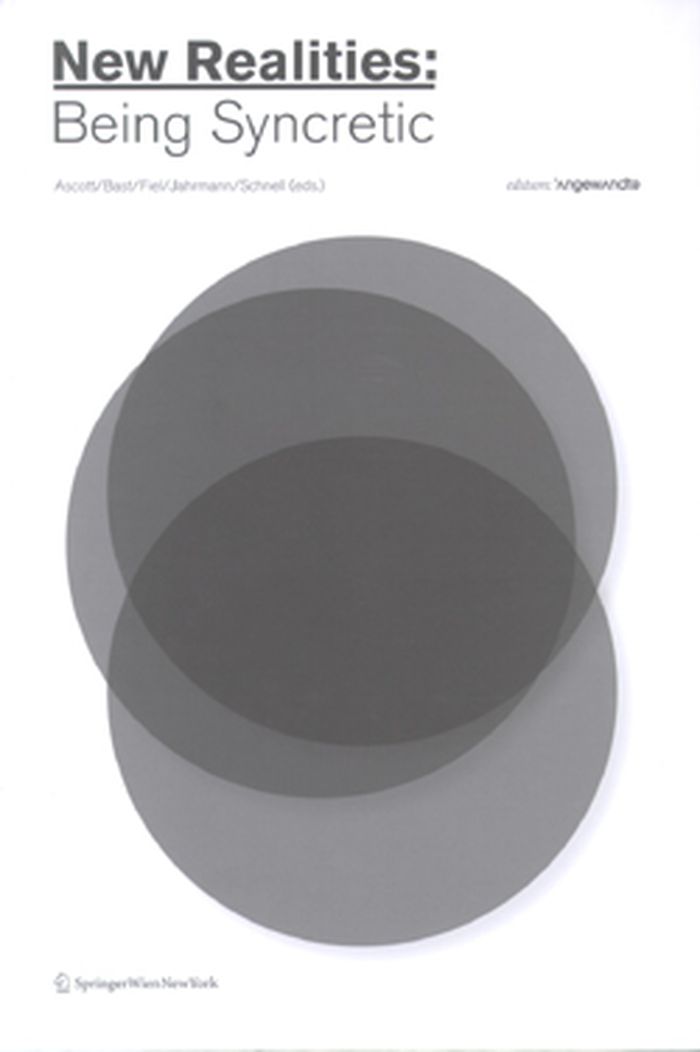
New realities: being syncretic
Actions:
Price:
$68.95
(available in store)
Summary:
Drawn from the contributions to the 9th international “Consciousness Reframed” research conference held at University of Applied Arts Vienna in 2008, this publication aims for a timely re-definition of contemporary syncretic inquiries into the fields of art, science, technology and society through theory and practice alike, reframing the concept of innovation in its relationship to progress and change within the context of perception and its transformation. It comprises a wide range of outstanding expertise and insights of artists, architects, performers, musicians, writers, scientists, and scholars. Among the authors from at least 20 countries are most prominently Roy Ascott, Gerald Bast, Jim Gimzewski, Pierre Lévy, Ryohei Nakatsu, Michael Punt, Ruth Schnell, Barbara Maria Stafford, Alfred Vendl, Victoria Vesna and Peter Weibel. The publication includes full papers and a DVD, edited by Ruth Schnell, with short video extracts of the event and accompanying visual reference.
Form:
books
books
Publication:
November 2008, New York
November 2008, New York
Subject:
Architectural Theory
Architectural Theory
Form:
books
books
Actions:
Price:
$39.95
(available to order)
Summary:
"An industry manager who left his white-blue, silver-shimmering world of car bodywork and dove into the pitch-black, mysterious world of architecture for the first time during a competition asked me one day: "Ms Rau, why do architects actually wear black?" Although I was wearing black and I am an architect I didn’t have a spontaneous answer, so I responded: "Ask the other(...)
Title:
Why do architects wear black?
Actions:
Price:
$39.95
(available to order)
Summary:
"An industry manager who left his white-blue, silver-shimmering world of car bodywork and dove into the pitch-black, mysterious world of architecture for the first time during a competition asked me one day: "Ms Rau, why do architects actually wear black?" Although I was wearing black and I am an architect I didn’t have a spontaneous answer, so I responded: "Ask the other architects!" That was in 2001, and it is why this small book came to be. I have asked the question at an international level and whenever it seems appropriate ever since. The sometimes amusing and other times programmatic or hair-splitting answers I have received over the last seven years are listed chronologically in this little black volume. Read, and please, don’t ask me why architects wear black!"
Form:
books
books
Publication:
October 2008, New York
October 2008, New York
Subject:
Architectural Theory
Architectural Theory


