


2227 Results
Form:
books
books
Title:
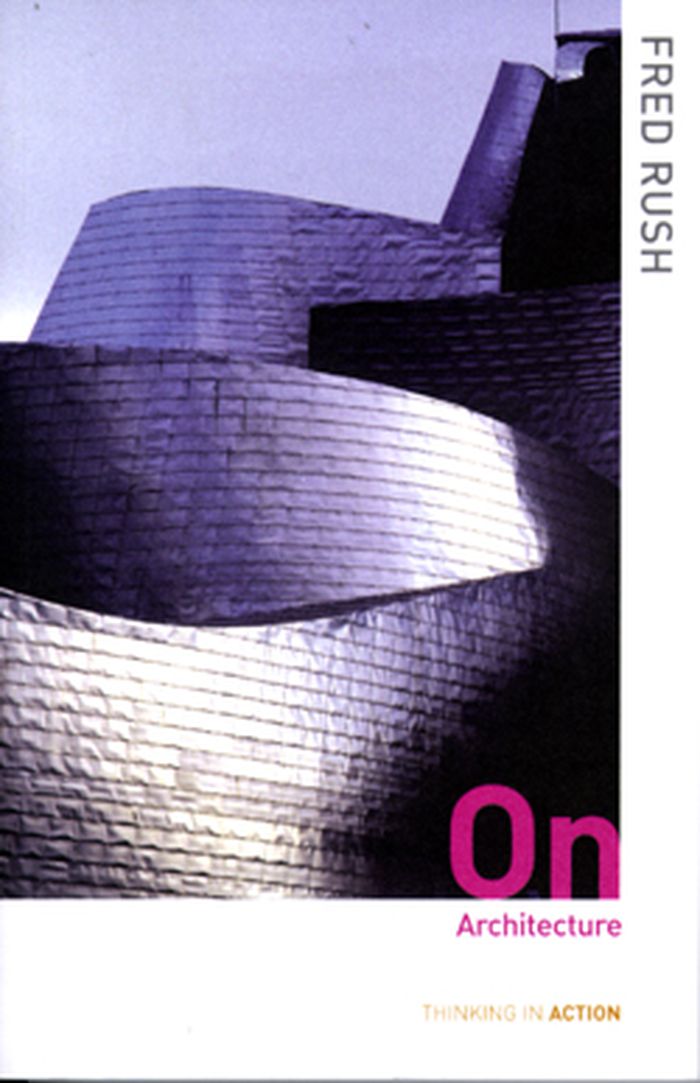
On architecture
On architecture
Actions:
Price:
$25.95
(available to order)
Summary:
In this publication, Fred Rush argues this is a consequence of neglecting the role of the body in architecture. Our encounter with a building is first and foremost a bodily one; buildings are lived-in, communal spaces and their construction reveals a lot about our relation to the environment as a whole. Drawing on examples from architects classic and contemporary such as(...)
Title:
On architecture
Actions:
Price:
$25.95
(available to order)
Summary:
In this publication, Fred Rush argues this is a consequence of neglecting the role of the body in architecture. Our encounter with a building is first and foremost a bodily one; buildings are lived-in, communal spaces and their construction reveals a lot about our relation to the environment as a whole. Drawing on examples from architects classic and contemporary such as Le Corbusier and Frank Lloyd Wright, and exploring the significance of buildings in relation to film and music and philosophers such as Heidegger and Merleau-Ponty, Fred Rush argues that philosophical reflection on building can tell us something important about the human condition.
Form:
books
books
Publication:
July 2008, New York, London
July 2008, New York, London
Subject:
Architectural Theory
Architectural Theory
Form:
books
books

Title:
L'idéologie structuraliste
L'idéologie structuraliste
Actions:
Price:
$14.95
(available to order)
Summary:
« Le structuralisme, c'est l'idéologie d'une période où la pratique s'inspire du concept de structure dans les cadres du mode de production et de rapports sociaux de production déterminés. La pratique sociale est aussi une pratique politique: celle de l'État. » Henri Lefebvre
Title:
L'idéologie structuraliste
Actions:
Price:
$14.95
(available to order)
Summary:
« Le structuralisme, c'est l'idéologie d'une période où la pratique s'inspire du concept de structure dans les cadres du mode de production et de rapports sociaux de production déterminés. La pratique sociale est aussi une pratique politique: celle de l'État. » Henri Lefebvre
Form:
books
books
Publication:
January 1973, Paris
January 1973, Paris
Subject:
Architectural Theory
Architectural Theory
Form:
books
books
Actions:
Price:
$49.95
(available to order)
Summary:
In recent years 'culture' has become a central concern across a wide range of disciplines. This book introduces the main substantive and theoretical strands of this 'turn to culture' through the medium of a particular case study: that of the Sony Walkman. Using the example of the Walkman, this book indicates how and why cultural practices and institutions have come to(...)
Subject:
Architectural Theory
Architectural Theory
Publication:
February 1997, London, Thousand Oaks, New Delhi
February 1997, London, Thousand Oaks, New Delhi
Title:
Doing cultural studies: the story of the Sony Walkman
Actions:
Price:
$49.95
(available to order)
Summary:
In recent years 'culture' has become a central concern across a wide range of disciplines. This book introduces the main substantive and theoretical strands of this 'turn to culture' through the medium of a particular case study: that of the Sony Walkman. Using the example of the Walkman, this book indicates how and why cultural practices and institutions have come to play such an important role in our lives, and introduces some of the central ideas, concepts and methods of analysis involved in conducting cultural studies.
Form:
books
books
Publication:
February 1997, London, Thousand Oaks, New Delhi
February 1997, London, Thousand Oaks, New Delhi
Subject:
Architectural Theory
Architectural Theory
Form:
books
books
Actions:
Price:
$30.00
(available to order)
Summary:
Rebecca Solnit has made a vocation of journeying into difficult territory and reporting back, as an environmentalist, antiglobalization activist, and public intellectual. Storming the Gates of Paradise, an anthology of her essential essays from the past ten years, takes the reader from the Pyrenees to the U.S.-Mexican border, from San Francisco to London, from open sky to(...)
Title:
Storming the gates of paradise: Landscapes for politics
Actions:
Price:
$30.00
(available to order)
Summary:
Rebecca Solnit has made a vocation of journeying into difficult territory and reporting back, as an environmentalist, antiglobalization activist, and public intellectual. Storming the Gates of Paradise, an anthology of her essential essays from the past ten years, takes the reader from the Pyrenees to the U.S.-Mexican border, from San Francisco to London, from open sky to the deepest mines, and from the antislavery struggles of two hundred years ago to today's street protests. The nearly forty essays collected here comprise a unique guidebook to the American landscape after the millennium–not just the deserts, skies, gardens, and wilderness areas that have long made up Solnit's subject matter, but the social landscape of democracy and repression, of borders, ruins, and protests. She ventures into territories as dark as prison and as sublime as a broad vista, revealing beauty in the harshest landscape and political struggle in the most apparently serene view. Her introduction sets the tone and the book's overarching themes as she describes Thoreau, leaving the jail cell where he had been confined for refusing to pay war taxes and proceeding directly to his favorite huckleberry patch. In this way she links pleasure to politics, brilliantly demonstrating that the path to paradise has often run through prison.
Form:
books
books
Publication:
May 2008, Berkeley
May 2008, Berkeley
Subject:
Architectural Theory
Architectural Theory
Form:
books
books

Price:
$31.50
(available to order)
Summary:
This ambitious study uses the concept of the familiar and the avant-garde practice of defamiliarization to reexamine some of the most important buildings of the twentieth century. The Familiar and the Unfamiliar in Twentieth-Century Architecture examines the work--written and built--of four seminal twentieth-century architects and firms: Frank Lloyd Wright, Le Corbusier,(...)
Title:
The familiar and the unfamiliar in twentieth-century architecture
Actions:
Price:
$31.50
(available to order)
Summary:
This ambitious study uses the concept of the familiar and the avant-garde practice of defamiliarization to reexamine some of the most important buildings of the twentieth century. The Familiar and the Unfamiliar in Twentieth-Century Architecture examines the work--written and built--of four seminal twentieth-century architects and firms: Frank Lloyd Wright, Le Corbusier, Aldo Rossi, and the partnership of Robert Venturi and Denise Scott Brown. In approaching the history of twentieth-century Western architecture from the perspective of the architectural subject--the person architects imagine experiencing their work--Jean La Marche reveals new insights into the ways humans are imagined in relation to architecture.
Form:
books
books
Publication:
August 2008, Chicago
August 2008, Chicago
Subject:
Architectural Theory
Architectural Theory
Form:
books
books
Actions:
Price:
$36.95
(available to order)
Summary:
"Logics of worlds" is the long-awaited sequel to Alain Badiou's much-heralded masterpiece, "Being and event". Unafraid to resurrect and reinvent the classical themes of philosophy, Badiou gives new meaning to concepts such as object, body and relation, mobilising them in arresting studies that range from the architectural planning of Brasilia to contemporary astronomy,(...)
Title:
Logics of worlds : being and event, 2
Actions:
Price:
$36.95
(available to order)
Summary:
"Logics of worlds" is the long-awaited sequel to Alain Badiou's much-heralded masterpiece, "Being and event". Unafraid to resurrect and reinvent the classical themes of philosophy, Badiou gives new meaning to concepts such as object, body and relation, mobilising them in arresting studies that range from the architectural planning of Brasilia to contemporary astronomy, and confronting himself with towering philosophical counterparts (Leibniz, Kant, Hegel, Kierkegaard, Lacan, Deleuze). The book culminates in an impassioned call to ‘live for an Idea’.
Form:
books
books
Publication:
October 2008
October 2008
Subject:
Architectural Theory
Architectural Theory
Form:
books
books
Actions:
Price:
$46.00
(available to order)
Summary:
Is architecture art? This vexed question has been posed since the 1700s, when—breaking from earlier centuries in which there were no divisions between visual artist, architect, and engineer—architects and laypeople alike began to see these vocations as distinct. Exploring how this separation of roles occurred, and how in the twentieth century arts and architecture started(...)
Title:
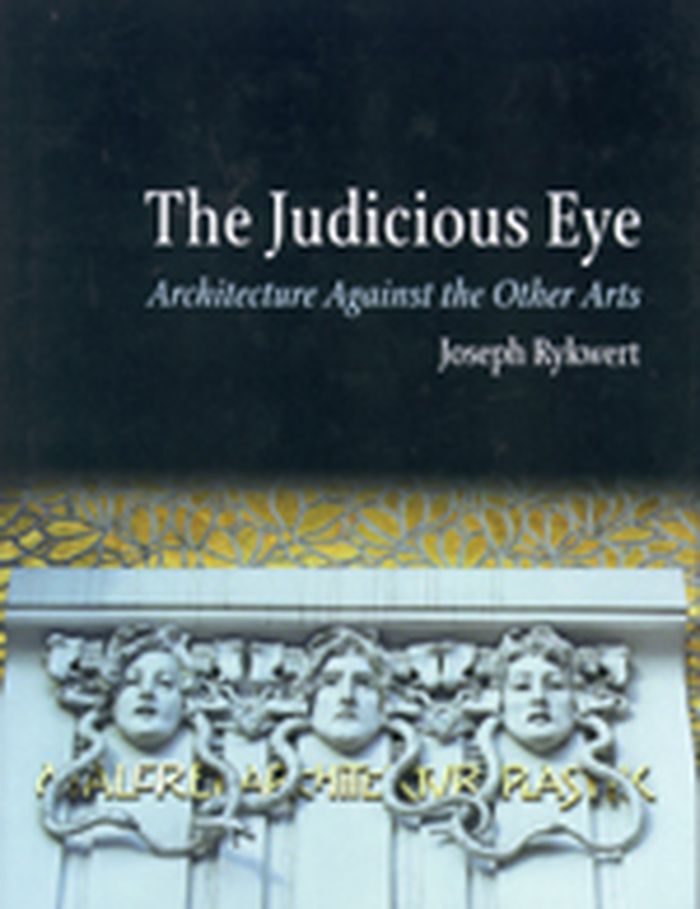
The judicious eye: architecture against the other arts
Actions:
Price:
$46.00
(available to order)
Summary:
Is architecture art? This vexed question has been posed since the 1700s, when—breaking from earlier centuries in which there were no divisions between visual artist, architect, and engineer—architects and laypeople alike began to see these vocations as distinct. Exploring how this separation of roles occurred, and how in the twentieth century arts and architecture started to come together again, The Judicious Eye is the definitive history of the relationships between painting, sculpture, and architecture as they have shifted over the past three centuries. Joseph Rykwert locates the first major shift during the Enlightenment, when key philosophers drew implied and explicit distinctions between the visual arts and architecture. As time progressed, architects came to see themselves as part of an established profession, while visual artists increasingly moved toward society’s margins, deepening the chasm between them. Detailing the eventual attempts to heal this breach, Rykwert concludes in the mid-twentieth century, when the artistic avant-garde turned to architects in its battle against a stagnant society. The Judicious Eye, then, provides a necessary foundation for understanding architecture and visual art in the twenty-first century, as they continue to break new ground by growing closer to their intertwined roots.
Form:
books
books
Publication:
May 2008, Chicago, London
May 2008, Chicago, London
Subject:
Architectural Theory
Architectural Theory
Form:
books
books

Actions:
Price:
$29.95
(available to order)
Summary:
In Becoming Beside Ourselves, the renowed cultural theorist and mathematician Brian Rotman turns his attention to alphabetic writing or the inscription of spoken language. Contending that all media configure what they mediate, he maintains that alphabetic writing has long served as the West's dominant cognitive technology. Its logic and limitations have shaped thought and(...)
Title:
Becoming beside ourselves: the alphabet, ghosts, and distributed human being
Actions:
Price:
$29.95
(available to order)
Summary:
In Becoming Beside Ourselves, the renowed cultural theorist and mathematician Brian Rotman turns his attention to alphabetic writing or the inscription of spoken language. Contending that all media configure what they mediate, he maintains that alphabetic writing has long served as the West's dominant cognitive technology. Its logic and limitations have shaped thought and affect from its inception until the present. Now its grip on Western consciousness is giving way to virtual technologies and networked media, which are reconfiguring human subjectivity just as alphabetic texts have done for millenia. Brian Rotman is Distinguished Humanities Professor in the Department of Comparative Studies at Ohio University.
Form:
books
books
Publication:
May 2008, Durham
May 2008, Durham
Subject:
Architectural Theory
Architectural Theory
Form:
books
books
Actions:
Price:
$18.95
(available in store)
Summary:
The creative forms of literature and architecture appear to be distinct, one constructing a world on the page, the other producing the world in which we live. It is a conscious act to read literature, but the effects of architecture can pass by unnoticed. Yet, despite such obvious differences, writers and architects share a dynamic with their readers and visitors that is(...)
Subject:
Architectural Theory
Architectural Theory
Publication:
April 2008, Minneapolis
April 2008, Minneapolis
Title:
Writing and seeing architecture
Actions:
Price:
$18.95
(available in store)
Summary:
The creative forms of literature and architecture appear to be distinct, one constructing a world on the page, the other producing the world in which we live. It is a conscious act to read literature, but the effects of architecture can pass by unnoticed. Yet, despite such obvious differences, writers and architects share a dynamic with their readers and visitors that is unpredictably similar. Writing and Seeing Architecture unveils a candid conversation between Christian de Portzamparc, celebrated French architect, and influential theorist Philippe Sollers that challenges us to see the analogous nature of writing and architecture. Their fascinating discussion offers a renewal of visionary architectural thinking by invoking past literary ideals that sought to liberate society through the reinvention of writing itself. Urging that new rules be set for each creation rather than resorting to limitations of the capitalist society, the authors’ daring confrontation of the interactions between writing and designing a space forcefully demonstrates the importance of intellectuals and practitioners intervening in the public sphere.
Form:
books
books
Publication:
April 2008, Minneapolis
April 2008, Minneapolis
Subject:
Architectural Theory
Architectural Theory
Form:
books
books
Actions:
Price:
$60.00
(available to order)
Summary:
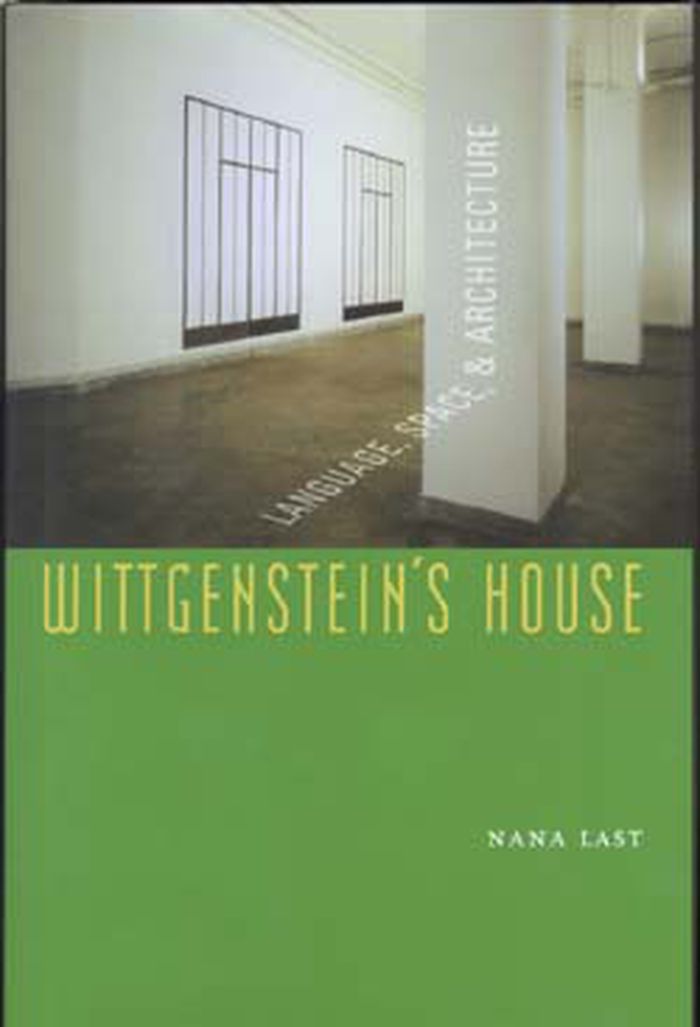
Wittgenstein's House reads Wittgenstein's his two main philosophical texts, Tractatus Logico-Philosophicus and Philosophical Investigations, in relation to an experience that intervened between them: his design and construction of the Stonborough-Wittgenstein house in Vienna. Arguing that the practice of architecture occupies not just a historical position between(...)
Title:
Wittgenstein's house: language, space, & architecture
Actions:
Price:
$60.00
(available to order)
Summary:
Wittgenstein's House reads Wittgenstein's his two main philosophical texts, Tractatus Logico-Philosophicus and Philosophical Investigations, in relation to an experience that intervened between them: his design and construction of the Stonborough-Wittgenstein house in Vienna. Arguing that the practice of architecture occupies not just a historical position between Wittgenstein's early and late philosophy, but a conceptual position as well, the book demonstrates that Wittgenstein's practice of architecture constitutes a fundamental component in the development of his philosophy of language from its early to late phases. The book advances the radical proposition that the field in which architecture and philosophy operate includes linguistic and spatial practices. It develops innovative forms of interdisciplinary analyses to demonstrate that the philosophical positions put forth by Wittgenstein's two main works are literally unthinkable outside of their respective conceptions of space: the view from above in the early work and the view from within constructed by the late work. To examine the manner in which Wittgenstein's practice of architecture insinuated itself into his philosophy, the author interweaves in-depth analyses of the spatial constructs underpinning the early and late philosophies with conceptual, formal and operative discussions of the design of the Stonborough-Wittgenstein house. Together these discussions reveal how Wittgenstein's practice of architecture engaged philosophical concepts, through which it influenced Wittgenstein's philosophy of language. At the heart of this approach is the finding that the philosophical concepts at the core of Wittgenstein's philosophy areindeed spatial ones, including his concerns with the limits of language, the boundary between showing and saying, the intricate textual numbering systems he devises, the relationship between the interiority of the subject and the publicness of language, and the formative principle of family resemblance.
Form:
books
books
Publication:
May 2008, New York
May 2008, New York
Subject:
Architectural Theory
Architectural Theory


