


2227 Results
Form:
books
books
Actions:
Price:
$27.50
(available in store)
Summary:
L'architecture est à la mode, et pourtant elle n'a jamais autant manqué à notre culture commune. A l'heure où des objets architecturaux spectaculaires mais coupés de la vie sociale semblent l'emporter sur le rêve collectif, La pensée de midi a convié architectes, urbanistes, paysagistes, designers, historiens et écrivains à faire le point sur notre manière d'habiter le(...)
$27.50
(available in store)
Summary:
L'architecture est à la mode, et pourtant elle n'a jamais autant manqué à notre culture commune. A l'heure où des objets architecturaux spectaculaires mais coupés de la vie sociale semblent l'emporter sur le rêve collectif, La pensée de midi a convié architectes, urbanistes, paysagistes, designers, historiens et écrivains à faire le point sur notre manière d'habiter le(...)
Title:
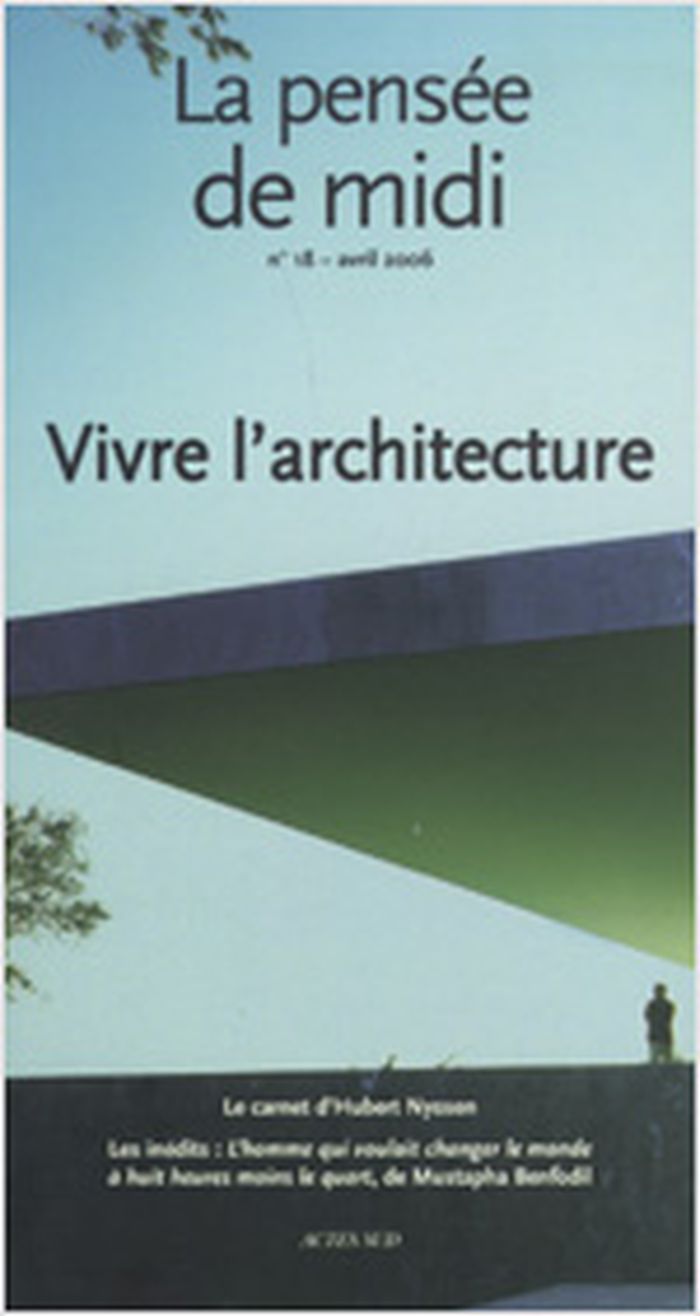
La pensée de midi no. 18 : vivre l'architecture
Actions:
Price:
$27.50
(available in store)
Summary:
L'architecture est à la mode, et pourtant elle n'a jamais autant manqué à notre culture commune. A l'heure où des objets architecturaux spectaculaires mais coupés de la vie sociale semblent l'emporter sur le rêve collectif, La pensée de midi a convié architectes, urbanistes, paysagistes, designers, historiens et écrivains à faire le point sur notre manière d'habiter le monde, singulièrement en Méditerranée. Un dossier pour réinventer d'autres façons de vivre ensemble dans l'espace urbain.
La pensée de midi no. 18 : vivre l'architecture
Actions:
Price:
$27.50
(available in store)
Summary:
L'architecture est à la mode, et pourtant elle n'a jamais autant manqué à notre culture commune. A l'heure où des objets architecturaux spectaculaires mais coupés de la vie sociale semblent l'emporter sur le rêve collectif, La pensée de midi a convié architectes, urbanistes, paysagistes, designers, historiens et écrivains à faire le point sur notre manière d'habiter le monde, singulièrement en Méditerranée. Un dossier pour réinventer d'autres façons de vivre ensemble dans l'espace urbain.
Form:
books
books
Publication:
April 2006, Arles
April 2006, Arles
Subject:
Architectural Theory
Architectural Theory
Form:
books
books
Price:
$39.95
(available in store)
Summary:
En Europe un débat existe qui vise à comprendre si l'on peut, aujourd'hui, parler de recherche sur le projet en architecture. Et encore, quelle devrait être une recherche sur le projet ? Est-il possible de trouver une relation entre la recherche et la pratique du projet ? " Les machines du projet " constituent la réponse que les auteurs donnent aux questions posées à(...)
$39.95
(available in store)
Summary:
En Europe un débat existe qui vise à comprendre si l'on peut, aujourd'hui, parler de recherche sur le projet en architecture. Et encore, quelle devrait être une recherche sur le projet ? Est-il possible de trouver une relation entre la recherche et la pratique du projet ? " Les machines du projet " constituent la réponse que les auteurs donnent aux questions posées à(...)
Subject:
Architectural Theory
Architectural Theory
Publication:
April 2006, Paris
April 2006, Paris
Title:
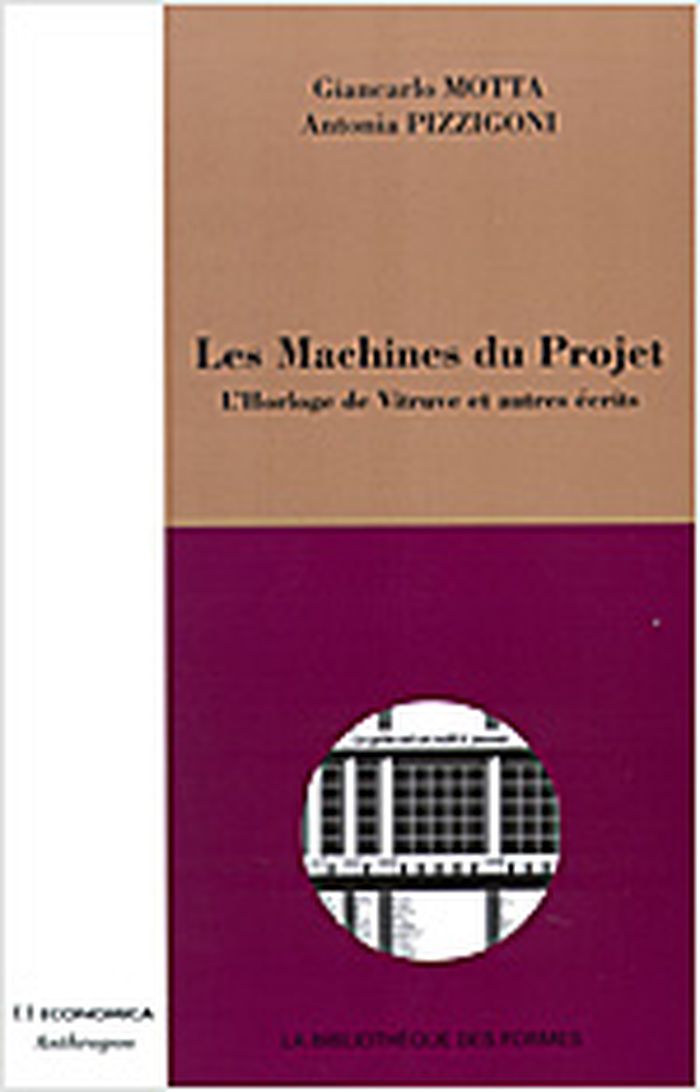
Les machines du projet : l'horloge de Vitruve et autres écrits
Actions:
Price:
$39.95
(available in store)
Summary:
En Europe un débat existe qui vise à comprendre si l'on peut, aujourd'hui, parler de recherche sur le projet en architecture. Et encore, quelle devrait être une recherche sur le projet ? Est-il possible de trouver une relation entre la recherche et la pratique du projet ? " Les machines du projet " constituent la réponse que les auteurs donnent aux questions posées à partir d'un travail de recherche d'une dizaine d'années. Ce livre veut documenter cette recherche qui considère le projet surtout comme une manière d'étudier l'architecture ainsi que comme un instrument pour la produire. Reconnaître le rôle que les techniques jouent dans le projet, en particulier celles de la représentation, ouvre le chemin à l'étude de son fonctionnement. La nature technique de ses procédés permet de parler du projet comme d'une " machine ". De cette machine dépend la possibilité du projet de se situer au centre de l'instabilité et de régir les contradictions entre nouveauté et tradition, entre généralités et apports personnels, entre archétypes et solutions que la pensée moderne a introduites dans l'architecture. C'est le cas des relations entre la tradition du projet d'architecture et le rapide développement des technologies informatiques.
Les machines du projet : l'horloge de Vitruve et autres écrits
Actions:
Price:
$39.95
(available in store)
Summary:
En Europe un débat existe qui vise à comprendre si l'on peut, aujourd'hui, parler de recherche sur le projet en architecture. Et encore, quelle devrait être une recherche sur le projet ? Est-il possible de trouver une relation entre la recherche et la pratique du projet ? " Les machines du projet " constituent la réponse que les auteurs donnent aux questions posées à partir d'un travail de recherche d'une dizaine d'années. Ce livre veut documenter cette recherche qui considère le projet surtout comme une manière d'étudier l'architecture ainsi que comme un instrument pour la produire. Reconnaître le rôle que les techniques jouent dans le projet, en particulier celles de la représentation, ouvre le chemin à l'étude de son fonctionnement. La nature technique de ses procédés permet de parler du projet comme d'une " machine ". De cette machine dépend la possibilité du projet de se situer au centre de l'instabilité et de régir les contradictions entre nouveauté et tradition, entre généralités et apports personnels, entre archétypes et solutions que la pensée moderne a introduites dans l'architecture. C'est le cas des relations entre la tradition du projet d'architecture et le rapide développement des technologies informatiques.
Form:
books
books
Publication:
April 2006, Paris
April 2006, Paris
Subject:
Architectural Theory
Architectural Theory
Form:
books
books
Actions:
Price:
$19.95
(available to order)
Summary:
La main de Kahn, levée à mi-distance entre lui et nous, représente un lien mythique entre l'imagination de l'architecte et son oeuvre construit (la main du charpentier et celle du maçon viennent aussi à l'esprit par proximité professionnelle). Mais la main de Kahn est ouverte, vide, libérée des affres de la construction, libre de tout crayon ou té. Comme le mouvement d'un(...)
$19.95
(available to order)
Summary:
La main de Kahn, levée à mi-distance entre lui et nous, représente un lien mythique entre l'imagination de l'architecte et son oeuvre construit (la main du charpentier et celle du maçon viennent aussi à l'esprit par proximité professionnelle). Mais la main de Kahn est ouverte, vide, libérée des affres de la construction, libre de tout crayon ou té. Comme le mouvement d'un(...)
Title:
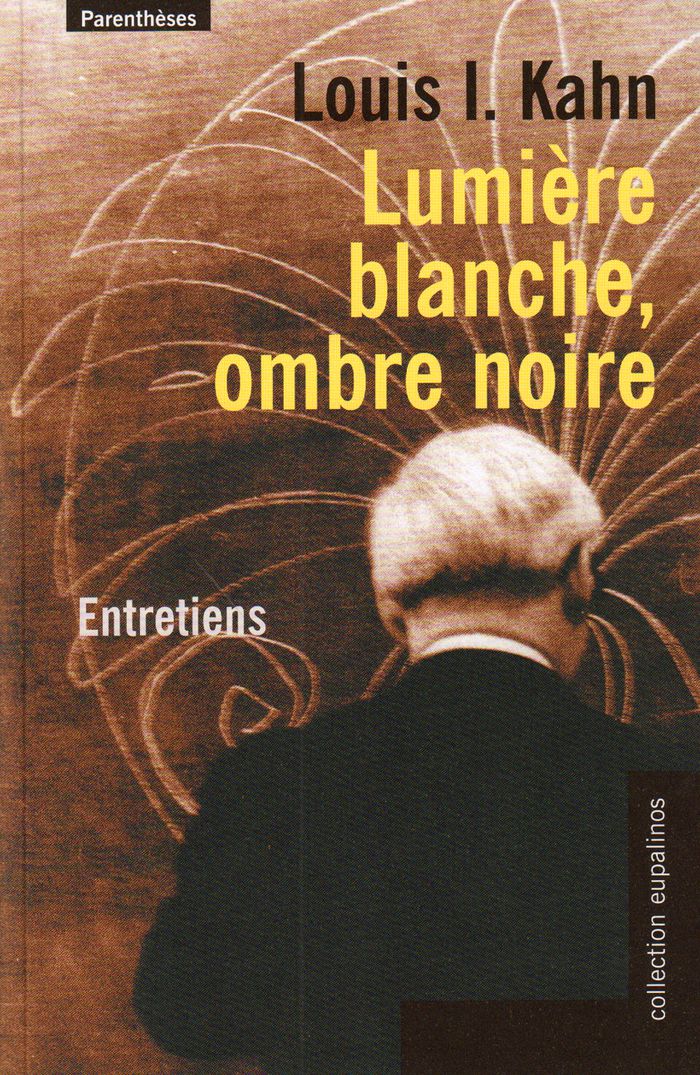
Lumière blanche, ombre noire : entretiens
Actions:
Price:
$19.95
(available to order)
Summary:
La main de Kahn, levée à mi-distance entre lui et nous, représente un lien mythique entre l'imagination de l'architecte et son oeuvre construit (la main du charpentier et celle du maçon viennent aussi à l'esprit par proximité professionnelle). Mais la main de Kahn est ouverte, vide, libérée des affres de la construction, libre de tout crayon ou té. Comme le mouvement d'un oiseau, ce geste de la main s'impose, promesse non d'une construction, mais du construit en utilisation, liaison synoptique entre le sujet et l'objet. Une telle architecture en soi est tout sauf un pauvre fac-similé de main. Dans la main réside le rêve ultime d'une architecture vivante.
Lumière blanche, ombre noire : entretiens
Actions:
Price:
$19.95
(available to order)
Summary:
La main de Kahn, levée à mi-distance entre lui et nous, représente un lien mythique entre l'imagination de l'architecte et son oeuvre construit (la main du charpentier et celle du maçon viennent aussi à l'esprit par proximité professionnelle). Mais la main de Kahn est ouverte, vide, libérée des affres de la construction, libre de tout crayon ou té. Comme le mouvement d'un oiseau, ce geste de la main s'impose, promesse non d'une construction, mais du construit en utilisation, liaison synoptique entre le sujet et l'objet. Une telle architecture en soi est tout sauf un pauvre fac-similé de main. Dans la main réside le rêve ultime d'une architecture vivante.
Form:
books
books
Publication:
October 2016
October 2016
Subject:
Architectural Theory
Architectural Theory
Form:
books
books
Actions:
Price:
$19.95
(available to order)
Summary:
Convertir l’optimisme en danger et laisser celui-ci s’exprimer forment un ensemble d’opérations dont on peut dire qu’il a toujours figuré au coeur du programme architectural de Rem Koolhaas. Cependant, il n’a jamais été aussi clairement explicité que dans ce livre-manifeste. L’optimisme de Koolhaas est dual : il nous affirme non seulement que l’architecture doit se(...)
$19.95
(available to order)
Summary:
Convertir l’optimisme en danger et laisser celui-ci s’exprimer forment un ensemble d’opérations dont on peut dire qu’il a toujours figuré au coeur du programme architectural de Rem Koolhaas. Cependant, il n’a jamais été aussi clairement explicité que dans ce livre-manifeste. L’optimisme de Koolhaas est dual : il nous affirme non seulement que l’architecture doit se(...)
Title:
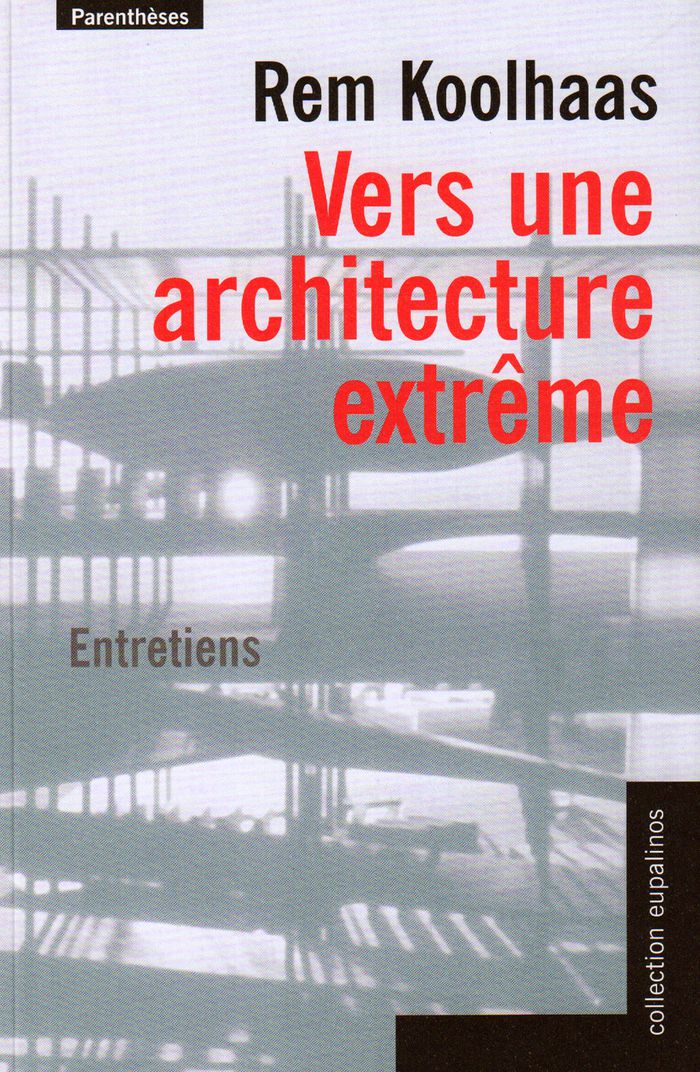
Vers une architecture extrême
Actions:
Price:
$19.95
(available to order)
Summary:
Convertir l’optimisme en danger et laisser celui-ci s’exprimer forment un ensemble d’opérations dont on peut dire qu’il a toujours figuré au coeur du programme architectural de Rem Koolhaas. Cependant, il n’a jamais été aussi clairement explicité que dans ce livre-manifeste. L’optimisme de Koolhaas est dual : il nous affirme non seulement que l’architecture doit se détourner de la vanité et du narcissisme confortables qui continuent à la protéger des réalités aléatoires de la bienséance historique, mais aussi que la spéculation architecturale doit se recentrer pragmatiquement, sur « la découverte de nouveaux potentiels dans les conditions existantes » sur « le cadrage des transformations inévitables et des forces de la modernisation, et la recherche de leurs articulations ». L’architecture sérieuse doit concrètement désirer être dangereuse.
Vers une architecture extrême
Actions:
Price:
$19.95
(available to order)
Summary:
Convertir l’optimisme en danger et laisser celui-ci s’exprimer forment un ensemble d’opérations dont on peut dire qu’il a toujours figuré au coeur du programme architectural de Rem Koolhaas. Cependant, il n’a jamais été aussi clairement explicité que dans ce livre-manifeste. L’optimisme de Koolhaas est dual : il nous affirme non seulement que l’architecture doit se détourner de la vanité et du narcissisme confortables qui continuent à la protéger des réalités aléatoires de la bienséance historique, mais aussi que la spéculation architecturale doit se recentrer pragmatiquement, sur « la découverte de nouveaux potentiels dans les conditions existantes » sur « le cadrage des transformations inévitables et des forces de la modernisation, et la recherche de leurs articulations ». L’architecture sérieuse doit concrètement désirer être dangereuse.
Form:
books
books
Publication:
October 2016
October 2016
Subject:
Architectural Theory
Architectural Theory
Form:
books
books
Title:
Guy Debord
Guy Debord
Actions:
Price:
$21.50
(available to order)
Summary:
Guy Debord (1931–94) was one of the most important and intriguing intellectual figures of the twentieth century. Filmmaker and poet, urban critic and political theorist, adventurer and activist extraordinaire during Paris’s May 1968 uprisings, Debord was simultaneously behind and ahead of his times. Best-known as guru of the avant-garde revolutionary movement the(...)
$21.50
(available to order)
Summary:
Guy Debord (1931–94) was one of the most important and intriguing intellectual figures of the twentieth century. Filmmaker and poet, urban critic and political theorist, adventurer and activist extraordinaire during Paris’s May 1968 uprisings, Debord was simultaneously behind and ahead of his times. Best-known as guru of the avant-garde revolutionary movement the(...)
Title:
Guy Debord
Actions:
Price:
$21.50
(available to order)
Summary:
Guy Debord (1931–94) was one of the most important and intriguing intellectual figures of the twentieth century. Filmmaker and poet, urban critic and political theorist, adventurer and activist extraordinaire during Paris’s May 1968 uprisings, Debord was simultaneously behind and ahead of his times. Best-known as guru of the avant-garde revolutionary movement the Situationist International (1957-72), and for a classic indictment of post-war capitalist consumerism The Society of the Spectacle (1967), Debord’s life and work remains fascinating to this day. Yet the man himself remained elusive and enigmatic throughout his life. Master urban tactician in the 1950s, political muckraker, organizer and theorist during the 1960s, vagabond throughout the 1970s, fleeing to Spain and Italy, he lived as a recluse during the 1980s and early 1990s in an isolated farmhouse in Champot (Auvergne), behind a high stone wall. Guy Debord crosses over that Champot wall, pushes back Debord’s shutters and peers through his windows. It crosses his threshold, drinks his wine, and listens to him talk. Andrew Merrifield focuses on the particulars of Debord’s life, shedding light on this admirable yet apparently impenetrable figure, a free spirit who was radically at odds with life but at the same time loved many things in it, and thought them worth fighting for. The book reveals the dynamics of the man, his ideas, and his times – which have much to say to our own, equally troubled times. The ideas of Guy Debord, who died only 10 years ago, continue to expose the fragility of our democracy and the mismatch between people and political power today; this book shows that the lessons of Debord are as fresh, subversive, and relevant now as they were forty years ago.
Guy Debord
Actions:
Price:
$21.50
(available to order)
Summary:
Guy Debord (1931–94) was one of the most important and intriguing intellectual figures of the twentieth century. Filmmaker and poet, urban critic and political theorist, adventurer and activist extraordinaire during Paris’s May 1968 uprisings, Debord was simultaneously behind and ahead of his times. Best-known as guru of the avant-garde revolutionary movement the Situationist International (1957-72), and for a classic indictment of post-war capitalist consumerism The Society of the Spectacle (1967), Debord’s life and work remains fascinating to this day. Yet the man himself remained elusive and enigmatic throughout his life. Master urban tactician in the 1950s, political muckraker, organizer and theorist during the 1960s, vagabond throughout the 1970s, fleeing to Spain and Italy, he lived as a recluse during the 1980s and early 1990s in an isolated farmhouse in Champot (Auvergne), behind a high stone wall. Guy Debord crosses over that Champot wall, pushes back Debord’s shutters and peers through his windows. It crosses his threshold, drinks his wine, and listens to him talk. Andrew Merrifield focuses on the particulars of Debord’s life, shedding light on this admirable yet apparently impenetrable figure, a free spirit who was radically at odds with life but at the same time loved many things in it, and thought them worth fighting for. The book reveals the dynamics of the man, his ideas, and his times – which have much to say to our own, equally troubled times. The ideas of Guy Debord, who died only 10 years ago, continue to expose the fragility of our democracy and the mismatch between people and political power today; this book shows that the lessons of Debord are as fresh, subversive, and relevant now as they were forty years ago.
Form:
books
books
Publication:
October 2005, London
October 2005, London
Subject:
Architectural Theory
Architectural Theory
Form:
books
books
Price:
$18.00
(available to order)
Summary:
"The edifice complex" explores the intimate and inextricable relationship between power, money and architecture in the twentieth century. How and why have presidents, prime ministers, mayors, millionaires and bishops come to share such a fascination with grand designs? From Blair to Mitterrand, from Hitler to Stalin to Saddam Hussein, architecture has become an end in(...)
$18.00
(available to order)
Summary:
"The edifice complex" explores the intimate and inextricable relationship between power, money and architecture in the twentieth century. How and why have presidents, prime ministers, mayors, millionaires and bishops come to share such a fascination with grand designs? From Blair to Mitterrand, from Hitler to Stalin to Saddam Hussein, architecture has become an end in(...)
Title:
The edifice complex : how the rich and powerful shape the world
Actions:
Price:
$18.00
(available to order)
Summary:
"The edifice complex" explores the intimate and inextricable relationship between power, money and architecture in the twentieth century. How and why have presidents, prime ministers, mayors, millionaires and bishops come to share such a fascination with grand designs? From Blair to Mitterrand, from Hitler to Stalin to Saddam Hussein, architecture has become an end in itself, as well as a means to an end. This is a book of genuine timeliness, throwing new light on the motivations of the rich and powerful around the world - and on the ways they seek to affect us.
The edifice complex : how the rich and powerful shape the world
Actions:
Price:
$18.00
(available to order)
Summary:
"The edifice complex" explores the intimate and inextricable relationship between power, money and architecture in the twentieth century. How and why have presidents, prime ministers, mayors, millionaires and bishops come to share such a fascination with grand designs? From Blair to Mitterrand, from Hitler to Stalin to Saddam Hussein, architecture has become an end in itself, as well as a means to an end. This is a book of genuine timeliness, throwing new light on the motivations of the rich and powerful around the world - and on the ways they seek to affect us.
Form:
books
books
Publication:
May 2006, London, New York
May 2006, London, New York
Subject:
Architectural Theory
Architectural Theory
Form:
books
books
Price:
$51.99
(available to order)
Summary:
Baudrillard has become incredibly popular in architecture in recent years and this is the first time that the work of one of the world’s greatest philosophers has been pulled together to present a complete assessment and understanding of it. In Baudrillard's terms, architecture could be seen as the supreme medium of contemporary visual culture, especially in its(...)
$51.99
(available to order)
Summary:
Baudrillard has become incredibly popular in architecture in recent years and this is the first time that the work of one of the world’s greatest philosophers has been pulled together to present a complete assessment and understanding of it. In Baudrillard's terms, architecture could be seen as the supreme medium of contemporary visual culture, especially in its(...)
Publication:
December 2005, Chichester
December 2005, Chichester
Title:
Mass identity architecture : architectural writings of Jean Beaudrillard
Actions:
Price:
$51.99
(available to order)
Summary:
Baudrillard has become incredibly popular in architecture in recent years and this is the first time that the work of one of the world’s greatest philosophers has been pulled together to present a complete assessment and understanding of it. In Baudrillard's terms, architecture could be seen as the supreme medium of contemporary visual culture, especially in its potential to influence the individual's perception of reality as a component of the massmedia system. This type of cultural analysis of the built environment is a relatively new idea in architectural criticism and this book provides the first invaluable directory for the reader. Proto uses extracts from Baudrillard's very own work, including previously unpublished material. Proto's style makes Baudrillard's work easy to read and easily accessible to readers in cultural studies, geography and art, as well as sociology and social theory.
Mass identity architecture : architectural writings of Jean Beaudrillard
Actions:
Price:
$51.99
(available to order)
Summary:
Baudrillard has become incredibly popular in architecture in recent years and this is the first time that the work of one of the world’s greatest philosophers has been pulled together to present a complete assessment and understanding of it. In Baudrillard's terms, architecture could be seen as the supreme medium of contemporary visual culture, especially in its potential to influence the individual's perception of reality as a component of the massmedia system. This type of cultural analysis of the built environment is a relatively new idea in architectural criticism and this book provides the first invaluable directory for the reader. Proto uses extracts from Baudrillard's very own work, including previously unpublished material. Proto's style makes Baudrillard's work easy to read and easily accessible to readers in cultural studies, geography and art, as well as sociology and social theory.
Form:
books
books
Publication:
December 2005, Chichester
December 2005, Chichester
Form:
books
books
Actions:
Price:
$23.95
(available to order)
Summary:
At the dawn of the twenty-first century, architecture is in a state of crisis. Numbed by an ugly and shoddily constructed built environment and outraged by the cost of high-profile design projects, the public has become disinterested in and contemptuous of architecture as both a profession and an art. At the same time, some of our most creative designers have isolated(...)
$23.95
(available to order)
Summary:
At the dawn of the twenty-first century, architecture is in a state of crisis. Numbed by an ugly and shoddily constructed built environment and outraged by the cost of high-profile design projects, the public has become disinterested in and contemptuous of architecture as both a profession and an art. At the same time, some of our most creative designers have isolated(...)
Title:
In the scheme of things : alternative thinking on the practice of architecture
Actions:
Price:
$23.95
(available to order)
Summary:
At the dawn of the twenty-first century, architecture is in a state of crisis. Numbed by an ugly and shoddily constructed built environment and outraged by the cost of high-profile design projects, the public has become disinterested in and contemptuous of architecture as both a profession and an art. At the same time, some of our most creative designers have isolated themselves from the tastes and needs of mainstream society, reflecting a similar malaise found in design and architecture schools around the country. In this troubling climate, Thomas R. Fisher contends that the purpose and prospects of architectural practice must be reconsidered and reenergized. "In the Scheme of Things" looks at architecture's need to respond creatively and meaningfully to the extraordinary changes affecting the profession now, changes that include the global economy, the advent of computer-aided design, and the growing disconnection between design schools, architectural practice, and the public. In each of the twelve essays that comprise this timely volume, Fisher addresses issues of vital concern to architects and students, offering hard-hitting criticism and proposing innovative and practical ideas for reform at the level of both the individual practitioner and the profession as a whole. Through his thoughtful and nuanced consideration of architecture's ideological foundations and its relationship to ecology, politics, and technology, as well as his subtle understanding of the architect's interior life, Fisher challenges the demoralized design community to recapture its historical role as steward and visionary of the public realm.
In the scheme of things : alternative thinking on the practice of architecture
Actions:
Price:
$23.95
(available to order)
Summary:
At the dawn of the twenty-first century, architecture is in a state of crisis. Numbed by an ugly and shoddily constructed built environment and outraged by the cost of high-profile design projects, the public has become disinterested in and contemptuous of architecture as both a profession and an art. At the same time, some of our most creative designers have isolated themselves from the tastes and needs of mainstream society, reflecting a similar malaise found in design and architecture schools around the country. In this troubling climate, Thomas R. Fisher contends that the purpose and prospects of architectural practice must be reconsidered and reenergized. "In the Scheme of Things" looks at architecture's need to respond creatively and meaningfully to the extraordinary changes affecting the profession now, changes that include the global economy, the advent of computer-aided design, and the growing disconnection between design schools, architectural practice, and the public. In each of the twelve essays that comprise this timely volume, Fisher addresses issues of vital concern to architects and students, offering hard-hitting criticism and proposing innovative and practical ideas for reform at the level of both the individual practitioner and the profession as a whole. Through his thoughtful and nuanced consideration of architecture's ideological foundations and its relationship to ecology, politics, and technology, as well as his subtle understanding of the architect's interior life, Fisher challenges the demoralized design community to recapture its historical role as steward and visionary of the public realm.
Form:
books
books
Publication:
February 2006, Minneapolis
February 2006, Minneapolis
Subject:
Architectural Theory
Architectural Theory
Form:
books
books
Title:
Leçons d'architecture
Leçons d'architecture
Actions:
Price:
$49.95
(available to order)
Summary:
Ce livre, immédiatement admis au rang de classique, a connu nombre de réimpressions. Hertzberger expose le contexte professionnel et les idées sous-tendant son oeuvre. En regroupant textes et illustrations par thèmes, il réussit à transformer sa vaste expérience en une théorie passionnante, qui offre au lecteur, plutôt que des règles et des recettes, une source(...)
$49.95
(available to order)
Summary:
Ce livre, immédiatement admis au rang de classique, a connu nombre de réimpressions. Hertzberger expose le contexte professionnel et les idées sous-tendant son oeuvre. En regroupant textes et illustrations par thèmes, il réussit à transformer sa vaste expérience en une théorie passionnante, qui offre au lecteur, plutôt que des règles et des recettes, une source(...)
Title:
Leçons d'architecture
Actions:
Price:
$49.95
(available to order)
Summary:
Ce livre, immédiatement admis au rang de classique, a connu nombre de réimpressions. Hertzberger expose le contexte professionnel et les idées sous-tendant son oeuvre. En regroupant textes et illustrations par thèmes, il réussit à transformer sa vaste expérience en une théorie passionnante, qui offre au lecteur, plutôt que des règles et des recettes, une source d'inspiration et de connaissance.
Leçons d'architecture
Actions:
Price:
$49.95
(available to order)
Summary:
Ce livre, immédiatement admis au rang de classique, a connu nombre de réimpressions. Hertzberger expose le contexte professionnel et les idées sous-tendant son oeuvre. En regroupant textes et illustrations par thèmes, il réussit à transformer sa vaste expérience en une théorie passionnante, qui offre au lecteur, plutôt que des règles et des recettes, une source d'inspiration et de connaissance.
Form:
books
books
Publication:
June 2008
June 2008
Subject:
Architectural Theory
Architectural Theory
Form:
books
books
Actions:
Price:
$42.95
(available to order)
Summary:
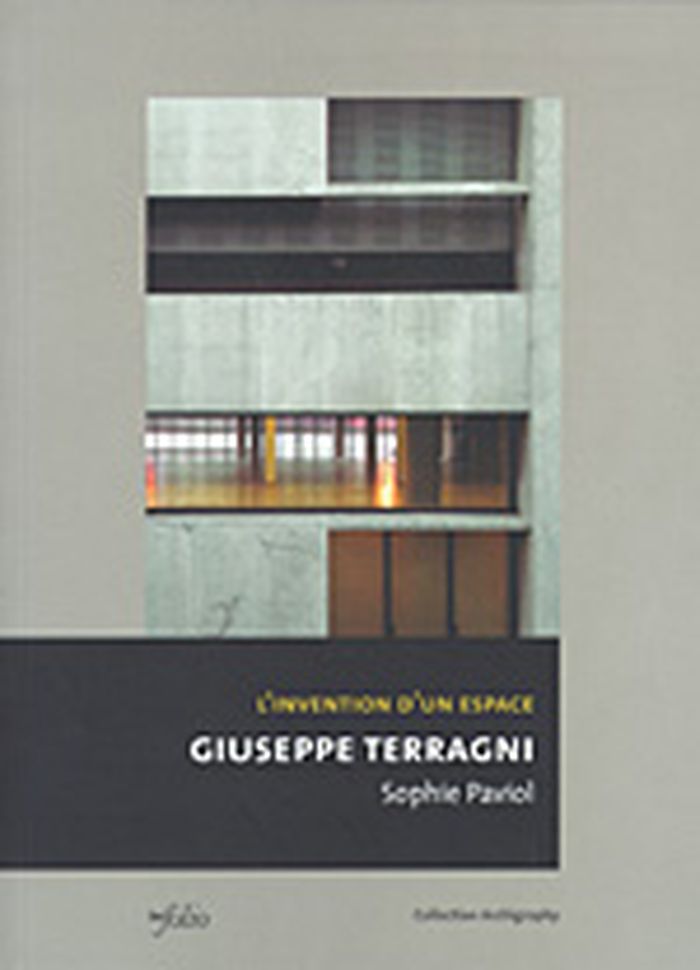
Ce livre est la première recherche rigoureuse consacrée en France à l'oeuvre de Giuseppe Terragni. D'édifice en édifice, de Côme à Rome, il nous convie à regarder cette architecture de plus près, en portant la plus grande attention à sa constitution. Il nous propose aussi d'interroger la position moderne contemporaine de Terragni, éclairée par les écrits du Gruppo 7.
$42.95
(available to order)
Summary:
Ce livre est la première recherche rigoureuse consacrée en France à l'oeuvre de Giuseppe Terragni. D'édifice en édifice, de Côme à Rome, il nous convie à regarder cette architecture de plus près, en portant la plus grande attention à sa constitution. Il nous propose aussi d'interroger la position moderne contemporaine de Terragni, éclairée par les écrits du Gruppo 7.
Title:
L'invention d'un espace : Giuseppe Terragni
Actions:
Price:
$42.95
(available to order)
Summary:
Ce livre est la première recherche rigoureuse consacrée en France à l'oeuvre de Giuseppe Terragni. D'édifice en édifice, de Côme à Rome, il nous convie à regarder cette architecture de plus près, en portant la plus grande attention à sa constitution. Il nous propose aussi d'interroger la position moderne contemporaine de Terragni, éclairée par les écrits du Gruppo 7.
L'invention d'un espace : Giuseppe Terragni
Actions:
Price:
$42.95
(available to order)
Summary:
Ce livre est la première recherche rigoureuse consacrée en France à l'oeuvre de Giuseppe Terragni. D'édifice en édifice, de Côme à Rome, il nous convie à regarder cette architecture de plus près, en portant la plus grande attention à sa constitution. Il nous propose aussi d'interroger la position moderne contemporaine de Terragni, éclairée par les écrits du Gruppo 7.
Form:
books
books
Publication:
October 2006, Gollion
October 2006, Gollion
Subject:
Architectural Theory
Architectural Theory


