


2227 Results
Form:
books
books
Actions:
Price:
$45.00
(available to order)
Summary:
This book provides an excellent framework for understanding the most important strains of current philosophical work in North America, England, France, and Germany. Selections from the work of 14 contemporary philosophers not only display the multiplicity of approaches currently being pursued on the subject, but also help spell out today's options for either doing, or not(...)
$45.00
(available to order)
Summary:
This book provides an excellent framework for understanding the most important strains of current philosophical work in North America, England, France, and Germany. Selections from the work of 14 contemporary philosophers not only display the multiplicity of approaches currently being pursued on the subject, but also help spell out today's options for either doing, or not(...)
Subject:
Architectural Theory
Architectural Theory
Publication:
November 1986, Cambridge
November 1986, Cambridge
Title:
Philosophy end or translation ?
Actions:
Price:
$45.00
(available to order)
Summary:
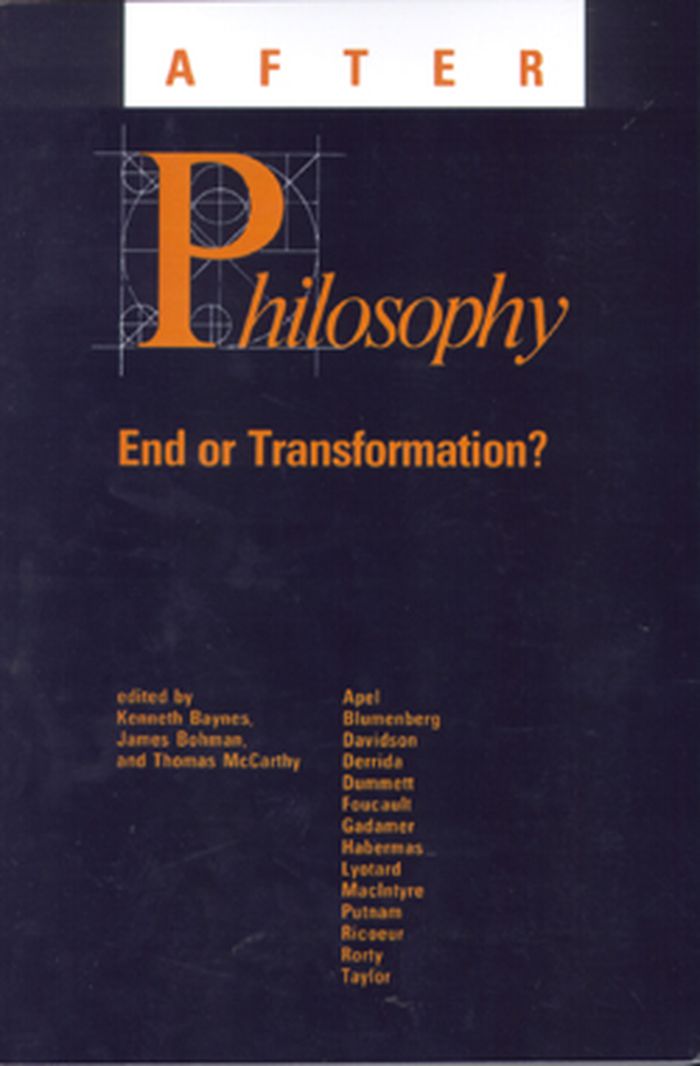
This book provides an excellent framework for understanding the most important strains of current philosophical work in North America, England, France, and Germany. Selections from the work of 14 contemporary philosophers not only display the multiplicity of approaches currently being pursued on the subject, but also help spell out today's options for either doing, or not doing, philosophy.
Philosophy end or translation ?
Actions:
Price:
$45.00
(available to order)
Summary:
This book provides an excellent framework for understanding the most important strains of current philosophical work in North America, England, France, and Germany. Selections from the work of 14 contemporary philosophers not only display the multiplicity of approaches currently being pursued on the subject, but also help spell out today's options for either doing, or not doing, philosophy.
Form:
books
books
Publication:
November 1986, Cambridge
November 1986, Cambridge
Subject:
Architectural Theory
Architectural Theory
Form:
books
books
Title:
Real presences
Real presences
Actions:
Price:
$18.95
(available to order)
Summary:
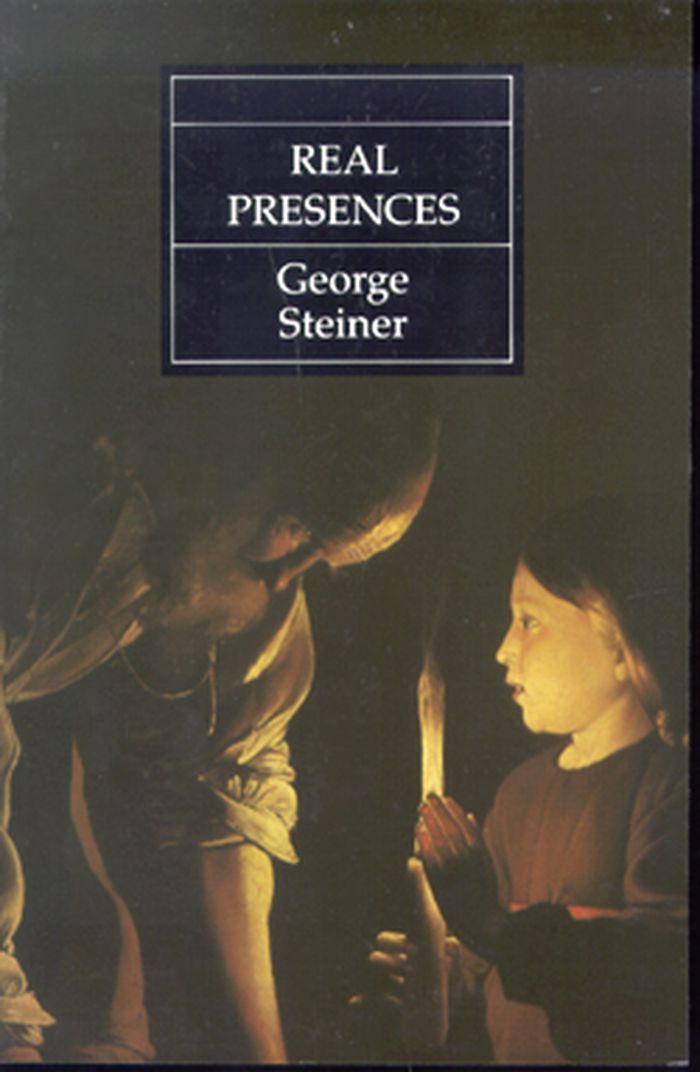
Can there be major dimensions of a poem, a painting, a musical composition created in the absence of God? Or, is God always a real presence in the arts? Steiner passionately argues that a transcendent reality grounds all genuine art and human communication.
$18.95
(available to order)
Summary:
Can there be major dimensions of a poem, a painting, a musical composition created in the absence of God? Or, is God always a real presence in the arts? Steiner passionately argues that a transcendent reality grounds all genuine art and human communication.
Title:
Real presences
Actions:
Price:
$18.95
(available to order)
Summary:
Can there be major dimensions of a poem, a painting, a musical composition created in the absence of God? Or, is God always a real presence in the arts? Steiner passionately argues that a transcendent reality grounds all genuine art and human communication.
Real presences
Actions:
Price:
$18.95
(available to order)
Summary:
Can there be major dimensions of a poem, a painting, a musical composition created in the absence of God? Or, is God always a real presence in the arts? Steiner passionately argues that a transcendent reality grounds all genuine art and human communication.
Form:
books
books
Publication:
April 1991, Chicago
April 1991, Chicago
Subject:
Architectural Theory
Architectural Theory
Form:
books
books
Title:
Poetry, language, thought
Poetry, language, thought
Actions:
Price:
$18.00
(available to order)
Summary:
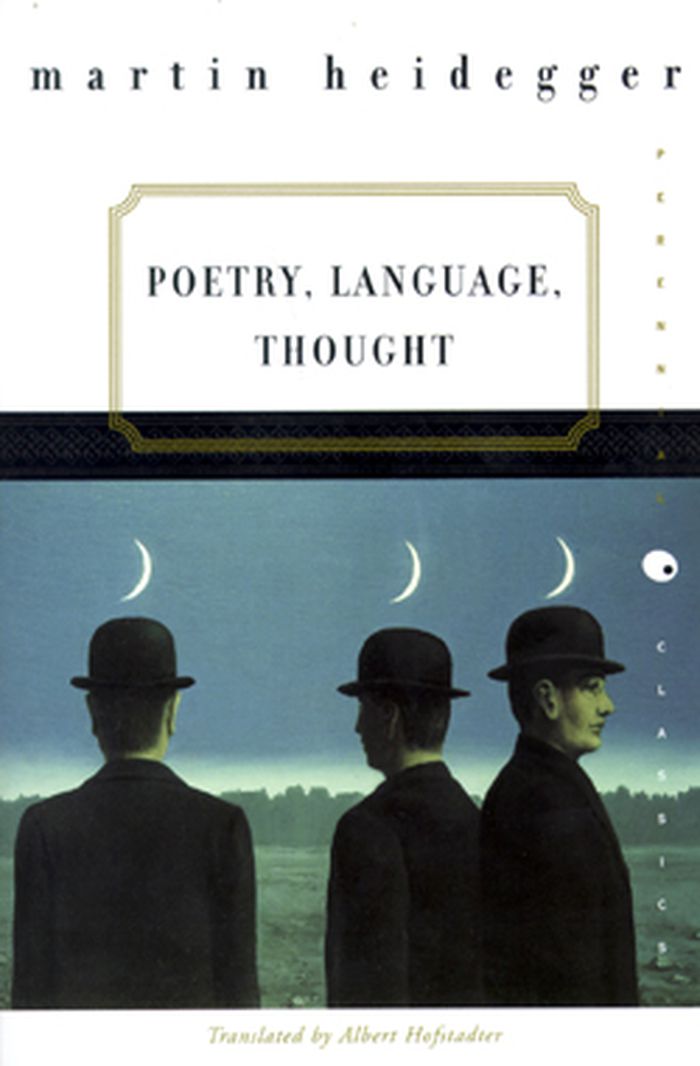
Originaly published in 1971. This book opened up appreciation of the author beyond the confines of philosophy to the reaches of poetry. In Heidegger's thinking, poetry is not a mere amusement or form of culture but a force that opens up the realm of truth and brings man to the measure of his being and his world.
$18.00
(available to order)
Summary:
Originaly published in 1971. This book opened up appreciation of the author beyond the confines of philosophy to the reaches of poetry. In Heidegger's thinking, poetry is not a mere amusement or form of culture but a force that opens up the realm of truth and brings man to the measure of his being and his world.
Title:
Poetry, language, thought
Actions:
Price:
$18.00
(available to order)
Summary:
Originaly published in 1971. This book opened up appreciation of the author beyond the confines of philosophy to the reaches of poetry. In Heidegger's thinking, poetry is not a mere amusement or form of culture but a force that opens up the realm of truth and brings man to the measure of his being and his world.
Poetry, language, thought
Actions:
Price:
$18.00
(available to order)
Summary:
Originaly published in 1971. This book opened up appreciation of the author beyond the confines of philosophy to the reaches of poetry. In Heidegger's thinking, poetry is not a mere amusement or form of culture but a force that opens up the realm of truth and brings man to the measure of his being and his world.
Form:
books
books
Publication:
October 2001, New York
October 2001, New York
Subject:
Architectural Theory
Architectural Theory
Form:
books
books
Actions:
Price:
$19.50
(available to order)
Summary:
The seminal work by one of the most important thinkers of the twentieth century, Physics and Philosophy is Werner Heisenberg's concise and accessible narrative of the revolution in modern physics, in which he played a towering role. The outgrowth of a celebrated lecture series, this book remains as relevant, provocative, and fascinating as when it was first published in(...)
$19.50
(available to order)
Summary:
The seminal work by one of the most important thinkers of the twentieth century, Physics and Philosophy is Werner Heisenberg's concise and accessible narrative of the revolution in modern physics, in which he played a towering role. The outgrowth of a celebrated lecture series, this book remains as relevant, provocative, and fascinating as when it was first published in(...)
Title:
Physics and philosophy: the revolution of modern science
Actions:
Price:
$19.50
(available to order)
Summary:
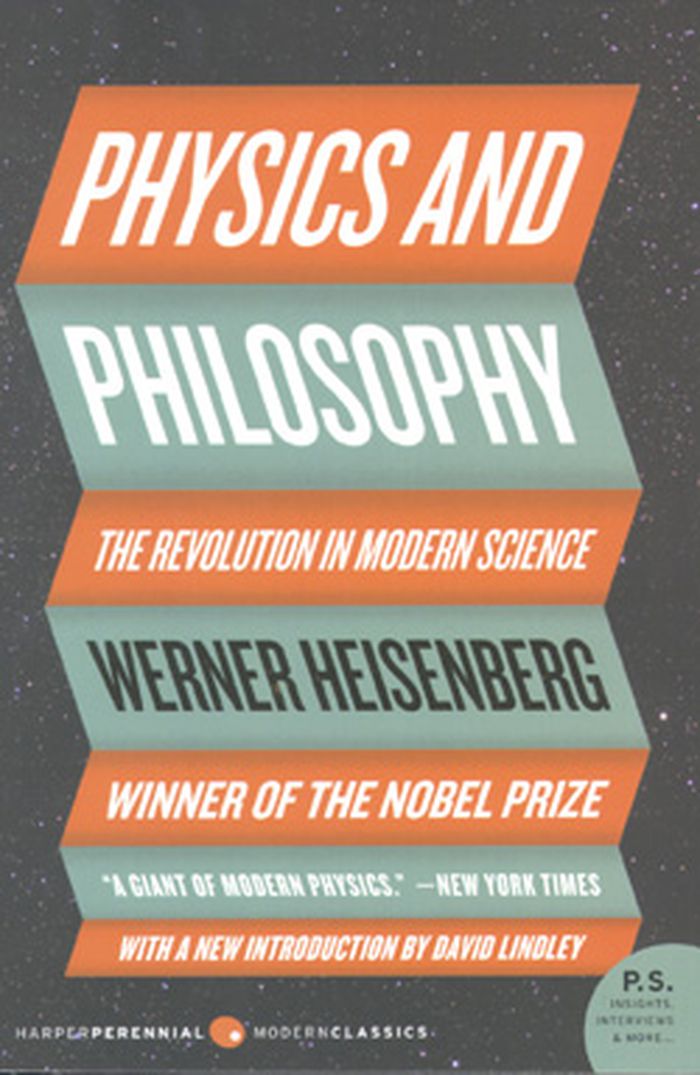
The seminal work by one of the most important thinkers of the twentieth century, Physics and Philosophy is Werner Heisenberg's concise and accessible narrative of the revolution in modern physics, in which he played a towering role. The outgrowth of a celebrated lecture series, this book remains as relevant, provocative, and fascinating as when it was first published in 1958. A brilliant scientist whose ideas altered our perception of the universe, Heisenberg is considered the father of quantum physics; he is most famous for the Uncertainty Principle, which states that quantum particles do not occupy a fixed, measurable position. His contributions remain a cornerstone of contemporary physics theory and application.
Physics and philosophy: the revolution of modern science
Actions:
Price:
$19.50
(available to order)
Summary:
The seminal work by one of the most important thinkers of the twentieth century, Physics and Philosophy is Werner Heisenberg's concise and accessible narrative of the revolution in modern physics, in which he played a towering role. The outgrowth of a celebrated lecture series, this book remains as relevant, provocative, and fascinating as when it was first published in 1958. A brilliant scientist whose ideas altered our perception of the universe, Heisenberg is considered the father of quantum physics; he is most famous for the Uncertainty Principle, which states that quantum particles do not occupy a fixed, measurable position. His contributions remain a cornerstone of contemporary physics theory and application.
Form:
books
books
Publication:
May 2007, New York
May 2007, New York
Subject:
Architectural Theory
Architectural Theory
Form:
books
books
Actions:
Price:
$7.50
(available to order)
Summary:
In Discourse on Method, Descartes rejects the limitations of traditional philosophy and theology in favor of the certainty of logic, geometry, and algebra. He proposes a method of thought that combines the rigor of a scientific approach comprising four principles: to accept only what reason recognizes as 'clear and distinct' to analyse complex ideas by dividing them into(...)
$7.50
(available to order)
Summary:
In Discourse on Method, Descartes rejects the limitations of traditional philosophy and theology in favor of the certainty of logic, geometry, and algebra. He proposes a method of thought that combines the rigor of a scientific approach comprising four principles: to accept only what reason recognizes as 'clear and distinct' to analyse complex ideas by dividing them into(...)
Title:
Discourse on method and meditations
Actions:
Price:
$7.50
(available to order)
Summary:
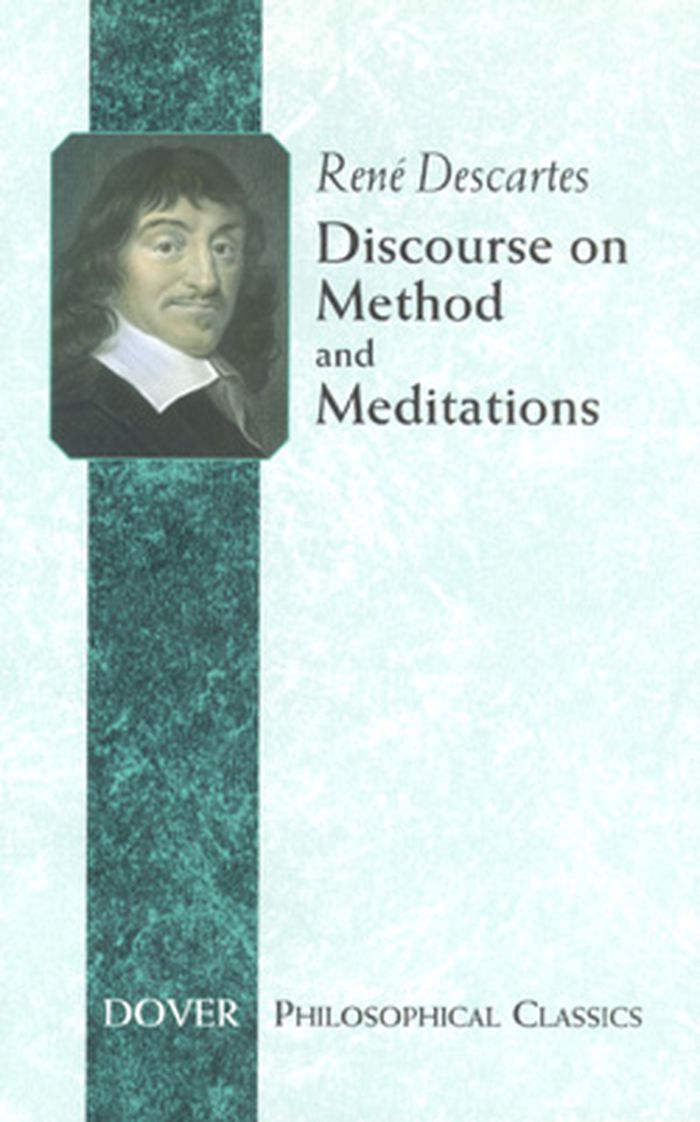
In Discourse on Method, Descartes rejects the limitations of traditional philosophy and theology in favor of the certainty of logic, geometry, and algebra. He proposes a method of thought that combines the rigor of a scientific approach comprising four principles: to accept only what reason recognizes as 'clear and distinct' to analyse complex ideas by dividing them into smaller elements; to reconstruct the ideas; and to make accurate and complete enumerations of the data.
Discourse on method and meditations
Actions:
Price:
$7.50
(available to order)
Summary:
In Discourse on Method, Descartes rejects the limitations of traditional philosophy and theology in favor of the certainty of logic, geometry, and algebra. He proposes a method of thought that combines the rigor of a scientific approach comprising four principles: to accept only what reason recognizes as 'clear and distinct' to analyse complex ideas by dividing them into smaller elements; to reconstruct the ideas; and to make accurate and complete enumerations of the data.
Form:
books
books
Publication:
December 2003, Minneola
December 2003, Minneola
Subject:
Architectural Theory
Architectural Theory
Form:
books
books
Title:
Aristotle poetics
Aristotle poetics
Actions:
Price:
$12.95
(available to order)
Summary:
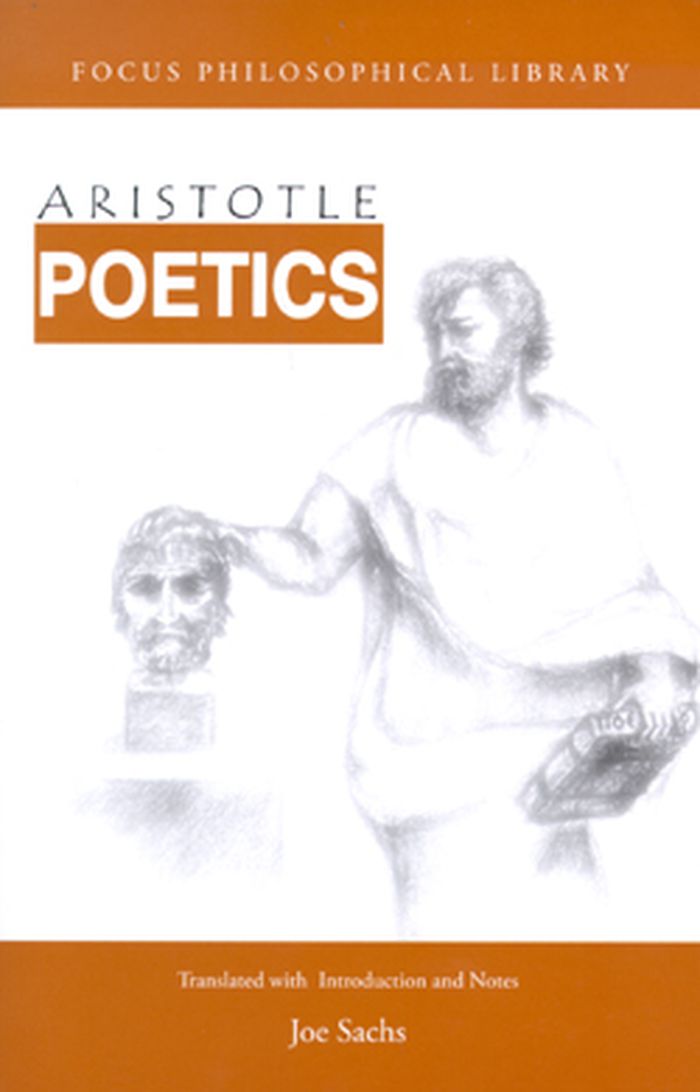
Modern students can now appreciate the wisdom of the world's greatest thinkers. Though clear, faithful translations by Joe Sachs. This modern and classical philosophical texts accessible and inspirational.
$12.95
(available to order)
Summary:
Modern students can now appreciate the wisdom of the world's greatest thinkers. Though clear, faithful translations by Joe Sachs. This modern and classical philosophical texts accessible and inspirational.
Title:
Aristotle poetics
Actions:
Price:
$12.95
(available to order)
Summary:
Modern students can now appreciate the wisdom of the world's greatest thinkers. Though clear, faithful translations by Joe Sachs. This modern and classical philosophical texts accessible and inspirational.
Aristotle poetics
Actions:
Price:
$12.95
(available to order)
Summary:
Modern students can now appreciate the wisdom of the world's greatest thinkers. Though clear, faithful translations by Joe Sachs. This modern and classical philosophical texts accessible and inspirational.
Form:
books
books
Publication:
August 2006, Newburyport
August 2006, Newburyport
Subject:
Architectural Theory
Architectural Theory
Form:
books
books
Title:
Merleau-Ponty for architects
Merleau-Ponty for architects
Actions:
Price:
$46.10
(available to order)
Summary:
The philosophy of Maurice Merleau-Ponty (1908–1961) has influenced the design work of architects as diverse as Steven Holl and Peter Zumthor, as well as informing renowned schools of architectural theory, notably those around Dalibor Vesely at Cambridge, Kenneth Frampton, David Leatherbarrow and Alberto Pérez-Gómez in North America and Juhani Pallasmaa in Finland.(...)
$46.10
(available to order)
Summary:
The philosophy of Maurice Merleau-Ponty (1908–1961) has influenced the design work of architects as diverse as Steven Holl and Peter Zumthor, as well as informing renowned schools of architectural theory, notably those around Dalibor Vesely at Cambridge, Kenneth Frampton, David Leatherbarrow and Alberto Pérez-Gómez in North America and Juhani Pallasmaa in Finland.(...)
Title:
Merleau-Ponty for architects
Actions:
Price:
$46.10
(available to order)
Summary:
The philosophy of Maurice Merleau-Ponty (1908–1961) has influenced the design work of architects as diverse as Steven Holl and Peter Zumthor, as well as informing renowned schools of architectural theory, notably those around Dalibor Vesely at Cambridge, Kenneth Frampton, David Leatherbarrow and Alberto Pérez-Gómez in North America and Juhani Pallasmaa in Finland. Merleau-Ponty suggested that the value of people’s experience of the world gained through their immediate bodily engagement with it remains greater than the value of understanding gleaned through abstract mathematical, scientific or technological systems. This book summarizes what Merleau-Ponty’s philosophy has to offer specifically for architects. It locates architectural thinking in the context of his work, placing it in relation to themes such as space, movement, materiality and creativity, introduces key texts, helps decode difficult terms and provides quick reference for further reading.
Merleau-Ponty for architects
Actions:
Price:
$46.10
(available to order)
Summary:
The philosophy of Maurice Merleau-Ponty (1908–1961) has influenced the design work of architects as diverse as Steven Holl and Peter Zumthor, as well as informing renowned schools of architectural theory, notably those around Dalibor Vesely at Cambridge, Kenneth Frampton, David Leatherbarrow and Alberto Pérez-Gómez in North America and Juhani Pallasmaa in Finland. Merleau-Ponty suggested that the value of people’s experience of the world gained through their immediate bodily engagement with it remains greater than the value of understanding gleaned through abstract mathematical, scientific or technological systems. This book summarizes what Merleau-Ponty’s philosophy has to offer specifically for architects. It locates architectural thinking in the context of his work, placing it in relation to themes such as space, movement, materiality and creativity, introduces key texts, helps decode difficult terms and provides quick reference for further reading.
Form:
books
books
Publication:
June 2018
June 2018
Subject:
Architectural Theory
Architectural Theory
Form:
books
books
Title:
Bhabha for architects
Bhabha for architects
Actions:
Price:
$37.50
(available in store)
Summary:
The work of Homi K. Bhabha has permeated into numerous publications which use postcolonial discourse as a means to analyze architectural practices in previously colonized contexts, particularly in Africa, Asia, the Middle-East, South-East Asia and, Latin America. Bhabha's use of the concept of ‘space’ has made his work highly appealing to architects and architectural(...)
$37.50
(available in store)
Summary:
The work of Homi K. Bhabha has permeated into numerous publications which use postcolonial discourse as a means to analyze architectural practices in previously colonized contexts, particularly in Africa, Asia, the Middle-East, South-East Asia and, Latin America. Bhabha's use of the concept of ‘space’ has made his work highly appealing to architects and architectural(...)
Title:
Bhabha for architects
Actions:
Price:
$37.50
(available in store)
Summary:
The work of Homi K. Bhabha has permeated into numerous publications which use postcolonial discourse as a means to analyze architectural practices in previously colonized contexts, particularly in Africa, Asia, the Middle-East, South-East Asia and, Latin America. Bhabha's use of the concept of ‘space’ has made his work highly appealing to architects and architectural theorists. This introductory book, specifically for architects, focuses on Bhabha’s seminal book The Location of Culture and reveals how his work contributes to architectural theory and the study of contemporary architectures in general, not only in colonial and postcolonial contexts.
Bhabha for architects
Actions:
Price:
$37.50
(available in store)
Summary:
The work of Homi K. Bhabha has permeated into numerous publications which use postcolonial discourse as a means to analyze architectural practices in previously colonized contexts, particularly in Africa, Asia, the Middle-East, South-East Asia and, Latin America. Bhabha's use of the concept of ‘space’ has made his work highly appealing to architects and architectural theorists. This introductory book, specifically for architects, focuses on Bhabha’s seminal book The Location of Culture and reveals how his work contributes to architectural theory and the study of contemporary architectures in general, not only in colonial and postcolonial contexts.
Form:
books
books
Publication:
August 2009
August 2009
Subject:
Architectural Theory
Architectural Theory
Form:
books
books
Title:
Basic writings
Basic writings
Actions:
Price:
$18.95
(available to order)
Summary:
Basic Writings is the finest single-volume anthology of the work of Martin Heidegger, widely considered one of the most important modern philosophers. Its selections offer a full range of the influential author's writings—including "The Origin of the Work of Art," the introduction to Being and Time, "What Is Metaphysics?," "Letter on Humanism," "The Question Concerning(...)
$18.95
(available to order)
Summary:
Basic Writings is the finest single-volume anthology of the work of Martin Heidegger, widely considered one of the most important modern philosophers. Its selections offer a full range of the influential author's writings—including "The Origin of the Work of Art," the introduction to Being and Time, "What Is Metaphysics?," "Letter on Humanism," "The Question Concerning(...)
Subject:
Architectural Theory
Architectural Theory
Publication:
November 2008, London, Toronto, Sydney
November 2008, London, Toronto, Sydney
Title:
Basic writings
Actions:
Price:
$18.95
(available to order)
Summary:
Basic Writings is the finest single-volume anthology of the work of Martin Heidegger, widely considered one of the most important modern philosophers. Its selections offer a full range of the influential author's writings—including "The Origin of the Work of Art," the introduction to Being and Time, "What Is Metaphysics?," "Letter on Humanism," "The Question Concerning Technology," "The Way to Language," and "The End of Philosophy." Featuring a foreword by Heidegger scholar Taylor Carman, this essential collection provides readers with a concise introduction to the groundbreaking philosophy of this brilliant and essential thinker.
Basic writings
Actions:
Price:
$18.95
(available to order)
Summary:
Basic Writings is the finest single-volume anthology of the work of Martin Heidegger, widely considered one of the most important modern philosophers. Its selections offer a full range of the influential author's writings—including "The Origin of the Work of Art," the introduction to Being and Time, "What Is Metaphysics?," "Letter on Humanism," "The Question Concerning Technology," "The Way to Language," and "The End of Philosophy." Featuring a foreword by Heidegger scholar Taylor Carman, this essential collection provides readers with a concise introduction to the groundbreaking philosophy of this brilliant and essential thinker.
Form:
books
books
Publication:
November 2008, London, Toronto, Sydney
November 2008, London, Toronto, Sydney
Subject:
Architectural Theory
Architectural Theory
Form:
books
books
Actions:
Price:
$71.95
(available in store)
Summary:
Nicolas Malebranche is now recognised as a major figure in the history of philosophy, occupying a crucial place in the Rationalist tradition of Descartes, Spinoza and Leibniz. The Search after Truth is his first, longest and most important work; this volume also presents the Elucidations which accompanied its third edition, the result of comments that Malebranche(...)
$71.95
(available in store)
Summary:
Nicolas Malebranche is now recognised as a major figure in the history of philosophy, occupying a crucial place in the Rationalist tradition of Descartes, Spinoza and Leibniz. The Search after Truth is his first, longest and most important work; this volume also presents the Elucidations which accompanied its third edition, the result of comments that Malebranche(...)
Publication:
March 1997, Cambridge
March 1997, Cambridge
Title:
Malebranche the search after truth
Actions:
Price:
$71.95
(available in store)
Summary:
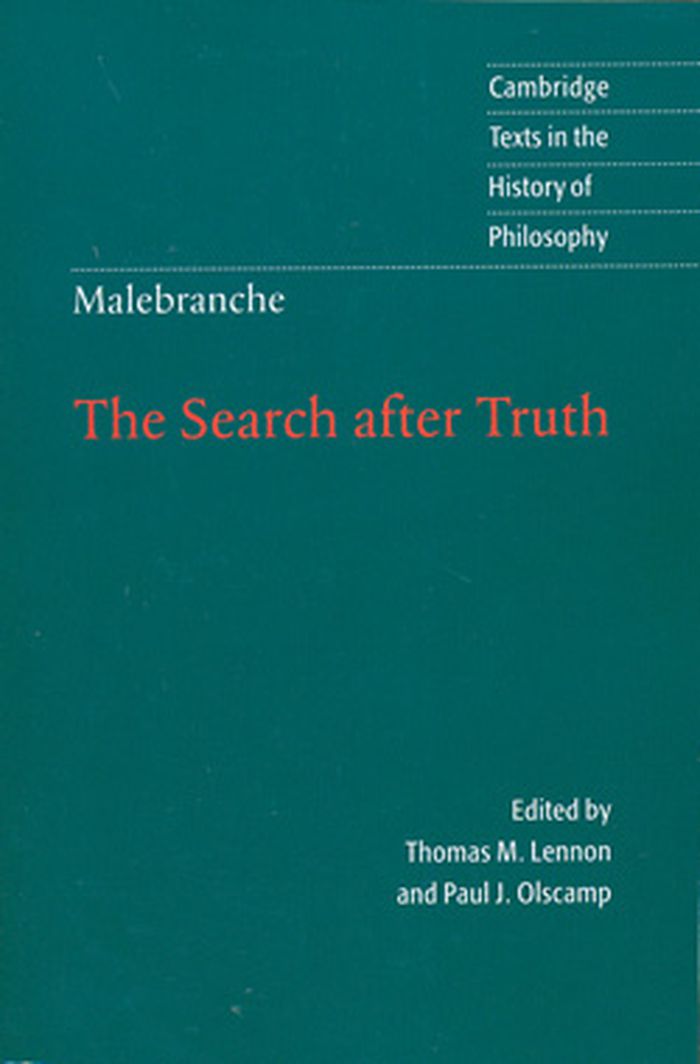
Nicolas Malebranche is now recognised as a major figure in the history of philosophy, occupying a crucial place in the Rationalist tradition of Descartes, Spinoza and Leibniz. The Search after Truth is his first, longest and most important work; this volume also presents the Elucidations which accompanied its third edition, the result of comments that Malebranche solicited on the original work and an important repository of his theories of ideas and causation.
Malebranche the search after truth
Actions:
Price:
$71.95
(available in store)
Summary:
Nicolas Malebranche is now recognised as a major figure in the history of philosophy, occupying a crucial place in the Rationalist tradition of Descartes, Spinoza and Leibniz. The Search after Truth is his first, longest and most important work; this volume also presents the Elucidations which accompanied its third edition, the result of comments that Malebranche solicited on the original work and an important repository of his theories of ideas and causation.
Form:
books
books
Publication:
March 1997, Cambridge
March 1997, Cambridge


