


2221 Results
Form:
books
books
Actions:
Price:
$29.00
(available to order)
Summary:
Suite à L’habiter dans sa poétique première, ce livre recueille les actes du colloque tenu en septembre 2009 à Cerisy-la-Salle. Il s’agit à présent de la création, c’est-à-dire de la poïétique d’un monde autre que l’insoutenable monde actuel. Insoutenable, notre monde l’est puisque non viable écologiquement, injustifiable moralement (car de plus en plus inégalitaire), et(...)
$29.00
(available to order)
Summary:
Suite à L’habiter dans sa poétique première, ce livre recueille les actes du colloque tenu en septembre 2009 à Cerisy-la-Salle. Il s’agit à présent de la création, c’est-à-dire de la poïétique d’un monde autre que l’insoutenable monde actuel. Insoutenable, notre monde l’est puisque non viable écologiquement, injustifiable moralement (car de plus en plus inégalitaire), et(...)
Subject:
Architectural Theory
Architectural Theory
Publication:
June 2012
June 2012
Title:
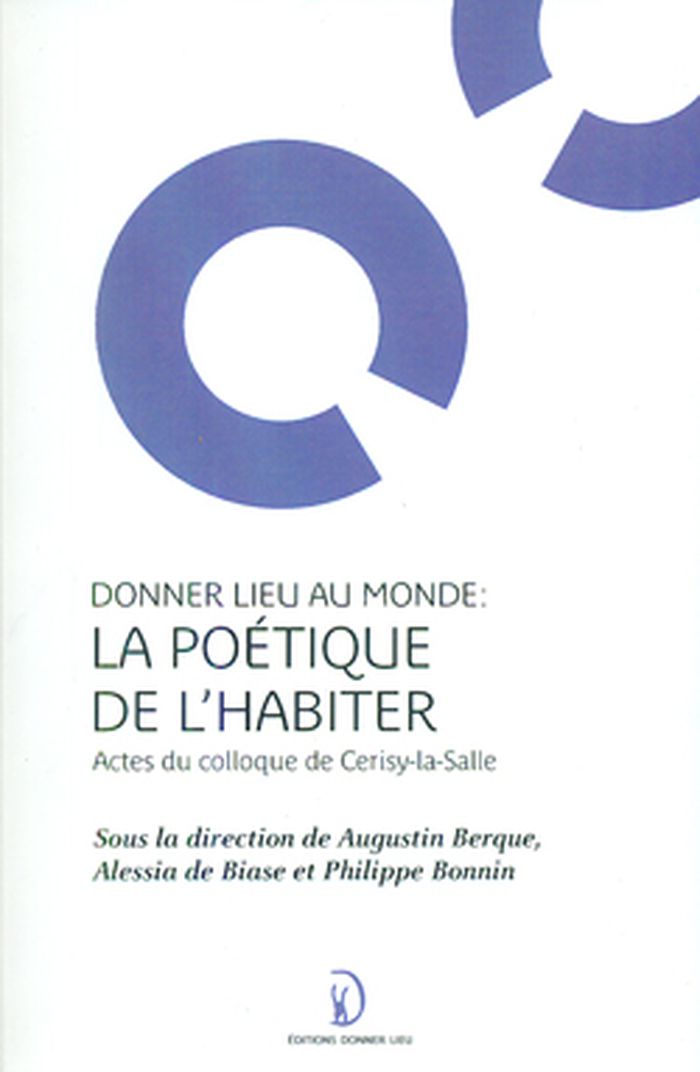
Donner lieu au monde : la poétique de l’habiter
Actions:
Price:
$29.00
(available to order)
Summary:
Suite à L’habiter dans sa poétique première, ce livre recueille les actes du colloque tenu en septembre 2009 à Cerisy-la-Salle. Il s’agit à présent de la création, c’est-à-dire de la poïétique d’un monde autre que l’insoutenable monde actuel. Insoutenable, notre monde l’est puisque non viable écologiquement, injustifiable moralement (car de plus en plus inégalitaire), et inacceptable esthétiquement (car il « tue le paysage »). Dans la réarticulation cosmologique du Vrai (ici l’adéquation de notre mode de vie aux capacités de la Terre), du Bien et du Beau, les auteurs ont donc été invités à imaginer un nouveau poème du monde, au-delà de la modernité qui l’a fait taire en disjoignant les champs respectifs de la technoscience, de l’éthique et de l’esthétique.
Donner lieu au monde : la poétique de l’habiter
Actions:
Price:
$29.00
(available to order)
Summary:
Suite à L’habiter dans sa poétique première, ce livre recueille les actes du colloque tenu en septembre 2009 à Cerisy-la-Salle. Il s’agit à présent de la création, c’est-à-dire de la poïétique d’un monde autre que l’insoutenable monde actuel. Insoutenable, notre monde l’est puisque non viable écologiquement, injustifiable moralement (car de plus en plus inégalitaire), et inacceptable esthétiquement (car il « tue le paysage »). Dans la réarticulation cosmologique du Vrai (ici l’adéquation de notre mode de vie aux capacités de la Terre), du Bien et du Beau, les auteurs ont donc été invités à imaginer un nouveau poème du monde, au-delà de la modernité qui l’a fait taire en disjoignant les champs respectifs de la technoscience, de l’éthique et de l’esthétique.
Form:
books
books
Publication:
June 2012
June 2012
Subject:
Architectural Theory
Architectural Theory
Form:
books
books
Actions:
Price:
$29.00
(available to order)
Summary:
Le livre recueille les actes du colloque tenu à Cerisy-la-Salle, du 1 er au 8 septembre 2006. Le point de départ est la phrase de F. Hölderlin que M. Heidegger a rendu fameuse : « L’humain habite en poète ». Cette idée, peu à peu diffusée, a fini par subvertir les dogmes fonctionnalistes du mouvement moderne en architecture. Une maison est davantage qu’une « machine à(...)
$29.00
(available to order)
Summary:
Le livre recueille les actes du colloque tenu à Cerisy-la-Salle, du 1 er au 8 septembre 2006. Le point de départ est la phrase de F. Hölderlin que M. Heidegger a rendu fameuse : « L’humain habite en poète ». Cette idée, peu à peu diffusée, a fini par subvertir les dogmes fonctionnalistes du mouvement moderne en architecture. Une maison est davantage qu’une « machine à(...)
Subject:
Architectural Theory
Architectural Theory
Publication:
June 2012
June 2012
Title:
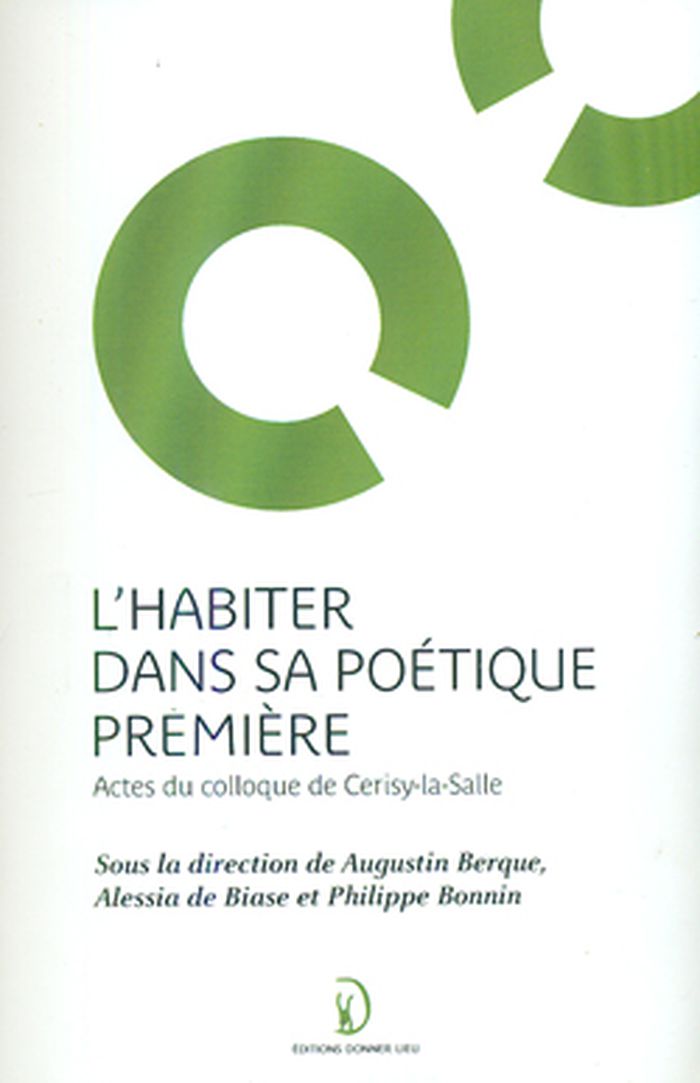
L’habiter dans sa poétique première
Actions:
Price:
$29.00
(available to order)
Summary:
Le livre recueille les actes du colloque tenu à Cerisy-la-Salle, du 1 er au 8 septembre 2006. Le point de départ est la phrase de F. Hölderlin que M. Heidegger a rendu fameuse : « L’humain habite en poète ». Cette idée, peu à peu diffusée, a fini par subvertir les dogmes fonctionnalistes du mouvement moderne en architecture. Une maison est davantage qu’une « machine à habiter » ! Ce « davantage » de l’habiter humain – sa poétique – il s’est agi d’en saisir la dynamique première dans certains de ses motifs privilégiés, la spatialité, la temporalité, la corporéité, la musique, la poésie…, à partir de ce qui la fonde : la Terre, comme à la fois planète et sol phénoménologique. Cette poétique, c’est effectivement ce qui a peu à peu entraîné les participants et leurs spécialités diverses – architecture, anthropologie, chorégraphie, géographie, musique, informatique, peinture, littérature, cinema – dans la synergie que favorisait le lieu.
L’habiter dans sa poétique première
Actions:
Price:
$29.00
(available to order)
Summary:
Le livre recueille les actes du colloque tenu à Cerisy-la-Salle, du 1 er au 8 septembre 2006. Le point de départ est la phrase de F. Hölderlin que M. Heidegger a rendu fameuse : « L’humain habite en poète ». Cette idée, peu à peu diffusée, a fini par subvertir les dogmes fonctionnalistes du mouvement moderne en architecture. Une maison est davantage qu’une « machine à habiter » ! Ce « davantage » de l’habiter humain – sa poétique – il s’est agi d’en saisir la dynamique première dans certains de ses motifs privilégiés, la spatialité, la temporalité, la corporéité, la musique, la poésie…, à partir de ce qui la fonde : la Terre, comme à la fois planète et sol phénoménologique. Cette poétique, c’est effectivement ce qui a peu à peu entraîné les participants et leurs spécialités diverses – architecture, anthropologie, chorégraphie, géographie, musique, informatique, peinture, littérature, cinema – dans la synergie que favorisait le lieu.
Form:
books
books
Publication:
June 2012
June 2012
Subject:
Architectural Theory
Architectural Theory
Form:
books
books
Title:
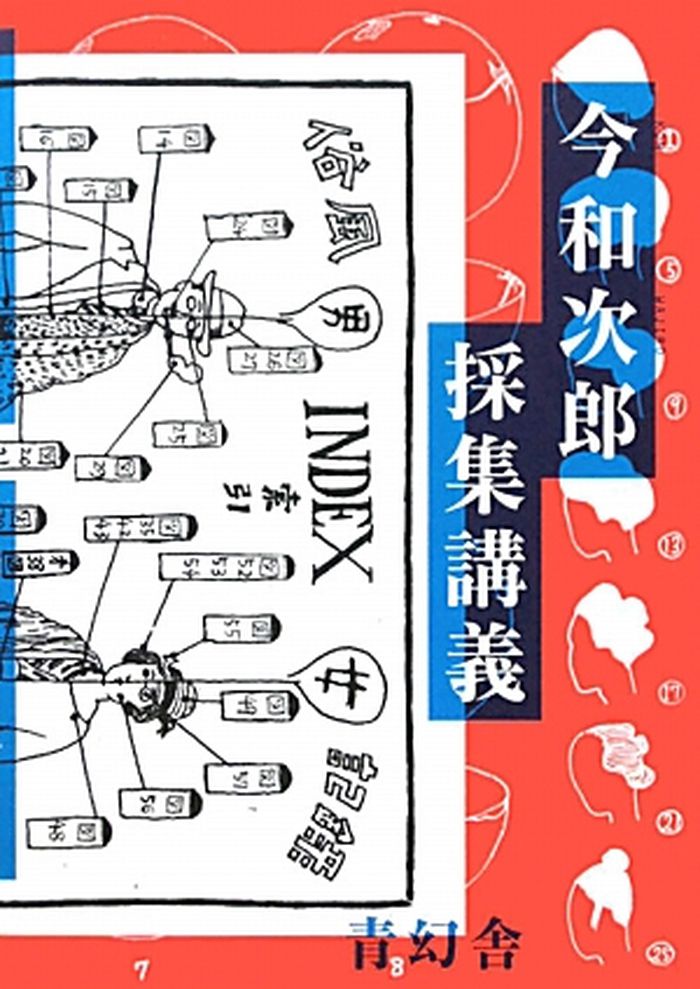
Wajiro Kon retrospective
Wajiro Kon retrospective
Actions:
Price:
$57.95
(available to order)
Summary:
Known as the founder of “modernology”, the Japanese scholar Wajiro Kon (1888-1973) was an avid observer and recorder of changes that occurred to the landscapes and people of Tokyo, a city that underwent dramatic urban change in the early days of the nineteenth century. This book looks back on Kon’s wide-ranging work as an architect, designer, and folklore researcher,(...)
$57.95
(available to order)
Summary:
Known as the founder of “modernology”, the Japanese scholar Wajiro Kon (1888-1973) was an avid observer and recorder of changes that occurred to the landscapes and people of Tokyo, a city that underwent dramatic urban change in the early days of the nineteenth century. This book looks back on Kon’s wide-ranging work as an architect, designer, and folklore researcher,(...)
Title:
Wajiro Kon retrospective
Actions:
Price:
$57.95
(available to order)
Summary:
Known as the founder of “modernology”, the Japanese scholar Wajiro Kon (1888-1973) was an avid observer and recorder of changes that occurred to the landscapes and people of Tokyo, a city that underwent dramatic urban change in the early days of the nineteenth century. This book looks back on Kon’s wide-ranging work as an architect, designer, and folklore researcher, showcasing not only sketches and photos, but also his architectural and design drawings. Kuroishi Izumi provides an insightful essay on the more unknown aspects of Wajiro Kon’s work and his critical ideas on philosophy, science and history.
Wajiro Kon retrospective
Actions:
Price:
$57.95
(available to order)
Summary:
Known as the founder of “modernology”, the Japanese scholar Wajiro Kon (1888-1973) was an avid observer and recorder of changes that occurred to the landscapes and people of Tokyo, a city that underwent dramatic urban change in the early days of the nineteenth century. This book looks back on Kon’s wide-ranging work as an architect, designer, and folklore researcher, showcasing not only sketches and photos, but also his architectural and design drawings. Kuroishi Izumi provides an insightful essay on the more unknown aspects of Wajiro Kon’s work and his critical ideas on philosophy, science and history.
Form:
books
books
Publication:
June 2012
June 2012
Subject:
Architectural Theory
Architectural Theory
Form:
books
books
Actions:
Price:
$17.95
(available to order)
Summary:
Ces 10 clefs abordent l'architecture non par une approche spectaculaire, mais par une voie plus subjective. Elles tentent d'éviter l'écueil consistant à présenter ce domaine aux yeux du grand public comme une valeur culturelle fondée soit sur la dimension patrimoniale, soit sur les prouesses techniques des grands ouvrages d'art, ou encore sur la dimension événementielle(...)
$17.95
(available to order)
Summary:
Ces 10 clefs abordent l'architecture non par une approche spectaculaire, mais par une voie plus subjective. Elles tentent d'éviter l'écueil consistant à présenter ce domaine aux yeux du grand public comme une valeur culturelle fondée soit sur la dimension patrimoniale, soit sur les prouesses techniques des grands ouvrages d'art, ou encore sur la dimension événementielle(...)
Title:
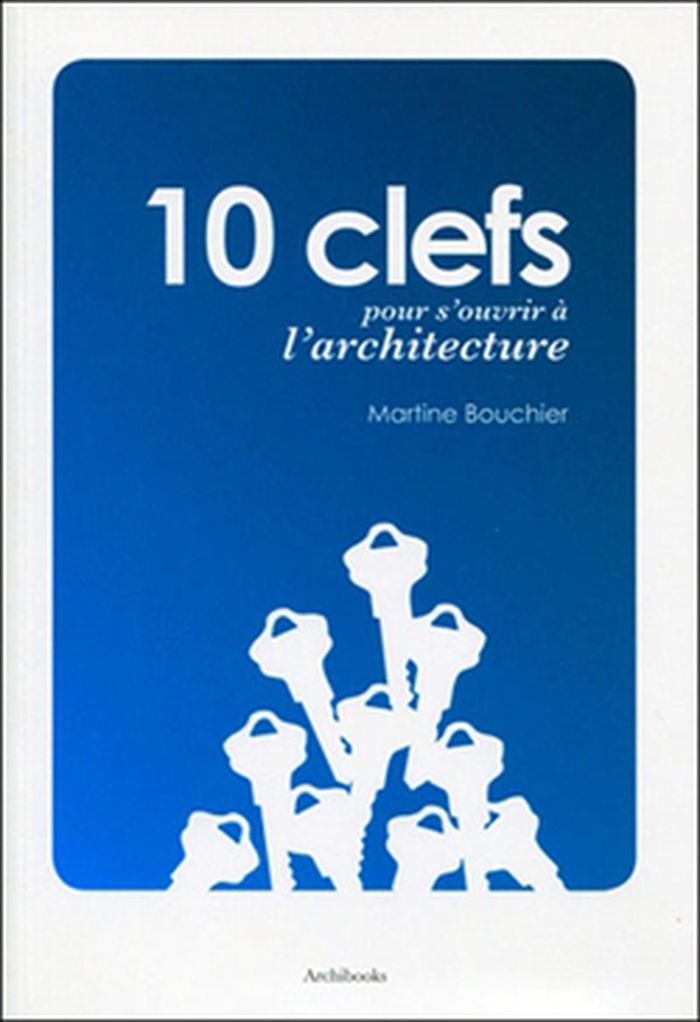
Dix clefs pour s'ouvrir à l'architecture
Actions:
Price:
$17.95
(available to order)
Summary:
Ces 10 clefs abordent l'architecture non par une approche spectaculaire, mais par une voie plus subjective. Elles tentent d'éviter l'écueil consistant à présenter ce domaine aux yeux du grand public comme une valeur culturelle fondée soit sur la dimension patrimoniale, soit sur les prouesses techniques des grands ouvrages d'art, ou encore sur la dimension événementielle de certaines réalisations qui se prêtent aux jeux des caméra et deviennent de parfaits décors pour le fond d'écran des journaux télévisés.
Dix clefs pour s'ouvrir à l'architecture
Actions:
Price:
$17.95
(available to order)
Summary:
Ces 10 clefs abordent l'architecture non par une approche spectaculaire, mais par une voie plus subjective. Elles tentent d'éviter l'écueil consistant à présenter ce domaine aux yeux du grand public comme une valeur culturelle fondée soit sur la dimension patrimoniale, soit sur les prouesses techniques des grands ouvrages d'art, ou encore sur la dimension événementielle de certaines réalisations qui se prêtent aux jeux des caméra et deviennent de parfaits décors pour le fond d'écran des journaux télévisés.
Form:
books
books
Publication:
July 2012
July 2012
Subject:
Architectural Theory
Architectural Theory
Form:
books
books

Actions:
Price:
$40.00
(available to order)
Summary:
Since its launch in late 2000, Cabinet magazine has become a touchstone for a certain approach to understanding culture, one that shuns orthodox distinctions--high/low, serious/humorous, professional/amateur--in favor of a commitment to the idea that all objects, practices and discourses can, if read against the grain, teach us something important about the world. Its(...)
$40.00
(available to order)
Summary:
Since its launch in late 2000, Cabinet magazine has become a touchstone for a certain approach to understanding culture, one that shuns orthodox distinctions--high/low, serious/humorous, professional/amateur--in favor of a commitment to the idea that all objects, practices and discourses can, if read against the grain, teach us something important about the world. Its(...)
Title:
Curiosity and method: ten years of Cabinet Magazine
Actions:
Price:
$40.00
(available to order)
Summary:
Since its launch in late 2000, Cabinet magazine has become a touchstone for a certain approach to understanding culture, one that shuns orthodox distinctions--high/low, serious/humorous, professional/amateur--in favor of a commitment to the idea that all objects, practices and discourses can, if read against the grain, teach us something important about the world. Its hybrid sensibility merges the visually engaging style of an arts periodical, the exuberance of a fanzine and the in-depth exploration of a scholarly journal to create a sourcebook of ideas for an international audience of readers, from artists and designers to scientists, philosophers and historians. Using essays, interviews and artist projects to present a variety of topics in language accessible to the non-specialist, Cabinet has aimed to encourage a new culture of curiosity.
Curiosity and method: ten years of Cabinet Magazine
Actions:
Price:
$40.00
(available to order)
Summary:
Since its launch in late 2000, Cabinet magazine has become a touchstone for a certain approach to understanding culture, one that shuns orthodox distinctions--high/low, serious/humorous, professional/amateur--in favor of a commitment to the idea that all objects, practices and discourses can, if read against the grain, teach us something important about the world. Its hybrid sensibility merges the visually engaging style of an arts periodical, the exuberance of a fanzine and the in-depth exploration of a scholarly journal to create a sourcebook of ideas for an international audience of readers, from artists and designers to scientists, philosophers and historians. Using essays, interviews and artist projects to present a variety of topics in language accessible to the non-specialist, Cabinet has aimed to encourage a new culture of curiosity.
Form:
books
books
Publication:
December 2012
December 2012
Subject:
Architectural Theory
Architectural Theory
Form:
books
books
Actions:
Price:
$46.95
(available to order)
Summary:
Scolari's illustrated studies show that illusionistic perspective is not the only, or even the best, representation of objects in history; parallel projection, for example, preserves in scale the actual measurements of objects it represents, avoiding the distortions of one-point perspective. Scolari analyzes the use of nonperspectival representations in pre-Renaissance(...)
$46.95
(available to order)
Summary:
Scolari's illustrated studies show that illusionistic perspective is not the only, or even the best, representation of objects in history; parallel projection, for example, preserves in scale the actual measurements of objects it represents, avoiding the distortions of one-point perspective. Scolari analyzes the use of nonperspectival representations in pre-Renaissance(...)
Title:
Oblique drawing : a history of anti-perspective
Actions:
Price:
$46.95
(available to order)
Summary:
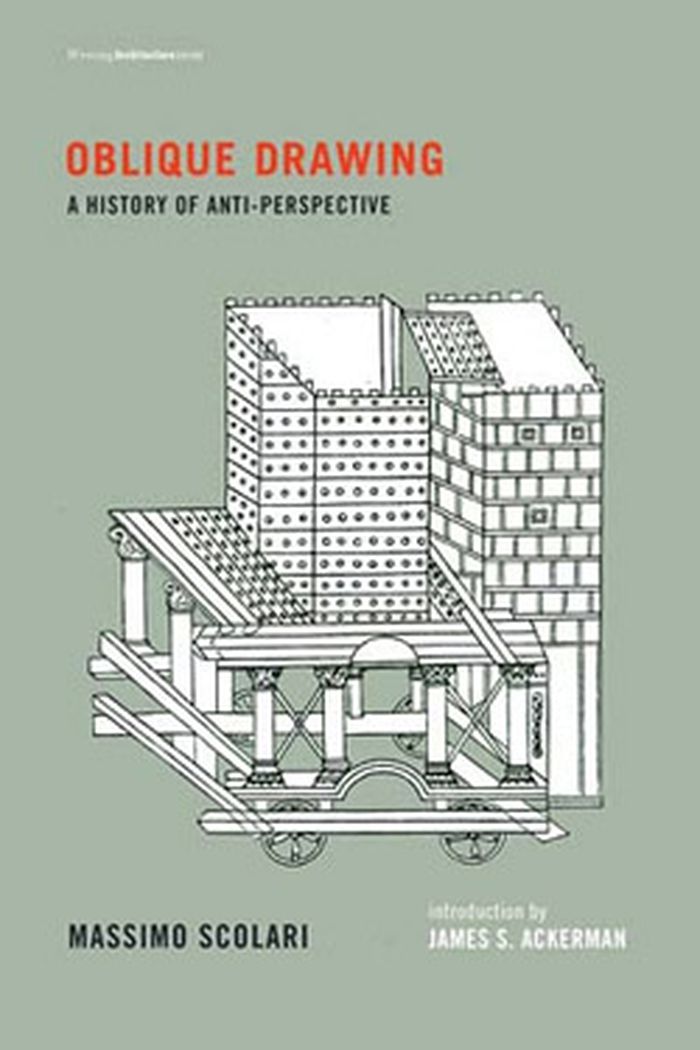
Scolari's illustrated studies show that illusionistic perspective is not the only, or even the best, representation of objects in history; parallel projection, for example, preserves in scale the actual measurements of objects it represents, avoiding the distortions of one-point perspective. Scolari analyzes the use of nonperspectival representations in pre-Renaissance images of machines and military hardware, architectural models and drawings, and illustrations of geometrical solids. He challenges Panofsky's theory of Pompeiian perspective and explains the difficulties encountered by the Chinese when they viewed Jesuit missionaries' perspectival religious images. Scolari demonstrates the diversity of representational forms devised through the centuries, and shows how each one reveals something that is lacking in the others.
Oblique drawing : a history of anti-perspective
Actions:
Price:
$46.95
(available to order)
Summary:
Scolari's illustrated studies show that illusionistic perspective is not the only, or even the best, representation of objects in history; parallel projection, for example, preserves in scale the actual measurements of objects it represents, avoiding the distortions of one-point perspective. Scolari analyzes the use of nonperspectival representations in pre-Renaissance images of machines and military hardware, architectural models and drawings, and illustrations of geometrical solids. He challenges Panofsky's theory of Pompeiian perspective and explains the difficulties encountered by the Chinese when they viewed Jesuit missionaries' perspectival religious images. Scolari demonstrates the diversity of representational forms devised through the centuries, and shows how each one reveals something that is lacking in the others.
Form:
books
books
Publication:
September 2012
September 2012
Subject:
Architectural Theory
Architectural Theory
Form:
books
books
Actions:
Price:
$31.95
(available to order)
Summary:
Since the middle of the eighteenth century, political thinkers of all kinds--radical and reactionary, professional and amateur--have been complaining about “bureaucracy.” But what, exactly, are they complaining about? In The Demon of Writing, Ben Kafka offers a critical history and theory of one of the most ubiquitous, least understood forms of media: paperwork.(...)
$31.95
(available to order)
Summary:
Since the middle of the eighteenth century, political thinkers of all kinds--radical and reactionary, professional and amateur--have been complaining about “bureaucracy.” But what, exactly, are they complaining about? In The Demon of Writing, Ben Kafka offers a critical history and theory of one of the most ubiquitous, least understood forms of media: paperwork.(...)
Title:
The demon of writing: powers and failures of paperwork
Actions:
Price:
$31.95
(available to order)
Summary:
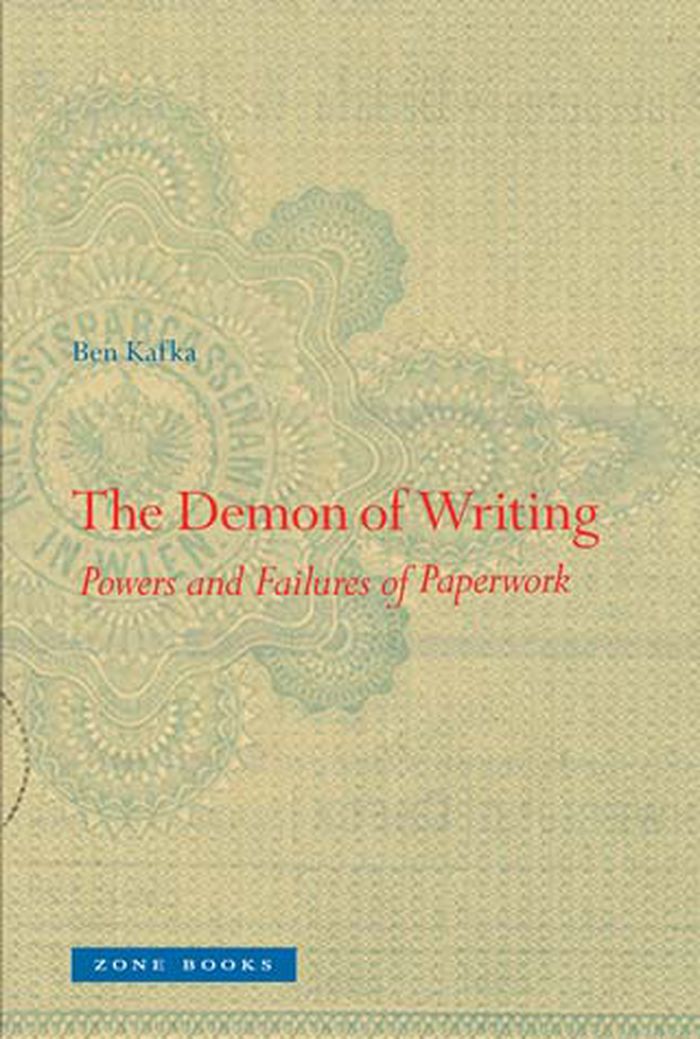
Since the middle of the eighteenth century, political thinkers of all kinds--radical and reactionary, professional and amateur--have been complaining about “bureaucracy.” But what, exactly, are they complaining about? In The Demon of Writing, Ben Kafka offers a critical history and theory of one of the most ubiquitous, least understood forms of media: paperwork. States rely on records to tax and spend, protect and serve, discipline and punish. But time and again, this paperwork proves to be unreliable. Examining episodes that range from the story of a clerk who lost his job and then his mind in the French Revolution to an account of Roland Barthes’s brief stint as a university administrator, Kafka reveals the powers, the failures, and even the pleasures of paperwork. Many of its complexities, he argues, have been obscured by the comic-paranoid style that characterizes much of our criticism of bureaucracy. Kafka proposes a new theory of what Karl Marx called the “bureaucratic medium.”
The demon of writing: powers and failures of paperwork
Actions:
Price:
$31.95
(available to order)
Summary:
Since the middle of the eighteenth century, political thinkers of all kinds--radical and reactionary, professional and amateur--have been complaining about “bureaucracy.” But what, exactly, are they complaining about? In The Demon of Writing, Ben Kafka offers a critical history and theory of one of the most ubiquitous, least understood forms of media: paperwork. States rely on records to tax and spend, protect and serve, discipline and punish. But time and again, this paperwork proves to be unreliable. Examining episodes that range from the story of a clerk who lost his job and then his mind in the French Revolution to an account of Roland Barthes’s brief stint as a university administrator, Kafka reveals the powers, the failures, and even the pleasures of paperwork. Many of its complexities, he argues, have been obscured by the comic-paranoid style that characterizes much of our criticism of bureaucracy. Kafka proposes a new theory of what Karl Marx called the “bureaucratic medium.”
Form:
books
books
Publication:
November 2012
November 2012
Subject:
Architectural Theory
Architectural Theory
Form:
books
books
Price:
$28.95
(available to order)
Summary:
This book offers a range of perspectives on a variety of incarnations of garbage, inviting the reader to consider garbage in a way that goes beyond the common buy green discourse that empowers individuals while limiting environmental activism to consumerist practices.
$28.95
(available to order)
Summary:
This book offers a range of perspectives on a variety of incarnations of garbage, inviting the reader to consider garbage in a way that goes beyond the common buy green discourse that empowers individuals while limiting environmental activism to consumerist practices.
Title:
Histories of the dustheap : waste, material cultures, social justice
Actions:
Price:
$28.95
(available to order)
Summary:
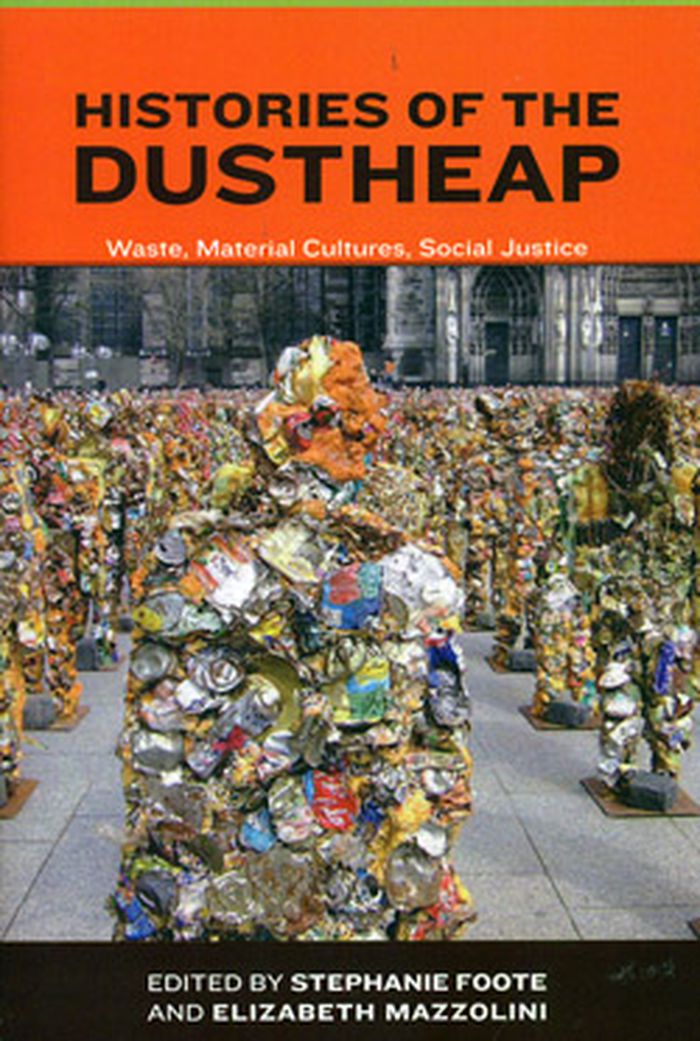
This book offers a range of perspectives on a variety of incarnations of garbage, inviting the reader to consider garbage in a way that goes beyond the common buy green discourse that empowers individuals while limiting environmental activism to consumerist practices.
Histories of the dustheap : waste, material cultures, social justice
Actions:
Price:
$28.95
(available to order)
Summary:
This book offers a range of perspectives on a variety of incarnations of garbage, inviting the reader to consider garbage in a way that goes beyond the common buy green discourse that empowers individuals while limiting environmental activism to consumerist practices.
Form:
books
books
Publication:
October 2012
October 2012
Subject:
Architectural Theory
Architectural Theory
Form:
books
books
Actions:
Price:
$22.95
(available to order)
Summary:
Amid the cultural and political ferment of 1960s France, a group of avant-garde architects, artists, writers, theorists, and critics known as "spatial urbanists" envisioned a series of urban utopias--phantom cities of a possible future. The utopian "spatial" city most often took the form of a massive grid or mesh suspended above the ground, all of its parts (and(...)
$22.95
(available to order)
Summary:
Amid the cultural and political ferment of 1960s France, a group of avant-garde architects, artists, writers, theorists, and critics known as "spatial urbanists" envisioned a series of urban utopias--phantom cities of a possible future. The utopian "spatial" city most often took the form of a massive grid or mesh suspended above the ground, all of its parts (and(...)
Title:
Topologies: the urban utopia in France, 1960-1970
Actions:
Price:
$22.95
(available to order)
Summary:
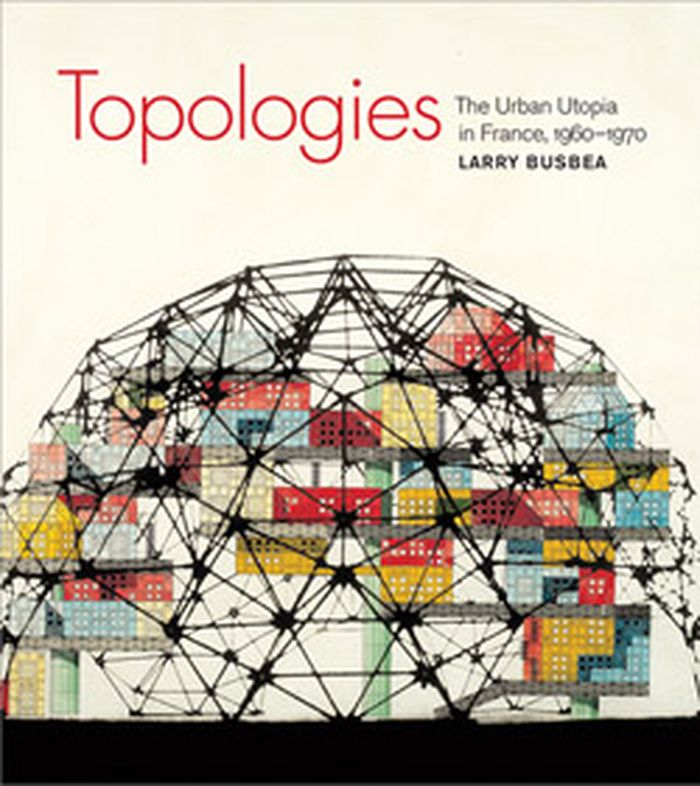
Amid the cultural and political ferment of 1960s France, a group of avant-garde architects, artists, writers, theorists, and critics known as "spatial urbanists" envisioned a series of urban utopias--phantom cities of a possible future. The utopian "spatial" city most often took the form of a massive grid or mesh suspended above the ground, all of its parts (and inhabitants) circulating in a smooth, synchronous rhythm, its streets and buildings constituting a gigantic work of plastic art or interactive machine. In this new urban world, technology and automation were positive forces, providing for material needs as well as time and space for leisure. In this first study of the French avant-garde tendency known as spatial urbanism, Larry Busbea analyzes projects by artists and architects (including the most famous spatial practitioner, Yona Friedman) and explores texts (many of which have never before been translated from the French) by Michel Ragon, the influential founder of the Groupe International d'Architecture Prospective (GIAP), Victor Vasarely, and others. Even at its most fanciful, Busbea argues, the French urban utopia provided an image for social transformations that were only beginning to be described by cultural theorists and sociologists.
Topologies: the urban utopia in France, 1960-1970
Actions:
Price:
$22.95
(available to order)
Summary:
Amid the cultural and political ferment of 1960s France, a group of avant-garde architects, artists, writers, theorists, and critics known as "spatial urbanists" envisioned a series of urban utopias--phantom cities of a possible future. The utopian "spatial" city most often took the form of a massive grid or mesh suspended above the ground, all of its parts (and inhabitants) circulating in a smooth, synchronous rhythm, its streets and buildings constituting a gigantic work of plastic art or interactive machine. In this new urban world, technology and automation were positive forces, providing for material needs as well as time and space for leisure. In this first study of the French avant-garde tendency known as spatial urbanism, Larry Busbea analyzes projects by artists and architects (including the most famous spatial practitioner, Yona Friedman) and explores texts (many of which have never before been translated from the French) by Michel Ragon, the influential founder of the Groupe International d'Architecture Prospective (GIAP), Victor Vasarely, and others. Even at its most fanciful, Busbea argues, the French urban utopia provided an image for social transformations that were only beginning to be described by cultural theorists and sociologists.
Form:
books
books
Publication:
October 2012
October 2012
Subject:
Architectural Theory
Architectural Theory
Form:
books
books
Actions:
Price:
$44.95
(available to order)
Summary:
Today, one in five homeowners in American cities and suburbs lives in a multifamily home rather than a single-family dwelling. As the American dream evolves, precipitated by declining real estate prices and a renewed interest in city living, many predict that condos will become the predominant form of housing in the 21st century. In this unprecedented study Matthew Gordon(...)
$44.95
(available to order)
Summary:
Today, one in five homeowners in American cities and suburbs lives in a multifamily home rather than a single-family dwelling. As the American dream evolves, precipitated by declining real estate prices and a renewed interest in city living, many predict that condos will become the predominant form of housing in the 21st century. In this unprecedented study Matthew Gordon(...)
Title:
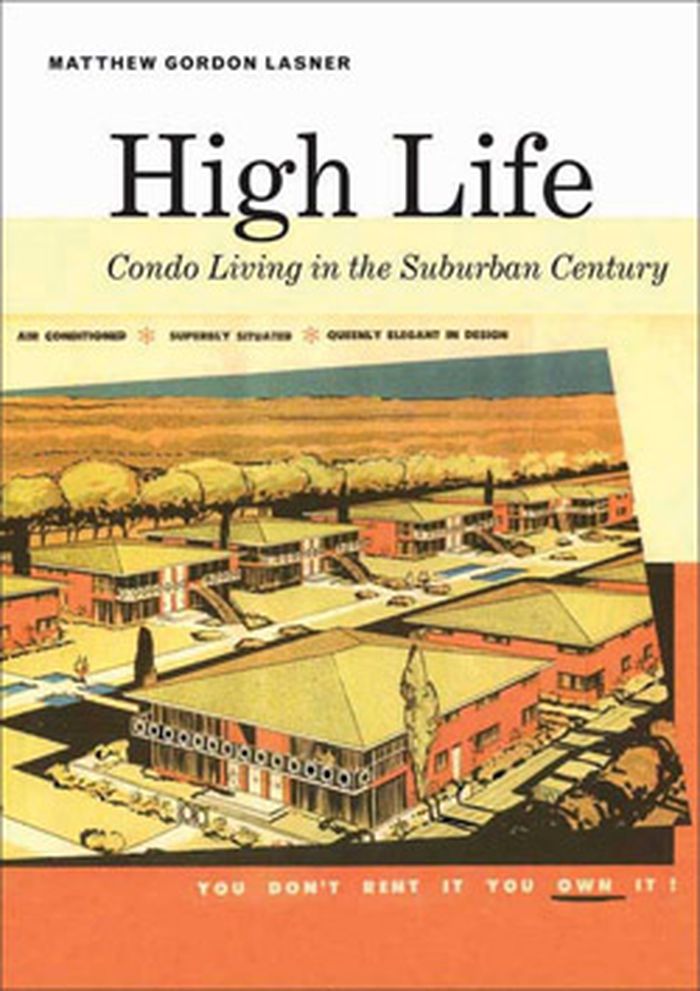
High life : condo living in the suburban century
Actions:
Price:
$44.95
(available to order)
Summary:
Today, one in five homeowners in American cities and suburbs lives in a multifamily home rather than a single-family dwelling. As the American dream evolves, precipitated by declining real estate prices and a renewed interest in city living, many predict that condos will become the predominant form of housing in the 21st century. In this unprecedented study Matthew Gordon Lasner explores the history of co-owned multifamily housing in the United States, from New York City's first co-op, in 1881, to contemporary condo and townhouse complexes coast to coast. Lasner explains the complicated social, economic, and political factors that have increased demand for this way of living, situating the trend within the larger housing market and broad shifts in residential architecture. He contrasts the prevalence and popularity of condos, townhouses, and other privately governed communities with their ambiguous economic, legal, and social standing, as well as their striking absence from urban and architectural history.
High life : condo living in the suburban century
Actions:
Price:
$44.95
(available to order)
Summary:
Today, one in five homeowners in American cities and suburbs lives in a multifamily home rather than a single-family dwelling. As the American dream evolves, precipitated by declining real estate prices and a renewed interest in city living, many predict that condos will become the predominant form of housing in the 21st century. In this unprecedented study Matthew Gordon Lasner explores the history of co-owned multifamily housing in the United States, from New York City's first co-op, in 1881, to contemporary condo and townhouse complexes coast to coast. Lasner explains the complicated social, economic, and political factors that have increased demand for this way of living, situating the trend within the larger housing market and broad shifts in residential architecture. He contrasts the prevalence and popularity of condos, townhouses, and other privately governed communities with their ambiguous economic, legal, and social standing, as well as their striking absence from urban and architectural history.
Form:
books
books
Publication:
October 2012
October 2012
Subject:
Architectural Theory
Architectural Theory


