


2221 Results
Form:
books
books
Actions:
Price:
$20.00
(available to order)
Summary:
In the 1920s, the urban theory of Ludwig Hilberseimer (1885–1967) redefined architecture’s relationship to the city. His proposal for a high-rise city, where leisure, labor and circulation would be vertically integrated, both frightened his contemporaries and offered a trenchant critique of the dynamics of the capitalist metropolis. Hilberseimer’s Groszstadt-architektur(...)
$20.00
(available to order)
Summary:
In the 1920s, the urban theory of Ludwig Hilberseimer (1885–1967) redefined architecture’s relationship to the city. His proposal for a high-rise city, where leisure, labor and circulation would be vertically integrated, both frightened his contemporaries and offered a trenchant critique of the dynamics of the capitalist metropolis. Hilberseimer’s Groszstadt-architektur(...)
Title:
Metropolisarchitecture and selected essays
Actions:
Price:
$20.00
(available to order)
Summary:
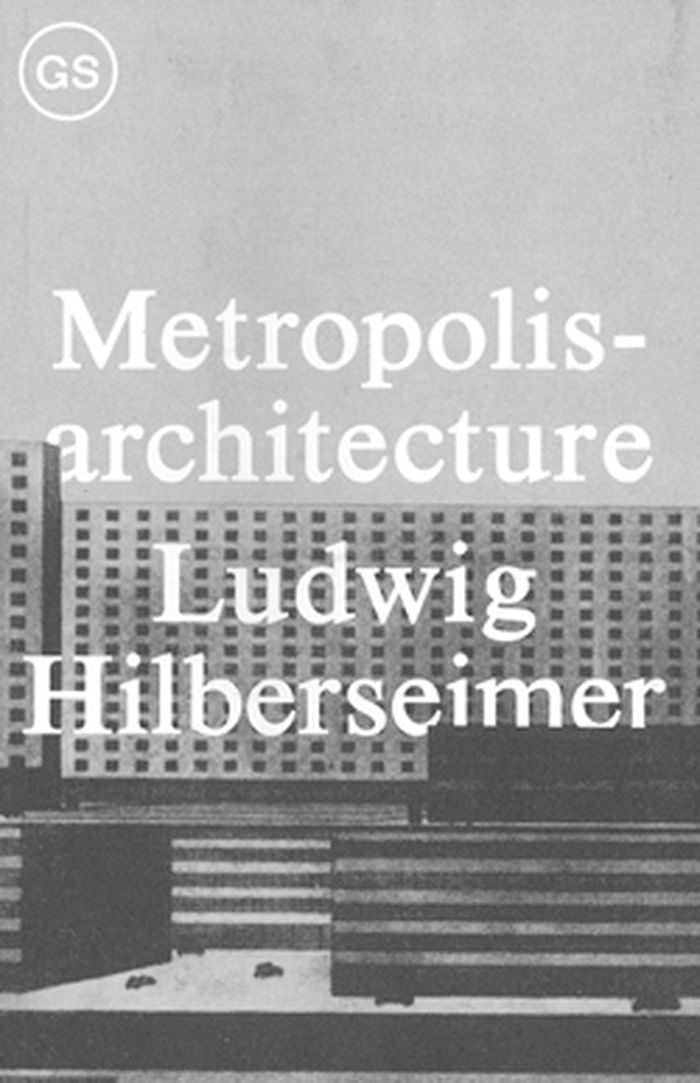
In the 1920s, the urban theory of Ludwig Hilberseimer (1885–1967) redefined architecture’s relationship to the city. His proposal for a high-rise city, where leisure, labor and circulation would be vertically integrated, both frightened his contemporaries and offered a trenchant critique of the dynamics of the capitalist metropolis. Hilberseimer’s Groszstadt-architektur (Metropolisarchitecture) is presented here for the first time in English translation. Two additional essays frame this international cross-section of metropolitan architecture: “Der Wille zur Architektur” (The Will to Architecture) and “Vorschlag zur City-Bebauung” (Proposal for City-Building). The propositions assembled here encourage us to reconsider mobility, concentration and the scale of architectural intervention in our own era of urban expansion. This is the second title in the GSAPP Sourcebooks series, devoted to recovering and translating overlooked texts on architecture and the city.
Metropolisarchitecture and selected essays
Actions:
Price:
$20.00
(available to order)
Summary:
In the 1920s, the urban theory of Ludwig Hilberseimer (1885–1967) redefined architecture’s relationship to the city. His proposal for a high-rise city, where leisure, labor and circulation would be vertically integrated, both frightened his contemporaries and offered a trenchant critique of the dynamics of the capitalist metropolis. Hilberseimer’s Groszstadt-architektur (Metropolisarchitecture) is presented here for the first time in English translation. Two additional essays frame this international cross-section of metropolitan architecture: “Der Wille zur Architektur” (The Will to Architecture) and “Vorschlag zur City-Bebauung” (Proposal for City-Building). The propositions assembled here encourage us to reconsider mobility, concentration and the scale of architectural intervention in our own era of urban expansion. This is the second title in the GSAPP Sourcebooks series, devoted to recovering and translating overlooked texts on architecture and the city.
Form:
books
books
Publication:
October 2012
October 2012
Subject:
Architectural Theory
Architectural Theory
Form:
books
books
Price:
$39.80
(available to order)
Summary:
Modernism In-Between explores the historical “in-betweenness” of Yugoslavian modernism and the strategies architects used to mediate different--sometimes directly opposed--concepts of culture and architecture. Surveyed here is a wide range of topics, from city building and state representation, to the typologies of everyday life. Also discussed is the work of Yugoslavia's(...)
$39.80
(available to order)
Summary:
Modernism In-Between explores the historical “in-betweenness” of Yugoslavian modernism and the strategies architects used to mediate different--sometimes directly opposed--concepts of culture and architecture. Surveyed here is a wide range of topics, from city building and state representation, to the typologies of everyday life. Also discussed is the work of Yugoslavia's(...)
Title:
Modernism in-between: the mediatory architectures of socialist Yugoslavia
Actions:
Price:
$39.80
(available to order)
Summary:
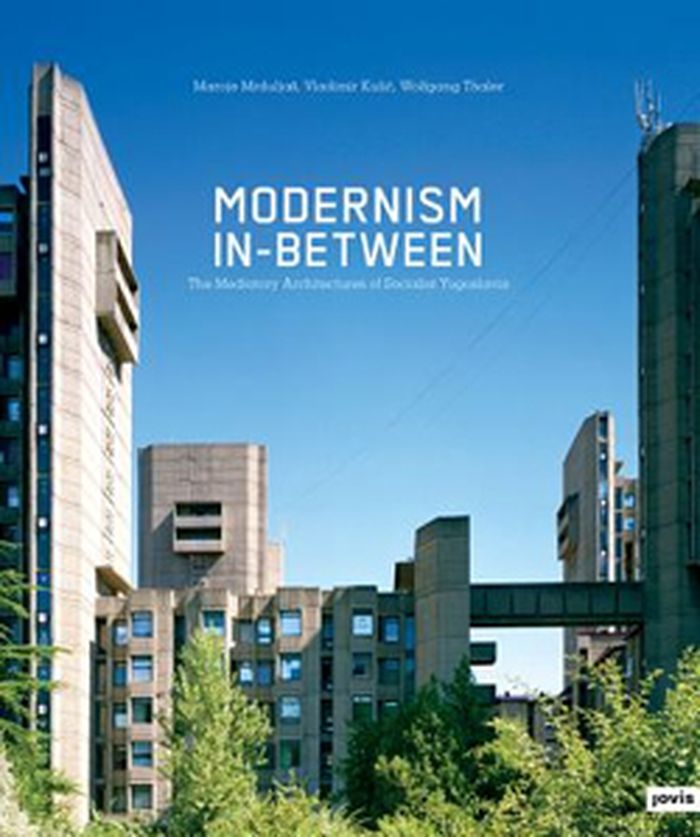
Modernism In-Between explores the historical “in-betweenness” of Yugoslavian modernism and the strategies architects used to mediate different--sometimes directly opposed--concepts of culture and architecture. Surveyed here is a wide range of topics, from city building and state representation, to the typologies of everyday life. Also discussed is the work of Yugoslavia's leading architects, who transformed their in-betweenness into a new quality: Edvard Ravnikar's seamless blending of such varied influences as Joe Plenik, Le Corbusier and Otto Wagner; Bogdan Bogdanovic's war memorials, which filtered deep-seated cultural archetypes through the lens of Surrealism; Juraj Neidhardt's efforts at forging a modern identity for Bosnia based on the vernacular Ottoman heritage; and Vjenceslav Richter's neo-avant-garde experiments, which provided some of the most convincing representations of Yugoslav socialism. Wolfgang Thaler's photographs document these and many other achievements.
Modernism in-between: the mediatory architectures of socialist Yugoslavia
Actions:
Price:
$39.80
(available to order)
Summary:
Modernism In-Between explores the historical “in-betweenness” of Yugoslavian modernism and the strategies architects used to mediate different--sometimes directly opposed--concepts of culture and architecture. Surveyed here is a wide range of topics, from city building and state representation, to the typologies of everyday life. Also discussed is the work of Yugoslavia's leading architects, who transformed their in-betweenness into a new quality: Edvard Ravnikar's seamless blending of such varied influences as Joe Plenik, Le Corbusier and Otto Wagner; Bogdan Bogdanovic's war memorials, which filtered deep-seated cultural archetypes through the lens of Surrealism; Juraj Neidhardt's efforts at forging a modern identity for Bosnia based on the vernacular Ottoman heritage; and Vjenceslav Richter's neo-avant-garde experiments, which provided some of the most convincing representations of Yugoslav socialism. Wolfgang Thaler's photographs document these and many other achievements.
Form:
books
books
Publication:
October 2012
October 2012
Subject:
Architectural Theory
Architectural Theory
Form:
books
books
Actions:
Price:
$14.95
(available to order)
Summary:
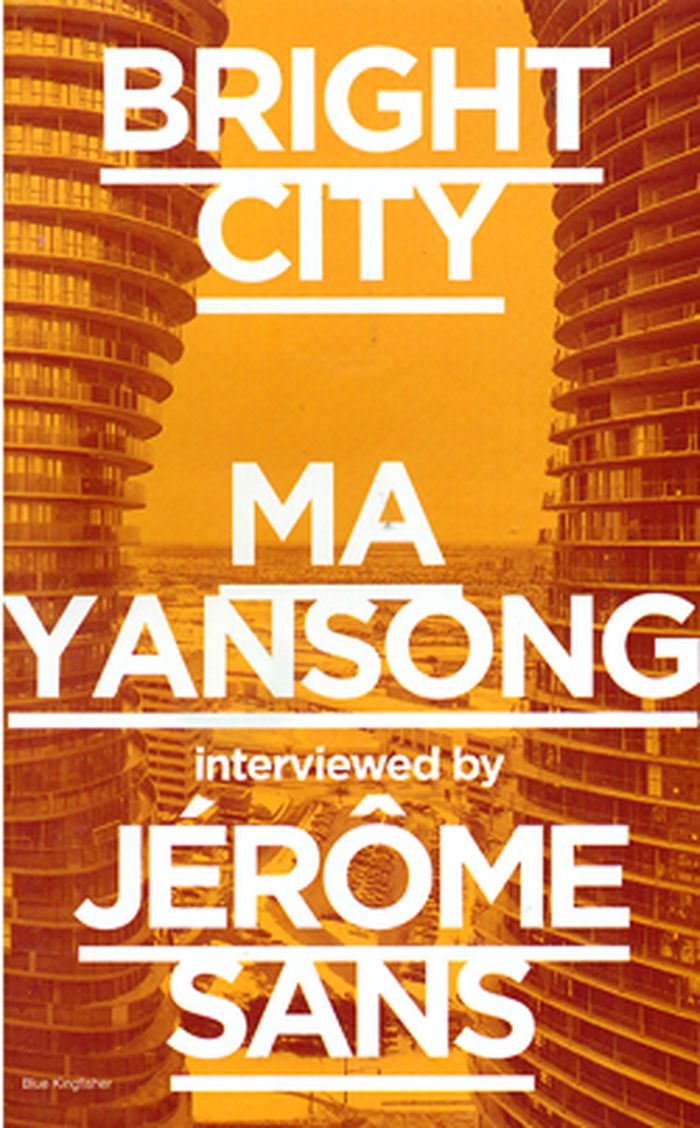
Bright City: Ma Yansong Interviewed by Jérôme Sans is the second in a series of pocket-book interviews with key cultural figures by internationally renowned curator, cultural agitator and pioneer Jérôme Sans. Here, Sans interviews Ma Yansong (born 1975), the founder of MAD Architects and architect of “Floating Island” and Absolute World.”
$14.95
(available to order)
Summary:
Bright City: Ma Yansong Interviewed by Jérôme Sans is the second in a series of pocket-book interviews with key cultural figures by internationally renowned curator, cultural agitator and pioneer Jérôme Sans. Here, Sans interviews Ma Yansong (born 1975), the founder of MAD Architects and architect of “Floating Island” and Absolute World.”
Title:
Bright city: Ma Yansong interviewed by Jérôme Sans
Actions:
Price:
$14.95
(available to order)
Summary:
Bright City: Ma Yansong Interviewed by Jérôme Sans is the second in a series of pocket-book interviews with key cultural figures by internationally renowned curator, cultural agitator and pioneer Jérôme Sans. Here, Sans interviews Ma Yansong (born 1975), the founder of MAD Architects and architect of “Floating Island” and Absolute World.”
Bright city: Ma Yansong interviewed by Jérôme Sans
Actions:
Price:
$14.95
(available to order)
Summary:
Bright City: Ma Yansong Interviewed by Jérôme Sans is the second in a series of pocket-book interviews with key cultural figures by internationally renowned curator, cultural agitator and pioneer Jérôme Sans. Here, Sans interviews Ma Yansong (born 1975), the founder of MAD Architects and architect of “Floating Island” and Absolute World.”
Form:
books
books
Publication:
October 2012
October 2012
Subject:
Architectural Theory
Architectural Theory
Form:
books
books
Actions:
Price:
$65.95
(available to order)
Summary:
Buildings tell stories. Castles, country homes, churches, and monasteries are "documents" of the people who built them, owned them, lived and died in them, inherited and saved or destroyed them, and recorded their histories. Literature and Architecture in Early Modern England examines the relationship between sixteenth and seventeenth-century architectural and literary(...)
$65.95
(available to order)
Summary:
Buildings tell stories. Castles, country homes, churches, and monasteries are "documents" of the people who built them, owned them, lived and died in them, inherited and saved or destroyed them, and recorded their histories. Literature and Architecture in Early Modern England examines the relationship between sixteenth and seventeenth-century architectural and literary(...)
Title:
Literature and architecture in early Modern England
Actions:
Price:
$65.95
(available to order)
Summary:
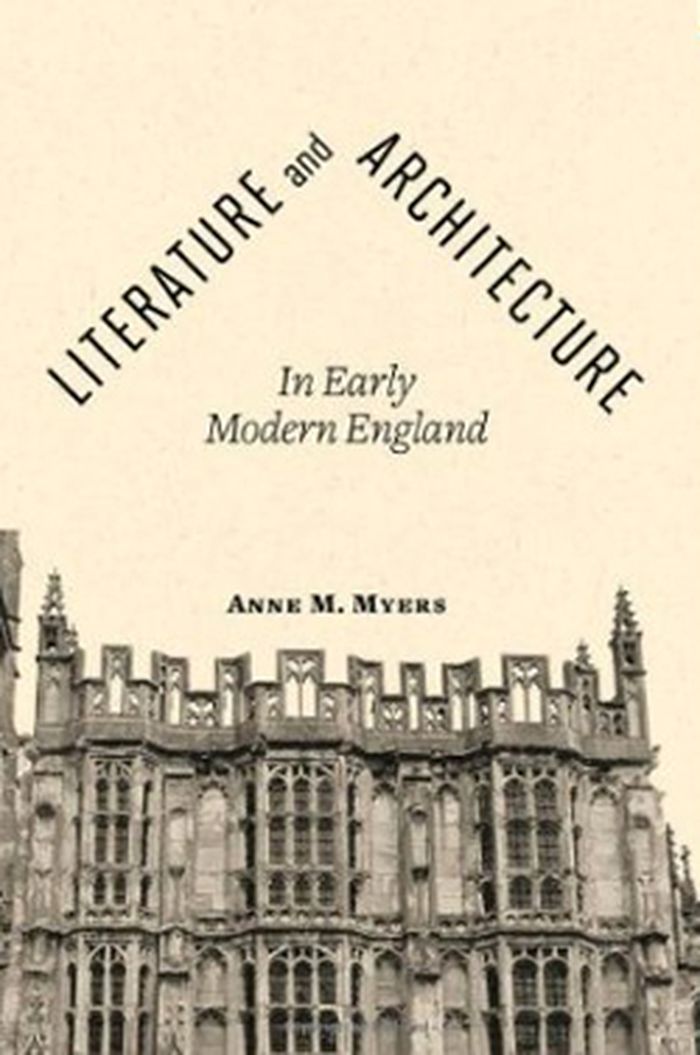
Buildings tell stories. Castles, country homes, churches, and monasteries are "documents" of the people who built them, owned them, lived and died in them, inherited and saved or destroyed them, and recorded their histories. Literature and Architecture in Early Modern England examines the relationship between sixteenth and seventeenth-century architectural and literary works. By becoming more sensitive to the narrative functions of architecture, Anne M. Myers argues, we begin to understand how a range of writers viewed and made use of the material built environment that surrounded the production of early modern texts in England. Scholars have long found themselves in the position of excusing or explaining England's failure to achieve the equivalent of the Italian Renaissance in the visual arts. Myers proposes that architecture inspired an unusual amount of historiographic and literary production, including poetry, drama, architectural treatises, and diaries. Works by William Camden, Henry Wotton, Ben Jonson, Andrew Marvell, George Herbert, Anne Clifford, and John Evelyn, when considered as a group, are texts that overturn the engrained critical notion that a Protestant fear of idolatry sentenced the visual arts and architecture in England to a state of suspicion and neglect.
Literature and architecture in early Modern England
Actions:
Price:
$65.95
(available to order)
Summary:
Buildings tell stories. Castles, country homes, churches, and monasteries are "documents" of the people who built them, owned them, lived and died in them, inherited and saved or destroyed them, and recorded their histories. Literature and Architecture in Early Modern England examines the relationship between sixteenth and seventeenth-century architectural and literary works. By becoming more sensitive to the narrative functions of architecture, Anne M. Myers argues, we begin to understand how a range of writers viewed and made use of the material built environment that surrounded the production of early modern texts in England. Scholars have long found themselves in the position of excusing or explaining England's failure to achieve the equivalent of the Italian Renaissance in the visual arts. Myers proposes that architecture inspired an unusual amount of historiographic and literary production, including poetry, drama, architectural treatises, and diaries. Works by William Camden, Henry Wotton, Ben Jonson, Andrew Marvell, George Herbert, Anne Clifford, and John Evelyn, when considered as a group, are texts that overturn the engrained critical notion that a Protestant fear of idolatry sentenced the visual arts and architecture in England to a state of suspicion and neglect.
Form:
books
books
Publication:
August 2012
August 2012
Subject:
Architectural Theory
Architectural Theory
Form:
books
books
Actions:
Price:
$30.95
(available to order)
Summary:
R.Buckminster Fuller: World Man documents a lecture given at the Princeton University School of Architecture. Delivered at the height of his career (Fuller had appeared on the cover of Time magazine in 1964), he used the lecture to reflect on and synthesize his most significant concepts. In addition to a facsimile of the lecture's typewritten transcript, the book includes(...)
$30.95
(available to order)
Summary:
R.Buckminster Fuller: World Man documents a lecture given at the Princeton University School of Architecture. Delivered at the height of his career (Fuller had appeared on the cover of Time magazine in 1964), he used the lecture to reflect on and synthesize his most significant concepts. In addition to a facsimile of the lecture's typewritten transcript, the book includes(...)
Title:
R. Buckminster Fuller: world man
Actions:
Price:
$30.95
(available to order)
Summary:
R.Buckminster Fuller: World Man documents a lecture given at the Princeton University School of Architecture. Delivered at the height of his career (Fuller had appeared on the cover of Time magazine in 1964), he used the lecture to reflect on and synthesize his most significant concepts. In addition to a facsimile of the lecture's typewritten transcript, the book includes an introductory essay on Fuller's work, a glossary of key terms and phrases, and an interview with Robert Geddes, the dean responsible for bringing Fuller to teach and lecture at the school.
R. Buckminster Fuller: world man
Actions:
Price:
$30.95
(available to order)
Summary:
R.Buckminster Fuller: World Man documents a lecture given at the Princeton University School of Architecture. Delivered at the height of his career (Fuller had appeared on the cover of Time magazine in 1964), he used the lecture to reflect on and synthesize his most significant concepts. In addition to a facsimile of the lecture's typewritten transcript, the book includes an introductory essay on Fuller's work, a glossary of key terms and phrases, and an interview with Robert Geddes, the dean responsible for bringing Fuller to teach and lecture at the school.
Form:
books
books
Publication:
October 2012
October 2012
Subject:
Architectural Theory
Architectural Theory
Form:
books
books
Title:
Toyo Ito : forces of nature
Toyo Ito : forces of nature
Actions:
Price:
$24.95
(available to order)
Summary:
The work of Japanese architect Toyo Ito explores the dynamic relationship between buildings and their environments. His principal focus is on developing an architecture free of the grid system, which he believes homogenizes people and their lives. Toyo Ito: Forces of Nature documents the architects 2009 Kassler lecture at the Princeton University School of Architecture.(...)
$24.95
(available to order)
Summary:
The work of Japanese architect Toyo Ito explores the dynamic relationship between buildings and their environments. His principal focus is on developing an architecture free of the grid system, which he believes homogenizes people and their lives. Toyo Ito: Forces of Nature documents the architects 2009 Kassler lecture at the Princeton University School of Architecture.(...)
Title:
Toyo Ito : forces of nature
Actions:
Price:
$24.95
(available to order)
Summary:
The work of Japanese architect Toyo Ito explores the dynamic relationship between buildings and their environments. His principal focus is on developing an architecture free of the grid system, which he believes homogenizes people and their lives. Toyo Ito: Forces of Nature documents the architects 2009 Kassler lecture at the Princeton University School of Architecture. Told primarily in Ito's own voice, the book features the edited lecture transcript, as well as an interview with the architect by Julian Worrall and a new translation of Ito's 1980 essay The Projection of the Profane World onto the Sacred. Projects illustrated in the book include: Berkeley Art Museum and Pacific Film Archive (unbuilt), Taichung Opera House, Tama Art University Library, and Kakamigahara Crematorium. Bringing together different strands of a long and fruitful career, Toyo Ito: Forces of Nature concludes with an afterword by Ito that addresses the exhibition Home for All, a response to Japans earthquake and tsunami disasters in March 2011.
Toyo Ito : forces of nature
Actions:
Price:
$24.95
(available to order)
Summary:
The work of Japanese architect Toyo Ito explores the dynamic relationship between buildings and their environments. His principal focus is on developing an architecture free of the grid system, which he believes homogenizes people and their lives. Toyo Ito: Forces of Nature documents the architects 2009 Kassler lecture at the Princeton University School of Architecture. Told primarily in Ito's own voice, the book features the edited lecture transcript, as well as an interview with the architect by Julian Worrall and a new translation of Ito's 1980 essay The Projection of the Profane World onto the Sacred. Projects illustrated in the book include: Berkeley Art Museum and Pacific Film Archive (unbuilt), Taichung Opera House, Tama Art University Library, and Kakamigahara Crematorium. Bringing together different strands of a long and fruitful career, Toyo Ito: Forces of Nature concludes with an afterword by Ito that addresses the exhibition Home for All, a response to Japans earthquake and tsunami disasters in March 2011.
Form:
books
books
Publication:
October 2012
October 2012
Subject:
Architectural Theory
Architectural Theory
Form:
books
books
Actions:
Price:
$30.95
(available to order)
Summary:
The Project of Autonomy radically rediscusses the concept of autonomy in politics and architecture by tracing a concise and polemical argument about its history in Italy in the 1960s and early 1970s. Architect and educator Pier Vittorio Aureli analyzes the position of the Operaism movement, formed by a group of intellectuals that produced a powerful and rigorous critique(...)
$30.95
(available to order)
Summary:
The Project of Autonomy radically rediscusses the concept of autonomy in politics and architecture by tracing a concise and polemical argument about its history in Italy in the 1960s and early 1970s. Architect and educator Pier Vittorio Aureli analyzes the position of the Operaism movement, formed by a group of intellectuals that produced a powerful and rigorous critique(...)
Title:
The project of autonomy: politics and architecture within and against capitalism
Actions:
Price:
$30.95
(available to order)
Summary:
The Project of Autonomy radically rediscusses the concept of autonomy in politics and architecture by tracing a concise and polemical argument about its history in Italy in the 1960s and early 1970s. Architect and educator Pier Vittorio Aureli analyzes the position of the Operaism movement, formed by a group of intellectuals that produced a powerful and rigorous critique of capitalism and its intersections with two of the most radical architectural-urban theories of the day: Aldo Rossi's redefinition of the architecture of the city and Archizoom's No-stop City. Readers are introduced to major figures like Mario Tronti and Raniero Panzieri, who previously have been little known in the English-speaking world, especially in an architectural context, and to the political motivations behind the theories of Rossi and Archizoom. The book draws on significant new source material, including recent interviews by the author and untranslated documents.
The project of autonomy: politics and architecture within and against capitalism
Actions:
Price:
$30.95
(available to order)
Summary:
The Project of Autonomy radically rediscusses the concept of autonomy in politics and architecture by tracing a concise and polemical argument about its history in Italy in the 1960s and early 1970s. Architect and educator Pier Vittorio Aureli analyzes the position of the Operaism movement, formed by a group of intellectuals that produced a powerful and rigorous critique of capitalism and its intersections with two of the most radical architectural-urban theories of the day: Aldo Rossi's redefinition of the architecture of the city and Archizoom's No-stop City. Readers are introduced to major figures like Mario Tronti and Raniero Panzieri, who previously have been little known in the English-speaking world, especially in an architectural context, and to the political motivations behind the theories of Rossi and Archizoom. The book draws on significant new source material, including recent interviews by the author and untranslated documents.
Form:
books
books
Publication:
August 2012
August 2012
Subject:
Architectural Theory
Architectural Theory
Form:
books
books
Actions:
Price:
$60.00
(available to order)
Summary:
Between Walls and Windows documents the Haus der Kulturen der Welt, the congress hall in West Berlin presented to Germany in 1958 by the U.S., and designed by architect Hugh Stubbins. Compiling analyses, ideas and literary narratives, it uses the building to discuss the influence of architecture on populations and citizens.
$60.00
(available to order)
Summary:
Between Walls and Windows documents the Haus der Kulturen der Welt, the congress hall in West Berlin presented to Germany in 1958 by the U.S., and designed by architect Hugh Stubbins. Compiling analyses, ideas and literary narratives, it uses the building to discuss the influence of architecture on populations and citizens.
Title:
Between walls and windows: architecture and ideology
Actions:
Price:
$60.00
(available to order)
Summary:
Between Walls and Windows documents the Haus der Kulturen der Welt, the congress hall in West Berlin presented to Germany in 1958 by the U.S., and designed by architect Hugh Stubbins. Compiling analyses, ideas and literary narratives, it uses the building to discuss the influence of architecture on populations and citizens.
Between walls and windows: architecture and ideology
Actions:
Price:
$60.00
(available to order)
Summary:
Between Walls and Windows documents the Haus der Kulturen der Welt, the congress hall in West Berlin presented to Germany in 1958 by the U.S., and designed by architect Hugh Stubbins. Compiling analyses, ideas and literary narratives, it uses the building to discuss the influence of architecture on populations and citizens.
Form:
books
books
Publication:
August 2012
August 2012
Subject:
Architectural Theory
Architectural Theory
Form:
books
books
Price:
$38.95
(available in store)
Summary:
In Architecture in Translation, Esra Akcan offers a way to understand the global circulation of culture that extends the notion of translation beyond language to visual fields. She shows how members of the ruling Kemalist elite in Turkey further aligned themselves with Europe by choosing German-speaking architects to oversee much of the design of modern cities. Focusing(...)
$38.95
(available in store)
Summary:
In Architecture in Translation, Esra Akcan offers a way to understand the global circulation of culture that extends the notion of translation beyond language to visual fields. She shows how members of the ruling Kemalist elite in Turkey further aligned themselves with Europe by choosing German-speaking architects to oversee much of the design of modern cities. Focusing(...)
Title:
Architecture in translation : Germany, Turkey & the modern house
Actions:
Price:
$38.95
(available in store)
Summary:
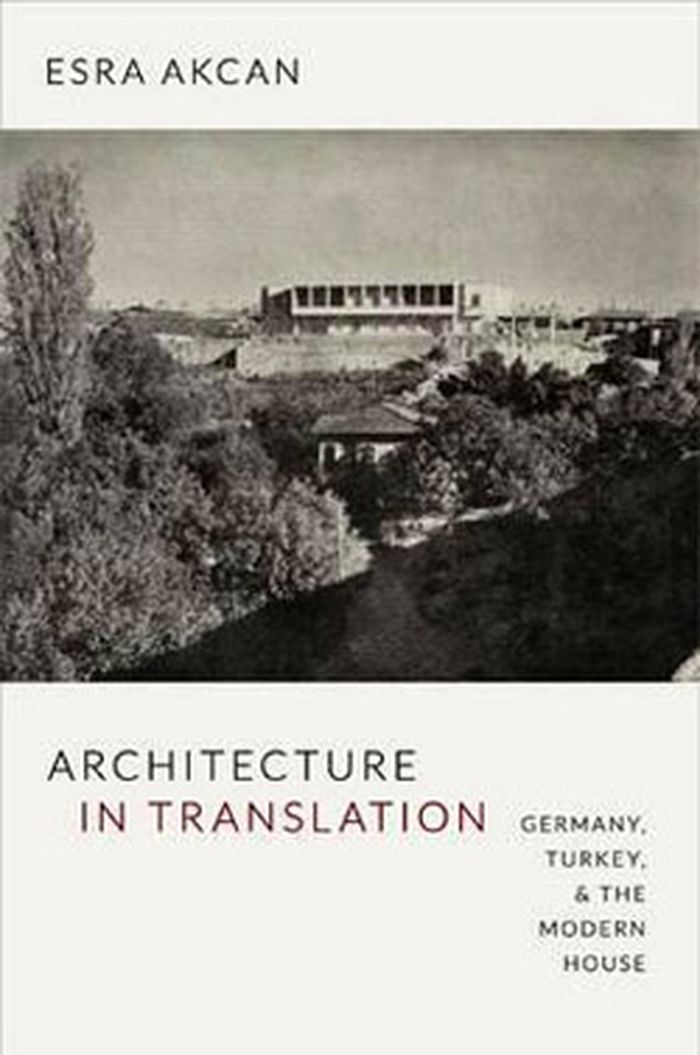
In Architecture in Translation, Esra Akcan offers a way to understand the global circulation of culture that extends the notion of translation beyond language to visual fields. She shows how members of the ruling Kemalist elite in Turkey further aligned themselves with Europe by choosing German-speaking architects to oversee much of the design of modern cities. Focusing on the period from the 1920s through the 1950s, Akcan traces the geographical circulation of modern residential models, including the garden city—which emphasized green spaces separating low-density neighborhoods of houses surrounded by gardens—and mass housing built first for the working-class residents in industrial cities and, later, more broadly for mixed-income residents. She shows how the concept of translation—the process of change that occurs with transportation of people, ideas, technology, information, and images from one or more countries to another—allows for consideration of the sociopolitical context and agency of all parties in cultural exchanges. Moving beyond the indistinct concepts of hybrid and transculturation and avoiding passive metaphors such as import, influence, or transfer, translation offers a new approach relevant to many disciplines. Akcan advocates a commitment to a new culture of translatability from below for a truly cosmopolitan ethics in a globalizing world.
Architecture in translation : Germany, Turkey & the modern house
Actions:
Price:
$38.95
(available in store)
Summary:
In Architecture in Translation, Esra Akcan offers a way to understand the global circulation of culture that extends the notion of translation beyond language to visual fields. She shows how members of the ruling Kemalist elite in Turkey further aligned themselves with Europe by choosing German-speaking architects to oversee much of the design of modern cities. Focusing on the period from the 1920s through the 1950s, Akcan traces the geographical circulation of modern residential models, including the garden city—which emphasized green spaces separating low-density neighborhoods of houses surrounded by gardens—and mass housing built first for the working-class residents in industrial cities and, later, more broadly for mixed-income residents. She shows how the concept of translation—the process of change that occurs with transportation of people, ideas, technology, information, and images from one or more countries to another—allows for consideration of the sociopolitical context and agency of all parties in cultural exchanges. Moving beyond the indistinct concepts of hybrid and transculturation and avoiding passive metaphors such as import, influence, or transfer, translation offers a new approach relevant to many disciplines. Akcan advocates a commitment to a new culture of translatability from below for a truly cosmopolitan ethics in a globalizing world.
Form:
books
books
Publication:
August 2012
August 2012
Subject:
Architectural Theory
Architectural Theory
Form:
books
books
Title:
AD narrative architecture
AD narrative architecture
Actions:
Price:
$55.00
(available to order)
Summary:
Since the early eighties, many architects have used the term "narrative" to describe their work. To architects the enduring attraction of narrative is that it offers a way of engaging with the way a city feels and works. Rather than reducing architecture to mere style or an overt emphasis on technology, it foregrounds the experiential dimension of architecture. Narrative(...)
$55.00
(available to order)
Summary:
Since the early eighties, many architects have used the term "narrative" to describe their work. To architects the enduring attraction of narrative is that it offers a way of engaging with the way a city feels and works. Rather than reducing architecture to mere style or an overt emphasis on technology, it foregrounds the experiential dimension of architecture. Narrative(...)
Title:
AD narrative architecture
Actions:
Price:
$55.00
(available to order)
Summary:
Since the early eighties, many architects have used the term "narrative" to describe their work. To architects the enduring attraction of narrative is that it offers a way of engaging with the way a city feels and works. Rather than reducing architecture to mere style or an overt emphasis on technology, it foregrounds the experiential dimension of architecture. Narrative Architecture explores the potential for narrative as a way of interpreting buildings from ancient history through to the present, deals with architectural background, analysis and practice as well as its future development.
AD narrative architecture
Actions:
Price:
$55.00
(available to order)
Summary:
Since the early eighties, many architects have used the term "narrative" to describe their work. To architects the enduring attraction of narrative is that it offers a way of engaging with the way a city feels and works. Rather than reducing architecture to mere style or an overt emphasis on technology, it foregrounds the experiential dimension of architecture. Narrative Architecture explores the potential for narrative as a way of interpreting buildings from ancient history through to the present, deals with architectural background, analysis and practice as well as its future development.
Form:
books
books
Publication:
June 2012
June 2012


