


2227 Results
Form:
books
books
Title:
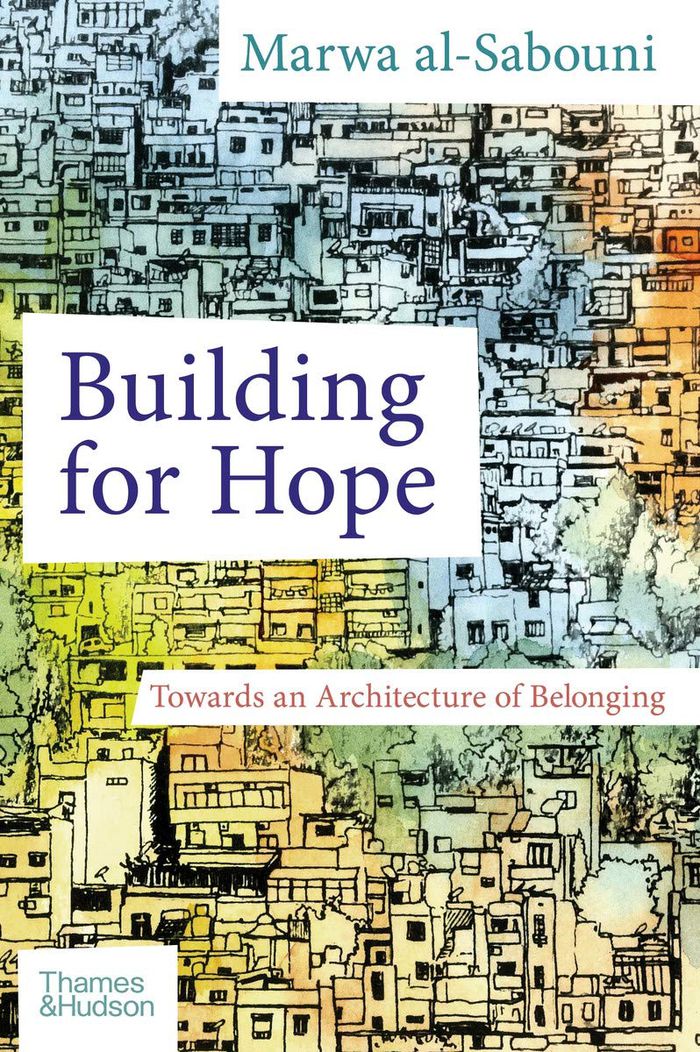
Building for hope
Building for hope
Actions:
Price:
$39.95
(available to order)
Summary:
This new book by Syrian architect Marwa al-Sabouni, seeks to understand how cities and buildings- scarred by conflict, blight, and pandemic- can be healed through design and urban mindfulness. When Marwa al-Sabouni published Battle for Home in 2016, she was a little-known architect, living in battle-ravaged Homs, Syria, unable to practice her profession. She turned her(...)
Title:
Building for hope
Actions:
Price:
$39.95
(available to order)
Summary:
This new book by Syrian architect Marwa al-Sabouni, seeks to understand how cities and buildings- scarred by conflict, blight, and pandemic- can be healed through design and urban mindfulness. When Marwa al-Sabouni published Battle for Home in 2016, she was a little-known architect, living in battle-ravaged Homs, Syria, unable to practice her profession. She turned her fierce intelligence to chronicling how her city and country were undone through decades of architectural mismanagement and mistakes. Once published, Marwa al-Sabouni’s book and story attracted the attention of international media- CNN, The New York Times- and received critical acclaim worldwide. The United Nations called on her for insights and expertise. She became a TED fellow, was invited to speak to audiences around the world, and some suggested she be nominated for architecture’s highest honor, the Pritzker Prize. Al-Sabouni’s deep understanding of Middle Eastern heritage and architecture gives her insight into a wide range of cities, informing her views on how cities work best, how they might fail, and what can be done to harmonize the lives of all their inhabitants. In this new book, al-Sabouni draws together several narratives: her personal and professional observations of some of the world’s most fascinating cities, from Detroit to Helsinki; the lessons that Western societies might learn from Islamic culture and design; and philosophical reflections on how our personal and communal spaces can provide the basic foundations for happiness. Through this tapestry of personal experience, unblinking perspective, and insight, al-Sabouni offers real-world solutions- and hope- for how peace might be created through mindful urban planning.
Form:
books
books
Publication:
April 2021
April 2021
Subject:
Architectural Theory
Architectural Theory
Form:
books
books

Title:
L'architecture naturelle
L'architecture naturelle
Actions:
Price:
$29.95
(available to order)
Summary:
Architecte du stade olympique ou du musée Hiroshige de Tokyo et en France, de la cité des arts de Besançon, du FRAC de Marseille ou de l’étonnant conservatoire d’Aix-en-Provence, mais aussi de nombreuses maisons audacieuses en bambous ou en bois, Kengo Kuma décline le principe fondamental de l’architecture japonaise, qui unit l’homme et la nature. Il n’y a pas(...)
Title:
L'architecture naturelle
Actions:
Price:
$29.95
(available to order)
Summary:
Architecte du stade olympique ou du musée Hiroshige de Tokyo et en France, de la cité des arts de Besançon, du FRAC de Marseille ou de l’étonnant conservatoire d’Aix-en-Provence, mais aussi de nombreuses maisons audacieuses en bambous ou en bois, Kengo Kuma décline le principe fondamental de l’architecture japonaise, qui unit l’homme et la nature. Il n’y a pas d’opposition entre le dedans et le dehors. Tout est affaire de gradation, de superpositions, de syntonie. À l’opposé de l’architecture occidentale pour qui la monumentalité est l’aboutissement. En huit chapitres, huit matériaux, huit réalisations emblématiques, cet architecte radical nous entraîne dans de nouvelles voies de respect de la nature. Ce livre est à la fois, un livre d’histoire subjective de l’architecture, un manuel d’application pratique et le portrait d’un architecte épris de nature.
Form:
books
books
Publication:
October 2020
October 2020
Subject:
Architectural Theory
Architectural Theory
Form:
books
books

Actions:
Price:
$59.95
(available to order)
Summary:
Celui qui observe la production architecturale contemporaine ne peut manquer de constater une résurgence de l’archaïque. Que ce soit dans les formes adoptées, les procédés constructifs et les matériaux utilisés ou les processus mis en œuvre, tout se passe comme si derrière l’épuisement des lumières du présent et du progrès technologique se profilait une autre voie,(...)
Title:
L'archaïque et ses possibles : architecture et philosophie
Actions:
Price:
$59.95
(available to order)
Summary:
Celui qui observe la production architecturale contemporaine ne peut manquer de constater une résurgence de l’archaïque. Que ce soit dans les formes adoptées, les procédés constructifs et les matériaux utilisés ou les processus mis en œuvre, tout se passe comme si derrière l’épuisement des lumières du présent et du progrès technologique se profilait une autre voie, plongeant dans l’immémorial. Pour autant, cet archaïque contemporain n’est pas un retour nostalgique au passé, mais correspond plutôt à un recentrement sur l’essentiel. Loin d’être simple, cet essentiel est traversé de puissantes et irréductibles tensions. Décrypter cette tendance revient ici à sonder notre culture de l’édifier, à en ausculter les fondements, à y déceler les paradoxes profonds. Autour de six grandes thématiques qui forment les chapitres de cet ouvrage — Installations, Inventions, Archétypes, Corps et affects, Déplacements, Expériences de pensée — ce sont donc six débats qui sont ouverts. Architectes, philosophes, historiens, chercheurs nous aident à mieux comprendre les enjeux d’un moment théorique important de la question architecturale et d’en saisir les possibles.
Form:
books
books
Publication:
January 2021
January 2021
Subject:
Architectural Theory
Architectural Theory
Form:
books
books

Actions:
Price:
$55.00
(available to order)
Summary:
Being boring (or boringness) has been one of the qualities of architecture an architect desperately tries to avoid. Not to provoke (or at least try to provoke) some reaction from one’s audience is to admit to a lack of ideas or an absence of creativity. In ''Kind of boring,'' Paul Preissner rejects the idea that architecture should demand anything from its audience. The(...)
Title:
Kind of boring: canonical work and other visible things meant to be viewed as architecture
Actions:
Price:
$55.00
(available to order)
Summary:
Being boring (or boringness) has been one of the qualities of architecture an architect desperately tries to avoid. Not to provoke (or at least try to provoke) some reaction from one’s audience is to admit to a lack of ideas or an absence of creativity. In ''Kind of boring,'' Paul Preissner rejects the idea that architecture should demand anything from its audience. The ''boring and dumb'' architecture documented in this book leaves us alone. In this way, the work of Paul Preissner Architects produces a conceptual space, a meaning independent of our relationship to the work; we can only understand (or misunderstand) it. Through a lot of drawings, some essays, and many pictures, this book documents what happens when architecture stops begging for our attention and instead makes space for reflection.
Form:
books
books
Publication:
March 2021
March 2021
Subject:
Architectural Theory
Architectural Theory
Form:
books
books

Title:
Les Grands Ateliers : un lieu unique de formation, d'expérimentation et de recherche en architecture
Les Grands Ateliers : un lieu unique de formation, d'expérimentation et de recherche en architecture
Actions:
Price:
$60.00
(available in store)
Summary:
Cet ouvrage collectif explore des pratiques pédagogiques actives qui ont bénéficié de l’existence d’un lieu dédié à l’expérimentation constructive : les Grands Ateliers situés à Villefontaine, entre Lyon et Grenoble. Il ouvre des pistes de réflexion sur la question de l’enseignement de l’architecture par le faire, et de la recherche par le projet et l’expérimentation.
Title:
Les Grands Ateliers : un lieu unique de formation, d'expérimentation et de recherche en architecture
Actions:
Price:
$60.00
(available in store)
Summary:
Cet ouvrage collectif explore des pratiques pédagogiques actives qui ont bénéficié de l’existence d’un lieu dédié à l’expérimentation constructive : les Grands Ateliers situés à Villefontaine, entre Lyon et Grenoble. Il ouvre des pistes de réflexion sur la question de l’enseignement de l’architecture par le faire, et de la recherche par le projet et l’expérimentation.
Form:
books
books
Publication:
December 2020
December 2020
Subject:
Architectural Theory
Architectural Theory
Form:
books
books
Actions:
Price:
$48.95
(available in store)
Summary:
Marnes se situe entre la revue de fond et le recueil d'écrits de référence, inédits ou épuisés, dans les champs de l'architecture, de l'urbanisme, de l'écologie et du paysage. Ce volume contient un texte majeur de la théorie architecturale : 'La Forme du territoire' de Vittorio Gregotti (1966), une série d'écrits d'architectes contemporains – St John Wilson, Caruso,(...)
Title:
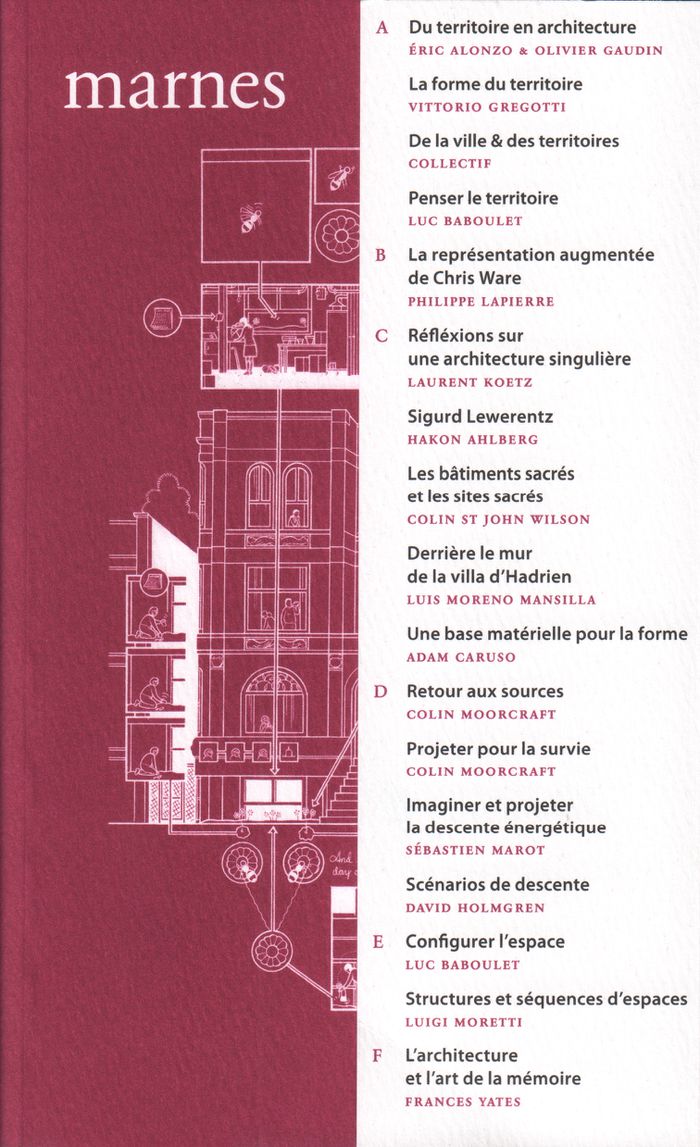
Marnes, documents d'architecture N° 5
Actions:
Price:
$48.95
(available in store)
Summary:
Marnes se situe entre la revue de fond et le recueil d'écrits de référence, inédits ou épuisés, dans les champs de l'architecture, de l'urbanisme, de l'écologie et du paysage. Ce volume contient un texte majeur de la théorie architecturale : 'La Forme du territoire' de Vittorio Gregotti (1966), une série d'écrits d'architectes contemporains – St John Wilson, Caruso, Mansilla – sur Sigurd Lewerentz, un architecte suédois dont la production est l'une des plus intrigantes du XXe siècle, un article de référence de Lugi Morreti sur les 'Structures et séquences d'espace' (1953) ainsi qu'une conférence de l'historienne Frances Yates sur l'art de la mémoire. 'Projeter pour la survie', qui dresse en 1972 un état des enjeux écologiques dans la revue Architectural Design, est mis en parallèle avec un texte récent de David Holmgren, cofondateur de la permaculture, qui trace quatre scénarios pour le futur. Enfin, Philippe Lapierre explore l'univers urbain et architectural de l'auteur de bande-dessinées Chris Ware. Ces textes s'accompagnent de contributions d'Eric Alonzo, Luc Baboulet, Olivier Gaudin, Laurent Koetz et Sébastien Marot. Marnes, documents d'architecture est une production de l'Ecole d'architecture de la ville & des territoires.
Form:
books
books
Publication:
August 2020
August 2020
Subject:
Architectural Theory
Architectural Theory
Form:
books
books
Title:
Politics of learning, politics of space: architecture and the education shock of the 1960s and 1970s
Politics of learning, politics of space: architecture and the education shock of the 1960s and 1970s
Actions:
Price:
$21.95
(available to order)
Summary:
How the relationships between education and outer space have developed historically is exemplified in an incisive way by the decades that followed the 'Sputnik shock' of 1957. The wake-up call that resulted from the Soviet space program set the global landscape of learning in motion. New schools and universities came into being against the backdrop of the reform euphoria(...)
Publication:
February 2021
February 2021
Title:
Politics of learning, politics of space: architecture and the education shock of the 1960s and 1970s
Actions:
Price:
$21.95
(available to order)
Summary:
How the relationships between education and outer space have developed historically is exemplified in an incisive way by the decades that followed the 'Sputnik shock' of 1957. The wake-up call that resulted from the Soviet space program set the global landscape of learning in motion. New schools and universities came into being against the backdrop of the reform euphoria and mood of catastrophe. At the same time, traditional pedagogical concepts were severely called into question—including the call to do away with institutions of education. What is shown in the architectures of learning is not only a politics of space, but also the educational shock that intensively shook up the global societies of the 1960s and 1970s, while they were gradually being transformed into knowledge societies.
Form:
books
books
Publication:
February 2021
February 2021
Form:
books
books
Title:
The ruins lesson
The ruins lesson
Actions:
Price:
$48.95
(available in store)
Summary:
How have ruins become so valued in Western culture and so central to our art and literature? Covering a vast chronological and geographical range, from ancient Egyptian inscriptions to twentieth-century memorials, Susan Stewart seeks to answer this question as she traces the appeal of ruins and ruins images, and the lessons that writers and artists have drawn from their(...)
Title:
The ruins lesson
Actions:
Price:
$48.95
(available in store)
Summary:
How have ruins become so valued in Western culture and so central to our art and literature? Covering a vast chronological and geographical range, from ancient Egyptian inscriptions to twentieth-century memorials, Susan Stewart seeks to answer this question as she traces the appeal of ruins and ruins images, and the lessons that writers and artists have drawn from their haunting forms. Stewart takes us on a sweeping journey through founding legends of broken covenants and original sin, the Christian appropriation of the classical past, and images of decay in early modern allegory. Stewart looks in depth at the works of Goethe, Piranesi, Blake, and Wordsworth, each of whom found in ruins a means of reinventing his art. "The ruins lesson" ultimately asks what can resist ruination—and finds in the self-transforming, ever-fleeting practices of language and thought a clue to what might truly endure.
Form:
books
books
Publication:
June 2021
June 2021
Subject:
Architectural Theory
Architectural Theory
Form:
books
books
Actions:
Price:
$65.95
(available to order)
Summary:
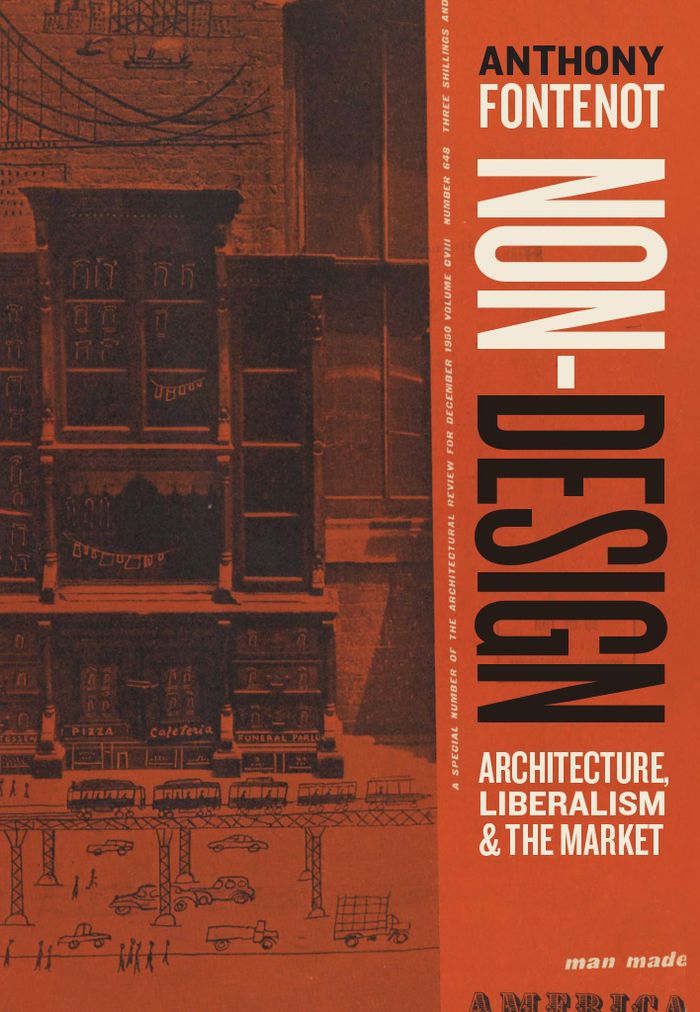
Anthony Fontenot’s book uncovers the surprisingly libertarian heart of the most influential British and American architectural and urbanist discourses of the postwar period, expressed as a critique of central design and a support of spontaneous order. "Non-design" illuminates the unexpected philosophical common ground between enemies of state support, most prominently(...)
Title:
Non-design: Architecture, liberalism, and the market
Actions:
Price:
$65.95
(available to order)
Summary:
Anthony Fontenot’s book uncovers the surprisingly libertarian heart of the most influential British and American architectural and urbanist discourses of the postwar period, expressed as a critique of central design and a support of spontaneous order. "Non-design" illuminates the unexpected philosophical common ground between enemies of state support, most prominently the economist Friedrich Hayek, and numerous notable postwar architects and urbanists like Robert Venturi, Denise Scott Brown, Reyner Banham, and Jane Jacobs. These thinkers espoused a distinctive concept of 'non-design,' characterized by a rejection of conscious design and an embrace of various phenomenon that emerge without intention or deliberate human guidance. This diffuse and complex body of theories discarded many of the cultural presuppositions of the time, shunning the traditions of modern design in favor of the wisdom, freedom, and self-organizing capacity of the market. Fontenot reveals the little-known commonalities between the aesthetic deregulation sought by ostensibly liberal thinkers and Hayek’s more controversial conception of state power, detailing what this unexplored affinity means for our conceptions of political liberalism. "Non-design" thoroughly recasts conventional views of postwar architecture and urbanism, as well as liberal and libertarian philosophies.
Form:
books
books
Publication:
July 2021
July 2021
Subject:
Architectural Theory
Architectural Theory
Form:
books
books
Title:
Reyner Banham revisited
Reyner Banham revisited
Actions:
Price:
$50.00
(available to order)
Summary:
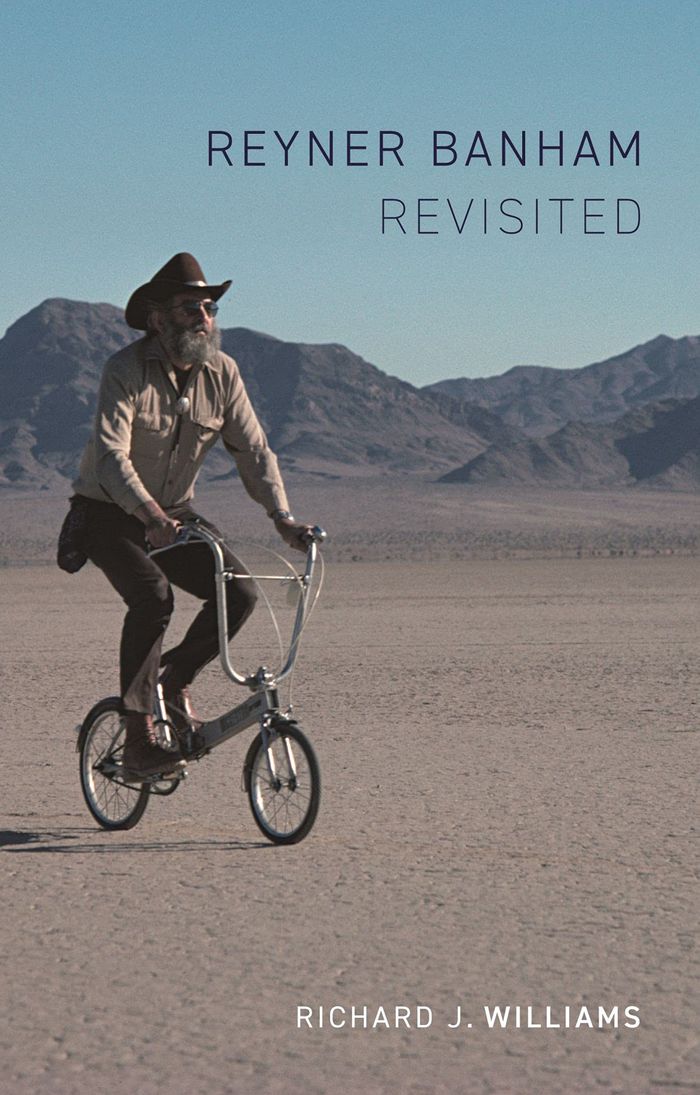
Reyner Banham (1922–88) was a prolific, iconoclastic critic of modern architecture, cities, and mass culture in Britain and the United States, and his provocative writings are inescapable in these areas. His 1971 book on Los Angeles was groundbreaking in what it told Californians about their own metropolis, and architects about what cities might be if freed from(...)
Title:
Reyner Banham revisited
Actions:
Price:
$50.00
(available to order)
Summary:
Reyner Banham (1922–88) was a prolific, iconoclastic critic of modern architecture, cities, and mass culture in Britain and the United States, and his provocative writings are inescapable in these areas. His 1971 book on Los Angeles was groundbreaking in what it told Californians about their own metropolis, and architects about what cities might be if freed from tradition. Banham’s obsession with technology, and his talent for thinking the unthinkable, mean his work still resonates now, more than thirty years after his death. This book explores the full breadth of his career and his legacy, dealing not only with his major books, but a wide range of his journalism and media outputs, as well as the singular character of Banham himself.
Form:
books
books
Publication:
July 2021
July 2021
Subject:
Architectural Theory
Architectural Theory


