


138 Results
Form:
books
books

Title:
Le livre et la bibliothèque: La quête des savoirs et de la culture, mélanges offerts à Marcel Laje
Le livre et la bibliothèque: La quête des savoirs et de la culture, mélanges offerts à Marcel Laje
Actions:
Price:
$45.00
(available in store)
Summary:
Cet ouvrage présente le livre et la bibliothèque comme objet et lieu privilégiés où s’incarne la quête des savoirs et de la culture. Qu’on pense en mode analogique ou numérique, le livre et la bibliothèque ne sont-ils pas les meilleurs moyens de répondre au besoin essentiel que nous avons tous de connaître, de savoir, de nous développer?? Le livre comme support de la(...)
$45.00
(available in store)
Summary:
Cet ouvrage présente le livre et la bibliothèque comme objet et lieu privilégiés où s’incarne la quête des savoirs et de la culture. Qu’on pense en mode analogique ou numérique, le livre et la bibliothèque ne sont-ils pas les meilleurs moyens de répondre au besoin essentiel que nous avons tous de connaître, de savoir, de nous développer?? Le livre comme support de la(...)
Subject:
Archive, library and the digital
Archive, library and the digital
Publication:
February 2023
February 2023
Title:
Le livre et la bibliothèque: La quête des savoirs et de la culture, mélanges offerts à Marcel Laje
Actions:
Price:
$45.00
(available in store)
Summary:
Cet ouvrage présente le livre et la bibliothèque comme objet et lieu privilégiés où s’incarne la quête des savoirs et de la culture. Qu’on pense en mode analogique ou numérique, le livre et la bibliothèque ne sont-ils pas les meilleurs moyens de répondre au besoin essentiel que nous avons tous de connaître, de savoir, de nous développer?? Le livre comme support de la connaissance et la bibliothèque comme milieu de recherche du savoir ont fourni de tout temps une contribution importante à l’apprentissage, à la progression, bref à l’évolution de l’être humain. L’ouvrage que nous proposons aborde ce vaste terrain de réflexion dans une approche nationale et internationale avec un regard historique, actuel et tourné vers l’avenir.
Le livre et la bibliothèque: La quête des savoirs et de la culture, mélanges offerts à Marcel Laje
Actions:
Price:
$45.00
(available in store)
Summary:
Cet ouvrage présente le livre et la bibliothèque comme objet et lieu privilégiés où s’incarne la quête des savoirs et de la culture. Qu’on pense en mode analogique ou numérique, le livre et la bibliothèque ne sont-ils pas les meilleurs moyens de répondre au besoin essentiel que nous avons tous de connaître, de savoir, de nous développer?? Le livre comme support de la connaissance et la bibliothèque comme milieu de recherche du savoir ont fourni de tout temps une contribution importante à l’apprentissage, à la progression, bref à l’évolution de l’être humain. L’ouvrage que nous proposons aborde ce vaste terrain de réflexion dans une approche nationale et internationale avec un regard historique, actuel et tourné vers l’avenir.
Form:
books
books
Publication:
February 2023
February 2023
Subject:
Archive, library and the digital
Archive, library and the digital
Form:
books
books
Actions:
Price:
$36.00
(available in store)
Summary:
This critical anthology addresses three often-overlooked issues facing archival organizations: the question of inclusion in or exclusion from the archive; the loss of individuality and specificity in the archive; the danger of homogenization; and the risk that archiving may foster a form of pigeonholing. Since the archive is a fundamental symbolic entity, on the basis of(...)
$36.00
(available in store)
Summary:
This critical anthology addresses three often-overlooked issues facing archival organizations: the question of inclusion in or exclusion from the archive; the loss of individuality and specificity in the archive; the danger of homogenization; and the risk that archiving may foster a form of pigeonholing. Since the archive is a fundamental symbolic entity, on the basis of(...)
Title:
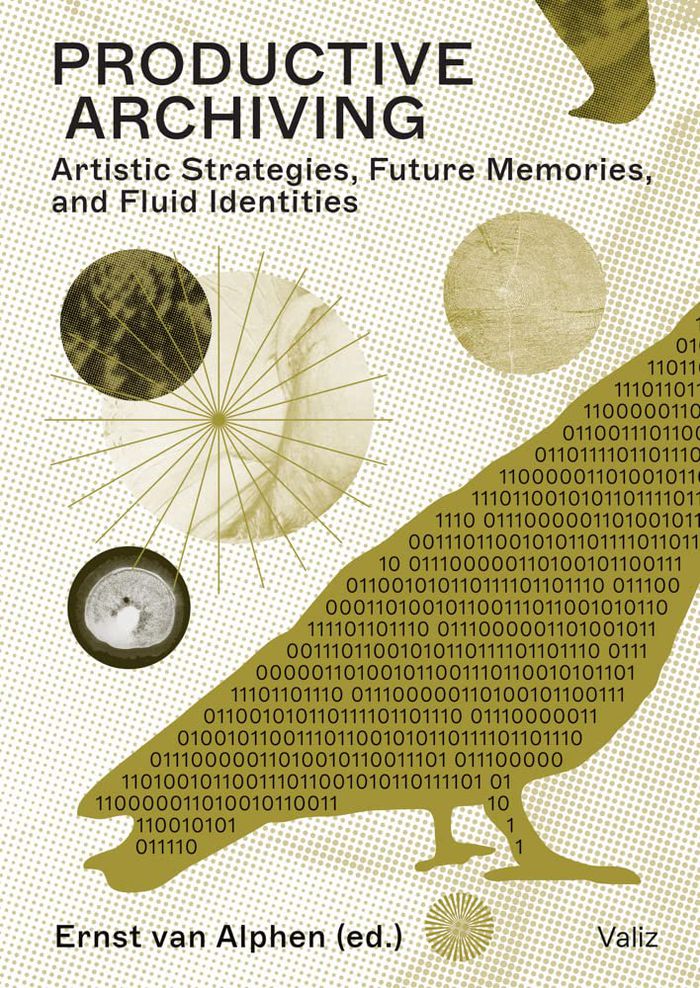
Productive archiving: Artistic strategies, future memories & fluid identities
Actions:
Price:
$36.00
(available in store)
Summary:
This critical anthology addresses three often-overlooked issues facing archival organizations: the question of inclusion in or exclusion from the archive; the loss of individuality and specificity in the archive; the danger of homogenization; and the risk that archiving may foster a form of pigeonholing. Since the archive is a fundamental symbolic entity, on the basis of which we organize our lives, the past, the present and the future, these issues require exploration. ''Productive archiving'' proposes that artistic treatments of (and interventions in) archives can offer innovative ways to foster new connections and ways of thinking and organizing.
Productive archiving: Artistic strategies, future memories & fluid identities
Actions:
Price:
$36.00
(available in store)
Summary:
This critical anthology addresses three often-overlooked issues facing archival organizations: the question of inclusion in or exclusion from the archive; the loss of individuality and specificity in the archive; the danger of homogenization; and the risk that archiving may foster a form of pigeonholing. Since the archive is a fundamental symbolic entity, on the basis of which we organize our lives, the past, the present and the future, these issues require exploration. ''Productive archiving'' proposes that artistic treatments of (and interventions in) archives can offer innovative ways to foster new connections and ways of thinking and organizing.
Form:
books
books
Publication:
June 2023
June 2023
Subject:
Archive, library and the digital
Archive, library and the digital
Form:
books
books
Title:
Dopostoria
Dopostoria
Actions:
Price:
$40.00
(available to order)
Summary:
Who owns the past? Are museum archives and their re-collections of cultural heritage a cult of the dead-and if so, are we living in a necropolis? This book on photography, cemeteries, and the archive evolved out of an experimental research project at the Bibliotheca Hertzianain Rome, with its immense collection of canonic photographs from the history of art and(...)
$40.00
(available to order)
Summary:
Who owns the past? Are museum archives and their re-collections of cultural heritage a cult of the dead-and if so, are we living in a necropolis? This book on photography, cemeteries, and the archive evolved out of an experimental research project at the Bibliotheca Hertzianain Rome, with its immense collection of canonic photographs from the history of art and(...)
Publication:
March 2023
March 2023
Title:
Dopostoria
Actions:
Price:
$40.00
(available to order)
Summary:
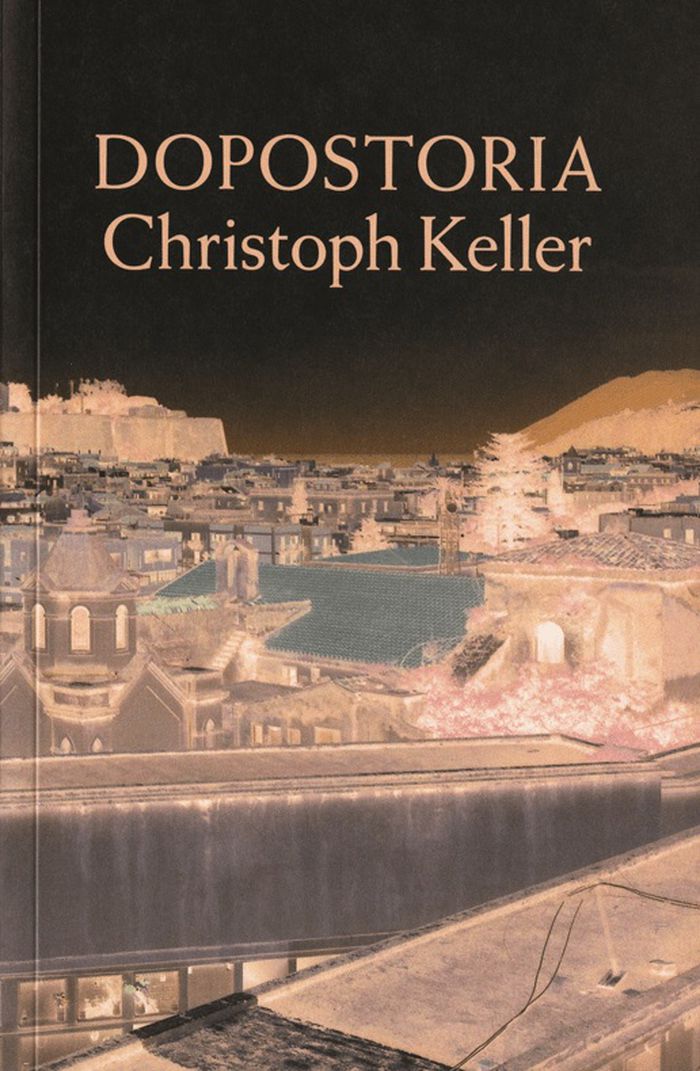
Who owns the past? Are museum archives and their re-collections of cultural heritage a cult of the dead-and if so, are we living in a necropolis? This book on photography, cemeteries, and the archive evolved out of an experimental research project at the Bibliotheca Hertzianain Rome, with its immense collection of canonic photographs from the history of art and architecture. An artist's book, it takes on the form of a description of an unfinished film in five acts-a cinematic fragment, so to speak: ''DOPOSTORIA.'' The title essay by Christoph Keller is complemented by two contributions on burial cultures in prehistory and in modernity from the archaeologist Maria Clara Martinelli and the modern historian Carolin Kosuch. A sequence of collages at the back of the book conjures up a phantasmagorical journey through an ancient-modern Rome.
Dopostoria
Actions:
Price:
$40.00
(available to order)
Summary:
Who owns the past? Are museum archives and their re-collections of cultural heritage a cult of the dead-and if so, are we living in a necropolis? This book on photography, cemeteries, and the archive evolved out of an experimental research project at the Bibliotheca Hertzianain Rome, with its immense collection of canonic photographs from the history of art and architecture. An artist's book, it takes on the form of a description of an unfinished film in five acts-a cinematic fragment, so to speak: ''DOPOSTORIA.'' The title essay by Christoph Keller is complemented by two contributions on burial cultures in prehistory and in modernity from the archaeologist Maria Clara Martinelli and the modern historian Carolin Kosuch. A sequence of collages at the back of the book conjures up a phantasmagorical journey through an ancient-modern Rome.
Form:
books
books
Publication:
March 2023
March 2023
Form:
books
books

Price:
$45.00
(available in store)
Summary:
Si le numérique est désormais ubiquitaire, quels sont les angles morts de ce regard dont le centre est partout et la circonférence nulle part ? C'est à cette question qu'essaient de répondre les 145 entrées et la vingtaine de contributeur·trices de ce glossaire. On y trouvera des expressions-clés, familières ou inattendues, des réflexions originales et des synthèses(...)
$45.00
(available in store)
Summary:
Si le numérique est désormais ubiquitaire, quels sont les angles morts de ce regard dont le centre est partout et la circonférence nulle part ? C'est à cette question qu'essaient de répondre les 145 entrées et la vingtaine de contributeur·trices de ce glossaire. On y trouvera des expressions-clés, familières ou inattendues, des réflexions originales et des synthèses(...)
Subject:
Archive, library and the digital
Archive, library and the digital
Publication:
January 2023
January 2023
Title:
Angles morts du numérique ubiquitaire: Un glossaire critique et amoureux
Actions:
Price:
$45.00
(available in store)
Summary:
Si le numérique est désormais ubiquitaire, quels sont les angles morts de ce regard dont le centre est partout et la circonférence nulle part ? C'est à cette question qu'essaient de répondre les 145 entrées et la vingtaine de contributeur·trices de ce glossaire. On y trouvera des expressions-clés, familières ou inattendues, des réflexions originales et des synthèses pédagogiques sur les profondes ambivalences dont ces angles morts sont le lieu. Ces zones d'ombre marquent en effet à la fois des limites et des lacunes des meilleurs efforts de programmation, condamnant certaines réalités à rester exclues de ce qui (se) compte dans notre monde numérisé. C'est pour nous permettre de mieux naviguer parmi ces ambivalences que cet ouvrage propose quelques éléments d'un vocabulaire commun du numérique ubiquitaire. Il se veut critique, parce que les formes prises par les exploitations actuelles du numérique sont souvent inquiétantes et demandent à être restructurées. Il se dit amoureux pour renouer avec une veine d'espoirs et d'émerveillements devant les potentiels d'émancipation et d'intelligence collectives dont reste porteuse la computation.
Angles morts du numérique ubiquitaire: Un glossaire critique et amoureux
Actions:
Price:
$45.00
(available in store)
Summary:
Si le numérique est désormais ubiquitaire, quels sont les angles morts de ce regard dont le centre est partout et la circonférence nulle part ? C'est à cette question qu'essaient de répondre les 145 entrées et la vingtaine de contributeur·trices de ce glossaire. On y trouvera des expressions-clés, familières ou inattendues, des réflexions originales et des synthèses pédagogiques sur les profondes ambivalences dont ces angles morts sont le lieu. Ces zones d'ombre marquent en effet à la fois des limites et des lacunes des meilleurs efforts de programmation, condamnant certaines réalités à rester exclues de ce qui (se) compte dans notre monde numérisé. C'est pour nous permettre de mieux naviguer parmi ces ambivalences que cet ouvrage propose quelques éléments d'un vocabulaire commun du numérique ubiquitaire. Il se veut critique, parce que les formes prises par les exploitations actuelles du numérique sont souvent inquiétantes et demandent à être restructurées. Il se dit amoureux pour renouer avec une veine d'espoirs et d'émerveillements devant les potentiels d'émancipation et d'intelligence collectives dont reste porteuse la computation.
Form:
books
books
Publication:
January 2023
January 2023
Subject:
Archive, library and the digital
Archive, library and the digital
Form:
books
books
Actions:
Price:
$30.00
(available in store)
Summary:
Gérard Berréby s'entretient avec Aurélie Noury sur ce qui constitue sa première expérience éditoriale, au tout début des années 1980. En décidant de réaliser sur sa seule initiative une édition pirate du livre d'Aragon – alors opposé à tout retirage –, Gérard Berréby soulève plusieurs questions liées à l'appropriation et à l'autoédition : la copie et le faux, la(...)
$30.00
(available in store)
Summary:
Gérard Berréby s'entretient avec Aurélie Noury sur ce qui constitue sa première expérience éditoriale, au tout début des années 1980. En décidant de réaliser sur sa seule initiative une édition pirate du livre d'Aragon – alors opposé à tout retirage –, Gérard Berréby soulève plusieurs questions liées à l'appropriation et à l'autoédition : la copie et le faux, la(...)
Title:
Documents relatifs à l'édition pirate du Traité du style de Louis Aragon par Gérard Berréby
Actions:
Price:
$30.00
(available in store)
Summary:
Gérard Berréby s'entretient avec Aurélie Noury sur ce qui constitue sa première expérience éditoriale, au tout début des années 1980. En décidant de réaliser sur sa seule initiative une édition pirate du livre d'Aragon – alors opposé à tout retirage –, Gérard Berréby soulève plusieurs questions liées à l'appropriation et à l'autoédition : la copie et le faux, la circulation des textes, le détournement, le droit d'auteur, l'édition comme geste politique, la prescription, etc. L'épisode, inédit dans l'histoire de l'édition généraliste, aura provoqué de nombreuses réactions dans le monde littéraire, jusqu'aux poursuites judiciaires engagées par Gallimard. À partir des témoignages et documents d'époque, analysés par Berréby et mis en perspective par Nathalie Leleu plus de 40 ans après, l'ouvrage retrace les circonstances d'un geste fondateur pour le futur directeur des éditions Allia.
Documents relatifs à l'édition pirate du Traité du style de Louis Aragon par Gérard Berréby
Actions:
Price:
$30.00
(available in store)
Summary:
Gérard Berréby s'entretient avec Aurélie Noury sur ce qui constitue sa première expérience éditoriale, au tout début des années 1980. En décidant de réaliser sur sa seule initiative une édition pirate du livre d'Aragon – alors opposé à tout retirage –, Gérard Berréby soulève plusieurs questions liées à l'appropriation et à l'autoédition : la copie et le faux, la circulation des textes, le détournement, le droit d'auteur, l'édition comme geste politique, la prescription, etc. L'épisode, inédit dans l'histoire de l'édition généraliste, aura provoqué de nombreuses réactions dans le monde littéraire, jusqu'aux poursuites judiciaires engagées par Gallimard. À partir des témoignages et documents d'époque, analysés par Berréby et mis en perspective par Nathalie Leleu plus de 40 ans après, l'ouvrage retrace les circonstances d'un geste fondateur pour le futur directeur des éditions Allia.
Form:
books
books
Publication:
March 2024
March 2024
Subject:
Archive, library and the digital
Archive, library and the digital
Form:
books
books
Actions:
Price:
$66.00
(available to order)
Summary:
Publishing is experiencing one of the most transformative phases in its history. In "Tactical publishing", a sequel to "Post-digital print", Alessandro Ludovico explores the forces driving this historical phase, highlighting the tremendous opportunities it presents. Our task, he believes, is to develop an alternative publishing system that transcends the dichotomy between(...)
$66.00
(available to order)
Summary:
Publishing is experiencing one of the most transformative phases in its history. In "Tactical publishing", a sequel to "Post-digital print", Alessandro Ludovico explores the forces driving this historical phase, highlighting the tremendous opportunities it presents. Our task, he believes, is to develop an alternative publishing system that transcends the dichotomy between(...)
Title:
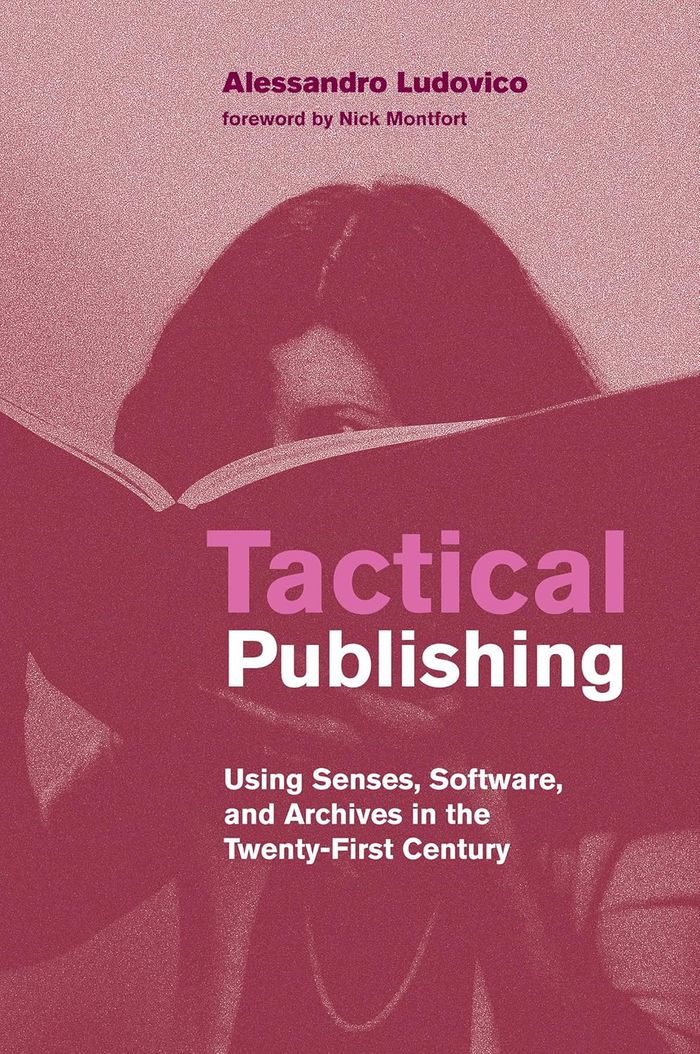
Tactical publishing: Using Senses, Software, and Archives in the Twenty-First century
Actions:
Price:
$66.00
(available to order)
Summary:
Publishing is experiencing one of the most transformative phases in its history. In "Tactical publishing", a sequel to "Post-digital print", Alessandro Ludovico explores the forces driving this historical phase, highlighting the tremendous opportunities it presents. Our task, he believes, is to develop an alternative publishing system that transcends the dichotomy between paper and digital media. He focuses first on the two activities on which publishing is premised—reading and writing (with an emphasis onwriting machines and post-truth in the latter)—and then deconstructs the concept, proposing alternative strategies inspired by recent practices and unconventional uses of technology.
Tactical publishing: Using Senses, Software, and Archives in the Twenty-First century
Actions:
Price:
$66.00
(available to order)
Summary:
Publishing is experiencing one of the most transformative phases in its history. In "Tactical publishing", a sequel to "Post-digital print", Alessandro Ludovico explores the forces driving this historical phase, highlighting the tremendous opportunities it presents. Our task, he believes, is to develop an alternative publishing system that transcends the dichotomy between paper and digital media. He focuses first on the two activities on which publishing is premised—reading and writing (with an emphasis onwriting machines and post-truth in the latter)—and then deconstructs the concept, proposing alternative strategies inspired by recent practices and unconventional uses of technology.
Form:
books
books
Publication:
January 2024
January 2024
Subject:
Archive, library and the digital
Archive, library and the digital
Form:
books
books
Actions:
Price:
$34.95
(available to order)
Summary:
Philip K. Dick, one of the most prolific and visionary authors of the 20th century, crafted compelling visions of possible futures and dystopian realities teeming with humans, artificial intelligences, and more. Yet, the Dickian universe is more than just its characters—it’s a realm intricately built with technological devices, machines, and objects entirely conceived by(...)
$34.95
(available to order)
Summary:
Philip K. Dick, one of the most prolific and visionary authors of the 20th century, crafted compelling visions of possible futures and dystopian realities teeming with humans, artificial intelligences, and more. Yet, the Dickian universe is more than just its characters—it’s a realm intricately built with technological devices, machines, and objects entirely conceived by(...)
Subject:
Archive, library and the digital
Archive, library and the digital
Publication:
July 2024
July 2024
Title:
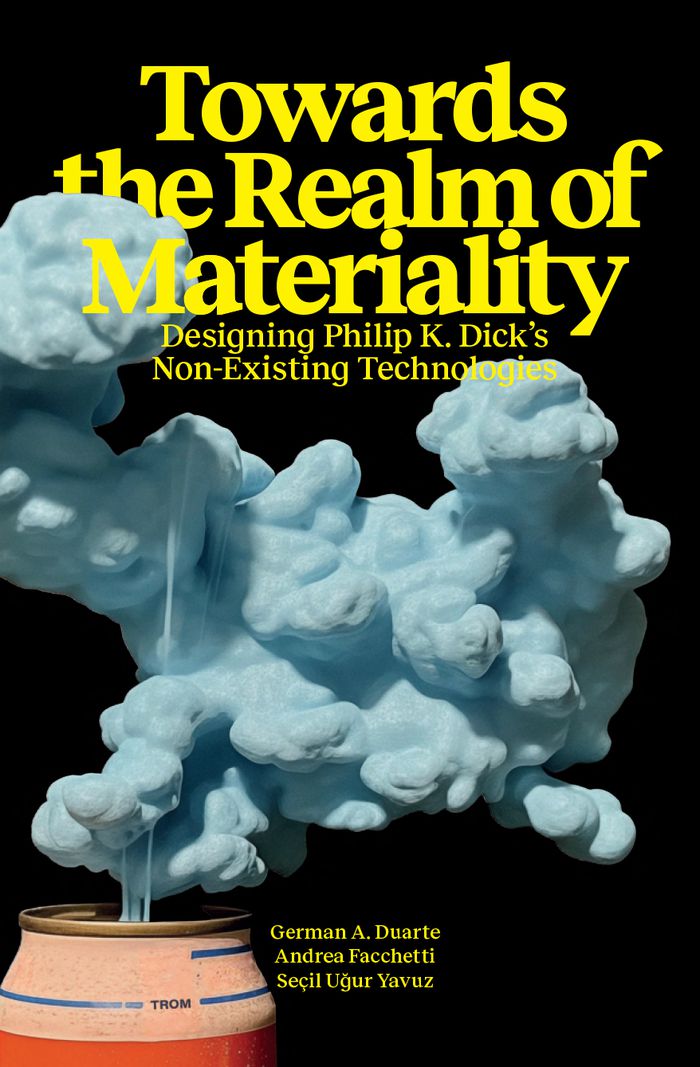
Towards the realm of materiality: Designing Philip K. Dick's non-existing technologies
Actions:
Price:
$34.95
(available to order)
Summary:
Philip K. Dick, one of the most prolific and visionary authors of the 20th century, crafted compelling visions of possible futures and dystopian realities teeming with humans, artificial intelligences, and more. Yet, the Dickian universe is more than just its characters—it’s a realm intricately built with technological devices, machines, and objects entirely conceived by this brilliant mind. How did Philip K. Dick envision these technologies, and through them, the future? And now, decades after his time, how should we perceive and interpret these tools? More intriguingly, how can we decode and reconstruct the creative process that led to the creation and "materialization" of these devices? Grounded in a multidisciplinary framework, this volume explores alternative designs and projects for some of the non-existing technologies described in Philip K. Dick’s oeuvre.
Towards the realm of materiality: Designing Philip K. Dick's non-existing technologies
Actions:
Price:
$34.95
(available to order)
Summary:
Philip K. Dick, one of the most prolific and visionary authors of the 20th century, crafted compelling visions of possible futures and dystopian realities teeming with humans, artificial intelligences, and more. Yet, the Dickian universe is more than just its characters—it’s a realm intricately built with technological devices, machines, and objects entirely conceived by this brilliant mind. How did Philip K. Dick envision these technologies, and through them, the future? And now, decades after his time, how should we perceive and interpret these tools? More intriguingly, how can we decode and reconstruct the creative process that led to the creation and "materialization" of these devices? Grounded in a multidisciplinary framework, this volume explores alternative designs and projects for some of the non-existing technologies described in Philip K. Dick’s oeuvre.
Form:
books
books
Publication:
July 2024
July 2024
Subject:
Archive, library and the digital
Archive, library and the digital
Form:
books
books

Price:
$37.95
(available to order)
Summary:
In "The politics of collecting," Eunsong Kim traces how racial capitalism and colonialism situated the rise of US museum collections and conceptual art forms. Investigating historical legal and property claims, she argues that regimes of expropriation--rather than merit or good taste--are responsible for popular ideas of formal innovation and artistic genius. In doing so,(...)
$37.95
(available to order)
Summary:
In "The politics of collecting," Eunsong Kim traces how racial capitalism and colonialism situated the rise of US museum collections and conceptual art forms. Investigating historical legal and property claims, she argues that regimes of expropriation--rather than merit or good taste--are responsible for popular ideas of formal innovation and artistic genius. In doing so,(...)
Title:
The politics of collecting: Race and the aestheticization of property
Actions:
Price:
$37.95
(available to order)
Summary:
In "The politics of collecting," Eunsong Kim traces how racial capitalism and colonialism situated the rise of US museum collections and conceptual art forms. Investigating historical legal and property claims, she argues that regimes of expropriation--rather than merit or good taste--are responsible for popular ideas of formal innovation and artistic genius. In doing so, she details how Marcel Duchamp's canonization has more to do with his patron's donations to museums than it does the quality of Duchamp's work, and she uncovers the racialized and financialized logic behind the Archive of New Poetry's collecting practices. Ranging from the conception of philanthropy devised by the robber barons of the late nineteenth century to ongoing digitization projects, Kim provides a new history of contemporary art that accounts for the complicated entanglement of race, capital, and labor behind storied art institutions and artists. Drawing on history, theory, and economics, Kim challenges received notions of artistic success and talent and calls for a new vision of art beyond the cultural institution.
The politics of collecting: Race and the aestheticization of property
Actions:
Price:
$37.95
(available to order)
Summary:
In "The politics of collecting," Eunsong Kim traces how racial capitalism and colonialism situated the rise of US museum collections and conceptual art forms. Investigating historical legal and property claims, she argues that regimes of expropriation--rather than merit or good taste--are responsible for popular ideas of formal innovation and artistic genius. In doing so, she details how Marcel Duchamp's canonization has more to do with his patron's donations to museums than it does the quality of Duchamp's work, and she uncovers the racialized and financialized logic behind the Archive of New Poetry's collecting practices. Ranging from the conception of philanthropy devised by the robber barons of the late nineteenth century to ongoing digitization projects, Kim provides a new history of contemporary art that accounts for the complicated entanglement of race, capital, and labor behind storied art institutions and artists. Drawing on history, theory, and economics, Kim challenges received notions of artistic success and talent and calls for a new vision of art beyond the cultural institution.
Form:
books
books
Publication:
August 2024
August 2024
Subject:
Archive, library and the digital
Archive, library and the digital
Form:
books
books
Actions:
Price:
$52.00
(available to order)
Summary:
Dans une démarche interdisciplinaire inspirée des études des sciences et techniques, articulant approches muséologiques et sociologiques, cette étude inédite sur les réserves des musées apporte un éclairage nouveau sur le monde de la conservation de l'art et du patrimoine. Lieu essentiel du musée où sont conservées les œuvres quand elles ne sont pas exposées, les(...)
$52.00
(available to order)
Summary:
Dans une démarche interdisciplinaire inspirée des études des sciences et techniques, articulant approches muséologiques et sociologiques, cette étude inédite sur les réserves des musées apporte un éclairage nouveau sur le monde de la conservation de l'art et du patrimoine. Lieu essentiel du musée où sont conservées les œuvres quand elles ne sont pas exposées, les(...)
Subject:
Archive, library and the digital
Archive, library and the digital
Publication:
September 2024
September 2024
Title:
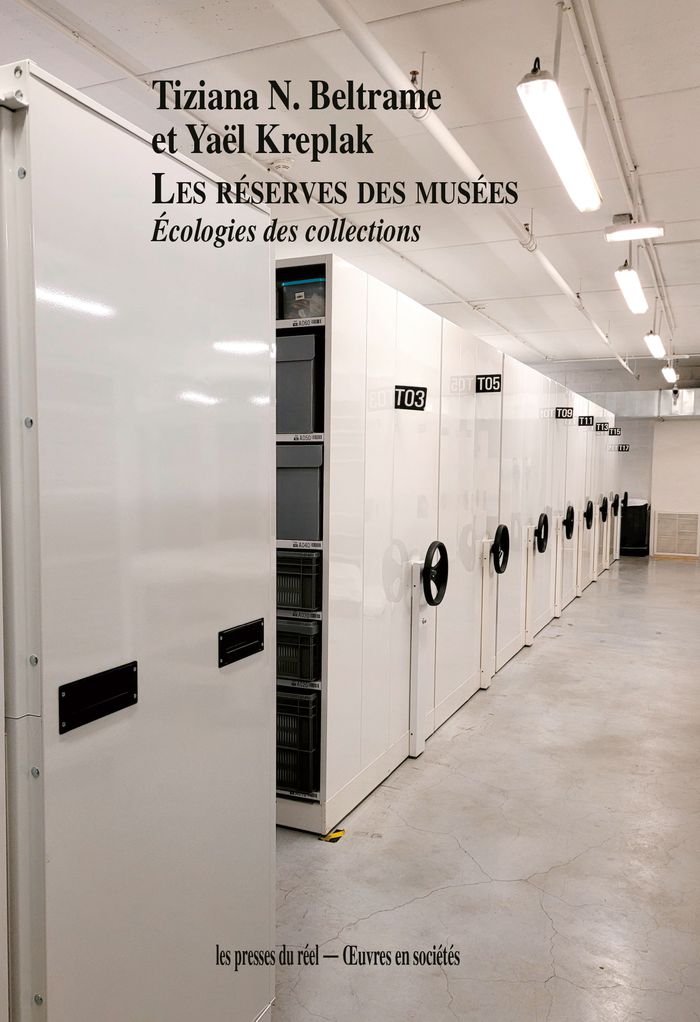
Les réserves des musées : Écologies des collections
Actions:
Price:
$52.00
(available to order)
Summary:
Dans une démarche interdisciplinaire inspirée des études des sciences et techniques, articulant approches muséologiques et sociologiques, cette étude inédite sur les réserves des musées apporte un éclairage nouveau sur le monde de la conservation de l'art et du patrimoine. Lieu essentiel du musée où sont conservées les œuvres quand elles ne sont pas exposées, les réserves sont restées longtemps dans l'ombre des salles d'expositions. Or, dans la majorité des institutions, seule une infime portion des collections est présentée au public : il y a donc un réel enjeu à penser la relation entre leurs parts visible et invisible, les problématiques liées à leur stockage et leur mouvement, et le travail qu'elles impliquent.
Les réserves des musées : Écologies des collections
Actions:
Price:
$52.00
(available to order)
Summary:
Dans une démarche interdisciplinaire inspirée des études des sciences et techniques, articulant approches muséologiques et sociologiques, cette étude inédite sur les réserves des musées apporte un éclairage nouveau sur le monde de la conservation de l'art et du patrimoine. Lieu essentiel du musée où sont conservées les œuvres quand elles ne sont pas exposées, les réserves sont restées longtemps dans l'ombre des salles d'expositions. Or, dans la majorité des institutions, seule une infime portion des collections est présentée au public : il y a donc un réel enjeu à penser la relation entre leurs parts visible et invisible, les problématiques liées à leur stockage et leur mouvement, et le travail qu'elles impliquent.
Form:
books
books
Publication:
September 2024
September 2024
Subject:
Archive, library and the digital
Archive, library and the digital
Form:
books
books
Title:
In the swarm
In the swarm
Actions:
Price:
$18.95
(available to order)
Summary:
Digital communication and social media have taken over our lives. In this contrarian reflection on digitized life, Byung-Chul Han counters the cheerleaders for Twitter revolutions and Facebook activism by arguing that digital communication is in fact responsible for the disintegration of community and public space and is slowly eroding any possibility for real political(...)
$18.95
(available to order)
Summary:
Digital communication and social media have taken over our lives. In this contrarian reflection on digitized life, Byung-Chul Han counters the cheerleaders for Twitter revolutions and Facebook activism by arguing that digital communication is in fact responsible for the disintegration of community and public space and is slowly eroding any possibility for real political(...)
Title:
In the swarm
Actions:
Price:
$18.95
(available to order)
Summary:
Digital communication and social media have taken over our lives. In this contrarian reflection on digitized life, Byung-Chul Han counters the cheerleaders for Twitter revolutions and Facebook activism by arguing that digital communication is in fact responsible for the disintegration of community and public space and is slowly eroding any possibility for real political action and meaningful political discourse. In the predigital, analog era, by the time an angry letter to the editor had been composed, mailed, and received, the immediate agitation had passed. Today, digital communication enables instantaneous, impulsive reaction, meant to express and stir up outrage on the spot. “The shitstorm,” writes Han, ”represents an authentic phenomenon of digital communication.” Meanwhile, the public, the senders and receivers of these communications have become a digital swarm—not a mass, or a crowd, or Negri and Hardt’s antiquated notion of a “multitude,” but a set of isolated individuals incapable of forming a “we,” incapable of calling dominant power relations into question, incapable of formulating a future because of an obsession with the present. The digital swarm is a fragmented entity that can focus on individual persons only in order to make them an object of scandal. Han, one of the most widely read philosophers in Europe today, describes a society in which information has overrun thought, in which the same algorithms are employed by Facebook, the stock market, and the intelligence services. Democracy is under threat because digital communication has made freedom and control indistinguishable. Big Brother has been succeeded by Big Data.
In the swarm
Actions:
Price:
$18.95
(available to order)
Summary:
Digital communication and social media have taken over our lives. In this contrarian reflection on digitized life, Byung-Chul Han counters the cheerleaders for Twitter revolutions and Facebook activism by arguing that digital communication is in fact responsible for the disintegration of community and public space and is slowly eroding any possibility for real political action and meaningful political discourse. In the predigital, analog era, by the time an angry letter to the editor had been composed, mailed, and received, the immediate agitation had passed. Today, digital communication enables instantaneous, impulsive reaction, meant to express and stir up outrage on the spot. “The shitstorm,” writes Han, ”represents an authentic phenomenon of digital communication.” Meanwhile, the public, the senders and receivers of these communications have become a digital swarm—not a mass, or a crowd, or Negri and Hardt’s antiquated notion of a “multitude,” but a set of isolated individuals incapable of forming a “we,” incapable of calling dominant power relations into question, incapable of formulating a future because of an obsession with the present. The digital swarm is a fragmented entity that can focus on individual persons only in order to make them an object of scandal. Han, one of the most widely read philosophers in Europe today, describes a society in which information has overrun thought, in which the same algorithms are employed by Facebook, the stock market, and the intelligence services. Democracy is under threat because digital communication has made freedom and control indistinguishable. Big Brother has been succeeded by Big Data.
Form:
books
books
Publication:
April 2017
April 2017
Subject:
Archive, library and the digital
Archive, library and the digital


