


138 Results
Form:
books
books
Title:
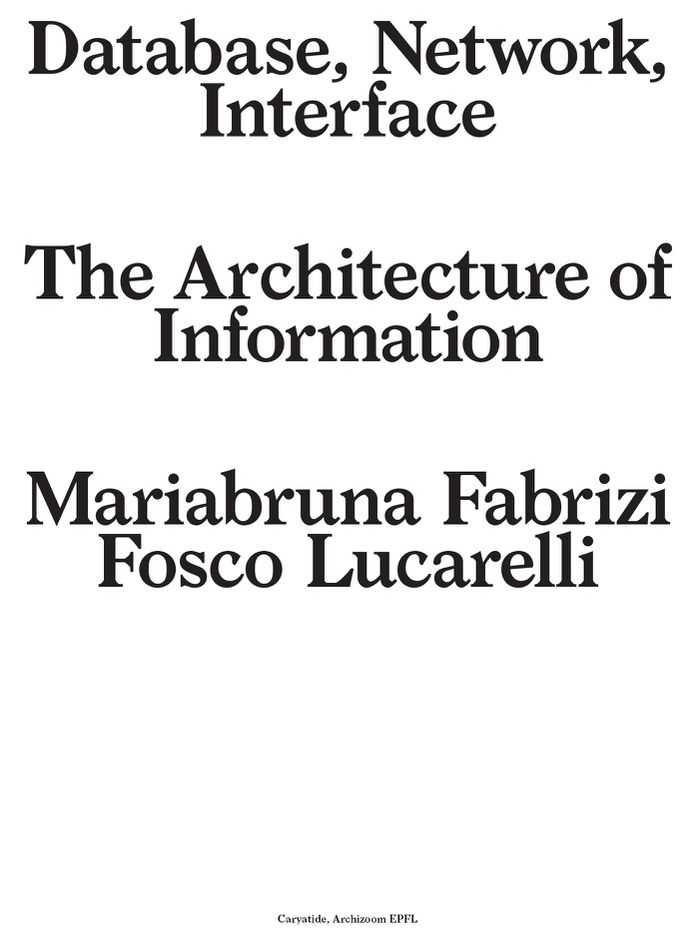
Database network interface
Database network interface
Actions:
Price:
$59.95
(available in store)
Summary:
Throughout human history, the library, the archive and the museum have embodied knowledge, information and collective culture to such an extent that it is possible to compare systems of information organisation with spatial and architectural typologies. The publication, conceived in the occasion of the exhibition at Archizoom (EPFL), dives into the relationship between(...)
Subject:
Archive, library and the digital
Archive, library and the digital
Publication:
October 2021
October 2021
Title:
Database network interface
Actions:
Price:
$59.95
(available in store)
Summary:
Throughout human history, the library, the archive and the museum have embodied knowledge, information and collective culture to such an extent that it is possible to compare systems of information organisation with spatial and architectural typologies. The publication, conceived in the occasion of the exhibition at Archizoom (EPFL), dives into the relationship between architectural and digital culture beyond the pure rhetoric of the digital turn and the digital as architectural style. The hypothesis is that the notions of "database", "network" and "interface"—common in the field of information technology—could be related to architectural issues of a formal, compositional or symbolic nature, of which spatial arrangements, plans or façades are the expression. In this sense, the publication presents a selection of case studies highlighting the possible links between digital and non-digital cultural projects and their architectural counterparts.
Form:
books
books
Publication:
October 2021
October 2021
Subject:
Archive, library and the digital
Archive, library and the digital
Form:
books
books
Title:
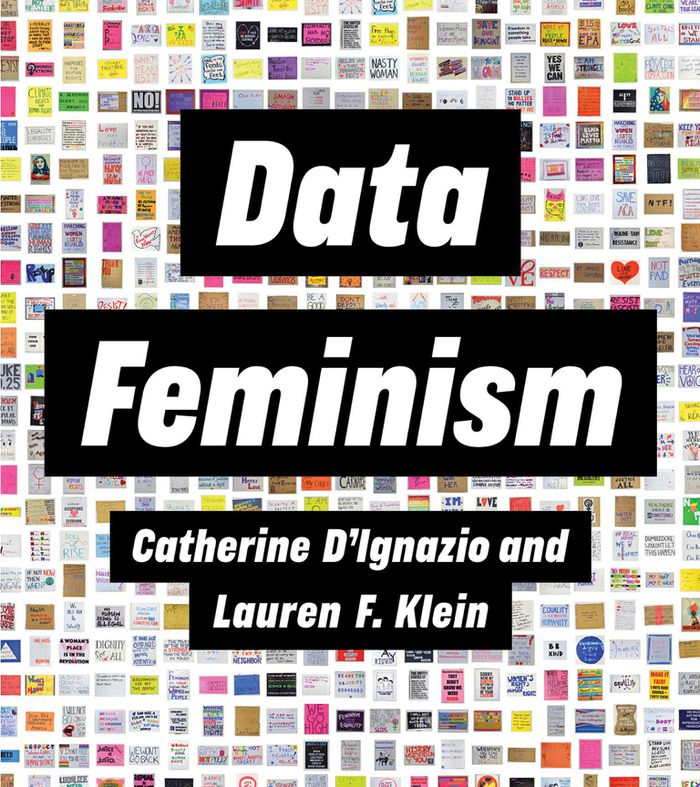
Data feminism
Data feminism
Actions:
Price:
$39.95
(available to order)
Summary:
Today, data science is a form of power. It has been used to expose injustice, improve health outcomes, and topple governments. But it has also been used to discriminate, police, and surveil. This potential for good, on the one hand, and harm, on the other, makes it essential to ask: Data science by whom? Data science for whom? Data science with whose interests in mind?(...)
Subject:
Archive, library and the digital
Archive, library and the digital
Publication:
March 2020
March 2020
Title:
Data feminism
Actions:
Price:
$39.95
(available to order)
Summary:
Today, data science is a form of power. It has been used to expose injustice, improve health outcomes, and topple governments. But it has also been used to discriminate, police, and surveil. This potential for good, on the one hand, and harm, on the other, makes it essential to ask: Data science by whom? Data science for whom? Data science with whose interests in mind? The narratives around big data and data science are overwhelmingly white, male, and techno-heroic. In ''Data feminism,'' Catherine D'Ignazio and Lauren Klein present a new way of thinking about data science and data ethics—one that is informed by intersectional feminist thought. Illustrating data feminism in action, D'Ignazio and Klein show how challenges to the male/female binary can help challenge other hierarchical (and empirically wrong) classification systems. They explain how, for example, an understanding of emotion can expand our ideas about effective data visualization, and how the concept of invisible labor can expose the significant human efforts required by our automated systems. And they show why the data never, ever ''speak for themselves.'' ''Data feminism'' offers strategies for data scientists seeking to learn how feminism can help them work toward justice, and for feminists who want to focus their efforts on the growing field of data science. But ''Data feminism'' is about much more than gender. It is about power, about who has it and who doesn't, and about how those differentials of power can be challenged and changed.
Form:
books
books
Publication:
March 2020
March 2020
Subject:
Archive, library and the digital
Archive, library and the digital
Form:
books
books

Actions:
Price:
$20.00
(available in store)
Summary:
Ce sont les nouveaux grands seigneurs de notre temps. Les GAFAM (Google, Apple, Facebook, Amazon, Microsoft) et autres plateformes (Airbnb, Uber et Netflix) règnent sans partage sur un empire numérique qui transcende les frontières nationales, au mépris de la souveraineté des États et de leurs législations. Épidémie de fausses nouvelles, polarisation des débats, contrôle(...)
Publication:
April 2022
April 2022
Title:
Les barbares numériques : Résister à l'invasion des GAFAM
Actions:
Price:
$20.00
(available in store)
Summary:
Ce sont les nouveaux grands seigneurs de notre temps. Les GAFAM (Google, Apple, Facebook, Amazon, Microsoft) et autres plateformes (Airbnb, Uber et Netflix) règnent sans partage sur un empire numérique qui transcende les frontières nationales, au mépris de la souveraineté des États et de leurs législations. Épidémie de fausses nouvelles, polarisation des débats, contrôle des données personnelles, surconsommation énergétique et pollution atmosphérique… Ces barbares numériques représentent une véritable menace pour la démocratie. Devant la passivité de nos gouvernements, à Québec comme à Ottawa, Alain Saulnier lance un appel à la résistance. Pour l’ancien directeur de l’information de Radio-Canada, il est urgent d’établir l’équité fiscale, de protéger les droits d’auteur et de moderniser tout l’écosystème numérique. Il en va de la survie de nos médias, de notre langue et de notre culture françaises en Amérique du Nord.
Form:
books
books
Publication:
April 2022
April 2022
Form:
books
books
Title:
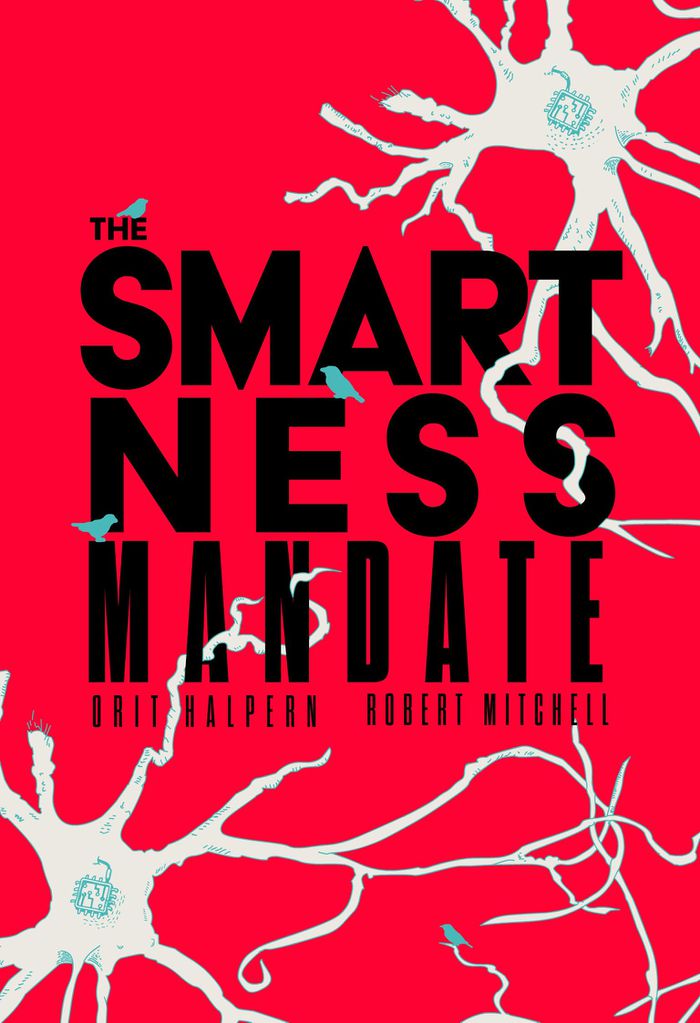
The smartness mandate
The smartness mandate
Actions:
Price:
$47.00
(available to order)
Summary:
In this book, the authors suggest that "smartness" is not primarily a technology, but rather an epistemology. Through this lens, they offer a critical exploration of the practices, technologies, and subjects that such an understanding relies upon—above all, artificial intelligence and machine learning. They approach these not simply as techniques for solving problems of(...)
Subject:
Archive, library and the digital
Archive, library and the digital
Publication:
December 2022
December 2022
Title:
The smartness mandate
Actions:
Price:
$47.00
(available to order)
Summary:
In this book, the authors suggest that "smartness" is not primarily a technology, but rather an epistemology. Through this lens, they offer a critical exploration of the practices, technologies, and subjects that such an understanding relies upon—above all, artificial intelligence and machine learning. They approach these not simply as techniques for solving problems of calculations, but rather as modes of managing life (human and other) in terms of neo-Darwinian evolution, distributed intelligences, and "resilience," all of which have serious implications for society, politics, and the environment.
Form:
books
books
Publication:
December 2022
December 2022
Subject:
Archive, library and the digital
Archive, library and the digital
Form:
books
books

Actions:
Price:
$47.00
(available to order)
Summary:
The only way to handle data responsibly, says Melanie Feinberg in this incisive work, is to take into account its human character. Though the data she discusses may seem familiar, close scrutiny shows it to be ambiguous, complicated, and uncertain: unruly. Drawing on the tools of information science, she uses everyday events to demonstrate a practical, critical, and(...)
Title:
Everyday adventures with unruly data
Actions:
Price:
$47.00
(available to order)
Summary:
The only way to handle data responsibly, says Melanie Feinberg in this incisive work, is to take into account its human character. Though the data she discusses may seem familiar, close scrutiny shows it to be ambiguous, complicated, and uncertain: unruly. Drawing on the tools of information science, she uses everyday events to demonstrate a practical, critical, and generative mode of thinking about data: its creation, management, aggregation, and use. As she reflects on the implications of commonplace events, Feinberg explicates fundamental concepts of data that reveal the many tiny design decisions—which may not even seem like design at all—that shape how data comes to be. Through the themes of serendipity, objectivity, equivalence, interoperability, taxonomy, labels, and locality, she illuminates the surprisingly pervasive role of data in our daily thoughts and lives.
Form:
books
books
Publication:
October 2022
October 2022
Subject:
Archive, library and the digital
Archive, library and the digital
Form:
books
books

Title:
Being digital
Being digital
Actions:
Price:
$19.00
(available to order)
Summary:
In lively, mordantly witty prose, Negroponte decodes the mysteries--and debunks the hype--surrounding bandwidth, multimedia, virtual reality, and the Internet, and explains why such touted innovations as the fax and the CD-ROM are likely to go the way of the BetaMax. "Succinct and readable. . . . If you suffer from digital anxiety . . .
Publication:
October 1996
October 1996
Title:
Being digital
Actions:
Price:
$19.00
(available to order)
Summary:
In lively, mordantly witty prose, Negroponte decodes the mysteries--and debunks the hype--surrounding bandwidth, multimedia, virtual reality, and the Internet, and explains why such touted innovations as the fax and the CD-ROM are likely to go the way of the BetaMax. "Succinct and readable. . . . If you suffer from digital anxiety . . .
Form:
books
books
Publication:
October 1996
October 1996
Form:
books
books

Price:
$21.95
(available to order)
Summary:
Google, Facebook, Amazon, mais aussi les banques et les assureurs : la constitution d’énormes bases de données (les « big data ») confère une place de plus en plus centrale aux algorithmes. L’ambition de ce livre est de montrer comment ces nouvelles techniques de calcul bouleversent notre société. À travers le classement de l’information, la personnalisation publicitaire,(...)
Publication:
November 2015
November 2015
Title:
À quoi rêvent les algorithmes. Nos vies à l'heure des big data
Actions:
Price:
$21.95
(available to order)
Summary:
Google, Facebook, Amazon, mais aussi les banques et les assureurs : la constitution d’énormes bases de données (les « big data ») confère une place de plus en plus centrale aux algorithmes. L’ambition de ce livre est de montrer comment ces nouvelles techniques de calcul bouleversent notre société. À travers le classement de l’information, la personnalisation publicitaire, la recommandation de produits, le ciblage des comportements ou l’orientation des déplacements, les méga-calculateurs sont en train de s’immiscer, de plus en plus intimement, dans la vie des individus. Or, loin d’être de simples outils techniques, les algorithmes véhiculent un projet politique. Comprendre leur logique, les valeurs et le type de société qu’ils promeuvent, c’est donner aux internautes les moyens de reprendre du pouvoir dans la société des calculs.
Form:
books
books
Publication:
November 2015
November 2015
Form:
books
books

Actions:
Price:
$48.00
(available to order)
Summary:
Is there a cultural logic of what we have come to call the information age? Have the technologies and techniques centered on the computer provided not only tools but also the metaphors through which we now understand the social and economic formation of our world? In Control, Seb Franklin addresses the conditions of knowledge that make the concept of the "information(...)
Title:
Control: digitality as cultural logic
Actions:
Price:
$48.00
(available to order)
Summary:
Is there a cultural logic of what we have come to call the information age? Have the technologies and techniques centered on the computer provided not only tools but also the metaphors through which we now understand the social and economic formation of our world? In Control, Seb Franklin addresses the conditions of knowledge that make the concept of the "information economy" possible while at the same time obscuring its effects on material social spaces. In so doing, Franklin traces three intertwined threads: the relationships among information, labor, and social management that emerged in the nineteenth century; the mid-twentieth-century diffusion of computational metaphors; and the appearance of informatic principles in certain contemporary socioeconomic and cultural practices. Drawing on critical theory, media theory, and the history of science, Franklin names control as the episteme grounding late capitalism. Beyond any specific device or set of technically mediated practices, digitality functions within this episteme as the logical basis for reshaped concepts of labor, subjectivity, and collectivity, as well as for the intensification of older modes of exclusion and dispossession. In tracking the pervasiveness of this logical mode into the present, Franklin locates the cultural traces of control across a diverse body of objects and practices, from cybernetics to economic theory and management styles, and from concepts of language and subjectivity to literary texts, films, and video games.
Form:
books
books
Publication:
November 2015
November 2015
Subject:
Archive, library and the digital
Archive, library and the digital


