


137 Results
Form:
books
books
Price:
$21.00
(available to order)
Summary:
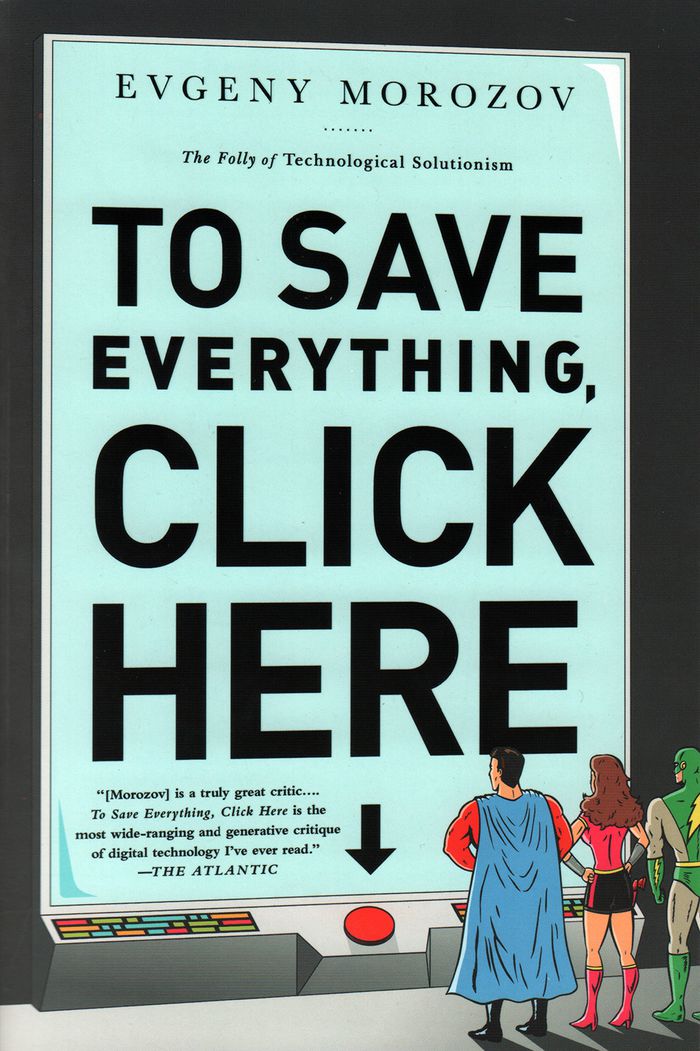
Arguing that we badly need a new, post-Internet way to debate the moral consequences of digital technologies, To Save Everything, Click Here warns against a world of seamless efficiency, where everyone is forced to wear Silicon Valley's digital straitjacket.
$21.00
(available to order)
Summary:
Arguing that we badly need a new, post-Internet way to debate the moral consequences of digital technologies, To Save Everything, Click Here warns against a world of seamless efficiency, where everyone is forced to wear Silicon Valley's digital straitjacket.
Title:
To save everything, click here: the folly of technological solutionism
Actions:
Price:
$21.00
(available to order)
Summary:
Arguing that we badly need a new, post-Internet way to debate the moral consequences of digital technologies, To Save Everything, Click Here warns against a world of seamless efficiency, where everyone is forced to wear Silicon Valley's digital straitjacket.
To save everything, click here: the folly of technological solutionism
Actions:
Price:
$21.00
(available to order)
Summary:
Arguing that we badly need a new, post-Internet way to debate the moral consequences of digital technologies, To Save Everything, Click Here warns against a world of seamless efficiency, where everyone is forced to wear Silicon Valley's digital straitjacket.
Form:
books
books
Publication:
April 2014
April 2014
Subject:
Archive, library and the digital
Archive, library and the digital
Form:
books
books
Actions:
Price:
$37.95
(available to order)
Summary:
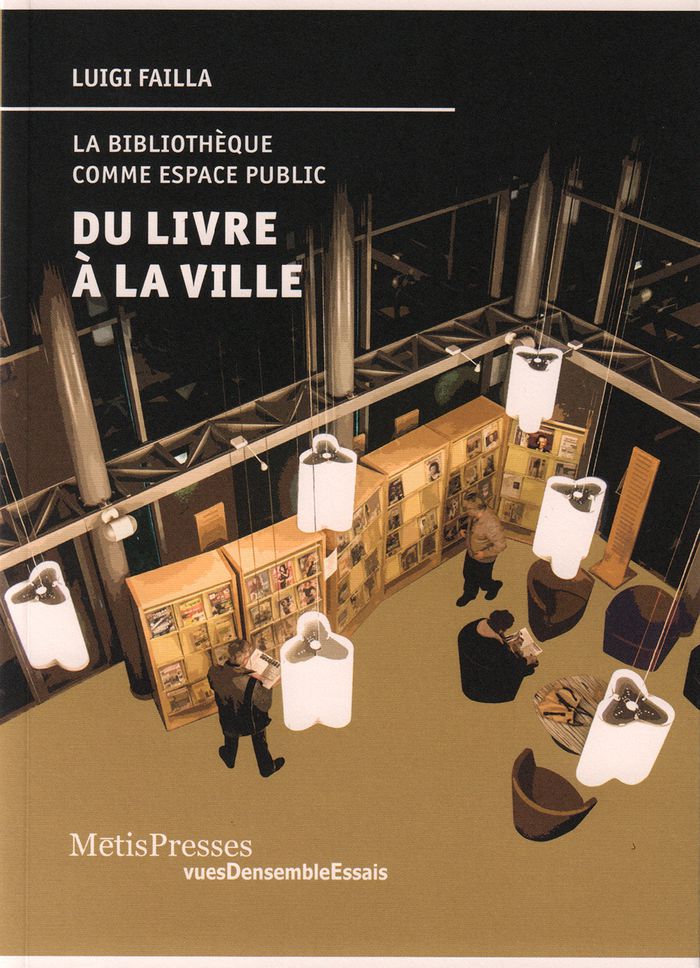
Le potentiel de la bibliothèque de consolider le lien entre la ville et l'homme contemporain invalide les fondements des années 1990, basés sur une vision hiérarchique de l'espace, au profit d'une conception vicinale. La définition d'un espace non-hiérarchique apparaît alors comme l'emblème de tout projet architectural.
$37.95
(available to order)
Summary:
Le potentiel de la bibliothèque de consolider le lien entre la ville et l'homme contemporain invalide les fondements des années 1990, basés sur une vision hiérarchique de l'espace, au profit d'une conception vicinale. La définition d'un espace non-hiérarchique apparaît alors comme l'emblème de tout projet architectural.
Title:
Du livre à la ville : la bibliothèque comme espace public
Actions:
Price:
$37.95
(available to order)
Summary:
Le potentiel de la bibliothèque de consolider le lien entre la ville et l'homme contemporain invalide les fondements des années 1990, basés sur une vision hiérarchique de l'espace, au profit d'une conception vicinale. La définition d'un espace non-hiérarchique apparaît alors comme l'emblème de tout projet architectural.
Du livre à la ville : la bibliothèque comme espace public
Actions:
Price:
$37.95
(available to order)
Summary:
Le potentiel de la bibliothèque de consolider le lien entre la ville et l'homme contemporain invalide les fondements des années 1990, basés sur une vision hiérarchique de l'espace, au profit d'une conception vicinale. La définition d'un espace non-hiérarchique apparaît alors comme l'emblème de tout projet architectural.
Form:
books
books
Publication:
January 2018
January 2018
Subject:
Archive, library and the digital
Archive, library and the digital
Form:
books
books
Title:
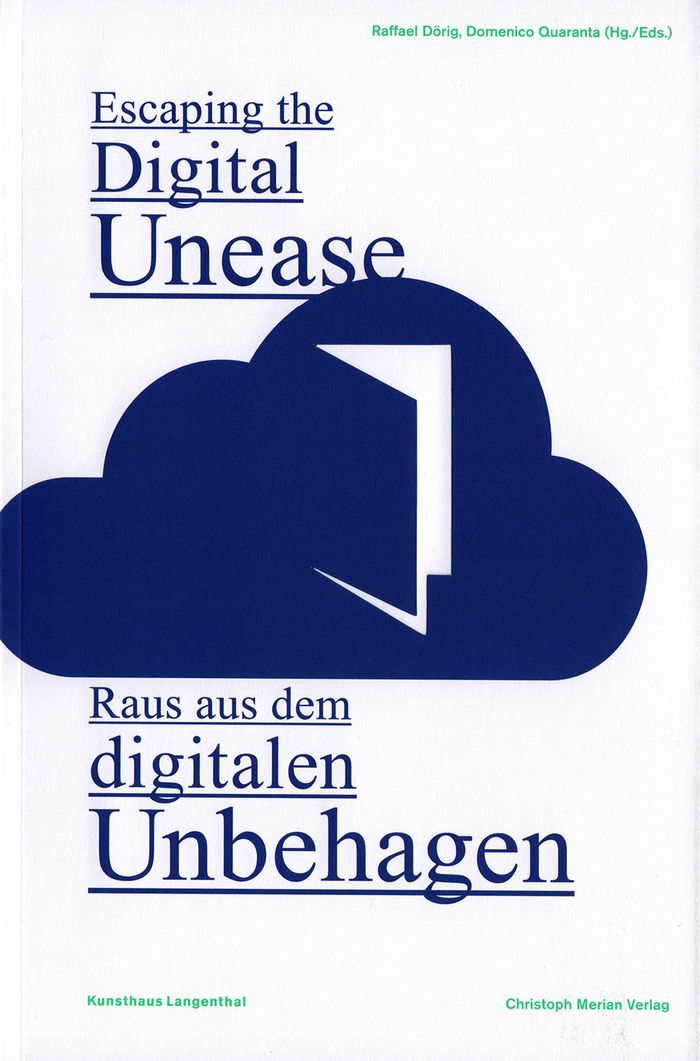
Escaping the digital unease
Escaping the digital unease
Actions:
Price:
$48.95
(available to order)
Summary:
Constant activity in digital and analogue spaces leaves behind an increasingly diffuse feeling of unease, irrespective of how commonplace that activity may be. Meantime however, the marketing of social relations, the dissolution of the private sphere, and the dominance of commercial actors are being perceived as a problem that demands an active interdisciplinary(...)
$48.95
(available to order)
Summary:
Constant activity in digital and analogue spaces leaves behind an increasingly diffuse feeling of unease, irrespective of how commonplace that activity may be. Meantime however, the marketing of social relations, the dissolution of the private sphere, and the dominance of commercial actors are being perceived as a problem that demands an active interdisciplinary(...)
Title:
Escaping the digital unease
Actions:
Price:
$48.95
(available to order)
Summary:
Constant activity in digital and analogue spaces leaves behind an increasingly diffuse feeling of unease, irrespective of how commonplace that activity may be. Meantime however, the marketing of social relations, the dissolution of the private sphere, and the dominance of commercial actors are being perceived as a problem that demands an active interdisciplinary discourse. Media scientists and artists reflect here on that unease and present perspectives on and ways out of the excessive demands on users by way of the most recent research and artistic experiments. This book brings together essays and provides insight into the international group exhibition featuring works by Olia Lialina, Christoph Wachter & Mathias Jud, and Benjamin Grosser, among others.
Escaping the digital unease
Actions:
Price:
$48.95
(available to order)
Summary:
Constant activity in digital and analogue spaces leaves behind an increasingly diffuse feeling of unease, irrespective of how commonplace that activity may be. Meantime however, the marketing of social relations, the dissolution of the private sphere, and the dominance of commercial actors are being perceived as a problem that demands an active interdisciplinary discourse. Media scientists and artists reflect here on that unease and present perspectives on and ways out of the excessive demands on users by way of the most recent research and artistic experiments. This book brings together essays and provides insight into the international group exhibition featuring works by Olia Lialina, Christoph Wachter & Mathias Jud, and Benjamin Grosser, among others.
Form:
books
books
Publication:
February 2018
February 2018
Subject:
Archive, library and the digital
Archive, library and the digital
Form:
books
books
Actions:
Price:
$18.95
(available to order)
Summary:
En étudiant des opérations et des systèmes techniques potentiellement ouverts à la recherche, cet essai interroge le rapport du design aux «humanités numériques» (digital humanities) qui se développent depuis le milieu des années 2000. En quoi les environnements numériques contemporains actualisent-ils les modes de production et de transmission des savoirs ? Quelle est la(...)
$18.95
(available to order)
Summary:
En étudiant des opérations et des systèmes techniques potentiellement ouverts à la recherche, cet essai interroge le rapport du design aux «humanités numériques» (digital humanities) qui se développent depuis le milieu des années 2000. En quoi les environnements numériques contemporains actualisent-ils les modes de production et de transmission des savoirs ? Quelle est la(...)
Title:
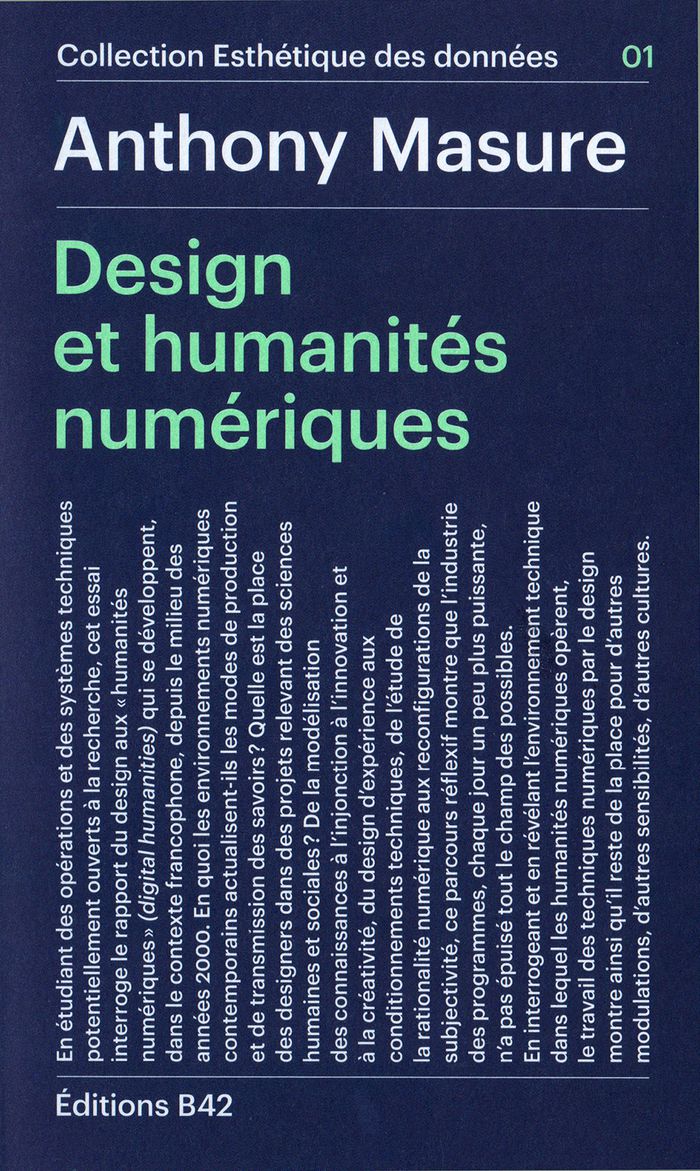
Design et humanités numériques
Actions:
Price:
$18.95
(available to order)
Summary:
En étudiant des opérations et des systèmes techniques potentiellement ouverts à la recherche, cet essai interroge le rapport du design aux «humanités numériques» (digital humanities) qui se développent depuis le milieu des années 2000. En quoi les environnements numériques contemporains actualisent-ils les modes de production et de transmission des savoirs ? Quelle est la place des designers dans des projets relevant des sciences humaines et sociales ? De la modélisation des connaissances à l’injonction à l’innovation et à la créativité, du design d’expérience aux conditionnements techniques, de l’étude de la rationalité numérique aux reconfigurations de la subjectivité, ce parcours réflexif montre que l’industrie des programmes, chaque jour un peu plus puissante, n’a pas épuisé tout le champ des possibles. En interrogeant et en révélant l’environnement technique dans lequel les humanités numériques opèrent, le travail des techniques numériques par le design montre ainsi qu’il reste de la place pour d’autres modulations, d’autres sensibilités, d’autres cultures.
Design et humanités numériques
Actions:
Price:
$18.95
(available to order)
Summary:
En étudiant des opérations et des systèmes techniques potentiellement ouverts à la recherche, cet essai interroge le rapport du design aux «humanités numériques» (digital humanities) qui se développent depuis le milieu des années 2000. En quoi les environnements numériques contemporains actualisent-ils les modes de production et de transmission des savoirs ? Quelle est la place des designers dans des projets relevant des sciences humaines et sociales ? De la modélisation des connaissances à l’injonction à l’innovation et à la créativité, du design d’expérience aux conditionnements techniques, de l’étude de la rationalité numérique aux reconfigurations de la subjectivité, ce parcours réflexif montre que l’industrie des programmes, chaque jour un peu plus puissante, n’a pas épuisé tout le champ des possibles. En interrogeant et en révélant l’environnement technique dans lequel les humanités numériques opèrent, le travail des techniques numériques par le design montre ainsi qu’il reste de la place pour d’autres modulations, d’autres sensibilités, d’autres cultures.
Form:
books
books
Publication:
November 2017
November 2017
Subject:
Archive, library and the digital
Archive, library and the digital
Form:
books
books
Actions:
Price:
$42.00
(available to order)
Summary:
David Parisi offers the first full history of haptic interface technologies, showing how the efforts of scientists and engineers over the past 300 years have gradually remade and redefined our sense of touch. Through lively analyses of electrical machines, videogames, sex toys, sensory substitution systems, robotics, and human-computer interfaces, Parisi shows how the(...)
$42.00
(available to order)
Summary:
David Parisi offers the first full history of haptic interface technologies, showing how the efforts of scientists and engineers over the past 300 years have gradually remade and redefined our sense of touch. Through lively analyses of electrical machines, videogames, sex toys, sensory substitution systems, robotics, and human-computer interfaces, Parisi shows how the(...)
Title:
Archaeologies of touch: interfacing with haptics from electricity to computing
Actions:
Price:
$42.00
(available to order)
Summary:
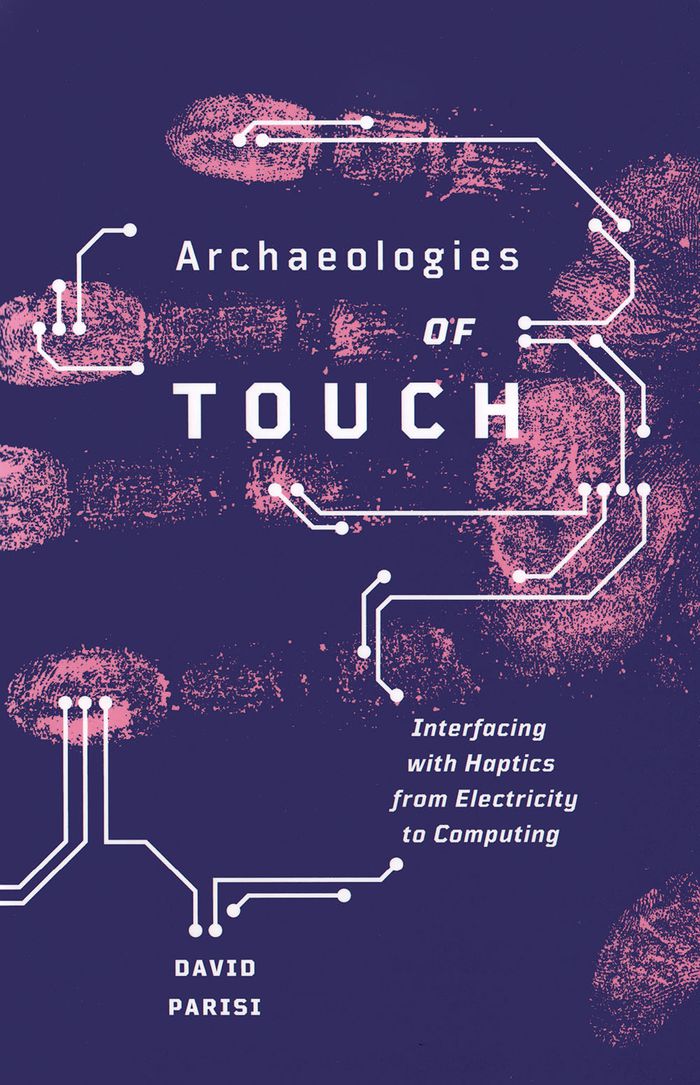
David Parisi offers the first full history of haptic interface technologies, showing how the efforts of scientists and engineers over the past 300 years have gradually remade and redefined our sense of touch. Through lively analyses of electrical machines, videogames, sex toys, sensory substitution systems, robotics, and human-computer interfaces, Parisi shows how the materiality of touch technologies has been shaped by attempts to transform human into more efficient processors of information.
Archaeologies of touch: interfacing with haptics from electricity to computing
Actions:
Price:
$42.00
(available to order)
Summary:
David Parisi offers the first full history of haptic interface technologies, showing how the efforts of scientists and engineers over the past 300 years have gradually remade and redefined our sense of touch. Through lively analyses of electrical machines, videogames, sex toys, sensory substitution systems, robotics, and human-computer interfaces, Parisi shows how the materiality of touch technologies has been shaped by attempts to transform human into more efficient processors of information.
Form:
books
books
Publication:
February 2018
February 2018
Subject:
Archive, library and the digital
Archive, library and the digital
Form:
books
books
Price:
$37.95
(available to order)
Summary:
Les deux intellectuels débattent de leur vision du numérique et de ses impacts positifs ou négatifs sur le monde à venir. Si pour M. Maffesoli, les nouvelles technologies ne constituent qu'une étape dans la structuration de la société, elles représentent l'avenir de l'homme aux yeux de l'artiste et philosophe canadien H. Fischer.
$37.95
(available to order)
Summary:
Les deux intellectuels débattent de leur vision du numérique et de ses impacts positifs ou négatifs sur le monde à venir. Si pour M. Maffesoli, les nouvelles technologies ne constituent qu'une étape dans la structuration de la société, elles représentent l'avenir de l'homme aux yeux de l'artiste et philosophe canadien H. Fischer.
Subject:
Archive, library and the digital
Archive, library and the digital
Publication:
April 2016
April 2016
Title:
La postmodernité à l'heure du numérique : regards croisés sur notre époque
Actions:
Price:
$37.95
(available to order)
Summary:
Les deux intellectuels débattent de leur vision du numérique et de ses impacts positifs ou négatifs sur le monde à venir. Si pour M. Maffesoli, les nouvelles technologies ne constituent qu'une étape dans la structuration de la société, elles représentent l'avenir de l'homme aux yeux de l'artiste et philosophe canadien H. Fischer.
La postmodernité à l'heure du numérique : regards croisés sur notre époque
Actions:
Price:
$37.95
(available to order)
Summary:
Les deux intellectuels débattent de leur vision du numérique et de ses impacts positifs ou négatifs sur le monde à venir. Si pour M. Maffesoli, les nouvelles technologies ne constituent qu'une étape dans la structuration de la société, elles représentent l'avenir de l'homme aux yeux de l'artiste et philosophe canadien H. Fischer.
Form:
books
books
Publication:
April 2016
April 2016
Subject:
Archive, library and the digital
Archive, library and the digital
Form:
books
books

Title:
Penser / Classer
Penser / Classer
Actions:
Price:
$29.95
(available to order)
Summary:
Que me demande-t-on, au juste ? Si je pense avant de classer ? Si je classe avant de penser ? Comment je classe ce que je pense ? Comment je pense quand je veux classer ? [...] Tellement tentant de vouloir distribuer le monde entier selon un code unique ; une loi universelle régirait l'ensemble des phénomènes : deux hémisphères, cinq continents, masculin et féminin,(...)
$29.95
(available to order)
Summary:
Que me demande-t-on, au juste ? Si je pense avant de classer ? Si je classe avant de penser ? Comment je classe ce que je pense ? Comment je pense quand je veux classer ? [...] Tellement tentant de vouloir distribuer le monde entier selon un code unique ; une loi universelle régirait l'ensemble des phénomènes : deux hémisphères, cinq continents, masculin et féminin,(...)
Title:
Penser / Classer
Actions:
Price:
$29.95
(available to order)
Summary:
Que me demande-t-on, au juste ? Si je pense avant de classer ? Si je classe avant de penser ? Comment je classe ce que je pense ? Comment je pense quand je veux classer ? [...] Tellement tentant de vouloir distribuer le monde entier selon un code unique ; une loi universelle régirait l'ensemble des phénomènes : deux hémisphères, cinq continents, masculin et féminin, animal et végétal, singulier pluriel, droite gauche, quatre saisons, cinq sens, six voyelles, sept jours, douze mois, vingt-six lettres. Malheureusement ça ne marche pas, ça n'a même jamais commencé à marcher, ça ne marchera jamais. N'empêche que l'on continuera encore longtemps à catégoriser tel ou tel animal selon qu'il a un nombre impair de doigts ou des cornes creuses.
Penser / Classer
Actions:
Price:
$29.95
(available to order)
Summary:
Que me demande-t-on, au juste ? Si je pense avant de classer ? Si je classe avant de penser ? Comment je classe ce que je pense ? Comment je pense quand je veux classer ? [...] Tellement tentant de vouloir distribuer le monde entier selon un code unique ; une loi universelle régirait l'ensemble des phénomènes : deux hémisphères, cinq continents, masculin et féminin, animal et végétal, singulier pluriel, droite gauche, quatre saisons, cinq sens, six voyelles, sept jours, douze mois, vingt-six lettres. Malheureusement ça ne marche pas, ça n'a même jamais commencé à marcher, ça ne marchera jamais. N'empêche que l'on continuera encore longtemps à catégoriser tel ou tel animal selon qu'il a un nombre impair de doigts ou des cornes creuses.
Form:
books
books
Publication:
June 2003
June 2003
Subject:
Archive, library and the digital
Archive, library and the digital
Form:
books
books
Title:
This will - this
This will - this
Actions:
Price:
$20.00
(available in store)
Summary:
The 2D bar code is disturbing and exciting because it is legible at an aesthetic level while remaining illegible at the level of content. What can we make of its linkages between logistics, cryptography, and space?
$20.00
(available in store)
Summary:
The 2D bar code is disturbing and exciting because it is legible at an aesthetic level while remaining illegible at the level of content. What can we make of its linkages between logistics, cryptography, and space?
Subject:
Archive, library and the digital
Archive, library and the digital
Publication:
January 2009
January 2009
Title:
This will - this
Actions:
Price:
$20.00
(available in store)
Summary:
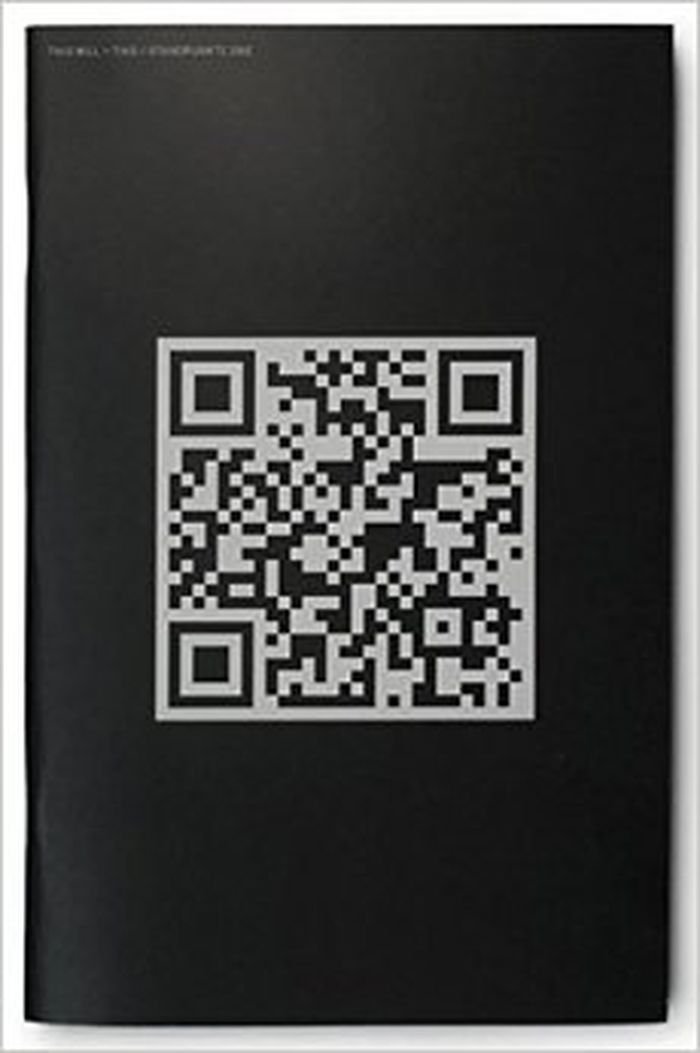
The 2D bar code is disturbing and exciting because it is legible at an aesthetic level while remaining illegible at the level of content. What can we make of its linkages between logistics, cryptography, and space?
This will - this
Actions:
Price:
$20.00
(available in store)
Summary:
The 2D bar code is disturbing and exciting because it is legible at an aesthetic level while remaining illegible at the level of content. What can we make of its linkages between logistics, cryptography, and space?
Form:
books
books
Publication:
January 2009
January 2009
Subject:
Archive, library and the digital
Archive, library and the digital
Form:
books
books
Actions:
Price:
$34.00
(available to order)
Summary:
'Track Changes' balances the stories of individual writers with a consideration of how the seemingly ineffable act of writing is always grounded in particular instruments and media, from quills to keyboards. Along the way, we discover the candidates for the first novel written on a word processor, explore the surprisingly varied reasons why writers of both popular and(...)
$34.00
(available to order)
Summary:
'Track Changes' balances the stories of individual writers with a consideration of how the seemingly ineffable act of writing is always grounded in particular instruments and media, from quills to keyboards. Along the way, we discover the candidates for the first novel written on a word processor, explore the surprisingly varied reasons why writers of both popular and(...)
Title:
Track changes: a literary history of word processing
Actions:
Price:
$34.00
(available to order)
Summary:
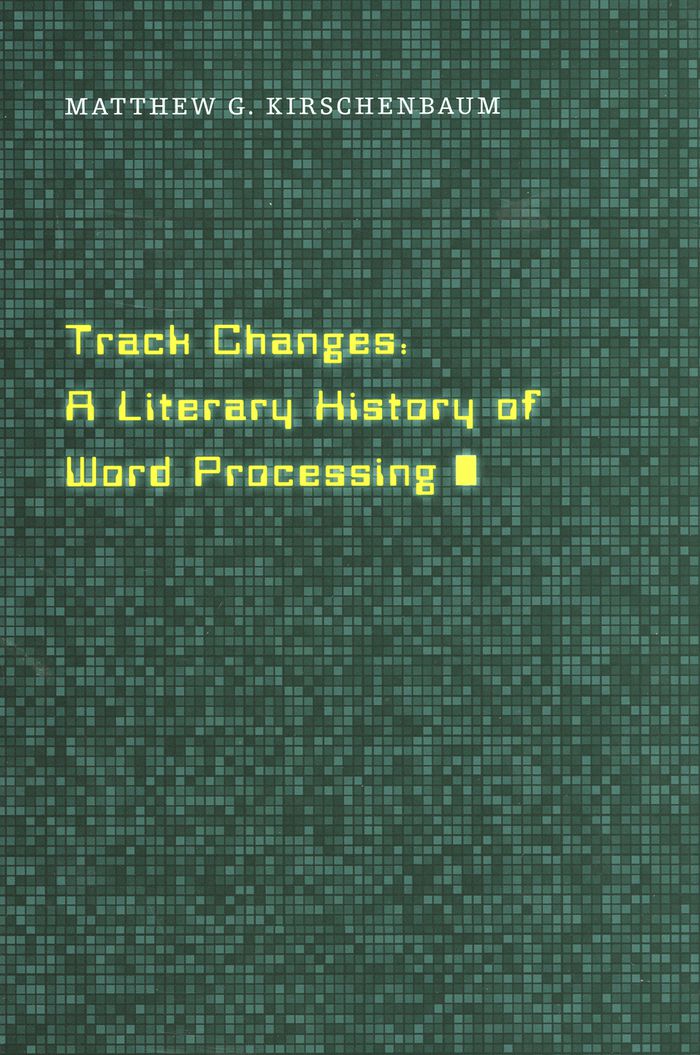
'Track Changes' balances the stories of individual writers with a consideration of how the seemingly ineffable act of writing is always grounded in particular instruments and media, from quills to keyboards. Along the way, we discover the candidates for the first novel written on a word processor, explore the surprisingly varied reasons why writers of both popular and serious literature adopted the technology, trace the spread of new metaphors and ideas from word processing in fiction and poetry, and consider the fate of literary scholarship and memory in an era when the final remnants of authorship may consist of folders on a hard drive or documents in the cloud.
Track changes: a literary history of word processing
Actions:
Price:
$34.00
(available to order)
Summary:
'Track Changes' balances the stories of individual writers with a consideration of how the seemingly ineffable act of writing is always grounded in particular instruments and media, from quills to keyboards. Along the way, we discover the candidates for the first novel written on a word processor, explore the surprisingly varied reasons why writers of both popular and serious literature adopted the technology, trace the spread of new metaphors and ideas from word processing in fiction and poetry, and consider the fate of literary scholarship and memory in an era when the final remnants of authorship may consist of folders on a hard drive or documents in the cloud.
Form:
books
books
Publication:
May 2016
May 2016
Subject:
Archive, library and the digital
Archive, library and the digital
Form:
books
books

Actions:
Price:
$57.50
(available to order)
Summary:
The book "Writingplace: investigations in architecture and literature" marks a step forward in an emerging debate on literary means in architecture. It offers a series of reflections on written language as a crucial element of architecture culture, and on the potential of using literary methods in architectural and urban research, education and design. For everyone(...)
$57.50
(available to order)
Summary:
The book "Writingplace: investigations in architecture and literature" marks a step forward in an emerging debate on literary means in architecture. It offers a series of reflections on written language as a crucial element of architecture culture, and on the potential of using literary methods in architectural and urban research, education and design. For everyone(...)
Title:
Writingplace: investigations in architecture and literature
Actions:
Price:
$57.50
(available to order)
Summary:
The book "Writingplace: investigations in architecture and literature" marks a step forward in an emerging debate on literary means in architecture. It offers a series of reflections on written language as a crucial element of architecture culture, and on the potential of using literary methods in architectural and urban research, education and design. For everyone interested in the transdisciplinary encounters between architecture and literature, the book offers both theoretical contributions that address notions such as narrative and literary imagination, and contemporary explorations regarding the operability of literary approaches. Writingplace includes contributions by experts in the fi eld such as Bart Keunen, Alberto Pérez Gómez, Wim van den Bergh, Klaske Havik, Katja Grillner and Wim Cuyvers.
Writingplace: investigations in architecture and literature
Actions:
Price:
$57.50
(available to order)
Summary:
The book "Writingplace: investigations in architecture and literature" marks a step forward in an emerging debate on literary means in architecture. It offers a series of reflections on written language as a crucial element of architecture culture, and on the potential of using literary methods in architectural and urban research, education and design. For everyone interested in the transdisciplinary encounters between architecture and literature, the book offers both theoretical contributions that address notions such as narrative and literary imagination, and contemporary explorations regarding the operability of literary approaches. Writingplace includes contributions by experts in the fi eld such as Bart Keunen, Alberto Pérez Gómez, Wim van den Bergh, Klaske Havik, Katja Grillner and Wim Cuyvers.
Form:
books
books
Publication:
April 2016
April 2016
Subject:
Archive, library and the digital
Archive, library and the digital


