


1204 Results
Form:
books
books
Title:
The green room
The green room
Actions:
Price:
$28.99
(available to order)
Summary:
The Greenroom is published on the occasion of the exhibition 'The Greenroom: Reconsidering the Documentary and Contemporary Art' prensented at the Center for Curatorial Studies and Hessel Museum of Art, Bart College, September 26, 2008 - February 1, 2009. This anthology seeks to overcome the existing dispersion of texts on documentary practices and offer new perspectives(...)
$28.99
(available to order)
Summary:
The Greenroom is published on the occasion of the exhibition 'The Greenroom: Reconsidering the Documentary and Contemporary Art' prensented at the Center for Curatorial Studies and Hessel Museum of Art, Bart College, September 26, 2008 - February 1, 2009. This anthology seeks to overcome the existing dispersion of texts on documentary practices and offer new perspectives(...)
Title:
The green room
Actions:
Price:
$28.99
(available to order)
Summary:
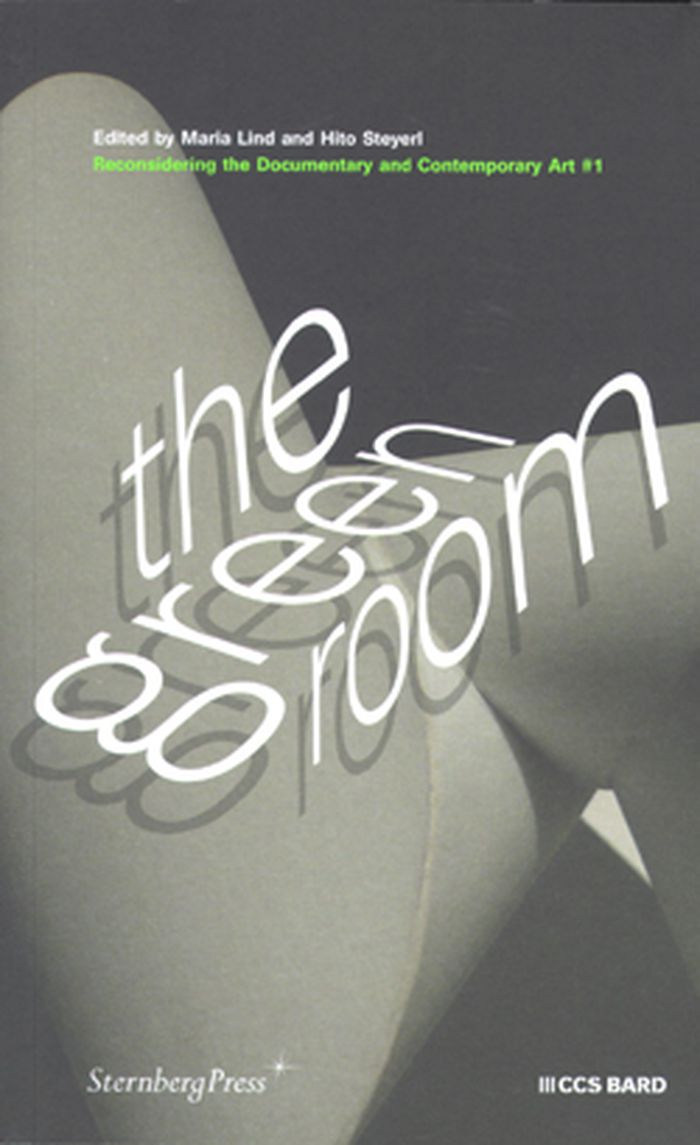
The Greenroom is published on the occasion of the exhibition 'The Greenroom: Reconsidering the Documentary and Contemporary Art' prensented at the Center for Curatorial Studies and Hessel Museum of Art, Bart College, September 26, 2008 - February 1, 2009. This anthology seeks to overcome the existing dispersion of texts on documentary practices and offer new perspectives on this crucial theme. Authors include T.J. Demos, Okwui Enwezor, Carles Guerra, Vít Havránek, Jörg Heiser, Stefan Jonsson, Maurizio Lazzarato, Olivier Lugon, Jean-Pierre Rehm, Hito Steyerl, and Jan Verwoert.
The green room
Actions:
Price:
$28.99
(available to order)
Summary:
The Greenroom is published on the occasion of the exhibition 'The Greenroom: Reconsidering the Documentary and Contemporary Art' prensented at the Center for Curatorial Studies and Hessel Museum of Art, Bart College, September 26, 2008 - February 1, 2009. This anthology seeks to overcome the existing dispersion of texts on documentary practices and offer new perspectives on this crucial theme. Authors include T.J. Demos, Okwui Enwezor, Carles Guerra, Vít Havránek, Jörg Heiser, Stefan Jonsson, Maurizio Lazzarato, Olivier Lugon, Jean-Pierre Rehm, Hito Steyerl, and Jan Verwoert.
Form:
books
books
Publication:
October 2008, Berlin
October 2008, Berlin
Subject:
Art Theory
Art Theory
Form:
books
books
Actions:
Price:
$34.50
(available to order)
Summary:
The influential Slovenian curator, art critic, writer and theorist Igor Zabel (1958-2005) was largely responsible for putting the Slovenian art scene on the map during the 1990s. As Senior Curator of Ljubljana's Moderna Galerija, he established cultural links between Eastern and Western Europe, developing a unique critical perspective on the ongoing transformation of the(...)
$34.50
(available to order)
Summary:
The influential Slovenian curator, art critic, writer and theorist Igor Zabel (1958-2005) was largely responsible for putting the Slovenian art scene on the map during the 1990s. As Senior Curator of Ljubljana's Moderna Galerija, he established cultural links between Eastern and Western Europe, developing a unique critical perspective on the ongoing transformation of the(...)
Subject:
Art Theory
Art Theory
Publication:
January 2009, Zurich
January 2009, Zurich
Title:
Continuing dialogues: a tribute to Igor Zabel
Actions:
Price:
$34.50
(available to order)
Summary:
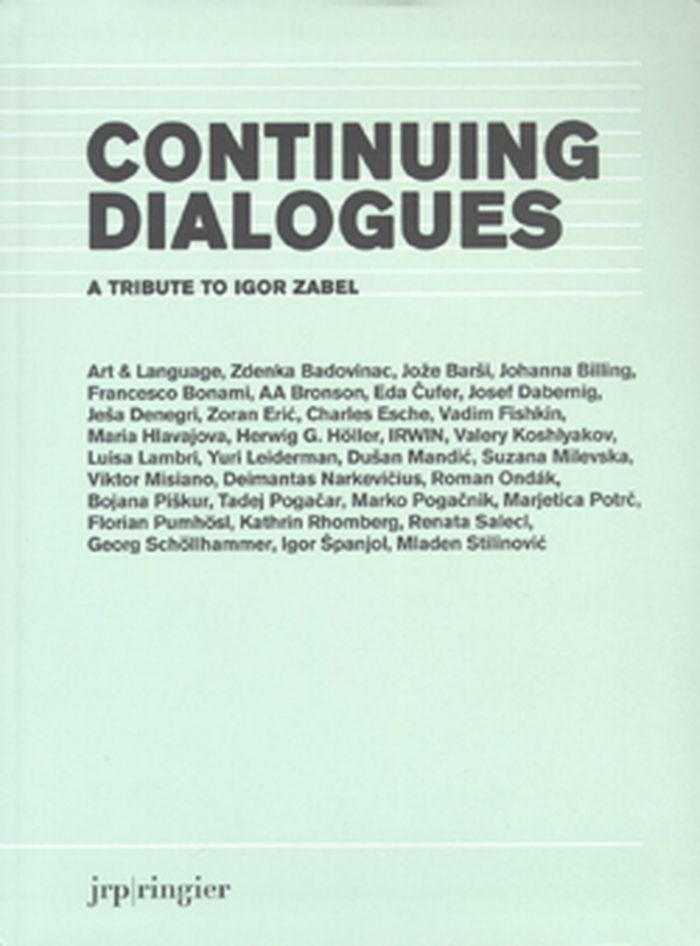
The influential Slovenian curator, art critic, writer and theorist Igor Zabel (1958-2005) was largely responsible for putting the Slovenian art scene on the map during the 1990s. As Senior Curator of Ljubljana's Moderna Galerija, he established cultural links between Eastern and Western Europe, developing a unique critical perspective on the ongoing transformation of the post-Communist era. This indispensable volume both develops and creates new contexts for the theories and strategies illustrated by Zabel in his exhibitions, publications, critical writings and European exchange initiatives. It is published collaboratively by the Igor Zabel Association for Culture and Theory in Ljubljana and the Erste Foundation.
Continuing dialogues: a tribute to Igor Zabel
Actions:
Price:
$34.50
(available to order)
Summary:
The influential Slovenian curator, art critic, writer and theorist Igor Zabel (1958-2005) was largely responsible for putting the Slovenian art scene on the map during the 1990s. As Senior Curator of Ljubljana's Moderna Galerija, he established cultural links between Eastern and Western Europe, developing a unique critical perspective on the ongoing transformation of the post-Communist era. This indispensable volume both develops and creates new contexts for the theories and strategies illustrated by Zabel in his exhibitions, publications, critical writings and European exchange initiatives. It is published collaboratively by the Igor Zabel Association for Culture and Theory in Ljubljana and the Erste Foundation.
Form:
books
books
Publication:
January 2009, Zurich
January 2009, Zurich
Subject:
Art Theory
Art Theory
Form:
books
books
Title:
Another publlication
Another publlication
Actions:
Price:
$10.00
(available to order)
Summary:
Another publication is a book project around the manifold perspectives on otherness. Magnanimous in its ubiquitous applications, the other floats between different points of view. The aim of the publication is to bind together different proposals, as a strategy to approach this somewhat bankrupt term. Twelve writers were invited to contribute a text on this subject, each(...)
$10.00
(available to order)
Summary:
Another publication is a book project around the manifold perspectives on otherness. Magnanimous in its ubiquitous applications, the other floats between different points of view. The aim of the publication is to bind together different proposals, as a strategy to approach this somewhat bankrupt term. Twelve writers were invited to contribute a text on this subject, each(...)
Title:
Another publlication
Actions:
Price:
$10.00
(available to order)
Summary:
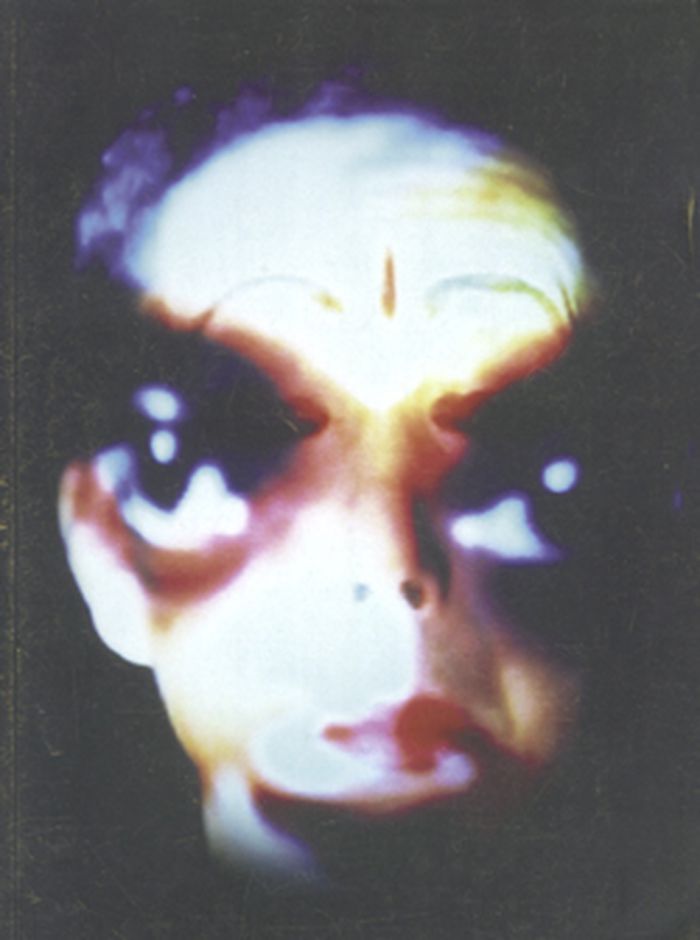
Another publication is a book project around the manifold perspectives on otherness. Magnanimous in its ubiquitous applications, the other floats between different points of view. The aim of the publication is to bind together different proposals, as a strategy to approach this somewhat bankrupt term. Twelve writers were invited to contribute a text on this subject, each writing a preface to a possible book around the other.
Another publlication
Actions:
Price:
$10.00
(available to order)
Summary:
Another publication is a book project around the manifold perspectives on otherness. Magnanimous in its ubiquitous applications, the other floats between different points of view. The aim of the publication is to bind together different proposals, as a strategy to approach this somewhat bankrupt term. Twelve writers were invited to contribute a text on this subject, each writing a preface to a possible book around the other.
Form:
books
books
Publication:
October 2007, Rotterdam
October 2007, Rotterdam
Subject:
Art Theory
Art Theory
Form:
books
books
Title:
Seth Price: dispersion
Seth Price: dispersion
Actions:
Price:
$12.00
(available to order)
Summary:
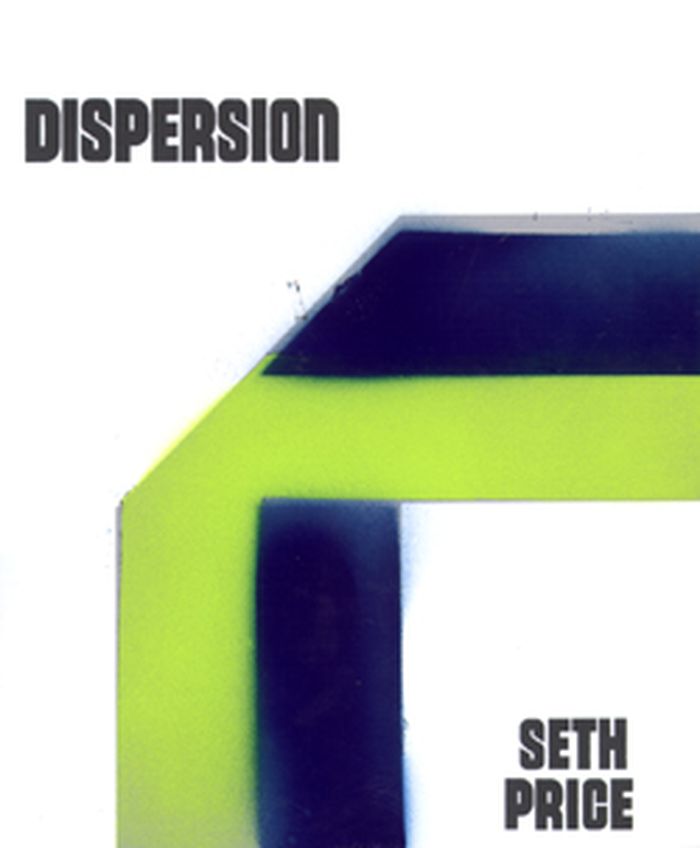
Artist Seth Price's provocative essay calling for a reexamination of "classical" conceptualism and for the establishment of a new public art. Punctuated with illustrations and featuring a spray-painted glossy cover.
$12.00
(available to order)
Summary:
Artist Seth Price's provocative essay calling for a reexamination of "classical" conceptualism and for the establishment of a new public art. Punctuated with illustrations and featuring a spray-painted glossy cover.
Title:
Seth Price: dispersion
Actions:
Price:
$12.00
(available to order)
Summary:
Artist Seth Price's provocative essay calling for a reexamination of "classical" conceptualism and for the establishment of a new public art. Punctuated with illustrations and featuring a spray-painted glossy cover.
Seth Price: dispersion
Actions:
Price:
$12.00
(available to order)
Summary:
Artist Seth Price's provocative essay calling for a reexamination of "classical" conceptualism and for the establishment of a new public art. Punctuated with illustrations and featuring a spray-painted glossy cover.
Form:
books
books
Publication:
October 2008, New York
October 2008, New York
Subject:
Art Theory
Art Theory
Form:
books
books
Actions:
Price:
$15.00
(available to order)
Summary:
The Center for Advanced Visual Studies is a fellowship program that commissions and produces new artworks at MIT. We facilitate exchange between internationally known and emerging contemporary artists and MIT’s faculty, students, and staff through public events, support for long-term art projects, and residencies for MIT students. This small book collects flyers for(...)
$15.00
(available to order)
Summary:
The Center for Advanced Visual Studies is a fellowship program that commissions and produces new artworks at MIT. We facilitate exchange between internationally known and emerging contemporary artists and MIT’s faculty, students, and staff through public events, support for long-term art projects, and residencies for MIT students. This small book collects flyers for(...)
Title:
Center for advanced visual studies
Actions:
Price:
$15.00
(available to order)
Summary:
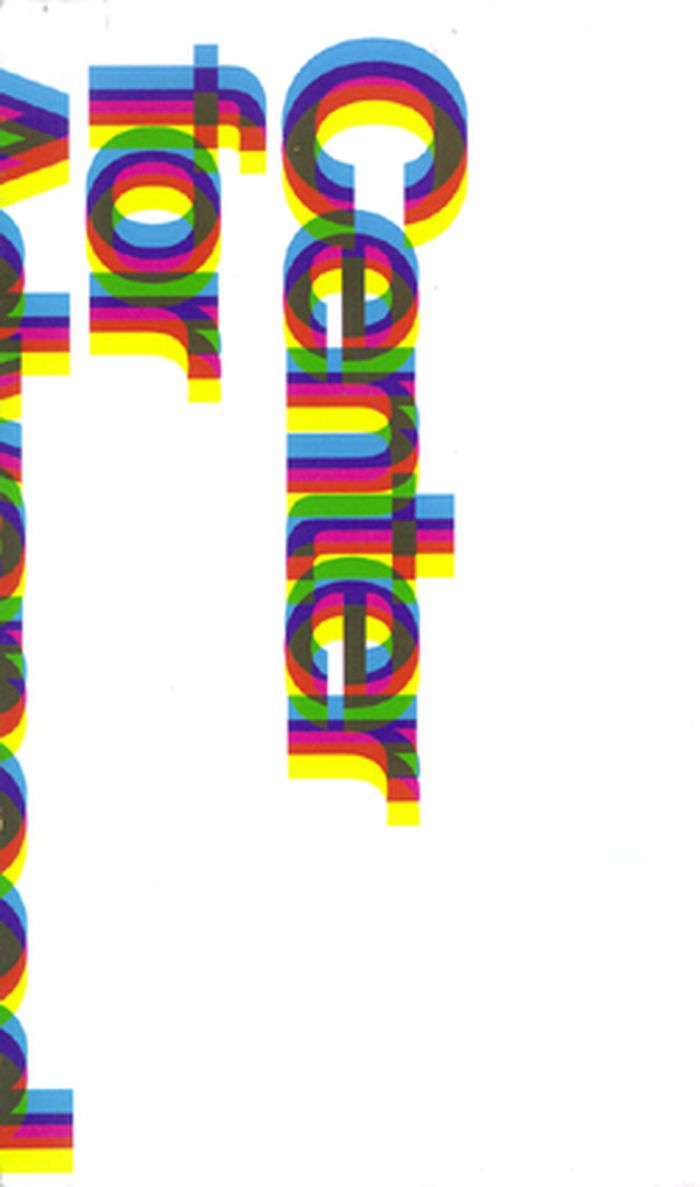
The Center for Advanced Visual Studies is a fellowship program that commissions and produces new artworks at MIT. We facilitate exchange between internationally known and emerging contemporary artists and MIT’s faculty, students, and staff through public events, support for long-term art projects, and residencies for MIT students. This small book collects flyers for public events and a sampling of pictures from four years of programming. http://cavs.mit.edu
Center for advanced visual studies
Actions:
Price:
$15.00
(available to order)
Summary:
The Center for Advanced Visual Studies is a fellowship program that commissions and produces new artworks at MIT. We facilitate exchange between internationally known and emerging contemporary artists and MIT’s faculty, students, and staff through public events, support for long-term art projects, and residencies for MIT students. This small book collects flyers for public events and a sampling of pictures from four years of programming. http://cavs.mit.edu
Form:
books
books
Publication:
October 2008, Cambridge
October 2008, Cambridge
Subject:
Art Theory
Art Theory
Form:
books
books
Actions:
Price:
$10.00
(available in store)
Summary:
Commissionned by Black Diamond Press and International Project space, Birmingham (U.K.), to coincide with the exhibition 'Chris Evans Militant bourgeois : an existentialist retreat, 18 January to 17 Frebruary 2007, at IPS, Birmingham.
$10.00
(available in store)
Summary:
Commissionned by Black Diamond Press and International Project space, Birmingham (U.K.), to coincide with the exhibition 'Chris Evans Militant bourgeois : an existentialist retreat, 18 January to 17 Frebruary 2007, at IPS, Birmingham.
Subject:
Art Theory
Art Theory
Publication:
October 2007, New York
October 2007, New York
Title:
Militant bourgeois : an existantialist retreat
Actions:
Price:
$10.00
(available in store)
Summary:
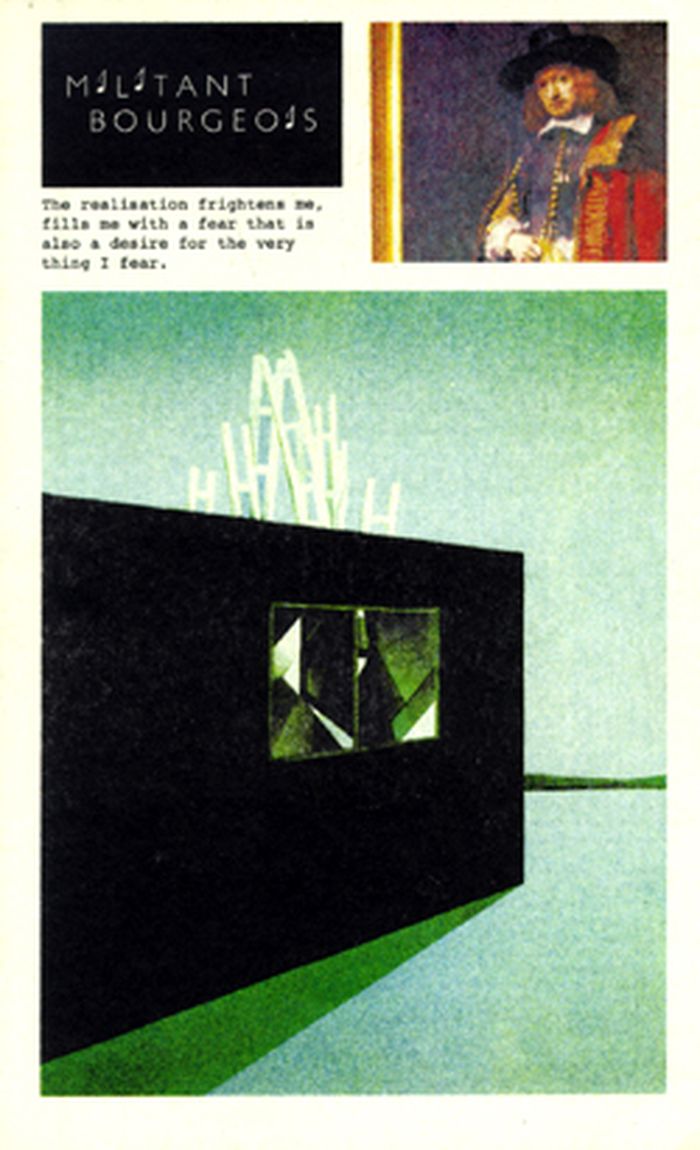
Commissionned by Black Diamond Press and International Project space, Birmingham (U.K.), to coincide with the exhibition 'Chris Evans Militant bourgeois : an existentialist retreat, 18 January to 17 Frebruary 2007, at IPS, Birmingham.
Militant bourgeois : an existantialist retreat
Actions:
Price:
$10.00
(available in store)
Summary:
Commissionned by Black Diamond Press and International Project space, Birmingham (U.K.), to coincide with the exhibition 'Chris Evans Militant bourgeois : an existentialist retreat, 18 January to 17 Frebruary 2007, at IPS, Birmingham.
Form:
books
books
Publication:
October 2007, New York
October 2007, New York
Subject:
Art Theory
Art Theory
Form:
books
books
Actions:
Price:
$19.75
(available to order)
Summary:
La guerre futuriste est une mobilisation totale contre les valeurs politiques, morales et culturelles du passé; elle permet à Marinetti de rompre les ponts avec la décadence, d'être de plain-pied dans la réalité qui n'est plus la conséquence du passé mais son contraire. Il repère un ennemi immédiat - les empires centraux "moribonds" - et un objectif facile -(...)
$19.75
(available to order)
Summary:
La guerre futuriste est une mobilisation totale contre les valeurs politiques, morales et culturelles du passé; elle permet à Marinetti de rompre les ponts avec la décadence, d'être de plain-pied dans la réalité qui n'est plus la conséquence du passé mais son contraire. Il repère un ennemi immédiat - les empires centraux "moribonds" - et un objectif facile -(...)
Title:
Marinetti et la révolution futuriste
Actions:
Price:
$19.75
(available to order)
Summary:
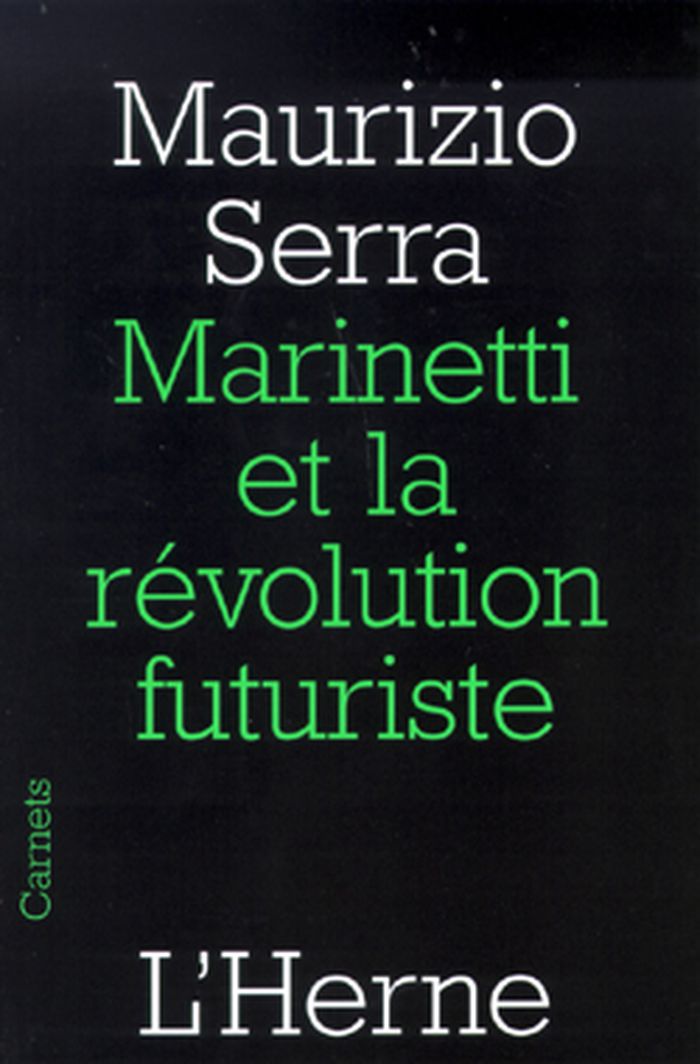
La guerre futuriste est une mobilisation totale contre les valeurs politiques, morales et culturelles du passé; elle permet à Marinetti de rompre les ponts avec la décadence, d'être de plain-pied dans la réalité qui n'est plus la conséquence du passé mais son contraire. Il repère un ennemi immédiat - les empires centraux "moribonds" - et un objectif facile - l'irrédentisme ; mais surtout il identifie, dans la technique au service du mythe, l'avènement traumatique de la modernité. [...] Marinetti n'est décidément pas facile à cerner. Il est de "droite" ou plutôt d'"extrême droite", lorsqu'il en appelle au droit du plus fort, au reniement de la solidarité de classe, à la loi martiale contre les pacifistes et les traîtres, à la destruction de l'ennemi et pas seulement à sa défaite. Il est de "gauche ", ou plutôt d'"extrême gauche" parce qu'à ses yeux la guerre doit mener à la dissolution de tout ordre préétabli, y compris celui des non-belligérants comme l'Eglise - d'où sa fronde pendant la période fasciste contre les compromis et la corruption du régime. Maurizio Serra, diplomate et historien italien, né à Londres en 1955 ; il dirige actuellement l'Institut diplomatique du ministère des Affaires étrangères italien. Spécialiste d'histoire des idées au XXe siècle, professeur de relations internationales à l'université LUISS de Rome, il est l'auteur de plusieurs ouvrages dont Le Passager du siècle.
Marinetti et la révolution futuriste
Actions:
Price:
$19.75
(available to order)
Summary:
La guerre futuriste est une mobilisation totale contre les valeurs politiques, morales et culturelles du passé; elle permet à Marinetti de rompre les ponts avec la décadence, d'être de plain-pied dans la réalité qui n'est plus la conséquence du passé mais son contraire. Il repère un ennemi immédiat - les empires centraux "moribonds" - et un objectif facile - l'irrédentisme ; mais surtout il identifie, dans la technique au service du mythe, l'avènement traumatique de la modernité. [...] Marinetti n'est décidément pas facile à cerner. Il est de "droite" ou plutôt d'"extrême droite", lorsqu'il en appelle au droit du plus fort, au reniement de la solidarité de classe, à la loi martiale contre les pacifistes et les traîtres, à la destruction de l'ennemi et pas seulement à sa défaite. Il est de "gauche ", ou plutôt d'"extrême gauche" parce qu'à ses yeux la guerre doit mener à la dissolution de tout ordre préétabli, y compris celui des non-belligérants comme l'Eglise - d'où sa fronde pendant la période fasciste contre les compromis et la corruption du régime. Maurizio Serra, diplomate et historien italien, né à Londres en 1955 ; il dirige actuellement l'Institut diplomatique du ministère des Affaires étrangères italien. Spécialiste d'histoire des idées au XXe siècle, professeur de relations internationales à l'université LUISS de Rome, il est l'auteur de plusieurs ouvrages dont Le Passager du siècle.
Form:
books
books
Publication:
November 2008, Paris
November 2008, Paris
Subject:
Art Theory
Art Theory
Form:
books
books
Price:
$28.95
(available to order)
Summary:
Originally published in Swedish in 1992, this book examines the enigmatic relation of melancholia to an early kind of cannibalism, which psychoanalysis, in particular, stressed. It contains reading of, amongst others, Franz Kafka, Samuel Beckett, Thomas Bernhard, Sigmund Freud, G. W. F. Hegel, and the Swedish poet Gunnar Ekelöf. The authors also quote Goethe and Rabelais,(...)
$28.95
(available to order)
Summary:
Originally published in Swedish in 1992, this book examines the enigmatic relation of melancholia to an early kind of cannibalism, which psychoanalysis, in particular, stressed. It contains reading of, amongst others, Franz Kafka, Samuel Beckett, Thomas Bernhard, Sigmund Freud, G. W. F. Hegel, and the Swedish poet Gunnar Ekelöf. The authors also quote Goethe and Rabelais,(...)
Subject:
Art Theory
Art Theory
Publication:
October 2008, Berlin, New York
October 2008, Berlin, New York
Title:
As a weasel sucks eggs, an essay on melancholy and cannibalism
Actions:
Price:
$28.95
(available to order)
Summary:
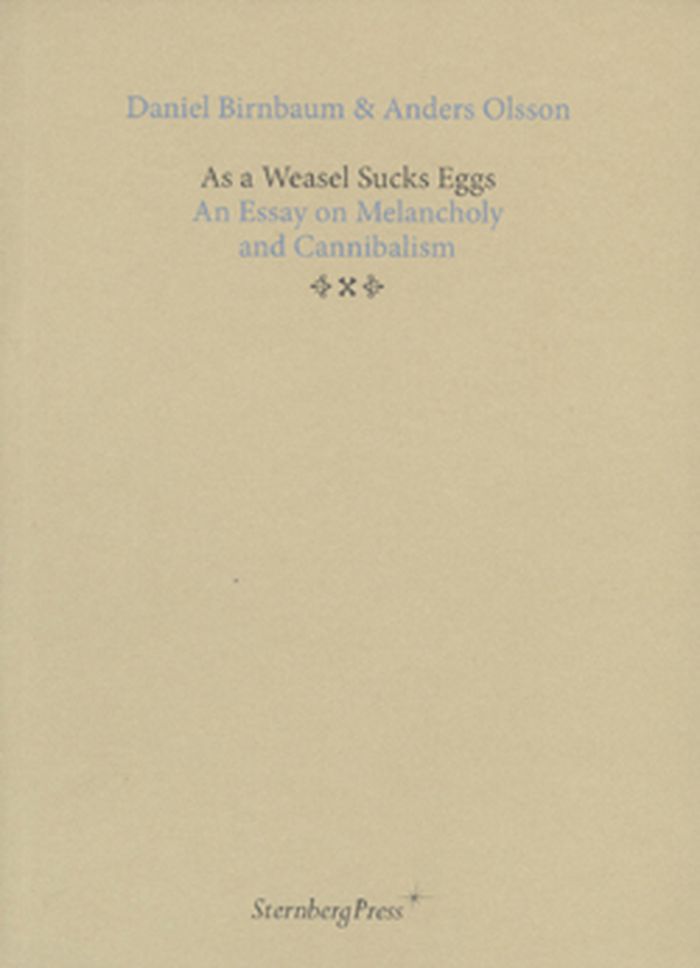
Originally published in Swedish in 1992, this book examines the enigmatic relation of melancholia to an early kind of cannibalism, which psychoanalysis, in particular, stressed. It contains reading of, amongst others, Franz Kafka, Samuel Beckett, Thomas Bernhard, Sigmund Freud, G. W. F. Hegel, and the Swedish poet Gunnar Ekelöf. The authors also quote Goethe and Rabelais, for whom food is a cosmic principle, the soil of fertility, on which all creation is based. In a transferred sense, food also plays that same role for the melancholiac he who questions the normal order of things, who creates an other unknown food, with a variety of meanings. The authors trace the desire for this other food through the ages, and scrutinize its relationship to both primitive sacrificial rites as well as contemporary anthropology, philosophy, and linguistic theory.
As a weasel sucks eggs, an essay on melancholy and cannibalism
Actions:
Price:
$28.95
(available to order)
Summary:
Originally published in Swedish in 1992, this book examines the enigmatic relation of melancholia to an early kind of cannibalism, which psychoanalysis, in particular, stressed. It contains reading of, amongst others, Franz Kafka, Samuel Beckett, Thomas Bernhard, Sigmund Freud, G. W. F. Hegel, and the Swedish poet Gunnar Ekelöf. The authors also quote Goethe and Rabelais, for whom food is a cosmic principle, the soil of fertility, on which all creation is based. In a transferred sense, food also plays that same role for the melancholiac he who questions the normal order of things, who creates an other unknown food, with a variety of meanings. The authors trace the desire for this other food through the ages, and scrutinize its relationship to both primitive sacrificial rites as well as contemporary anthropology, philosophy, and linguistic theory.
Form:
books
books
Publication:
October 2008, Berlin, New York
October 2008, Berlin, New York
Subject:
Art Theory
Art Theory
Form:
books
books
Actions:
Price:
$42.00
(available in store)
Summary:
Can art be used as an effective means for change or resistance against hegemonic power? What shape should such art assume? And in which context can it be used effectively to develop political relevance? This volume offers a broad spectrum of responses, both from the arts and in essays. The contributions range from the 1960’s to the present day. The themes include the(...)
$42.00
(available in store)
Summary:
Can art be used as an effective means for change or resistance against hegemonic power? What shape should such art assume? And in which context can it be used effectively to develop political relevance? This volume offers a broad spectrum of responses, both from the arts and in essays. The contributions range from the 1960’s to the present day. The themes include the(...)
Title:
Kunst+ politik, art + politics
Actions:
Price:
$42.00
(available in store)
Summary:
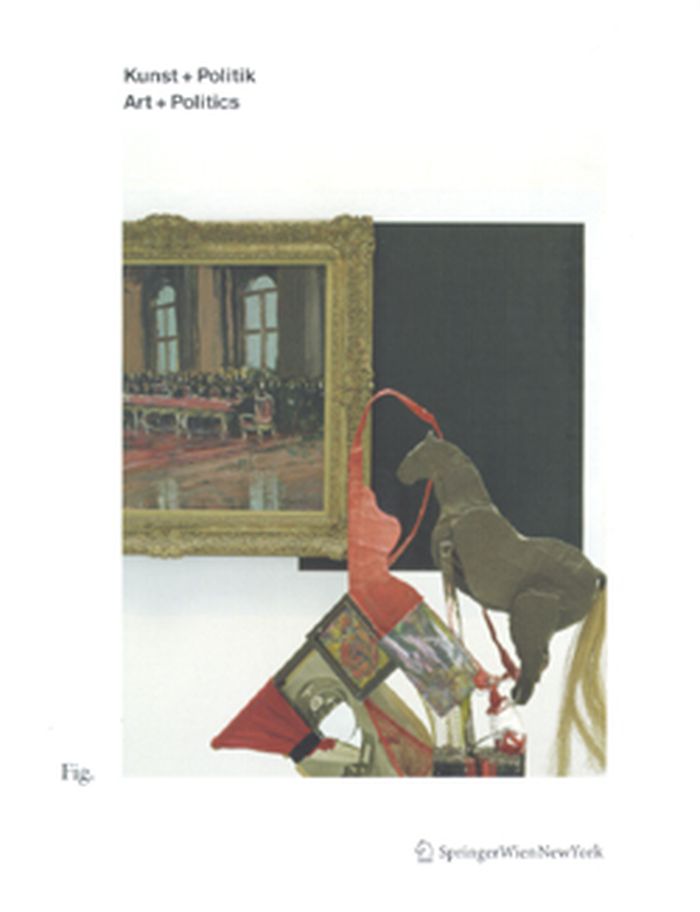
Can art be used as an effective means for change or resistance against hegemonic power? What shape should such art assume? And in which context can it be used effectively to develop political relevance? This volume offers a broad spectrum of responses, both from the arts and in essays. The contributions range from the 1960’s to the present day. The themes include the after effects of the holocaust, the Hungarian uprising, the nuclear threat and alienation as well as migration.
Kunst+ politik, art + politics
Actions:
Price:
$42.00
(available in store)
Summary:
Can art be used as an effective means for change or resistance against hegemonic power? What shape should such art assume? And in which context can it be used effectively to develop political relevance? This volume offers a broad spectrum of responses, both from the arts and in essays. The contributions range from the 1960’s to the present day. The themes include the after effects of the holocaust, the Hungarian uprising, the nuclear threat and alienation as well as migration.
Form:
books
books
Publication:
October 2008, New York
October 2008, New York
Subject:
Art Theory
Art Theory
Form:
books
books
Actions:
Price:
$24.95
(available in store)
Summary:
"What is highly likely but not impossible?" is informed by themes found in the work of Hiwa K, such as statehood, war, migration, belonging, the effects of neoliberalism and colonialism, home as a concept, language, and the myth of the individual artist. The compendium ranges freely across mediums, drawing together experimental poetry, science fiction, photography,(...)
$24.95
(available in store)
Summary:
"What is highly likely but not impossible?" is informed by themes found in the work of Hiwa K, such as statehood, war, migration, belonging, the effects of neoliberalism and colonialism, home as a concept, language, and the myth of the individual artist. The compendium ranges freely across mediums, drawing together experimental poetry, science fiction, photography,(...)
Title:
What is highly unlikely but not impossible?
Actions:
Price:
$24.95
(available in store)
Summary:
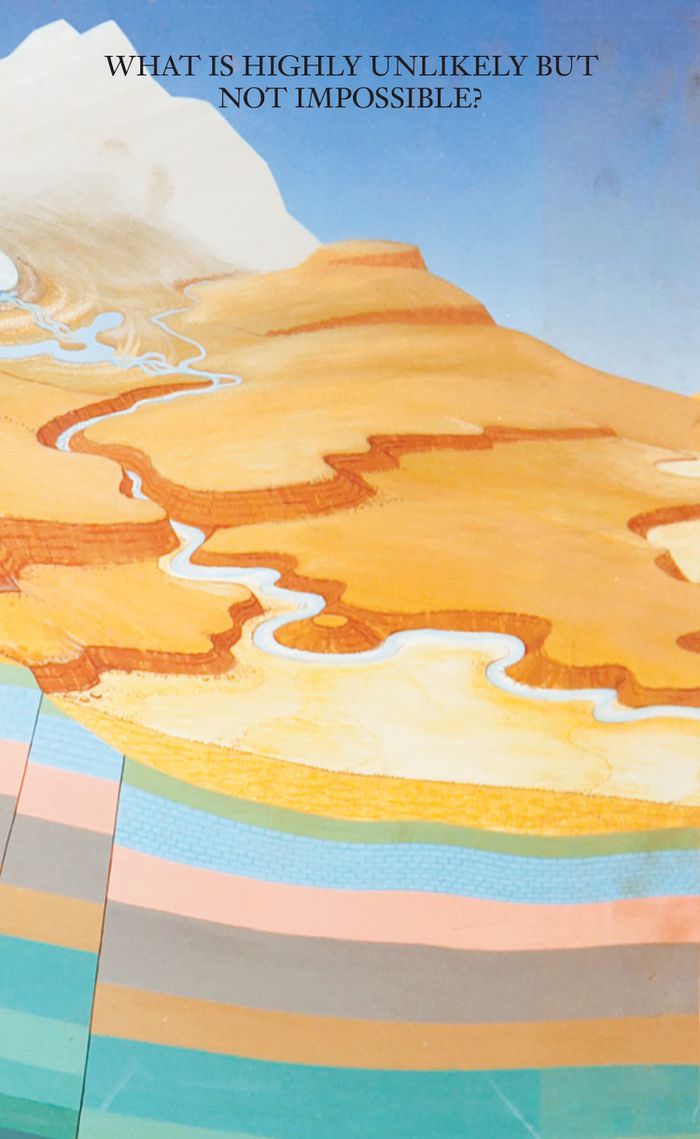
"What is highly likely but not impossible?" is informed by themes found in the work of Hiwa K, such as statehood, war, migration, belonging, the effects of neoliberalism and colonialism, home as a concept, language, and the myth of the individual artist. The compendium ranges freely across mediums, drawing together experimental poetry, science fiction, photography, memoir, academic essays, art historical texts, and more. Contributions include a short story by Benjamin Labatut, an excerpt from a lecture by Achille Mbembe, and drawings by Hajra Waheed. Like previous editions in the series, this book brings together a range of voices and mediums to consider?some of the most pressing issues of our time.?
What is highly unlikely but not impossible?
Actions:
Price:
$24.95
(available in store)
Summary:
"What is highly likely but not impossible?" is informed by themes found in the work of Hiwa K, such as statehood, war, migration, belonging, the effects of neoliberalism and colonialism, home as a concept, language, and the myth of the individual artist. The compendium ranges freely across mediums, drawing together experimental poetry, science fiction, photography, memoir, academic essays, art historical texts, and more. Contributions include a short story by Benjamin Labatut, an excerpt from a lecture by Achille Mbembe, and drawings by Hajra Waheed. Like previous editions in the series, this book brings together a range of voices and mediums to consider?some of the most pressing issues of our time.?
Form:
books
books
Publication:
August 2026
August 2026
Subject:
Art Theory
Art Theory


