


1204 Results
Form:
books
books
Title:
The last pictures
The last pictures
Actions:
Price:
$52.00
(available in store)
Summary:
Human civilizations' longest lasting artifacts are not the great Pyramids of Giza, nor the cave paintings at Lascaux, but the communications satellites that circle our planet. In a stationary orbit above the equator, the satellites that broadcast our TV signals, route our phone calls, and process our credit card transactions experience no atmospheric drag. Their inert(...)
$52.00
(available in store)
Summary:
Human civilizations' longest lasting artifacts are not the great Pyramids of Giza, nor the cave paintings at Lascaux, but the communications satellites that circle our planet. In a stationary orbit above the equator, the satellites that broadcast our TV signals, route our phone calls, and process our credit card transactions experience no atmospheric drag. Their inert(...)
Title:
The last pictures
Actions:
Price:
$52.00
(available in store)
Summary:
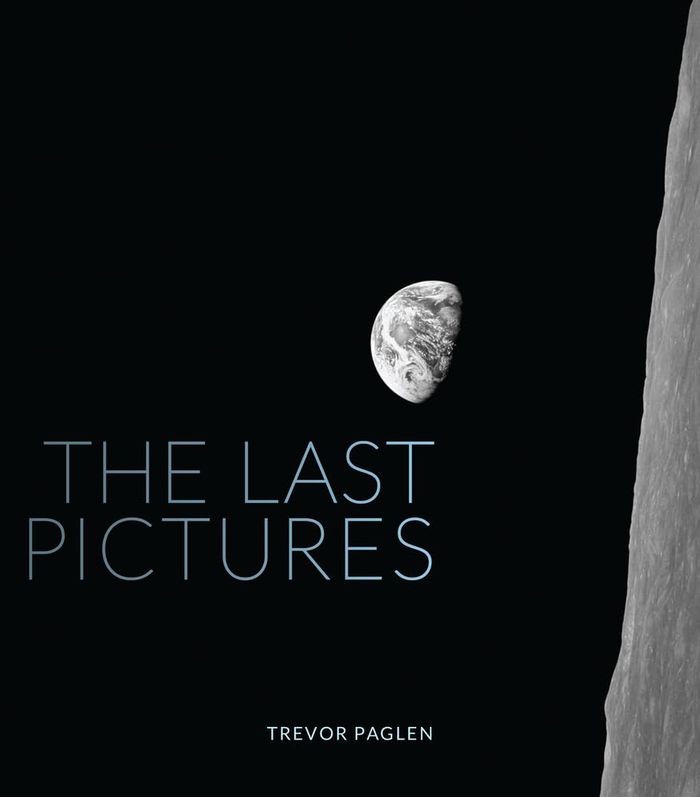
Human civilizations' longest lasting artifacts are not the great Pyramids of Giza, nor the cave paintings at Lascaux, but the communications satellites that circle our planet. In a stationary orbit above the equator, the satellites that broadcast our TV signals, route our phone calls, and process our credit card transactions experience no atmospheric drag. Their inert hulls will continue to drift around Earth until the Sun expands into a red giant and engulfs them about 4.5 billion years from now. he Last Pictures, co-published by Creative Time Books, is rooted in the premise that these communications satellites will ultimately become the cultural and material ruins of the late 20th and early 21st centuries, far outlasting anything else humans have created. Inspired in part by ancient cave paintings, nuclear waste warning signs, and Carl Sagan's Golden Records of the 1970s, artist/geographer and MacArthur "Genius" Fellow Trevor Paglen has developed a collection of one hundred images that will be etched onto an ultra-archival, golden silicon disc.
The last pictures
Actions:
Price:
$52.00
(available in store)
Summary:
Human civilizations' longest lasting artifacts are not the great Pyramids of Giza, nor the cave paintings at Lascaux, but the communications satellites that circle our planet. In a stationary orbit above the equator, the satellites that broadcast our TV signals, route our phone calls, and process our credit card transactions experience no atmospheric drag. Their inert hulls will continue to drift around Earth until the Sun expands into a red giant and engulfs them about 4.5 billion years from now. he Last Pictures, co-published by Creative Time Books, is rooted in the premise that these communications satellites will ultimately become the cultural and material ruins of the late 20th and early 21st centuries, far outlasting anything else humans have created. Inspired in part by ancient cave paintings, nuclear waste warning signs, and Carl Sagan's Golden Records of the 1970s, artist/geographer and MacArthur "Genius" Fellow Trevor Paglen has developed a collection of one hundred images that will be etched onto an ultra-archival, golden silicon disc.
Form:
books
books
Publication:
September 2012
September 2012
Subject:
Art Theory
Art Theory
Form:
books
books
Actions:
Price:
$78.00
(available to order)
Summary:
This historical survey focuses on female artists who were either working with computer technologies or taking up the subject of computing and cybernetics in their work in the early years of the computer revolution. It documents a lesser-known history of the inception of digital art, countering conventional narratives by focusing entirely on female figures. Comprising more(...)
$78.00
(available to order)
Summary:
This historical survey focuses on female artists who were either working with computer technologies or taking up the subject of computing and cybernetics in their work in the early years of the computer revolution. It documents a lesser-known history of the inception of digital art, countering conventional narratives by focusing entirely on female figures. Comprising more(...)
Title:
Radical Software: Women, Art & Computing: 1960-1991
Actions:
Price:
$78.00
(available to order)
Summary:
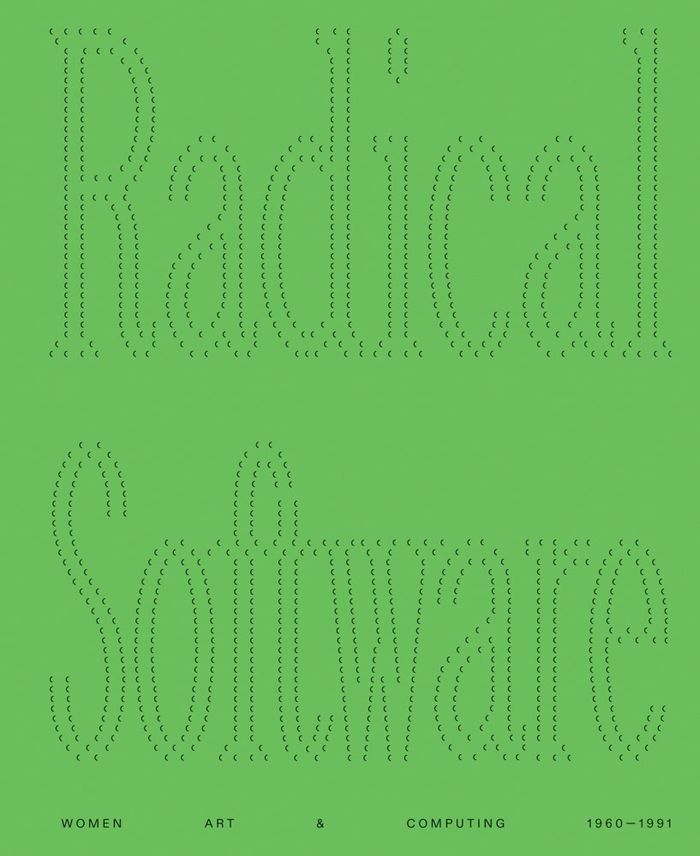
This historical survey focuses on female artists who were either working with computer technologies or taking up the subject of computing and cybernetics in their work in the early years of the computer revolution. It documents a lesser-known history of the inception of digital art, countering conventional narratives by focusing entirely on female figures. Comprising more than 100 works by 50 artists from 14 countries, it spans a period from the first years of integrated circuit computing in the 1960s to the "microcomputer revolution," which led to the birth of home computing in the 1980s. This extensive publication includes three new essays by Tina Rivers Ryan, Margit Rosen and the exhibition's curator, Michelle Cotton. It also features a richly illustrated timeline covering the period between 1613 and 1991 and includes 27 new interviews with artists and over 200 illustrations.
Radical Software: Women, Art & Computing: 1960-1991
Actions:
Price:
$78.00
(available to order)
Summary:
This historical survey focuses on female artists who were either working with computer technologies or taking up the subject of computing and cybernetics in their work in the early years of the computer revolution. It documents a lesser-known history of the inception of digital art, countering conventional narratives by focusing entirely on female figures. Comprising more than 100 works by 50 artists from 14 countries, it spans a period from the first years of integrated circuit computing in the 1960s to the "microcomputer revolution," which led to the birth of home computing in the 1980s. This extensive publication includes three new essays by Tina Rivers Ryan, Margit Rosen and the exhibition's curator, Michelle Cotton. It also features a richly illustrated timeline covering the period between 1613 and 1991 and includes 27 new interviews with artists and over 200 illustrations.
Form:
books
books
Publication:
September 2025
September 2025
Subject:
Art Theory
Art Theory
Form:
books
books
Actions:
Price:
$25.00
(available in store)
Summary:
"Nous sommes tous des astronautes : scénarios et prototypes pour des temps extrêmes" accueille son deuxième complément. Chercheurs et chercheuses, artistes, philosophes, professeurs et professeures repensent la réalité virtuelle dans le monde et les arts.
$25.00
(available in store)
Summary:
"Nous sommes tous des astronautes : scénarios et prototypes pour des temps extrêmes" accueille son deuxième complément. Chercheurs et chercheuses, artistes, philosophes, professeurs et professeures repensent la réalité virtuelle dans le monde et les arts.
Title:
Nous sommes tous des astronautes : Complément 2
Actions:
Price:
$25.00
(available in store)
Summary:
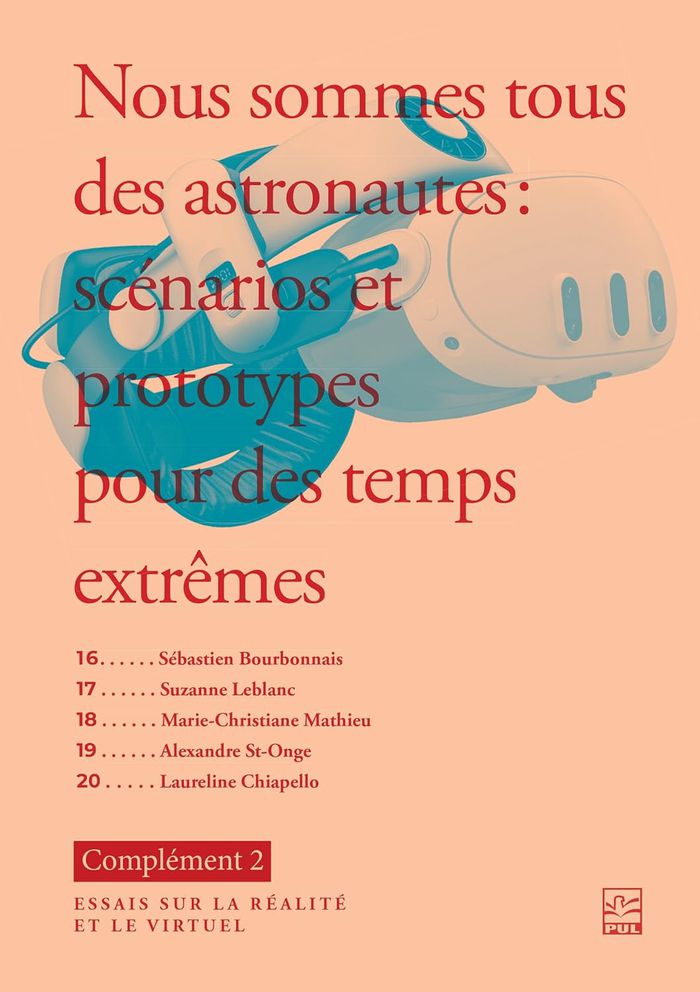
"Nous sommes tous des astronautes : scénarios et prototypes pour des temps extrêmes" accueille son deuxième complément. Chercheurs et chercheuses, artistes, philosophes, professeurs et professeures repensent la réalité virtuelle dans le monde et les arts.
Nous sommes tous des astronautes : Complément 2
Actions:
Price:
$25.00
(available in store)
Summary:
"Nous sommes tous des astronautes : scénarios et prototypes pour des temps extrêmes" accueille son deuxième complément. Chercheurs et chercheuses, artistes, philosophes, professeurs et professeures repensent la réalité virtuelle dans le monde et les arts.
Form:
books
books
Publication:
March 2026
March 2026
Subject:
Art Theory
Art Theory
Form:
books
books
Actions:
Price:
$63.00
(available in store)
Summary:
Video is everywhere. Since its debut as a consumer medium in the 1960s, video has shaped our opinions, our politics and our societies. On our phones and computer screens, walls and streets, it defines new spaces and experiences—spreading memes, lies, fervor, fact and fiction. In other words, video has transformed the world. Featuring works from the collection of the(...)
$63.00
(available in store)
Summary:
Video is everywhere. Since its debut as a consumer medium in the 1960s, video has shaped our opinions, our politics and our societies. On our phones and computer screens, walls and streets, it defines new spaces and experiences—spreading memes, lies, fervor, fact and fiction. In other words, video has transformed the world. Featuring works from the collection of the(...)
Title:
Signals: How video transformed the world
Actions:
Price:
$63.00
(available in store)
Summary:
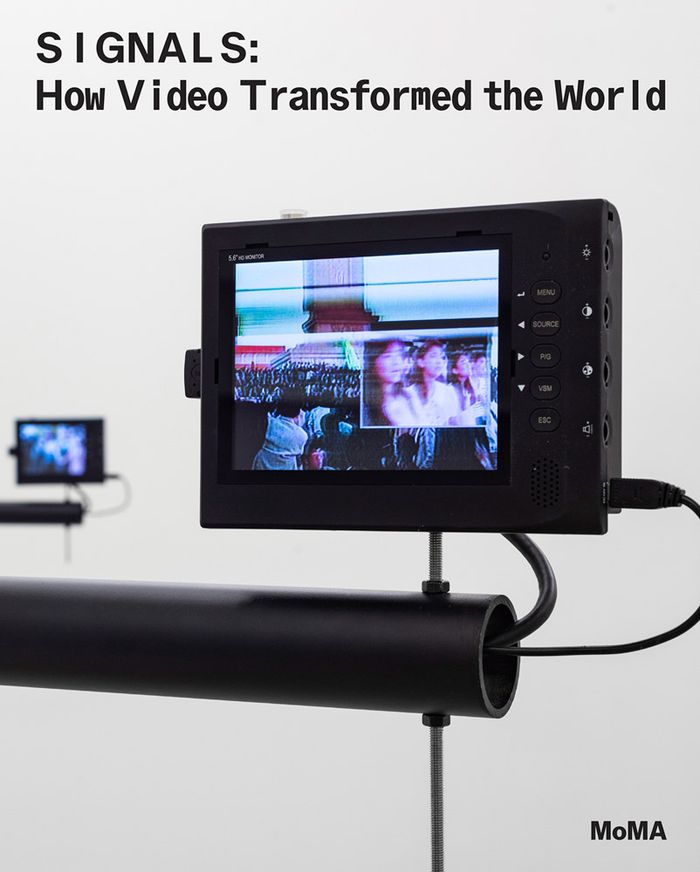
Video is everywhere. Since its debut as a consumer medium in the 1960s, video has shaped our opinions, our politics and our societies. On our phones and computer screens, walls and streets, it defines new spaces and experiences—spreading memes, lies, fervor, fact and fiction. In other words, video has transformed the world. Featuring works from the collection of the Museum of Modern Art, New York, this illuminating exhibition catalog—MoMA’s first major publication on video art in nearly 30 years—explores the ways in which artists have both championed and questioned video’s promise, some hoping to create new networks of communication, democratic engagement and public participation, others protesting commercial and state control over information, vision and truth itself.
Signals: How video transformed the world
Actions:
Price:
$63.00
(available in store)
Summary:
Video is everywhere. Since its debut as a consumer medium in the 1960s, video has shaped our opinions, our politics and our societies. On our phones and computer screens, walls and streets, it defines new spaces and experiences—spreading memes, lies, fervor, fact and fiction. In other words, video has transformed the world. Featuring works from the collection of the Museum of Modern Art, New York, this illuminating exhibition catalog—MoMA’s first major publication on video art in nearly 30 years—explores the ways in which artists have both championed and questioned video’s promise, some hoping to create new networks of communication, democratic engagement and public participation, others protesting commercial and state control over information, vision and truth itself.
Form:
books
books
Publication:
April 2023
April 2023
Subject:
Art Theory
Art Theory
Form:
books
books
Title:
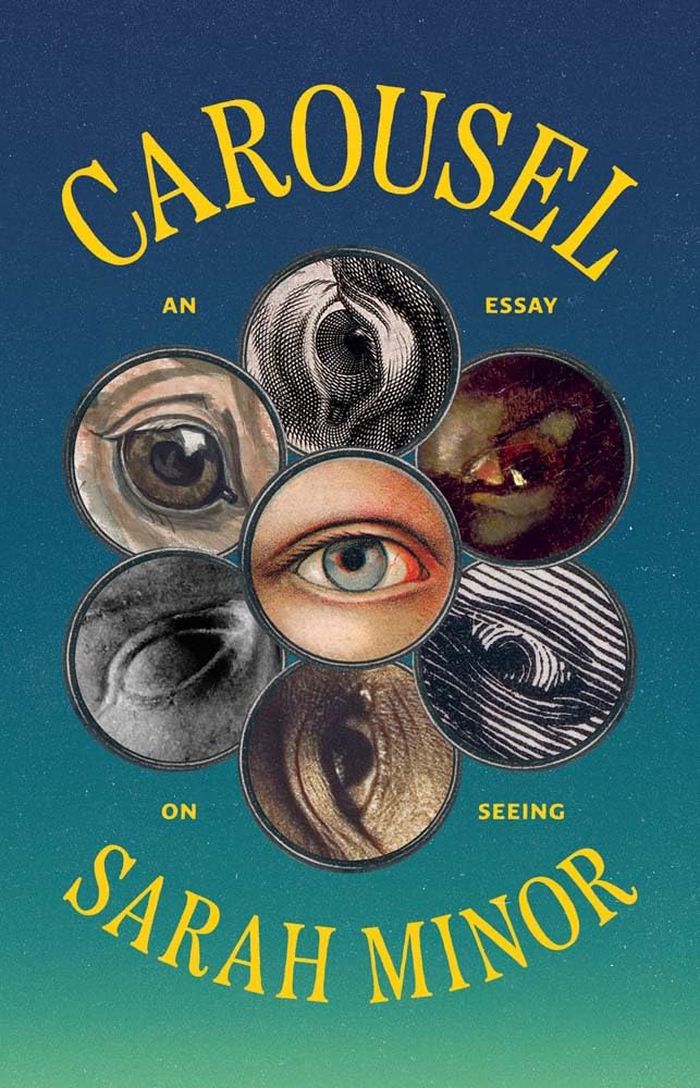
Carousel: An essay on seeing
Carousel: An essay on seeing
Actions:
Price:
$39.95
(available in store)
Summary:
''Carousel'' opens as a professor begins delivering a lecture to a hot room. Her students have the internet in their pockets, screens on their wrists, seeing in more directions than students ever could before. But what, in fact, are they looking at? In the spirit of John Berger’s ''Ways of Seeing'', Sarah Minor’s ''Carousel'' explores how the pursuit of panoramic(...)
$39.95
(available in store)
Summary:
''Carousel'' opens as a professor begins delivering a lecture to a hot room. Her students have the internet in their pockets, screens on their wrists, seeing in more directions than students ever could before. But what, in fact, are they looking at? In the spirit of John Berger’s ''Ways of Seeing'', Sarah Minor’s ''Carousel'' explores how the pursuit of panoramic(...)
Title:
Carousel: An essay on seeing
Actions:
Price:
$39.95
(available in store)
Summary:
''Carousel'' opens as a professor begins delivering a lecture to a hot room. Her students have the internet in their pockets, screens on their wrists, seeing in more directions than students ever could before. But what, in fact, are they looking at? In the spirit of John Berger’s ''Ways of Seeing'', Sarah Minor’s ''Carousel'' explores how the pursuit of panoramic vision frames power, distorts reality, and implicates both viewer and subject. Across short, loping sections that weave history with memoir, close looking with confession, Minor masterfully fuses the slide lecture with the lyric essay, tying medieval tapestries to surrealism and Instagram reels to predator drones. In language that captures the disorientation of that other carousel, the whirling carnival ride, Minor shows how the more we strive to see, the more we ultimately reveal ourselves.
Carousel: An essay on seeing
Actions:
Price:
$39.95
(available in store)
Summary:
''Carousel'' opens as a professor begins delivering a lecture to a hot room. Her students have the internet in their pockets, screens on their wrists, seeing in more directions than students ever could before. But what, in fact, are they looking at? In the spirit of John Berger’s ''Ways of Seeing'', Sarah Minor’s ''Carousel'' explores how the pursuit of panoramic vision frames power, distorts reality, and implicates both viewer and subject. Across short, loping sections that weave history with memoir, close looking with confession, Minor masterfully fuses the slide lecture with the lyric essay, tying medieval tapestries to surrealism and Instagram reels to predator drones. In language that captures the disorientation of that other carousel, the whirling carnival ride, Minor shows how the more we strive to see, the more we ultimately reveal ourselves.
Form:
books
books
Publication:
July 2026
July 2026
Subject:
Art Theory
Art Theory
Form:
books
books
Title:
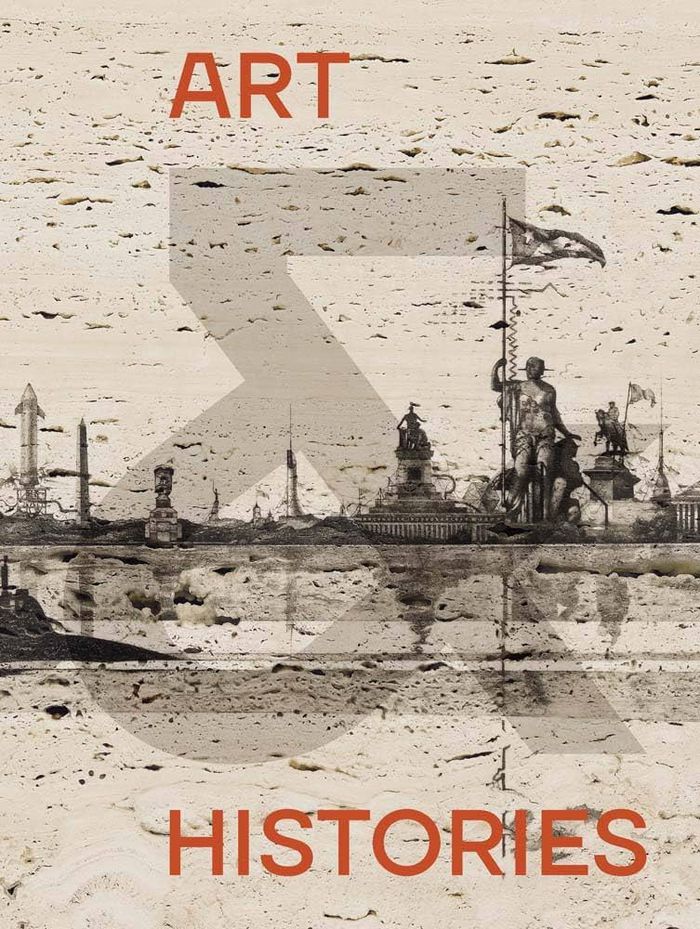
Art & Histories: Volume 1
Art & Histories: Volume 1
Actions:
Price:
$45.00
(available in store)
Summary:
Each essay in this groundbreaking volume—the first in an exciting new series from the ''Center for Advanced Study in the Visual Arts'' —engages aesthetic and cultural debates that situate research on the arts at the intersection of various disciplines, including architecture, film, literature, curatorial and museum studies, and the arts of performance. Reflecting the(...)
$45.00
(available in store)
Summary:
Each essay in this groundbreaking volume—the first in an exciting new series from the ''Center for Advanced Study in the Visual Arts'' —engages aesthetic and cultural debates that situate research on the arts at the intersection of various disciplines, including architecture, film, literature, curatorial and museum studies, and the arts of performance. Reflecting the(...)
Title:
Art & Histories: Volume 1
Actions:
Price:
$45.00
(available in store)
Summary:
Each essay in this groundbreaking volume—the first in an exciting new series from the ''Center for Advanced Study in the Visual Arts'' —engages aesthetic and cultural debates that situate research on the arts at the intersection of various disciplines, including architecture, film, literature, curatorial and museum studies, and the arts of performance. Reflecting the series’ goal to engage with different cultural contexts and time periods, newly commissioned essays from emerging and established scholars address subjects ranging from medieval dance and ancient Assyrian reliefs to expressions of gender embodiment and the art of the Afro-Atlantic. First-person narratives ground theoretical considerations of the theme. Reflecting a commitment to embracing the book form as a space for art itself, ''Art & Histories'' includes a detachable accordion-fold insert with a work from Miami-based artist Glexis Novoa. One of his signature horizon lines unites Washington, DC, and the artist’s native Havana. Meticulous drawings executed on travertine marble entangle the two cities and their monuments, symbolizing both violent and triumphant histories and their ideological reversals.
Art & Histories: Volume 1
Actions:
Price:
$45.00
(available in store)
Summary:
Each essay in this groundbreaking volume—the first in an exciting new series from the ''Center for Advanced Study in the Visual Arts'' —engages aesthetic and cultural debates that situate research on the arts at the intersection of various disciplines, including architecture, film, literature, curatorial and museum studies, and the arts of performance. Reflecting the series’ goal to engage with different cultural contexts and time periods, newly commissioned essays from emerging and established scholars address subjects ranging from medieval dance and ancient Assyrian reliefs to expressions of gender embodiment and the art of the Afro-Atlantic. First-person narratives ground theoretical considerations of the theme. Reflecting a commitment to embracing the book form as a space for art itself, ''Art & Histories'' includes a detachable accordion-fold insert with a work from Miami-based artist Glexis Novoa. One of his signature horizon lines unites Washington, DC, and the artist’s native Havana. Meticulous drawings executed on travertine marble entangle the two cities and their monuments, symbolizing both violent and triumphant histories and their ideological reversals.
Form:
books
books
Publication:
January 2026
January 2026
Subject:
Art Theory
Art Theory
Form:
books
books

Actions:
Price:
$38.00
(available in store)
Summary:
Joan Mitchell (1925–1992), one of the most important artists of the post-war period, is also a uniquely transatlantic figure. From the 1950s onward, as Mitchell shuttled back and forth between the United States and France, her work—and the discourse around it—developed across two continents, two cultures, and two languages. Invited by Mara Hoberman, nine artists, who are(...)
$38.00
(available in store)
Summary:
Joan Mitchell (1925–1992), one of the most important artists of the post-war period, is also a uniquely transatlantic figure. From the 1950s onward, as Mitchell shuttled back and forth between the United States and France, her work—and the discourse around it—developed across two continents, two cultures, and two languages. Invited by Mara Hoberman, nine artists, who are(...)
Title:
Joan Mitchell: Transatlantique
Actions:
Price:
$38.00
(available in store)
Summary:
Joan Mitchell (1925–1992), one of the most important artists of the post-war period, is also a uniquely transatlantic figure. From the 1950s onward, as Mitchell shuttled back and forth between the United States and France, her work—and the discourse around it—developed across two continents, two cultures, and two languages. Invited by Mara Hoberman, nine artists, who are themselves based on either side of the Atlantic, reflect on Mitchell's life, work and enduring impact.
Joan Mitchell: Transatlantique
Actions:
Price:
$38.00
(available in store)
Summary:
Joan Mitchell (1925–1992), one of the most important artists of the post-war period, is also a uniquely transatlantic figure. From the 1950s onward, as Mitchell shuttled back and forth between the United States and France, her work—and the discourse around it—developed across two continents, two cultures, and two languages. Invited by Mara Hoberman, nine artists, who are themselves based on either side of the Atlantic, reflect on Mitchell's life, work and enduring impact.
Form:
books
books
Publication:
February 2026
February 2026
Subject:
Art Theory
Art Theory
Form:
books
books
Price:
$44.95
(available in store)
Summary:
Une exploration pionnière de l'évolution des fonctions fondamentales des écrans dans l'histoire (du corps comme proto-écran aux dispositifs portables d'aujourd'hui), de leurs implications anthropologiques et philosophiques, et de leur impact profond sur la culture humaine, offrant un récit éloquent sur notre réalité médiatisée. Les écrans ne se limitent pas à montrer(...)
$44.95
(available in store)
Summary:
Une exploration pionnière de l'évolution des fonctions fondamentales des écrans dans l'histoire (du corps comme proto-écran aux dispositifs portables d'aujourd'hui), de leurs implications anthropologiques et philosophiques, et de leur impact profond sur la culture humaine, offrant un récit éloquent sur notre réalité médiatisée. Les écrans ne se limitent pas à montrer(...)
Title:
Pour une anthropologie des écrans: Montrer et cacher, exposer et protéger
Actions:
Price:
$44.95
(available in store)
Summary:
Une exploration pionnière de l'évolution des fonctions fondamentales des écrans dans l'histoire (du corps comme proto-écran aux dispositifs portables d'aujourd'hui), de leurs implications anthropologiques et philosophiques, et de leur impact profond sur la culture humaine, offrant un récit éloquent sur notre réalité médiatisée. Les écrans ne se limitent pas à montrer ou cacher : depuis la préhistoire, ils servent d'intermédiaires dans notre relation au monde en protégeant autant qu'en exposant nos corps. À travers une enquête historico-généalogique et une analyse aussi bien des technologies présentes que du futur proche, les auteurs déconstruisent l'idée selon laquelle les écrans seraient inséparables des images, que celles-ci s'opposeraient aux mots, ainsi que ce qu'ils nomment idéologie de la « Transparence 2.0 », à savoir la prétention de pouvoir éliminer toute médiation tant en communication qu'en politique. Ils montrent également que les technologies portables ne nous rapprochent nullement d'une supposée disparition des écrans, mais semblent plutôt dessiner un quasi-retour à l'utilisation de notre corps, cette fois-ci « augmenté », comme écran. Cela soulève de nouvelles questions relationnelles, éthiques et politiques, que le livre contribue à éclairer.
Pour une anthropologie des écrans: Montrer et cacher, exposer et protéger
Actions:
Price:
$44.95
(available in store)
Summary:
Une exploration pionnière de l'évolution des fonctions fondamentales des écrans dans l'histoire (du corps comme proto-écran aux dispositifs portables d'aujourd'hui), de leurs implications anthropologiques et philosophiques, et de leur impact profond sur la culture humaine, offrant un récit éloquent sur notre réalité médiatisée. Les écrans ne se limitent pas à montrer ou cacher : depuis la préhistoire, ils servent d'intermédiaires dans notre relation au monde en protégeant autant qu'en exposant nos corps. À travers une enquête historico-généalogique et une analyse aussi bien des technologies présentes que du futur proche, les auteurs déconstruisent l'idée selon laquelle les écrans seraient inséparables des images, que celles-ci s'opposeraient aux mots, ainsi que ce qu'ils nomment idéologie de la « Transparence 2.0 », à savoir la prétention de pouvoir éliminer toute médiation tant en communication qu'en politique. Ils montrent également que les technologies portables ne nous rapprochent nullement d'une supposée disparition des écrans, mais semblent plutôt dessiner un quasi-retour à l'utilisation de notre corps, cette fois-ci « augmenté », comme écran. Cela soulève de nouvelles questions relationnelles, éthiques et politiques, que le livre contribue à éclairer.
Form:
books
books
Publication:
February 2026
February 2026
Subject:
Art Theory
Art Theory
Form:
books
books

Actions:
Price:
$25.95
(available in store)
Summary:
''Landscapes'' showcases the development and practice of John Berger’s unique way of seeing. Here he surveys the aesthetic landscapes that have informed, challenged and nourished his understanding of the world. Berger pays homage to the writers and thinkers who influenced him, such as Walter Benjamin, Rosa Luxemburg and Bertolt Brecht. His expansive perspective(...)
$25.95
(available in store)
Summary:
''Landscapes'' showcases the development and practice of John Berger’s unique way of seeing. Here he surveys the aesthetic landscapes that have informed, challenged and nourished his understanding of the world. Berger pays homage to the writers and thinkers who influenced him, such as Walter Benjamin, Rosa Luxemburg and Bertolt Brecht. His expansive perspective(...)
Title:
Landscapes: John Berger on art
Actions:
Price:
$25.95
(available in store)
Summary:
''Landscapes'' showcases the development and practice of John Berger’s unique way of seeing. Here he surveys the aesthetic landscapes that have informed, challenged and nourished his understanding of the world. Berger pays homage to the writers and thinkers who influenced him, such as Walter Benjamin, Rosa Luxemburg and Bertolt Brecht. His expansive perspective embraces artistic movements and individual artists – from the Renaissance to the present – while never neglecting the social and political context of their creation.
Landscapes: John Berger on art
Actions:
Price:
$25.95
(available in store)
Summary:
''Landscapes'' showcases the development and practice of John Berger’s unique way of seeing. Here he surveys the aesthetic landscapes that have informed, challenged and nourished his understanding of the world. Berger pays homage to the writers and thinkers who influenced him, such as Walter Benjamin, Rosa Luxemburg and Bertolt Brecht. His expansive perspective embraces artistic movements and individual artists – from the Renaissance to the present – while never neglecting the social and political context of their creation.
Form:
books
books
Publication:
April 2026
April 2026
Subject:
Art Theory
Art Theory
Form:
books
books
Actions:
Price:
$52.50
(available in store)
Summary:
Eating and drinking images may seem like an anomalous notion but, since antiquity, in the European and Mediterranean worlds, people have swallowed down frescoes, icons, engravings, eucharistic hosts stamped with images, heraldic wafers, marzipan figures, and other sculpted dishes. Either specifically made for human consumption or diverted from their original purpose so as(...)
$52.50
(available in store)
Summary:
Eating and drinking images may seem like an anomalous notion but, since antiquity, in the European and Mediterranean worlds, people have swallowed down frescoes, icons, engravings, eucharistic hosts stamped with images, heraldic wafers, marzipan figures, and other sculpted dishes. Either specifically made for human consumption or diverted from their original purpose so as(...)
Title:
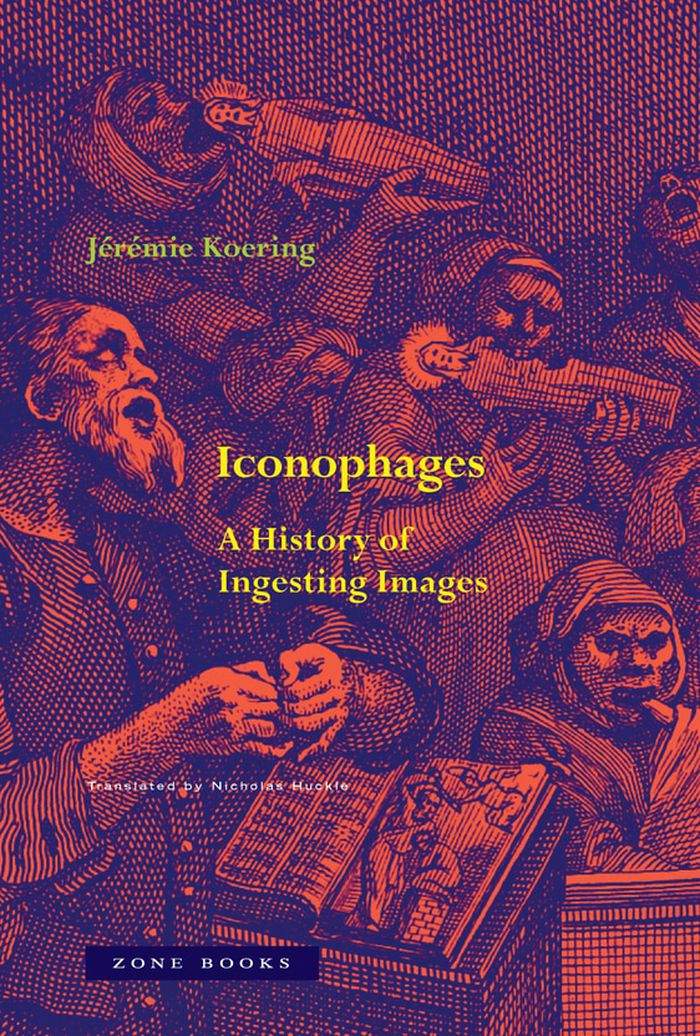
Iconophages: A history of ingesting images
Actions:
Price:
$52.50
(available in store)
Summary:
Eating and drinking images may seem like an anomalous notion but, since antiquity, in the European and Mediterranean worlds, people have swallowed down frescoes, icons, engravings, eucharistic hosts stamped with images, heraldic wafers, marzipan figures, and other sculpted dishes. Either specifically made for human consumption or diverted from their original purpose so as to be ingested, these figured artifacts have been not only gazed upon but also incorporated—taken into the body—as solids or liquids. How can we explain such behavior? Why take an image into one’s own body, devouring it at the risk of destroying it, consuming rather than contemplating it wisely from a distance? What structures of the imagination underlie and justify these desires for incorporation? What are the visual configurations offered up to the mouth, and what are their effects? What therapeutic, religious, symbolic, and social functions can we attribute to these forms of relations with icons? These are a few of the questions raised in this investigation into iconophagy. "Iconophages" aims to retrace, for the first time, the history of iconophagy. Jérémie Koering examines this unexplored facet of the history of images through an interdisciplinary approach that ranges across art history, cultural and material history, anthropology, philosophy, and the history of the body and the senses. He analyzes the human investment, in terms of culture and imagination, at stake in this seemingly paradoxical way of experiencing images. Beyond the hidden knowledge unearthed here, these pages bring to light a new way of understanding images, just as they illuminate the occasionally outlandish relations we maintain with them.
Iconophages: A history of ingesting images
Actions:
Price:
$52.50
(available in store)
Summary:
Eating and drinking images may seem like an anomalous notion but, since antiquity, in the European and Mediterranean worlds, people have swallowed down frescoes, icons, engravings, eucharistic hosts stamped with images, heraldic wafers, marzipan figures, and other sculpted dishes. Either specifically made for human consumption or diverted from their original purpose so as to be ingested, these figured artifacts have been not only gazed upon but also incorporated—taken into the body—as solids or liquids. How can we explain such behavior? Why take an image into one’s own body, devouring it at the risk of destroying it, consuming rather than contemplating it wisely from a distance? What structures of the imagination underlie and justify these desires for incorporation? What are the visual configurations offered up to the mouth, and what are their effects? What therapeutic, religious, symbolic, and social functions can we attribute to these forms of relations with icons? These are a few of the questions raised in this investigation into iconophagy. "Iconophages" aims to retrace, for the first time, the history of iconophagy. Jérémie Koering examines this unexplored facet of the history of images through an interdisciplinary approach that ranges across art history, cultural and material history, anthropology, philosophy, and the history of the body and the senses. He analyzes the human investment, in terms of culture and imagination, at stake in this seemingly paradoxical way of experiencing images. Beyond the hidden knowledge unearthed here, these pages bring to light a new way of understanding images, just as they illuminate the occasionally outlandish relations we maintain with them.
Form:
books
books
Publication:
January 2026
January 2026
Subject:
Art Theory
Art Theory


