


878 Results
Form:
books
books
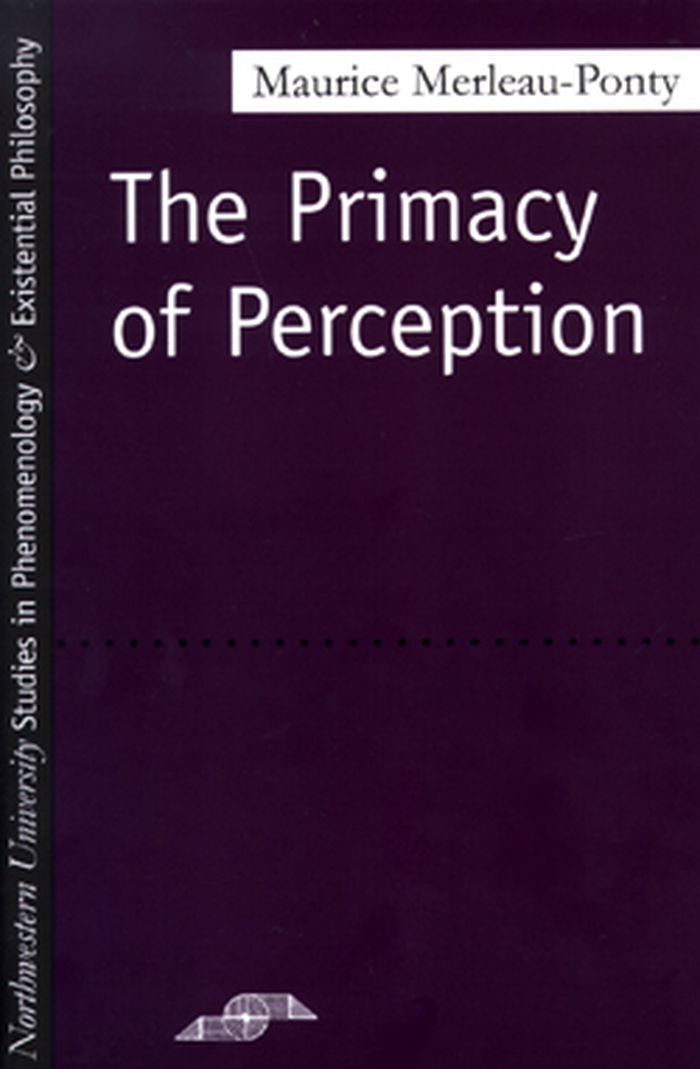
Title:
The primacy of perception
The primacy of perception
Actions:
Price:
$45.50
(available to order)
Summary:
"The primacy of perception" brings together a number of important studies by Maurice Merleau-Ponty that appeared in various publications from 1947 to 1961. The title essay, which is in essence a presentation of the underlying thesis of his "Phenomenology of perception", is followed by two courses given by Merleau-Ponty at the Sorbonne on phenomenological psychology. "Eye(...)
$45.50
(available to order)
Summary:
"The primacy of perception" brings together a number of important studies by Maurice Merleau-Ponty that appeared in various publications from 1947 to 1961. The title essay, which is in essence a presentation of the underlying thesis of his "Phenomenology of perception", is followed by two courses given by Merleau-Ponty at the Sorbonne on phenomenological psychology. "Eye(...)
Title:
The primacy of perception
Actions:
Price:
$45.50
(available to order)
Summary:
"The primacy of perception" brings together a number of important studies by Maurice Merleau-Ponty that appeared in various publications from 1947 to 1961. The title essay, which is in essence a presentation of the underlying thesis of his "Phenomenology of perception", is followed by two courses given by Merleau-Ponty at the Sorbonne on phenomenological psychology. "Eye and mind" and the concluding chapters present applications of Merleau-Ponty's ideas to the realms of art, philosophy of history, and politics. Taken together, the studies in this volume provide a systematic introduction to the major themes of Merleau-Ponty's philosophy.
The primacy of perception
Actions:
Price:
$45.50
(available to order)
Summary:
"The primacy of perception" brings together a number of important studies by Maurice Merleau-Ponty that appeared in various publications from 1947 to 1961. The title essay, which is in essence a presentation of the underlying thesis of his "Phenomenology of perception", is followed by two courses given by Merleau-Ponty at the Sorbonne on phenomenological psychology. "Eye and mind" and the concluding chapters present applications of Merleau-Ponty's ideas to the realms of art, philosophy of history, and politics. Taken together, the studies in this volume provide a systematic introduction to the major themes of Merleau-Ponty's philosophy.
Form:
books
books
Publication:
January 1964, Evanston
January 1964, Evanston
Subject:
Critical Theory
Critical Theory
Form:
books
books
Actions:
Price:
$18.95
(available to order)
Summary:
La Raison technicienne croit savoir comment organiser au mieux les choses et les gens, assignant à chacun une place, un rôle, des produits à consommer. Mais l'homme ordinaire se soustrait en silence à cette conformation. Il invente le quotidien grâce aux arts de faire, ruses subtiles, tactiques de résistance par lesquelles il détourne les objets et les codes, se(...)
$18.95
(available to order)
Summary:
La Raison technicienne croit savoir comment organiser au mieux les choses et les gens, assignant à chacun une place, un rôle, des produits à consommer. Mais l'homme ordinaire se soustrait en silence à cette conformation. Il invente le quotidien grâce aux arts de faire, ruses subtiles, tactiques de résistance par lesquelles il détourne les objets et les codes, se(...)
Title:
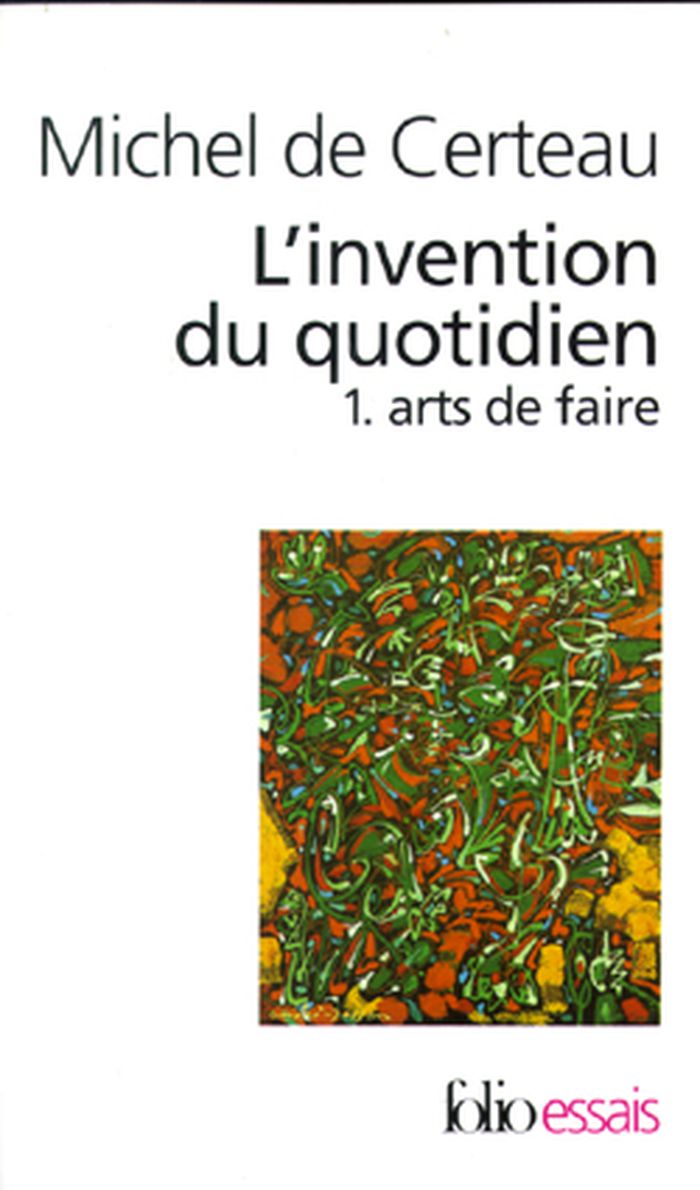
L'invention du quotidien 1. arts de faire
Actions:
Price:
$18.95
(available to order)
Summary:
La Raison technicienne croit savoir comment organiser au mieux les choses et les gens, assignant à chacun une place, un rôle, des produits à consommer. Mais l'homme ordinaire se soustrait en silence à cette conformation. Il invente le quotidien grâce aux arts de faire, ruses subtiles, tactiques de résistance par lesquelles il détourne les objets et les codes, se réapproprie l'espace et l'usage à sa façon. Tours et traverses, manières de faire des coups, astuces de chasseurs, mobilités, mises en récit et trouvailles de mots, mille pratiques inventives prouvent, à qui sait les voir, que la foule sans qualité n'est pas obéissante et passive, mais pratique l'écart dans l'usage des produits imposés, dans une liberté buissonnière par laquelle chacun tâche de vivre au mieux l'ordre social et la violence des choses. Michel de Certeau, le premier, restitua les ruses anonymes des arts de faire, cet art de vivre la société de consommation. Vite devenues classiques, ses analyses pionnières ont inspiré historiens, philosophes et sociologues.
L'invention du quotidien 1. arts de faire
Actions:
Price:
$18.95
(available to order)
Summary:
La Raison technicienne croit savoir comment organiser au mieux les choses et les gens, assignant à chacun une place, un rôle, des produits à consommer. Mais l'homme ordinaire se soustrait en silence à cette conformation. Il invente le quotidien grâce aux arts de faire, ruses subtiles, tactiques de résistance par lesquelles il détourne les objets et les codes, se réapproprie l'espace et l'usage à sa façon. Tours et traverses, manières de faire des coups, astuces de chasseurs, mobilités, mises en récit et trouvailles de mots, mille pratiques inventives prouvent, à qui sait les voir, que la foule sans qualité n'est pas obéissante et passive, mais pratique l'écart dans l'usage des produits imposés, dans une liberté buissonnière par laquelle chacun tâche de vivre au mieux l'ordre social et la violence des choses. Michel de Certeau, le premier, restitua les ruses anonymes des arts de faire, cet art de vivre la société de consommation. Vite devenues classiques, ses analyses pionnières ont inspiré historiens, philosophes et sociologues.
Form:
books
books
Publication:
January 2002, Paris
January 2002, Paris
Subject:
Critical Theory
Critical Theory
Form:
books
books
Title:
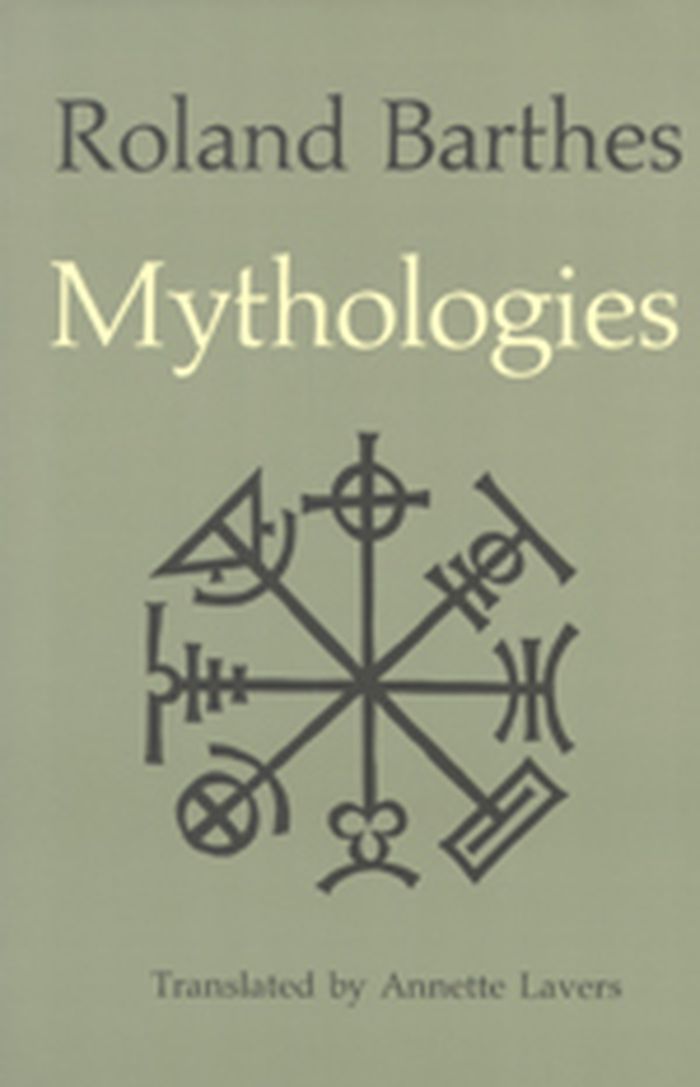
Mythologies
Mythologies
Actions:
Price:
$14.50
(available to order)
Summary:
"Mythologies" illustrates the beautiful generosity of Barthes's progressive interest in the meaning (his word is signification) of practically everything around him, not only the books and paintings of high art, but also the slogans, trivia, toys, food, and popular rituals (cruises, striptease, eating, wrestling matches) of contemporary life . . . For Barthes, words and(...)
$14.50
(available to order)
Summary:
"Mythologies" illustrates the beautiful generosity of Barthes's progressive interest in the meaning (his word is signification) of practically everything around him, not only the books and paintings of high art, but also the slogans, trivia, toys, food, and popular rituals (cruises, striptease, eating, wrestling matches) of contemporary life . . . For Barthes, words and(...)
Title:
Mythologies
Actions:
Price:
$14.50
(available to order)
Summary:
"Mythologies" illustrates the beautiful generosity of Barthes's progressive interest in the meaning (his word is signification) of practically everything around him, not only the books and paintings of high art, but also the slogans, trivia, toys, food, and popular rituals (cruises, striptease, eating, wrestling matches) of contemporary life . . . For Barthes, words and objects have in common the organized capacity to say something; at the same time, since they are signs, words and objects have the bad faith always to appear natural to their consumer, as if what they say is eternal, true, necessary, instead of arbitrary, made, contingent. Mythologies finds Barthes revealing the fashioned systems of ideas that make it possible, for example, for 'Einstein's brain' to stand for, be the myth of, 'a genius so lacking in magic that one speaks about his thought as a functional labor analogous to the mechanical making of sausages.' Each of the little essays in this book wrenches a definition out of a common but constructed object, making the object speak its hidden, but ever-so-present, reservoir of manufactured sense." -Edward W. Said
Mythologies
Actions:
Price:
$14.50
(available to order)
Summary:
"Mythologies" illustrates the beautiful generosity of Barthes's progressive interest in the meaning (his word is signification) of practically everything around him, not only the books and paintings of high art, but also the slogans, trivia, toys, food, and popular rituals (cruises, striptease, eating, wrestling matches) of contemporary life . . . For Barthes, words and objects have in common the organized capacity to say something; at the same time, since they are signs, words and objects have the bad faith always to appear natural to their consumer, as if what they say is eternal, true, necessary, instead of arbitrary, made, contingent. Mythologies finds Barthes revealing the fashioned systems of ideas that make it possible, for example, for 'Einstein's brain' to stand for, be the myth of, 'a genius so lacking in magic that one speaks about his thought as a functional labor analogous to the mechanical making of sausages.' Each of the little essays in this book wrenches a definition out of a common but constructed object, making the object speak its hidden, but ever-so-present, reservoir of manufactured sense." -Edward W. Said
Form:
books
books
Publication:
January 1993, New York
January 1993, New York
Subject:
Critical Theory
Critical Theory
Form:
books
books
Title:
La condition postmoderne
La condition postmoderne
Actions:
Price:
$19.95
(available to order)
Summary:
Contribution à la discussion internationale sur la question de la légitimité : qu'est-ce qui permet aujourd'hui de dire qu'une loi est juste, un énoncé vrai ? Il y a eu les grands récits, l'émancipation du citoyen, la réalisation de l'Esprit, la société sans classes. L'âge moderne y recourait pour légitimer ou critiquer ses savoirs et ses actes. L'homme postmoderne n'y(...)
$19.95
(available to order)
Summary:
Contribution à la discussion internationale sur la question de la légitimité : qu'est-ce qui permet aujourd'hui de dire qu'une loi est juste, un énoncé vrai ? Il y a eu les grands récits, l'émancipation du citoyen, la réalisation de l'Esprit, la société sans classes. L'âge moderne y recourait pour légitimer ou critiquer ses savoirs et ses actes. L'homme postmoderne n'y(...)
Title:
La condition postmoderne
Actions:
Price:
$19.95
(available to order)
Summary:
Contribution à la discussion internationale sur la question de la légitimité : qu'est-ce qui permet aujourd'hui de dire qu'une loi est juste, un énoncé vrai ? Il y a eu les grands récits, l'émancipation du citoyen, la réalisation de l'Esprit, la société sans classes. L'âge moderne y recourait pour légitimer ou critiquer ses savoirs et ses actes. L'homme postmoderne n'y croit plus. Les décideurs lui offrent pour perspective l'accroissement de la puissance et la pacification par la transparence communicationnelle. Mais il sait que le savoir quand à devient marchandise informationnelle est une source de profits et un moyen de décider et de contrôler. Où réside la légitimité, après les récits ? Dans la meilleure opérativité du système ? C'est un critère technologique, il ne permet pas de juger du vrai et du juste. Dans le consensus ? Mais l'invention se fait dans le dissentiment. Pourquoi pas dans ce dernier ? La société qui vient relève moins d'une anthropologie newtonienne (comme le structuralisme ou la théorie des systèmes) et plus d'une pragmatique des particules langagières. Le savoir postmoderne n'est pas seulement l'instrument des pouvoirs : il raffine notre sensibilité aux différences et renforce notre capacité de supporter l'incommensurable. Lui-même ne trouve pas sa raison dans l'homologie des experts, mais dans la paralogie des inventeurs. Et maintenant : une légitimation du lien social, une société juste, est-elle praticable selon un paradoxe analogue ? En quoi consiste celui-ci ?
La condition postmoderne
Actions:
Price:
$19.95
(available to order)
Summary:
Contribution à la discussion internationale sur la question de la légitimité : qu'est-ce qui permet aujourd'hui de dire qu'une loi est juste, un énoncé vrai ? Il y a eu les grands récits, l'émancipation du citoyen, la réalisation de l'Esprit, la société sans classes. L'âge moderne y recourait pour légitimer ou critiquer ses savoirs et ses actes. L'homme postmoderne n'y croit plus. Les décideurs lui offrent pour perspective l'accroissement de la puissance et la pacification par la transparence communicationnelle. Mais il sait que le savoir quand à devient marchandise informationnelle est une source de profits et un moyen de décider et de contrôler. Où réside la légitimité, après les récits ? Dans la meilleure opérativité du système ? C'est un critère technologique, il ne permet pas de juger du vrai et du juste. Dans le consensus ? Mais l'invention se fait dans le dissentiment. Pourquoi pas dans ce dernier ? La société qui vient relève moins d'une anthropologie newtonienne (comme le structuralisme ou la théorie des systèmes) et plus d'une pragmatique des particules langagières. Le savoir postmoderne n'est pas seulement l'instrument des pouvoirs : il raffine notre sensibilité aux différences et renforce notre capacité de supporter l'incommensurable. Lui-même ne trouve pas sa raison dans l'homologie des experts, mais dans la paralogie des inventeurs. Et maintenant : une légitimation du lien social, une société juste, est-elle praticable selon un paradoxe analogue ? En quoi consiste celui-ci ?
Form:
books
books
Publication:
January 1900, Paris
January 1900, Paris
Subject:
Critical Theory
Critical Theory
Form:
books
books
Actions:
Price:
$39.95
(available to order)
Summary:
Miniature books, eighteenth-century novels, Tom Thumb weddings, tall tales, and objects of tourism and nostalgia: this diverse group of cultural forms is the subject of On Longing, a fascinating analysis of the ways in which everyday objects are narrated to animate or realize certain versions of the world. Originally published in 1984 (Johns Hopkins University Press), and(...)
$39.95
(available to order)
Summary:
Miniature books, eighteenth-century novels, Tom Thumb weddings, tall tales, and objects of tourism and nostalgia: this diverse group of cultural forms is the subject of On Longing, a fascinating analysis of the ways in which everyday objects are narrated to animate or realize certain versions of the world. Originally published in 1984 (Johns Hopkins University Press), and(...)
Publication:
January 1993, Durham
January 1993, Durham
Title:
On longing : Narratives of the miniature, the gigantic, the souvenir, the collection
Actions:
Price:
$39.95
(available to order)
Summary:
Miniature books, eighteenth-century novels, Tom Thumb weddings, tall tales, and objects of tourism and nostalgia: this diverse group of cultural forms is the subject of On Longing, a fascinating analysis of the ways in which everyday objects are narrated to animate or realize certain versions of the world. Originally published in 1984 (Johns Hopkins University Press), and now available in paperback for the first time, this highly original book draws on insights from semiotics and from psychoanalytic, feminist, and marxist criticism. Addressing the relations of language to experience, the body to scale, and narratives to objects, Susan Stewart looks at the "miniature" as a metaphor for interiority and at the "gigantic" as an exaggeration of aspects of the exterior. In the final part of her essay Stewart examines the ways in which the "souvenir" and the "collection" are objects mediating experience in time and space.
On longing : Narratives of the miniature, the gigantic, the souvenir, the collection
Actions:
Price:
$39.95
(available to order)
Summary:
Miniature books, eighteenth-century novels, Tom Thumb weddings, tall tales, and objects of tourism and nostalgia: this diverse group of cultural forms is the subject of On Longing, a fascinating analysis of the ways in which everyday objects are narrated to animate or realize certain versions of the world. Originally published in 1984 (Johns Hopkins University Press), and now available in paperback for the first time, this highly original book draws on insights from semiotics and from psychoanalytic, feminist, and marxist criticism. Addressing the relations of language to experience, the body to scale, and narratives to objects, Susan Stewart looks at the "miniature" as a metaphor for interiority and at the "gigantic" as an exaggeration of aspects of the exterior. In the final part of her essay Stewart examines the ways in which the "souvenir" and the "collection" are objects mediating experience in time and space.
Form:
books
books
Publication:
January 1993, Durham
January 1993, Durham
Form:
books
books
Title:
The society of the spectacle
The society of the spectacle
Actions:
Price:
$23.95
(available to order)
Summary:
Translated by Donald Nicholson-Smith. Few works of political and cultural theory have been as enduringly provocative as Guy Debord's "The society of the spectacle". From its publication amid the social upheavals of the 1960s up to the present, the volatile theses of this book have decisively transformed debates on the shape of modernity, capitalism and everyday life in(...)
$23.95
(available to order)
Summary:
Translated by Donald Nicholson-Smith. Few works of political and cultural theory have been as enduringly provocative as Guy Debord's "The society of the spectacle". From its publication amid the social upheavals of the 1960s up to the present, the volatile theses of this book have decisively transformed debates on the shape of modernity, capitalism and everyday life in(...)
Title:
The society of the spectacle
Actions:
Price:
$23.95
(available to order)
Summary:
Translated by Donald Nicholson-Smith. Few works of political and cultural theory have been as enduringly provocative as Guy Debord's "The society of the spectacle". From its publication amid the social upheavals of the 1960s up to the present, the volatile theses of this book have decisively transformed debates on the shape of modernity, capitalism and everyday life in the late twentieth century. Now finally available in a superb English translation approved by the author, Debord's text remains as crucial as ever for understanding the contemporary effects of power, which are increasingly inseparable from the new virtual worlds of our rapidly changing image/information culture.
The society of the spectacle
Actions:
Price:
$23.95
(available to order)
Summary:
Translated by Donald Nicholson-Smith. Few works of political and cultural theory have been as enduringly provocative as Guy Debord's "The society of the spectacle". From its publication amid the social upheavals of the 1960s up to the present, the volatile theses of this book have decisively transformed debates on the shape of modernity, capitalism and everyday life in the late twentieth century. Now finally available in a superb English translation approved by the author, Debord's text remains as crucial as ever for understanding the contemporary effects of power, which are increasingly inseparable from the new virtual worlds of our rapidly changing image/information culture.
Form:
books
books
Publication:
November 1995, New York
November 1995, New York
Form:
books
books

Price:
$23.95
(available in store)
Summary:
Perdre la maison, la laisser derrière, de force ou par choix, c'est bien plus que quitter une coque faite de béton, de bois ou autres matériaux de construction. Cette maison, nous l'avons investie de nos gestes quotidiens, de nos pensées et de nos souvenirs. Nous l'avons modelée à notre image, selon nos goûts et nos besoins. En retour, la maison nous a conféré abri et(...)
$23.95
(available in store)
Summary:
Perdre la maison, la laisser derrière, de force ou par choix, c'est bien plus que quitter une coque faite de béton, de bois ou autres matériaux de construction. Cette maison, nous l'avons investie de nos gestes quotidiens, de nos pensées et de nos souvenirs. Nous l'avons modelée à notre image, selon nos goûts et nos besoins. En retour, la maison nous a conféré abri et(...)
Title:
Perdre la maison : essai sur l'art et le deuil de l'espace habité
Actions:
Price:
$23.95
(available in store)
Summary:
Perdre la maison, la laisser derrière, de force ou par choix, c'est bien plus que quitter une coque faite de béton, de bois ou autres matériaux de construction. Cette maison, nous l'avons investie de nos gestes quotidiens, de nos pensées et de nos souvenirs. Nous l'avons modelée à notre image, selon nos goûts et nos besoins. En retour, la maison nous a conféré abri et sécurité, procurant confort et chaleur, non seulement pour le corps, mais aussi pour l'esprit. Que se passe-t-il dès lors qu'elle est perdue ou quittée ? Cet essai - qui mélange habilement art, architecture, psychanalyse et philosophie - met en scène le deuil du réceptacle de vie qui n'est plus, tout comme cela se fait pour un défunt, puisque la maison est en quelque sorte le double de notre corps. Nécessaire et fascinant temps de transition, afin que puisse s'opérer l'investissement d'un lieu nouveau.
Perdre la maison : essai sur l'art et le deuil de l'espace habité
Actions:
Price:
$23.95
(available in store)
Summary:
Perdre la maison, la laisser derrière, de force ou par choix, c'est bien plus que quitter une coque faite de béton, de bois ou autres matériaux de construction. Cette maison, nous l'avons investie de nos gestes quotidiens, de nos pensées et de nos souvenirs. Nous l'avons modelée à notre image, selon nos goûts et nos besoins. En retour, la maison nous a conféré abri et sécurité, procurant confort et chaleur, non seulement pour le corps, mais aussi pour l'esprit. Que se passe-t-il dès lors qu'elle est perdue ou quittée ? Cet essai - qui mélange habilement art, architecture, psychanalyse et philosophie - met en scène le deuil du réceptacle de vie qui n'est plus, tout comme cela se fait pour un défunt, puisque la maison est en quelque sorte le double de notre corps. Nécessaire et fascinant temps de transition, afin que puisse s'opérer l'investissement d'un lieu nouveau.
Form:
books
books
Publication:
March 2020
March 2020
Subject:
Critical Theory
Critical Theory
Form:
books
books
Title:
What comes after farce?
What comes after farce?
Actions:
Price:
$33.95
(available to order)
Summary:
If farce follows tragedy, what follows farce? Where does the double predicament of a post-truth and post-shame politics leave artists and critics on the left? How to demystify a hegemonic order that dismisses its own contradictions? How to belittle a political elite that cannot be embarrassed, or to mock party leaders who thrive on the absurd? How to out-dada President(...)
$33.95
(available to order)
Summary:
If farce follows tragedy, what follows farce? Where does the double predicament of a post-truth and post-shame politics leave artists and critics on the left? How to demystify a hegemonic order that dismisses its own contradictions? How to belittle a political elite that cannot be embarrassed, or to mock party leaders who thrive on the absurd? How to out-dada President(...)
Title:
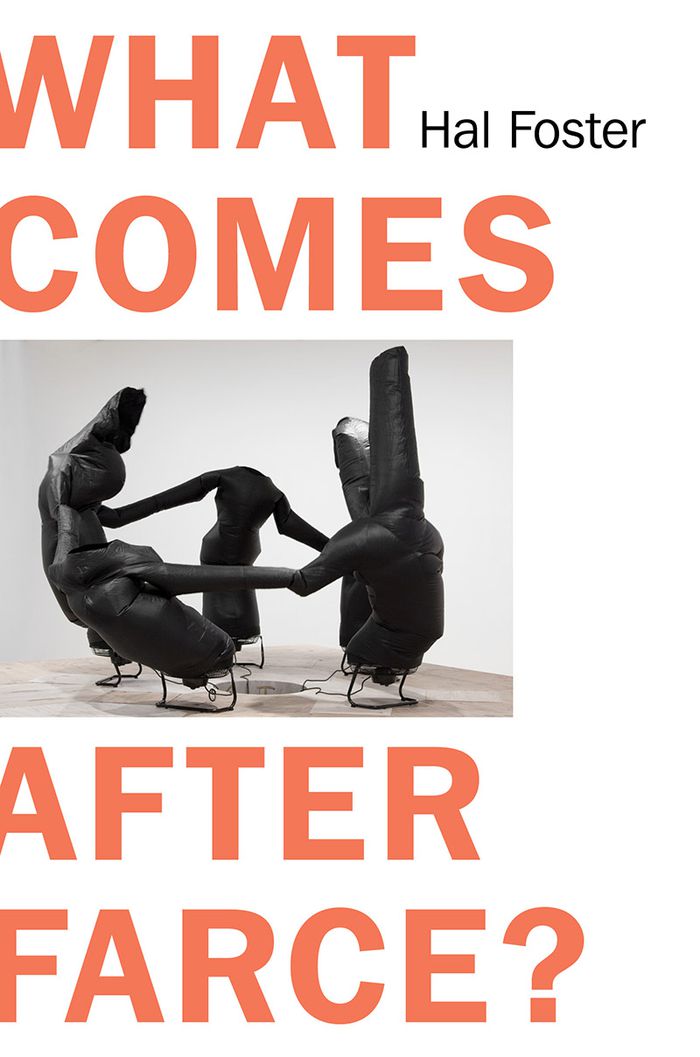
What comes after farce?
Actions:
Price:
$33.95
(available to order)
Summary:
If farce follows tragedy, what follows farce? Where does the double predicament of a post-truth and post-shame politics leave artists and critics on the left? How to demystify a hegemonic order that dismisses its own contradictions? How to belittle a political elite that cannot be embarrassed, or to mock party leaders who thrive on the absurd? How to out-dada President Ubu? And, in any event, why add outrage to a media economy that thrives on the same? 'What Comes After Farce?' comments on shifts in art, criticism, and fiction in the face of the current regime of war, surveillance, extreme inequality, and media disruption. A first section focuses on the cultural politics of emergency since 9/11, including the use and abuse of trauma, paranoia, and kitsch. A second reviews the neoliberal makeover of art institutions during the same period. Finally, a third section surveys transformations in media as reflected in recent art, film, and fiction. Among the phenomena explored here are “machine vision” (images produced by machines for other machines without a human interface),“operational images” (images that do not represent the world so much as intervene in it), and the algorithmic scripting of information so pervasive in our everyday lives.
What comes after farce?
Actions:
Price:
$33.95
(available to order)
Summary:
If farce follows tragedy, what follows farce? Where does the double predicament of a post-truth and post-shame politics leave artists and critics on the left? How to demystify a hegemonic order that dismisses its own contradictions? How to belittle a political elite that cannot be embarrassed, or to mock party leaders who thrive on the absurd? How to out-dada President Ubu? And, in any event, why add outrage to a media economy that thrives on the same? 'What Comes After Farce?' comments on shifts in art, criticism, and fiction in the face of the current regime of war, surveillance, extreme inequality, and media disruption. A first section focuses on the cultural politics of emergency since 9/11, including the use and abuse of trauma, paranoia, and kitsch. A second reviews the neoliberal makeover of art institutions during the same period. Finally, a third section surveys transformations in media as reflected in recent art, film, and fiction. Among the phenomena explored here are “machine vision” (images produced by machines for other machines without a human interface),“operational images” (images that do not represent the world so much as intervene in it), and the algorithmic scripting of information so pervasive in our everyday lives.
Form:
books
books
Publication:
June 2020
June 2020
Subject:
Critical Theory
Critical Theory
Form:
books
books
Actions:
Price:
$13.99
(available in store)
Summary:
Accelerationism is the bastard offspring of a furtive liaison between Marxism and science fiction. Its basic premise is that the only way out is the way through: to get beyond capitalism, we need to push its technologies to the point where they explode. This may be dubious as a political strategy, but it works as a powerful artistic program. Other authors have debated(...)
$13.99
(available in store)
Summary:
Accelerationism is the bastard offspring of a furtive liaison between Marxism and science fiction. Its basic premise is that the only way out is the way through: to get beyond capitalism, we need to push its technologies to the point where they explode. This may be dubious as a political strategy, but it works as a powerful artistic program. Other authors have debated(...)
Title:
No speed limit: essays on accelerationsim
Actions:
Price:
$13.99
(available in store)
Summary:
Accelerationism is the bastard offspring of a furtive liaison between Marxism and science fiction. Its basic premise is that the only way out is the way through: to get beyond capitalism, we need to push its technologies to the point where they explode. This may be dubious as a political strategy, but it works as a powerful artistic program. Other authors have debated the pros and cons of accelerationist politics; 'No Speed Limit' makes the case for an accelerationist aesthetics. Our present moment is illuminated, both for good and for ill, in the cracked mirror of science-fictional futurity.
No speed limit: essays on accelerationsim
Actions:
Price:
$13.99
(available in store)
Summary:
Accelerationism is the bastard offspring of a furtive liaison between Marxism and science fiction. Its basic premise is that the only way out is the way through: to get beyond capitalism, we need to push its technologies to the point where they explode. This may be dubious as a political strategy, but it works as a powerful artistic program. Other authors have debated the pros and cons of accelerationist politics; 'No Speed Limit' makes the case for an accelerationist aesthetics. Our present moment is illuminated, both for good and for ill, in the cracked mirror of science-fictional futurity.
Form:
books
books
Publication:
May 2016
May 2016
Subject:
Critical Theory
Critical Theory
Form:
books
books

Title:
À nos amis
À nos amis
Actions:
Price:
$17.95
(available to order)
Summary:
« À nos amis » se veut un rapport sur l’état du monde et du mouvement, un écrit essentiellement stratégique et ouvertement partisan. Son ambition politique est démesurée : produire une intelligibilité partagée de l’époque, en dépit de l’extrême confusion du présent. On ne peut se contenter de célébrer l’onde insurrectionnelle qui parcourt présentement le monde, tout en se(...)
$17.95
(available to order)
Summary:
« À nos amis » se veut un rapport sur l’état du monde et du mouvement, un écrit essentiellement stratégique et ouvertement partisan. Son ambition politique est démesurée : produire une intelligibilité partagée de l’époque, en dépit de l’extrême confusion du présent. On ne peut se contenter de célébrer l’onde insurrectionnelle qui parcourt présentement le monde, tout en se(...)
Title:
À nos amis
Actions:
Price:
$17.95
(available to order)
Summary:
« À nos amis » se veut un rapport sur l’état du monde et du mouvement, un écrit essentiellement stratégique et ouvertement partisan. Son ambition politique est démesurée : produire une intelligibilité partagée de l’époque, en dépit de l’extrême confusion du présent. On ne peut se contenter de célébrer l’onde insurrectionnelle qui parcourt présentement le monde, tout en se félicitant de l’avoir senti poindre avant les autres, sans s’étendre sur le caractère composite, et parfois franchement équivoque, de certains soulèvements. Ce dont il s’agit aujourd’hui pour le Comité Invisible, c’est plutôt cerner et prendre à bras le corps les difficultés, les impasses et les embûches que rencontre ce mouvement mondial qui n’a pas de nom, mais qui fait tout trembler. Comment faire pour que les insurrections ne s’étranglent pas au stade l’émeute ? Quelles sont les stratégies adverses et les moyens de les déjouer ? Sommes-nous bien sûrs d’avoir saisi le type de gouvernementalité qui nous fait face ? Quelle part de la tradition révolutionnaire faut-il laisser derrière nous pour pouvoir à nouveau envisager une victoire ? Et d’ailleurs, en quoi consisterait une « victoire » ?
À nos amis
Actions:
Price:
$17.95
(available to order)
Summary:
« À nos amis » se veut un rapport sur l’état du monde et du mouvement, un écrit essentiellement stratégique et ouvertement partisan. Son ambition politique est démesurée : produire une intelligibilité partagée de l’époque, en dépit de l’extrême confusion du présent. On ne peut se contenter de célébrer l’onde insurrectionnelle qui parcourt présentement le monde, tout en se félicitant de l’avoir senti poindre avant les autres, sans s’étendre sur le caractère composite, et parfois franchement équivoque, de certains soulèvements. Ce dont il s’agit aujourd’hui pour le Comité Invisible, c’est plutôt cerner et prendre à bras le corps les difficultés, les impasses et les embûches que rencontre ce mouvement mondial qui n’a pas de nom, mais qui fait tout trembler. Comment faire pour que les insurrections ne s’étranglent pas au stade l’émeute ? Quelles sont les stratégies adverses et les moyens de les déjouer ? Sommes-nous bien sûrs d’avoir saisi le type de gouvernementalité qui nous fait face ? Quelle part de la tradition révolutionnaire faut-il laisser derrière nous pour pouvoir à nouveau envisager une victoire ? Et d’ailleurs, en quoi consisterait une « victoire » ?
Form:
books
books
Publication:
November 2014
November 2014
Subject:
Critical Theory
Critical Theory


