


432 Results
Form:
books
books
Actions:
Price:
$45.95
(available to order)
Summary:
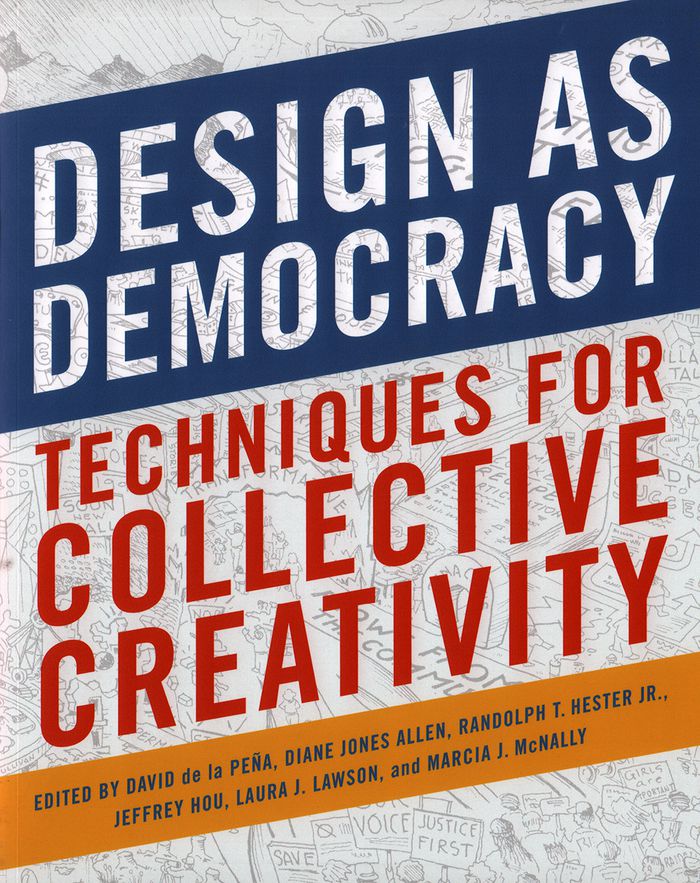
Design as Democracy offers fresh insights for creating meaningful dialogue between designers and communities and for transforming places with justice and democracy in mind.
$45.95
(available to order)
Summary:
Design as Democracy offers fresh insights for creating meaningful dialogue between designers and communities and for transforming places with justice and democracy in mind.
Subject:
Environment and environmental theory
Environment and environmental theory
Publication:
December 2017
December 2017
Title:
Design as democracy: techniques for collective creativity
Actions:
Price:
$45.95
(available to order)
Summary:
Design as Democracy offers fresh insights for creating meaningful dialogue between designers and communities and for transforming places with justice and democracy in mind.
Design as democracy: techniques for collective creativity
Actions:
Price:
$45.95
(available to order)
Summary:
Design as Democracy offers fresh insights for creating meaningful dialogue between designers and communities and for transforming places with justice and democracy in mind.
Form:
books
books
Publication:
December 2017
December 2017
Subject:
Environment and environmental theory
Environment and environmental theory
Form:
books
books
Title:
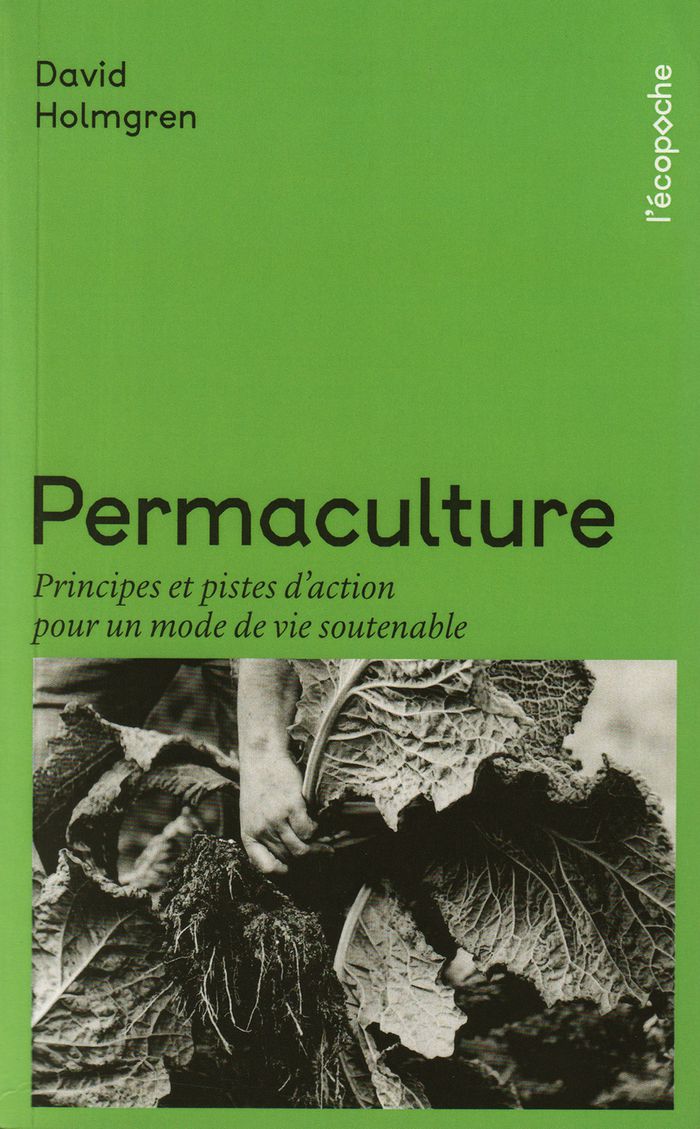
Permaculture
Permaculture
Actions:
Price:
$23.95
(available to order)
Summary:
Comment vivre dans le respect des limites et des ressources de la nature ? Alors que la production mondiale de pétrole a atteint son maximum et que c’en est désormais fini des énergies fossiles bon marché, la permaculture constitue une réponse pragmatique aux enjeux de notre époque. Elle utilise la pensée systémique pour « élaborer en toute conscience des paysages qui(...)
$23.95
(available to order)
Summary:
Comment vivre dans le respect des limites et des ressources de la nature ? Alors que la production mondiale de pétrole a atteint son maximum et que c’en est désormais fini des énergies fossiles bon marché, la permaculture constitue une réponse pragmatique aux enjeux de notre époque. Elle utilise la pensée systémique pour « élaborer en toute conscience des paysages qui(...)
Title:
Permaculture
Actions:
Price:
$23.95
(available to order)
Summary:
Comment vivre dans le respect des limites et des ressources de la nature ? Alors que la production mondiale de pétrole a atteint son maximum et que c’en est désormais fini des énergies fossiles bon marché, la permaculture constitue une réponse pragmatique aux enjeux de notre époque. Elle utilise la pensée systémique pour « élaborer en toute conscience des paysages qui imitent les schémas et les relations observés dans la nature et fournissent en abondance nourriture, fibres et énergie afin de subvenir aux besoins locaux ». En quatre décennies, la permaculture est devenue un mouvement international, apportant une contribution pratique au débat sur la soutenabilité.
Permaculture
Actions:
Price:
$23.95
(available to order)
Summary:
Comment vivre dans le respect des limites et des ressources de la nature ? Alors que la production mondiale de pétrole a atteint son maximum et que c’en est désormais fini des énergies fossiles bon marché, la permaculture constitue une réponse pragmatique aux enjeux de notre époque. Elle utilise la pensée systémique pour « élaborer en toute conscience des paysages qui imitent les schémas et les relations observés dans la nature et fournissent en abondance nourriture, fibres et énergie afin de subvenir aux besoins locaux ». En quatre décennies, la permaculture est devenue un mouvement international, apportant une contribution pratique au débat sur la soutenabilité.
Form:
books
books
Publication:
October 2017
October 2017
Subject:
Environment and environmental theory
Environment and environmental theory
Form:
books
books
Price:
$34.95
(available to order)
Summary:
À cause des effets imprévus de l'histoire humaine, ce que nous regroupions sous le nom de Nature quitte l'arrière-plan de notre décor séculaire et monte sur scène, au premier plan. L'air, les océans, les glaciers, le climat, les sols : tout ce que nous avons rendu instable, interagit avec nous. Gaïa est le nom du retour sur Terre de tout ce que nous avions envoyé off(...)
$34.95
(available to order)
Summary:
À cause des effets imprévus de l'histoire humaine, ce que nous regroupions sous le nom de Nature quitte l'arrière-plan de notre décor séculaire et monte sur scène, au premier plan. L'air, les océans, les glaciers, le climat, les sols : tout ce que nous avons rendu instable, interagit avec nous. Gaïa est le nom du retour sur Terre de tout ce que nous avions envoyé off(...)
Title:
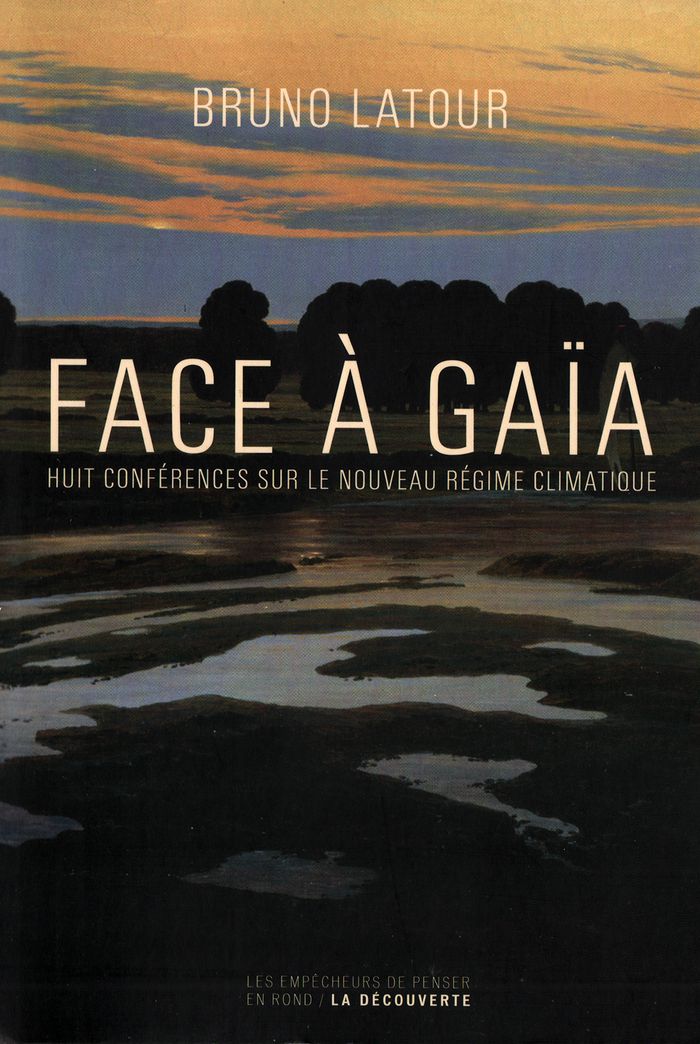
Face à Gaïa : huit conférences sur le nouveau régime climatique
Actions:
Price:
$34.95
(available to order)
Summary:
À cause des effets imprévus de l'histoire humaine, ce que nous regroupions sous le nom de Nature quitte l'arrière-plan de notre décor séculaire et monte sur scène, au premier plan. L'air, les océans, les glaciers, le climat, les sols : tout ce que nous avons rendu instable, interagit avec nous. Gaïa est le nom du retour sur Terre de tout ce que nous avions envoyé off shore. Nous sommes ces Terriens, qui se définissent politiquement comme ceux qui se préparent à regarder Gaïa de face. En explorant les mille figures de Gaïa, on peut déplier tout ce que la notion de Nature avait confondu : une éthique, une politique, une étrange conception des sciences et, surtout, une économie et même une théologie.
Face à Gaïa : huit conférences sur le nouveau régime climatique
Actions:
Price:
$34.95
(available to order)
Summary:
À cause des effets imprévus de l'histoire humaine, ce que nous regroupions sous le nom de Nature quitte l'arrière-plan de notre décor séculaire et monte sur scène, au premier plan. L'air, les océans, les glaciers, le climat, les sols : tout ce que nous avons rendu instable, interagit avec nous. Gaïa est le nom du retour sur Terre de tout ce que nous avions envoyé off shore. Nous sommes ces Terriens, qui se définissent politiquement comme ceux qui se préparent à regarder Gaïa de face. En explorant les mille figures de Gaïa, on peut déplier tout ce que la notion de Nature avait confondu : une éthique, une politique, une étrange conception des sciences et, surtout, une économie et même une théologie.
Form:
books
books
Publication:
October 2015
October 2015
Subject:
Environment and environmental theory
Environment and environmental theory
Form:
books
books
Actions:
Price:
$27.95
(available in store)
Summary:
Depuis une dizaine d’années, que ce soit dans les bois de Sivens, à Notre-Dame-des-Landes, à Bure ou dans les Cévennes, il est évident qu’il se passe quelque chose du côté de la forêt. Certains ont commencé à habiter ces espaces, avec la détermination de sortir du monde mortifère de l’économie. Un tout autre rapport au monde s’y bâtit, à l’opposé de cette science(...)
$27.95
(available in store)
Summary:
Depuis une dizaine d’années, que ce soit dans les bois de Sivens, à Notre-Dame-des-Landes, à Bure ou dans les Cévennes, il est évident qu’il se passe quelque chose du côté de la forêt. Certains ont commencé à habiter ces espaces, avec la détermination de sortir du monde mortifère de l’économie. Un tout autre rapport au monde s’y bâtit, à l’opposé de cette science(...)
Subject:
Environment and environmental theory
Environment and environmental theory
Publication:
October 2017
October 2017
Title:
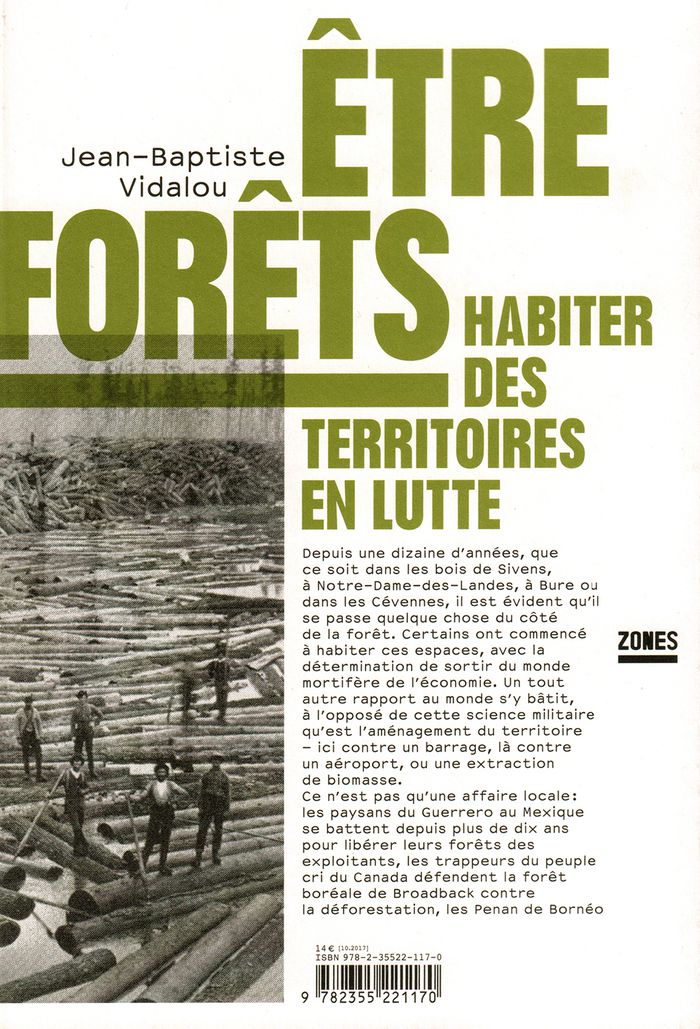
Être forêts : habiter des territoires en lutte
Actions:
Price:
$27.95
(available in store)
Summary:
Depuis une dizaine d’années, que ce soit dans les bois de Sivens, à Notre-Dame-des-Landes, à Bure ou dans les Cévennes, il est évident qu’il se passe quelque chose du côté de la forêt. Certains ont commencé à habiter ces espaces, avec la détermination de sortir du monde mortifère de l’économie. Un tout autre rapport au monde s’y bâtit, à l’opposé de cette science militaire qu’est l’aménagement du territoire – ici contre un barrage, là contre un aéroport, ou une extraction de biomasse. Ce n’est pas qu’une affaire locale : les paysans du Guerrero au Mexique se battent depuis plus de dix ans pour libérer leurs forêts des exploitants, les trappeurs du peuple cri du Canada défendent la forêt boréale de Broadback contre la déforestation, les Penan de Bornéo s’arment de sarbacanes contre les compagnies de plantation de palmiers à huile… Partout des luttes résonnent de cette même idée : la forêt n’est pas une réserve de biosphère ou un puits de carbone.
Être forêts : habiter des territoires en lutte
Actions:
Price:
$27.95
(available in store)
Summary:
Depuis une dizaine d’années, que ce soit dans les bois de Sivens, à Notre-Dame-des-Landes, à Bure ou dans les Cévennes, il est évident qu’il se passe quelque chose du côté de la forêt. Certains ont commencé à habiter ces espaces, avec la détermination de sortir du monde mortifère de l’économie. Un tout autre rapport au monde s’y bâtit, à l’opposé de cette science militaire qu’est l’aménagement du territoire – ici contre un barrage, là contre un aéroport, ou une extraction de biomasse. Ce n’est pas qu’une affaire locale : les paysans du Guerrero au Mexique se battent depuis plus de dix ans pour libérer leurs forêts des exploitants, les trappeurs du peuple cri du Canada défendent la forêt boréale de Broadback contre la déforestation, les Penan de Bornéo s’arment de sarbacanes contre les compagnies de plantation de palmiers à huile… Partout des luttes résonnent de cette même idée : la forêt n’est pas une réserve de biosphère ou un puits de carbone.
Form:
books
books
Publication:
October 2017
October 2017
Subject:
Environment and environmental theory
Environment and environmental theory
Form:
books
books
Actions:
Price:
$20.95
(available to order)
Summary:
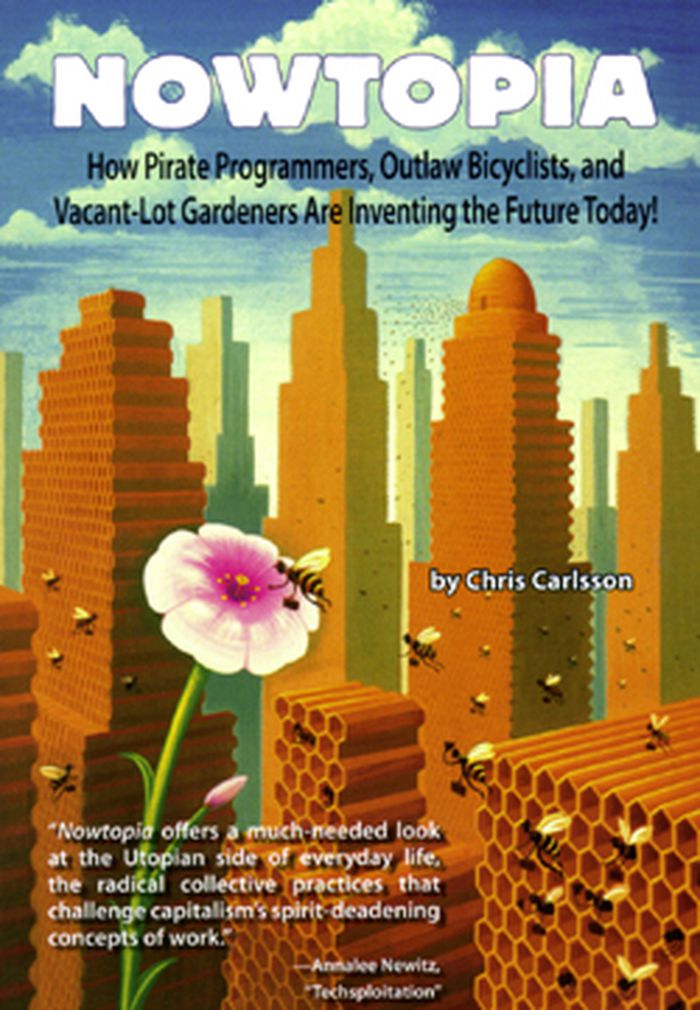
Chris Carlsson, executive director of the multimedia history project "Shaping San Francisco," is a writer, publisher, editor, and community organizer. He has edited four collections of political and historical essays. He helped launch the monthly bike-ins known as Critical Mass, and was the longtime editor of "Processed World" magazine.
$20.95
(available to order)
Summary:
Chris Carlsson, executive director of the multimedia history project "Shaping San Francisco," is a writer, publisher, editor, and community organizer. He has edited four collections of political and historical essays. He helped launch the monthly bike-ins known as Critical Mass, and was the longtime editor of "Processed World" magazine.
Subject:
Environment and environmental theory
Environment and environmental theory
Publication:
May 2008, Edinburgh, Oakland, West Virginia
May 2008, Edinburgh, Oakland, West Virginia
Title:
Nowtopia: how pirate programmers, outlaw bicyclists, and vacant-lot gardeners are inventing the future today!
Actions:
Price:
$20.95
(available to order)
Summary:
Chris Carlsson, executive director of the multimedia history project "Shaping San Francisco," is a writer, publisher, editor, and community organizer. He has edited four collections of political and historical essays. He helped launch the monthly bike-ins known as Critical Mass, and was the longtime editor of "Processed World" magazine.
Nowtopia: how pirate programmers, outlaw bicyclists, and vacant-lot gardeners are inventing the future today!
Actions:
Price:
$20.95
(available to order)
Summary:
Chris Carlsson, executive director of the multimedia history project "Shaping San Francisco," is a writer, publisher, editor, and community organizer. He has edited four collections of political and historical essays. He helped launch the monthly bike-ins known as Critical Mass, and was the longtime editor of "Processed World" magazine.
Form:
books
books
Publication:
May 2008, Edinburgh, Oakland, West Virginia
May 2008, Edinburgh, Oakland, West Virginia
Subject:
Environment and environmental theory
Environment and environmental theory
Form:
books
books

Title:
Le piège Énergie Est
Le piège Énergie Est
Actions:
Price:
$17.00
(available in store)
Summary:
L’oléoduc Énergie Est n’est pas qu’un simple tuyau où couleraient 2 000 litres de pétrole à la seconde. Donner le feu vert au projet de TransCanada, c’est s’exposer à des risques majeurs de catastrophe écologique (860 cours d’eau traversés, déversement possible de l’équivalent de 36 déraillements à Lac-Mégantic) pour de bien faibles retombées économiques. C’est aussi(...)
$17.00
(available in store)
Summary:
L’oléoduc Énergie Est n’est pas qu’un simple tuyau où couleraient 2 000 litres de pétrole à la seconde. Donner le feu vert au projet de TransCanada, c’est s’exposer à des risques majeurs de catastrophe écologique (860 cours d’eau traversés, déversement possible de l’équivalent de 36 déraillements à Lac-Mégantic) pour de bien faibles retombées économiques. C’est aussi(...)
Title:
Le piège Énergie Est
Actions:
Price:
$17.00
(available in store)
Summary:
L’oléoduc Énergie Est n’est pas qu’un simple tuyau où couleraient 2 000 litres de pétrole à la seconde. Donner le feu vert au projet de TransCanada, c’est s’exposer à des risques majeurs de catastrophe écologique (860 cours d’eau traversés, déversement possible de l’équivalent de 36 déraillements à Lac-Mégantic) pour de bien faibles retombées économiques. C’est aussi s’enfermer dans une logique capitaliste délétère qui nous pousse à extraire et à consommer toujours davantage de pétrole sale, fortement générateur de gaz à effet de serre. Par le fait même, c’est abandonner les indispensables cibles en matière de lutte contre les changements climatiques afin d’éviter une hausse dramatique de la température du globe. Éric Pineault rassemble les pièces du casse-tête Énergie Est et expose tous les pièges du complexe des sables bitumineux pour bloquer sans compromis ce projet de pipeline. En ce début de XXIe siècle, nous avons une responsabilité climatique historique. La transition énergétique est incontournable. Le monde nous regarde.
Le piège Énergie Est
Actions:
Price:
$17.00
(available in store)
Summary:
L’oléoduc Énergie Est n’est pas qu’un simple tuyau où couleraient 2 000 litres de pétrole à la seconde. Donner le feu vert au projet de TransCanada, c’est s’exposer à des risques majeurs de catastrophe écologique (860 cours d’eau traversés, déversement possible de l’équivalent de 36 déraillements à Lac-Mégantic) pour de bien faibles retombées économiques. C’est aussi s’enfermer dans une logique capitaliste délétère qui nous pousse à extraire et à consommer toujours davantage de pétrole sale, fortement générateur de gaz à effet de serre. Par le fait même, c’est abandonner les indispensables cibles en matière de lutte contre les changements climatiques afin d’éviter une hausse dramatique de la température du globe. Éric Pineault rassemble les pièces du casse-tête Énergie Est et expose tous les pièges du complexe des sables bitumineux pour bloquer sans compromis ce projet de pipeline. En ce début de XXIe siècle, nous avons une responsabilité climatique historique. La transition énergétique est incontournable. Le monde nous regarde.
Form:
books
books
Publication:
April 2016
April 2016
Subject:
Environment and environmental theory
Environment and environmental theory
Form:
books
books
Price:
$42.99
(available to order)
Summary:
Western Canada's natural environment faces intensifying threats from industrialization in agriculture and resource development, social and cultural complicity in these destructive practices, and most recently the negative effects of global climate change. The complex nature of the problems being addressed calls for productive interdisciplinary solutions. In this book,(...)
$42.99
(available to order)
Summary:
Western Canada's natural environment faces intensifying threats from industrialization in agriculture and resource development, social and cultural complicity in these destructive practices, and most recently the negative effects of global climate change. The complex nature of the problems being addressed calls for productive interdisciplinary solutions. In this book,(...)
Subject:
Environment and environmental theory
Environment and environmental theory
Publication:
September 2014
September 2014
Title:
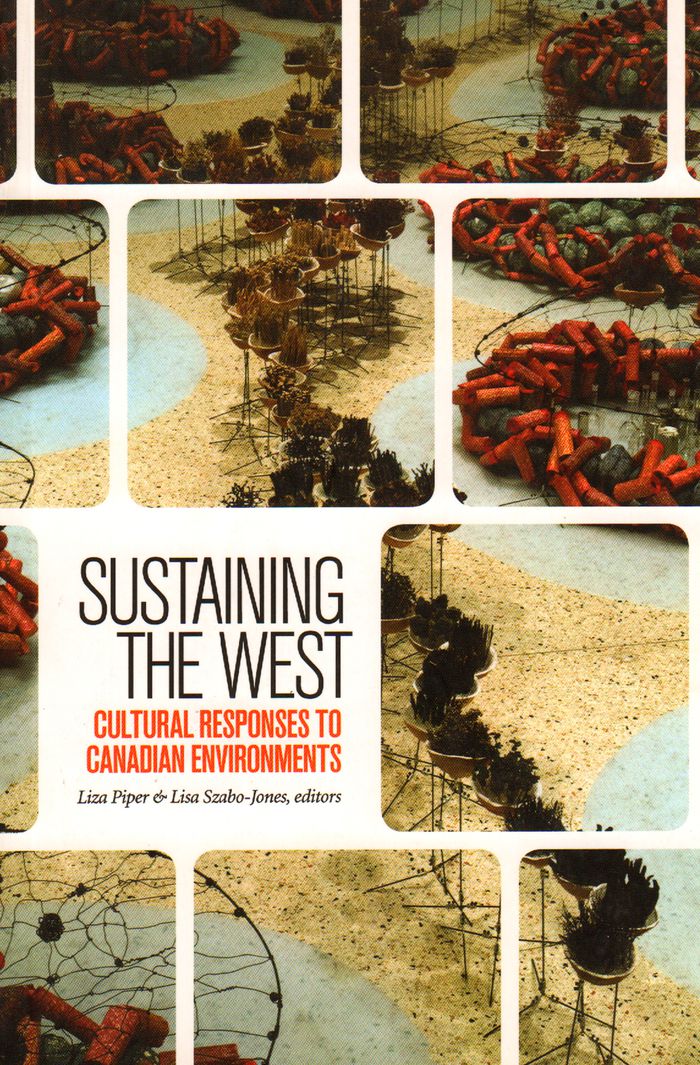
Sustaining the west: cultural responses to Canadian environments
Actions:
Price:
$42.99
(available to order)
Summary:
Western Canada's natural environment faces intensifying threats from industrialization in agriculture and resource development, social and cultural complicity in these destructive practices, and most recently the negative effects of global climate change. The complex nature of the problems being addressed calls for productive interdisciplinary solutions. In this book, arts and humanities scholars and literary and visual artists tackle these pressing environmental issues in provocative and transformative ways. Their commitment to environmental causes emerges through the fields of environmental history, environmental and ecocriticism, ecofeminism, ecoart, ecopoetry, and environmental journalism. This indispensable and timely resource constitutes a sustained cross-pollinating conversation across the environmental humanities about forms of representation and activism that enable ecological knowledge and ethical action on behalf of Western Canadian environments, yet have global reach. Among the developments in the contributors' construction of environmental knowledge are a focus on the power of sentiment in linking people to the fate of nature, and the need to decolonize social and environmental relations and assumptions in the West.
Sustaining the west: cultural responses to Canadian environments
Actions:
Price:
$42.99
(available to order)
Summary:
Western Canada's natural environment faces intensifying threats from industrialization in agriculture and resource development, social and cultural complicity in these destructive practices, and most recently the negative effects of global climate change. The complex nature of the problems being addressed calls for productive interdisciplinary solutions. In this book, arts and humanities scholars and literary and visual artists tackle these pressing environmental issues in provocative and transformative ways. Their commitment to environmental causes emerges through the fields of environmental history, environmental and ecocriticism, ecofeminism, ecoart, ecopoetry, and environmental journalism. This indispensable and timely resource constitutes a sustained cross-pollinating conversation across the environmental humanities about forms of representation and activism that enable ecological knowledge and ethical action on behalf of Western Canadian environments, yet have global reach. Among the developments in the contributors' construction of environmental knowledge are a focus on the power of sentiment in linking people to the fate of nature, and the need to decolonize social and environmental relations and assumptions in the West.
Form:
books
books
Publication:
September 2014
September 2014
Subject:
Environment and environmental theory
Environment and environmental theory
Form:
books
books
Actions:
Price:
$27.95
(available to order)
Summary:
The violence wrought by climate change, toxic drift, deforestation, oil spills, and the environmental aftermath of war takes place gradually and often invisibly. Using the innovative concept of “slow violence” to describe these threats, Rob Nixon focuses on the inattention we have paid to the attritional lethality of many environmental crises, in contrast with the(...)
$27.95
(available to order)
Summary:
The violence wrought by climate change, toxic drift, deforestation, oil spills, and the environmental aftermath of war takes place gradually and often invisibly. Using the innovative concept of “slow violence” to describe these threats, Rob Nixon focuses on the inattention we have paid to the attritional lethality of many environmental crises, in contrast with the(...)
Title:
Slow violence and the environmentalism of the poor
Actions:
Price:
$27.95
(available to order)
Summary:
The violence wrought by climate change, toxic drift, deforestation, oil spills, and the environmental aftermath of war takes place gradually and often invisibly. Using the innovative concept of “slow violence” to describe these threats, Rob Nixon focuses on the inattention we have paid to the attritional lethality of many environmental crises, in contrast with the sensational, spectacle-driven messaging that impels public activism today. Slow violence, because it is so readily ignored by a hard-charging capitalism, exacerbates the vulnerability of ecosystems and of people who are poor, disempowered, and often involuntarily displaced, while fueling social conflicts that arise from desperation as life-sustaining conditions erode.
Slow violence and the environmentalism of the poor
Actions:
Price:
$27.95
(available to order)
Summary:
The violence wrought by climate change, toxic drift, deforestation, oil spills, and the environmental aftermath of war takes place gradually and often invisibly. Using the innovative concept of “slow violence” to describe these threats, Rob Nixon focuses on the inattention we have paid to the attritional lethality of many environmental crises, in contrast with the sensational, spectacle-driven messaging that impels public activism today. Slow violence, because it is so readily ignored by a hard-charging capitalism, exacerbates the vulnerability of ecosystems and of people who are poor, disempowered, and often involuntarily displaced, while fueling social conflicts that arise from desperation as life-sustaining conditions erode.
Form:
books
books
Publication:
March 2013
March 2013
Subject:
Environment and environmental theory
Environment and environmental theory
Form:
books
books
Actions:
Price:
$39.00
(available to order)
Summary:
This book is a collection of essays at the intersection of architecture and climate change. Neither a collective lament nor an inventory of architectural responses, the essays consider cultural values ascribed to climate and ask how climate re? ects our conception of what architecture is and does. Which materials and conceptual infrastructures render climate legible,(...)
$39.00
(available to order)
Summary:
This book is a collection of essays at the intersection of architecture and climate change. Neither a collective lament nor an inventory of architectural responses, the essays consider cultural values ascribed to climate and ask how climate re? ects our conception of what architecture is and does. Which materials and conceptual infrastructures render climate legible,(...)
Subject:
Environment and environmental theory
Environment and environmental theory
Publication:
July 2016
July 2016
Title:
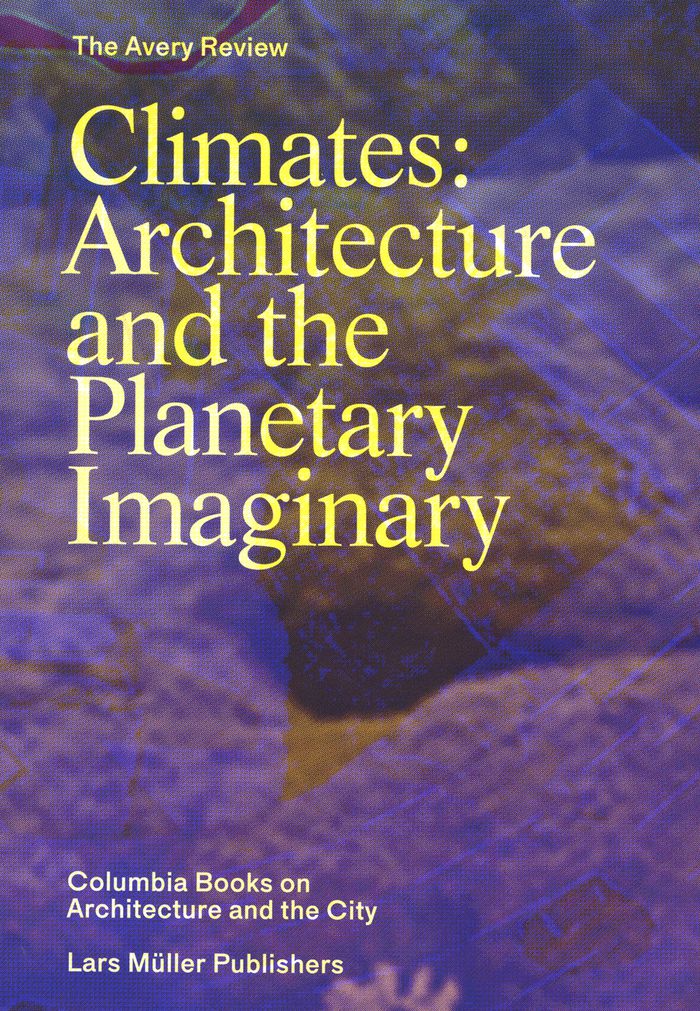
Climates: architecture and the planetary imaginary
Actions:
Price:
$39.00
(available to order)
Summary:
This book is a collection of essays at the intersection of architecture and climate change. Neither a collective lament nor an inventory of architectural responses, the essays consider cultural values ascribed to climate and ask how climate re? ects our conception of what architecture is and does. Which materials and conceptual infrastructures render climate legible, knowable, and actionable, and what are their spatial implications? How do these interrelated questions offer new vantage points on the architectural rami? cations of climate change at the interface of resiliency, sustain-ability, and ecotechnology? 'Climates' also contains a dossier of precedents for thinking about architecture and climate change drawn from a number of leading practitioners. New approaches to understanding climate in architecture make this book invaluable.This publication is a project by The Avery Review, a journal produced by the Of?ce of Publications at Columbia University's Graduate School of Architecture, Planning and Preservation.
Climates: architecture and the planetary imaginary
Actions:
Price:
$39.00
(available to order)
Summary:
This book is a collection of essays at the intersection of architecture and climate change. Neither a collective lament nor an inventory of architectural responses, the essays consider cultural values ascribed to climate and ask how climate re? ects our conception of what architecture is and does. Which materials and conceptual infrastructures render climate legible, knowable, and actionable, and what are their spatial implications? How do these interrelated questions offer new vantage points on the architectural rami? cations of climate change at the interface of resiliency, sustain-ability, and ecotechnology? 'Climates' also contains a dossier of precedents for thinking about architecture and climate change drawn from a number of leading practitioners. New approaches to understanding climate in architecture make this book invaluable.This publication is a project by The Avery Review, a journal produced by the Of?ce of Publications at Columbia University's Graduate School of Architecture, Planning and Preservation.
Form:
books
books
Publication:
July 2016
July 2016
Subject:
Environment and environmental theory
Environment and environmental theory
Form:
books
books
Actions:
Price:
$75.50
(available to order)
Summary:
Convergence is based on the thermodynamic premise that architecture should maximize its ecological and architectural power. No matter how paradoxical it might initially seem, architects should maximize energy intake, maximize energy use, and maximize energy feedback and reinforcement. This presumes that the necessary excess of architecture is in fact an architect’s(...)
$75.50
(available to order)
Summary:
Convergence is based on the thermodynamic premise that architecture should maximize its ecological and architectural power. No matter how paradoxical it might initially seem, architects should maximize energy intake, maximize energy use, and maximize energy feedback and reinforcement. This presumes that the necessary excess of architecture is in fact an architect’s(...)
Title:
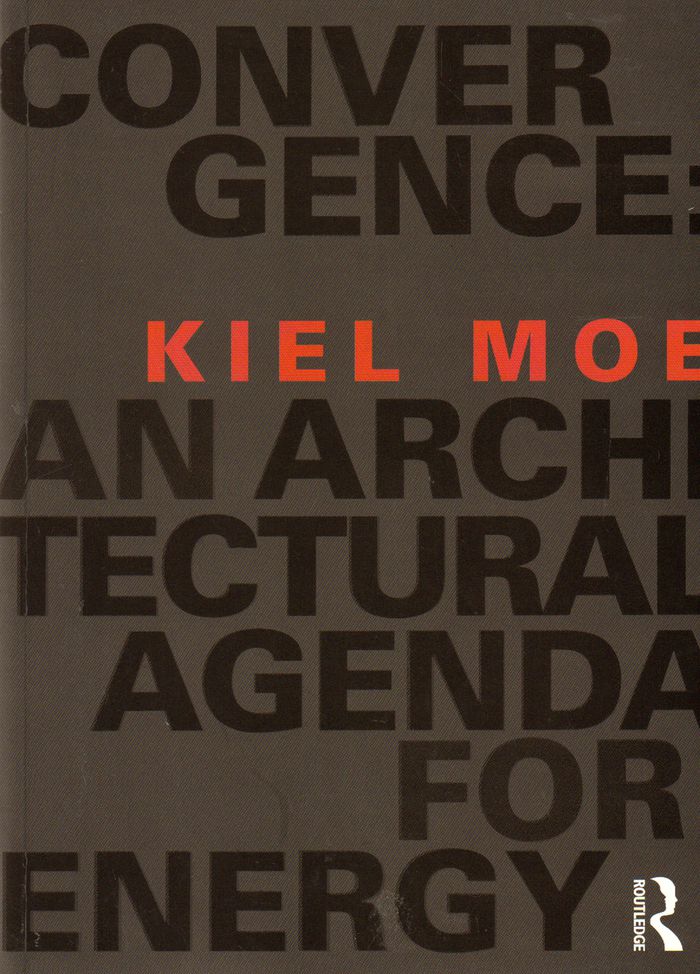
Convergence: An Architectural Agenda for Energy
Actions:
Price:
$75.50
(available to order)
Summary:
Convergence is based on the thermodynamic premise that architecture should maximize its ecological and architectural power. No matter how paradoxical it might initially seem, architects should maximize energy intake, maximize energy use, and maximize energy feedback and reinforcement. This presumes that the necessary excess of architecture is in fact an architect’s greatest asset when it comes to an agenda for energy, not a liability.
Convergence: An Architectural Agenda for Energy
Actions:
Price:
$75.50
(available to order)
Summary:
Convergence is based on the thermodynamic premise that architecture should maximize its ecological and architectural power. No matter how paradoxical it might initially seem, architects should maximize energy intake, maximize energy use, and maximize energy feedback and reinforcement. This presumes that the necessary excess of architecture is in fact an architect’s greatest asset when it comes to an agenda for energy, not a liability.
Form:
books
books
Publication:
January 2014
January 2014
Subject:
Environment and environmental theory
Environment and environmental theory


