


265 Results
Form:
books
books
Price:
$45.95
(available to order)
Summary:
In 1968, Robert Smithson reacted to Michael Fried’s influential essay “Art and Objecthood” with a series of works called non-sites. While Fried described the spectator’s connection with a work of art as a momentary visual engagement, Smithson’s non-sites asked spectators to do something more: to take time looking, walking, seeing, reading, and thinking about the(...)
$45.95
(available to order)
Summary:
In 1968, Robert Smithson reacted to Michael Fried’s influential essay “Art and Objecthood” with a series of works called non-sites. While Fried described the spectator’s connection with a work of art as a momentary visual engagement, Smithson’s non-sites asked spectators to do something more: to take time looking, walking, seeing, reading, and thinking about the(...)
Title:
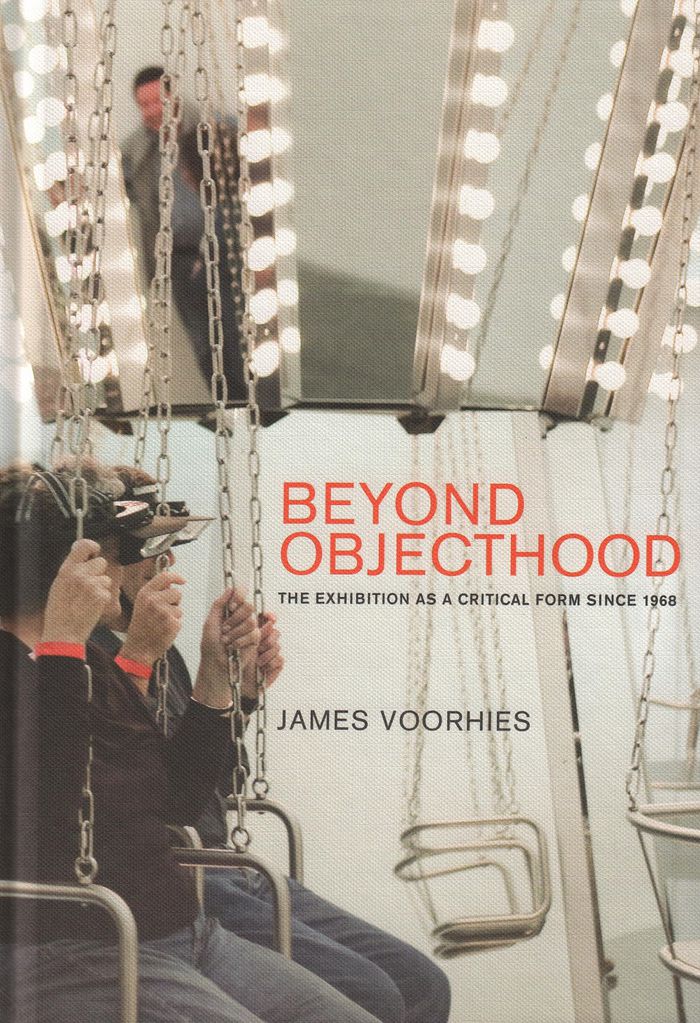
Beyond objecthood: the exhibition as a critical form since 1968
Actions:
Price:
$45.95
(available to order)
Summary:
In 1968, Robert Smithson reacted to Michael Fried’s influential essay “Art and Objecthood” with a series of works called non-sites. While Fried described the spectator’s connection with a work of art as a momentary visual engagement, Smithson’s non-sites asked spectators to do something more: to take time looking, walking, seeing, reading, and thinking about the combination of objects, images, and texts installed in a gallery. In Beyond Objecthood, James Voorhies traces a genealogy of spectatorship through the rise of the exhibition as a critical form—and artistic medium. Artists like Smithson, Group Material, and Michael Asher sought to reconfigure and expand the exhibition and the museum into something more active, open, and democratic, by inviting spectators into new and unexpected encounters with works of art and institutions. This practice was sharply critical of the ingrained characteristics long associated with art institutions and conventional exhibition-making; and yet, Voorhies finds, over time the critique has been diluted by efforts of the very institutions that now gravitate to the “participatory.”
Beyond objecthood: the exhibition as a critical form since 1968
Actions:
Price:
$45.95
(available to order)
Summary:
In 1968, Robert Smithson reacted to Michael Fried’s influential essay “Art and Objecthood” with a series of works called non-sites. While Fried described the spectator’s connection with a work of art as a momentary visual engagement, Smithson’s non-sites asked spectators to do something more: to take time looking, walking, seeing, reading, and thinking about the combination of objects, images, and texts installed in a gallery. In Beyond Objecthood, James Voorhies traces a genealogy of spectatorship through the rise of the exhibition as a critical form—and artistic medium. Artists like Smithson, Group Material, and Michael Asher sought to reconfigure and expand the exhibition and the museum into something more active, open, and democratic, by inviting spectators into new and unexpected encounters with works of art and institutions. This practice was sharply critical of the ingrained characteristics long associated with art institutions and conventional exhibition-making; and yet, Voorhies finds, over time the critique has been diluted by efforts of the very institutions that now gravitate to the “participatory.”
Form:
books
books
Publication:
February 2017
February 2017
Subject:
Museology
Museology
Form:
books
books
Actions:
Price:
$32.95
(available to order)
Summary:
This anthology addresses the challenges of curating, presenting, and preserving new-media art—artworks that use digital technologies as media and emphasize process over object. As an art form that is inherently time based, dynamic, interactive, collaborative, customizable, and variable, new-media art resists objectification. It boldly challenges the traditional art(...)
$32.95
(available to order)
Summary:
This anthology addresses the challenges of curating, presenting, and preserving new-media art—artworks that use digital technologies as media and emphasize process over object. As an art form that is inherently time based, dynamic, interactive, collaborative, customizable, and variable, new-media art resists objectification. It boldly challenges the traditional art(...)
Title:
New media in the white cube and beyond
Actions:
Price:
$32.95
(available to order)
Summary:
This anthology addresses the challenges of curating, presenting, and preserving new-media art—artworks that use digital technologies as media and emphasize process over object. As an art form that is inherently time based, dynamic, interactive, collaborative, customizable, and variable, new-media art resists objectification. It boldly challenges the traditional art world's customary methods of presentation and documentation as well as its approach to collection and preservation. Edited and introduced by Christiane Paul and featuring contributions by prominent practitioners—institutional and independent curators, theorists, and conservators—this volume charts developments in an exciting field and addresses the conceptual, philosophical, and practical issues of both curating and presenting new-media art.
New media in the white cube and beyond
Actions:
Price:
$32.95
(available to order)
Summary:
This anthology addresses the challenges of curating, presenting, and preserving new-media art—artworks that use digital technologies as media and emphasize process over object. As an art form that is inherently time based, dynamic, interactive, collaborative, customizable, and variable, new-media art resists objectification. It boldly challenges the traditional art world's customary methods of presentation and documentation as well as its approach to collection and preservation. Edited and introduced by Christiane Paul and featuring contributions by prominent practitioners—institutional and independent curators, theorists, and conservators—this volume charts developments in an exciting field and addresses the conceptual, philosophical, and practical issues of both curating and presenting new-media art.
Form:
books
books
Publication:
October 2008
October 2008
Form:
books
books
Title:
A brief history of curating
A brief history of curating
Actions:
Price:
$33.95
(available to order)
Summary:
This publication is dedicated to pioneering curators and presents a unique collection of interviews by Hans Ulrich Obrist: Anne d'Harnoncourt, Werner Hofman, Jean Leering, Franz Meyer, Seth Siegelaub, Walter Zanini, Johannes Cladders, Lucy Lippard, Walter Hopps, Pontus Hultén, and Harald Szeemann are gathered together in this volume. The contributions map the(...)
$33.95
(available to order)
Summary:
This publication is dedicated to pioneering curators and presents a unique collection of interviews by Hans Ulrich Obrist: Anne d'Harnoncourt, Werner Hofman, Jean Leering, Franz Meyer, Seth Siegelaub, Walter Zanini, Johannes Cladders, Lucy Lippard, Walter Hopps, Pontus Hultén, and Harald Szeemann are gathered together in this volume. The contributions map the(...)
Title:
A brief history of curating
Actions:
Price:
$33.95
(available to order)
Summary:
This publication is dedicated to pioneering curators and presents a unique collection of interviews by Hans Ulrich Obrist: Anne d'Harnoncourt, Werner Hofman, Jean Leering, Franz Meyer, Seth Siegelaub, Walter Zanini, Johannes Cladders, Lucy Lippard, Walter Hopps, Pontus Hultén, and Harald Szeemann are gathered together in this volume. The contributions map the development of the curatorial field, from early independent curating in the 1960s and 1970s and the experimental institutional programs developed in Europe and in the USA at this time, through Documenta and the development of biennales.
A brief history of curating
Actions:
Price:
$33.95
(available to order)
Summary:
This publication is dedicated to pioneering curators and presents a unique collection of interviews by Hans Ulrich Obrist: Anne d'Harnoncourt, Werner Hofman, Jean Leering, Franz Meyer, Seth Siegelaub, Walter Zanini, Johannes Cladders, Lucy Lippard, Walter Hopps, Pontus Hultén, and Harald Szeemann are gathered together in this volume. The contributions map the development of the curatorial field, from early independent curating in the 1960s and 1970s and the experimental institutional programs developed in Europe and in the USA at this time, through Documenta and the development of biennales.
Form:
books
books
Publication:
September 2008, Zürich
September 2008, Zürich
Subject:
Museology
Museology
Form:
books
books
Price:
$20.00
(available to order)
Summary:
Edité par l'Institut du patrimoine, UQAM. Incluant des contributions de John Impert (Restitution of Art amd Antiquities: What are the implications of Holocaust restitution for museums that collect antiquities?), Marie-Hélène Foisy (Quelle place pour les publications d'exposition dans les musées?), Laurie Guillemette (L'écrit dans l'exposition; Analyses et études de cas),(...)
$20.00
(available to order)
Summary:
Edité par l'Institut du patrimoine, UQAM. Incluant des contributions de John Impert (Restitution of Art amd Antiquities: What are the implications of Holocaust restitution for museums that collect antiquities?), Marie-Hélène Foisy (Quelle place pour les publications d'exposition dans les musées?), Laurie Guillemette (L'écrit dans l'exposition; Analyses et études de cas),(...)
Title:
Muséologies: les cahiers d'études supérieures, volume 2, avril 2008
Actions:
Price:
$20.00
(available to order)
Summary:
Edité par l'Institut du patrimoine, UQAM. Incluant des contributions de John Impert (Restitution of Art amd Antiquities: What are the implications of Holocaust restitution for museums that collect antiquities?), Marie-Hélène Foisy (Quelle place pour les publications d'exposition dans les musées?), Laurie Guillemette (L'écrit dans l'exposition; Analyses et études de cas), Geneviève Provencher-St-Cyr (L'action coopérative. Une proposition d'ancrage des musées dans la vie régionale), John Porter - directuer du Musée national des beaux-arts du Québec (Entrevue un), Marc Mayer - directeur du Musée d'art contemporain de Montréal (Entrevue deux), Virginie Soulier , Ève-Lyne Cayouette-Ashby, Émilie Allain, Nellie Demers(Colloque étudiant en muséologie de l'UQAM et de l'UDEM: Le rôle social du musée), Mathieu Dormaels (Rôle social des musées: une autre 'nouvelle' muséologie)
Muséologies: les cahiers d'études supérieures, volume 2, avril 2008
Actions:
Price:
$20.00
(available to order)
Summary:
Edité par l'Institut du patrimoine, UQAM. Incluant des contributions de John Impert (Restitution of Art amd Antiquities: What are the implications of Holocaust restitution for museums that collect antiquities?), Marie-Hélène Foisy (Quelle place pour les publications d'exposition dans les musées?), Laurie Guillemette (L'écrit dans l'exposition; Analyses et études de cas), Geneviève Provencher-St-Cyr (L'action coopérative. Une proposition d'ancrage des musées dans la vie régionale), John Porter - directuer du Musée national des beaux-arts du Québec (Entrevue un), Marc Mayer - directeur du Musée d'art contemporain de Montréal (Entrevue deux), Virginie Soulier , Ève-Lyne Cayouette-Ashby, Émilie Allain, Nellie Demers(Colloque étudiant en muséologie de l'UQAM et de l'UDEM: Le rôle social du musée), Mathieu Dormaels (Rôle social des musées: une autre 'nouvelle' muséologie)
Form:
books
books
Publication:
April 2008, Montréal
April 2008, Montréal
Form:
books
books
Actions:
Price:
$32.95
(available to order)
Summary:
On his quest for the "Delirious museum", Storrie takes a journey that begins in the Louvre and continues through Paris, London, Los Angeles and Las Vegas. He encounters on his way the museum architecture of John Soane, Carlo Scarpa and Daniel Libeskind, the exhibitions of El Lissitsky and of Frederick Kiessler, and the work of artists as varied as Marcel Duchamps, Andy(...)
$32.95
(available to order)
Summary:
On his quest for the "Delirious museum", Storrie takes a journey that begins in the Louvre and continues through Paris, London, Los Angeles and Las Vegas. He encounters on his way the museum architecture of John Soane, Carlo Scarpa and Daniel Libeskind, the exhibitions of El Lissitsky and of Frederick Kiessler, and the work of artists as varied as Marcel Duchamps, Andy(...)
Title:
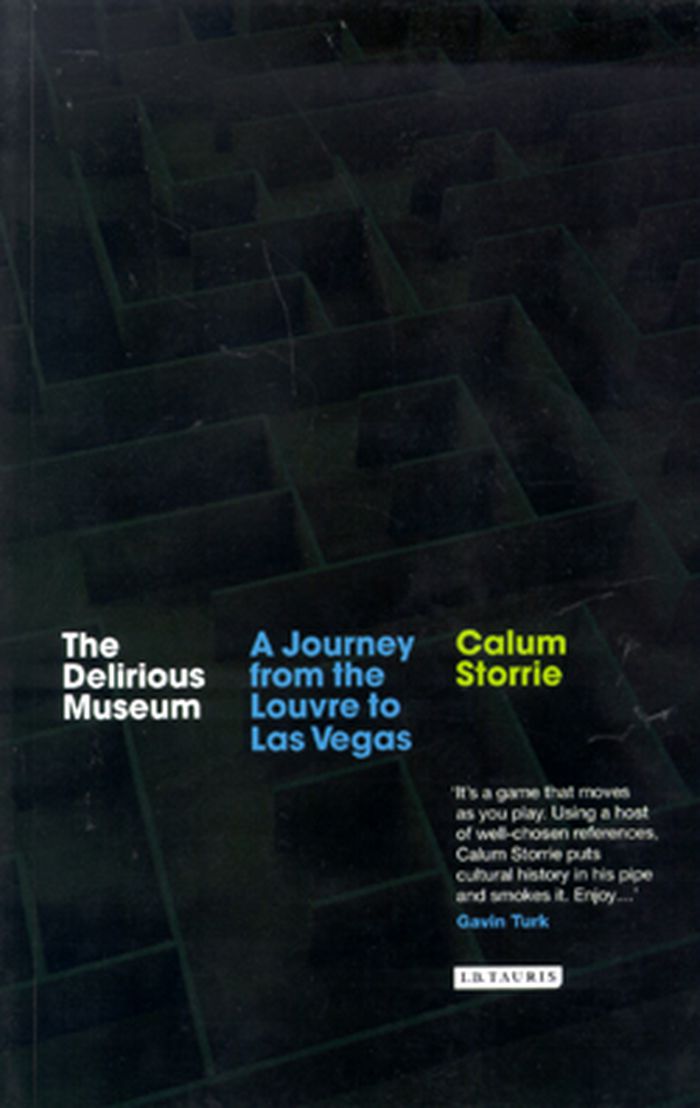
The delirious museum: a journey from the Louvre to Las Vegas
Actions:
Price:
$32.95
(available to order)
Summary:
On his quest for the "Delirious museum", Storrie takes a journey that begins in the Louvre and continues through Paris, London, Los Angeles and Las Vegas. He encounters on his way the museum architecture of John Soane, Carlo Scarpa and Daniel Libeskind, the exhibitions of El Lissitsky and of Frederick Kiessler, and the work of artists as varied as Marcel Duchamps, Andy Warhol, Marcel Broodthaers, Sophie Calle and Mark Dion. Calum Storrie is an architect, curator and exhibition designer, who has written extensively on museums.
The delirious museum: a journey from the Louvre to Las Vegas
Actions:
Price:
$32.95
(available to order)
Summary:
On his quest for the "Delirious museum", Storrie takes a journey that begins in the Louvre and continues through Paris, London, Los Angeles and Las Vegas. He encounters on his way the museum architecture of John Soane, Carlo Scarpa and Daniel Libeskind, the exhibitions of El Lissitsky and of Frederick Kiessler, and the work of artists as varied as Marcel Duchamps, Andy Warhol, Marcel Broodthaers, Sophie Calle and Mark Dion. Calum Storrie is an architect, curator and exhibition designer, who has written extensively on museums.
Form:
books
books
Publication:
February 2008, London, New York
February 2008, London, New York
Subject:
Museology
Museology
Form:
books
books
Actions:
Price:
$84.95
(available to order)
Summary:
A Paris, au lendemain de l'exposition universelle de 1878, un musée de Sculpture comparée - le plus grand du monde - investit le palais du Trocadéro. Ce musée, dont Viollet-le-Duc rêvait depuis 1848, ne cessera d'accroître ses collections pendant un demi-siècle. En 1937, dans l'aile Paris du palais Chaillot construit sur le même emplacement, il cède la place au musée des(...)
$84.95
(available to order)
Summary:
A Paris, au lendemain de l'exposition universelle de 1878, un musée de Sculpture comparée - le plus grand du monde - investit le palais du Trocadéro. Ce musée, dont Viollet-le-Duc rêvait depuis 1848, ne cessera d'accroître ses collections pendant un demi-siècle. En 1937, dans l'aile Paris du palais Chaillot construit sur le même emplacement, il cède la place au musée des(...)
Title:
Le musée des monuments francais
Actions:
Price:
$84.95
(available to order)
Summary:
A Paris, au lendemain de l'exposition universelle de 1878, un musée de Sculpture comparée - le plus grand du monde - investit le palais du Trocadéro. Ce musée, dont Viollet-le-Duc rêvait depuis 1848, ne cessera d'accroître ses collections pendant un demi-siècle. En 1937, dans l'aile Paris du palais Chaillot construit sur le même emplacement, il cède la place au musée des Monuments français dont l'ambition, héritée de la Révolution française, est de proposer une anthologie de l'art national. En 2007, la dernière métamorphose du musée des Monuments français le place au cœur du dispositif de la Cité de l'architecture et du patrimoine, pour en faire l'instrument d'une politique culturelle novatrice, associant mémoire et projet.
Le musée des monuments francais
Actions:
Price:
$84.95
(available to order)
Summary:
A Paris, au lendemain de l'exposition universelle de 1878, un musée de Sculpture comparée - le plus grand du monde - investit le palais du Trocadéro. Ce musée, dont Viollet-le-Duc rêvait depuis 1848, ne cessera d'accroître ses collections pendant un demi-siècle. En 1937, dans l'aile Paris du palais Chaillot construit sur le même emplacement, il cède la place au musée des Monuments français dont l'ambition, héritée de la Révolution française, est de proposer une anthologie de l'art national. En 2007, la dernière métamorphose du musée des Monuments français le place au cœur du dispositif de la Cité de l'architecture et du patrimoine, pour en faire l'instrument d'une politique culturelle novatrice, associant mémoire et projet.
Form:
books
books
Publication:
November 2007, Paris
November 2007, Paris
Subject:
Museology
Museology
Form:
books
books
Title:
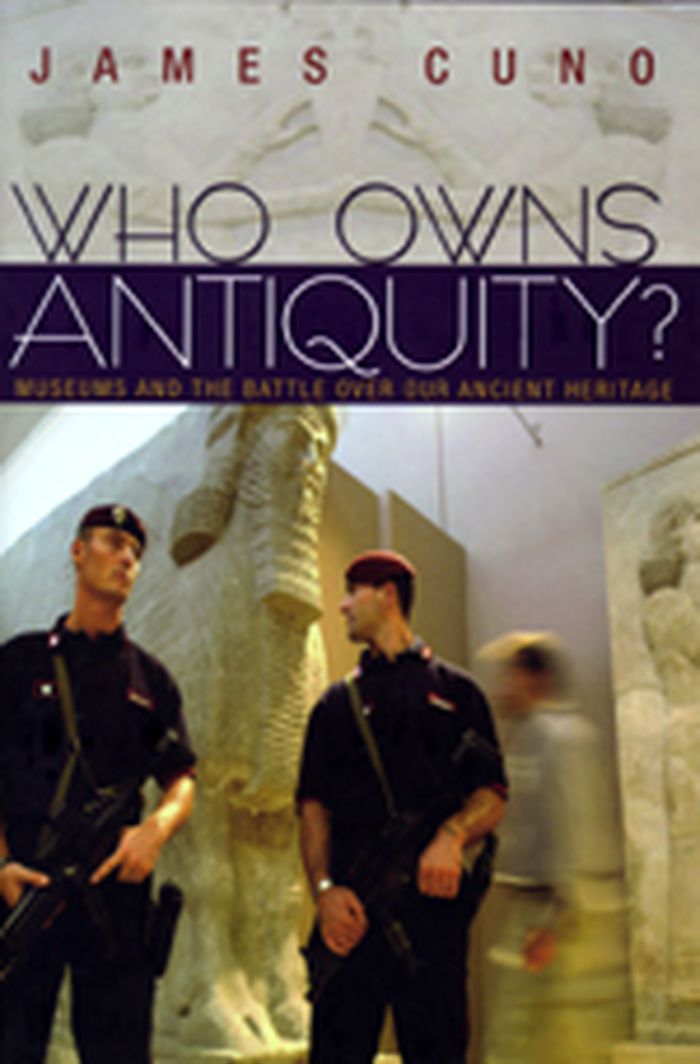
Who owns antiquity?
Who owns antiquity?
Actions:
Price:
$24.95
(available to order)
Summary:
Whether antiquities should be returned to the countries where they were found is one of the most urgent and controversial issues in the art world today, and it has pitted museums, private collectors, and dealers against source countries, archaeologists, and academics. Maintaining that the acquisition of undocumented antiquities by museums encourages the looting of(...)
$24.95
(available to order)
Summary:
Whether antiquities should be returned to the countries where they were found is one of the most urgent and controversial issues in the art world today, and it has pitted museums, private collectors, and dealers against source countries, archaeologists, and academics. Maintaining that the acquisition of undocumented antiquities by museums encourages the looting of(...)
Title:
Who owns antiquity?
Actions:
Price:
$24.95
(available to order)
Summary:
Whether antiquities should be returned to the countries where they were found is one of the most urgent and controversial issues in the art world today, and it has pitted museums, private collectors, and dealers against source countries, archaeologists, and academics. Maintaining that the acquisition of undocumented antiquities by museums encourages the looting of archaeological sites, countries such as Italy, Greece, Egypt, Turkey, and China have claimed ancient artifacts as state property, called for their return from museums around the world, and passed laws against their future export. But in Who Owns Antiquity?, one of the world's leading museum directors vigorously challenges this nationalistic position, arguing that it is damaging and often disingenuous. "Antiquities," James Cuno argues, "are the cultural property of all humankind," "evidence of the world's ancient past and not that of a particular modern nation. They comprise antiquity, and antiquity knows no borders." Cuno argues that nationalistic retention and reclamation policies impede common access to this common heritage and encourage a dubious and dangerous politicization of antiquities--and of culture itself. Antiquities need to be protected from looting but also from nationalistic identity politics. To do this, Cuno calls for measures to broaden rather than restrict international access to antiquities. He advocates restoration of the system under which source countries would share newly discovered artifacts in exchange for archaeological help, and he argues that museums should again be allowed reasonable ways to acquire undocumented antiquities. The first extended defense of the side of museums in the struggle over antiquities, Who Owns Antiquity? is sure to be as important as it is controversial.
Who owns antiquity?
Actions:
Price:
$24.95
(available to order)
Summary:
Whether antiquities should be returned to the countries where they were found is one of the most urgent and controversial issues in the art world today, and it has pitted museums, private collectors, and dealers against source countries, archaeologists, and academics. Maintaining that the acquisition of undocumented antiquities by museums encourages the looting of archaeological sites, countries such as Italy, Greece, Egypt, Turkey, and China have claimed ancient artifacts as state property, called for their return from museums around the world, and passed laws against their future export. But in Who Owns Antiquity?, one of the world's leading museum directors vigorously challenges this nationalistic position, arguing that it is damaging and often disingenuous. "Antiquities," James Cuno argues, "are the cultural property of all humankind," "evidence of the world's ancient past and not that of a particular modern nation. They comprise antiquity, and antiquity knows no borders." Cuno argues that nationalistic retention and reclamation policies impede common access to this common heritage and encourage a dubious and dangerous politicization of antiquities--and of culture itself. Antiquities need to be protected from looting but also from nationalistic identity politics. To do this, Cuno calls for measures to broaden rather than restrict international access to antiquities. He advocates restoration of the system under which source countries would share newly discovered artifacts in exchange for archaeological help, and he argues that museums should again be allowed reasonable ways to acquire undocumented antiquities. The first extended defense of the side of museums in the struggle over antiquities, Who Owns Antiquity? is sure to be as important as it is controversial.
Form:
books
books
Publication:
May 2008, Princeton, Oxford
May 2008, Princeton, Oxford
Subject:
Museology
Museology
Form:
books
books
Actions:
Price:
$42.00
(available in store)
Summary:
The focus of this issue of icamprint is on the 'market' for private archives. After all, collecting and managing the documentation of architecture history to conform to academic and scientific standards is a complex business, and a core task for most icam members. In this context, whether or not the 'originals' by star architects have an artistic value on the market is(...)
$42.00
(available in store)
Summary:
The focus of this issue of icamprint is on the 'market' for private archives. After all, collecting and managing the documentation of architecture history to conform to academic and scientific standards is a complex business, and a core task for most icam members. In this context, whether or not the 'originals' by star architects have an artistic value on the market is(...)
Title:
icam print 02 december 2007 International confederation of architectural museums
Actions:
Price:
$42.00
(available in store)
Summary:
The focus of this issue of icamprint is on the 'market' for private archives. After all, collecting and managing the documentation of architecture history to conform to academic and scientific standards is a complex business, and a core task for most icam members. In this context, whether or not the 'originals' by star architects have an artistic value on the market is only superficially a decisive issue. If one considers the lengths taken by the custodian's of Le Corbusier's estate to secure a suitable new home for what is without doubt a painting of artistic note, and so a market value and with it a place in an art history context, then it is worth waiting to see the place conceded on the art market one day to project-related sketches and drawings by contemporary star architects. The whole history of the conception and realisation of important works of architecture within a context of culture history ought to feature more prominently in the collection policy of icam members to ensure its suitability for research purposes. It remains to be seen what price is attributed to these comprehensive documents, these convolutes, in the competition between private collectors. This notwithstanding, the 'market' for collecting is just as crucial to icam members as the continuing debate on 'originals', and safeguarding them in times of digital architecture production. icamprint will focus increasingly on these and related issues, opening the discussion to all of the member institutions, to develop into an indispensable medium providing orientation on key issues for all icam members.
icam print 02 december 2007 International confederation of architectural museums
Actions:
Price:
$42.00
(available in store)
Summary:
The focus of this issue of icamprint is on the 'market' for private archives. After all, collecting and managing the documentation of architecture history to conform to academic and scientific standards is a complex business, and a core task for most icam members. In this context, whether or not the 'originals' by star architects have an artistic value on the market is only superficially a decisive issue. If one considers the lengths taken by the custodian's of Le Corbusier's estate to secure a suitable new home for what is without doubt a painting of artistic note, and so a market value and with it a place in an art history context, then it is worth waiting to see the place conceded on the art market one day to project-related sketches and drawings by contemporary star architects. The whole history of the conception and realisation of important works of architecture within a context of culture history ought to feature more prominently in the collection policy of icam members to ensure its suitability for research purposes. It remains to be seen what price is attributed to these comprehensive documents, these convolutes, in the competition between private collectors. This notwithstanding, the 'market' for collecting is just as crucial to icam members as the continuing debate on 'originals', and safeguarding them in times of digital architecture production. icamprint will focus increasingly on these and related issues, opening the discussion to all of the member institutions, to develop into an indispensable medium providing orientation on key issues for all icam members.
Form:
books
books
Publication:
October 2007, Vienna
October 2007, Vienna
Subject:
Museology
Museology
Form:
books
books

Actions:
Price:
$24.95
(available to order)
Summary:
In Punctuation: Art, Politics, and Play, Jennifer DeVere Brody places punctuation at center stage. She illuminates the performative aspects of dots, ellipses, hyphens, quotation marks, semicolons, colons, and exclamation points by considering them in relation to aesthetics and experimental art. Through her readings of texts and symbols ranging from style guides to digital(...)
$24.95
(available to order)
Summary:
In Punctuation: Art, Politics, and Play, Jennifer DeVere Brody places punctuation at center stage. She illuminates the performative aspects of dots, ellipses, hyphens, quotation marks, semicolons, colons, and exclamation points by considering them in relation to aesthetics and experimental art. Through her readings of texts and symbols ranging from style guides to digital(...)
Title:
Punctuation: Art, Politics, and Play
Actions:
Price:
$24.95
(available to order)
Summary:
In Punctuation: Art, Politics, and Play, Jennifer DeVere Brody places punctuation at center stage. She illuminates the performative aspects of dots, ellipses, hyphens, quotation marks, semicolons, colons, and exclamation points by considering them in relation to aesthetics and experimental art. Through her readings of texts and symbols ranging from style guides to digital art, from emoticons to dance pieces, Brody suggests that instead of always clarifying meaning, punctuation can sometimes open up space for interpretation, enabling writers and visual artists to interrogate and reformulate notions of life, death, art, and identity politics.
Punctuation: Art, Politics, and Play
Actions:
Price:
$24.95
(available to order)
Summary:
In Punctuation: Art, Politics, and Play, Jennifer DeVere Brody places punctuation at center stage. She illuminates the performative aspects of dots, ellipses, hyphens, quotation marks, semicolons, colons, and exclamation points by considering them in relation to aesthetics and experimental art. Through her readings of texts and symbols ranging from style guides to digital art, from emoticons to dance pieces, Brody suggests that instead of always clarifying meaning, punctuation can sometimes open up space for interpretation, enabling writers and visual artists to interrogate and reformulate notions of life, death, art, and identity politics.
Form:
books
books
Publication:
May 2008, Durham, London
May 2008, Durham, London
Subject:
Museology
Museology
Form:
books
books
Actions:
Price:
$34.95
(available to order)
Summary:
When does an artist's creation become art, and where? Does it occur in the solitary confines of an artist's studio or does it require the context of an art gallery's white cube? What is the relationship between these two culturally charged spaces? How does the site of art's presentation shape the meaning and determine even the very possibility of its existence?
$34.95
(available to order)
Summary:
When does an artist's creation become art, and where? Does it occur in the solitary confines of an artist's studio or does it require the context of an art gallery's white cube? What is the relationship between these two culturally charged spaces? How does the site of art's presentation shape the meaning and determine even the very possibility of its existence?
Title:
Studio and Cube: on the relationship between where art is made and where at is displayed
Actions:
Price:
$34.95
(available to order)
Summary:
When does an artist's creation become art, and where? Does it occur in the solitary confines of an artist's studio or does it require the context of an art gallery's white cube? What is the relationship between these two culturally charged spaces? How does the site of art's presentation shape the meaning and determine even the very possibility of its existence?
Studio and Cube: on the relationship between where art is made and where at is displayed
Actions:
Price:
$34.95
(available to order)
Summary:
When does an artist's creation become art, and where? Does it occur in the solitary confines of an artist's studio or does it require the context of an art gallery's white cube? What is the relationship between these two culturally charged spaces? How does the site of art's presentation shape the meaning and determine even the very possibility of its existence?
Form:
books
books
Publication:
April 2008, New York
April 2008, New York
Subject:
Museology
Museology


