


2959 Results
Form:
journals and magazines
journals and magazines

Actions:
Price:
$16.95
(available to order)
Summary:
Welcome to the 59th issue of ''The Funambulist'' (May-June 2025), dedicated to Black Indigeneities. The association of these two terms will certainly appear obvious to many, while it might surprise others, depending on readers’ personal and regional imaginaries. The issue examines the Indigeneity-Blackness nexus in Melanesia —in Fiji (Mara Mahoney and Ratu Ropate Rakuita(...)
$16.95
(available to order)
Summary:
Welcome to the 59th issue of ''The Funambulist'' (May-June 2025), dedicated to Black Indigeneities. The association of these two terms will certainly appear obvious to many, while it might surprise others, depending on readers’ personal and regional imaginaries. The issue examines the Indigeneity-Blackness nexus in Melanesia —in Fiji (Mara Mahoney and Ratu Ropate Rakuita(...)
Title:
The Funambulist 59: Black indigeneities
Actions:
Price:
$16.95
(available to order)
Summary:
Welcome to the 59th issue of ''The Funambulist'' (May-June 2025), dedicated to Black Indigeneities. The association of these two terms will certainly appear obvious to many, while it might surprise others, depending on readers’ personal and regional imaginaries. The issue examines the Indigeneity-Blackness nexus in Melanesia —in Fiji (Mara Mahoney and Ratu Ropate Rakuita Wailutu Kama) and beyond, in Aotearoa New Zealand (Nathan Rew and Makanaka Tuwe)—in several regions of the African Continent—South Africa (Zoé Samudzi and Mpho Matheolane/Nolan Oswald Dennis), Nubia (Menna Agha), Eritrea (Semhar Haile), and the Gabonese forests (Maya Mihindou)—in the Caribbean—Guiana (Karl Joseph and Marc-Alexandre Tareau) and Haiti (Tessa Mars)—as well as in the diaspora. The cover artwork by Tessa Mars.
The Funambulist 59: Black indigeneities
Actions:
Price:
$16.95
(available to order)
Summary:
Welcome to the 59th issue of ''The Funambulist'' (May-June 2025), dedicated to Black Indigeneities. The association of these two terms will certainly appear obvious to many, while it might surprise others, depending on readers’ personal and regional imaginaries. The issue examines the Indigeneity-Blackness nexus in Melanesia —in Fiji (Mara Mahoney and Ratu Ropate Rakuita Wailutu Kama) and beyond, in Aotearoa New Zealand (Nathan Rew and Makanaka Tuwe)—in several regions of the African Continent—South Africa (Zoé Samudzi and Mpho Matheolane/Nolan Oswald Dennis), Nubia (Menna Agha), Eritrea (Semhar Haile), and the Gabonese forests (Maya Mihindou)—in the Caribbean—Guiana (Karl Joseph and Marc-Alexandre Tareau) and Haiti (Tessa Mars)—as well as in the diaspora. The cover artwork by Tessa Mars.
Form:
journals and magazines
journals and magazines
Publication:
May 2025
May 2025
Subject:
Magazines
Magazines
Form:
journals and magazines
journals and magazines
Title:
Vie des arts 277
Vie des arts 277
Actions:
Price:
$14.95
(available to order)
Summary:
« Vie des arts » s’épanouit de l’hiver et glisse vers le printemps avec un numéro thématique tout frais abordant la manière dont se sont liées, et se lient toujours, les disciplines de la musique et des arts dits « visuels » dans l’histoire de l’art. Électroacoustique et résonances, concerts vivants, déambulations sonores et symphonies performatives figurent dans notre(...)
$14.95
(available to order)
Summary:
« Vie des arts » s’épanouit de l’hiver et glisse vers le printemps avec un numéro thématique tout frais abordant la manière dont se sont liées, et se lient toujours, les disciplines de la musique et des arts dits « visuels » dans l’histoire de l’art. Électroacoustique et résonances, concerts vivants, déambulations sonores et symphonies performatives figurent dans notre(...)
Title:
Vie des arts 277
Actions:
Price:
$14.95
(available to order)
Summary:
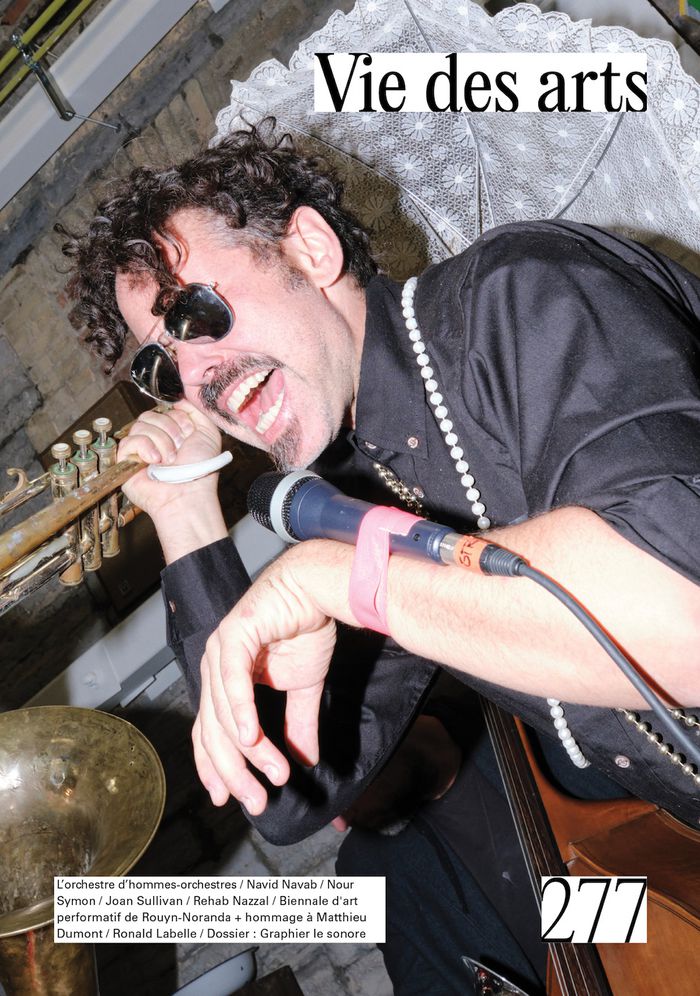
« Vie des arts » s’épanouit de l’hiver et glisse vers le printemps avec un numéro thématique tout frais abordant la manière dont se sont liées, et se lient toujours, les disciplines de la musique et des arts dits « visuels » dans l’histoire de l’art. Électroacoustique et résonances, concerts vivants, déambulations sonores et symphonies performatives figurent dans notre dossier intitulé « Graphier le sonore » — car comment parler des sons sans aborder la façon dont ils s’écrivent dans nos têtes, sur papier, dans l’espace ou même dans l’air de nos environnements?
Vie des arts 277
Actions:
Price:
$14.95
(available to order)
Summary:
« Vie des arts » s’épanouit de l’hiver et glisse vers le printemps avec un numéro thématique tout frais abordant la manière dont se sont liées, et se lient toujours, les disciplines de la musique et des arts dits « visuels » dans l’histoire de l’art. Électroacoustique et résonances, concerts vivants, déambulations sonores et symphonies performatives figurent dans notre dossier intitulé « Graphier le sonore » — car comment parler des sons sans aborder la façon dont ils s’écrivent dans nos têtes, sur papier, dans l’espace ou même dans l’air de nos environnements?
Form:
journals and magazines
journals and magazines
Publication:
May 2025
May 2025
Subject:
Magazines
Magazines
Form:
books
books
Title:
Roven n.18 2025
Roven n.18 2025
Actions:
Price:
$45.00
(available to order)
Summary:
Au sommaire de Roven n° 18, numéro spécial rêve et sommeil : ponctuation de Julie Redon ; essai sur la notation des rêves, par Guitemie Maldonado ; entretiens avec Marisa Cornejo par Julie Enckell, avec Jim Shaw par Camille Viéville, avec Drawing Now Paris ; David B. par Arnaud Fourrier ; approche historique par Leïla Jarbouai (Redon, Millet, Courbet, Granville, Salomon)(...)
$45.00
(available to order)
Summary:
Au sommaire de Roven n° 18, numéro spécial rêve et sommeil : ponctuation de Julie Redon ; essai sur la notation des rêves, par Guitemie Maldonado ; entretiens avec Marisa Cornejo par Julie Enckell, avec Jim Shaw par Camille Viéville, avec Drawing Now Paris ; David B. par Arnaud Fourrier ; approche historique par Leïla Jarbouai (Redon, Millet, Courbet, Granville, Salomon)(...)
Title:
Roven n.18 2025
Actions:
Price:
$45.00
(available to order)
Summary:
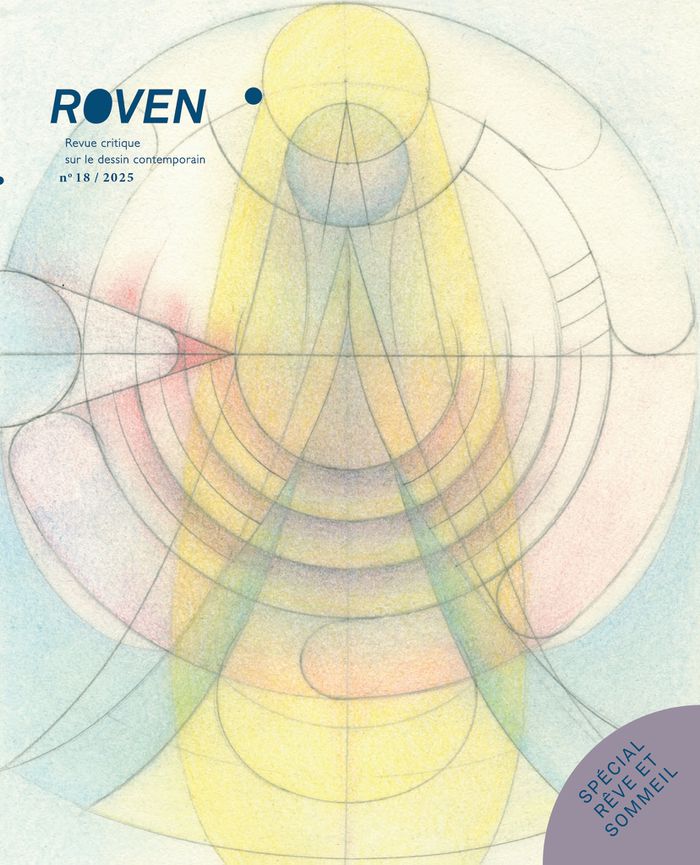
Au sommaire de Roven n° 18, numéro spécial rêve et sommeil : ponctuation de Julie Redon ; essai sur la notation des rêves, par Guitemie Maldonado ; entretiens avec Marisa Cornejo par Julie Enckell, avec Jim Shaw par Camille Viéville, avec Drawing Now Paris ; David B. par Arnaud Fourrier ; approche historique par Leïla Jarbouai (Redon, Millet, Courbet, Granville, Salomon) ; portfolios de Chloé Vanderstraeten (et entretien par Alexandre Leger), Kathy Acker, Martine Atrax, Federico Fellini, Stella Geppert, Lina Jabbour, Christine Rebet, Jean-Jacques Rullier, Sandra Vásquez de la Horra ; collection Frac Picardie.
Roven n.18 2025
Actions:
Price:
$45.00
(available to order)
Summary:
Au sommaire de Roven n° 18, numéro spécial rêve et sommeil : ponctuation de Julie Redon ; essai sur la notation des rêves, par Guitemie Maldonado ; entretiens avec Marisa Cornejo par Julie Enckell, avec Jim Shaw par Camille Viéville, avec Drawing Now Paris ; David B. par Arnaud Fourrier ; approche historique par Leïla Jarbouai (Redon, Millet, Courbet, Granville, Salomon) ; portfolios de Chloé Vanderstraeten (et entretien par Alexandre Leger), Kathy Acker, Martine Atrax, Federico Fellini, Stella Geppert, Lina Jabbour, Christine Rebet, Jean-Jacques Rullier, Sandra Vásquez de la Horra ; collection Frac Picardie.
Form:
books
books
Publication:
March 2025
March 2025
Subject:
Magazines
Magazines
Form:
books
books
Title:
Apartamento 35 Spring 2025
Apartamento 35 Spring 2025
Actions:
Price:
$33.00
(available in store)
Summary:
Featuring: Camille Henrot, Darius Khondji, Leïla Slimani, Raul Lopez, Wendy Whiteley, Huong Dodinh, Robert Plunket, Catherine Schroeder, Zhou Yilun, Vivian Suter, Deaton Chris Anthony, Erna Aaltonen & Howard Smith, Chilly Gonzales, Dan Friedman, and Steve Bailey. Plus: ‘The Divine Art of Living’, a story by Robert Plunket, ‘14 Stout Men’, a screenplay by Efthimis(...)
$33.00
(available in store)
Summary:
Featuring: Camille Henrot, Darius Khondji, Leïla Slimani, Raul Lopez, Wendy Whiteley, Huong Dodinh, Robert Plunket, Catherine Schroeder, Zhou Yilun, Vivian Suter, Deaton Chris Anthony, Erna Aaltonen & Howard Smith, Chilly Gonzales, Dan Friedman, and Steve Bailey. Plus: ‘The Divine Art of Living’, a story by Robert Plunket, ‘14 Stout Men’, a screenplay by Efthimis(...)
Subject:
Magazines
Magazines
Publication:
May 2025
May 2025
Title:
Apartamento 35 Spring 2025
Actions:
Price:
$33.00
(available in store)
Summary:
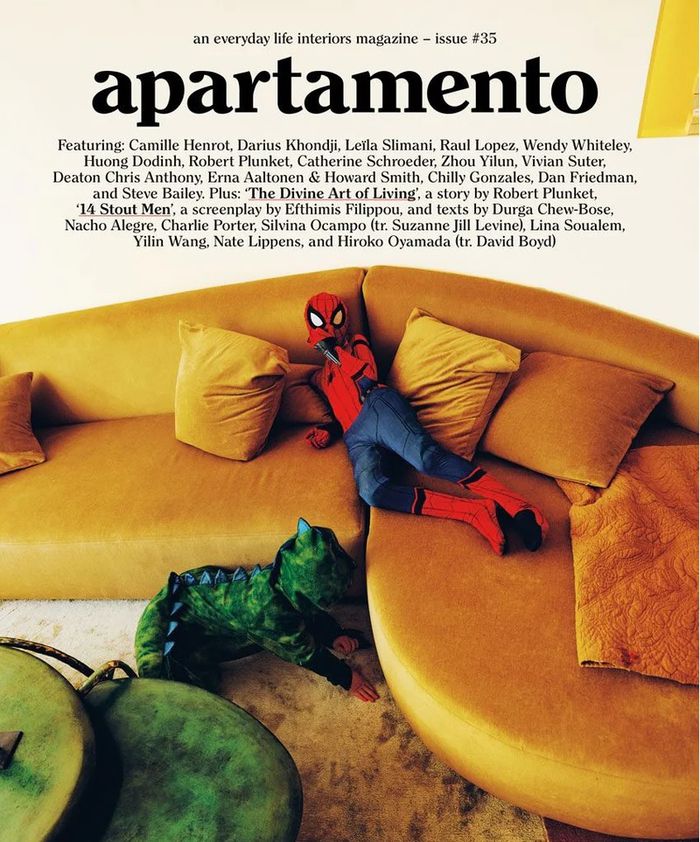
Featuring: Camille Henrot, Darius Khondji, Leïla Slimani, Raul Lopez, Wendy Whiteley, Huong Dodinh, Robert Plunket, Catherine Schroeder, Zhou Yilun, Vivian Suter, Deaton Chris Anthony, Erna Aaltonen & Howard Smith, Chilly Gonzales, Dan Friedman, and Steve Bailey. Plus: ‘The Divine Art of Living’, a story by Robert Plunket, ‘14 Stout Men’, a screenplay by Efthimis Filippou, and texts by Durga Chew-Bose, Nacho Alegre, Charlie Porter, Silvina Ocampo (tr. Suzanne Jill Levine), Lina Soualem, Yilin Wang, Nate Lippens, and Hiroko Oyamada (tr. David Boyd)
Apartamento 35 Spring 2025
Actions:
Price:
$33.00
(available in store)
Summary:
Featuring: Camille Henrot, Darius Khondji, Leïla Slimani, Raul Lopez, Wendy Whiteley, Huong Dodinh, Robert Plunket, Catherine Schroeder, Zhou Yilun, Vivian Suter, Deaton Chris Anthony, Erna Aaltonen & Howard Smith, Chilly Gonzales, Dan Friedman, and Steve Bailey. Plus: ‘The Divine Art of Living’, a story by Robert Plunket, ‘14 Stout Men’, a screenplay by Efthimis Filippou, and texts by Durga Chew-Bose, Nacho Alegre, Charlie Porter, Silvina Ocampo (tr. Suzanne Jill Levine), Lina Soualem, Yilin Wang, Nate Lippens, and Hiroko Oyamada (tr. David Boyd)
Form:
books
books
Publication:
May 2025
May 2025
Subject:
Magazines
Magazines
Form:
books
books
Title:
Grey room 99
Grey room 99
Actions:
Price:
$39.95
(available in store)
Summary:
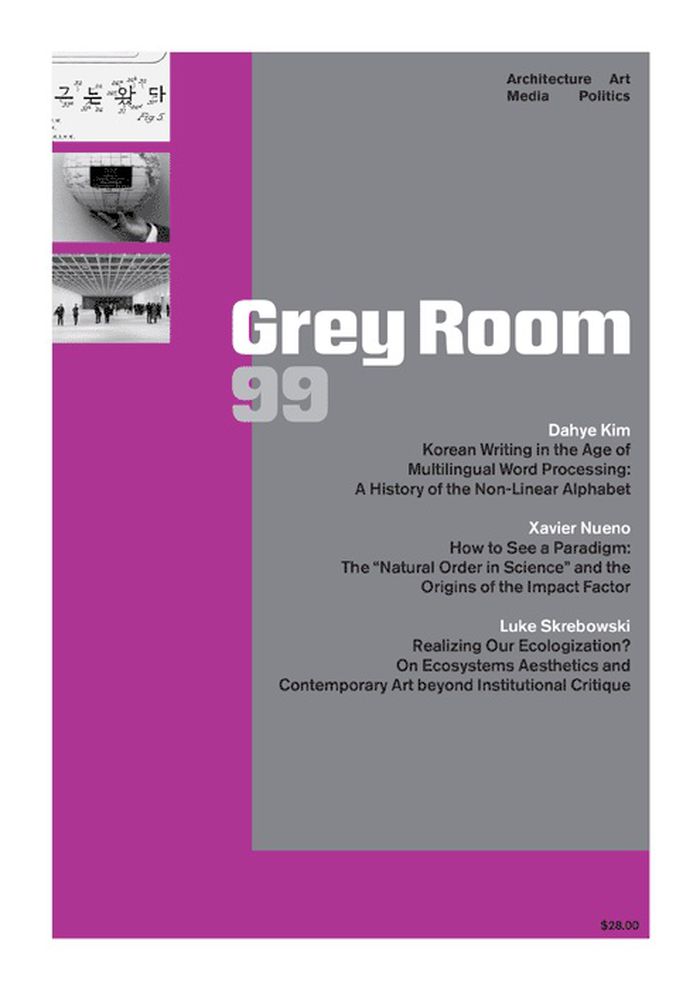
In this issue: Korean writing in the age of multilingual word processing: A history of the non-linear alphabet; How to see a paradigm: The "Natural Order in Science" and the origins of the impact factor; Realizing our ecologization? On ecosystems aesthetics and contemporary art beyond institutional critique.
$39.95
(available in store)
Summary:
In this issue: Korean writing in the age of multilingual word processing: A history of the non-linear alphabet; How to see a paradigm: The "Natural Order in Science" and the origins of the impact factor; Realizing our ecologization? On ecosystems aesthetics and contemporary art beyond institutional critique.
Title:
Grey room 99
Actions:
Price:
$39.95
(available in store)
Summary:
In this issue: Korean writing in the age of multilingual word processing: A history of the non-linear alphabet; How to see a paradigm: The "Natural Order in Science" and the origins of the impact factor; Realizing our ecologization? On ecosystems aesthetics and contemporary art beyond institutional critique.
Grey room 99
Actions:
Price:
$39.95
(available in store)
Summary:
In this issue: Korean writing in the age of multilingual word processing: A history of the non-linear alphabet; How to see a paradigm: The "Natural Order in Science" and the origins of the impact factor; Realizing our ecologization? On ecosystems aesthetics and contemporary art beyond institutional critique.
Form:
books
books
Publication:
March 2025
March 2025
Subject:
Magazines
Magazines
Form:
books
books
Title:
October 191
October 191
Actions:
Price:
$35.50
(available to order)
Summary:
In this issue: Six propositions: After Trump's second victory; Imitate Baldessari: Artists, teachers, and the making of conceptual art; Women on walls: Projection, anonymity, envy, and Eileen Gray; Plastic flesh and the biological oeuvre; The spectacular drone: Contesting pandemic lockdowns from above and below; Surface, materia bodies, and the avant-garde in philosophy(...)
$35.50
(available to order)
Summary:
In this issue: Six propositions: After Trump's second victory; Imitate Baldessari: Artists, teachers, and the making of conceptual art; Women on walls: Projection, anonymity, envy, and Eileen Gray; Plastic flesh and the biological oeuvre; The spectacular drone: Contesting pandemic lockdowns from above and below; Surface, materia bodies, and the avant-garde in philosophy(...)
Title:
October 191
Actions:
Price:
$35.50
(available to order)
Summary:
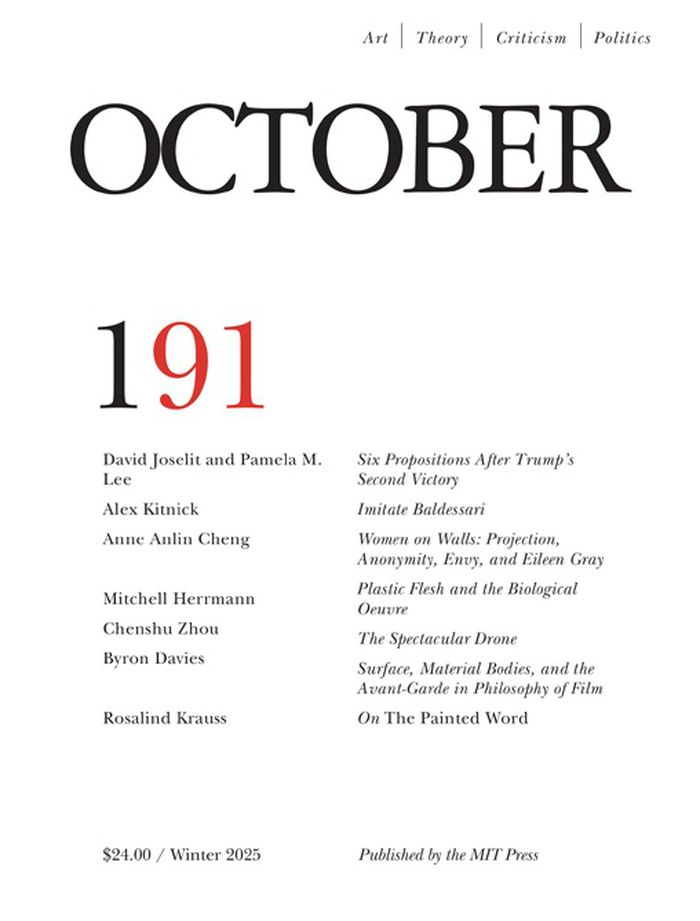
In this issue: Six propositions: After Trump's second victory; Imitate Baldessari: Artists, teachers, and the making of conceptual art; Women on walls: Projection, anonymity, envy, and Eileen Gray; Plastic flesh and the biological oeuvre; The spectacular drone: Contesting pandemic lockdowns from above and below; Surface, materia bodies, and the avant-garde in philosophy and film; On "The Painted World".
October 191
Actions:
Price:
$35.50
(available to order)
Summary:
In this issue: Six propositions: After Trump's second victory; Imitate Baldessari: Artists, teachers, and the making of conceptual art; Women on walls: Projection, anonymity, envy, and Eileen Gray; Plastic flesh and the biological oeuvre; The spectacular drone: Contesting pandemic lockdowns from above and below; Surface, materia bodies, and the avant-garde in philosophy and film; On "The Painted World".
Form:
books
books
Publication:
January 2025
January 2025
Subject:
Magazines
Magazines
Form:
books
books
Actions:
Price:
$45.95
(available to order)
Summary:
Archivio opens its third editorial cycle: four thematic issues, each curated by a Guest Editor with deep expertise, offering access to worlds where past, present, and future converge. The third issue, Archivio N°11, focuses on technology and is curated by Massimo Banzi, co-founder of Arduino, together with Cecilia Botta, technology historian and Head of Memories at(...)
$45.95
(available to order)
Summary:
Archivio opens its third editorial cycle: four thematic issues, each curated by a Guest Editor with deep expertise, offering access to worlds where past, present, and future converge. The third issue, Archivio N°11, focuses on technology and is curated by Massimo Banzi, co-founder of Arduino, together with Cecilia Botta, technology historian and Head of Memories at(...)
Title:
Archivio n.11 : The Tech Issue
Actions:
Price:
$45.95
(available to order)
Summary:
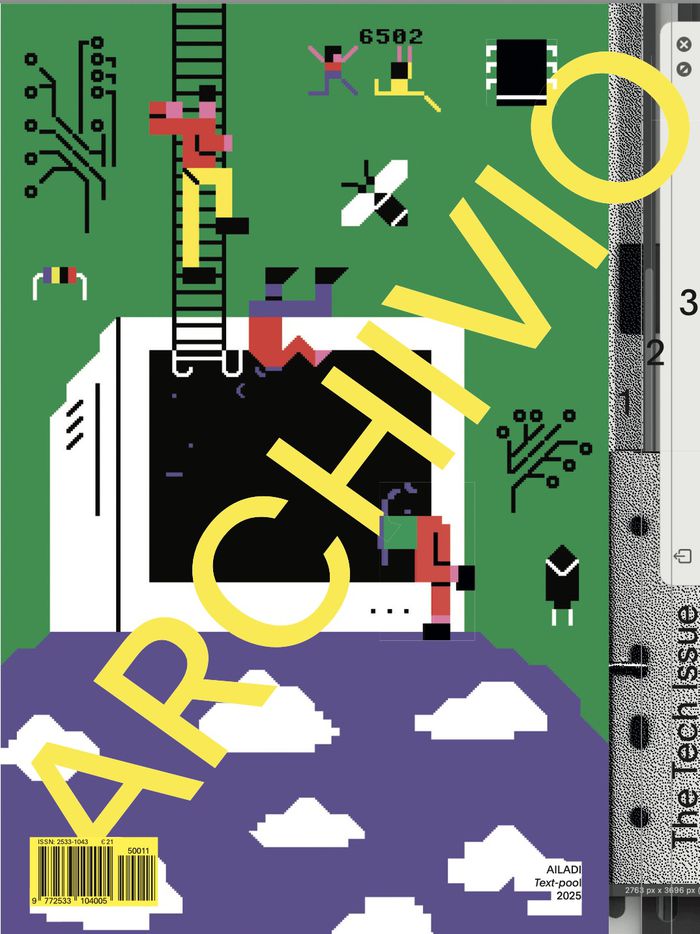
Archivio opens its third editorial cycle: four thematic issues, each curated by a Guest Editor with deep expertise, offering access to worlds where past, present, and future converge. The third issue, Archivio N°11, focuses on technology and is curated by Massimo Banzi, co-founder of Arduino, together with Cecilia Botta, technology historian and Head of Memories at Promemoria Group, the magazine's publisher. Daniela Hamaui oversees editorial direction, while Alessandro Gori shapes the art direction. The cover, designed by artist Ailadi, pays tribute to the early aesthetics of the digital age. Created using PETSCII, the character set of Commodore 8-bit computers, it evokes the visual language of technology in its formative years. Archivio N°11 maps the international landscape of technology archives, tracing the roots of the digital revolution and exploring the places where our technological past is preserved, along with the collectors and institutions that recognized its cultural value.
Archivio n.11 : The Tech Issue
Actions:
Price:
$45.95
(available to order)
Summary:
Archivio opens its third editorial cycle: four thematic issues, each curated by a Guest Editor with deep expertise, offering access to worlds where past, present, and future converge. The third issue, Archivio N°11, focuses on technology and is curated by Massimo Banzi, co-founder of Arduino, together with Cecilia Botta, technology historian and Head of Memories at Promemoria Group, the magazine's publisher. Daniela Hamaui oversees editorial direction, while Alessandro Gori shapes the art direction. The cover, designed by artist Ailadi, pays tribute to the early aesthetics of the digital age. Created using PETSCII, the character set of Commodore 8-bit computers, it evokes the visual language of technology in its formative years. Archivio N°11 maps the international landscape of technology archives, tracing the roots of the digital revolution and exploring the places where our technological past is preserved, along with the collectors and institutions that recognized its cultural value.
Form:
books
books
Publication:
December 2025
December 2025
Subject:
Magazines
Magazines
Form:
journals and magazines
journals and magazines
Actions:
Price:
$52.00
(available in store)
Summary:
The December 2024 issue of a+u magazine features the work of Nikken Sekkei. Founded 125 years ago in 1900, the Nikkei Sekkei group is an organizational design firm with about 3,000 employees. Nikken Sekkei’s designers have worked on numerous building and urban design projects in Japan. When pursuing their work, what do they rely on? And what have they inherited from their(...)
$52.00
(available in store)
Summary:
The December 2024 issue of a+u magazine features the work of Nikken Sekkei. Founded 125 years ago in 1900, the Nikkei Sekkei group is an organizational design firm with about 3,000 employees. Nikken Sekkei’s designers have worked on numerous building and urban design projects in Japan. When pursuing their work, what do they rely on? And what have they inherited from their(...)
Subject:
Magazines
Magazines
Publication:
December 2024
December 2024
Title:
A+U 651 24:12 Nikken 2000-2024
Actions:
Price:
$52.00
(available in store)
Summary:
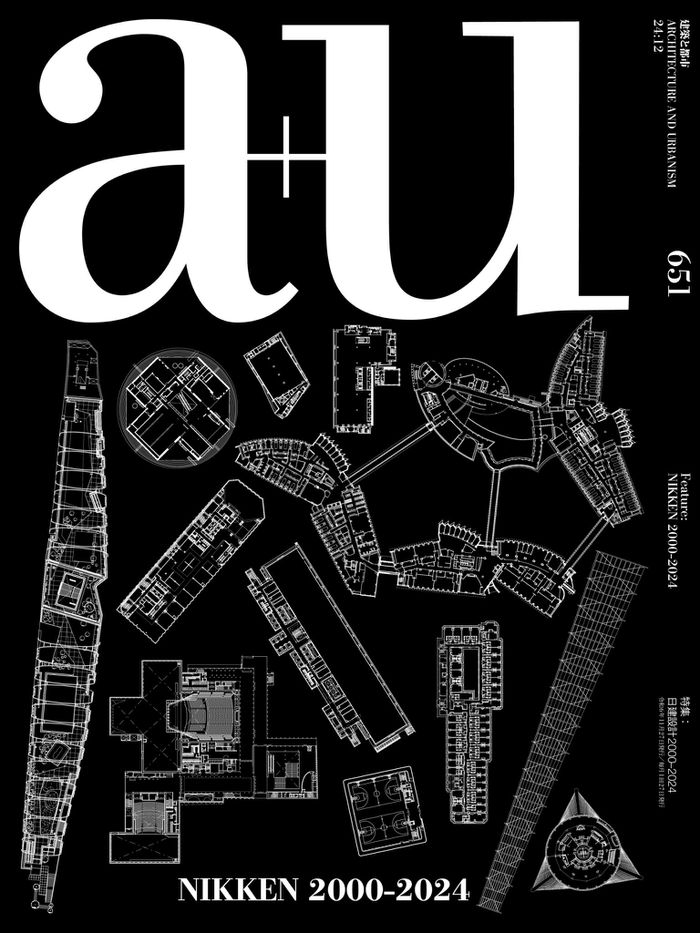
The December 2024 issue of a+u magazine features the work of Nikken Sekkei. Founded 125 years ago in 1900, the Nikkei Sekkei group is an organizational design firm with about 3,000 employees. Nikken Sekkei’s designers have worked on numerous building and urban design projects in Japan. When pursuing their work, what do they rely on? And what have they inherited from their predecessors? As we edited and prepared this issue for publication, we became increasingly interested in Nikken Sekkei’s floor plans and layout plans. Many of the designers who appear in this issue stressed the importance of floor plans and layout plans as a tool that anyone working hard on a project design can use to explore the needs of society and the client. This attitude toward design may be something that they feel they must pass on from one generation to the next as they grow in influence. Every project profile in this issue includes a 1/750 scale floor and layout plan.
A+U 651 24:12 Nikken 2000-2024
Actions:
Price:
$52.00
(available in store)
Summary:
The December 2024 issue of a+u magazine features the work of Nikken Sekkei. Founded 125 years ago in 1900, the Nikkei Sekkei group is an organizational design firm with about 3,000 employees. Nikken Sekkei’s designers have worked on numerous building and urban design projects in Japan. When pursuing their work, what do they rely on? And what have they inherited from their predecessors? As we edited and prepared this issue for publication, we became increasingly interested in Nikken Sekkei’s floor plans and layout plans. Many of the designers who appear in this issue stressed the importance of floor plans and layout plans as a tool that anyone working hard on a project design can use to explore the needs of society and the client. This attitude toward design may be something that they feel they must pass on from one generation to the next as they grow in influence. Every project profile in this issue includes a 1/750 scale floor and layout plan.
Form:
journals and magazines
journals and magazines
Publication:
December 2024
December 2024
Subject:
Magazines
Magazines
Form:
journals and magazines
journals and magazines
Actions:
Price:
$92.00
(available in store)
Summary:
More than six decades and one hundred works built on four continents attest to the extensive and prolific career of Renzo Piano at the helm of his "Building Workshop." The fourth monograph devoted to the oeuvre of Renzo Piano Building Workshop contains a selection of fifteen works and projects presented in a circular itinerary around the globe that begins and ends in(...)
$92.00
(available in store)
Summary:
More than six decades and one hundred works built on four continents attest to the extensive and prolific career of Renzo Piano at the helm of his "Building Workshop." The fourth monograph devoted to the oeuvre of Renzo Piano Building Workshop contains a selection of fifteen works and projects presented in a circular itinerary around the globe that begins and ends in(...)
Title:
AV Monographs 273: Renzo Piano
Actions:
Price:
$92.00
(available in store)
Summary:
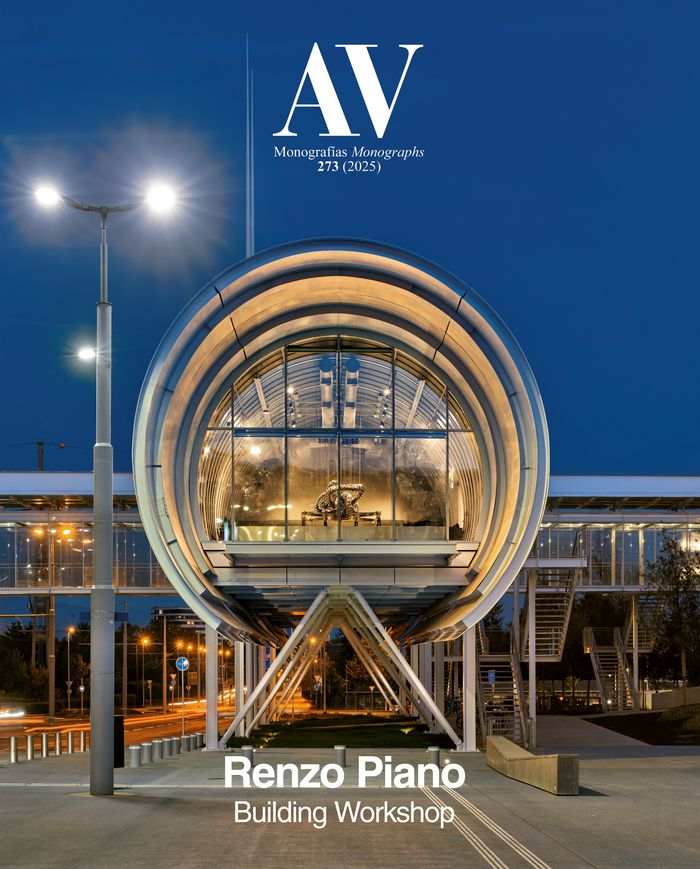
More than six decades and one hundred works built on four continents attest to the extensive and prolific career of Renzo Piano at the helm of his "Building Workshop." The fourth monograph devoted to the oeuvre of Renzo Piano Building Workshop contains a selection of fifteen works and projects presented in a circular itinerary around the globe that begins and ends in Paris, the city that made the Genoese architect known worldwide.
AV Monographs 273: Renzo Piano
Actions:
Price:
$92.00
(available in store)
Summary:
More than six decades and one hundred works built on four continents attest to the extensive and prolific career of Renzo Piano at the helm of his "Building Workshop." The fourth monograph devoted to the oeuvre of Renzo Piano Building Workshop contains a selection of fifteen works and projects presented in a circular itinerary around the globe that begins and ends in Paris, the city that made the Genoese architect known worldwide.
Form:
journals and magazines
journals and magazines
Publication:
May 2025
May 2025
Subject:
Magazines
Magazines
Form:
journals and magazines
journals and magazines
Actions:
Price:
$40.00
(available to order)
Summary:
Ce nouveau numéro d’AA ouvre un nouveau chapitre pour la revue, dont les atours et les perspectives éditoriales évoluent pour mieux la situer au point de rencontre entre société et savoirs – car, nul·le n’étant censé·e ignorer la loi, « l’architecture est une expression de la culture ». // This 464th issue represents the beginning of a new chapter for the magazine, with a(...)
$40.00
(available to order)
Summary:
Ce nouveau numéro d’AA ouvre un nouveau chapitre pour la revue, dont les atours et les perspectives éditoriales évoluent pour mieux la situer au point de rencontre entre société et savoirs – car, nul·le n’étant censé·e ignorer la loi, « l’architecture est une expression de la culture ». // This 464th issue represents the beginning of a new chapter for the magazine, with a(...)
Title:
A'A' 464 : guerre et paix / war and peace
Actions:
Price:
$40.00
(available to order)
Summary:
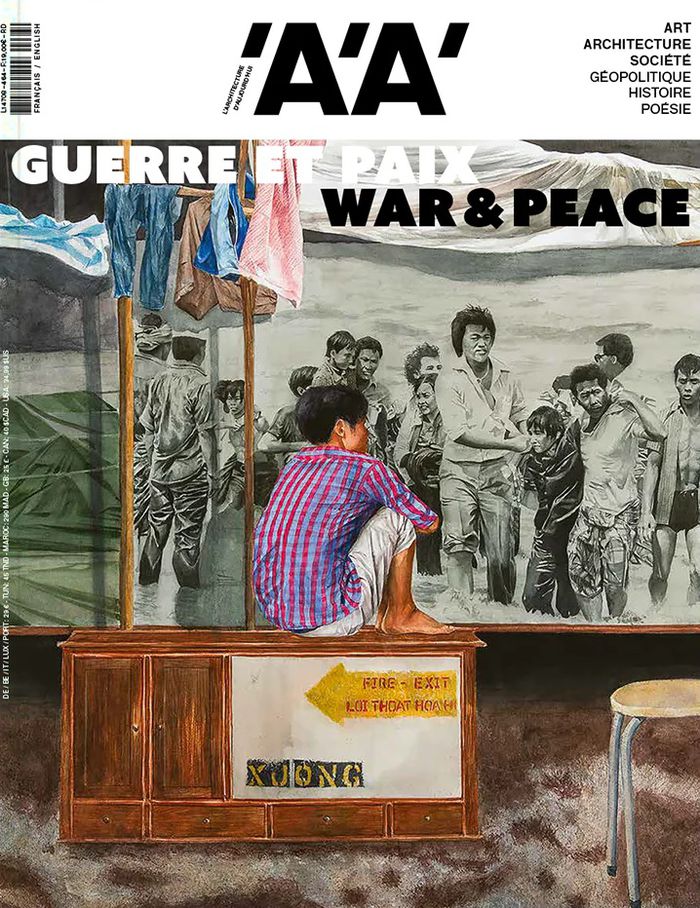
Ce nouveau numéro d’AA ouvre un nouveau chapitre pour la revue, dont les atours et les perspectives éditoriales évoluent pour mieux la situer au point de rencontre entre société et savoirs – car, nul·le n’étant censé·e ignorer la loi, « l’architecture est une expression de la culture ». // This 464th issue represents the beginning of a new chapter for the magazine, with a new look and a new editorial approach that places it at the crossroads of society and knowledge, because, as it is said in the French law since 1977, "architecture is an expression of culture".
A'A' 464 : guerre et paix / war and peace
Actions:
Price:
$40.00
(available to order)
Summary:
Ce nouveau numéro d’AA ouvre un nouveau chapitre pour la revue, dont les atours et les perspectives éditoriales évoluent pour mieux la situer au point de rencontre entre société et savoirs – car, nul·le n’étant censé·e ignorer la loi, « l’architecture est une expression de la culture ». // This 464th issue represents the beginning of a new chapter for the magazine, with a new look and a new editorial approach that places it at the crossroads of society and knowledge, because, as it is said in the French law since 1977, "architecture is an expression of culture".
Form:
journals and magazines
journals and magazines
Publication:
April 2025
April 2025
Subject:
Magazines
Magazines


