


2244 Results
Form:
books
books
Actions:
Price:
$18.95
(available in store)
Summary:
The creative forms of literature and architecture appear to be distinct, one constructing a world on the page, the other producing the world in which we live. It is a conscious act to read literature, but the effects of architecture can pass by unnoticed. Yet, despite such obvious differences, writers and architects share a dynamic with their readers and visitors that is(...)
Subject:
Architectural Theory
Architectural Theory
Publication:
April 2008, Minneapolis
April 2008, Minneapolis
Title:
Writing and seeing architecture
Actions:
Price:
$18.95
(available in store)
Summary:
The creative forms of literature and architecture appear to be distinct, one constructing a world on the page, the other producing the world in which we live. It is a conscious act to read literature, but the effects of architecture can pass by unnoticed. Yet, despite such obvious differences, writers and architects share a dynamic with their readers and visitors that is unpredictably similar. Writing and Seeing Architecture unveils a candid conversation between Christian de Portzamparc, celebrated French architect, and influential theorist Philippe Sollers that challenges us to see the analogous nature of writing and architecture. Their fascinating discussion offers a renewal of visionary architectural thinking by invoking past literary ideals that sought to liberate society through the reinvention of writing itself. Urging that new rules be set for each creation rather than resorting to limitations of the capitalist society, the authors’ daring confrontation of the interactions between writing and designing a space forcefully demonstrates the importance of intellectuals and practitioners intervening in the public sphere.
Form:
books
books
Publication:
April 2008, Minneapolis
April 2008, Minneapolis
Subject:
Architectural Theory
Architectural Theory
Form:
books
books
Actions:
Price:
$60.00
(available to order)
Summary:
Wittgenstein's House reads Wittgenstein's his two main philosophical texts, Tractatus Logico-Philosophicus and Philosophical Investigations, in relation to an experience that intervened between them: his design and construction of the Stonborough-Wittgenstein house in Vienna. Arguing that the practice of architecture occupies not just a historical position between(...)
Title:
Wittgenstein's house: language, space, & architecture
Actions:
Price:
$60.00
(available to order)
Summary:
Wittgenstein's House reads Wittgenstein's his two main philosophical texts, Tractatus Logico-Philosophicus and Philosophical Investigations, in relation to an experience that intervened between them: his design and construction of the Stonborough-Wittgenstein house in Vienna. Arguing that the practice of architecture occupies not just a historical position between Wittgenstein's early and late philosophy, but a conceptual position as well, the book demonstrates that Wittgenstein's practice of architecture constitutes a fundamental component in the development of his philosophy of language from its early to late phases. The book advances the radical proposition that the field in which architecture and philosophy operate includes linguistic and spatial practices. It develops innovative forms of interdisciplinary analyses to demonstrate that the philosophical positions put forth by Wittgenstein's two main works are literally unthinkable outside of their respective conceptions of space: the view from above in the early work and the view from within constructed by the late work. To examine the manner in which Wittgenstein's practice of architecture insinuated itself into his philosophy, the author interweaves in-depth analyses of the spatial constructs underpinning the early and late philosophies with conceptual, formal and operative discussions of the design of the Stonborough-Wittgenstein house. Together these discussions reveal how Wittgenstein's practice of architecture engaged philosophical concepts, through which it influenced Wittgenstein's philosophy of language. At the heart of this approach is the finding that the philosophical concepts at the core of Wittgenstein's philosophy areindeed spatial ones, including his concerns with the limits of language, the boundary between showing and saying, the intricate textual numbering systems he devises, the relationship between the interiority of the subject and the publicness of language, and the formative principle of family resemblance.
Form:
books
books
Publication:
May 2008, New York
May 2008, New York
Subject:
Architectural Theory
Architectural Theory
Form:
books
books
Actions:
Price:
$21.95
(available to order)
Summary:
In Housing Problems, Susan Bernstein studies the actual houses of Goethe, Walpole, and Freud alongside textual articulations of the architectonic problems of design, containment, shelter, and fragmentation. The linking of "text" and "house" brings into focus the historical tradition that has established a symmetry between design and instance, interior and exterior, author(...)
Title:
Housing problems: writing and architecture in Goethe, Walpole, Freud and Heidegger
Actions:
Price:
$21.95
(available to order)
Summary:
In Housing Problems, Susan Bernstein studies the actual houses of Goethe, Walpole, and Freud alongside textual articulations of the architectonic problems of design, containment, shelter, and fragmentation. The linking of "text" and "house" brings into focus the historical tradition that has established a symmetry between design and instance, interior and exterior, author and house—an often unexamined fantasy of historicism. Taking as its point of departure Goethe's efforts to establish such a synthesis through the concept of Bildung, the book traces the destabilization of this symmetry between house and self in Gothic literature and in narratives surrounding the founding of psychoanalysis. The interest in architecture holds open the tension between the generalizing figures of architectonics and the singular quality of housing features. These continue to mark theoretical thinking even as they dissolve and withdraw, as in Heidegger's "house of Being."
Form:
books
books
Publication:
June 2008
June 2008
Subject:
Architectural Theory
Architectural Theory
Form:
books
books
Actions:
Price:
$48.00
(available to order)
Summary:
The Italian architect and historian Manfredo Tafuri made a decisive contribution to the practice of architectural history, yet the breadth of his bibliography and the depth of his perception into historical problems remains largely unexplored even today. The first English-language book to consider his contribution to architectural culture, it opens an overdue discussion(...)
Title:
Manfredo Tafuri: choosing history
Actions:
Price:
$48.00
(available to order)
Summary:
The Italian architect and historian Manfredo Tafuri made a decisive contribution to the practice of architectural history, yet the breadth of his bibliography and the depth of his perception into historical problems remains largely unexplored even today. The first English-language book to consider his contribution to architectural culture, it opens an overdue discussion on both the premises of his practice and the historical questions that consequently emerge.
Form:
books
books
Publication:
January 1900
January 1900
Subject:
Architectural Theory
Architectural Theory
Form:
books
books
Actions:
Price:
$27.95
(available to order)
Summary:
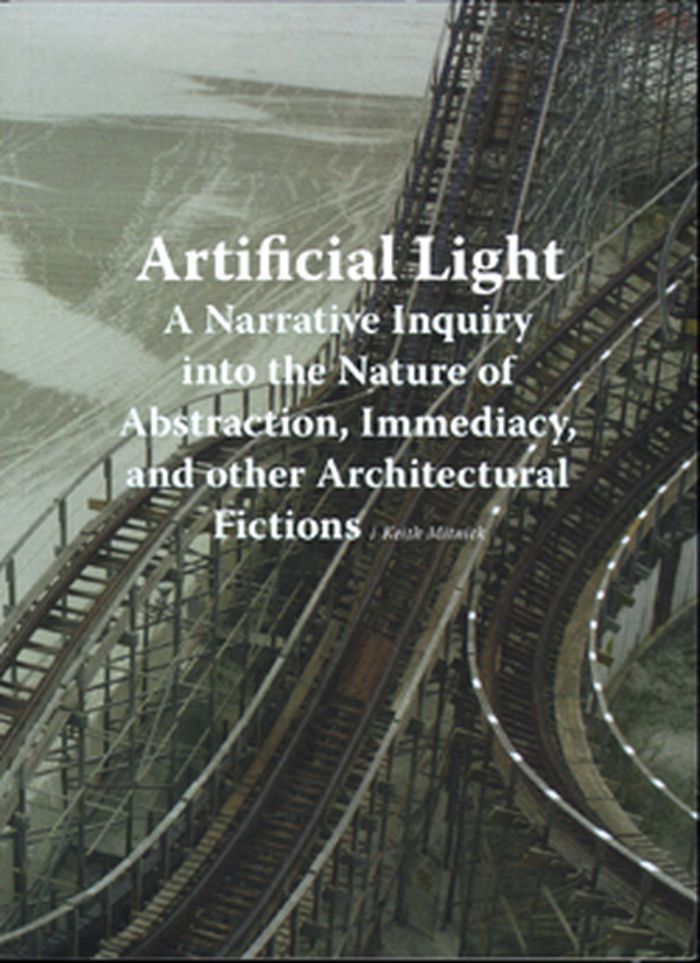
"Artificial light" suggests an alternative type of critical theory consisting of personal and fictitious anecdotes, real and fake photographs, and mini-essays that addresses prevalent themes in architecture such as immediacy, affect, abstraction, atmosphere, realness, and banality. With a narrative style reminiscent of other unconventional writers on design such as Paul(...)
Title:
Artificial light : a narrative inquiry into the nature of abstraction, immediacy, and other architectural fictions
Actions:
Price:
$27.95
(available to order)
Summary:
"Artificial light" suggests an alternative type of critical theory consisting of personal and fictitious anecdotes, real and fake photographs, and mini-essays that addresses prevalent themes in architecture such as immediacy, affect, abstraction, atmosphere, realness, and banality. With a narrative style reminiscent of other unconventional writers on design such as Paul Shepheard, Roger Connah, and Rebecca Solnit, "Artificial light" is the beautifully written and visually engaging debut of a dynamic new voice in the world of architectural criticism. Keith Mitnick is an assistant professor of architecture at the University of Michigan, where he teaches graduate-level studios and seminars in architectural criticism, and a founding principal of Mitnick Roddier Hicks.
Form:
books
books
Publication:
March 2008, New York
March 2008, New York
Subject:
Architectural Theory
Architectural Theory
Form:
books
books
Title:
Trying Leviathan
Trying Leviathan
Actions:
Price:
$29.95
(available to order)
Summary:
In Trying Leviathan, D.Graham Burnett recovers the strange story of Maurice v. Judd, an 1818 trial that pitted the new sciences of taxonomy against the then-popular, and biblically sanctioned, view that the whale was a fish. The immediate dispute was mundace: whether whale oil was fish oil and therefore subject to state inspection. But the trial fueled a sensational(...)
Title:
Trying Leviathan
Actions:
Price:
$29.95
(available to order)
Summary:
In Trying Leviathan, D.Graham Burnett recovers the strange story of Maurice v. Judd, an 1818 trial that pitted the new sciences of taxonomy against the then-popular, and biblically sanctioned, view that the whale was a fish. The immediate dispute was mundace: whether whale oil was fish oil and therefore subject to state inspection. But the trial fueled a sensational public debate in which nothing less than the order of nature, and how we know it, was at stake.
Form:
books
books
Publication:
October 2007, Princeton
October 2007, Princeton
Subject:
Architectural Theory
Architectural Theory
Form:
books
books

Price:
$69.95
(available to order)
Summary:
In Supercrit 2: 'Learning from Las Vegas', Robert Venturi and Denise Scott Brown, the couple revisit their infamous book which overturned the barriers separating high architecture from the commercial architecture of the Strip. You can hear the couple's project description, see the drawings and join in the crit. This innovative and compelling book is an invaluable resource(...)
Publication:
February 2008, London, New York
February 2008, London, New York
Title:
Supercrit 2 Robert Venturi and Denise Scott Brown: Learning from Las Vegas
Actions:
Price:
$69.95
(available to order)
Summary:
In Supercrit 2: 'Learning from Las Vegas', Robert Venturi and Denise Scott Brown, the couple revisit their infamous book which overturned the barriers separating high architecture from the commercial architecture of the Strip. You can hear the couple's project description, see the drawings and join in the crit. This innovative and compelling book is an invaluable resource for any architecture student.
Form:
books
books
Publication:
February 2008, London, New York
February 2008, London, New York
Form:
books
books

Actions:
Price:
$42.00
(available in store)
Summary:
Juin 1940 : les combats et la défaite. Les centres historiques sont dévastés, les châteaux réquisitionnés, les monuments effondrés. Le régime autoritaire de Vichy entreprend le " redressement moral " du pays. Contre l'internationalisme et le cosmopolitisme des avant-gardes, l'architecture française doit retrouver sa grandeur nationale et sa place éminente dans le monde.(...)
Publication:
April 2008, Rennes
April 2008, Rennes
Title:
Les monuments historiques de 1940 à 1959: administration, architecture, urbanisme
Actions:
Price:
$42.00
(available in store)
Summary:
Juin 1940 : les combats et la défaite. Les centres historiques sont dévastés, les châteaux réquisitionnés, les monuments effondrés. Le régime autoritaire de Vichy entreprend le " redressement moral " du pays. Contre l'internationalisme et le cosmopolitisme des avant-gardes, l'architecture française doit retrouver sa grandeur nationale et sa place éminente dans le monde. Dans ce projet, les monuments anciens ont un rôle de tout premier plan. Il ne s'agit pas seulement, en effet, de relever les ruines, mais aussi d'inventer une nouvelle modernité architecturale et urbaine appuyée sur la tradition et le génie artistique propre à la France. Le service des Monuments historiques se rapproche des services de l'urbanisme et de la reconstruction afin d'inventer le nouveau cadre bâti de la France régénérée. Juin l944-Mai 1945: nouvelles destructions et Libération. A la réflexion théorique succède l'action, dans un pays exsangue. Commence le grand chantier de la reconstruction, elles désillusions: crédits insuffisants, rupture du consensus avec les responsables de la construction. Refusant l'habituelle opposition entre architecture et patrimoine, cet ouvrage envisage le monument historique comme un élément à part entière de l'histoire de l'architecture. Il retrace son itinéraire politique et social autant que son destin matériel dans une période agitée, caractérisée par une quantité d'interventions absolument sans précédent.
Form:
books
books
Publication:
April 2008, Rennes
April 2008, Rennes
Form:
books
books
Title:
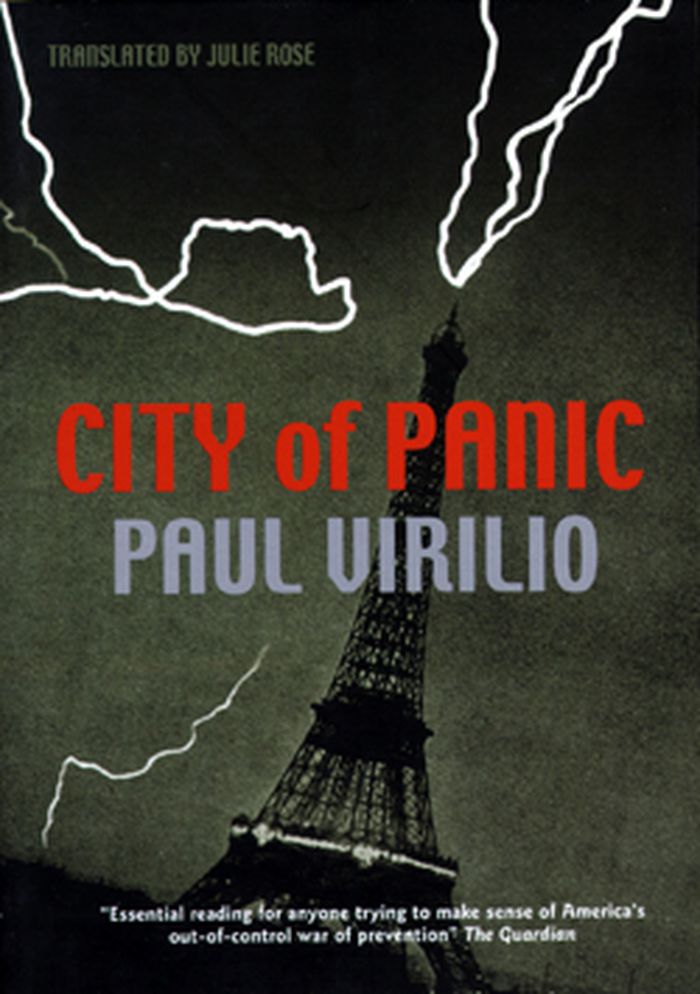
City of Panic
City of Panic
Actions:
Price:
$19.95
(available to order)
Summary:
City of Panic opens with a journey across the airy boulevards of Paris and into the crypt pf its Metro. Along the way, City of Panic tells the story of all cities. Cities everywhere are being reconstructed through a campaign of panic, the proliferation of gated-communities, policed shopping malls, the ever-widening net of surveillance, and a media consistently(...)
Title:
City of Panic
Actions:
Price:
$19.95
(available to order)
Summary:
City of Panic opens with a journey across the airy boulevards of Paris and into the crypt pf its Metro. Along the way, City of Panic tells the story of all cities. Cities everywhere are being reconstructed through a campaign of panic, the proliferation of gated-communities, policed shopping malls, the ever-widening net of surveillance, and a media consistently fabricating a world of fear. As the past is torn downand replaced with an identikit present we seem to have accpted that our cities really are war zones and that every city must ben the same.
Form:
books
books
Publication:
May 2007, Oxford, New York
May 2007, Oxford, New York
Subject:
Architectural Theory
Architectural Theory
Form:
books
books
Price:
$39.00
(available to order)
Summary:
Since they were first established in the 1880s, children’s summer camps have touched the lives of millions of people. Although the camping experience has a special place in the popular imagination, few scholars have given serious thought to this peculiarly American phenomenon. Why were summer camps created? What concerns and ideals motivated their founders? Whom did they(...)
Title:
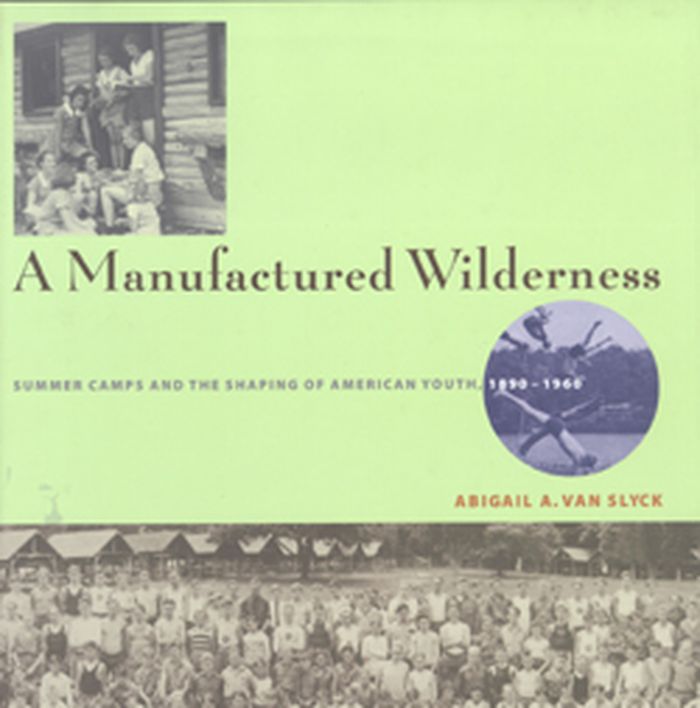
A manufactured wilderness: summer camps and the shaping of american youth
Actions:
Price:
$39.00
(available to order)
Summary:
Since they were first established in the 1880s, children’s summer camps have touched the lives of millions of people. Although the camping experience has a special place in the popular imagination, few scholars have given serious thought to this peculiarly American phenomenon. Why were summer camps created? What concerns and ideals motivated their founders? Whom did they serve? How did they change over time? What factors influenced their design? To answer these and many other questions, Abigail A. Van Slyck trains an informed eye on the most visible and evocative aspect of camp life: its landscape and architecture. She argues that summer camps delivered much more than a simple encounter with the natural world. Instead, she suggests, camps provided a man-made version of wilderness, shaped by middle-class anxieties about gender roles, class tensions, race relations, and modernity and its impact on the lives of children. Following a fascinating history of summer camps and a wide-ranging overview of the factors that led to their creation, Van Slyck examines the intersections of the natural landscape with human-built forms and social activities. In particular, she addresses changing attitudes toward such subjects as children’s health, sanitation, play, relationships between the sexes, Native American culture, and evolving ideas about childhood. Generously illustrated with period photographs, maps, plans, and promotional images of camps throughout North America, A Manufactured Wilderness is the first book to offer a thorough consideration of the summer camp environment.
Form:
books
books
Publication:
October 2006, Minnesota
October 2006, Minnesota
Subject:
Architectural Theory
Architectural Theory


