


452 Results
Form:
books
books

Actions:
Price:
$49.50
(available to order)
Summary:
Once symbols of the past, ruins have become ubiquitous signs of our future. Americans today encounter ruins in the media on a daily basis - images of abandoned factories and malls, toxic landscapes, devastating fires, hurricanes, and floods. In this sweeping study, Miles Orvell offers a new understanding of the spectacle of ruins in US culture, exploring how(...)
$49.50
(available to order)
Summary:
Once symbols of the past, ruins have become ubiquitous signs of our future. Americans today encounter ruins in the media on a daily basis - images of abandoned factories and malls, toxic landscapes, devastating fires, hurricanes, and floods. In this sweeping study, Miles Orvell offers a new understanding of the spectacle of ruins in US culture, exploring how(...)
Title:
Empire of ruins: American culture, photography, and the spectacle of destruction
Actions:
Price:
$49.50
(available to order)
Summary:
Once symbols of the past, ruins have become ubiquitous signs of our future. Americans today encounter ruins in the media on a daily basis - images of abandoned factories and malls, toxic landscapes, devastating fires, hurricanes, and floods. In this sweeping study, Miles Orvell offers a new understanding of the spectacle of ruins in US culture, exploring how photographers, writers, painters, and filmmakers have responded to ruin and destruction, both real and imaginary, in an effort to make sense of the past and envision the future. ''Empire of ruins'' explains why Americans in the nineteenth century yearned for the ruins of Rome and Egypt and how they portrayed a past as ancient and mysterious in the remains of Native American cultures. As the romance of ruins gave way to twentieth-century capitalism, older structures were demolished to make way for grander ones, a process interpreted by artists as a symptom of America's "creative destruction." In the late twentieth century, Americans began to inhabit a perpetual state of ruins, made visible by photographs of decaying inner cities, derelict factories and malls, and the waste lands of the mining industry. This interdisciplinary work focuses on how visual media have transformed disaster and decay into spectacles that compel our moral attention even as they balance horror and beauty. Looking to the future, Orvell considers the visual portrayal of climate ruins as we face the political and ethical responsibilities of our changing world. A wide-ranging work by an acclaimed urban, cultural, and photography scholar, ''Empire of ruins'' offers a provocative and lavishly illustrated look at the American past, present, and future.
Empire of ruins: American culture, photography, and the spectacle of destruction
Actions:
Price:
$49.50
(available to order)
Summary:
Once symbols of the past, ruins have become ubiquitous signs of our future. Americans today encounter ruins in the media on a daily basis - images of abandoned factories and malls, toxic landscapes, devastating fires, hurricanes, and floods. In this sweeping study, Miles Orvell offers a new understanding of the spectacle of ruins in US culture, exploring how photographers, writers, painters, and filmmakers have responded to ruin and destruction, both real and imaginary, in an effort to make sense of the past and envision the future. ''Empire of ruins'' explains why Americans in the nineteenth century yearned for the ruins of Rome and Egypt and how they portrayed a past as ancient and mysterious in the remains of Native American cultures. As the romance of ruins gave way to twentieth-century capitalism, older structures were demolished to make way for grander ones, a process interpreted by artists as a symptom of America's "creative destruction." In the late twentieth century, Americans began to inhabit a perpetual state of ruins, made visible by photographs of decaying inner cities, derelict factories and malls, and the waste lands of the mining industry. This interdisciplinary work focuses on how visual media have transformed disaster and decay into spectacles that compel our moral attention even as they balance horror and beauty. Looking to the future, Orvell considers the visual portrayal of climate ruins as we face the political and ethical responsibilities of our changing world. A wide-ranging work by an acclaimed urban, cultural, and photography scholar, ''Empire of ruins'' offers a provocative and lavishly illustrated look at the American past, present, and future.
Form:
books
books
Publication:
January 2021
January 2021
Subject:
Theory of Photography
Theory of Photography
Form:
books
books

Title:
Inventer la couleur
Inventer la couleur
Actions:
Price:
$45.95
(available in store)
Summary:
À l’occasion de la célébration du centenaire de la mort de Ducos du Hauron, inventeur agenais de la photographie en couleur, François Saint Pierre propose une exposition qui explore le rapport à la couleur dans la photographie moderne et contemporaine, essentiellement aux États-Unis et en France. Le catalogue réunit plus de 120 œuvres de 19 photographes auteurs et(...)
$45.95
(available in store)
Summary:
À l’occasion de la célébration du centenaire de la mort de Ducos du Hauron, inventeur agenais de la photographie en couleur, François Saint Pierre propose une exposition qui explore le rapport à la couleur dans la photographie moderne et contemporaine, essentiellement aux États-Unis et en France. Le catalogue réunit plus de 120 œuvres de 19 photographes auteurs et(...)
Subject:
Theory of Photography
Theory of Photography
Publication:
October 2021
October 2021
Title:
Inventer la couleur
Actions:
Price:
$45.95
(available in store)
Summary:
À l’occasion de la célébration du centenaire de la mort de Ducos du Hauron, inventeur agenais de la photographie en couleur, François Saint Pierre propose une exposition qui explore le rapport à la couleur dans la photographie moderne et contemporaine, essentiellement aux États-Unis et en France. Le catalogue réunit plus de 120 œuvres de 19 photographes auteurs et artistes, autour des pionniers William Eggleston, Ernst Haas et Saul Leiter, qui, en faisant entrer la photographie en couleur au musée dans les années 60/70, ont battu en brêche le préjugé tenace selon lequel « le noir et blanc serait l’art et la couleur serait commerciale ». En Europe, où le monopole artistique du noir et blanc était encore plus marqué, l’Italien Luigi Ghirri dans les années 1970 et le Français John Batho dès 1963, s’engagent dans la photographie en couleur. « Je voulais savoir, déclare ce dernier, ce que la photographie pouvait avoir à dire au sujet de la couleur. » Cette réflexion se prolonge avec des artistes du numériques comme Constance Nouvel qui explore ce que peut encore la photographie à l’heure des réseaux sociaux. Avec des photographies de Vincent Ballard, Sammy Baloji, John Batho, Denis Brihat, Alix Delmas, Philippe Durand, William Eggleston, Luigi Ghirri, Jan Groover, Saul Leiter, Mazdak, Ernst Haas, Pierre et Gilles, Bernard Plossu, Julien Richaudaud, Paolo Roversi, Laure Tiberghien et James Welling.
Inventer la couleur
Actions:
Price:
$45.95
(available in store)
Summary:
À l’occasion de la célébration du centenaire de la mort de Ducos du Hauron, inventeur agenais de la photographie en couleur, François Saint Pierre propose une exposition qui explore le rapport à la couleur dans la photographie moderne et contemporaine, essentiellement aux États-Unis et en France. Le catalogue réunit plus de 120 œuvres de 19 photographes auteurs et artistes, autour des pionniers William Eggleston, Ernst Haas et Saul Leiter, qui, en faisant entrer la photographie en couleur au musée dans les années 60/70, ont battu en brêche le préjugé tenace selon lequel « le noir et blanc serait l’art et la couleur serait commerciale ». En Europe, où le monopole artistique du noir et blanc était encore plus marqué, l’Italien Luigi Ghirri dans les années 1970 et le Français John Batho dès 1963, s’engagent dans la photographie en couleur. « Je voulais savoir, déclare ce dernier, ce que la photographie pouvait avoir à dire au sujet de la couleur. » Cette réflexion se prolonge avec des artistes du numériques comme Constance Nouvel qui explore ce que peut encore la photographie à l’heure des réseaux sociaux. Avec des photographies de Vincent Ballard, Sammy Baloji, John Batho, Denis Brihat, Alix Delmas, Philippe Durand, William Eggleston, Luigi Ghirri, Jan Groover, Saul Leiter, Mazdak, Ernst Haas, Pierre et Gilles, Bernard Plossu, Julien Richaudaud, Paolo Roversi, Laure Tiberghien et James Welling.
Form:
books
books
Publication:
October 2021
October 2021
Subject:
Theory of Photography
Theory of Photography
Form:
books
books
Actions:
Price:
$54.95
(available to order)
Summary:
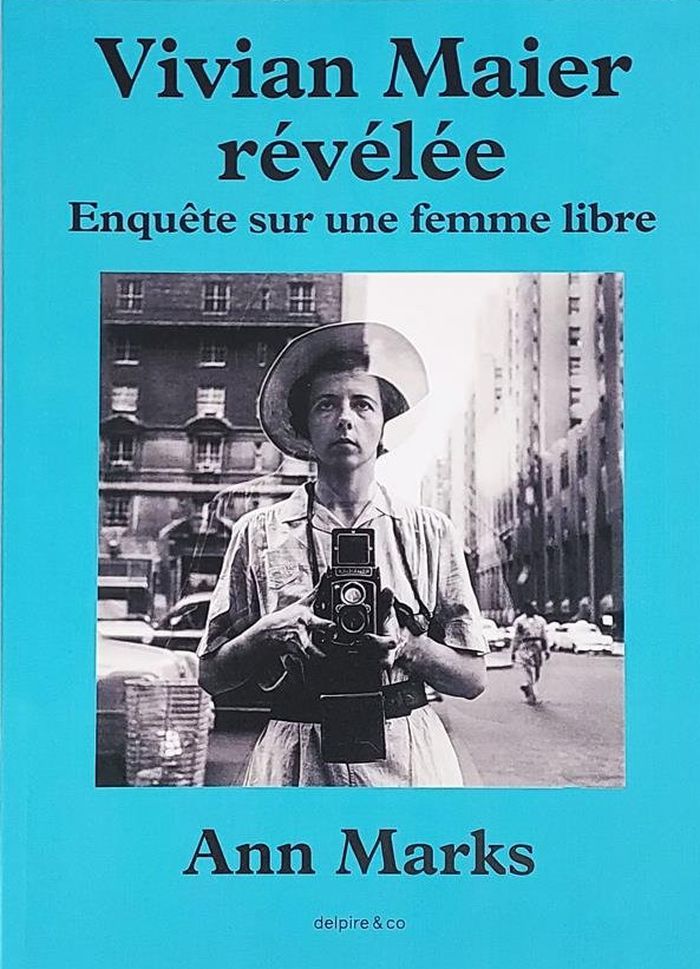
En dix-huit chapitres, largement illustrés de photographies, l’auteure Ann Marks mène l’enquête pour percer le(s) secret(s) de la plus mystérieuse des femmes photographes, dont l’œuvre fut découverte par hasard lors de l’achat d’un lot de photographies anonymes au cours d’une vente aux enchères.
$54.95
(available to order)
Summary:
En dix-huit chapitres, largement illustrés de photographies, l’auteure Ann Marks mène l’enquête pour percer le(s) secret(s) de la plus mystérieuse des femmes photographes, dont l’œuvre fut découverte par hasard lors de l’achat d’un lot de photographies anonymes au cours d’une vente aux enchères.
Title:
Vivian Maier révélée : enquête sur une femme libre
Actions:
Price:
$54.95
(available to order)
Summary:
En dix-huit chapitres, largement illustrés de photographies, l’auteure Ann Marks mène l’enquête pour percer le(s) secret(s) de la plus mystérieuse des femmes photographes, dont l’œuvre fut découverte par hasard lors de l’achat d’un lot de photographies anonymes au cours d’une vente aux enchères.
Vivian Maier révélée : enquête sur une femme libre
Actions:
Price:
$54.95
(available to order)
Summary:
En dix-huit chapitres, largement illustrés de photographies, l’auteure Ann Marks mène l’enquête pour percer le(s) secret(s) de la plus mystérieuse des femmes photographes, dont l’œuvre fut découverte par hasard lors de l’achat d’un lot de photographies anonymes au cours d’une vente aux enchères.
Form:
books
books
Publication:
November 2021
November 2021
Subject:
Theory of Photography
Theory of Photography
Form:
books
books
Actions:
Price:
$60.00
(available to order)
Summary:
This book is an experimental new memoir from one of the world’s most prolific artists — an impressionistic scrapbook that documents the rich and surprising touchstones that make up over half a century of ground-breaking work. With essays, photographs, stories, and excerpts that draw on Shore’s decades of teaching, this is an essential handbook for anyone interested in(...)
$60.00
(available to order)
Summary:
This book is an experimental new memoir from one of the world’s most prolific artists — an impressionistic scrapbook that documents the rich and surprising touchstones that make up over half a century of ground-breaking work. With essays, photographs, stories, and excerpts that draw on Shore’s decades of teaching, this is an essential handbook for anyone interested in(...)
Title:
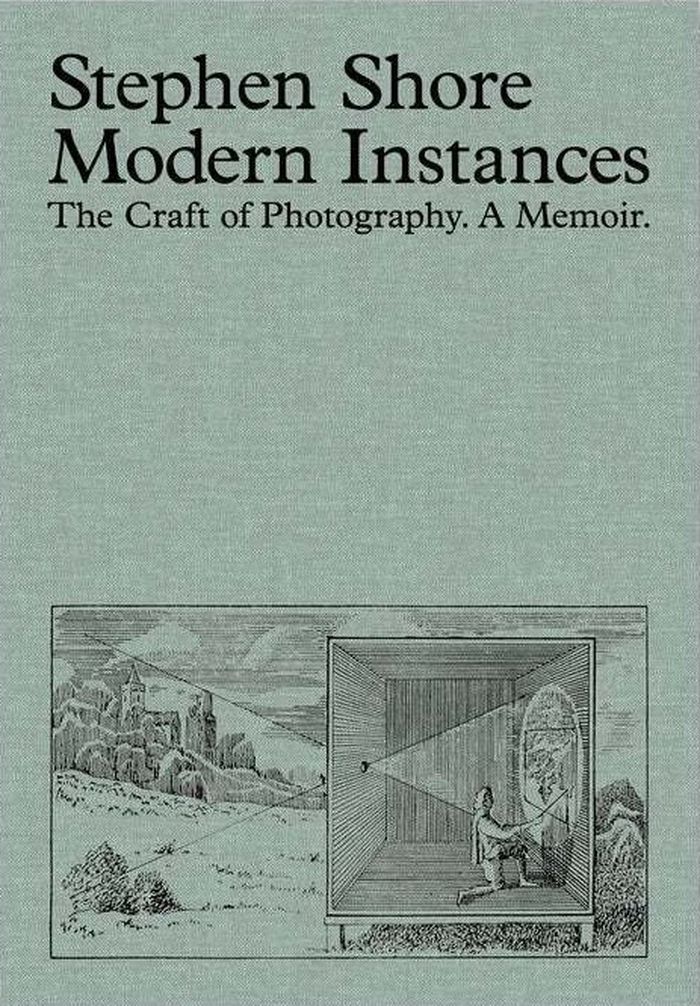
Modern instances:The craft of photography
Actions:
Price:
$60.00
(available to order)
Summary:
This book is an experimental new memoir from one of the world’s most prolific artists — an impressionistic scrapbook that documents the rich and surprising touchstones that make up over half a century of ground-breaking work. With essays, photographs, stories, and excerpts that draw on Shore’s decades of teaching, this is an essential handbook for anyone interested in learning more about mastering one’s craft and the distinct threads that come together to inform a creative voice. As much as offering meditation on the influences of a single artist, this publication proposes a new way of thinking about the world around us, in which even the smallest moment can become a source of boundless inspiration — if only we pay attention.
Modern instances:The craft of photography
Actions:
Price:
$60.00
(available to order)
Summary:
This book is an experimental new memoir from one of the world’s most prolific artists — an impressionistic scrapbook that documents the rich and surprising touchstones that make up over half a century of ground-breaking work. With essays, photographs, stories, and excerpts that draw on Shore’s decades of teaching, this is an essential handbook for anyone interested in learning more about mastering one’s craft and the distinct threads that come together to inform a creative voice. As much as offering meditation on the influences of a single artist, this publication proposes a new way of thinking about the world around us, in which even the smallest moment can become a source of boundless inspiration — if only we pay attention.
Form:
books
books
Publication:
February 2022
February 2022
Subject:
Theory of Photography
Theory of Photography
Form:
books
books
Title:
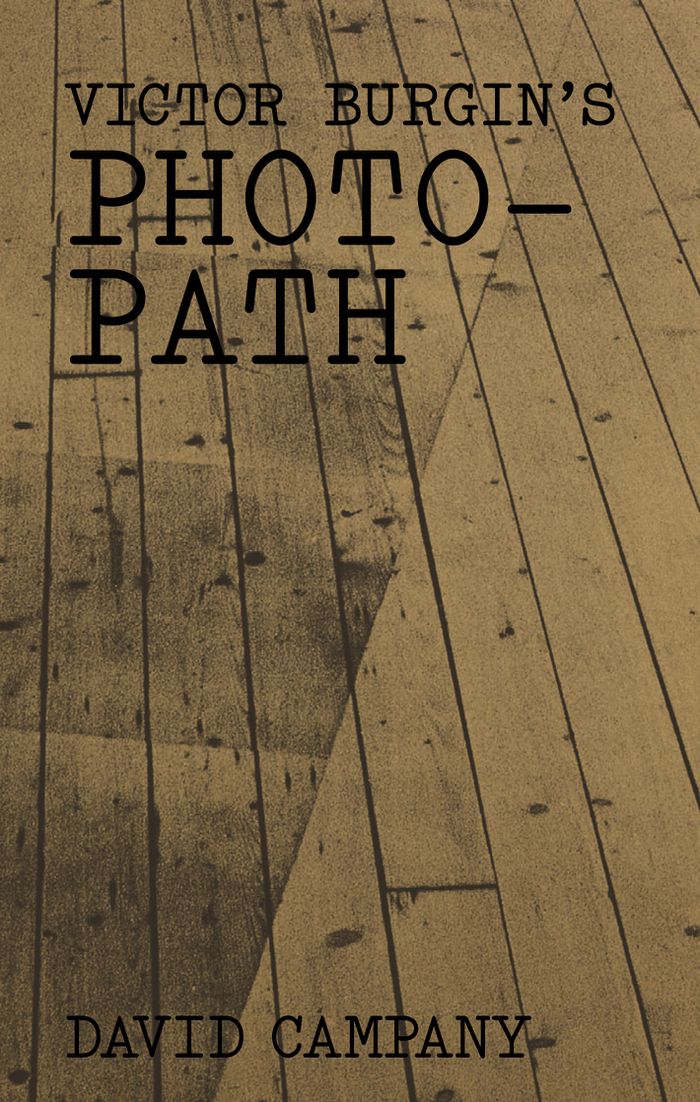
Victor Burgin's photopath
Victor Burgin's photopath
Actions:
Price:
$25.00
(available to order)
Summary:
''A path along the floor, of proportions 1×21 units, photographed. Photographs printed actual size of objects and prints attached to the floor so that images are perfectly congruent with their objects.'' With these words of instruction, typed on a humble card in 1967, Victor Burgin conceived one of the most profound and remarkable works of photographic art. Each time it(...)
$25.00
(available to order)
Summary:
''A path along the floor, of proportions 1×21 units, photographed. Photographs printed actual size of objects and prints attached to the floor so that images are perfectly congruent with their objects.'' With these words of instruction, typed on a humble card in 1967, Victor Burgin conceived one of the most profound and remarkable works of photographic art. Each time it(...)
Title:
Victor Burgin's photopath
Actions:
Price:
$25.00
(available to order)
Summary:
''A path along the floor, of proportions 1×21 units, photographed. Photographs printed actual size of objects and prints attached to the floor so that images are perfectly congruent with their objects.'' With these words of instruction, typed on a humble card in 1967, Victor Burgin conceived one of the most profound and remarkable works of photographic art. Each time it was exhibited, it had to be made anew, unique to its setting. Embracing Minimalism and Conceptual art, performance and site-specific installation, there is no other artwork like Photopath. In his characteristically analytical and associative manner, writer and curator David Campany takes the reader through the history and implications of Photopath, and their place in the breadth of Victor Burgin’s art and theoretical writings.
Victor Burgin's photopath
Actions:
Price:
$25.00
(available to order)
Summary:
''A path along the floor, of proportions 1×21 units, photographed. Photographs printed actual size of objects and prints attached to the floor so that images are perfectly congruent with their objects.'' With these words of instruction, typed on a humble card in 1967, Victor Burgin conceived one of the most profound and remarkable works of photographic art. Each time it was exhibited, it had to be made anew, unique to its setting. Embracing Minimalism and Conceptual art, performance and site-specific installation, there is no other artwork like Photopath. In his characteristically analytical and associative manner, writer and curator David Campany takes the reader through the history and implications of Photopath, and their place in the breadth of Victor Burgin’s art and theoretical writings.
Form:
books
books
Publication:
April 2022
April 2022
Subject:
Theory of Photography
Theory of Photography
Form:
books
books
Actions:
Price:
$22.99
(available to order)
Summary:
How do the most diverse and relevant voices of contemporary photography respond to the urgent issues of today? In this series of small, insightful, and beautifully presented books, Henry Carroll, the bestselling photography writer of the last decade, unpacks the ideas behind images to reflect on race, gender, faith, inequality, beauty, politics, and our shifting(...)
$22.99
(available to order)
Summary:
How do the most diverse and relevant voices of contemporary photography respond to the urgent issues of today? In this series of small, insightful, and beautifully presented books, Henry Carroll, the bestselling photography writer of the last decade, unpacks the ideas behind images to reflect on race, gender, faith, inequality, beauty, politics, and our shifting(...)
Title:
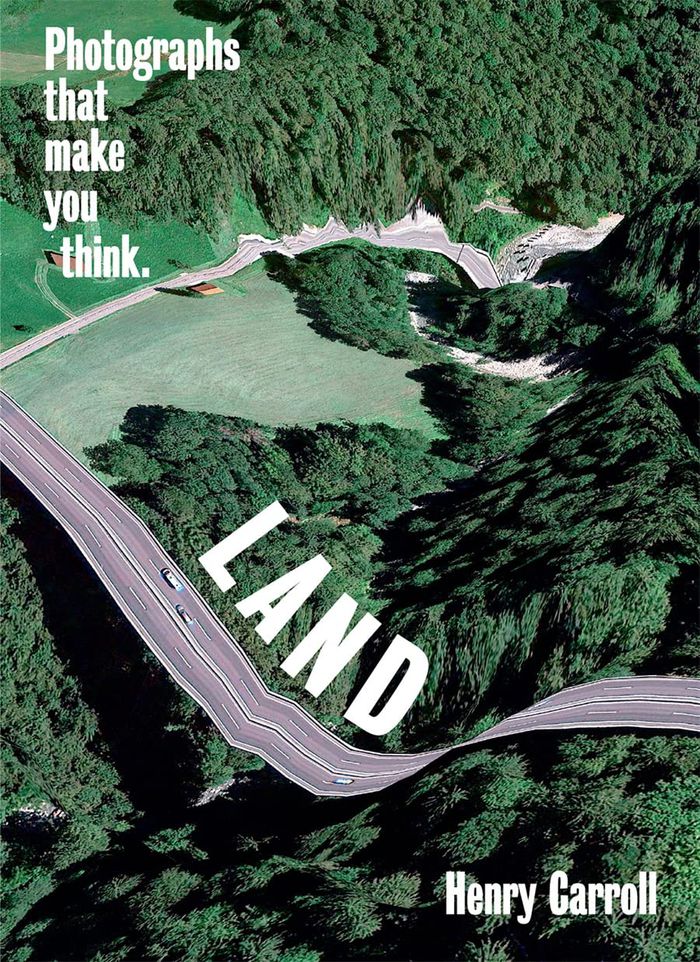
LAND: Photographs that make you think
Actions:
Price:
$22.99
(available to order)
Summary:
How do the most diverse and relevant voices of contemporary photography respond to the urgent issues of today? In this series of small, insightful, and beautifully presented books, Henry Carroll, the bestselling photography writer of the last decade, unpacks the ideas behind images to reflect on race, gender, faith, inequality, beauty, politics, and our shifting relationship to animals, nature, and the environment. ''LAND: Photographs that make you think'' considers humanity’s changing relationship with the natural world, a relationship that has seen us edge further away from real encounters. The photographs explore how the sublime can be commodified, packaged, and distributed, leading to an alarming emotional distancing. With images from a diverse group of photographers, Carroll explores the impermanence of borders, the human reaction to scenes of devastation on Instagram feeds, and the many variables that inform one’s relationship to land. He considers how a photographer’s response to landscape is subjective, full of meaning that’s coloured by their own psyches, foibles, fears, and hopes. With captivating and striking photography, Carroll invites the reader to contemplate how their inner world influences their interactions with the natural world.
LAND: Photographs that make you think
Actions:
Price:
$22.99
(available to order)
Summary:
How do the most diverse and relevant voices of contemporary photography respond to the urgent issues of today? In this series of small, insightful, and beautifully presented books, Henry Carroll, the bestselling photography writer of the last decade, unpacks the ideas behind images to reflect on race, gender, faith, inequality, beauty, politics, and our shifting relationship to animals, nature, and the environment. ''LAND: Photographs that make you think'' considers humanity’s changing relationship with the natural world, a relationship that has seen us edge further away from real encounters. The photographs explore how the sublime can be commodified, packaged, and distributed, leading to an alarming emotional distancing. With images from a diverse group of photographers, Carroll explores the impermanence of borders, the human reaction to scenes of devastation on Instagram feeds, and the many variables that inform one’s relationship to land. He considers how a photographer’s response to landscape is subjective, full of meaning that’s coloured by their own psyches, foibles, fears, and hopes. With captivating and striking photography, Carroll invites the reader to contemplate how their inner world influences their interactions with the natural world.
Form:
books
books
Publication:
March 2022
March 2022
Subject:
Theory of Photography
Theory of Photography
Form:
books
books
Actions:
Price:
$60.95
(available to order)
Summary:
Devant la disparition d’un certain nombre de supports de diffusion, de presse et d’édition, les pures pratiques du documentaire et du photojournalisme se sont trouvées en crise depuis les années 1970. Pour continuer de rendre compte de situations sociétales ou idéologiques complexes des photographes venant aussi bien du reportage que des arts plastiques se sont posés la(...)
$60.95
(available to order)
Summary:
Devant la disparition d’un certain nombre de supports de diffusion, de presse et d’édition, les pures pratiques du documentaire et du photojournalisme se sont trouvées en crise depuis les années 1970. Pour continuer de rendre compte de situations sociétales ou idéologiques complexes des photographes venant aussi bien du reportage que des arts plastiques se sont posés la(...)
Subject:
Theory of Photography
Theory of Photography
Publication:
February 2022
February 2022
Title:
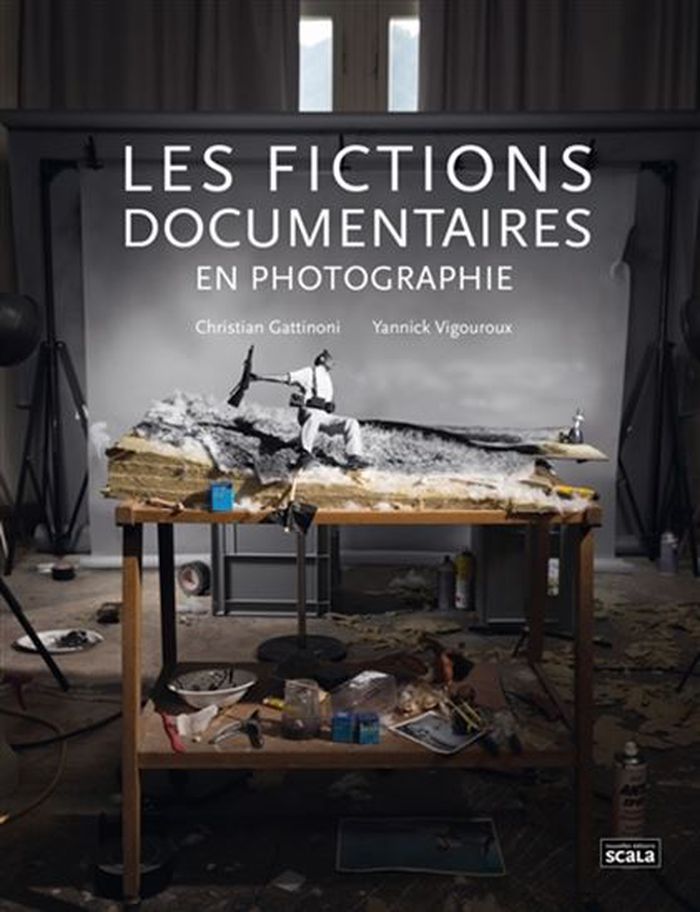
Les fictions documentaires en photographie
Actions:
Price:
$60.95
(available to order)
Summary:
Devant la disparition d’un certain nombre de supports de diffusion, de presse et d’édition, les pures pratiques du documentaire et du photojournalisme se sont trouvées en crise depuis les années 1970. Pour continuer de rendre compte de situations sociétales ou idéologiques complexes des photographes venant aussi bien du reportage que des arts plastiques se sont posés la question de formes mixtes, les fictions documentaires. Se rendant sur le terrain où ils entrent en dialogue avec des communautés concernées, ils produisent des ensembles d’images selon différents protocoles.
Les fictions documentaires en photographie
Actions:
Price:
$60.95
(available to order)
Summary:
Devant la disparition d’un certain nombre de supports de diffusion, de presse et d’édition, les pures pratiques du documentaire et du photojournalisme se sont trouvées en crise depuis les années 1970. Pour continuer de rendre compte de situations sociétales ou idéologiques complexes des photographes venant aussi bien du reportage que des arts plastiques se sont posés la question de formes mixtes, les fictions documentaires. Se rendant sur le terrain où ils entrent en dialogue avec des communautés concernées, ils produisent des ensembles d’images selon différents protocoles.
Form:
books
books
Publication:
February 2022
February 2022
Subject:
Theory of Photography
Theory of Photography
Form:
books
books
Actions:
Price:
$24.95
(available to order)
Summary:
Écrire ou photographier ? La question est d’une étonnante modernité. Mais elle n’est pas nouvelle et elle accompagne l’histoire de l’édition. Sylvain Venayre saisit l’occasion de réfléchir au rapport du texte et des images, de l’art de la description des lieux face à l’art de les représenter visuellement, par l’approche des relations entre deux grands artistes du XIXe(...)
$24.95
(available to order)
Summary:
Écrire ou photographier ? La question est d’une étonnante modernité. Mais elle n’est pas nouvelle et elle accompagne l’histoire de l’édition. Sylvain Venayre saisit l’occasion de réfléchir au rapport du texte et des images, de l’art de la description des lieux face à l’art de les représenter visuellement, par l’approche des relations entre deux grands artistes du XIXe(...)
Title:
Écrire ou photographier : Flaubert et Du Camp en Égypte
Actions:
Price:
$24.95
(available to order)
Summary:
Écrire ou photographier ? La question est d’une étonnante modernité. Mais elle n’est pas nouvelle et elle accompagne l’histoire de l’édition. Sylvain Venayre saisit l’occasion de réfléchir au rapport du texte et des images, de l’art de la description des lieux face à l’art de les représenter visuellement, par l’approche des relations entre deux grands artistes du XIXe siècle : Gustave Flaubert et Maxime Du Camp. Ces deux-là sont âgés de 27 ans, en ce milieu du siècle, quand ils entreprennent de partir en voyage : destination l’Égypte et le Moyen Orient. C’est une destination toute trouvée dans un contexte favorable aux voyages et aux expéditions.
Écrire ou photographier : Flaubert et Du Camp en Égypte
Actions:
Price:
$24.95
(available to order)
Summary:
Écrire ou photographier ? La question est d’une étonnante modernité. Mais elle n’est pas nouvelle et elle accompagne l’histoire de l’édition. Sylvain Venayre saisit l’occasion de réfléchir au rapport du texte et des images, de l’art de la description des lieux face à l’art de les représenter visuellement, par l’approche des relations entre deux grands artistes du XIXe siècle : Gustave Flaubert et Maxime Du Camp. Ces deux-là sont âgés de 27 ans, en ce milieu du siècle, quand ils entreprennent de partir en voyage : destination l’Égypte et le Moyen Orient. C’est une destination toute trouvée dans un contexte favorable aux voyages et aux expéditions.
Form:
books
books
Publication:
October 2020
October 2020
Subject:
Theory of Photography
Theory of Photography
Form:
books
books

Actions:
Price:
$39.95
(available in store)
Summary:
This volume is a beautifully illustrated and astute examination of women photographers in Canada as it took shape in the nineteenth and early-twentieth centuries. Throughout, the camera was both a witness to the colonialism, capitalism, and gendered and racialized social organization, and a protagonist. And women across the country, whether residents or visitors, captured(...)
$39.95
(available in store)
Summary:
This volume is a beautifully illustrated and astute examination of women photographers in Canada as it took shape in the nineteenth and early-twentieth centuries. Throughout, the camera was both a witness to the colonialism, capitalism, and gendered and racialized social organization, and a protagonist. And women across the country, whether residents or visitors, captured(...)
Title:
Rare merit: Women in photography in Canada, 1840-1940
Actions:
Price:
$39.95
(available in store)
Summary:
This volume is a beautifully illustrated and astute examination of women photographers in Canada as it took shape in the nineteenth and early-twentieth centuries. Throughout, the camera was both a witness to the colonialism, capitalism, and gendered and racialized social organization, and a protagonist. And women across the country, whether residents or visitors, captured people and places that were entirely new to the lens. This book shows how they did so, and the meaning their work carries.
Rare merit: Women in photography in Canada, 1840-1940
Actions:
Price:
$39.95
(available in store)
Summary:
This volume is a beautifully illustrated and astute examination of women photographers in Canada as it took shape in the nineteenth and early-twentieth centuries. Throughout, the camera was both a witness to the colonialism, capitalism, and gendered and racialized social organization, and a protagonist. And women across the country, whether residents or visitors, captured people and places that were entirely new to the lens. This book shows how they did so, and the meaning their work carries.
Form:
books
books
Publication:
June 2022
June 2022
Subject:
Theory of Photography
Theory of Photography
Form:
books
books
Price:
$39.95
(available to order)
Summary:
This volume revives the work of late nineteenth-century landscape photographers who shaped the environmental attitudes of settlers in the colonies of the Tasman World and in California. Despite having little association with one another, these photographers developed remarkably similar visions of nature. In both the American West and the Tasman World, landscape(...)
$39.95
(available to order)
Summary:
This volume revives the work of late nineteenth-century landscape photographers who shaped the environmental attitudes of settlers in the colonies of the Tasman World and in California. Despite having little association with one another, these photographers developed remarkably similar visions of nature. In both the American West and the Tasman World, landscape(...)
Title:
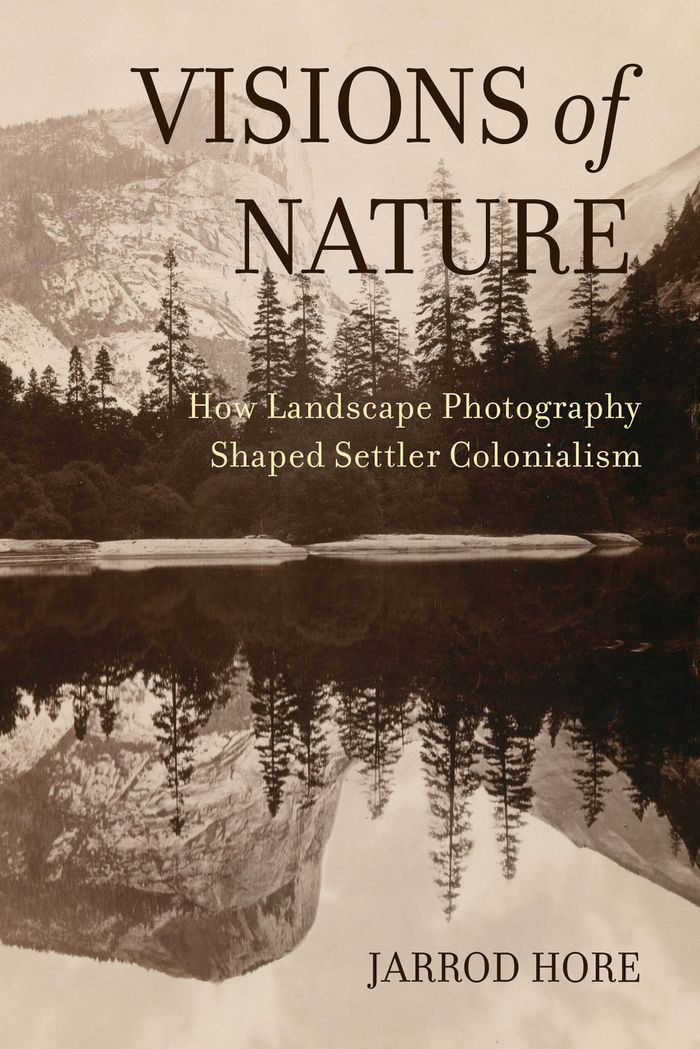
Visions of nature: How landscape photography shaped settler colonialism
Actions:
Price:
$39.95
(available to order)
Summary:
This volume revives the work of late nineteenth-century landscape photographers who shaped the environmental attitudes of settlers in the colonies of the Tasman World and in California. Despite having little association with one another, these photographers developed remarkably similar visions of nature. In both the American West and the Tasman World, landscape photography fed into settler belonging and produced new ways of thinking about territory and history. During this key period of settler revolution, a generation of photographers came to associate “nature” with remoteness, antiquity, and emptiness, a perspective that disguised the realities of Indigenous presence and reinforced colonial fantasies of environmental abundance. This book lifts the work of these photographers out of their provincial contexts and repositions it within a new comparative frame.
Visions of nature: How landscape photography shaped settler colonialism
Actions:
Price:
$39.95
(available to order)
Summary:
This volume revives the work of late nineteenth-century landscape photographers who shaped the environmental attitudes of settlers in the colonies of the Tasman World and in California. Despite having little association with one another, these photographers developed remarkably similar visions of nature. In both the American West and the Tasman World, landscape photography fed into settler belonging and produced new ways of thinking about territory and history. During this key period of settler revolution, a generation of photographers came to associate “nature” with remoteness, antiquity, and emptiness, a perspective that disguised the realities of Indigenous presence and reinforced colonial fantasies of environmental abundance. This book lifts the work of these photographers out of their provincial contexts and repositions it within a new comparative frame.
Form:
books
books
Publication:
May 2022
May 2022
Subject:
Theory of Photography
Theory of Photography


