


319 Results
Form:
books
books

Title:
Our daily debates
Our daily debates
Actions:
Price:
$22.00
(available in store)
Summary:
It is 7 weeks before the graduation. A student (Nina 26) has asked 4 other students (Sirkel 23, Claus 33, Noa 31 and Brita 30) to meet her and have a debate about graphic design, their future profession.
$22.00
(available in store)
Summary:
It is 7 weeks before the graduation. A student (Nina 26) has asked 4 other students (Sirkel 23, Claus 33, Noa 31 and Brita 30) to meet her and have a debate about graphic design, their future profession.
Subject:
Design Theory
Design Theory
Publication:
March 2008, New York, Amsterdam, London
March 2008, New York, Amsterdam, London
Title:
Our daily debates
Actions:
Price:
$22.00
(available in store)
Summary:
It is 7 weeks before the graduation. A student (Nina 26) has asked 4 other students (Sirkel 23, Claus 33, Noa 31 and Brita 30) to meet her and have a debate about graphic design, their future profession.
Our daily debates
Actions:
Price:
$22.00
(available in store)
Summary:
It is 7 weeks before the graduation. A student (Nina 26) has asked 4 other students (Sirkel 23, Claus 33, Noa 31 and Brita 30) to meet her and have a debate about graphic design, their future profession.
Form:
books
books
Publication:
March 2008, New York, Amsterdam, London
March 2008, New York, Amsterdam, London
Subject:
Design Theory
Design Theory
Form:
books
books

Title:
Can I make everybody happy?
Can I make everybody happy?
Actions:
Price:
$22.00
(available in store)
Summary:
Nowadays, if we speak about graphic design we can never be sure if we are actually talking about the same thing. The books in this series investigate different fields of graphic design where this lack of definition currently exists, as a means to contribute to the discussion and awareness of an arbitrary profession. This book express the email-exhange between clients(...)
Subject:
Design Theory
Design Theory
Publication:
March 2008, London, Amsterdam, New York
March 2008, London, Amsterdam, New York
Title:
Can I make everybody happy?
Actions:
Price:
$22.00
(available in store)
Summary:
Nowadays, if we speak about graphic design we can never be sure if we are actually talking about the same thing. The books in this series investigate different fields of graphic design where this lack of definition currently exists, as a means to contribute to the discussion and awareness of an arbitrary profession. This book express the email-exhange between clients and designers on ten different projects. All names mentioned are fictional.
Form:
books
books
Publication:
March 2008, London, Amsterdam, New York
March 2008, London, Amsterdam, New York
Subject:
Design Theory
Design Theory
Form:
books
books
Actions:
Price:
$22.00
(available to order)
Summary:
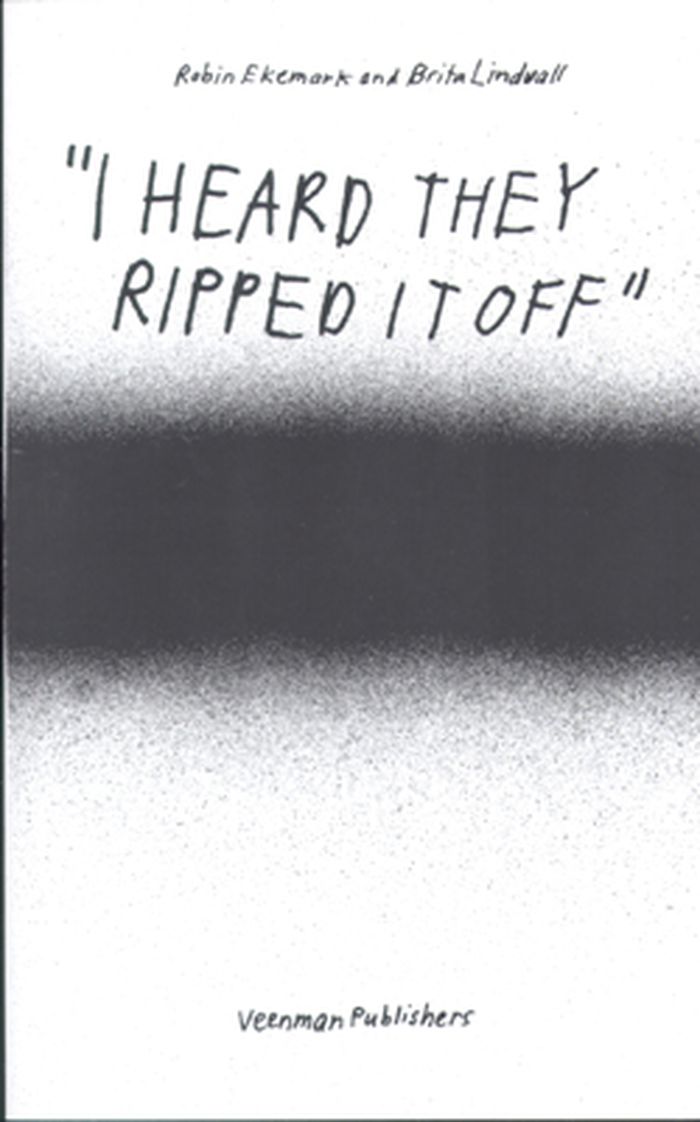
This book is an attempt to tell a story from the closest point of a source. Before it is supposed to be a gossip. Before the juice is added and still is a bit boring and stiff. When looking up at reliable sources like Wikipedia and Google, the word gossip: ''Originates from God-sib, he Godparent of one's child, referring to a relationship of close friendship'' and it(...)
Subject:
Design Theory
Design Theory
Publication:
March 2008, London, Amsterdam, New York
March 2008, London, Amsterdam, New York
Title:
'' I heard they ripped it off ''
Actions:
Price:
$22.00
(available to order)
Summary:
This book is an attempt to tell a story from the closest point of a source. Before it is supposed to be a gossip. Before the juice is added and still is a bit boring and stiff. When looking up at reliable sources like Wikipedia and Google, the word gossip: ''Originates from God-sib, he Godparent of one's child, referring to a relationship of close friendship'' and it is also: '' An event between loose mouthed assholes, that happens as soon as you get into high-school, and follows you all the way to your death bed. It never ends.'' It is also: '' In it's form one of the oldest and most common means of spreading and sharing facts, with a reputation of errors and other variations'' This we of course found highly interesting so we did this book based on that, about the variations of a story when it comes from the same source. To try it out we asked people from the graphics design department in the Rietveld Academy, to re-tell us a story we are supposed to know better than others.
Form:
books
books
Publication:
March 2008, London, Amsterdam, New York
March 2008, London, Amsterdam, New York
Subject:
Design Theory
Design Theory
Form:
books
books
Title:
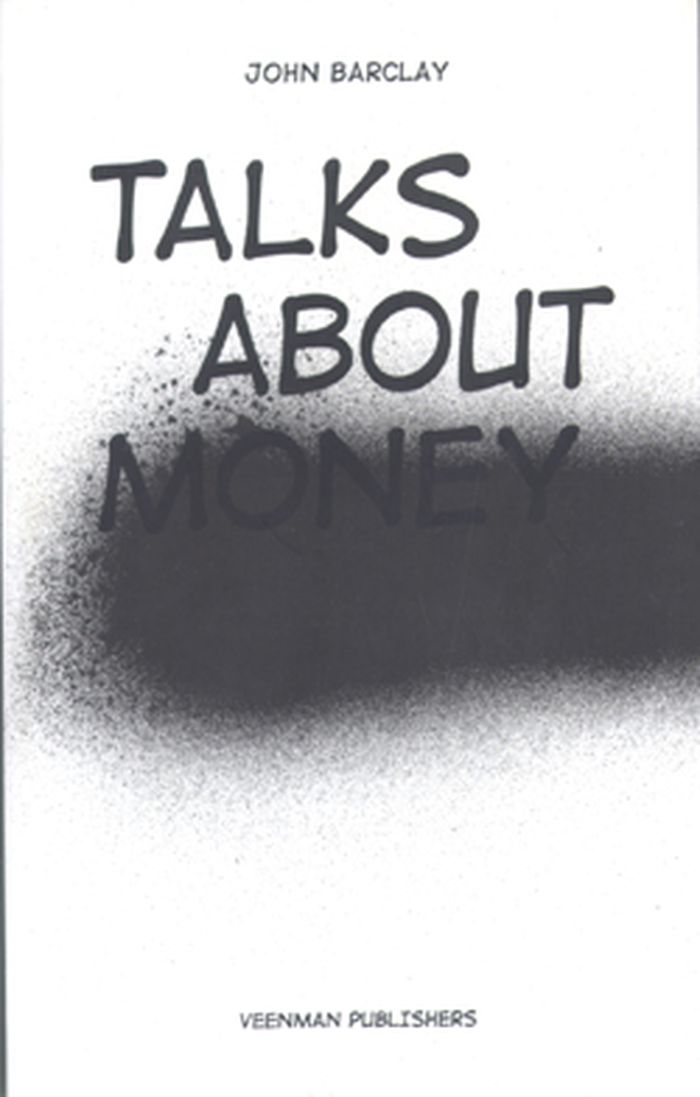
Talks about money
Talks about money
Actions:
Price:
$22.00
(available to order)
Summary:
What does it mean to do something for free versus asking a lot? How much can we ask? Graphic design does not have any intrinsic value. Money is important, but also not an openly discussed topic. Even though guidelines for charging exist, we often have to negotiate our prices. The texts in this book are based on interviews made in 2006/2007 with freelance graphic(...)
Title:
Talks about money
Actions:
Price:
$22.00
(available to order)
Summary:
What does it mean to do something for free versus asking a lot? How much can we ask? Graphic design does not have any intrinsic value. Money is important, but also not an openly discussed topic. Even though guidelines for charging exist, we often have to negotiate our prices. The texts in this book are based on interviews made in 2006/2007 with freelance graphic designers. They range from students and beginners to designers with many years of professional experience, from a one-man ste-up tp a bigger studio with employees. Inside you'll find a wild, wide range of prices, different ways of calculating a price, problems, strategies, principles, numbers and a lot of zeros.
Form:
books
books
Publication:
March 2008, London, Amsterdam, New York
March 2008, London, Amsterdam, New York
Subject:
Design Theory
Design Theory
Form:
books
books
Title:
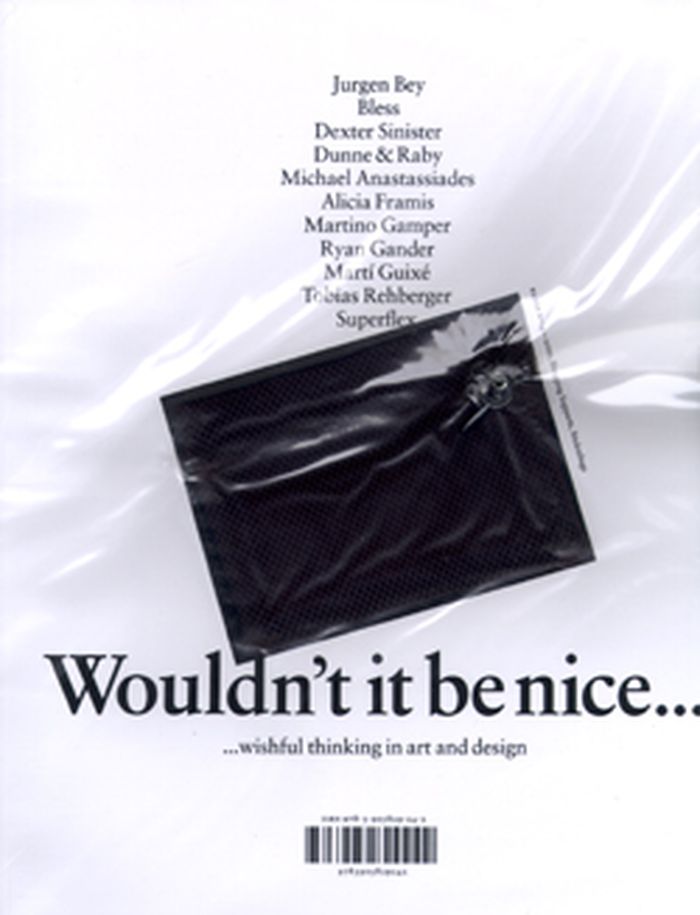
Wouldn't It be nice
Wouldn't It be nice
Actions:
Price:
$45.00
(available to order)
Summary:
« Wouldnt it be nice... » explore les processus intellectuels et les méthodes de travail qui aboutissent à diverses attitudes et pratiques créatives, oscillant entre divers champs de tension. D`une part, la dichotomie entre activisme et résignation, ainsi que entre préoccupations sociales et contôle social. Dautre part, l`écart entre les grands projets et les dures(...)
Title:
Wouldn't It be nice
Actions:
Price:
$45.00
(available to order)
Summary:
« Wouldnt it be nice... » explore les processus intellectuels et les méthodes de travail qui aboutissent à diverses attitudes et pratiques créatives, oscillant entre divers champs de tension. D`une part, la dichotomie entre activisme et résignation, ainsi que entre préoccupations sociales et contôle social. Dautre part, l`écart entre les grands projets et les dures réalités, lopposition entre esprit de conciliation et esprit de confrontation.
Form:
books
books
Publication:
January 2008, Genève
January 2008, Genève
Subject:
Design Theory
Design Theory
Form:
books
books
Title:
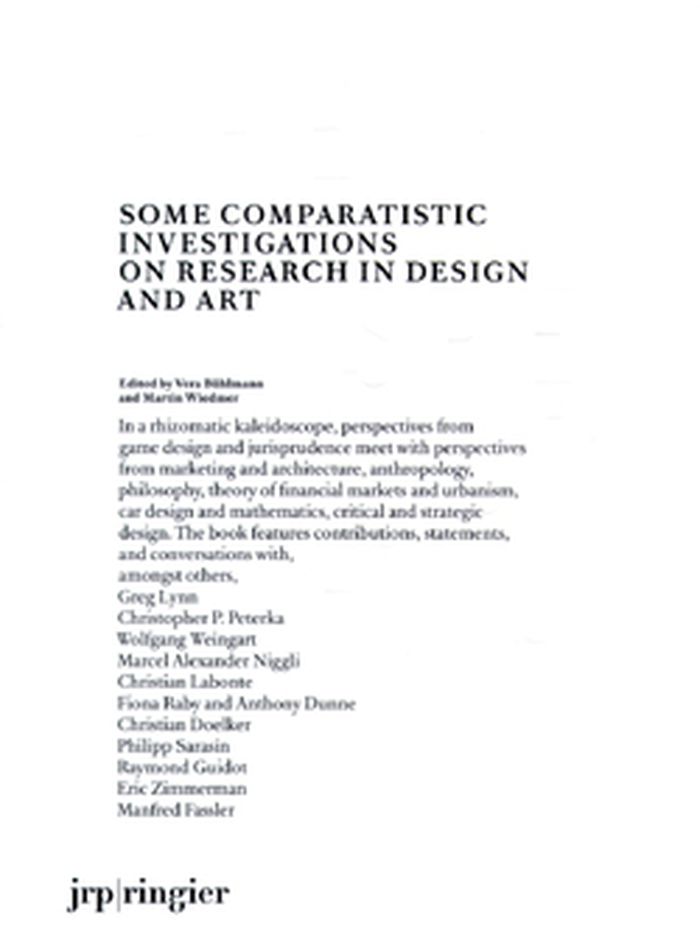
Pre-Specifics
Pre-Specifics
Actions:
Price:
$40.00
(available to order)
Summary:
The demand for design competence crosses almost all disciplinary boundaries, making the designers of today particularly ubiquitous in their influence. Pre-Specifics argues that the most promising strategies for the design disciplines of tomorrow can be forecast in the common codes of "virtual relations" shared by material, biological, technological, cognitive and media(...)
Title:
Pre-Specifics
Actions:
Price:
$40.00
(available to order)
Summary:
The demand for design competence crosses almost all disciplinary boundaries, making the designers of today particularly ubiquitous in their influence. Pre-Specifics argues that the most promising strategies for the design disciplines of tomorrow can be forecast in the common codes of "virtual relations" shared by material, biological, technological, cognitive and media perspectives. The book features contributions, statements, and conversations with internationally renowned authors such as Greg Lynn, Christopher Peterka, Wolfgang Weingart, Marcel Alexander Niggli, Christian Labonte, Fiona Raby and Anthony Dunne, Christian Doelker, Philipp Sarasin, Raymond Guidot, Eric Zimmerman and Manfred Fassler among others. It is designed by Ludovic Balland, and published with the Institute for Research in Art and Design HGK FHNW in Basel.
Form:
books
books
Publication:
February 2008, Zurich
February 2008, Zurich
Subject:
Design Theory
Design Theory
Form:
books
books
Price:
$39.50
(available to order)
Summary:
Today, we live in an economic system that revolves around producing and consuming objects made of plastic and metal, electronics, synthetic textiles and other things that do not decompose within a foreseeable amount of time. We start to review the role of these objects in a series of challenges that lie ahead of us. In the design discipline, sustainability and social(...)
Title:
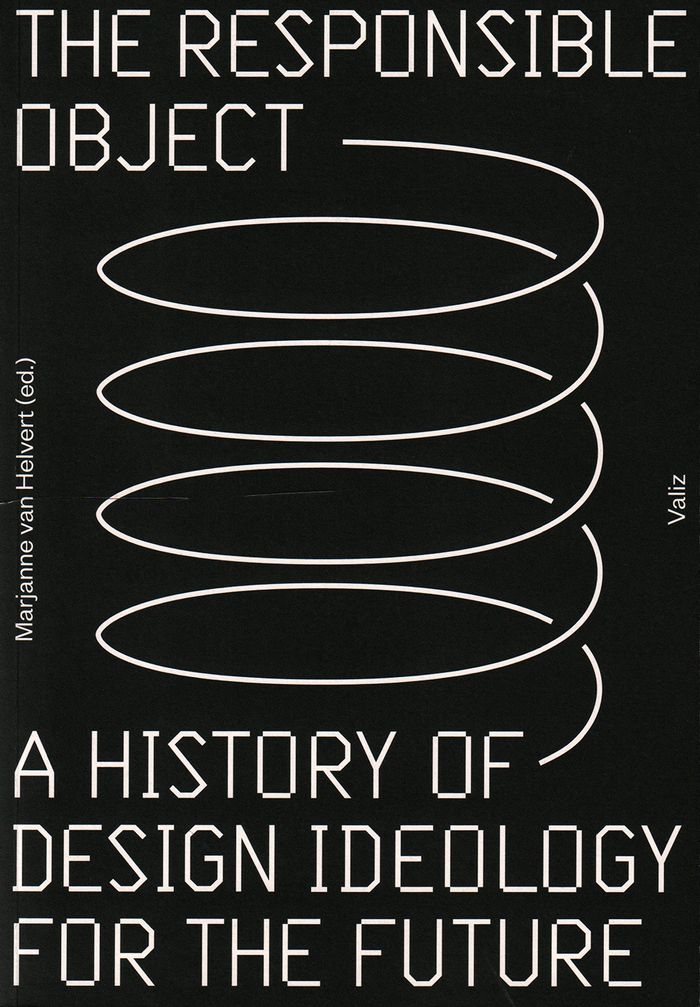
The responsible object; a history of the design ideology for the future
Actions:
Price:
$39.50
(available to order)
Summary:
Today, we live in an economic system that revolves around producing and consuming objects made of plastic and metal, electronics, synthetic textiles and other things that do not decompose within a foreseeable amount of time. We start to review the role of these objects in a series of challenges that lie ahead of us. In the design discipline, sustainability and social responsibility have become prolific epithets, generating new products, materials, and technologies, designed to change the course of our future. The intrinsic design ideologies are often not new, but form a fundamental part of design history, reappearing throughout the previous centuries. This book presents a history of socially committed design strategies within the western design tradition, from William Morris to Victor Papanek, and from VKhUTEMAS to FabLab. A critical resource for designers, students, cultural critics, and anyone interested in building a sustainable future.
Form:
books
books
Publication:
January 2017
January 2017
Subject:
Design Theory
Design Theory
Form:
books
books
Actions:
Price:
$55.00
(available to order)
Summary:
Assignments can give instructions, describe an exercise, present a problem, set out rules, propose a game, stimulate a process, or simply throw out questions. "Taking a line for a walk" brings attention to something that is often neglected: the assignment as a pedagogical element and verbal artefact of design education. This book is a compendium of 224 assignments, edited(...)
Title:
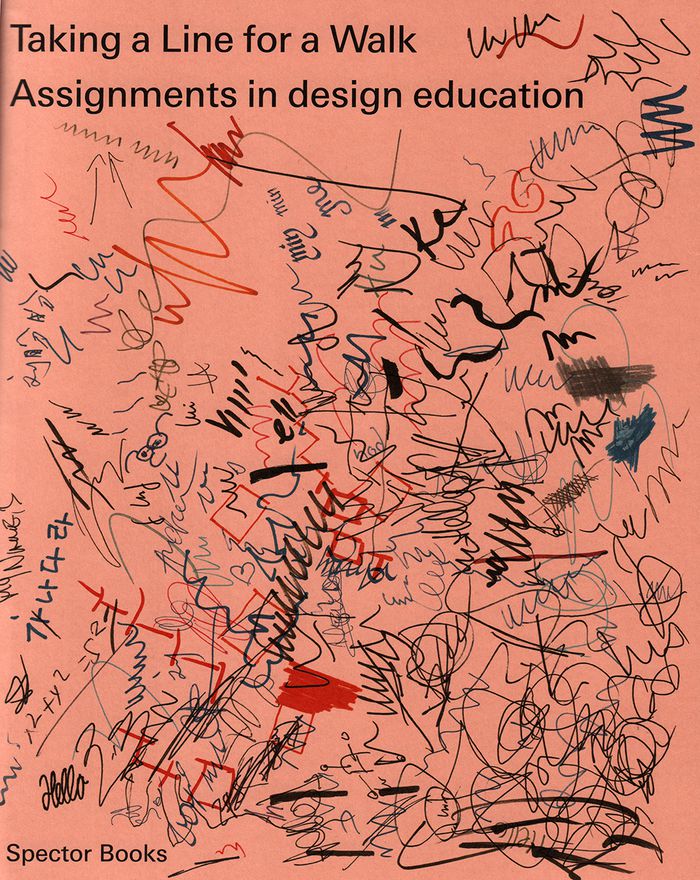
Taking a line for walk: assignments in design education
Actions:
Price:
$55.00
(available to order)
Summary:
Assignments can give instructions, describe an exercise, present a problem, set out rules, propose a game, stimulate a process, or simply throw out questions. "Taking a line for a walk" brings attention to something that is often neglected: the assignment as a pedagogical element and verbal artefact of design education. This book is a compendium of 224 assignments, edited by Nina Paim and coedited by Emilia Bergmark. A reference book for educators, researchers, and students alike, it includes both contemporary and historical examples and offers a space for different lines of design pedagogy to converge and converse. An accompanying essay by Corinne Gisel takes a closer look at the various forms assignments can take and the educational contexts they exist within. Taking a Line for a Walk derived from an exhibition of the same name at the International Biennial of Graphic Design Brno 2014.
Form:
books
books
Publication:
October 2016
October 2016
Subject:
Design Theory
Design Theory
Form:
books
books
Price:
$22.99
(available to order)
Summary:
Have you ever wondered where rocking chairs came from, or why cheap plastic chairs are suddenly everywhere? In "Now I sit me down", the distinguished architect and writer Witold Rybczynski chronicles the history of the chair from the folding stools of pharaonic Egypt to the ubiquitous stackable monobloc chairs of today. He tells the stories of the inventor of the bentwood(...)
Title:
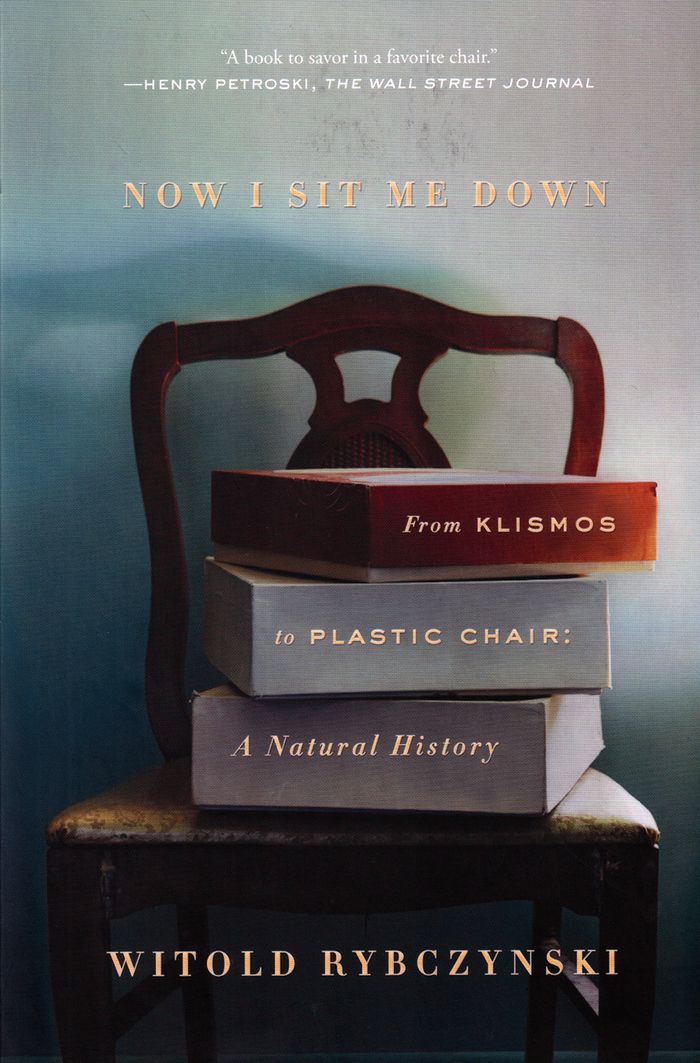
Now I sit me down: from klismos to plastic chair, a natural history
Actions:
Price:
$22.99
(available to order)
Summary:
Have you ever wondered where rocking chairs came from, or why cheap plastic chairs are suddenly everywhere? In "Now I sit me down", the distinguished architect and writer Witold Rybczynski chronicles the history of the chair from the folding stools of pharaonic Egypt to the ubiquitous stackable monobloc chairs of today. He tells the stories of the inventor of the bentwood chair, Michael Thonet, and of the creators of the first molded-plywood chair, Charles and Ray Eames. He reveals the history of chairs to be a social history—of different ways of sitting, of changing manners and attitudes, and of varying tastes. The history of chairs is the history of who we are. We learn how the ancient Chinese switched from sitting on the floor to sitting in a chair, and how the iconic chair of Middle America—the BarcaLounger—traces its roots back to the Bauhaus. Rybczynski weaves a rich tapestry that draws on art and design history, personal experience, and historical accounts. And he pairs these stories with his own delightful hand-drawn illustrations: colonial rockers and English cabrioles, languorous chaise longues and no-nonsense ergonomic task chairs—they’re all here. The famous Danish furniture designer Hans Wegner once remarked, “A chair is only finished when someone sits in it.” As Rybczynski tells it, the way we choose to sit and what we choose to sit on speak volumes about our values, our tastes, and the things we hold dear.
Form:
books
books
Publication:
August 2017
August 2017
Subject:
Design Theory
Design Theory
Form:
books
books
Title:
Design d'aujourd'hui
Design d'aujourd'hui
Actions:
Price:
$50.95
(available to order)
Summary:
Design de produits, d’espaces, d’interaction, de service… Le design est omniprésent. Il évolue sans cesse, s’adapte à nos vies, à nos envies, à nos besoins qu’il anticipe parfois. À la fois enjeu économique, culturel et de civilisation, le design est un vecteur de croissance et de différenciation pour les entreprises, un formidable moyen d’expression pour les créateurs et(...)
Title:
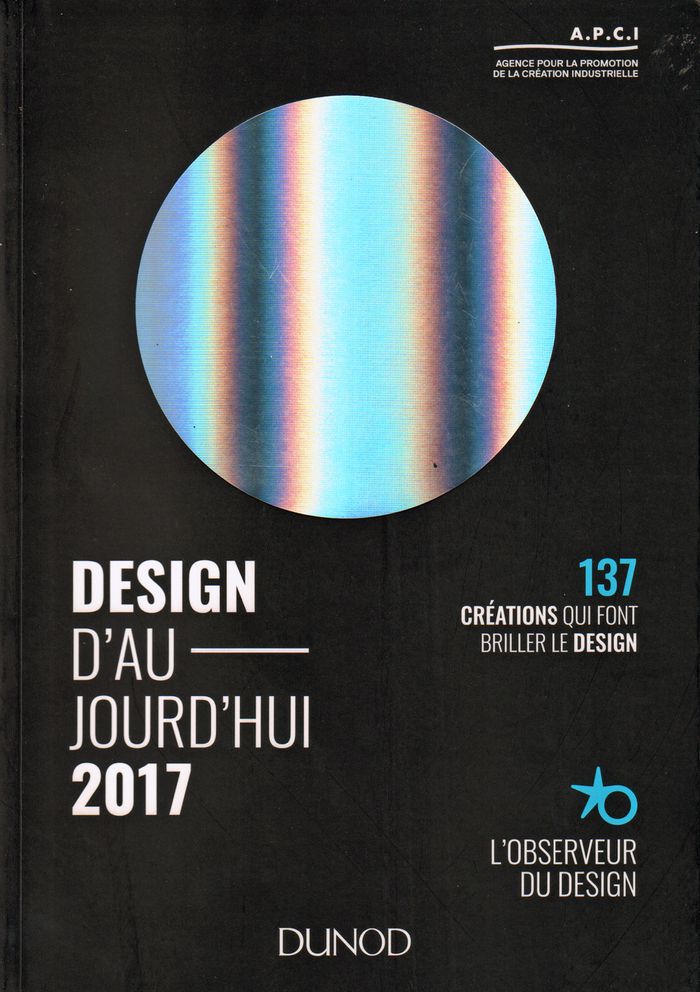
Design d'aujourd'hui
Actions:
Price:
$50.95
(available to order)
Summary:
Design de produits, d’espaces, d’interaction, de service… Le design est omniprésent. Il évolue sans cesse, s’adapte à nos vies, à nos envies, à nos besoins qu’il anticipe parfois. À la fois enjeu économique, culturel et de civilisation, le design est un vecteur de croissance et de différenciation pour les entreprises, un formidable moyen d’expression pour les créateurs et un outil indispensable à toute démarche visant à concilier progrès et respect de l’environnement. Après avoir donné la parole à quelques acteurs importants du design, cet ouvrage présente 137 créations issues du savoir-faire et de l’imagination des designers d’aujourd’hui. 137 designs étonnants, pratiques, ludiques ou performants, qui témoignent de l’importance du design et de ce qu’il nous réserve de plus beau.
Form:
books
books
Publication:
January 2017
January 2017
Subject:
Design Theory
Design Theory


