


1923 Results
Form:
books
books
Actions:
Price:
$23.00
(available to order)
Summary:
Est-il inconcevable de transformer radicalement les manières actuelles de penser et de fabriquer la ville, où élus, concepteurs et promoteurs s’affrontent dans un climat de forte pression économique qui favorise une esthétique médiocre, fragmente le territoire et aboutit toujours à la prédation du vivant et de la nature ? Face à la crise climatique, on ne peut plus se(...)
$23.00
(available to order)
Summary:
Est-il inconcevable de transformer radicalement les manières actuelles de penser et de fabriquer la ville, où élus, concepteurs et promoteurs s’affrontent dans un climat de forte pression économique qui favorise une esthétique médiocre, fragmente le territoire et aboutit toujours à la prédation du vivant et de la nature ? Face à la crise climatique, on ne peut plus se(...)
Title:
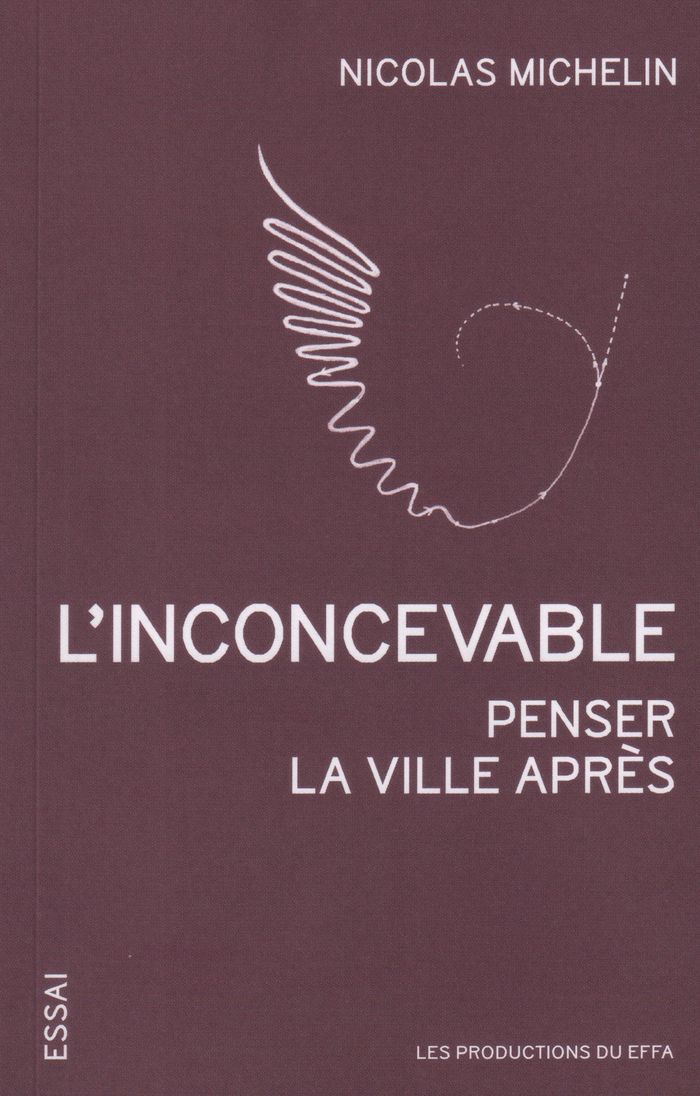
L'inconcevable : Penser la ville après
Actions:
Price:
$23.00
(available to order)
Summary:
Est-il inconcevable de transformer radicalement les manières actuelles de penser et de fabriquer la ville, où élus, concepteurs et promoteurs s’affrontent dans un climat de forte pression économique qui favorise une esthétique médiocre, fragmente le territoire et aboutit toujours à la prédation du vivant et de la nature ? Face à la crise climatique, on ne peut plus se satisfaire de petits arrangements, il faut changer de paradigme. Dans cet essai très documenté, Nicolas Michelin propose de nouveaux principes de travail, assortis d’un certain nombre de mesures à caractère obligatoire, et esquisse les bases d’un ré-attachement indispensable à la Terre.
L'inconcevable : Penser la ville après
Actions:
Price:
$23.00
(available to order)
Summary:
Est-il inconcevable de transformer radicalement les manières actuelles de penser et de fabriquer la ville, où élus, concepteurs et promoteurs s’affrontent dans un climat de forte pression économique qui favorise une esthétique médiocre, fragmente le territoire et aboutit toujours à la prédation du vivant et de la nature ? Face à la crise climatique, on ne peut plus se satisfaire de petits arrangements, il faut changer de paradigme. Dans cet essai très documenté, Nicolas Michelin propose de nouveaux principes de travail, assortis d’un certain nombre de mesures à caractère obligatoire, et esquisse les bases d’un ré-attachement indispensable à la Terre.
Form:
books
books
Publication:
May 2023
May 2023
Subject:
Urban Theory
Urban Theory
Form:
books
books
Title:
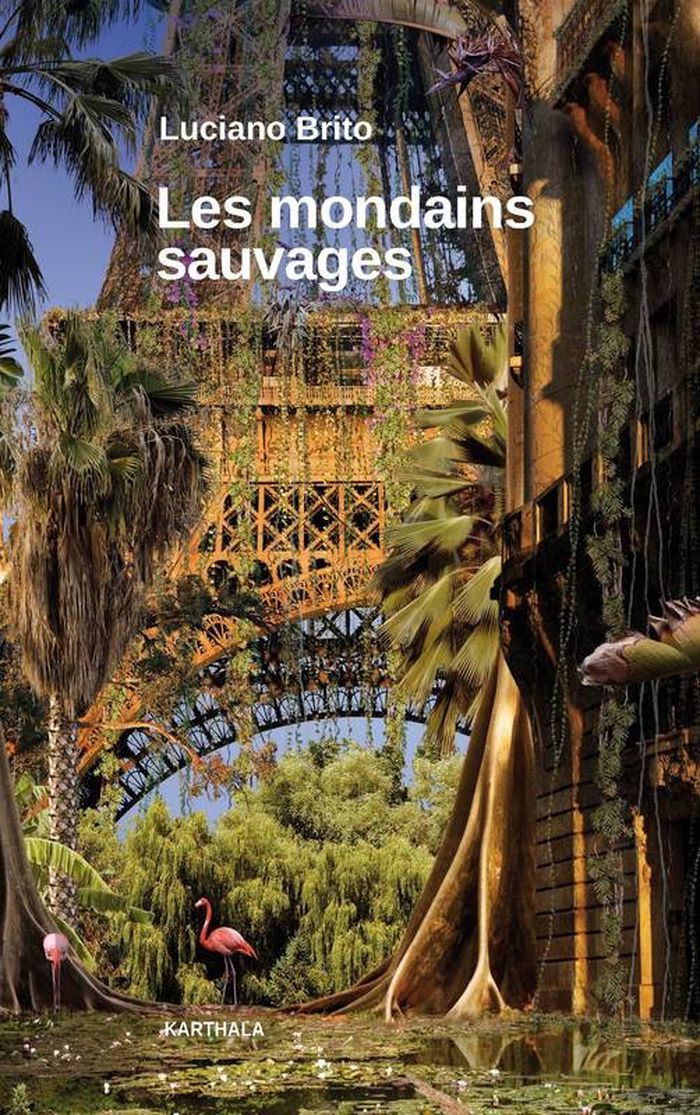
Les mondains sauvages
Les mondains sauvages
Actions:
Price:
$54.95
(available in store)
Summary:
Cet essai renverse le regard porté sur les récits d’arrivées dans les grandes villes : et si ces «romans d’apprentissages», ces «romans de migrations», au lieu d’être des trajectoires d’émancipation, n’étaient-ils pas plutôt des romans d’ensauvagement ? La ville, l’urbanité n’est pas le stade ultime de la civilisation : au sein de sociétés capitalistes et inégalitaires,(...)
$54.95
(available in store)
Summary:
Cet essai renverse le regard porté sur les récits d’arrivées dans les grandes villes : et si ces «romans d’apprentissages», ces «romans de migrations», au lieu d’être des trajectoires d’émancipation, n’étaient-ils pas plutôt des romans d’ensauvagement ? La ville, l’urbanité n’est pas le stade ultime de la civilisation : au sein de sociétés capitalistes et inégalitaires,(...)
Title:
Les mondains sauvages
Actions:
Price:
$54.95
(available in store)
Summary:
Cet essai renverse le regard porté sur les récits d’arrivées dans les grandes villes : et si ces «romans d’apprentissages», ces «romans de migrations», au lieu d’être des trajectoires d’émancipation, n’étaient-ils pas plutôt des romans d’ensauvagement ? La ville, l’urbanité n’est pas le stade ultime de la civilisation : au sein de sociétés capitalistes et inégalitaires, c’est bien le mythe positif de la ville contemporaine qu’il faut revoir à nouveaux frais. À partir des chefs-d’œuvre de Marcel Proust, d’Osman Lins, de V. S. Naipaul, de Joyce Carol Oates et de Roberto Bolaño, l’auteur s’attache à définir ce qu’il entend par « mondains sauvages » : lorsque la ville est une erreur, un cauchemar, les personnages travaillent à leur propre dépossession. Les villes sont malades, trouées, névrosées – dessinant des paysages labyrinthiques. Luciano Brito analyse comment émerge une poétique sous le signe du devenir-végétal de l’urbain. Le croisement audacieux des grands romanciers du XXe siècle à travers le monde propose ainsi une vision renouvelée des grandes villes, du bidonville à la mégapole, de l’agglomération branchée aux faubourgs sales.
Les mondains sauvages
Actions:
Price:
$54.95
(available in store)
Summary:
Cet essai renverse le regard porté sur les récits d’arrivées dans les grandes villes : et si ces «romans d’apprentissages», ces «romans de migrations», au lieu d’être des trajectoires d’émancipation, n’étaient-ils pas plutôt des romans d’ensauvagement ? La ville, l’urbanité n’est pas le stade ultime de la civilisation : au sein de sociétés capitalistes et inégalitaires, c’est bien le mythe positif de la ville contemporaine qu’il faut revoir à nouveaux frais. À partir des chefs-d’œuvre de Marcel Proust, d’Osman Lins, de V. S. Naipaul, de Joyce Carol Oates et de Roberto Bolaño, l’auteur s’attache à définir ce qu’il entend par « mondains sauvages » : lorsque la ville est une erreur, un cauchemar, les personnages travaillent à leur propre dépossession. Les villes sont malades, trouées, névrosées – dessinant des paysages labyrinthiques. Luciano Brito analyse comment émerge une poétique sous le signe du devenir-végétal de l’urbain. Le croisement audacieux des grands romanciers du XXe siècle à travers le monde propose ainsi une vision renouvelée des grandes villes, du bidonville à la mégapole, de l’agglomération branchée aux faubourgs sales.
Form:
books
books
Publication:
June 2023
June 2023
Subject:
Urban Theory
Urban Theory
Form:
books
books
Actions:
Price:
$60.95
(available to order)
Summary:
Un changement de paradigme dans la pratique du projet d’urbanisme paysager s’opère actuellement dans un contexte d’urgence climatique : l’acclimatation en est le nouveau modèle. De ce paradigme, des échantillons de formes spatiales émergent et parmi celles-ci, celui de trame fraîche acclimatée. Cette forme de composition offre un contrepoint aux générations précédentes(...)
$60.95
(available to order)
Summary:
Un changement de paradigme dans la pratique du projet d’urbanisme paysager s’opère actuellement dans un contexte d’urgence climatique : l’acclimatation en est le nouveau modèle. De ce paradigme, des échantillons de formes spatiales émergent et parmi celles-ci, celui de trame fraîche acclimatée. Cette forme de composition offre un contrepoint aux générations précédentes(...)
Title:
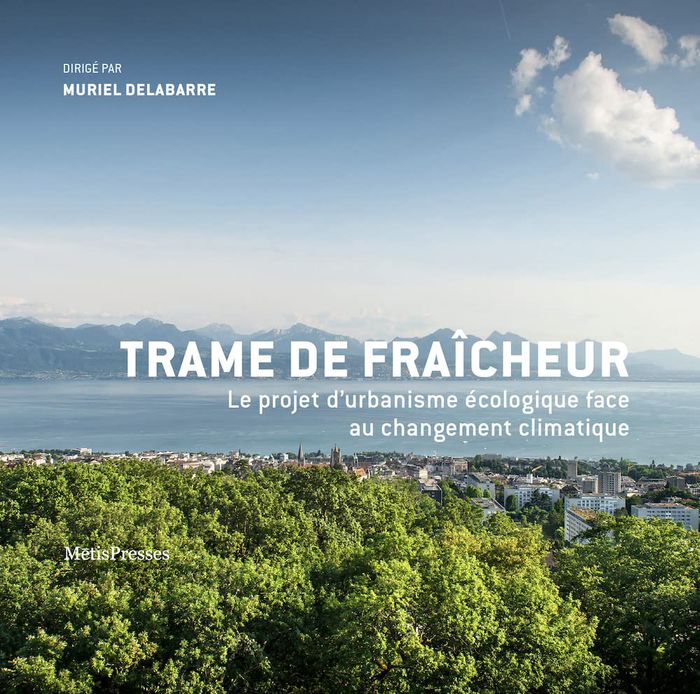
Trame de fraîcheur : le projet d'urbanisme écologique face au changement climatique
Actions:
Price:
$60.95
(available to order)
Summary:
Un changement de paradigme dans la pratique du projet d’urbanisme paysager s’opère actuellement dans un contexte d’urgence climatique : l’acclimatation en est le nouveau modèle. De ce paradigme, des échantillons de formes spatiales émergent et parmi celles-ci, celui de trame fraîche acclimatée. Cette forme de composition offre un contrepoint aux générations précédentes des trames vertes et bleues (TVB). Face au réchauffement climatique, nous franchissons une nouvelle étape, où la question essentielle concerne la convergence entre la recherche, les orientations stratégiques en matière d’atténuation et d’adaptation et les moyens de mise en œuvre possibles dans l’activité de projet d’urbanisme paysager. En prenant comme cas d’étude Lausanne, ce livre tente de répondre à ce défi en réfléchissant à l’implantation au sein de cette ville d’une trame de fraîcheur. L’ouvrage se structure en trois parties qui donnent toutes des outils réplicables dans d’autres contextes, pour d’autres territoires vulnérables : Une lecture cartographique et statistique des formes environnementales lausannoises et une analyse bioclimatique inédite; L’élaboration d’une base conceptuelle et de visions prospectives en 2030 puis 2050 pour accompagner l’installation de la trame de fraîcheur;Un zoom sur une expérience de requalification d’espace public en cours afin de préfigurer l’implantation de dispositifs d’écologie urbaine. Cette dernière partie interroge le processus de projet en donnant la parole aux experts de la ville de Lausanne, et présente un catalogue de références recensant de multiples expériences internationales achevées et sources d’inspiration.
Trame de fraîcheur : le projet d'urbanisme écologique face au changement climatique
Actions:
Price:
$60.95
(available to order)
Summary:
Un changement de paradigme dans la pratique du projet d’urbanisme paysager s’opère actuellement dans un contexte d’urgence climatique : l’acclimatation en est le nouveau modèle. De ce paradigme, des échantillons de formes spatiales émergent et parmi celles-ci, celui de trame fraîche acclimatée. Cette forme de composition offre un contrepoint aux générations précédentes des trames vertes et bleues (TVB). Face au réchauffement climatique, nous franchissons une nouvelle étape, où la question essentielle concerne la convergence entre la recherche, les orientations stratégiques en matière d’atténuation et d’adaptation et les moyens de mise en œuvre possibles dans l’activité de projet d’urbanisme paysager. En prenant comme cas d’étude Lausanne, ce livre tente de répondre à ce défi en réfléchissant à l’implantation au sein de cette ville d’une trame de fraîcheur. L’ouvrage se structure en trois parties qui donnent toutes des outils réplicables dans d’autres contextes, pour d’autres territoires vulnérables : Une lecture cartographique et statistique des formes environnementales lausannoises et une analyse bioclimatique inédite; L’élaboration d’une base conceptuelle et de visions prospectives en 2030 puis 2050 pour accompagner l’installation de la trame de fraîcheur;Un zoom sur une expérience de requalification d’espace public en cours afin de préfigurer l’implantation de dispositifs d’écologie urbaine. Cette dernière partie interroge le processus de projet en donnant la parole aux experts de la ville de Lausanne, et présente un catalogue de références recensant de multiples expériences internationales achevées et sources d’inspiration.
Form:
books
books
Publication:
June 2023
June 2023
Subject:
Urban Theory
Urban Theory
Form:
books
books
Price:
$36.00
(available to order)
Summary:
In the foreword of ''Smooth City'', René Boer writes about changes shaping the city center of Amsterdam nowadays: how the streets once known for their roughness, are now characterized by homogenous aesthetics, minimalist shopping windows and shiny Uber taxis. These are typical characteristics of the "smooth city": a city in which the urge for "perfection," efficiency and(...)
$36.00
(available to order)
Summary:
In the foreword of ''Smooth City'', René Boer writes about changes shaping the city center of Amsterdam nowadays: how the streets once known for their roughness, are now characterized by homogenous aesthetics, minimalist shopping windows and shiny Uber taxis. These are typical characteristics of the "smooth city": a city in which the urge for "perfection," efficiency and(...)
Publication:
September 2023
September 2023
Title:
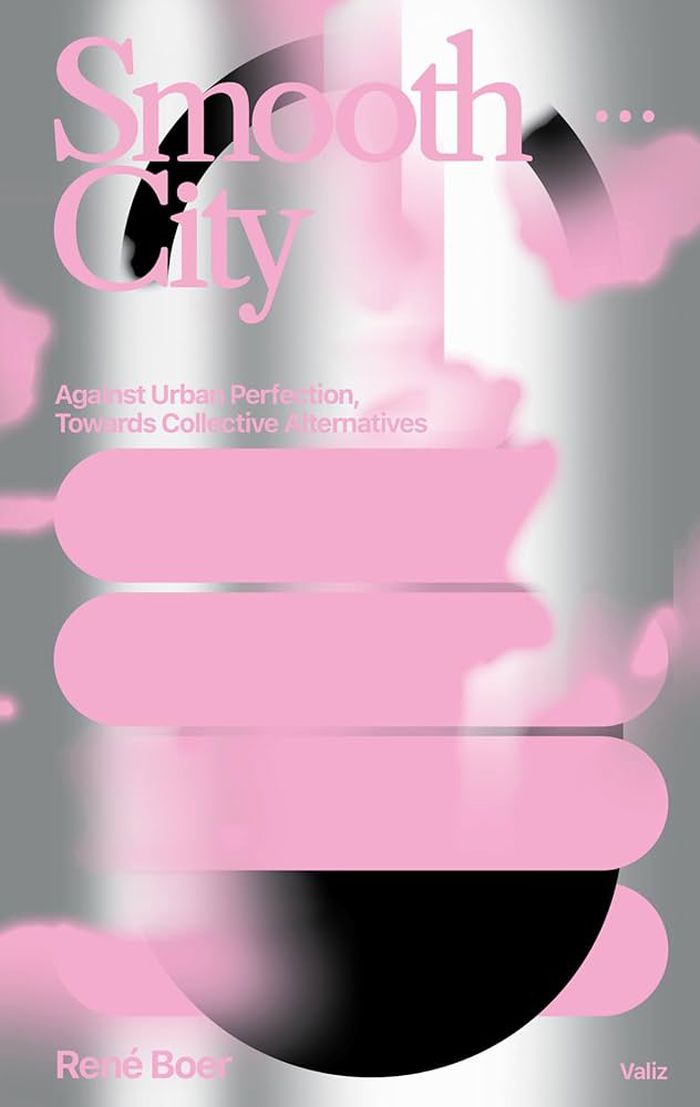
Smooth city: Against urban perfection, towards collective alternatives
Actions:
Price:
$36.00
(available to order)
Summary:
In the foreword of ''Smooth City'', René Boer writes about changes shaping the city center of Amsterdam nowadays: how the streets once known for their roughness, are now characterized by homogenous aesthetics, minimalist shopping windows and shiny Uber taxis. These are typical characteristics of the "smooth city": a city in which the urge for "perfection," efficiency and control is constantly increasing. It is a kind of city which is sterile, clean and layered with new technologies, which makes urban life seemingly "perfect" and frictionless. It can be questioned, however, whether there is still place for divergence from norms, forms of friction or any alternative in the smooth city? René Boer argues in Smooth City that this new version of urbanity undermines the democratic nature and the emancipatory potential of cities, and hardly leaves any space for experiment, non-normativity and transgression. ''Smooth City'' offers a critical analysis of the origins, characteristics and consequences of the smooth city and brings some very welcome reflections on the urban reality we are currently living in.
Smooth city: Against urban perfection, towards collective alternatives
Actions:
Price:
$36.00
(available to order)
Summary:
In the foreword of ''Smooth City'', René Boer writes about changes shaping the city center of Amsterdam nowadays: how the streets once known for their roughness, are now characterized by homogenous aesthetics, minimalist shopping windows and shiny Uber taxis. These are typical characteristics of the "smooth city": a city in which the urge for "perfection," efficiency and control is constantly increasing. It is a kind of city which is sterile, clean and layered with new technologies, which makes urban life seemingly "perfect" and frictionless. It can be questioned, however, whether there is still place for divergence from norms, forms of friction or any alternative in the smooth city? René Boer argues in Smooth City that this new version of urbanity undermines the democratic nature and the emancipatory potential of cities, and hardly leaves any space for experiment, non-normativity and transgression. ''Smooth City'' offers a critical analysis of the origins, characteristics and consequences of the smooth city and brings some very welcome reflections on the urban reality we are currently living in.
Form:
books
books
Publication:
September 2023
September 2023
Form:
books
books
Price:
$89.95
(available to order)
Summary:
In this book, a transdisciplinary international research team presents an expanded vocabulary of urbanisation processes through a comparison of Tokyo, Hong Kong – Shenzhen – Dongguan, Kolkata, Istanbul, Lagos, Paris, Mexico City and Los Angeles. Based on a novel cartography and on detailed ethnographic and historical explorations, this book systematically analyses the(...)
$89.95
(available to order)
Summary:
In this book, a transdisciplinary international research team presents an expanded vocabulary of urbanisation processes through a comparison of Tokyo, Hong Kong – Shenzhen – Dongguan, Kolkata, Istanbul, Lagos, Paris, Mexico City and Los Angeles. Based on a novel cartography and on detailed ethnographic and historical explorations, this book systematically analyses the(...)
Title:
Vocabularies for an urbanising planet: theory building through comparison
Actions:
Price:
$89.95
(available to order)
Summary:
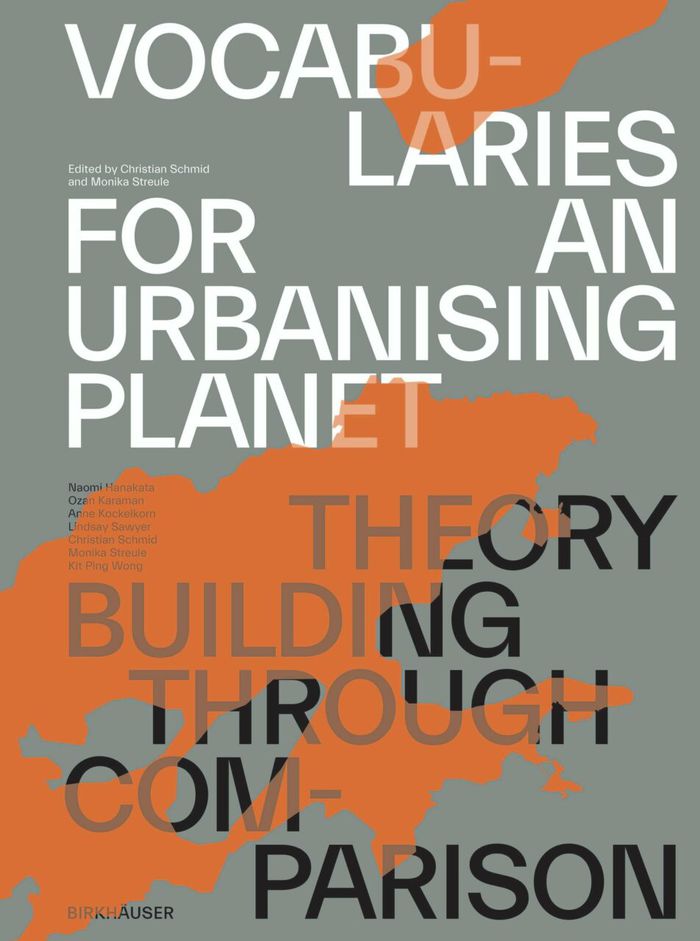
In this book, a transdisciplinary international research team presents an expanded vocabulary of urbanisation processes through a comparison of Tokyo, Hong Kong – Shenzhen – Dongguan, Kolkata, Istanbul, Lagos, Paris, Mexico City and Los Angeles. Based on a novel cartography and on detailed ethnographic and historical explorations, this book systematically analyses the diversity of responses to urgent contemporary urban challenges. It proposes a series of new concepts that allow us to assess the practical consequences of different urban strategies in everyday life.
Vocabularies for an urbanising planet: theory building through comparison
Actions:
Price:
$89.95
(available to order)
Summary:
In this book, a transdisciplinary international research team presents an expanded vocabulary of urbanisation processes through a comparison of Tokyo, Hong Kong – Shenzhen – Dongguan, Kolkata, Istanbul, Lagos, Paris, Mexico City and Los Angeles. Based on a novel cartography and on detailed ethnographic and historical explorations, this book systematically analyses the diversity of responses to urgent contemporary urban challenges. It proposes a series of new concepts that allow us to assess the practical consequences of different urban strategies in everyday life.
Form:
books
books
Publication:
October 2023
October 2023
Subject:
Urban Theory
Urban Theory
Form:
books
books
Actions:
Price:
$53.95
(available to order)
Summary:
What is it about Times Square that has inspired such attention for well over a century? And how is it that, despite its many changes of character, the place has maintained a unique hold on our collective imagination? In this book, which comes twenty years after her widely acclaimed Times Square Roulette, Lynne Sagalyn masterfully tells the story of profound urban change(...)
$53.95
(available to order)
Summary:
What is it about Times Square that has inspired such attention for well over a century? And how is it that, despite its many changes of character, the place has maintained a unique hold on our collective imagination? In this book, which comes twenty years after her widely acclaimed Times Square Roulette, Lynne Sagalyn masterfully tells the story of profound urban change(...)
Title:
Times Square remade: The dynamics of urban change
Actions:
Price:
$53.95
(available to order)
Summary:
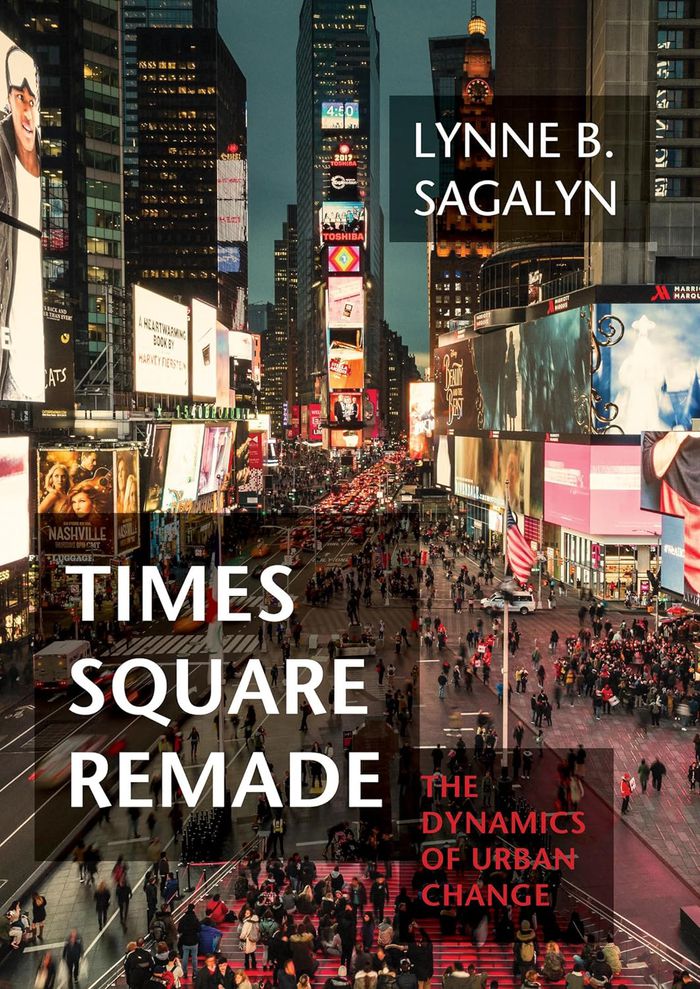
What is it about Times Square that has inspired such attention for well over a century? And how is it that, despite its many changes of character, the place has maintained a unique hold on our collective imagination? In this book, which comes twenty years after her widely acclaimed Times Square Roulette, Lynne Sagalyn masterfully tells the story of profound urban change over decades in the symbolic space that is New York City’s Times Square. Drawing on the history, sociology, and political economy of the place, ''Times Square remade'' examines how the public-private transformation of 42nd Street at Times Square impacted the entertainment district and adjacent neighborhoods, particularly Hell’s Kitchen. Sagalyn chronicles the earliest halcyon days of 42nd Street and Times Square as the nexus of speculation and competitive theater building as well as its darkest days as vice central, and on to the years of aggressive government intervention to cleanse West 42nd Street of pornography and crime. Thematically, the author analyzes the three main forces that have shaped and reshaped Times Square—theater, real estate, and pornography—and explains the politics and economics of what got built and what has been restored or preserved. Accompanied by nearly 160 images, more than half in color, ''Times Square remade'' is a deftly woven narrative of urban transformation that will appeal as much to the general reader and New York City enthusiast as to urbanists, city planners, architects, urban designers, and policymakers.
Times Square remade: The dynamics of urban change
Actions:
Price:
$53.95
(available to order)
Summary:
What is it about Times Square that has inspired such attention for well over a century? And how is it that, despite its many changes of character, the place has maintained a unique hold on our collective imagination? In this book, which comes twenty years after her widely acclaimed Times Square Roulette, Lynne Sagalyn masterfully tells the story of profound urban change over decades in the symbolic space that is New York City’s Times Square. Drawing on the history, sociology, and political economy of the place, ''Times Square remade'' examines how the public-private transformation of 42nd Street at Times Square impacted the entertainment district and adjacent neighborhoods, particularly Hell’s Kitchen. Sagalyn chronicles the earliest halcyon days of 42nd Street and Times Square as the nexus of speculation and competitive theater building as well as its darkest days as vice central, and on to the years of aggressive government intervention to cleanse West 42nd Street of pornography and crime. Thematically, the author analyzes the three main forces that have shaped and reshaped Times Square—theater, real estate, and pornography—and explains the politics and economics of what got built and what has been restored or preserved. Accompanied by nearly 160 images, more than half in color, ''Times Square remade'' is a deftly woven narrative of urban transformation that will appeal as much to the general reader and New York City enthusiast as to urbanists, city planners, architects, urban designers, and policymakers.
Form:
books
books
Publication:
October 2023
October 2023
Subject:
Urban Theory
Urban Theory
Form:
books
books
Actions:
Price:
$39.99
(available to order)
Summary:
We are living through a global catastrophe. Buildings affect how we feel, moment by moment, day by day. They have the power to lift us up and make us feel awestruck, playful, safe, and inspired, just as they can make us feel alienated and sad. But many of the places where we live, work, learn, and heal have become monotonous and disposable. We’re surrounded by cheap,(...)
$39.99
(available to order)
Summary:
We are living through a global catastrophe. Buildings affect how we feel, moment by moment, day by day. They have the power to lift us up and make us feel awestruck, playful, safe, and inspired, just as they can make us feel alienated and sad. But many of the places where we live, work, learn, and heal have become monotonous and disposable. We’re surrounded by cheap,(...)
Title:
Humanize: A maker's guide to designing our cities
Actions:
Price:
$39.99
(available to order)
Summary:
We are living through a global catastrophe. Buildings affect how we feel, moment by moment, day by day. They have the power to lift us up and make us feel awestruck, playful, safe, and inspired, just as they can make us feel alienated and sad. But many of the places where we live, work, learn, and heal have become monotonous and disposable. We’re surrounded by cheap, boring buildings that make people stressed, sick, and unhappy. In short, much of our world has been crafted in a way that is hostile to human experience. Now, drawing on his experience of the last thirty years in making bold, beautiful objects and buildings, Thomas Heatherwick offers both an informed critique of the inhumanity in most of today’s contemporary building design, and a rousing call for action. Looking through Heatherwick’s eyes, we see familiar landmarks and cityscapes around the world, from London, Paris, Barcelona, Singapore, New York, Vancouver, and beyond, both old and new, famous and obscure, to learn how places can either sap the life out of us—or nourish our senses and our psyche. The time has come, he says, to put emotion back at the heart of the design process, and the reasons to do so could not be more urgent. Design is not superficial: it has an impact upon economics, climate change, our mental and physical wellbeing—even the peace and cohesion of our societies.
Humanize: A maker's guide to designing our cities
Actions:
Price:
$39.99
(available to order)
Summary:
We are living through a global catastrophe. Buildings affect how we feel, moment by moment, day by day. They have the power to lift us up and make us feel awestruck, playful, safe, and inspired, just as they can make us feel alienated and sad. But many of the places where we live, work, learn, and heal have become monotonous and disposable. We’re surrounded by cheap, boring buildings that make people stressed, sick, and unhappy. In short, much of our world has been crafted in a way that is hostile to human experience. Now, drawing on his experience of the last thirty years in making bold, beautiful objects and buildings, Thomas Heatherwick offers both an informed critique of the inhumanity in most of today’s contemporary building design, and a rousing call for action. Looking through Heatherwick’s eyes, we see familiar landmarks and cityscapes around the world, from London, Paris, Barcelona, Singapore, New York, Vancouver, and beyond, both old and new, famous and obscure, to learn how places can either sap the life out of us—or nourish our senses and our psyche. The time has come, he says, to put emotion back at the heart of the design process, and the reasons to do so could not be more urgent. Design is not superficial: it has an impact upon economics, climate change, our mental and physical wellbeing—even the peace and cohesion of our societies.
Form:
books
books
Publication:
November 2023
November 2023
Subject:
Urban Theory
Urban Theory
Form:
books
books
Price:
$37.95
(available to order)
Summary:
In The City after Property, Sara Safransky examines how postindustrial decline generates new forms of urban land politics. In the 2010s, Detroit government officials classified a staggering 150,000 lots—more than a third of the city—as “vacant” or “abandoned.” Analyzing subsequent efforts to shrink the Motor City’s footprint and budget, Safransky presents a new way of(...)
$37.95
(available to order)
Summary:
In The City after Property, Sara Safransky examines how postindustrial decline generates new forms of urban land politics. In the 2010s, Detroit government officials classified a staggering 150,000 lots—more than a third of the city—as “vacant” or “abandoned.” Analyzing subsequent efforts to shrink the Motor City’s footprint and budget, Safransky presents a new way of(...)
Title:
The city after property: Abandonment and repair in postindustrial Detroit
Actions:
Price:
$37.95
(available to order)
Summary:
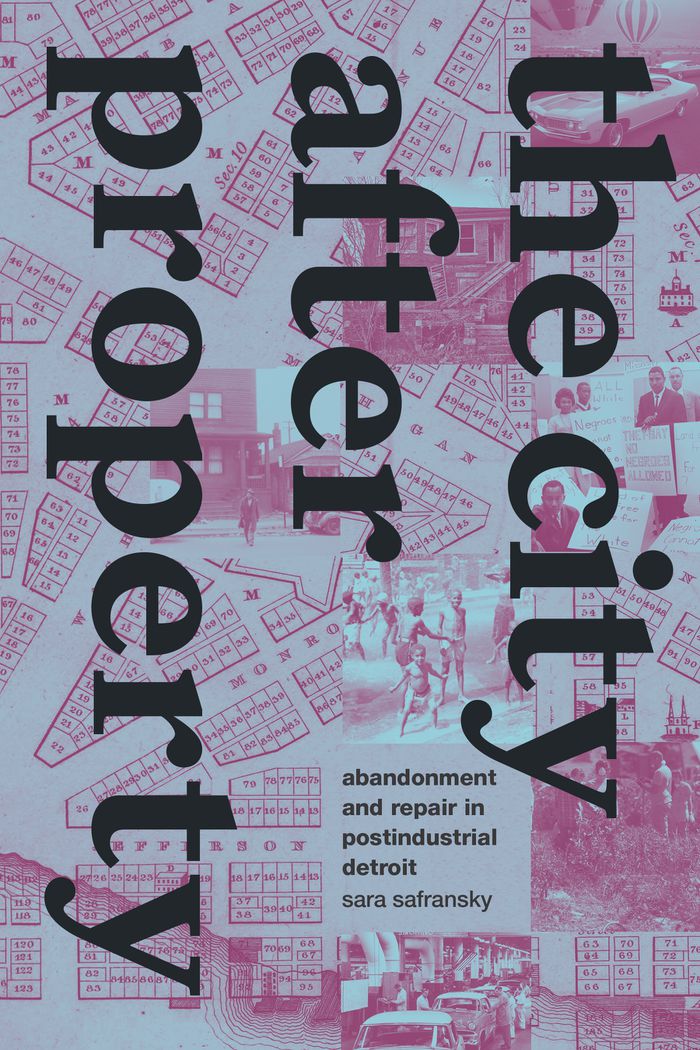
In The City after Property, Sara Safransky examines how postindustrial decline generates new forms of urban land politics. In the 2010s, Detroit government officials classified a staggering 150,000 lots—more than a third of the city—as “vacant” or “abandoned.” Analyzing subsequent efforts to shrink the Motor City’s footprint and budget, Safransky presents a new way of conceptualizing urban abandonment. She challenges popular myths that cast Detroit as empty along with narratives that reduce its historical decline to capital and white flight. In connecting contemporary debates over neoliberal urbanism to Cold War histories and the lasting political legacies of global movements for decolonization and Black liberation, she foregrounds how the making of—and challenges to—modern property regimes have shaped urban policy and politics. Drawing on critical geographical theory and community-based ethnography, Safransky shows how private property functions as a racialized construct, an ideology, and a moral force that shapes selves and worlds. By thinking the city “after property,” Safransky illuminates alternative ways of imagining and organizing urban life.
The city after property: Abandonment and repair in postindustrial Detroit
Actions:
Price:
$37.95
(available to order)
Summary:
In The City after Property, Sara Safransky examines how postindustrial decline generates new forms of urban land politics. In the 2010s, Detroit government officials classified a staggering 150,000 lots—more than a third of the city—as “vacant” or “abandoned.” Analyzing subsequent efforts to shrink the Motor City’s footprint and budget, Safransky presents a new way of conceptualizing urban abandonment. She challenges popular myths that cast Detroit as empty along with narratives that reduce its historical decline to capital and white flight. In connecting contemporary debates over neoliberal urbanism to Cold War histories and the lasting political legacies of global movements for decolonization and Black liberation, she foregrounds how the making of—and challenges to—modern property regimes have shaped urban policy and politics. Drawing on critical geographical theory and community-based ethnography, Safransky shows how private property functions as a racialized construct, an ideology, and a moral force that shapes selves and worlds. By thinking the city “after property,” Safransky illuminates alternative ways of imagining and organizing urban life.
Form:
books
books
Publication:
August 2023
August 2023
Form:
books
books
Actions:
Price:
$65.95
(available to order)
Summary:
Dans de nombreux pays du Sud, l'informalité représente une nécessité pour des citoyens qui décident d’autogérer leurs lieux de vie et de travail. Dans les villes du Nord, les pratiques informelles s’imposent plutôt comme une tentative de réparer la ville qui a été abîmée, polluée, abandonnée, et de reconstituer un tissu urbain là où celui-ci a été voué à la démolition, ou(...)
$65.95
(available to order)
Summary:
Dans de nombreux pays du Sud, l'informalité représente une nécessité pour des citoyens qui décident d’autogérer leurs lieux de vie et de travail. Dans les villes du Nord, les pratiques informelles s’imposent plutôt comme une tentative de réparer la ville qui a été abîmée, polluée, abandonnée, et de reconstituer un tissu urbain là où celui-ci a été voué à la démolition, ou(...)
Title:
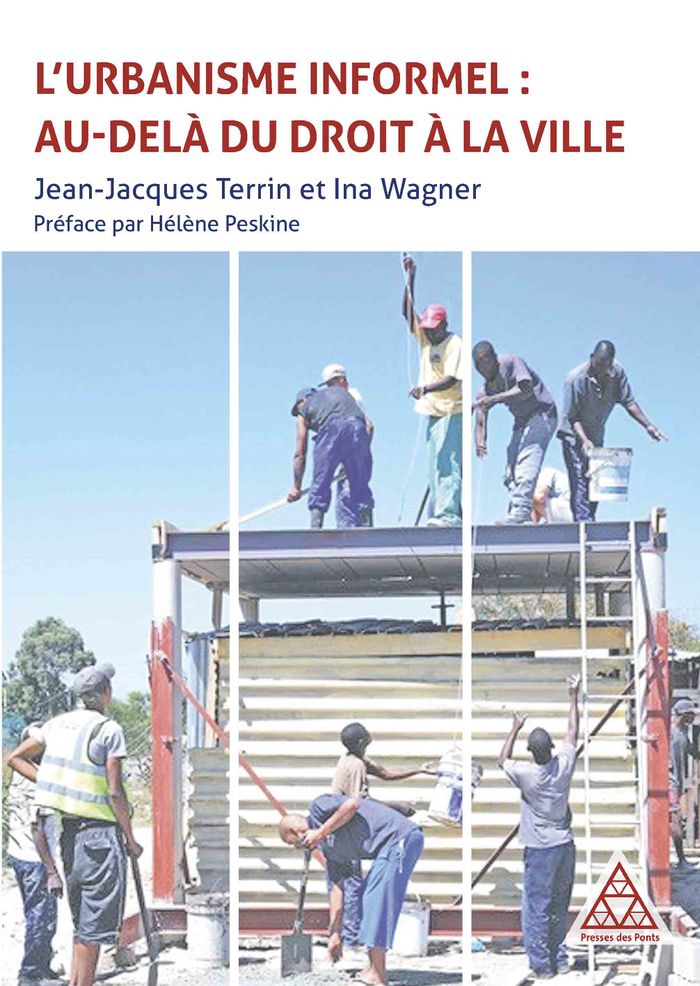
L'Urbanisme informel: Au-delà du droit à la ville
Actions:
Price:
$65.95
(available to order)
Summary:
Dans de nombreux pays du Sud, l'informalité représente une nécessité pour des citoyens qui décident d’autogérer leurs lieux de vie et de travail. Dans les villes du Nord, les pratiques informelles s’imposent plutôt comme une tentative de réparer la ville qui a été abîmée, polluée, abandonnée, et de reconstituer un tissu urbain là où celui-ci a été voué à la démolition, ou à l’élaboration de projets contestés. Dans les deux cas, l’informalité peut être une source d'urbanité et de créativité qui favorise l'intégration et la sociabilité. Elle participe d’un nouveau récit urbain combinant nécessité, aspirations, désirs même, et parfois résistance, voire indiscipline. Ce livre nous invite à considérer que l’informalité peut s’avérer inspirante pour aborder certains problèmes de gouvernance auxquels les villes sont actuellement confrontées.
L'Urbanisme informel: Au-delà du droit à la ville
Actions:
Price:
$65.95
(available to order)
Summary:
Dans de nombreux pays du Sud, l'informalité représente une nécessité pour des citoyens qui décident d’autogérer leurs lieux de vie et de travail. Dans les villes du Nord, les pratiques informelles s’imposent plutôt comme une tentative de réparer la ville qui a été abîmée, polluée, abandonnée, et de reconstituer un tissu urbain là où celui-ci a été voué à la démolition, ou à l’élaboration de projets contestés. Dans les deux cas, l’informalité peut être une source d'urbanité et de créativité qui favorise l'intégration et la sociabilité. Elle participe d’un nouveau récit urbain combinant nécessité, aspirations, désirs même, et parfois résistance, voire indiscipline. Ce livre nous invite à considérer que l’informalité peut s’avérer inspirante pour aborder certains problèmes de gouvernance auxquels les villes sont actuellement confrontées.
Form:
books
books
Publication:
August 2023
August 2023
Subject:
Urban Theory
Urban Theory
Form:
books
books
Price:
$43.95
(available to order)
Summary:
Over the past hundred years, the global motto has been "more, more, more" in terms of growth - of population, of the built environment, of human and financial capital, and of all manner of worldly goods. This was the reality as the world population boomed during the 1960s and 1970s. But reality is changing in front of our eyes. Growth is already slowing down, and(...)
$43.95
(available to order)
Summary:
Over the past hundred years, the global motto has been "more, more, more" in terms of growth - of population, of the built environment, of human and financial capital, and of all manner of worldly goods. This was the reality as the world population boomed during the 1960s and 1970s. But reality is changing in front of our eyes. Growth is already slowing down, and(...)
Title:
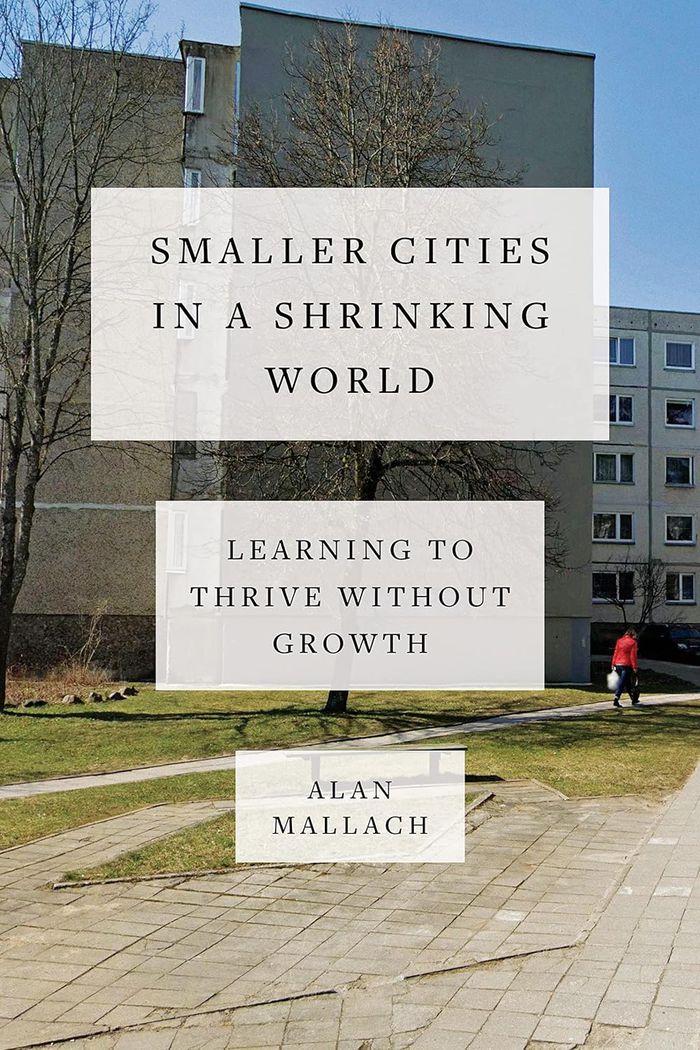
Smaller cities in a shrinking world: learning to thrive without growth
Actions:
Price:
$43.95
(available to order)
Summary:
Over the past hundred years, the global motto has been "more, more, more" in terms of growth - of population, of the built environment, of human and financial capital, and of all manner of worldly goods. This was the reality as the world population boomed during the 1960s and 1970s. But reality is changing in front of our eyes. Growth is already slowing down, and according to the most sophisticated demographers, the earth's population will begin to decline not hundreds of years from now, but within the lifetimes of many of the people now living on the planet. In ''Smaller cities in a shrinking world'', urban policy expert Alan Mallach seeks to understand how declining population and economic growth, coupled with the other forces that will influence their fates, particularly climate change, will affect the world's cities over the coming decades. What will it mean to have a world full of shrinking cities? Does it mean that they are doomed to decline in more ways than simply population numbers, or can we uncouple population decline from economic decay, abandoned buildings and impoverishment? Mallach has spent much of the last thirty or more years working in, looking at, thinking, and writing about shrinking cities-from Trenton, New Jersey, where he was director of housing and economic development, to other American cities like Detroit, Flint, and St. Louis, and from there to cities in Japan and Central and Eastern Europe. He has woven together his experience, research, and analysis in this fascinating, realistic yet hopeful look at how smaller, shrinking cities can thrive, despite the daunting challenges they face.
Smaller cities in a shrinking world: learning to thrive without growth
Actions:
Price:
$43.95
(available to order)
Summary:
Over the past hundred years, the global motto has been "more, more, more" in terms of growth - of population, of the built environment, of human and financial capital, and of all manner of worldly goods. This was the reality as the world population boomed during the 1960s and 1970s. But reality is changing in front of our eyes. Growth is already slowing down, and according to the most sophisticated demographers, the earth's population will begin to decline not hundreds of years from now, but within the lifetimes of many of the people now living on the planet. In ''Smaller cities in a shrinking world'', urban policy expert Alan Mallach seeks to understand how declining population and economic growth, coupled with the other forces that will influence their fates, particularly climate change, will affect the world's cities over the coming decades. What will it mean to have a world full of shrinking cities? Does it mean that they are doomed to decline in more ways than simply population numbers, or can we uncouple population decline from economic decay, abandoned buildings and impoverishment? Mallach has spent much of the last thirty or more years working in, looking at, thinking, and writing about shrinking cities-from Trenton, New Jersey, where he was director of housing and economic development, to other American cities like Detroit, Flint, and St. Louis, and from there to cities in Japan and Central and Eastern Europe. He has woven together his experience, research, and analysis in this fascinating, realistic yet hopeful look at how smaller, shrinking cities can thrive, despite the daunting challenges they face.
Form:
books
books
Publication:
June 2023
June 2023
Subject:
Urban Theory
Urban Theory


