


322 Results
Form:
research
research
Actions:
Description:
None
None
Date:
May 2016 to September 2017
May 2016 to September 2017
Title:
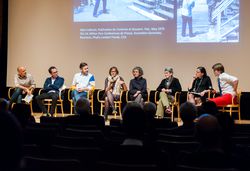
Multidisciplinary Research Program: Architecture and/for Photography
Actions:
Description:
None
Multidisciplinary Research Program: Architecture and/for Photography
Actions:
Description:
None
Form:
research
research
Date:
May 2016 to
September 2017
May 2016 to
September 2017
Form:
research
research
Actions:
Date:
May 2014 to September 2015
May 2014 to September 2015
Form:
research
research
Date:
May 2014 to
September 2015
May 2014 to
September 2015
Form:
research
research
Form:
research
research
Date:
2017 to
2018
2017 to
2018
Form:
archives
Level of archival description:
Fonds
archives
Level of archival description:
Fonds
Title:
Brian Boigon fonds
Brian Boigon fonds
Reference number:
AP188
Synopsis:
The Brian Boigon fonds, 1981–2015, documents various creative and professional projects by artist and data-architect, Brian Boigon. The majority of the fonds documents the multidisciplinary symposium series Culture Lab. Material in the fonds also documents Boigon’s research into cartoon movement in cyberspace in the form of both the Cartoon Regulators and Spillville. The fonds also contains records pertaining to Boigon’s web design company, Roller Coaster Studios. The records in the fonds largely consist of research and planning material, photographs and AV recordings documenting the projects, and sketches by Boigon and others.
AP188
Synopsis:
The Brian Boigon fonds, 1981–2015, documents various creative and professional projects by artist and data-architect, Brian Boigon. The majority of the fonds documents the multidisciplinary symposium series Culture Lab. Material in the fonds also documents Boigon’s research into cartoon movement in cyberspace in the form of both the Cartoon Regulators and Spillville. The fonds also contains records pertaining to Boigon’s web design company, Roller Coaster Studios. The records in the fonds largely consist of research and planning material, photographs and AV recordings documenting the projects, and sketches by Boigon and others.
People:
Date:
1981 - 2015
1981 - 2015
Title:
Brian Boigon fonds
Actions:
AP188
Synopsis:
The Brian Boigon fonds, 1981–2015, documents various creative and professional projects by artist and data-architect, Brian Boigon. The majority of the fonds documents the multidisciplinary symposium series Culture Lab. Material in the fonds also documents Boigon’s research into cartoon movement in cyberspace in the form of both the Cartoon Regulators and Spillville. The fonds also contains records pertaining to Boigon’s web design company, Roller Coaster Studios. The records in the fonds largely consist of research and planning material, photographs and AV recordings documenting the projects, and sketches by Boigon and others.
Brian Boigon fonds
Actions:
AP188
Synopsis:
The Brian Boigon fonds, 1981–2015, documents various creative and professional projects by artist and data-architect, Brian Boigon. The majority of the fonds documents the multidisciplinary symposium series Culture Lab. Material in the fonds also documents Boigon’s research into cartoon movement in cyberspace in the form of both the Cartoon Regulators and Spillville. The fonds also contains records pertaining to Boigon’s web design company, Roller Coaster Studios. The records in the fonds largely consist of research and planning material, photographs and AV recordings documenting the projects, and sketches by Boigon and others.
Form:
archives
Level of archival description:
Fonds
archives
Level of archival description:
Fonds
Date:
1981 - 2015
1981 - 2015
People:
Form:
exhibitions
exhibitions
Title:
Everlasting
Everlasting
Actions:
Description:
A film from the CCA’s 2023-2024 Indigenous Land Restitution Research Creation Fellow, multidisciplinary Haudenosaunee artist Iako’tsi:rareh Amanda Lickers.
A film from the CCA’s 2023-2024 Indigenous Land Restitution Research Creation Fellow, multidisciplinary Haudenosaunee artist Iako’tsi:rareh Amanda Lickers.
Location:
Shaughnessy House
Shaughnessy House
Date:
25 September 2025 to 8 November 2026
25 September 2025 to 8 November 2026
Title:
Everlasting
Actions:
Description:
A film from the CCA’s 2023-2024 Indigenous Land Restitution Research Creation Fellow, multidisciplinary Haudenosaunee artist Iako’tsi:rareh Amanda Lickers.
Everlasting
Actions:
Description:
A film from the CCA’s 2023-2024 Indigenous Land Restitution Research Creation Fellow, multidisciplinary Haudenosaunee artist Iako’tsi:rareh Amanda Lickers.
Form:
exhibitions
exhibitions
Date:
25 September 2025 to
8 November 2026
25 September 2025 to
8 November 2026
Location:
Shaughnessy House
Shaughnessy House
Form:
exhibitions
exhibitions
Actions:
Description:
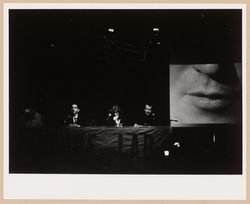
Culture Lab was a multidisciplinary symposium series initiated and directed by Brian Boigon that ran from 1991 to 1994. The exhibition provides new clues about the many forms and channels through which architectural discourses are shaped and circulated.
Culture Lab was a multidisciplinary symposium series initiated and directed by Brian Boigon that ran from 1991 to 1994. The exhibition provides new clues about the many forms and channels through which architectural discourses are shaped and circulated.
Location:
Octagonal Gallery Keyword(s):
Culture Lab, digital, entertainment, Farzin Lotfi-Jam, Sanford Kwinter
Octagonal Gallery Keyword(s):
Culture Lab, digital, entertainment, Farzin Lotfi-Jam, Sanford Kwinter
Date:
26 February 2026 to 30 August 2026
26 February 2026 to 30 August 2026
Title:
Interactive Entertainment Architecture: Culture Lab, Toronto 1991–1994
Actions:
Description:
Culture Lab was a multidisciplinary symposium series initiated and directed by Brian Boigon that ran from 1991 to 1994. The exhibition provides new clues about the many forms and channels through which architectural discourses are shaped and circulated.
Interactive Entertainment Architecture: Culture Lab, Toronto 1991–1994
Actions:
Description:
Culture Lab was a multidisciplinary symposium series initiated and directed by Brian Boigon that ran from 1991 to 1994. The exhibition provides new clues about the many forms and channels through which architectural discourses are shaped and circulated.
Form:
exhibitions
exhibitions
Date:
26 February 2026 to
30 August 2026
26 February 2026 to
30 August 2026
Location:
Octagonal Gallery Keyword(s):
Culture Lab, digital, entertainment, Farzin Lotfi-Jam, Sanford Kwinter
Octagonal Gallery Keyword(s):
Culture Lab, digital, entertainment, Farzin Lotfi-Jam, Sanford Kwinter
Form:
articles
articles
Title:
What, if not the family?
What, if not the family?
Actions:
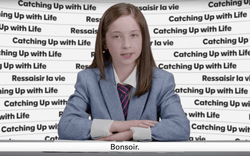
Guests from multidisciplinary perspectives discuss the spatial implications of ongoing shifts in ideas of the family
Issue:
A Social Reset
A Social Reset
Keyword(s):
Soirée, gala, family, what if not the family?, Miranda July, Other Architects, Grace Mortlock, David Neustein, Elena Schütz, Julian Schubert, Leonard Streich, Something Fantastic, Edit Collective, Marisa Morán Jahn, Rafi Segal, Carehaus, Johanna Hurme, 5468796 Architecture, Nahira Gerster-Sim, Frida Escobedo, Kumiko Inui, Emanuel Admasu, AD-WO
Soirée, gala, family, what if not the family?, Miranda July, Other Architects, Grace Mortlock, David Neustein, Elena Schütz, Julian Schubert, Leonard Streich, Something Fantastic, Edit Collective, Marisa Morán Jahn, Rafi Segal, Carehaus, Johanna Hurme, 5468796 Architecture, Nahira Gerster-Sim, Frida Escobedo, Kumiko Inui, Emanuel Admasu, AD-WO
Published:
7 June 2021
7 June 2021
Title:
What, if not the family?
Guests from multidisciplinary perspectives discuss the spatial implications of ongoing shifts in ideas of the family
Actions:
What, if not the family?
Guests from multidisciplinary perspectives discuss the spatial implications of ongoing shifts in ideas of the family
Actions:
Issue:
A Social Reset
A Social Reset
Form:
events
events
Actions:
Description:
This roundtable brings together multidisciplinary scholars from media and film studies, design, and visual culture to explore modernity in China during the 1950s and 1960s through the lens of material production and spatial transformation. Centered on the intensification of productivity in industry and land use, the discussion considers how object-making and(...)
This roundtable brings together multidisciplinary scholars from media and film studies, design, and visual culture to explore modernity in China during the 1950s and 1960s through the lens of material production and spatial transformation. Centered on the intensification of productivity in industry and land use, the discussion considers how object-making and(...)
Keyword(s):
Ying Qian, Weixian Pan, Jennifer Altehenger, Joshua Neves, How Modern, GEM Lab, Concordia
Ying Qian, Weixian Pan, Jennifer Altehenger, Joshua Neves, How Modern, GEM Lab, Concordia
Date:
19 February 2026, 6pm to 8pm
19 February 2026, 6pm to 8pm
Title:
Discussion: Revolutionary Matter
Actions:
Description:
This roundtable brings together multidisciplinary scholars from media and film studies, design, and visual culture to explore modernity in China during the 1950s and 1960s through the lens of material production and spatial transformation. Centered on the intensification of productivity in industry and land use, the discussion considers how object-making and(...)
Discussion: Revolutionary Matter
Actions:
Description:
This roundtable brings together multidisciplinary scholars from media and film studies, design, and visual culture to explore modernity in China during the 1950s and 1960s through the lens of material production and spatial transformation. Centered on the intensification of productivity in industry and land use, the discussion considers how object-making and(...)
Form:
events
events
Date:
19 February 2026
6pm to 8pm
19 February 2026
6pm to 8pm
Keyword(s):
Ying Qian, Weixian Pan, Jennifer Altehenger, Joshua Neves, How Modern, GEM Lab, Concordia
Ying Qian, Weixian Pan, Jennifer Altehenger, Joshua Neves, How Modern, GEM Lab, Concordia
Form:
archives
Level of archival description:
Fonds
archives
Level of archival description:
Fonds
Title:
Joseph Rykwert fonds
Joseph Rykwert fonds
Reference number:
AP209
Synopsis:
The Joseph Rykwert fonds, 1928-2022, documents Joseph Rykwert’s career as an architectural historian, author and professor. The fonds includes the records for over a dozen monographs written between the mid-1960s and the mid-2010s as well as edited works and articles, and details his teaching and lecturing activities from the 1960s onwards in universities in Europe and the United States. The records highlight Joseph Rykwert’s multidisciplinary approach, which involved archaeology, anthropology and psychoanalysis in his study of the history and theory of architecture and of the urban form. The fonds is composed of textual records, publications and ephemera, and of photographs including multiple albums and a large number of slides; the fonds also documents Joseph Rykwert’s career as an independent designer through drawings realized between the late 1940s and the late 1970s.
AP209
Synopsis:
The Joseph Rykwert fonds, 1928-2022, documents Joseph Rykwert’s career as an architectural historian, author and professor. The fonds includes the records for over a dozen monographs written between the mid-1960s and the mid-2010s as well as edited works and articles, and details his teaching and lecturing activities from the 1960s onwards in universities in Europe and the United States. The records highlight Joseph Rykwert’s multidisciplinary approach, which involved archaeology, anthropology and psychoanalysis in his study of the history and theory of architecture and of the urban form. The fonds is composed of textual records, publications and ephemera, and of photographs including multiple albums and a large number of slides; the fonds also documents Joseph Rykwert’s career as an independent designer through drawings realized between the late 1940s and the late 1970s.
People:
Date:
1928-2022
1928-2022
Title:
Joseph Rykwert fonds
Actions:
AP209
Synopsis:
The Joseph Rykwert fonds, 1928-2022, documents Joseph Rykwert’s career as an architectural historian, author and professor. The fonds includes the records for over a dozen monographs written between the mid-1960s and the mid-2010s as well as edited works and articles, and details his teaching and lecturing activities from the 1960s onwards in universities in Europe and the United States. The records highlight Joseph Rykwert’s multidisciplinary approach, which involved archaeology, anthropology and psychoanalysis in his study of the history and theory of architecture and of the urban form. The fonds is composed of textual records, publications and ephemera, and of photographs including multiple albums and a large number of slides; the fonds also documents Joseph Rykwert’s career as an independent designer through drawings realized between the late 1940s and the late 1970s.
Joseph Rykwert fonds
Actions:
AP209
Synopsis:
The Joseph Rykwert fonds, 1928-2022, documents Joseph Rykwert’s career as an architectural historian, author and professor. The fonds includes the records for over a dozen monographs written between the mid-1960s and the mid-2010s as well as edited works and articles, and details his teaching and lecturing activities from the 1960s onwards in universities in Europe and the United States. The records highlight Joseph Rykwert’s multidisciplinary approach, which involved archaeology, anthropology and psychoanalysis in his study of the history and theory of architecture and of the urban form. The fonds is composed of textual records, publications and ephemera, and of photographs including multiple albums and a large number of slides; the fonds also documents Joseph Rykwert’s career as an independent designer through drawings realized between the late 1940s and the late 1970s.
Form:
archives
Level of archival description:
Fonds
archives
Level of archival description:
Fonds
Date:
1928-2022
1928-2022
People:
Level of archival description:
Project
Project
Actions:
Reference number:
AP207.S1.1973.PR02
Description:
The project series documents the performance "Io Sono La Spia". It consists of a group of photographs of the founders of Global Tools taken in 1973, in Milan, in which Pettena identifies himself as "the spy" by holding a sign that reads "Io Sono La Spia" [I am the Spy]. Global Tools, was a multidisciplinary program of workshops used to promote different tools and materials in architecture and represented the peak in the radical movement in Italy. By identifying himself as "the spy", Pettena "claimed to be a betraying architect and he stated his own 'diversity' by calling into question his identified role as a 'radical architect'." [1] The project series contains the sign with the words "Io Sono La Spia" and photographs of the Global Tools team, including a photograph showing Pettena holding the sign "Io Sono La Spia". Source: [1] Marco Scotini, editor. Non-conscious architecture: Gianni Pettena, Sternberg Press, 2018, 235 pages. p. 184.
AP207.S1.1973.PR02
Description:
The project series documents the performance "Io Sono La Spia". It consists of a group of photographs of the founders of Global Tools taken in 1973, in Milan, in which Pettena identifies himself as "the spy" by holding a sign that reads "Io Sono La Spia" [I am the Spy]. Global Tools, was a multidisciplinary program of workshops used to promote different tools and materials in architecture and represented the peak in the radical movement in Italy. By identifying himself as "the spy", Pettena "claimed to be a betraying architect and he stated his own 'diversity' by calling into question his identified role as a 'radical architect'." [1] The project series contains the sign with the words "Io Sono La Spia" and photographs of the Global Tools team, including a photograph showing Pettena holding the sign "Io Sono La Spia". Source: [1] Marco Scotini, editor. Non-conscious architecture: Gianni Pettena, Sternberg Press, 2018, 235 pages. p. 184.
People:
Date:
1973-2015
1973-2015
Title:
Io Sono La Spia [I am the Spy] (1973)
Actions:
AP207.S1.1973.PR02
Description:
The project series documents the performance "Io Sono La Spia". It consists of a group of photographs of the founders of Global Tools taken in 1973, in Milan, in which Pettena identifies himself as "the spy" by holding a sign that reads "Io Sono La Spia" [I am the Spy]. Global Tools, was a multidisciplinary program of workshops used to promote different tools and materials in architecture and represented the peak in the radical movement in Italy. By identifying himself as "the spy", Pettena "claimed to be a betraying architect and he stated his own 'diversity' by calling into question his identified role as a 'radical architect'." [1] The project series contains the sign with the words "Io Sono La Spia" and photographs of the Global Tools team, including a photograph showing Pettena holding the sign "Io Sono La Spia". Source: [1] Marco Scotini, editor. Non-conscious architecture: Gianni Pettena, Sternberg Press, 2018, 235 pages. p. 184.
Io Sono La Spia [I am the Spy] (1973)
Actions:
AP207.S1.1973.PR02
Description:
The project series documents the performance "Io Sono La Spia". It consists of a group of photographs of the founders of Global Tools taken in 1973, in Milan, in which Pettena identifies himself as "the spy" by holding a sign that reads "Io Sono La Spia" [I am the Spy]. Global Tools, was a multidisciplinary program of workshops used to promote different tools and materials in architecture and represented the peak in the radical movement in Italy. By identifying himself as "the spy", Pettena "claimed to be a betraying architect and he stated his own 'diversity' by calling into question his identified role as a 'radical architect'." [1] The project series contains the sign with the words "Io Sono La Spia" and photographs of the Global Tools team, including a photograph showing Pettena holding the sign "Io Sono La Spia". Source: [1] Marco Scotini, editor. Non-conscious architecture: Gianni Pettena, Sternberg Press, 2018, 235 pages. p. 184.
Level of archival description:
Project
Project
Date:
1973-2015
1973-2015
People:


