


1829 Results
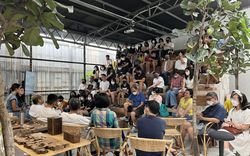
Clarissa Lim Kye Lee reflects on the findings from Making Mamak
Keyword(s):
Making Mamak, Emerging curator 2022-2023, Malaysian art collectives, south east asia, commoning
Making Mamak, Emerging curator 2022-2023, Malaysian art collectives, south east asia, commoning
Published:
25 August 2024
25 August 2024
Title:
Field Notes: From an Island to a Peninsula, and Back to Another Island
Clarissa Lim Kye Lee reflects on the findings from Making Mamak
Actions:
Field Notes: From an Island to a Peninsula, and Back to Another Island
Clarissa Lim Kye Lee reflects on the findings from Making Mamak
Actions:
Form:
articles
articles
Published:
25 August 2024
25 August 2024
Level of archival description:
Project
Project
Reference number:
AP066.S5.D2
Description:
Le dossier documente une exposition qui s'est tenue au R.C. Harris Water Filtration Plant, Toronto, en Ontario, en 1988, du 22 juin au 30 septembre 1988. L'exposition collective comptait 18 artistes et des architectes et était organisé par le "Visual Arts Ontario". Le dossier contient des dessins, des documents textuels, des documents photographiques et des maquettes. Description de l'exposition: "… individuals were invited to participate in what was billed as 'a prestigious showcase of art, architecture and design which will transform the roof-tops, grounds, and magnificent interiors of the R.C. Harris Water Filtration Plant into a unique museum of contemporary art.' Eighteen artists were invited to participate including John Baldessari, Jonathan Borogsky, Ludger Gerdes, Rebecca Horn, Komar and Melamid, Nancy Sperio, François Girard, Bruce Kuwabara, John Scott, Joanne Tod, Andreas Gehr, Morphosis, Aldo Rossi, Jacques Rousseau, Stacey Spiegel, Team Zoo and Krzyztof Wodiczko." Jennifer Fisher and Beth Seaton,"Waterworks: Visual Arts Ontario", Parachute, nº 52, novembre 1988, p. 59-60. Description du projet: "Parts of the site, …, have provided forms for casting concrete lawn chairs-like shapes - petrified recordings of the topography - fabricated of lake water, beach sand and pebbles, rods and wires." Ibidem
AP066.S5.D2
Description:
Le dossier documente une exposition qui s'est tenue au R.C. Harris Water Filtration Plant, Toronto, en Ontario, en 1988, du 22 juin au 30 septembre 1988. L'exposition collective comptait 18 artistes et des architectes et était organisé par le "Visual Arts Ontario". Le dossier contient des dessins, des documents textuels, des documents photographiques et des maquettes. Description de l'exposition: "… individuals were invited to participate in what was billed as 'a prestigious showcase of art, architecture and design which will transform the roof-tops, grounds, and magnificent interiors of the R.C. Harris Water Filtration Plant into a unique museum of contemporary art.' Eighteen artists were invited to participate including John Baldessari, Jonathan Borogsky, Ludger Gerdes, Rebecca Horn, Komar and Melamid, Nancy Sperio, François Girard, Bruce Kuwabara, John Scott, Joanne Tod, Andreas Gehr, Morphosis, Aldo Rossi, Jacques Rousseau, Stacey Spiegel, Team Zoo and Krzyztof Wodiczko." Jennifer Fisher and Beth Seaton,"Waterworks: Visual Arts Ontario", Parachute, nº 52, novembre 1988, p. 59-60. Description du projet: "Parts of the site, …, have provided forms for casting concrete lawn chairs-like shapes - petrified recordings of the topography - fabricated of lake water, beach sand and pebbles, rods and wires." Ibidem
People:
Date:
22 juin-30 septembre 1988
22 juin-30 septembre 1988
Title:
Installation "Waterworks", Toronto - "Horizons"
Actions:
AP066.S5.D2
Description:
Le dossier documente une exposition qui s'est tenue au R.C. Harris Water Filtration Plant, Toronto, en Ontario, en 1988, du 22 juin au 30 septembre 1988. L'exposition collective comptait 18 artistes et des architectes et était organisé par le "Visual Arts Ontario". Le dossier contient des dessins, des documents textuels, des documents photographiques et des maquettes. Description de l'exposition: "… individuals were invited to participate in what was billed as 'a prestigious showcase of art, architecture and design which will transform the roof-tops, grounds, and magnificent interiors of the R.C. Harris Water Filtration Plant into a unique museum of contemporary art.' Eighteen artists were invited to participate including John Baldessari, Jonathan Borogsky, Ludger Gerdes, Rebecca Horn, Komar and Melamid, Nancy Sperio, François Girard, Bruce Kuwabara, John Scott, Joanne Tod, Andreas Gehr, Morphosis, Aldo Rossi, Jacques Rousseau, Stacey Spiegel, Team Zoo and Krzyztof Wodiczko." Jennifer Fisher and Beth Seaton,"Waterworks: Visual Arts Ontario", Parachute, nº 52, novembre 1988, p. 59-60. Description du projet: "Parts of the site, …, have provided forms for casting concrete lawn chairs-like shapes - petrified recordings of the topography - fabricated of lake water, beach sand and pebbles, rods and wires." Ibidem
Installation "Waterworks", Toronto - "Horizons"
Actions:
AP066.S5.D2
Description:
Le dossier documente une exposition qui s'est tenue au R.C. Harris Water Filtration Plant, Toronto, en Ontario, en 1988, du 22 juin au 30 septembre 1988. L'exposition collective comptait 18 artistes et des architectes et était organisé par le "Visual Arts Ontario". Le dossier contient des dessins, des documents textuels, des documents photographiques et des maquettes. Description de l'exposition: "… individuals were invited to participate in what was billed as 'a prestigious showcase of art, architecture and design which will transform the roof-tops, grounds, and magnificent interiors of the R.C. Harris Water Filtration Plant into a unique museum of contemporary art.' Eighteen artists were invited to participate including John Baldessari, Jonathan Borogsky, Ludger Gerdes, Rebecca Horn, Komar and Melamid, Nancy Sperio, François Girard, Bruce Kuwabara, John Scott, Joanne Tod, Andreas Gehr, Morphosis, Aldo Rossi, Jacques Rousseau, Stacey Spiegel, Team Zoo and Krzyztof Wodiczko." Jennifer Fisher and Beth Seaton,"Waterworks: Visual Arts Ontario", Parachute, nº 52, novembre 1988, p. 59-60. Description du projet: "Parts of the site, …, have provided forms for casting concrete lawn chairs-like shapes - petrified recordings of the topography - fabricated of lake water, beach sand and pebbles, rods and wires." Ibidem
Level of archival description:
Dossier 2
Dossier 2
Date:
22 juin-30 septembre 1988
22 juin-30 septembre 1988
People:
Form:
archives
Level of archival description:
Fonds
archives
Level of archival description:
Fonds
Actions:
Reference number:
AP194
Synopsis:
The Johan Bettum OCEAN North projects records, 1995-2000, consist of born-digital files and a physical drawing that document three projects by the OCEAN North collective: Synthetic Landscape (1995-2000), Jyväskylä Music and Arts Centre (competition, 1997), and Tölöö Football Stadium (competition, 1997). The archive also includes a small amount of additional born-digital reference materials on 11 projects from the collective, including the three projects mentioned above.
AP194
Synopsis:
The Johan Bettum OCEAN North projects records, 1995-2000, consist of born-digital files and a physical drawing that document three projects by the OCEAN North collective: Synthetic Landscape (1995-2000), Jyväskylä Music and Arts Centre (competition, 1997), and Tölöö Football Stadium (competition, 1997). The archive also includes a small amount of additional born-digital reference materials on 11 projects from the collective, including the three projects mentioned above.
People:
Date:
1995-2000
1995-2000
Title:
Johan Bettum OCEAN North project records
Actions:
AP194
Synopsis:
The Johan Bettum OCEAN North projects records, 1995-2000, consist of born-digital files and a physical drawing that document three projects by the OCEAN North collective: Synthetic Landscape (1995-2000), Jyväskylä Music and Arts Centre (competition, 1997), and Tölöö Football Stadium (competition, 1997). The archive also includes a small amount of additional born-digital reference materials on 11 projects from the collective, including the three projects mentioned above.
Johan Bettum OCEAN North project records
Actions:
AP194
Synopsis:
The Johan Bettum OCEAN North projects records, 1995-2000, consist of born-digital files and a physical drawing that document three projects by the OCEAN North collective: Synthetic Landscape (1995-2000), Jyväskylä Music and Arts Centre (competition, 1997), and Tölöö Football Stadium (competition, 1997). The archive also includes a small amount of additional born-digital reference materials on 11 projects from the collective, including the three projects mentioned above.
Form:
archives
Level of archival description:
Fonds
archives
Level of archival description:
Fonds
Date:
1995-2000
1995-2000
People:
Form:
events
events

Description:
Individuals act as their own historians, suppressing some stories and emphasizing others. But at the scale of nations and cultures, and especially in this age of ubiquitous digital memory, it has become more difficult to forget. Building on questions about history and its uses, raised by exhibitions like Educating Architects: Four Courses by Kenneth Frampton and Besides,(...)
Individuals act as their own historians, suppressing some stories and emphasizing others. But at the scale of nations and cultures, and especially in this age of ubiquitous digital memory, it has become more difficult to forget. Building on questions about history and its uses, raised by exhibitions like Educating Architects: Four Courses by Kenneth Frampton and Besides,(...)
Keyword(s):
Johannes Grenzfurthner
Johannes Grenzfurthner
Date:
12 April 2018
12 April 2018
Title:
Come and Forget the Counterculture, with Johannes Grenzfurthner
Actions:
Description:
Individuals act as their own historians, suppressing some stories and emphasizing others. But at the scale of nations and cultures, and especially in this age of ubiquitous digital memory, it has become more difficult to forget. Building on questions about history and its uses, raised by exhibitions like Educating Architects: Four Courses by Kenneth Frampton and Besides,(...)
Come and Forget the Counterculture, with Johannes Grenzfurthner
Actions:
Description:
Individuals act as their own historians, suppressing some stories and emphasizing others. But at the scale of nations and cultures, and especially in this age of ubiquitous digital memory, it has become more difficult to forget. Building on questions about history and its uses, raised by exhibitions like Educating Architects: Four Courses by Kenneth Frampton and Besides,(...)
Form:
events
events
Date:
12 April 2018
12 April 2018
Keyword(s):
Johannes Grenzfurthner
Johannes Grenzfurthner
Form:
events
events
Actions:
Description:
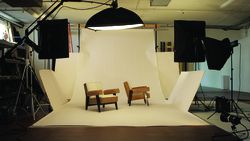
American artist Amie Siegel’s moving image work Provenance (2013) follows the global trade of furniture from Chandigarh in reverse: from the homes of collectors in Europe and North America to sale at auction, restoration, through overseas transport and finally back to India. Originally designed by Le Corbusier and Pierre Jeanneret, the Chandigarh furniture now sells(...)
American artist Amie Siegel’s moving image work Provenance (2013) follows the global trade of furniture from Chandigarh in reverse: from the homes of collectors in Europe and North America to sale at auction, restoration, through overseas transport and finally back to India. Originally designed by Le Corbusier and Pierre Jeanneret, the Chandigarh furniture now sells(...)
Date:
24 April 2014 , 6pm
24 April 2014 , 6pm
Title:
Artist’s Talk: Amie Siegel, Provenance
Actions:
Description:
American artist Amie Siegel’s moving image work Provenance (2013) follows the global trade of furniture from Chandigarh in reverse: from the homes of collectors in Europe and North America to sale at auction, restoration, through overseas transport and finally back to India. Originally designed by Le Corbusier and Pierre Jeanneret, the Chandigarh furniture now sells(...)
Artist’s Talk: Amie Siegel, Provenance
Actions:
Description:
American artist Amie Siegel’s moving image work Provenance (2013) follows the global trade of furniture from Chandigarh in reverse: from the homes of collectors in Europe and North America to sale at auction, restoration, through overseas transport and finally back to India. Originally designed by Le Corbusier and Pierre Jeanneret, the Chandigarh furniture now sells(...)
Form:
events
events
Date:
24 April 2014
6pm
24 April 2014
6pm
Form:
archives
Level of archival description:
Fonds
archives
Level of archival description:
Fonds
Title:
Jean-Louis Cohen fonds
Jean-Louis Cohen fonds
Actions:
Reference number:
AP210
Synopsis:
The Jean-Louis Cohen fonds, 1968 – 2023, documents the projects and activities of historian, curator, professor, and architect Jean-Louis Cohen (1949 – 2023). Cohen’s research focus was largely modern architecture and transnational architectural exchange, particularly between and among the United States, Europe, and the former Soviet Union in the 20th century. Through physical and digital records, this fonds documents his academic, publishing, and curatorial work along with his professional activities within architectural research and heritage organizations, as well as his architectural practice.
AP210
Synopsis:
The Jean-Louis Cohen fonds, 1968 – 2023, documents the projects and activities of historian, curator, professor, and architect Jean-Louis Cohen (1949 – 2023). Cohen’s research focus was largely modern architecture and transnational architectural exchange, particularly between and among the United States, Europe, and the former Soviet Union in the 20th century. Through physical and digital records, this fonds documents his academic, publishing, and curatorial work along with his professional activities within architectural research and heritage organizations, as well as his architectural practice.
People:
Date:
1968 - 2023
1968 - 2023
Title:
Jean-Louis Cohen fonds
Actions:
AP210
Synopsis:
The Jean-Louis Cohen fonds, 1968 – 2023, documents the projects and activities of historian, curator, professor, and architect Jean-Louis Cohen (1949 – 2023). Cohen’s research focus was largely modern architecture and transnational architectural exchange, particularly between and among the United States, Europe, and the former Soviet Union in the 20th century. Through physical and digital records, this fonds documents his academic, publishing, and curatorial work along with his professional activities within architectural research and heritage organizations, as well as his architectural practice.
Jean-Louis Cohen fonds
Actions:
AP210
Synopsis:
The Jean-Louis Cohen fonds, 1968 – 2023, documents the projects and activities of historian, curator, professor, and architect Jean-Louis Cohen (1949 – 2023). Cohen’s research focus was largely modern architecture and transnational architectural exchange, particularly between and among the United States, Europe, and the former Soviet Union in the 20th century. Through physical and digital records, this fonds documents his academic, publishing, and curatorial work along with his professional activities within architectural research and heritage organizations, as well as his architectural practice.
Form:
archives
Level of archival description:
Fonds
archives
Level of archival description:
Fonds
Date:
1968 - 2023
1968 - 2023
People:
Level of archival description:
Series
Series
Title:
Une architecture des humeurs
Une architecture des humeurs
Actions:
Reference number:
AP193.S4
Description:
Series 4, Une architecture des humeurs, 2008-2011, documents the conception and the presentation of exhibition and project Une architecture des humeurs. Presented at Le laboratoire art gallery in Paris between January and May 2010, Une architecture des humeurs is a conceptual, unbuilt, residential urban structure based on a potential future in which contemporary science reads human physiology and chemical balance. The idea is to acquire a chemistry of the “humors”, or the moods and temperament, of future purchasers. Taken as input, the information generates a diversity of habitable morphologies and relationships between them. With this process, the project attempts to make palpable and graspable, through technologies, the emotions of the participants captured via the chemistry of their body. The goal is to gather information on their capacity of adaptation, their level of sympathy and empathy while confronted to a situation or an environment. This information is then analyzed by computational, mathematical, and machinist procedures. This leads to the design and production of an urban structure submitted to the improbable and uncertain protocols produced by emotions, also creating aggregations and layouts that rearticulate the links between the individual and the collective. These structures are calculated following simultaneously incremental and recursive structural optimization protocols resulting in the physicality and morphology of architecture. The layout of the residential units and the structural trajectories are conceived and developed as posterior to the constructs supporting social life and not as an a priori. The structure of each components of the urban structure is generated by a secretion and weaving machine called Viab02. The machine is the second prototype of VIAB which was developed with Robotics Research Lab of the University of Southern California and takes its name from the terms viability and variability. With a process similar to contour crafting, the machine produces bio-cement, a mix between cement and bio-resin, giving form to the adapted residential structures. The records consist largely of images detailing the creative process of the firm, photographs of the exhibition, and 3D models. It also contains animated renderings representing the machine in action and sequences of the construction of the building or the structure. The records include a video orienting the project into François Roche theoretical stance, research as speculation, that can be summarize as the use of technological tools to take a critical and political position through esthetic in order to open new lines of thoughts. AP193.S2 contains updated previous version of the VIAB machine
AP193.S4
Description:
Series 4, Une architecture des humeurs, 2008-2011, documents the conception and the presentation of exhibition and project Une architecture des humeurs. Presented at Le laboratoire art gallery in Paris between January and May 2010, Une architecture des humeurs is a conceptual, unbuilt, residential urban structure based on a potential future in which contemporary science reads human physiology and chemical balance. The idea is to acquire a chemistry of the “humors”, or the moods and temperament, of future purchasers. Taken as input, the information generates a diversity of habitable morphologies and relationships between them. With this process, the project attempts to make palpable and graspable, through technologies, the emotions of the participants captured via the chemistry of their body. The goal is to gather information on their capacity of adaptation, their level of sympathy and empathy while confronted to a situation or an environment. This information is then analyzed by computational, mathematical, and machinist procedures. This leads to the design and production of an urban structure submitted to the improbable and uncertain protocols produced by emotions, also creating aggregations and layouts that rearticulate the links between the individual and the collective. These structures are calculated following simultaneously incremental and recursive structural optimization protocols resulting in the physicality and morphology of architecture. The layout of the residential units and the structural trajectories are conceived and developed as posterior to the constructs supporting social life and not as an a priori. The structure of each components of the urban structure is generated by a secretion and weaving machine called Viab02. The machine is the second prototype of VIAB which was developed with Robotics Research Lab of the University of Southern California and takes its name from the terms viability and variability. With a process similar to contour crafting, the machine produces bio-cement, a mix between cement and bio-resin, giving form to the adapted residential structures. The records consist largely of images detailing the creative process of the firm, photographs of the exhibition, and 3D models. It also contains animated renderings representing the machine in action and sequences of the construction of the building or the structure. The records include a video orienting the project into François Roche theoretical stance, research as speculation, that can be summarize as the use of technological tools to take a critical and political position through esthetic in order to open new lines of thoughts. AP193.S2 contains updated previous version of the VIAB machine
People:
Date:
2008-2011
2008-2011
Title:
Une architecture des humeurs
Actions:
AP193.S4
Description:
Series 4, Une architecture des humeurs, 2008-2011, documents the conception and the presentation of exhibition and project Une architecture des humeurs. Presented at Le laboratoire art gallery in Paris between January and May 2010, Une architecture des humeurs is a conceptual, unbuilt, residential urban structure based on a potential future in which contemporary science reads human physiology and chemical balance. The idea is to acquire a chemistry of the “humors”, or the moods and temperament, of future purchasers. Taken as input, the information generates a diversity of habitable morphologies and relationships between them. With this process, the project attempts to make palpable and graspable, through technologies, the emotions of the participants captured via the chemistry of their body. The goal is to gather information on their capacity of adaptation, their level of sympathy and empathy while confronted to a situation or an environment. This information is then analyzed by computational, mathematical, and machinist procedures. This leads to the design and production of an urban structure submitted to the improbable and uncertain protocols produced by emotions, also creating aggregations and layouts that rearticulate the links between the individual and the collective. These structures are calculated following simultaneously incremental and recursive structural optimization protocols resulting in the physicality and morphology of architecture. The layout of the residential units and the structural trajectories are conceived and developed as posterior to the constructs supporting social life and not as an a priori. The structure of each components of the urban structure is generated by a secretion and weaving machine called Viab02. The machine is the second prototype of VIAB which was developed with Robotics Research Lab of the University of Southern California and takes its name from the terms viability and variability. With a process similar to contour crafting, the machine produces bio-cement, a mix between cement and bio-resin, giving form to the adapted residential structures. The records consist largely of images detailing the creative process of the firm, photographs of the exhibition, and 3D models. It also contains animated renderings representing the machine in action and sequences of the construction of the building or the structure. The records include a video orienting the project into François Roche theoretical stance, research as speculation, that can be summarize as the use of technological tools to take a critical and political position through esthetic in order to open new lines of thoughts. AP193.S2 contains updated previous version of the VIAB machine
Une architecture des humeurs
Actions:
AP193.S4
Description:
Series 4, Une architecture des humeurs, 2008-2011, documents the conception and the presentation of exhibition and project Une architecture des humeurs. Presented at Le laboratoire art gallery in Paris between January and May 2010, Une architecture des humeurs is a conceptual, unbuilt, residential urban structure based on a potential future in which contemporary science reads human physiology and chemical balance. The idea is to acquire a chemistry of the “humors”, or the moods and temperament, of future purchasers. Taken as input, the information generates a diversity of habitable morphologies and relationships between them. With this process, the project attempts to make palpable and graspable, through technologies, the emotions of the participants captured via the chemistry of their body. The goal is to gather information on their capacity of adaptation, their level of sympathy and empathy while confronted to a situation or an environment. This information is then analyzed by computational, mathematical, and machinist procedures. This leads to the design and production of an urban structure submitted to the improbable and uncertain protocols produced by emotions, also creating aggregations and layouts that rearticulate the links between the individual and the collective. These structures are calculated following simultaneously incremental and recursive structural optimization protocols resulting in the physicality and morphology of architecture. The layout of the residential units and the structural trajectories are conceived and developed as posterior to the constructs supporting social life and not as an a priori. The structure of each components of the urban structure is generated by a secretion and weaving machine called Viab02. The machine is the second prototype of VIAB which was developed with Robotics Research Lab of the University of Southern California and takes its name from the terms viability and variability. With a process similar to contour crafting, the machine produces bio-cement, a mix between cement and bio-resin, giving form to the adapted residential structures. The records consist largely of images detailing the creative process of the firm, photographs of the exhibition, and 3D models. It also contains animated renderings representing the machine in action and sequences of the construction of the building or the structure. The records include a video orienting the project into François Roche theoretical stance, research as speculation, that can be summarize as the use of technological tools to take a critical and political position through esthetic in order to open new lines of thoughts. AP193.S2 contains updated previous version of the VIAB machine
Level of archival description:
Series
Series
Date:
2008-2011
2008-2011
People:
Level of archival description:
Project
Project
Actions:
Reference number:
AP066.S2.D73
Description:
Le dossier documente le projet non-réalisé de construction de logements collectifs CIDEM, situé à la Place des Arts, à Montréal, Québec. Le dossier contient des reprographies.
AP066.S2.D73
Description:
Le dossier documente le projet non-réalisé de construction de logements collectifs CIDEM, situé à la Place des Arts, à Montréal, Québec. Le dossier contient des reprographies.
People:
Date:
après 1985
après 1985
Title:
CIDEM 20 000 logements Place des Arts
Actions:
AP066.S2.D73
Description:
Le dossier documente le projet non-réalisé de construction de logements collectifs CIDEM, situé à la Place des Arts, à Montréal, Québec. Le dossier contient des reprographies.
CIDEM 20 000 logements Place des Arts
Actions:
AP066.S2.D73
Description:
Le dossier documente le projet non-réalisé de construction de logements collectifs CIDEM, situé à la Place des Arts, à Montréal, Québec. Le dossier contient des reprographies.
Level of archival description:
Projet
Projet
Date:
après 1985
après 1985
People:
Form:
archives
Level of archival description:
Fonds
archives
Level of archival description:
Fonds
Title:
Robert Duchesnay fonds
Robert Duchesnay fonds
Actions:
Reference number:
AP115
Synopsis:
Le Fonds Robert Duchesnay consiste en une série de photographies montrant les divers structure (principalement des dômes géodésiques) conçus ou influencée par R. Buckminster Fuller. Les photographies, prises par l'artiste et photographe montréalais Robert Duchesnay, ont été créées entre 1985 et 1992.
AP115
Synopsis:
Le Fonds Robert Duchesnay consiste en une série de photographies montrant les divers structure (principalement des dômes géodésiques) conçus ou influencée par R. Buckminster Fuller. Les photographies, prises par l'artiste et photographe montréalais Robert Duchesnay, ont été créées entre 1985 et 1992.
People:
Date:
1985-1992
1985-1992
Title:
Robert Duchesnay fonds
Actions:
AP115
Synopsis:
Le Fonds Robert Duchesnay consiste en une série de photographies montrant les divers structure (principalement des dômes géodésiques) conçus ou influencée par R. Buckminster Fuller. Les photographies, prises par l'artiste et photographe montréalais Robert Duchesnay, ont été créées entre 1985 et 1992.
Robert Duchesnay fonds
Actions:
AP115
Synopsis:
Le Fonds Robert Duchesnay consiste en une série de photographies montrant les divers structure (principalement des dômes géodésiques) conçus ou influencée par R. Buckminster Fuller. Les photographies, prises par l'artiste et photographe montréalais Robert Duchesnay, ont été créées entre 1985 et 1992.
Form:
archives
Level of archival description:
Fonds
archives
Level of archival description:
Fonds
Date:
1985-1992
1985-1992
People:
Form:
events
events
Title:
Environmental Histories
Environmental Histories
Actions:
Description:
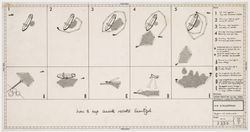
To kick off “Architecture and/for the Environment” —the CCA’s third Multidisciplinary Research Project funded by the Andrew W. Mellon Foundation—Daniel Abramson and Imre Szeman will present two key concepts that reconceive the environment in the history of architecture. Daniel Abramson, an architectural historian, will discuss how the idea of architectural “obsolescence”(...)
To kick off “Architecture and/for the Environment” —the CCA’s third Multidisciplinary Research Project funded by the Andrew W. Mellon Foundation—Daniel Abramson and Imre Szeman will present two key concepts that reconceive the environment in the history of architecture. Daniel Abramson, an architectural historian, will discuss how the idea of architectural “obsolescence”(...)
Location:
Paul Desmarais Theatre
Paul Desmarais Theatre
Date:
15 December 2016, 6pm
15 December 2016, 6pm
Title:
Environmental Histories
Actions:
Description:
To kick off “Architecture and/for the Environment” —the CCA’s third Multidisciplinary Research Project funded by the Andrew W. Mellon Foundation—Daniel Abramson and Imre Szeman will present two key concepts that reconceive the environment in the history of architecture. Daniel Abramson, an architectural historian, will discuss how the idea of architectural “obsolescence”(...)
Environmental Histories
Actions:
Description:
To kick off “Architecture and/for the Environment” —the CCA’s third Multidisciplinary Research Project funded by the Andrew W. Mellon Foundation—Daniel Abramson and Imre Szeman will present two key concepts that reconceive the environment in the history of architecture. Daniel Abramson, an architectural historian, will discuss how the idea of architectural “obsolescence”(...)
Form:
events
events
Date:
15 December 2016
6pm
15 December 2016
6pm
Location:
Paul Desmarais Theatre
Paul Desmarais Theatre


