


1128 Results
Form:
articles
articles
Actions:
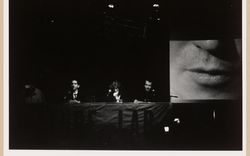
Brian Boigon introduces the Culture Lab
Keyword(s):
digital technology, interactivity, television, TV, multidisciplinary, multidisciplinarity
digital technology, interactivity, television, TV, multidisciplinary, multidisciplinarity
Published:
22 February 2026
22 February 2026
Title:
The nightclub redefined the notion of the symposium
Brian Boigon introduces the Culture Lab
Actions:
The nightclub redefined the notion of the symposium
Brian Boigon introduces the Culture Lab
Actions:
Form:
archives
Level of archival description:
Fonds
archives
Level of archival description:
Fonds
Reference number:
AP175
Synopsis:
UNStudio Erasmus Bridge project records, 1990-1996, documents the design, conception and construction process for the Erasmus Bridge in Rotterdam, Netherlands. The records consist largely of textual records and technical drawings material in addition to born-digital material and two models.
AP175
Synopsis:
UNStudio Erasmus Bridge project records, 1990-1996, documents the design, conception and construction process for the Erasmus Bridge in Rotterdam, Netherlands. The records consist largely of textual records and technical drawings material in addition to born-digital material and two models.
People:
Date:
1990-1996
1990-1996
Title:
UNStudio Erasmus Bridge project records
Actions:
AP175
Synopsis:
UNStudio Erasmus Bridge project records, 1990-1996, documents the design, conception and construction process for the Erasmus Bridge in Rotterdam, Netherlands. The records consist largely of textual records and technical drawings material in addition to born-digital material and two models.
UNStudio Erasmus Bridge project records
Actions:
AP175
Synopsis:
UNStudio Erasmus Bridge project records, 1990-1996, documents the design, conception and construction process for the Erasmus Bridge in Rotterdam, Netherlands. The records consist largely of textual records and technical drawings material in addition to born-digital material and two models.
Form:
archives
Level of archival description:
Fonds
archives
Level of archival description:
Fonds
Date:
1990-1996
1990-1996
People:
Form:
archives
Level of archival description:
Fonds
archives
Level of archival description:
Fonds
Actions:
Reference number:
AP186
Synopsis:
The Cloud 9 Villa Nurbs project records,1990s-2013, document the firm’s Villa Nurbs project, a private residence in Empuriabrava (Costa Brava), Spain. The archive consists of the firm’s total born-digital archive for the project, as well as physical materials in a number of formats, including drawings, textual records, slides, presentation materials, photographs, paintings, protoypes, material samples, and models.
AP186
Synopsis:
The Cloud 9 Villa Nurbs project records,1990s-2013, document the firm’s Villa Nurbs project, a private residence in Empuriabrava (Costa Brava), Spain. The archive consists of the firm’s total born-digital archive for the project, as well as physical materials in a number of formats, including drawings, textual records, slides, presentation materials, photographs, paintings, protoypes, material samples, and models.
People:
Date:
1990s-2013
1990s-2013
Title:
Cloud 9 Villa Nurbs project records
Actions:
AP186
Synopsis:
The Cloud 9 Villa Nurbs project records,1990s-2013, document the firm’s Villa Nurbs project, a private residence in Empuriabrava (Costa Brava), Spain. The archive consists of the firm’s total born-digital archive for the project, as well as physical materials in a number of formats, including drawings, textual records, slides, presentation materials, photographs, paintings, protoypes, material samples, and models.
Cloud 9 Villa Nurbs project records
Actions:
AP186
Synopsis:
The Cloud 9 Villa Nurbs project records,1990s-2013, document the firm’s Villa Nurbs project, a private residence in Empuriabrava (Costa Brava), Spain. The archive consists of the firm’s total born-digital archive for the project, as well as physical materials in a number of formats, including drawings, textual records, slides, presentation materials, photographs, paintings, protoypes, material samples, and models.
Form:
archives
Level of archival description:
Fonds
archives
Level of archival description:
Fonds
Date:
1990s-2013
1990s-2013
People:
Form:
archives
Level of archival description:
Fonds
archives
Level of archival description:
Fonds
Actions:
Reference number:
AP176
Synopsis:
Karl Chu X PHYLUM project records, 1998-2014 (predominant 1998-2002), documents the development and design process of Chu’s project X PHYLUM. The archive consists exclusively of original born-digital material.
AP176
Synopsis:
Karl Chu X PHYLUM project records, 1998-2014 (predominant 1998-2002), documents the development and design process of Chu’s project X PHYLUM. The archive consists exclusively of original born-digital material.
People:
Date:
1998-2014
1998-2014
Title:
Karl Chu X Phylum project records
Actions:
AP176
Synopsis:
Karl Chu X PHYLUM project records, 1998-2014 (predominant 1998-2002), documents the development and design process of Chu’s project X PHYLUM. The archive consists exclusively of original born-digital material.
Karl Chu X Phylum project records
Actions:
AP176
Synopsis:
Karl Chu X PHYLUM project records, 1998-2014 (predominant 1998-2002), documents the development and design process of Chu’s project X PHYLUM. The archive consists exclusively of original born-digital material.
Form:
archives
Level of archival description:
Fonds
archives
Level of archival description:
Fonds
Date:
1998-2014
1998-2014
People:
Form:
events
events
Title:
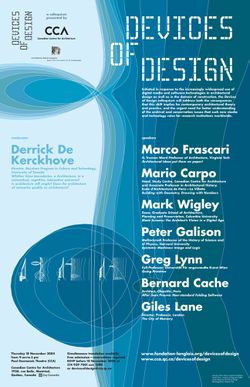
Devices of Design
Devices of Design
Actions:
Description:
A collaboration between the CCA and the Daniel Langlois Foundation for Art, Science, and Technology, Devices of Design was initiated in response to the increasingly widespread use of digital media and software technologies in architectural design and construction. A colloquium and a subsequent roundtable discussion address both the consequences that this shift implies for(...)
A collaboration between the CCA and the Daniel Langlois Foundation for Art, Science, and Technology, Devices of Design was initiated in response to the increasingly widespread use of digital media and software technologies in architectural design and construction. A colloquium and a subsequent roundtable discussion address both the consequences that this shift implies for(...)
Location:
Paul-Desmarais Theatre
Paul-Desmarais Theatre
Date:
18 November 2004 to 19 November 2004
18 November 2004 to 19 November 2004
Title:
Devices of Design
Actions:
Description:
A collaboration between the CCA and the Daniel Langlois Foundation for Art, Science, and Technology, Devices of Design was initiated in response to the increasingly widespread use of digital media and software technologies in architectural design and construction. A colloquium and a subsequent roundtable discussion address both the consequences that this shift implies for(...)
Devices of Design
Actions:
Description:
A collaboration between the CCA and the Daniel Langlois Foundation for Art, Science, and Technology, Devices of Design was initiated in response to the increasingly widespread use of digital media and software technologies in architectural design and construction. A colloquium and a subsequent roundtable discussion address both the consequences that this shift implies for(...)
Form:
events
events
Date:
18 November 2004 to
19 November 2004
18 November 2004 to
19 November 2004
Location:
Paul-Desmarais Theatre
Paul-Desmarais Theatre
Form:
archives
Level of archival description:
Fonds
archives
Level of archival description:
Fonds
Reference number:
AP167
Synopsis:
The ONL [Oosterhuis_Lénárd] NSA Muscle project records, 1995-2013, contain approximately 5,000 digital working files for the NSA Muscle, a built prototype commissioned for the Non-Standard Architecture exhibition at the Centre George Pompidou in Paris in 2003. The NSA Muscle is a programmable structure that changes its shape and content in real time. The records are entirely digital, and include administrative files, CAD files, Virtools files, publicity materials and photographs. They document the planning, design development, construction and exhibition of the NSA Muscle and related projects.
AP167
Synopsis:
The ONL [Oosterhuis_Lénárd] NSA Muscle project records, 1995-2013, contain approximately 5,000 digital working files for the NSA Muscle, a built prototype commissioned for the Non-Standard Architecture exhibition at the Centre George Pompidou in Paris in 2003. The NSA Muscle is a programmable structure that changes its shape and content in real time. The records are entirely digital, and include administrative files, CAD files, Virtools files, publicity materials and photographs. They document the planning, design development, construction and exhibition of the NSA Muscle and related projects.
People:
Date:
1995-2013
1995-2013
Title:
ONL [Oosterhuis_Lénárd] NSA Muscle project records
Actions:
AP167
Synopsis:
The ONL [Oosterhuis_Lénárd] NSA Muscle project records, 1995-2013, contain approximately 5,000 digital working files for the NSA Muscle, a built prototype commissioned for the Non-Standard Architecture exhibition at the Centre George Pompidou in Paris in 2003. The NSA Muscle is a programmable structure that changes its shape and content in real time. The records are entirely digital, and include administrative files, CAD files, Virtools files, publicity materials and photographs. They document the planning, design development, construction and exhibition of the NSA Muscle and related projects.
ONL [Oosterhuis_Lénárd] NSA Muscle project records
Actions:
AP167
Synopsis:
The ONL [Oosterhuis_Lénárd] NSA Muscle project records, 1995-2013, contain approximately 5,000 digital working files for the NSA Muscle, a built prototype commissioned for the Non-Standard Architecture exhibition at the Centre George Pompidou in Paris in 2003. The NSA Muscle is a programmable structure that changes its shape and content in real time. The records are entirely digital, and include administrative files, CAD files, Virtools files, publicity materials and photographs. They document the planning, design development, construction and exhibition of the NSA Muscle and related projects.
Form:
archives
Level of archival description:
Fonds
archives
Level of archival description:
Fonds
Date:
1995-2013
1995-2013
People:
Level of archival description:
Series
Series
Title:
Projects and events
Projects and events
Actions:
Reference number:
AP170.S3
Description:
Series 3, Projects and events, 1992 – 2014, documents each major installation of the Hyposurface project and consists of more than 10,000 digital files. These files include exhibition layout planning, Aegis simulator software demonstrating Hyposurface, event photographs and video, and ACDC and Aegis software related to specific events. This series also includes the majority of the material Paul Steenhuisen G5 Mac computer and the related Hyposurface audio installations. The bulk of the materials dates from 2000 – 2007. Events represented include Venice Biennale (Venice, 2000); CeBIT Technology Fair (Hannover, Germany, 2002); International Manufacturing Technology Show (IMTS, Chicago, 2006); BIO exhibition (Boston, 2007); and the Canadian Centre for Architecture (Montreal, 2013-2014). This series also contains a number of unidentified projects, including projects in Brisbane, Australia; Amsterdam, the Netherlands; and possibly Russia and Spain. There is also video documentation related to a Hyposurface proposal for BMW, as well as what appears to be a tour of Kuka Robotics staff through dECOi’s laboratory. This series contains nearly 3100 Aegis pattern files, which are identifiable by their file extension (.aeg). An additional 3100 files are plain text files, executable files, or an unidentified format, and appear to relate to other dECOi software. This series notably contains more than 2000 audio files related to the Paul Steenhuisen installations. The rest of the series contains largely still images and video, as well as a small number of AutoCAD and Rhino files. This series overlaps with Series 2: Software and related documentation. This series contains only software related to a specific project or event, while Series 2 contains software generally related to Hyposurface.
AP170.S3
Description:
Series 3, Projects and events, 1992 – 2014, documents each major installation of the Hyposurface project and consists of more than 10,000 digital files. These files include exhibition layout planning, Aegis simulator software demonstrating Hyposurface, event photographs and video, and ACDC and Aegis software related to specific events. This series also includes the majority of the material Paul Steenhuisen G5 Mac computer and the related Hyposurface audio installations. The bulk of the materials dates from 2000 – 2007. Events represented include Venice Biennale (Venice, 2000); CeBIT Technology Fair (Hannover, Germany, 2002); International Manufacturing Technology Show (IMTS, Chicago, 2006); BIO exhibition (Boston, 2007); and the Canadian Centre for Architecture (Montreal, 2013-2014). This series also contains a number of unidentified projects, including projects in Brisbane, Australia; Amsterdam, the Netherlands; and possibly Russia and Spain. There is also video documentation related to a Hyposurface proposal for BMW, as well as what appears to be a tour of Kuka Robotics staff through dECOi’s laboratory. This series contains nearly 3100 Aegis pattern files, which are identifiable by their file extension (.aeg). An additional 3100 files are plain text files, executable files, or an unidentified format, and appear to relate to other dECOi software. This series notably contains more than 2000 audio files related to the Paul Steenhuisen installations. The rest of the series contains largely still images and video, as well as a small number of AutoCAD and Rhino files. This series overlaps with Series 2: Software and related documentation. This series contains only software related to a specific project or event, while Series 2 contains software generally related to Hyposurface.
People:
Date:
1992 - 2014
1992 - 2014
Title:
Projects and events
Actions:
AP170.S3
Description:
Series 3, Projects and events, 1992 – 2014, documents each major installation of the Hyposurface project and consists of more than 10,000 digital files. These files include exhibition layout planning, Aegis simulator software demonstrating Hyposurface, event photographs and video, and ACDC and Aegis software related to specific events. This series also includes the majority of the material Paul Steenhuisen G5 Mac computer and the related Hyposurface audio installations. The bulk of the materials dates from 2000 – 2007. Events represented include Venice Biennale (Venice, 2000); CeBIT Technology Fair (Hannover, Germany, 2002); International Manufacturing Technology Show (IMTS, Chicago, 2006); BIO exhibition (Boston, 2007); and the Canadian Centre for Architecture (Montreal, 2013-2014). This series also contains a number of unidentified projects, including projects in Brisbane, Australia; Amsterdam, the Netherlands; and possibly Russia and Spain. There is also video documentation related to a Hyposurface proposal for BMW, as well as what appears to be a tour of Kuka Robotics staff through dECOi’s laboratory. This series contains nearly 3100 Aegis pattern files, which are identifiable by their file extension (.aeg). An additional 3100 files are plain text files, executable files, or an unidentified format, and appear to relate to other dECOi software. This series notably contains more than 2000 audio files related to the Paul Steenhuisen installations. The rest of the series contains largely still images and video, as well as a small number of AutoCAD and Rhino files. This series overlaps with Series 2: Software and related documentation. This series contains only software related to a specific project or event, while Series 2 contains software generally related to Hyposurface.
Projects and events
Actions:
AP170.S3
Description:
Series 3, Projects and events, 1992 – 2014, documents each major installation of the Hyposurface project and consists of more than 10,000 digital files. These files include exhibition layout planning, Aegis simulator software demonstrating Hyposurface, event photographs and video, and ACDC and Aegis software related to specific events. This series also includes the majority of the material Paul Steenhuisen G5 Mac computer and the related Hyposurface audio installations. The bulk of the materials dates from 2000 – 2007. Events represented include Venice Biennale (Venice, 2000); CeBIT Technology Fair (Hannover, Germany, 2002); International Manufacturing Technology Show (IMTS, Chicago, 2006); BIO exhibition (Boston, 2007); and the Canadian Centre for Architecture (Montreal, 2013-2014). This series also contains a number of unidentified projects, including projects in Brisbane, Australia; Amsterdam, the Netherlands; and possibly Russia and Spain. There is also video documentation related to a Hyposurface proposal for BMW, as well as what appears to be a tour of Kuka Robotics staff through dECOi’s laboratory. This series contains nearly 3100 Aegis pattern files, which are identifiable by their file extension (.aeg). An additional 3100 files are plain text files, executable files, or an unidentified format, and appear to relate to other dECOi software. This series notably contains more than 2000 audio files related to the Paul Steenhuisen installations. The rest of the series contains largely still images and video, as well as a small number of AutoCAD and Rhino files. This series overlaps with Series 2: Software and related documentation. This series contains only software related to a specific project or event, while Series 2 contains software generally related to Hyposurface.
Level of archival description:
Series
Series
Date:
1992 - 2014
1992 - 2014
People:
Form:
archives
Level of archival description:
Fonds
archives
Level of archival description:
Fonds
Reference number:
AP196
Synopsis:
Studio Gang Ford Calumet Environmental Center project records, 2003-2012, documents the design process for the Ford Calumet Environmental Center in Chicago, United-States. The records represent both phases during the competition and the full-term design, after the firm won the project. The records consist of born-digital material, sketches and drawings, textual records, photographs and seven models.
AP196
Synopsis:
Studio Gang Ford Calumet Environmental Center project records, 2003-2012, documents the design process for the Ford Calumet Environmental Center in Chicago, United-States. The records represent both phases during the competition and the full-term design, after the firm won the project. The records consist of born-digital material, sketches and drawings, textual records, photographs and seven models.
People:
Date:
2003-2011
2003-2011
Title:
Studio Gang Ford Calumet Environmental Center project records
Actions:
AP196
Synopsis:
Studio Gang Ford Calumet Environmental Center project records, 2003-2012, documents the design process for the Ford Calumet Environmental Center in Chicago, United-States. The records represent both phases during the competition and the full-term design, after the firm won the project. The records consist of born-digital material, sketches and drawings, textual records, photographs and seven models.
Studio Gang Ford Calumet Environmental Center project records
Actions:
AP196
Synopsis:
Studio Gang Ford Calumet Environmental Center project records, 2003-2012, documents the design process for the Ford Calumet Environmental Center in Chicago, United-States. The records represent both phases during the competition and the full-term design, after the firm won the project. The records consist of born-digital material, sketches and drawings, textual records, photographs and seven models.
Form:
archives
Level of archival description:
Fonds
archives
Level of archival description:
Fonds
Date:
2003-2011
2003-2011
People:
Form:
articles
articles
Actions:
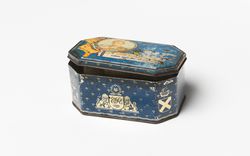
Brian Boigon asks Elizabeth Grosz, Sanford Kwinter, and Bruce Sterling to reflect on the computer revolution and its impact on bodies in space
Keyword(s):
digital technology, interactivity, television, TV, multidisciplinary, multidisciplinarity
digital technology, interactivity, television, TV, multidisciplinary, multidisciplinarity
Published:
13 July 2026
13 July 2026
Title:
Outer Space (Culture Lab, 1992)
Brian Boigon asks Elizabeth Grosz, Sanford Kwinter, and Bruce Sterling to reflect on the computer revolution and its impact on bodies in space
Actions:
Outer Space (Culture Lab, 1992)
Brian Boigon asks Elizabeth Grosz, Sanford Kwinter, and Bruce Sterling to reflect on the computer revolution and its impact on bodies in space
Actions:
Form:
archives
Level of archival description:
Fonds
archives
Level of archival description:
Fonds
Title:
Kaiman Lee fonds
Kaiman Lee fonds
Reference number:
AP222
Synopsis:
The Kaiman Lee fonds, circa 1965 – 2006, documents the professional and academic career of Dr. Kaiman Lee. The material in the fonds also represents the publishing activities of the Environmental Design and Research Center, and the Center for Environmental Research, both based in Boston. The fonds also covers Lee’s academic pursuits as a student and lecturer. The fonds also contains computer parts related to the ARK Two computer-aided design system which Lee worked on during his time at the Boston-based firm Perry, Dean and Stewart Architects. The records within the fonds largely consists of photographic materials, publications, and artefacts.
AP222
Synopsis:
The Kaiman Lee fonds, circa 1965 – 2006, documents the professional and academic career of Dr. Kaiman Lee. The material in the fonds also represents the publishing activities of the Environmental Design and Research Center, and the Center for Environmental Research, both based in Boston. The fonds also covers Lee’s academic pursuits as a student and lecturer. The fonds also contains computer parts related to the ARK Two computer-aided design system which Lee worked on during his time at the Boston-based firm Perry, Dean and Stewart Architects. The records within the fonds largely consists of photographic materials, publications, and artefacts.
People:
Date:
circa 1965 - 2006
circa 1965 - 2006
Title:
Kaiman Lee fonds
Actions:
AP222
Synopsis:
The Kaiman Lee fonds, circa 1965 – 2006, documents the professional and academic career of Dr. Kaiman Lee. The material in the fonds also represents the publishing activities of the Environmental Design and Research Center, and the Center for Environmental Research, both based in Boston. The fonds also covers Lee’s academic pursuits as a student and lecturer. The fonds also contains computer parts related to the ARK Two computer-aided design system which Lee worked on during his time at the Boston-based firm Perry, Dean and Stewart Architects. The records within the fonds largely consists of photographic materials, publications, and artefacts.
Kaiman Lee fonds
Actions:
AP222
Synopsis:
The Kaiman Lee fonds, circa 1965 – 2006, documents the professional and academic career of Dr. Kaiman Lee. The material in the fonds also represents the publishing activities of the Environmental Design and Research Center, and the Center for Environmental Research, both based in Boston. The fonds also covers Lee’s academic pursuits as a student and lecturer. The fonds also contains computer parts related to the ARK Two computer-aided design system which Lee worked on during his time at the Boston-based firm Perry, Dean and Stewart Architects. The records within the fonds largely consists of photographic materials, publications, and artefacts.
Form:
archives
Level of archival description:
Fonds
archives
Level of archival description:
Fonds
Date:
circa 1965 - 2006
circa 1965 - 2006
People:


