


103 Results
Form:
books
books
Actions:
Price:
$25.95
(available in store)
Summary:
An ever-increasing proportion of our lives is spent in supermarkets, airports and hotels, on motorways or in front of TVs, computer and cash machines. This invasion of the world by what Marc Auge calls 'non-space' results in a profound alteration of awareness: something we perceive, but only in a partial and incoherent manner. Auge uses the concept of 'supermodernity' to(...)
Title:
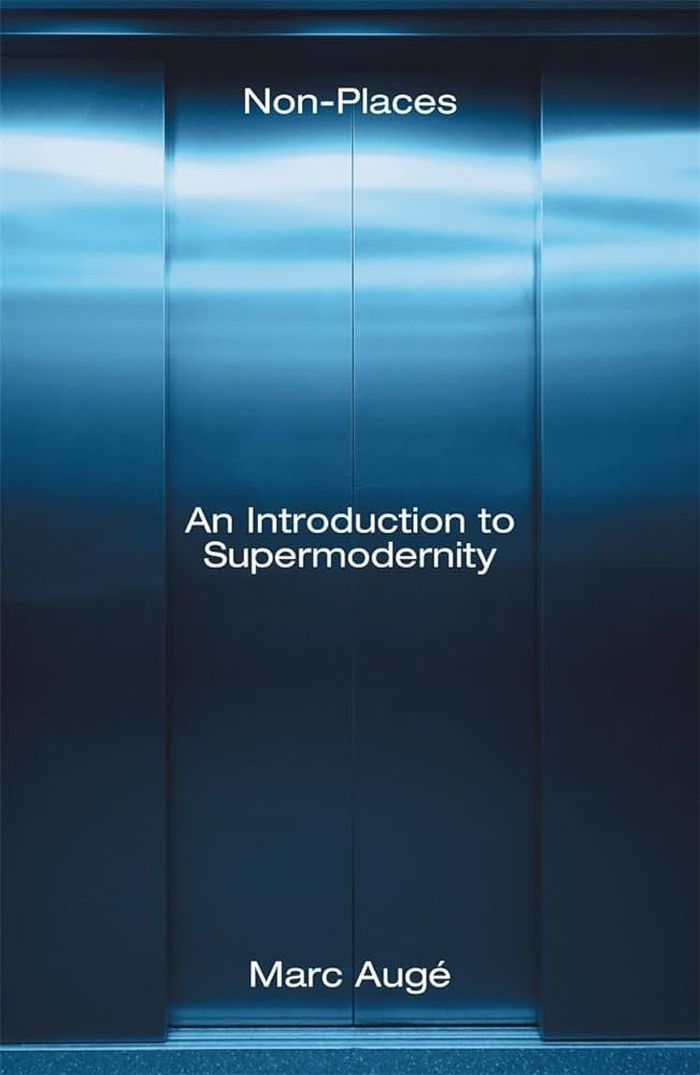
Non-places: An introduction to supermodernity
Actions:
Price:
$25.95
(available in store)
Summary:
An ever-increasing proportion of our lives is spent in supermarkets, airports and hotels, on motorways or in front of TVs, computer and cash machines. This invasion of the world by what Marc Auge calls 'non-space' results in a profound alteration of awareness: something we perceive, but only in a partial and incoherent manner. Auge uses the concept of 'supermodernity' to describe the logic of these late-capitalist phenomena - a logic of excessive information and excessive space. In this fascinating and lucid essay he seeks to establish and intellectual armature for an anthropology of supermodernity. Starting with an attempt to disentangle anthropology from history, Auge goes on to map the distinction between place, encrusted with historical monuments and creative social life, and non-place, to which individuals are connected in a uniform manner and where no organic social life is possible.
Form:
books
books
Publication:
November 2023
November 2023
Subject:
Architectural Theory
Architectural Theory
Form:
books
books
Actions:
Price:
$95.00
(available to order)
Summary:
In view of the growing number of diverse life styles, the search for flexible, adaptable floor plans has become a fundamental issue in residential building. That the continued demand in urban centres can only be responsibly satisfied by high-density housing is undisputed. More than ever before, building high-density housing is a complex, diverse and challenging task for(...)
Title:
High-density housing: Concepts, planning, construction
Actions:
Price:
$95.00
(available to order)
Summary:
In view of the growing number of diverse life styles, the search for flexible, adaptable floor plans has become a fundamental issue in residential building. That the continued demand in urban centres can only be responsibly satisfied by high-density housing is undisputed. More than ever before, building high-density housing is a complex, diverse and challenging task for planners and architects. This book presents international projects which document the breadth and complexity of the task, from the design of the floor plans, the development and use of resources, to the use of economically beneficial building systems. The high quality of the architecture and construction in such residential areas can be clearly seen in the uniform illustrations of the floor plans, and large-scale drawings of details which facilitate comparison. The introductory contributions discuss extensively the difficult and provocative topic of floor plan design and development. This book is a comprehensive review of the current state of residential building, the perspectives, trends and future developments.
Form:
books
books
Publication:
September 2004
September 2004
Subject:
Collective Housing
Collective Housing
Form:
books
books
Actions:
Price:
$140.00
(available to order)
Summary:
Bar, surface, body, and space are the fundamental elements of the design process. Every form, however complex, may be understood as a variation of them. And underlying every concrete design is a design methodology that can be analyzed, taught, and learned as a transformation of these four categories. Taking this theory as its starting point, this book is nothing less(...)
Title:
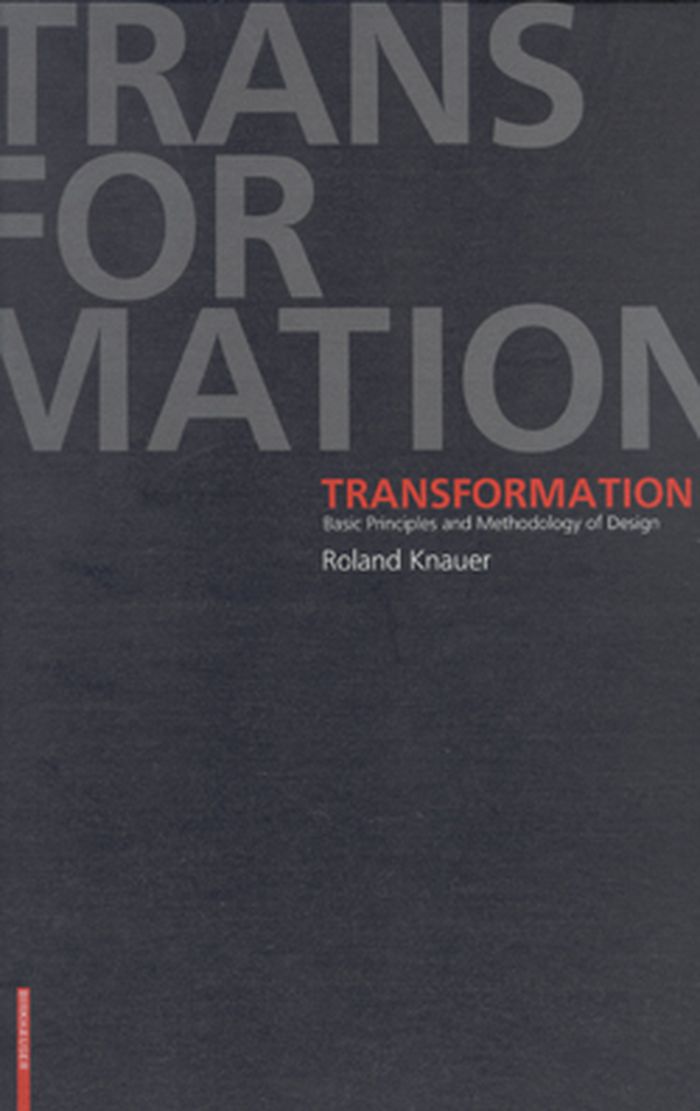
Transformation: basic principles and methodology of design
Actions:
Price:
$140.00
(available to order)
Summary:
Bar, surface, body, and space are the fundamental elements of the design process. Every form, however complex, may be understood as a variation of them. And underlying every concrete design is a design methodology that can be analyzed, taught, and learned as a transformation of these four categories. Taking this theory as its starting point, this book is nothing less than a foundational work for architects, designers, and lay people with an interest in cultural history. It details what could be called the unrivaled grammar of design. With a systematic aim and progressively increasing complexity, it unfolds the creative potential of these categories with succinct texts, uniform drawings, and a broad array of examples from architecture, design, and art. However, the book also occupies an exceptional position as a physical book: the layout makes it especially easy to compare and combine different design steps, and the separate binding of individual groups of pages makes doing so even easier. The result is a kind of construction set that invites the reader to play as well as research.
Form:
books
books
Publication:
April 2008, Basel, Berlin, Boston
April 2008, Basel, Berlin, Boston
Subject:
Interior Design
Interior Design


