


12962 Results
Form:
events
events
Actions:
Description:
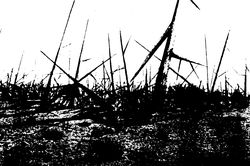
Peter Galison, Joseph Pellegrino University Professor of the History of Science and of Physics at Harvard University, discusses his current project – writing and filming about nuclear waste sites and the future of land. “As they are usually understood, ‘wasteland’ and ‘wilderness’ are opposites; when they merge on the sites of decommissioned weapons lands, when land is at(...)
Peter Galison, Joseph Pellegrino University Professor of the History of Science and of Physics at Harvard University, discusses his current project – writing and filming about nuclear waste sites and the future of land. “As they are usually understood, ‘wasteland’ and ‘wilderness’ are opposites; when they merge on the sites of decommissioned weapons lands, when land is at(...)
Location:
CCA Bookstore
CCA Bookstore
Date:
14 February 2010 , 3pm
14 February 2010 , 3pm
Title:
Peter Galison: Waste-Wilderness
Actions:
Description:
Peter Galison, Joseph Pellegrino University Professor of the History of Science and of Physics at Harvard University, discusses his current project – writing and filming about nuclear waste sites and the future of land. “As they are usually understood, ‘wasteland’ and ‘wilderness’ are opposites; when they merge on the sites of decommissioned weapons lands, when land is at(...)
Peter Galison: Waste-Wilderness
Actions:
Description:
Peter Galison, Joseph Pellegrino University Professor of the History of Science and of Physics at Harvard University, discusses his current project – writing and filming about nuclear waste sites and the future of land. “As they are usually understood, ‘wasteland’ and ‘wilderness’ are opposites; when they merge on the sites of decommissioned weapons lands, when land is at(...)
Form:
events
events
Date:
14 February 2010
3pm
14 February 2010
3pm
Location:
CCA Bookstore
CCA Bookstore
Form:
events
events
Actions:
Description:
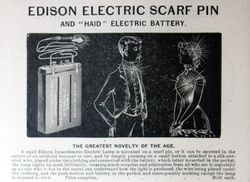
Visiting Scholar Katie Lloyd Thomas presents her research: In the United Kingdom, the naming and selection of building products—or ‘shopping’ on behalf of the client—only became part of the architect’s role during the vast expansion of mass manufacturing in the 1930s. These radical transformations, largely overlooked today, were enthusiastically embraced and debated by(...)
Visiting Scholar Katie Lloyd Thomas presents her research: In the United Kingdom, the naming and selection of building products—or ‘shopping’ on behalf of the client—only became part of the architect’s role during the vast expansion of mass manufacturing in the 1930s. These radical transformations, largely overlooked today, were enthusiastically embraced and debated by(...)
Location:
Shaughnessy House
Shaughnessy House
Date:
20 July 2017, 6pm
20 July 2017, 6pm
Title:
Visiting Scholar Seminar: Katie Lloyd Thomas
Actions:
Description:
Visiting Scholar Katie Lloyd Thomas presents her research: In the United Kingdom, the naming and selection of building products—or ‘shopping’ on behalf of the client—only became part of the architect’s role during the vast expansion of mass manufacturing in the 1930s. These radical transformations, largely overlooked today, were enthusiastically embraced and debated by(...)
Visiting Scholar Seminar: Katie Lloyd Thomas
Actions:
Description:
Visiting Scholar Katie Lloyd Thomas presents her research: In the United Kingdom, the naming and selection of building products—or ‘shopping’ on behalf of the client—only became part of the architect’s role during the vast expansion of mass manufacturing in the 1930s. These radical transformations, largely overlooked today, were enthusiastically embraced and debated by(...)
Form:
events
events
Date:
20 July 2017
6pm
20 July 2017
6pm
Location:
Shaughnessy House
Shaughnessy House
Form:
exhibitions
exhibitions
Actions:
Description:
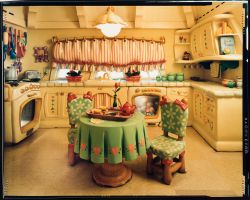
Realism and Illusion: Catherine Wagner Photographs the Disney Theme Parks presents a visual essay of the Disney theme parks in Anaheim, Orlando, Tokyo, and Paris. Fascinated by the importance of illusion in the design and layout of the parks, Wagner aspired “to add yet another layer of deception to this already simulated world, our world, where illusion is now more real(...)
Realism and Illusion: Catherine Wagner Photographs the Disney Theme Parks presents a visual essay of the Disney theme parks in Anaheim, Orlando, Tokyo, and Paris. Fascinated by the importance of illusion in the design and layout of the parks, Wagner aspired “to add yet another layer of deception to this already simulated world, our world, where illusion is now more real(...)
Location:
Octagonal gallery
Octagonal gallery
Date:
17 June 1997 to 28 September 1997
17 June 1997 to 28 September 1997
Title:
Realism and Illusion: Catherine Wagner Photographs the Disney Theme Parks
Actions:
Description:
Realism and Illusion: Catherine Wagner Photographs the Disney Theme Parks presents a visual essay of the Disney theme parks in Anaheim, Orlando, Tokyo, and Paris. Fascinated by the importance of illusion in the design and layout of the parks, Wagner aspired “to add yet another layer of deception to this already simulated world, our world, where illusion is now more real(...)
Realism and Illusion: Catherine Wagner Photographs the Disney Theme Parks
Actions:
Description:
Realism and Illusion: Catherine Wagner Photographs the Disney Theme Parks presents a visual essay of the Disney theme parks in Anaheim, Orlando, Tokyo, and Paris. Fascinated by the importance of illusion in the design and layout of the parks, Wagner aspired “to add yet another layer of deception to this already simulated world, our world, where illusion is now more real(...)
Form:
exhibitions
exhibitions
Date:
17 June 1997 to
28 September 1997
17 June 1997 to
28 September 1997
Location:
Octagonal gallery
Octagonal gallery
Form:
textual records
textual records
Actions:
Reference number:
ARCH275923
Description:
2 files - Edited copy of Seven Stones: The Architecture of Arthur Erickson by Edith Iglauer, later renamed to Seven Stones: A Portrait of Arthur Erickson (first published in1981); A bibliography of literature on Arthur Erickson (1973), compiled by Jill Wade, University of Manitoba Libraries.
ARCH275923
Description:
2 files - Edited copy of Seven Stones: The Architecture of Arthur Erickson by Edith Iglauer, later renamed to Seven Stones: A Portrait of Arthur Erickson (first published in1981); A bibliography of literature on Arthur Erickson (1973), compiled by Jill Wade, University of Manitoba Libraries.
People:
Date:
1973-1980
1973-1980
Title:
Various publications on Arthur Erickson
Actions:
ARCH275923
Description:
2 files - Edited copy of Seven Stones: The Architecture of Arthur Erickson by Edith Iglauer, later renamed to Seven Stones: A Portrait of Arthur Erickson (first published in1981); A bibliography of literature on Arthur Erickson (1973), compiled by Jill Wade, University of Manitoba Libraries.
Various publications on Arthur Erickson
Actions:
ARCH275923
Description:
2 files - Edited copy of Seven Stones: The Architecture of Arthur Erickson by Edith Iglauer, later renamed to Seven Stones: A Portrait of Arthur Erickson (first published in1981); A bibliography of literature on Arthur Erickson (1973), compiled by Jill Wade, University of Manitoba Libraries.
Form:
textual records
textual records
Date:
1973-1980
1973-1980
People:
Form:
textual records
textual records
Actions:
Reference number:
ARCH153747
Description:
Transcript of PDE's interview of Philip Johnson for Skyline, 18 January 1982 Corrections for notes in book on House X ? Correspondence with Skyline editor Transcript of PDE's interview with Robert Venturi, 10 June Edited transcript of PDE's interview with Henry Cobb, 11 March
ARCH153747
Description:
Transcript of PDE's interview of Philip Johnson for Skyline, 18 January 1982 Corrections for notes in book on House X ? Correspondence with Skyline editor Transcript of PDE's interview with Robert Venturi, 10 June Edited transcript of PDE's interview with Henry Cobb, 11 March
People:
Date:
1982
1982
Title:
Skyline, correspondence and transcriptions of interviews, 1982
Actions:
ARCH153747
Description:
Transcript of PDE's interview of Philip Johnson for Skyline, 18 January 1982 Corrections for notes in book on House X ? Correspondence with Skyline editor Transcript of PDE's interview with Robert Venturi, 10 June Edited transcript of PDE's interview with Henry Cobb, 11 March
Skyline, correspondence and transcriptions of interviews, 1982
Actions:
ARCH153747
Description:
Transcript of PDE's interview of Philip Johnson for Skyline, 18 January 1982 Corrections for notes in book on House X ? Correspondence with Skyline editor Transcript of PDE's interview with Robert Venturi, 10 June Edited transcript of PDE's interview with Henry Cobb, 11 March
Form:
textual records
textual records
Date:
1982
1982
People:
Level of archival description:
Project
Project
Actions:
Reference number:
AP198.S1.1997.PR02
Description:
Project records document the design process for OCEAN North’s competition entry for the Jyväskylä Music and Arts Centre in 1997. The project was titled Terra Cultura by OCEAN North. The international competition called to create a multi-usage space that would include a venue for the symphonic orchestra, a music school, exhibition spaces, and the possibility to host a variety of small cultural events in the Finnish city of Jyväskylä. The proposed site is in the center of the town, across the street from the Jyväskylä city church and its park, and nearby buildings designed by Alvar Aalto. OCEAN North’s concept presents a topological surface as an extension of the surrounding urban scape with two masses that would host the formal functions of the building (concert hall, music school, exhibition halls). The two volumes, or raised blocks, are divided along a diagonal elevated space, which is the extension of the ground’s topological surface filled and dubbed “Liquid Flow Space” by the design team. In their interview with Greg Lynn, Johan Bettum and Kivi Sotamaa mentioned that the idea for Jyväskylä was that it was a cloud. Digital files, in particular, show the process to achieve the projected design. Drawings provide views of streamed particles and of resulting peels. They also include plans, elevations and axonometric views of the structure. Most files are raster or vector images, likely saved from CAD software. A few files are in CAD formats such as Microstation, 3D Studio and form*Z. Digital files also present sine wave analysis and resulting charts for each component of the program. The analysis and charts present the relationships between various components of the building’s program such as the Art Museum, the Concert Halls, the technical space, and the Common facilities. These files are raster images and spreadsheets. Photographs of the site in Jyväskylä and of models built by OCEAN North were digitized and are included with the digital working files. Physical drawings are chiefly floor plans for the building, but also include sections and sketches. Finally, project files include photographic prints of two built models. One of these models, a small model of the conceptual masses of the building structure, is itself in the archive. Photographs show the model in the context of a city scape model. The second model, not part of the archive at CCA, was built at a bigger scale and was an intricate cardboard and wooden stick structure. Sources: Softspace: from a representation of form to a simulation of space, Edited by Sean Lally and Jessica Young. London, New York: Routledge, 2007. Greg Lynn, ed. Archaeology of the Digital 17: OCEAN North, Jyväskylä Music and Arts Centre, Montréal: Canadian Centre for Architecture, 2017. ePub.
AP198.S1.1997.PR02
Description:
Project records document the design process for OCEAN North’s competition entry for the Jyväskylä Music and Arts Centre in 1997. The project was titled Terra Cultura by OCEAN North. The international competition called to create a multi-usage space that would include a venue for the symphonic orchestra, a music school, exhibition spaces, and the possibility to host a variety of small cultural events in the Finnish city of Jyväskylä. The proposed site is in the center of the town, across the street from the Jyväskylä city church and its park, and nearby buildings designed by Alvar Aalto. OCEAN North’s concept presents a topological surface as an extension of the surrounding urban scape with two masses that would host the formal functions of the building (concert hall, music school, exhibition halls). The two volumes, or raised blocks, are divided along a diagonal elevated space, which is the extension of the ground’s topological surface filled and dubbed “Liquid Flow Space” by the design team. In their interview with Greg Lynn, Johan Bettum and Kivi Sotamaa mentioned that the idea for Jyväskylä was that it was a cloud. Digital files, in particular, show the process to achieve the projected design. Drawings provide views of streamed particles and of resulting peels. They also include plans, elevations and axonometric views of the structure. Most files are raster or vector images, likely saved from CAD software. A few files are in CAD formats such as Microstation, 3D Studio and form*Z. Digital files also present sine wave analysis and resulting charts for each component of the program. The analysis and charts present the relationships between various components of the building’s program such as the Art Museum, the Concert Halls, the technical space, and the Common facilities. These files are raster images and spreadsheets. Photographs of the site in Jyväskylä and of models built by OCEAN North were digitized and are included with the digital working files. Physical drawings are chiefly floor plans for the building, but also include sections and sketches. Finally, project files include photographic prints of two built models. One of these models, a small model of the conceptual masses of the building structure, is itself in the archive. Photographs show the model in the context of a city scape model. The second model, not part of the archive at CCA, was built at a bigger scale and was an intricate cardboard and wooden stick structure. Sources: Softspace: from a representation of form to a simulation of space, Edited by Sean Lally and Jessica Young. London, New York: Routledge, 2007. Greg Lynn, ed. Archaeology of the Digital 17: OCEAN North, Jyväskylä Music and Arts Centre, Montréal: Canadian Centre for Architecture, 2017. ePub.
People:
Date:
1997
1997
Title:
Terra Cultura – Jyväskylä Music and Arts Centre, international competition entry
Actions:
AP198.S1.1997.PR02
Description:
Project records document the design process for OCEAN North’s competition entry for the Jyväskylä Music and Arts Centre in 1997. The project was titled Terra Cultura by OCEAN North. The international competition called to create a multi-usage space that would include a venue for the symphonic orchestra, a music school, exhibition spaces, and the possibility to host a variety of small cultural events in the Finnish city of Jyväskylä. The proposed site is in the center of the town, across the street from the Jyväskylä city church and its park, and nearby buildings designed by Alvar Aalto. OCEAN North’s concept presents a topological surface as an extension of the surrounding urban scape with two masses that would host the formal functions of the building (concert hall, music school, exhibition halls). The two volumes, or raised blocks, are divided along a diagonal elevated space, which is the extension of the ground’s topological surface filled and dubbed “Liquid Flow Space” by the design team. In their interview with Greg Lynn, Johan Bettum and Kivi Sotamaa mentioned that the idea for Jyväskylä was that it was a cloud. Digital files, in particular, show the process to achieve the projected design. Drawings provide views of streamed particles and of resulting peels. They also include plans, elevations and axonometric views of the structure. Most files are raster or vector images, likely saved from CAD software. A few files are in CAD formats such as Microstation, 3D Studio and form*Z. Digital files also present sine wave analysis and resulting charts for each component of the program. The analysis and charts present the relationships between various components of the building’s program such as the Art Museum, the Concert Halls, the technical space, and the Common facilities. These files are raster images and spreadsheets. Photographs of the site in Jyväskylä and of models built by OCEAN North were digitized and are included with the digital working files. Physical drawings are chiefly floor plans for the building, but also include sections and sketches. Finally, project files include photographic prints of two built models. One of these models, a small model of the conceptual masses of the building structure, is itself in the archive. Photographs show the model in the context of a city scape model. The second model, not part of the archive at CCA, was built at a bigger scale and was an intricate cardboard and wooden stick structure. Sources: Softspace: from a representation of form to a simulation of space, Edited by Sean Lally and Jessica Young. London, New York: Routledge, 2007. Greg Lynn, ed. Archaeology of the Digital 17: OCEAN North, Jyväskylä Music and Arts Centre, Montréal: Canadian Centre for Architecture, 2017. ePub.
Terra Cultura – Jyväskylä Music and Arts Centre, international competition entry
Actions:
AP198.S1.1997.PR02
Description:
Project records document the design process for OCEAN North’s competition entry for the Jyväskylä Music and Arts Centre in 1997. The project was titled Terra Cultura by OCEAN North. The international competition called to create a multi-usage space that would include a venue for the symphonic orchestra, a music school, exhibition spaces, and the possibility to host a variety of small cultural events in the Finnish city of Jyväskylä. The proposed site is in the center of the town, across the street from the Jyväskylä city church and its park, and nearby buildings designed by Alvar Aalto. OCEAN North’s concept presents a topological surface as an extension of the surrounding urban scape with two masses that would host the formal functions of the building (concert hall, music school, exhibition halls). The two volumes, or raised blocks, are divided along a diagonal elevated space, which is the extension of the ground’s topological surface filled and dubbed “Liquid Flow Space” by the design team. In their interview with Greg Lynn, Johan Bettum and Kivi Sotamaa mentioned that the idea for Jyväskylä was that it was a cloud. Digital files, in particular, show the process to achieve the projected design. Drawings provide views of streamed particles and of resulting peels. They also include plans, elevations and axonometric views of the structure. Most files are raster or vector images, likely saved from CAD software. A few files are in CAD formats such as Microstation, 3D Studio and form*Z. Digital files also present sine wave analysis and resulting charts for each component of the program. The analysis and charts present the relationships between various components of the building’s program such as the Art Museum, the Concert Halls, the technical space, and the Common facilities. These files are raster images and spreadsheets. Photographs of the site in Jyväskylä and of models built by OCEAN North were digitized and are included with the digital working files. Physical drawings are chiefly floor plans for the building, but also include sections and sketches. Finally, project files include photographic prints of two built models. One of these models, a small model of the conceptual masses of the building structure, is itself in the archive. Photographs show the model in the context of a city scape model. The second model, not part of the archive at CCA, was built at a bigger scale and was an intricate cardboard and wooden stick structure. Sources: Softspace: from a representation of form to a simulation of space, Edited by Sean Lally and Jessica Young. London, New York: Routledge, 2007. Greg Lynn, ed. Archaeology of the Digital 17: OCEAN North, Jyväskylä Music and Arts Centre, Montréal: Canadian Centre for Architecture, 2017. ePub.
Level of archival description:
Project
Project
Date:
1997
1997
People:
Level of archival description:
Project
Project
Actions:
Reference number:
AP194.S1.1997.PR02
Description:
Project records document the design process for OCEAN North’s competition entry for the Jyväskylä Music and Arts Centre in 1997. The project was titled Terra Cultura by OCEAN North. The competition was to create a multi-usage space that would include a venue for the symphonic orchestra, a music school, exhibition spaces and the possibility to host a variety of small cultural events in the Finnish city of Jyväskylä. The proposed site is in the center of the town, across the street from the Jyväskylä city church and its park, and nearby buildings designed by Alvar Aalto. OCEAN North’s concept presents a topological surface as an extension of the surrounding urban scape with two masses that would host the formal functions of the building (concert hall, music school, exhibition halls). The two volumes, or raised blocks, are divided along a diagonal elevated space, which is the extension of the ground’s topological surface filled and dubbed “Liquid Flow Space” by the design team. In their interview with Greg Lynn, Johan Bettum and Kivi Sotamaa mentioned that the idea for Jyväskylä was that it was a cloud. To reach this goal, the team used CAD software to trace streams of particles as a modelling approach. The masses of linear elements that were generated were further deconstructed and turned into “peels” and rearranged to create the masses of the building. Physical models were also used to test and further what had emerged from the digital design process, with results being fed back into the digital drawings. During the process, Bettum also brought in the idea of the internalisation of the outside, taking inspiration from the Centre Georges Pompidou. Digital records document the creative process with raster and vector images, CAD drawings and models, and few digital textual records describing the project and the program charts. Drawings and models show site and building plans, perspectives and sections; particles streaming and resulting linear masses; peels and sections identified per color; and renderings of aerials, perspectives and elevation views. OCEAN North seems to have mostly used Microstation for modelling, although there are a few files created with form*Z and 3D Studio. Some of the raster images might have been created with these software as well, showing a given stage of the design process and including renderings. There are also screen captures showing the top, front, left and perspective views of 3D models. Adobe Photoshop and Illustrator were also used to create and modify drawings and diagrams. Program charts were created in Microsoft Excel. Sources: Softspace: from a representation of form to a simulation of space, Edited by Sean Lally and Jessica Young. London, New York: Routledge, 2007. Greg Lynn, ed. Archaeology of the Digital 17: OCEAN North, Jyväskylä Music and Arts Centre, Montréal: Canadian Centre for Architecture, 2017. ePub.
AP194.S1.1997.PR02
Description:
Project records document the design process for OCEAN North’s competition entry for the Jyväskylä Music and Arts Centre in 1997. The project was titled Terra Cultura by OCEAN North. The competition was to create a multi-usage space that would include a venue for the symphonic orchestra, a music school, exhibition spaces and the possibility to host a variety of small cultural events in the Finnish city of Jyväskylä. The proposed site is in the center of the town, across the street from the Jyväskylä city church and its park, and nearby buildings designed by Alvar Aalto. OCEAN North’s concept presents a topological surface as an extension of the surrounding urban scape with two masses that would host the formal functions of the building (concert hall, music school, exhibition halls). The two volumes, or raised blocks, are divided along a diagonal elevated space, which is the extension of the ground’s topological surface filled and dubbed “Liquid Flow Space” by the design team. In their interview with Greg Lynn, Johan Bettum and Kivi Sotamaa mentioned that the idea for Jyväskylä was that it was a cloud. To reach this goal, the team used CAD software to trace streams of particles as a modelling approach. The masses of linear elements that were generated were further deconstructed and turned into “peels” and rearranged to create the masses of the building. Physical models were also used to test and further what had emerged from the digital design process, with results being fed back into the digital drawings. During the process, Bettum also brought in the idea of the internalisation of the outside, taking inspiration from the Centre Georges Pompidou. Digital records document the creative process with raster and vector images, CAD drawings and models, and few digital textual records describing the project and the program charts. Drawings and models show site and building plans, perspectives and sections; particles streaming and resulting linear masses; peels and sections identified per color; and renderings of aerials, perspectives and elevation views. OCEAN North seems to have mostly used Microstation for modelling, although there are a few files created with form*Z and 3D Studio. Some of the raster images might have been created with these software as well, showing a given stage of the design process and including renderings. There are also screen captures showing the top, front, left and perspective views of 3D models. Adobe Photoshop and Illustrator were also used to create and modify drawings and diagrams. Program charts were created in Microsoft Excel. Sources: Softspace: from a representation of form to a simulation of space, Edited by Sean Lally and Jessica Young. London, New York: Routledge, 2007. Greg Lynn, ed. Archaeology of the Digital 17: OCEAN North, Jyväskylä Music and Arts Centre, Montréal: Canadian Centre for Architecture, 2017. ePub.
People:
Date:
1997-1998
1997-1998
Title:
Terra Cultura – Jyväskylä Music and Arts Centre, international competition entry, Jyväskylä, Finland (1997)
Actions:
AP194.S1.1997.PR02
Description:
Project records document the design process for OCEAN North’s competition entry for the Jyväskylä Music and Arts Centre in 1997. The project was titled Terra Cultura by OCEAN North. The competition was to create a multi-usage space that would include a venue for the symphonic orchestra, a music school, exhibition spaces and the possibility to host a variety of small cultural events in the Finnish city of Jyväskylä. The proposed site is in the center of the town, across the street from the Jyväskylä city church and its park, and nearby buildings designed by Alvar Aalto. OCEAN North’s concept presents a topological surface as an extension of the surrounding urban scape with two masses that would host the formal functions of the building (concert hall, music school, exhibition halls). The two volumes, or raised blocks, are divided along a diagonal elevated space, which is the extension of the ground’s topological surface filled and dubbed “Liquid Flow Space” by the design team. In their interview with Greg Lynn, Johan Bettum and Kivi Sotamaa mentioned that the idea for Jyväskylä was that it was a cloud. To reach this goal, the team used CAD software to trace streams of particles as a modelling approach. The masses of linear elements that were generated were further deconstructed and turned into “peels” and rearranged to create the masses of the building. Physical models were also used to test and further what had emerged from the digital design process, with results being fed back into the digital drawings. During the process, Bettum also brought in the idea of the internalisation of the outside, taking inspiration from the Centre Georges Pompidou. Digital records document the creative process with raster and vector images, CAD drawings and models, and few digital textual records describing the project and the program charts. Drawings and models show site and building plans, perspectives and sections; particles streaming and resulting linear masses; peels and sections identified per color; and renderings of aerials, perspectives and elevation views. OCEAN North seems to have mostly used Microstation for modelling, although there are a few files created with form*Z and 3D Studio. Some of the raster images might have been created with these software as well, showing a given stage of the design process and including renderings. There are also screen captures showing the top, front, left and perspective views of 3D models. Adobe Photoshop and Illustrator were also used to create and modify drawings and diagrams. Program charts were created in Microsoft Excel. Sources: Softspace: from a representation of form to a simulation of space, Edited by Sean Lally and Jessica Young. London, New York: Routledge, 2007. Greg Lynn, ed. Archaeology of the Digital 17: OCEAN North, Jyväskylä Music and Arts Centre, Montréal: Canadian Centre for Architecture, 2017. ePub.
Terra Cultura – Jyväskylä Music and Arts Centre, international competition entry, Jyväskylä, Finland (1997)
Actions:
AP194.S1.1997.PR02
Description:
Project records document the design process for OCEAN North’s competition entry for the Jyväskylä Music and Arts Centre in 1997. The project was titled Terra Cultura by OCEAN North. The competition was to create a multi-usage space that would include a venue for the symphonic orchestra, a music school, exhibition spaces and the possibility to host a variety of small cultural events in the Finnish city of Jyväskylä. The proposed site is in the center of the town, across the street from the Jyväskylä city church and its park, and nearby buildings designed by Alvar Aalto. OCEAN North’s concept presents a topological surface as an extension of the surrounding urban scape with two masses that would host the formal functions of the building (concert hall, music school, exhibition halls). The two volumes, or raised blocks, are divided along a diagonal elevated space, which is the extension of the ground’s topological surface filled and dubbed “Liquid Flow Space” by the design team. In their interview with Greg Lynn, Johan Bettum and Kivi Sotamaa mentioned that the idea for Jyväskylä was that it was a cloud. To reach this goal, the team used CAD software to trace streams of particles as a modelling approach. The masses of linear elements that were generated were further deconstructed and turned into “peels” and rearranged to create the masses of the building. Physical models were also used to test and further what had emerged from the digital design process, with results being fed back into the digital drawings. During the process, Bettum also brought in the idea of the internalisation of the outside, taking inspiration from the Centre Georges Pompidou. Digital records document the creative process with raster and vector images, CAD drawings and models, and few digital textual records describing the project and the program charts. Drawings and models show site and building plans, perspectives and sections; particles streaming and resulting linear masses; peels and sections identified per color; and renderings of aerials, perspectives and elevation views. OCEAN North seems to have mostly used Microstation for modelling, although there are a few files created with form*Z and 3D Studio. Some of the raster images might have been created with these software as well, showing a given stage of the design process and including renderings. There are also screen captures showing the top, front, left and perspective views of 3D models. Adobe Photoshop and Illustrator were also used to create and modify drawings and diagrams. Program charts were created in Microsoft Excel. Sources: Softspace: from a representation of form to a simulation of space, Edited by Sean Lally and Jessica Young. London, New York: Routledge, 2007. Greg Lynn, ed. Archaeology of the Digital 17: OCEAN North, Jyväskylä Music and Arts Centre, Montréal: Canadian Centre for Architecture, 2017. ePub.
Level of archival description:
Project
Project
Date:
1997-1998
1997-1998
People:
Form:
textual records
textual records
Actions:
Reference number:
AP197.S1.SS9.021
Description:
This box contains slide printouts on various architecture subjects as well as partial printouts of various writings by Kenneth Frampton that were used to update his curriculum vitae. Various clippings and articles about Kenneth Frampton and several of his curriculum vitaes (with edits) are also included in this box.
AP197.S1.SS9.021
Description:
This box contains slide printouts on various architecture subjects as well as partial printouts of various writings by Kenneth Frampton that were used to update his curriculum vitae. Various clippings and articles about Kenneth Frampton and several of his curriculum vitaes (with edits) are also included in this box.
People:
Date:
circa 1980-2015
circa 1980-2015
Title:
Slide printouts, partial printouts of various writings, curriculum vitaes, contracts and book deals as well as clippings and articles about Kenneth Frampton
Actions:
AP197.S1.SS9.021
Description:
This box contains slide printouts on various architecture subjects as well as partial printouts of various writings by Kenneth Frampton that were used to update his curriculum vitae. Various clippings and articles about Kenneth Frampton and several of his curriculum vitaes (with edits) are also included in this box.
Slide printouts, partial printouts of various writings, curriculum vitaes, contracts and book deals as well as clippings and articles about Kenneth Frampton
Actions:
AP197.S1.SS9.021
Description:
This box contains slide printouts on various architecture subjects as well as partial printouts of various writings by Kenneth Frampton that were used to update his curriculum vitae. Various clippings and articles about Kenneth Frampton and several of his curriculum vitaes (with edits) are also included in this box.
Form:
textual records
textual records
Date:
circa 1980-2015
circa 1980-2015
People:
Form:
events
events
Title:
Learning from... Copenhagen
Learning from... Copenhagen
Actions:
Description:
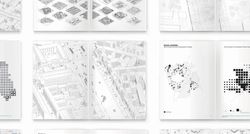
Deane Simpson presents the Atlas of the Copenhagens, a book project addressing an urban territory that has been posited in the media and celebrated by the municipality of Copenhagen as the world’s most sustainable and liveable city. Such claims suggest that Copenhagen is a fitting site to study and engage in a debate on sustainability and liveability. The Atlas operates(...)
Deane Simpson presents the Atlas of the Copenhagens, a book project addressing an urban territory that has been posited in the media and celebrated by the municipality of Copenhagen as the world’s most sustainable and liveable city. Such claims suggest that Copenhagen is a fitting site to study and engage in a debate on sustainability and liveability. The Atlas operates(...)
Location:
Paul-Desmarais Theatre
Paul-Desmarais Theatre
Date:
21 May 2015 , 6pm
21 May 2015 , 6pm
Title:
Learning from... Copenhagen
Actions:
Description:
Deane Simpson presents the Atlas of the Copenhagens, a book project addressing an urban territory that has been posited in the media and celebrated by the municipality of Copenhagen as the world’s most sustainable and liveable city. Such claims suggest that Copenhagen is a fitting site to study and engage in a debate on sustainability and liveability. The Atlas operates(...)
Learning from... Copenhagen
Actions:
Description:
Deane Simpson presents the Atlas of the Copenhagens, a book project addressing an urban territory that has been posited in the media and celebrated by the municipality of Copenhagen as the world’s most sustainable and liveable city. Such claims suggest that Copenhagen is a fitting site to study and engage in a debate on sustainability and liveability. The Atlas operates(...)
Form:
events
events
Date:
21 May 2015
6pm
21 May 2015
6pm
Location:
Paul-Desmarais Theatre
Paul-Desmarais Theatre
Form:
born digital, photographs
born digital, photographs
Actions:
Reference number:
AP179.S3.002
Description:
File contains digital photographs and related attribute files that are created when images are edited on a Mac. Original directory name: "2 of 2 CDs (Photos from Sack Tilton)". Most common file formats: Unidentified, JPEG File Interchange Format, Exchangeable Image File Format (Compressed), Raw JPEG Stream
AP179.S3.002
Description:
File contains digital photographs and related attribute files that are created when images are edited on a Mac. Original directory name: "2 of 2 CDs (Photos from Sack Tilton)". Most common file formats: Unidentified, JPEG File Interchange Format, Exchangeable Image File Format (Compressed), Raw JPEG Stream
People:
Date:
2004
2004
Title:
Digital photographs of the gatehouse building, Tongxian Art Center, Beijing
Actions:
AP179.S3.002
Description:
File contains digital photographs and related attribute files that are created when images are edited on a Mac. Original directory name: "2 of 2 CDs (Photos from Sack Tilton)". Most common file formats: Unidentified, JPEG File Interchange Format, Exchangeable Image File Format (Compressed), Raw JPEG Stream
Digital photographs of the gatehouse building, Tongxian Art Center, Beijing
Actions:
AP179.S3.002
Description:
File contains digital photographs and related attribute files that are created when images are edited on a Mac. Original directory name: "2 of 2 CDs (Photos from Sack Tilton)". Most common file formats: Unidentified, JPEG File Interchange Format, Exchangeable Image File Format (Compressed), Raw JPEG Stream
Form:
born digital, photographs
born digital, photographs
Date:
2004
2004
People:


