


109 Results
Form:
books
books
Actions:
Subject:
Publication:
Primary Information Art Workers Coalition 2008
Primary Information Art Workers Coalition 2008
Form:
books
books
Publication:
Primary Information Art Workers Coalition 2008
Primary Information Art Workers Coalition 2008
Subject:
Form:
books
books
Subject:
Publication:
Hatje Cantz 2012
Hatje Cantz 2012
Form:
books
books
Publication:
Hatje Cantz 2012
Hatje Cantz 2012
Subject:
Form:
books
books
Actions:
Holdings:
Description:
90 p. : color illustrations, maps, portraits ; 21 cm
Description:
90 p. : color illustrations, maps, portraits ; 21 cm
Author:
Subject:
Publication:
New York : Actar, 2013.
New York : Actar, 2013.
Title:
Slum insider : Mathare, Nairobi.
Actions:
Holdings:
Description:
90 p. : color illustrations, maps, portraits ; 21 cm
Slum insider : Mathare, Nairobi.
Actions:
Holdings:
Description:
90 p. : color illustrations, maps, portraits ; 21 cm
Form:
books
books
Publication:
New York : Actar, 2013.
New York : Actar, 2013.
Author:
Subject:
Form:
books
books
Actions:
Holdings:
Description:
xxii, 192 pages : illustrations, map ; 26 cm
Description:
xxii, 192 pages : illustrations, map ; 26 cm
Author:
Subject:
Publication:
Kirksville, Missouri : Truman State University Press, [2012]
Kirksville, Missouri : Truman State University Press, [2012]
Title:
Missouri armories : the Guard's home in architecture and history / Robert P. Wiegers.
Actions:
Holdings:
Description:
xxii, 192 pages : illustrations, map ; 26 cm
Missouri armories : the Guard's home in architecture and history / Robert P. Wiegers.
Actions:
Holdings:
Description:
xxii, 192 pages : illustrations, map ; 26 cm
Form:
books
books
Publication:
Kirksville, Missouri : Truman State University Press, [2012]
Kirksville, Missouri : Truman State University Press, [2012]
Author:
Subject:
Form:
books
books
Price:
$37.50
(available to order)
Summary:
The Body at Risk: Photography of Disorder, Illness, and Healing is the first book to explore the ways that photojournalists and social documentarians have conceptualized the human subject as a site of both good and ill health. The volume looks at photographs depicting child laborers; Depression-era health programs; general medical care in the southern United States at(...)
Title:
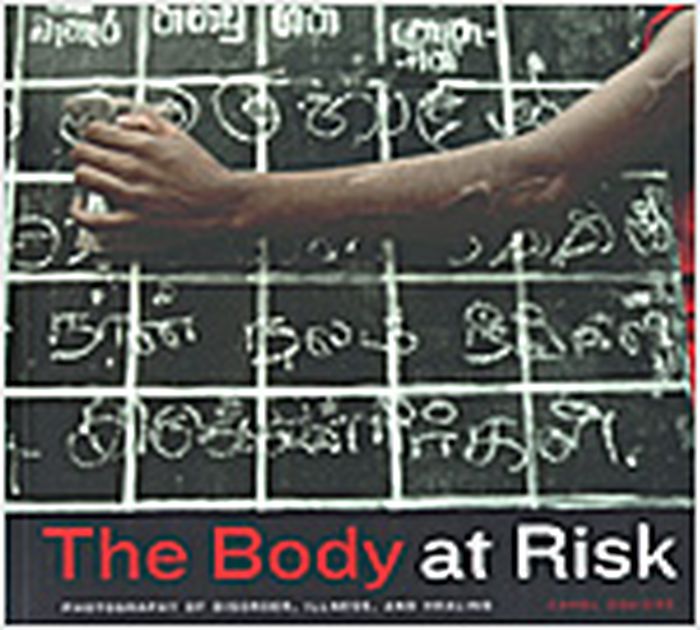
The body at risk : photography of disorder, illness and healing
Actions:
Price:
$37.50
(available to order)
Summary:
The Body at Risk: Photography of Disorder, Illness, and Healing is the first book to explore the ways that photojournalists and social documentarians have conceptualized the human subject as a site of both good and ill health. The volume looks at photographs depicting child laborers; Depression-era health programs; general medical care in the southern United States at mid-century; people with HIV, AIDS, and polio, along with their caretakers and the health workers who advocate for them; environmental pollution; physical and psychological injuries received during warfare; domestic violence; and emergency care in the modern urban hospital. It brings together ten significant bodies of photographs made over the past one hundred years to show how human health topics have been represented for the general public and how the emphasis on health has shifted; how photography has been used to present and promote certain points of view about health and the social circumstances that affect it, both positively and negatively; and how photography has helped shape public knowledge of and opinion about health care and some of the events and circumstances that engender it.
Form:
books
books
Publication:
December 2005, New York
December 2005, New York
Subject:
Theory of Photography
Theory of Photography
Form:
journals and magazines
journals and magazines

Title:
Mute vol 2 no 7
Mute vol 2 no 7
Actions:
Price:
$11.00
(available in store)
Summary:
We are living through an intensification of citizens', and non-citizens', visibility to capital. Database convergence, states of emergency and points-based immigration systems destroy the legal and informational grey zones in which the poor shelter and organise. As black economies and shadow sectors are exposed to the light of networked information in the interests of(...)
Title:
Mute vol 2 no 7
Actions:
Price:
$11.00
(available in store)
Summary:
We are living through an intensification of citizens', and non-citizens', visibility to capital. Database convergence, states of emergency and points-based immigration systems destroy the legal and informational grey zones in which the poor shelter and organise. As black economies and shadow sectors are exposed to the light of networked information in the interests of population management, border enforcement, welfare clamps-downs and, above all, profit, what are the risks and advantages of visibility?
Form:
journals and magazines
journals and magazines
Publication:
January 2008, London
January 2008, London
Subject:
Magazines
Magazines
Form:
books
books
Title:
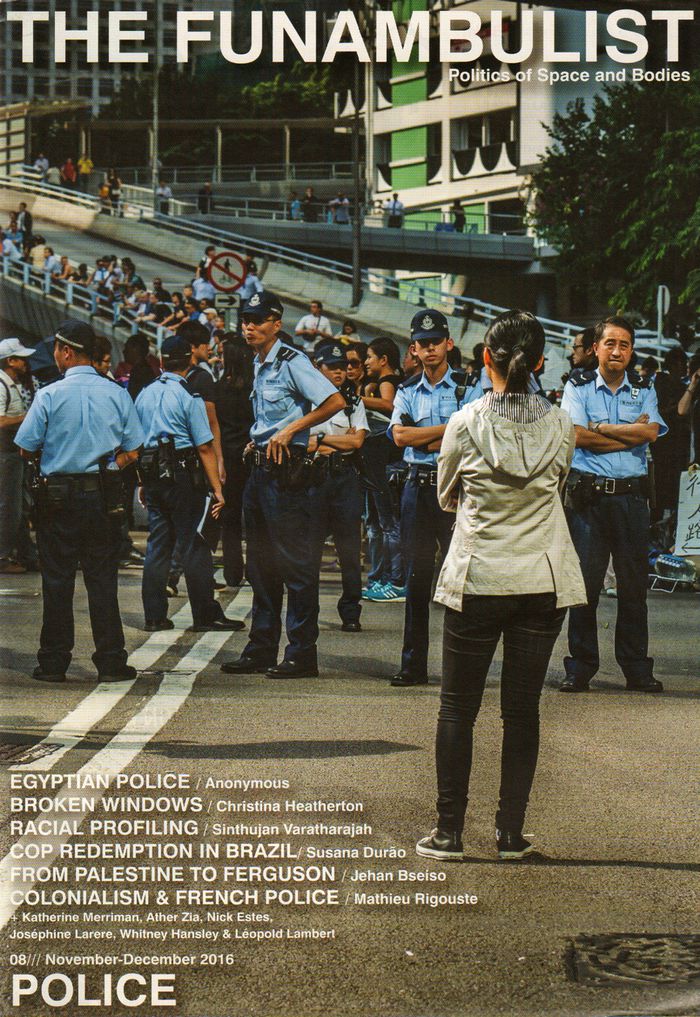
The Funambulist 8: Police
The Funambulist 8: Police
Actions:
Price:
$17.95
(available to order)
Summary:
This eighth issue of The Funambulist Magazine, dedicated to the police, can be read in continuity with Issue 04 (March-April 2016), which was focused on carceral environments. Its axiomatic editorial line is resolutely the same: just as there cannot be “better prisons,” there cannot be “better police,” at least not within the logics through which they are currently(...)
Title:
The Funambulist 8: Police
Actions:
Price:
$17.95
(available to order)
Summary:
This eighth issue of The Funambulist Magazine, dedicated to the police, can be read in continuity with Issue 04 (March-April 2016), which was focused on carceral environments. Its axiomatic editorial line is resolutely the same: just as there cannot be “better prisons,” there cannot be “better police,” at least not within the logics through which they are currently operating in a majority of the world’s societies. In this regard, the numerous murders of Native and Black bodies by the United States police, the violence of the Apartheid police in Jerusalem against Palestinians, the murderous operations of the Brazilian military police in the favelas, or the legalized abuse of power by the French and Turkish police during ongoing states of emergency; not as “police brutality” that would require reforms but, rather, as the very essence of policing itself, which calls for abolition.
Form:
books
books
Publication:
November 2016
November 2016
Subject:
Magazines
Magazines
Form:
books
books
Title:
War zones: gta papers 2
War zones: gta papers 2
Actions:
Price:
$39.95
(available to order)
Summary:
We tend to think of war as being fought in specific, bounded places—war zones. But since the end of World War II, warfare has taken different forms, with the wars themselves often undeclared and their battlegrounds ill-defined. This book addresses that shift. ''War Zones'' examines the people, landscapes, and built environments that are subject to both the civil and(...)
Title:
War zones: gta papers 2
Actions:
Price:
$39.95
(available to order)
Summary:
We tend to think of war as being fought in specific, bounded places—war zones. But since the end of World War II, warfare has taken different forms, with the wars themselves often undeclared and their battlegrounds ill-defined. This book addresses that shift. ''War Zones'' examines the people, landscapes, and built environments that are subject to both the civil and military aims and control of armed conflicts today. From colonial or total war, asymmetric war or counterinsurgency to barricaded or besieged cities, refugee camps or borderlines, to nuclear bunkers or ''war ghosts,'' to states of emergency and drone warfare, these texts disclose the complicated spatial aspects and process of formation of war zones past and present.
Form:
books
books
Publication:
August 2019
August 2019
Subject:
Architectural Theory
Architectural Theory
Form:
books
books
Actions:
Price:
$89.99
(available to order)
Summary:
Building Type Basics for Healthcare Facilities, Second Edition is your one-stop reference for the essential information you need to confidently begin the design process and successfully complete a healthcare project, large or small, on time and within budget. Leading architects from across the United States share their firsthand knowledge in order to guide you through all(...)
Subject:
Commercial interiors, Building types
Commercial interiors, Building types
Publication:
April 2007, 2008
April 2007, 2008
Title:
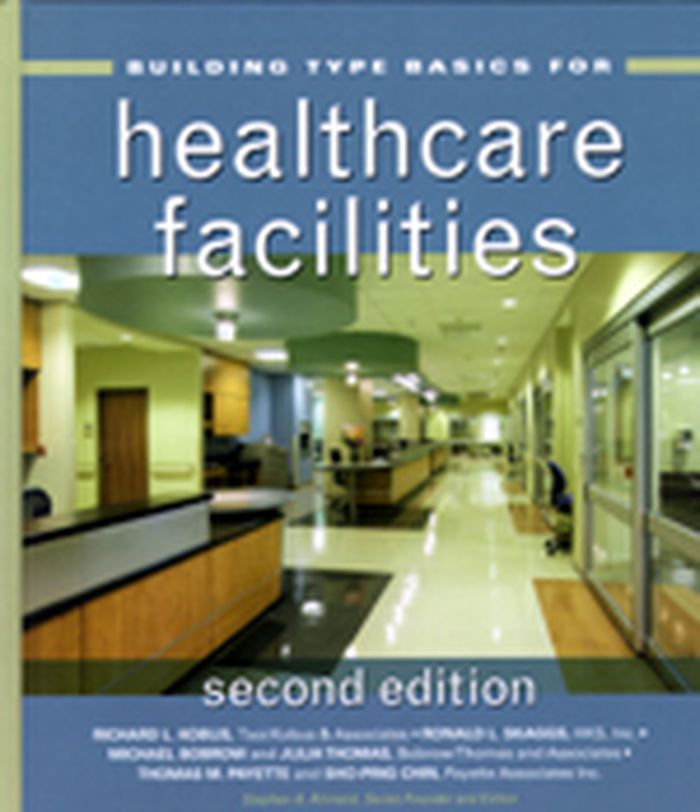
Building type basics for healthcare facilities
Actions:
Price:
$89.99
(available to order)
Summary:
Building Type Basics for Healthcare Facilities, Second Edition is your one-stop reference for the essential information you need to confidently begin the design process and successfully complete a healthcare project, large or small, on time and within budget. Leading architects from across the United States share their firsthand knowledge in order to guide you through all aspects of healthcare facility design, with an emphasis on what you need to do to get started quickly. This edition is revised with multiple new healthcare project examples completed this century, more information on engineering requirements, and background on evolving sustainability and technology issues. It begins with an assessment of the healthcare industry's current and future needs, focusing on how those needs affect architecture. Next you get critical information and guidelines that enable you to create successful designs for inpatient, outpatient, and long-term care facilities. Coverage includes clinics, emergency departments, ambulatory care units, specialty centers, as well as facilities designed for adaptive reuse or the assimilation of future technologies.
Form:
books
books
Publication:
April 2007, 2008
April 2007, 2008
Subject:
Commercial interiors, Building types
Commercial interiors, Building types


