


1064 Results
Form:
books
books
Actions:
Price:
$22.99
(available to order)
Summary:
What is the first thing to learn in art school? "Art can be anything." The second thing? "Learn to draw." With "101 things to learn in art school," artist and teacher Kit White delivers and develops such lessons, striking an instructive balance between technical advice and sage concepts. These 101 maxims, meditations, and demonstrations offer both a toolkit of ideas for(...)
Title:
101 things to learn in art school, revised
Actions:
Price:
$22.99
(available to order)
Summary:
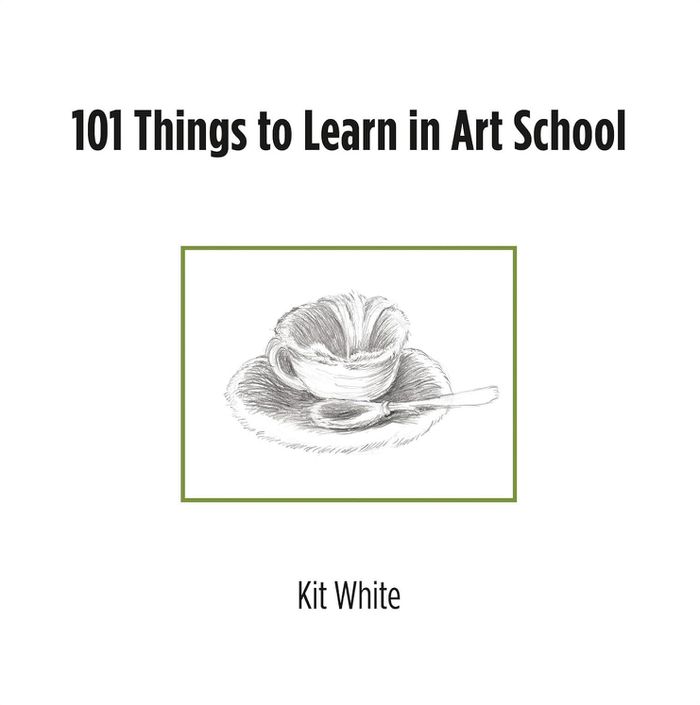
What is the first thing to learn in art school? "Art can be anything." The second thing? "Learn to draw." With "101 things to learn in art school," artist and teacher Kit White delivers and develops such lessons, striking an instructive balance between technical advice and sage concepts. These 101 maxims, meditations, and demonstrations offer both a toolkit of ideas for the art student and a set of guiding principles for the artist. Complementing each of the 101 succinct texts is an equally expressive drawing by the artist, often based on a historical or contemporary work of art, offering a visual correlative to the written thought. "Art can be anything" is illustrated by a drawing of Duchamp’s famous urinal; a description of chiaroscuro art is illuminated by an image "after Caravaggio"; a lesson on time and media is accompanied by a view of a Jenny Holzer projection; advice about surviving a critique gains resonance from Piero della Francesca’s arrow-pierced Saint Sebastian.
Form:
books
books
Publication:
October 2024
October 2024
Subject:
Art Theory
Art Theory
Form:
books
books
Actions:
Price:
$30.70
(available to order)
Summary:
'Television: Technology and Cultural Form' was first published in 1974, long before the dawn of multi-channel TV, or the reality and celebrity shows that now pack the schedules. Yet Williams' analysis of television's history, its institutions, programmes and practices, and its future prospects, remains remarkably prescient. Williams stresses the importance of(...)
Title:
Television: technology and cultural form
Actions:
Price:
$30.70
(available to order)
Summary:
'Television: Technology and Cultural Form' was first published in 1974, long before the dawn of multi-channel TV, or the reality and celebrity shows that now pack the schedules. Yet Williams' analysis of television's history, its institutions, programmes and practices, and its future prospects, remains remarkably prescient. Williams stresses the importance of technology in shaping the cultural form of television, while always resisting the determinism of McLuhan's dictum that 'the medium is the message'. If the medium really is the message, Williams asks, what is left for us to do or say? Williams argues that, on the contrary, we as viewers have the power to disturb, disrupt and to distract the otherwise cold logic of history and technology - not just because television is part of the fabric of our daily lives, but because new technologies continue to offer opportunities, momentarily outside the sway of transnational corporations or the grasp of media moguls, for new forms of self and political expression.
Form:
books
books
Publication:
June 2003
June 2003
Subject:
Critical Theory
Critical Theory
Form:
books
books
Actions:
Price:
$34.00
(available to order)
Summary:
Why write about buildings? Buildings are chunks of the material of the natural world, refashioned by humans and set down into place to stand as silent as the rocks and trees from which they were made. How can we describe that mute actuality? A building’s only complete description is itself. Writing often intensifies the cloud that obscures buildings rather than dissipates(...)
Title:
Buildings: between living time and rocky space
Actions:
Price:
$34.00
(available to order)
Summary:
Why write about buildings? Buildings are chunks of the material of the natural world, refashioned by humans and set down into place to stand as silent as the rocks and trees from which they were made. How can we describe that mute actuality? A building’s only complete description is itself. Writing often intensifies the cloud that obscures buildings rather than dissipates it. So why do it? Two generations ago, architects had a real job to do, rebuilding cities shattered by war. It turned out to be more difficult than it looked. Now the grandchildren of those utopians have a different role, which is to rescue a world that is being turned by the media, the money men and the machines into a replica of itself. In this book Paul Shepheard takes a sideways look at this elusive task and finds himself writing an ode to buildings, which asks: What are they? When do they happen? And how are they used?
Form:
books
books
Publication:
October 2016
October 2016
Subject:
Architectural Theory
Architectural Theory
Form:
books
books
Price:
$29.95
(available to order)
Summary:
Crowds explores the key role assumed by human multitudes in modern life by means of a graphically innovative, multi-author volume in which essays, word histories, and personal testimonies are woven together into a multiperspectival and multilayered group portrait. The portrait in question includes analyses of market crowds, crowds in modern art and literature, modern(...)
Title:
Crowds
Actions:
Price:
$29.95
(available to order)
Summary:
Crowds explores the key role assumed by human multitudes in modern life by means of a graphically innovative, multi-author volume in which essays, word histories, and personal testimonies are woven together into a multiperspectival and multilayered group portrait. The portrait in question includes analyses of market crowds, crowds in modern art and literature, modern assemblies as compared to their premodern and ancient counterparts, modern sports crowds, human multitudes and mass media such as photography and cinema, crowds as political actors, and the emergence of crowd-centred discourses in social sciences such as psychology, anthropology, and sociology. Contributors include Stefan Jonsson, Allen Guttmann, Susanna Elm, John Plotz, Christine Poggi, William Egginton, Haun Saussy, Joan Ramon Resina, and Charles Tilly, with testimonies by authors such as Greil Marcus, Richard Rorty, Michel Serres, Alain Schnapp, Michael Hardt, T. J. Clark, and Susan Buck-Morss. The book represents the main output of one of the Stanford Humanities Lab’s prototype “Big Humanities” projects.
Form:
books
books
Publication:
May 2006, Stanford
May 2006, Stanford
Subject:
Urban Theory
Urban Theory
Form:
books
books
Title:
Marshall McLuhan : unbound
Marshall McLuhan : unbound
Actions:
Price:
$41.95
(available to order)
Summary:
The essay is for exploring; the book, for explaining. Such was McLuhan’s philosophy about these two forms. The essay is the freer form and one better suited to exploration than the longer meditation, the book. This startling new series puts the reader in the place of colleague and co-researcher. Instead of giving the reader just another collection of articles and(...)
Title:
Marshall McLuhan : unbound
Actions:
Price:
$41.95
(available to order)
Summary:
The essay is for exploring; the book, for explaining. Such was McLuhan’s philosophy about these two forms. The essay is the freer form and one better suited to exploration than the longer meditation, the book. This startling new series puts the reader in the place of colleague and co-researcher. Instead of giving the reader just another collection of articles and interviews, "McLuhan : unbound" gives you offprints of the original essays. See how the two McLuhans, the literary academic and the public media expert are really one. Some of these articles were written before the subsequent book was envisioned: they are preliminary forays into new territory. Some were written after the book and encapsulate major themes; some set out additional discoveries or matters left out of the book; some present material discovered as a result of writing the book. The McLuhan "Unbound" offprints series is not the last word in presenting McLuhan´s ideas and discoveries, but the first.
Form:
books
books
Publication:
January 2001, Corte Madera
January 2001, Corte Madera
Subject:
Critical Theory
Critical Theory
Form:
books
books
Title:
Art: an introduction
Art: an introduction
Actions:
Price:
$32.00
(available to order)
Summary:
This publication offers an original, clear, and wide-ranging introduction to the arts of painting and sculpture, to the principal artistic print media, and to the visual arts of modernism and post-modernism. Covering the entire history of art, from Paleolithic cave painting to contemporary art, it provides foundational guidance on the basic character and techniques of the(...)
Title:
Art: an introduction
Actions:
Price:
$32.00
(available to order)
Summary:
This publication offers an original, clear, and wide-ranging introduction to the arts of painting and sculpture, to the principal artistic print media, and to the visual arts of modernism and post-modernism. Covering the entire history of art, from Paleolithic cave painting to contemporary art, it provides foundational guidance on the basic character and techniques of the different art forms, on the various genres of painting in the Western tradition, and on the techniques of sculpture as they have been practiced over several millennia and across a wide range of cultures. Throughout the book, Harrison discusses the relative priorities of aesthetic appreciation and historical inquiry, and the importance of combining the two approaches. Written in a style that is at once graceful, engaging, and personal, as well as analytical and exact, this illuminating book offers an impassioned and timely defense of the importance and value of the firsthand encounter with works of art, whether in museums or in their original locations.
Form:
books
books
Publication:
March 2020
March 2020
Subject:
Art Theory
Art Theory
Form:
books
books
Title:
Photography performing humor
Photography performing humor
Actions:
Price:
$82.50
(available in store)
Summary:
Despite the ubiquitous presence of photographic humor in art and popular media, the phenomenon has as yet received very little scholarly attention. Focusing on staged humor rather than on comic effects of snapshot photography, this volume brings together leading scholars in the field addressing humor preformed in front of the camera, often specifically created for the(...)
Title:
Photography performing humor
Actions:
Price:
$82.50
(available in store)
Summary:
Despite the ubiquitous presence of photographic humor in art and popular media, the phenomenon has as yet received very little scholarly attention. Focusing on staged humor rather than on comic effects of snapshot photography, this volume brings together leading scholars in the field addressing humor preformed in front of the camera, often specifically created for the camera, and the preformative joke-work done by the medium itself. A first section explores how photography, due to its 'shattering' qualities, turns into a privileged medium for eliciting humorous effects and how humor can be discerned within the photographic event. A second section discusses the toolbox of photographic trickery (photomontage, double exposure and cinematic movement) that allows photography to mock itself. The book closes with a section on photographic wit in conceptual art, both in canonized and more locally distinct practices.
Form:
books
books
Publication:
July 2019
July 2019
Subject:
Theory of Photography
Theory of Photography
Form:
books
books

Price:
$107.99
(available to order)
Summary:
During the 1970s, London-based photographers joined together to form collectives which engaged with local and international political protest in cities across the UK. This book is a survey of the radical community photography that these collectives produced. The photographers derived inspiration from counterculture while finding new ways to produce, publish and exhibit(...)
Title:
Photography of protest and community: The radical collectives of the 1970s
Actions:
Price:
$107.99
(available to order)
Summary:
During the 1970s, London-based photographers joined together to form collectives which engaged with local and international political protest in cities across the UK. This book is a survey of the radical community photography that these collectives produced. The photographers derived inspiration from counterculture while finding new ways to produce, publish and exhibit their work. They wanted to do things in their own way, to create their own magazines and exhibition networks, and to take their politicised photographic and textual commentary on the re-imagination of British cities in the post-war period into community centres, laundrettes, Working Men’s Clubs, polytechnics, nurseries – anywhere that would have them. This book reveals how they created a ‘history from below’, positioning themselves outside of established mainstream media, and aiming to make the invisible visible by bringing the disenfranchised and marginalised into the political debate.
Form:
books
books
Publication:
December 2020
December 2020
Subject:
Theory of Photography
Theory of Photography
Form:
books
books
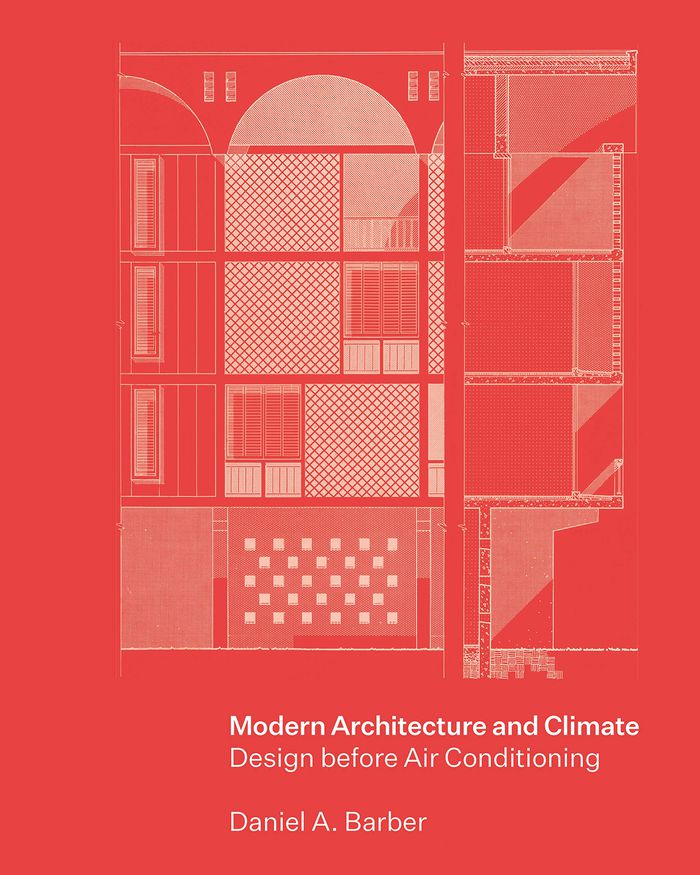
Price:
$68.00
(available to order)
Summary:
This volume explores how leading architects of the twentieth century incorporated climate-mediating strategies into their designs, and shows how regional approaches to climate adaptability were essential to the development of modern architecture. Focusing on the period surrounding World War II—before fossil-fuel powered air-conditioning became widely available—Daniel(...)
Title:
Modern architecture and climate: Design before air conditioning
Actions:
Price:
$68.00
(available to order)
Summary:
This volume explores how leading architects of the twentieth century incorporated climate-mediating strategies into their designs, and shows how regional approaches to climate adaptability were essential to the development of modern architecture. Focusing on the period surrounding World War II—before fossil-fuel powered air-conditioning became widely available—Daniel Barber brings to light a vibrant and dynamic architectural discussion involving design, materials, and shading systems as means of interior climate control. He looks at projects by well-known architects such as Richard Neutra, Le Corbusier, Lúcio Costa, Mies van der Rohe, and Skidmore, Owings, and Merrill, and the work of climate-focused architects such as MMM Roberto, Olgyay and Olgyay, and Cliff May. Drawing on the editorial projects of James Marston Fitch, Elizabeth Gordon, and others, he demonstrates how images and diagrams produced by architects helped conceptualize climate knowledge, alongside the work of meteorologists, physicists, engineers, and social scientists. Barber describes how this novel type of environmental media catalyzed new ways of thinking about climate and architectural design.
Form:
books
books
Publication:
April 2023
April 2023
Subject:
Architectural Theory
Architectural Theory
Form:
books
books
Actions:
Price:
$23.95
(available to order)
Summary:
First published in 1967, Guy Debord's stinging revolutionary critique of contemporary society, The Society of the Spectacle has since acquired a cult status. Credited by many as being the inspiration for the ideas generated by the events of May 1968 in France, Debord's pitiless attack on commodity fetishism and its incrustation in the practices of everyday life continues(...)
Title:
Comments on the society of the spectacle
Actions:
Price:
$23.95
(available to order)
Summary:
First published in 1967, Guy Debord's stinging revolutionary critique of contemporary society, The Society of the Spectacle has since acquired a cult status. Credited by many as being the inspiration for the ideas generated by the events of May 1968 in France, Debord's pitiless attack on commodity fetishism and its incrustation in the practices of everyday life continues to burn brightly in today's age of satellite television and the soundbite. In Comments on the Society of the Spectacle, published twenty years later, Debord returned to the themes of his previous analysis and demonstrated how they were all the more relevant in a period when the integrated spectacle was dominant. Resolutely refusing to be reconciled to the system, Debord trenchantly slices through the doxa and mystification offered tip by journalists and pundits to show how aspects of reality as diverse as terrorism and the environment, the Mafia and the media, were caught up in the logic of the spectacular society. Pointing the finger clearly at those who benefit from the logic of domination, Debord's comments convey the revolutionary impulse at the heart of situationism.
Form:
books
books
Publication:
January 2011
January 2011
Subject:
Critical Theory
Critical Theory


