


1046 Results
Form:
books
books

Title:
Domesticity at War
Domesticity at War
Actions:
Price:
$54.95
(available to order)
Summary:
In the years immediately following World War II, America embraced modern architecture--not as something imported from Europe, but as an entirely new mode of operation, with original and captivating designs made in the USA. Beatriz Colomina shows how postwar American architecture adapted the techniques and materials that were developed for military applications to domestic(...)
$54.95
(available to order)
Summary:
In the years immediately following World War II, America embraced modern architecture--not as something imported from Europe, but as an entirely new mode of operation, with original and captivating designs made in the USA. Beatriz Colomina shows how postwar American architecture adapted the techniques and materials that were developed for military applications to domestic(...)
Title:
Domesticity at War
Actions:
Price:
$54.95
(available to order)
Summary:
In the years immediately following World War II, America embraced modern architecture--not as something imported from Europe, but as an entirely new mode of operation, with original and captivating designs made in the USA. Beatriz Colomina shows how postwar American architecture adapted the techniques and materials that were developed for military applications to domestic use. Just as manufacturers were turning wartime industry to peacetime productivity--going from missiles to washing machines--American architects and cultural institutions were, in Buckminster Fuller’s words, turning "weaponry into livingry." This new form of domesticity itself turned out to be a powerful weapon. Images of American domestic bliss--suburban homes, manicured lawns, kitchen accessories--went around the world as an effective propaganda campaign. Cold War anxieties were masked by endlessly repeated images of a picture-perfect domestic environment. Even the popular conception of the architect became domesticated, changing from that of an austere modernist to a plaid-shirt wearing homebody. Domesticity at War itself has a distinctive architecture. Housed within the case are two units: one book of text, and one book of illustrations--most of them in color, including advertisements, newspaper and magazine articles, architectural photographs, and more.
Domesticity at War
Actions:
Price:
$54.95
(available to order)
Summary:
In the years immediately following World War II, America embraced modern architecture--not as something imported from Europe, but as an entirely new mode of operation, with original and captivating designs made in the USA. Beatriz Colomina shows how postwar American architecture adapted the techniques and materials that were developed for military applications to domestic use. Just as manufacturers were turning wartime industry to peacetime productivity--going from missiles to washing machines--American architects and cultural institutions were, in Buckminster Fuller’s words, turning "weaponry into livingry." This new form of domesticity itself turned out to be a powerful weapon. Images of American domestic bliss--suburban homes, manicured lawns, kitchen accessories--went around the world as an effective propaganda campaign. Cold War anxieties were masked by endlessly repeated images of a picture-perfect domestic environment. Even the popular conception of the architect became domesticated, changing from that of an austere modernist to a plaid-shirt wearing homebody. Domesticity at War itself has a distinctive architecture. Housed within the case are two units: one book of text, and one book of illustrations--most of them in color, including advertisements, newspaper and magazine articles, architectural photographs, and more.
Form:
books
books
Publication:
March 2007, Cambridge / London
March 2007, Cambridge / London
Subject:
Architectural Theory
Architectural Theory
Form:
books
books

Title:
Hansaviertel portraits
Hansaviertel portraits
Actions:
Price:
$65.00
(available to order)
Summary:
A former debris-strewn wasteland in the inner city—some 300 out of 343 residential buildings were destroyed during the Second World War—the Hansaviertel is one of the most defining architecture projects of the postwar period in Berlin. In 1952, an international ideas competition was held under the title die stadt von morgen (the city of tomorrow); more than fifty(...)
$65.00
(available to order)
Summary:
A former debris-strewn wasteland in the inner city—some 300 out of 343 residential buildings were destroyed during the Second World War—the Hansaviertel is one of the most defining architecture projects of the postwar period in Berlin. In 1952, an international ideas competition was held under the title die stadt von morgen (the city of tomorrow); more than fifty(...)
Subject:
Architecture since 1900, Europe
Architecture since 1900, Europe
Publication:
October 2024
October 2024
Title:
Hansaviertel portraits
Actions:
Price:
$65.00
(available to order)
Summary:
A former debris-strewn wasteland in the inner city—some 300 out of 343 residential buildings were destroyed during the Second World War—the Hansaviertel is one of the most defining architecture projects of the postwar period in Berlin. In 1952, an international ideas competition was held under the title die stadt von morgen (the city of tomorrow); more than fifty architects presented plans for the rebuilding of West Berlin, including leading practitioners of Western modernist architecture like Alvar Aalto, Werner Düttmann, Egon Eiermann, Walter Gropius, Arne Jacobsen, Oscar Niemeyer, and Max Taut. Construction based on their designs in the redevelopment area began in 1956. The result was a neighborhood designed for people and their needs—largely without predetermined paths, with lots of greenery, flexible floor plans, space for small businesses, and facilities for everyday needs. Visiting the area and its people today, one can still feel the designers’ visionary resolve to establish new ways of residential living. Locals are united by their fascination with architecture and design and their love for their neighborhood, which over the decades has developed an authentic patina and now stands as witness to a key chapter in the city’s more recent history.
Hansaviertel portraits
Actions:
Price:
$65.00
(available to order)
Summary:
A former debris-strewn wasteland in the inner city—some 300 out of 343 residential buildings were destroyed during the Second World War—the Hansaviertel is one of the most defining architecture projects of the postwar period in Berlin. In 1952, an international ideas competition was held under the title die stadt von morgen (the city of tomorrow); more than fifty architects presented plans for the rebuilding of West Berlin, including leading practitioners of Western modernist architecture like Alvar Aalto, Werner Düttmann, Egon Eiermann, Walter Gropius, Arne Jacobsen, Oscar Niemeyer, and Max Taut. Construction based on their designs in the redevelopment area began in 1956. The result was a neighborhood designed for people and their needs—largely without predetermined paths, with lots of greenery, flexible floor plans, space for small businesses, and facilities for everyday needs. Visiting the area and its people today, one can still feel the designers’ visionary resolve to establish new ways of residential living. Locals are united by their fascination with architecture and design and their love for their neighborhood, which over the decades has developed an authentic patina and now stands as witness to a key chapter in the city’s more recent history.
Form:
books
books
Publication:
October 2024
October 2024
Subject:
Architecture since 1900, Europe
Architecture since 1900, Europe
Form:
books
books

Actions:
Price:
$45.50
(available to order)
Summary:
In the 1960s art fell out of time; both artists and critics lost their temporal bearings in response to what E. M. Cioran called "not being entitled to time." This anxiety and uneasiness about time, which Pamela Lee calls "chronophobia," cut across movements, media, and genres, and was figured in works ranging from kinetic sculptures to Andy Warhol films. Despite its(...)
$45.50
(available to order)
Summary:
In the 1960s art fell out of time; both artists and critics lost their temporal bearings in response to what E. M. Cioran called "not being entitled to time." This anxiety and uneasiness about time, which Pamela Lee calls "chronophobia," cut across movements, media, and genres, and was figured in works ranging from kinetic sculptures to Andy Warhol films. Despite its(...)
Title:
Chronophobia : on time in the art of the 1960's
Actions:
Price:
$45.50
(available to order)
Summary:
In the 1960s art fell out of time; both artists and critics lost their temporal bearings in response to what E. M. Cioran called "not being entitled to time." This anxiety and uneasiness about time, which Pamela Lee calls "chronophobia," cut across movements, media, and genres, and was figured in works ranging from kinetic sculptures to Andy Warhol films. Despite its pervasiveness, the subject of time and 1960s art has gone largely unexamined in historical accounts of the period. Chronophobia is the first critical attempt to define this obsession and analyze it in relation to art and technology. Lee discusses the chronophobia of art relative to the emergence of the Information Age in postwar culture. The accompanying rapid technological transformations, including the advent of computers and automation processes, produced for many an acute sense of historical unknowing; the seemingly accelerated pace of life began to outstrip any attempts to make sense of the present. Lee sees the attitude of 1960s art to time as a historical prelude to our current fixation on time and speed within digital culture. Reflecting upon the 1960s cultural anxiety about temporality, she argues, helps us historicize our current relation to technology and time.
Chronophobia : on time in the art of the 1960's
Actions:
Price:
$45.50
(available to order)
Summary:
In the 1960s art fell out of time; both artists and critics lost their temporal bearings in response to what E. M. Cioran called "not being entitled to time." This anxiety and uneasiness about time, which Pamela Lee calls "chronophobia," cut across movements, media, and genres, and was figured in works ranging from kinetic sculptures to Andy Warhol films. Despite its pervasiveness, the subject of time and 1960s art has gone largely unexamined in historical accounts of the period. Chronophobia is the first critical attempt to define this obsession and analyze it in relation to art and technology. Lee discusses the chronophobia of art relative to the emergence of the Information Age in postwar culture. The accompanying rapid technological transformations, including the advent of computers and automation processes, produced for many an acute sense of historical unknowing; the seemingly accelerated pace of life began to outstrip any attempts to make sense of the present. Lee sees the attitude of 1960s art to time as a historical prelude to our current fixation on time and speed within digital culture. Reflecting upon the 1960s cultural anxiety about temporality, she argues, helps us historicize our current relation to technology and time.
Form:
books
books
Publication:
May 2004, Cambridge, Mass.
May 2004, Cambridge, Mass.
Subject:
Contemporary Art Monographs
Contemporary Art Monographs
Form:
books
books

Actions:
Price:
$56.00
(available to order)
Summary:
Robert Smithson (1938–1973), an artist of paramount importance in postwar America, created radical new perspectives for landscape architecture, photography, art criticism, and site-specific installation. His Spiral Jetty - a 1,500-foot-long coil of rock built in 1970 at the edge of the Great Salt Lake - is widely appreciated as one of the most significant art projects of(...)
$56.00
(available to order)
Summary:
Robert Smithson (1938–1973), an artist of paramount importance in postwar America, created radical new perspectives for landscape architecture, photography, art criticism, and site-specific installation. His Spiral Jetty - a 1,500-foot-long coil of rock built in 1970 at the edge of the Great Salt Lake - is widely appreciated as one of the most significant art projects of(...)
Subject:
Contemporary Art Monographs
Contemporary Art Monographs
Publication:
April 2004, New Haven / London
April 2004, New Haven / London
Title:
Mirror-Travels : Robert Smithson and history
Actions:
Price:
$56.00
(available to order)
Summary:
Robert Smithson (1938–1973), an artist of paramount importance in postwar America, created radical new perspectives for landscape architecture, photography, art criticism, and site-specific installation. His Spiral Jetty - a 1,500-foot-long coil of rock built in 1970 at the edge of the Great Salt Lake - is widely appreciated as one of the most significant art projects of the twentieth century. Less well known is the connection between the Jetty and the nearby Golden Spike National Historic Site, location of the completion of the first U.S. transcontinental railroad. The link between these two monuments is but one facet of an entire complex of historical reference and reflection that structures Smithson’s work. Mirror-Travels encompasses the full span of Smithson’s career, offering a close analysis of the artist’s working model of history and featuring comprehensive case studies of three of his most influential works: The Monuments of Passaic, Incidents of Mirror-Travel in the Yucatan, and the Spiral Jetty. Incorporating abundant new material from Smithson’s personal papers and library, Jennifer Roberts offers surprising new interpretations about the artist and his responses to the social, ideological, and material contradictions of his time.
Mirror-Travels : Robert Smithson and history
Actions:
Price:
$56.00
(available to order)
Summary:
Robert Smithson (1938–1973), an artist of paramount importance in postwar America, created radical new perspectives for landscape architecture, photography, art criticism, and site-specific installation. His Spiral Jetty - a 1,500-foot-long coil of rock built in 1970 at the edge of the Great Salt Lake - is widely appreciated as one of the most significant art projects of the twentieth century. Less well known is the connection between the Jetty and the nearby Golden Spike National Historic Site, location of the completion of the first U.S. transcontinental railroad. The link between these two monuments is but one facet of an entire complex of historical reference and reflection that structures Smithson’s work. Mirror-Travels encompasses the full span of Smithson’s career, offering a close analysis of the artist’s working model of history and featuring comprehensive case studies of three of his most influential works: The Monuments of Passaic, Incidents of Mirror-Travel in the Yucatan, and the Spiral Jetty. Incorporating abundant new material from Smithson’s personal papers and library, Jennifer Roberts offers surprising new interpretations about the artist and his responses to the social, ideological, and material contradictions of his time.
Form:
books
books
Publication:
April 2004, New Haven / London
April 2004, New Haven / London
Subject:
Contemporary Art Monographs
Contemporary Art Monographs
Form:
books
books
Actions:
Price:
$105.00
(available to order)
Summary:
Josef Paul Kleihues (1933–2004) was one of the most prolific architects of postwar Germany, famous both as the Director of the International Building Exhibition Berlin in 1987 and for his design for the Museum of Contemporary Art in Chicago. He was also known for his sensitive interventions into older buildings, an instance of which is the former Hamburger Bahnhof - now(...)
$105.00
(available to order)
Summary:
Josef Paul Kleihues (1933–2004) was one of the most prolific architects of postwar Germany, famous both as the Director of the International Building Exhibition Berlin in 1987 and for his design for the Museum of Contemporary Art in Chicago. He was also known for his sensitive interventions into older buildings, an instance of which is the former Hamburger Bahnhof - now(...)
Title:
Josef Paul Kleihues: works 1966-1980 Vol. 1
Actions:
Price:
$105.00
(available to order)
Summary:
Josef Paul Kleihues (1933–2004) was one of the most prolific architects of postwar Germany, famous both as the Director of the International Building Exhibition Berlin in 1987 and for his design for the Museum of Contemporary Art in Chicago. He was also known for his sensitive interventions into older buildings, an instance of which is the former Hamburger Bahnhof - now the Museum für Gegenwart - in Berlin, where Kleihues intermixed glass walls and light installations by the American Minimalist Dan Flavin with the building’s original nineteenth-century Neoclassical design. (His reconstruction was widely deemed to rival or even surpass Gae Aulenti's overhaul of the interior of the Musée d'Orsay in Paris.) This first volume of a three-part monograph presents projects up to 1980, including the highly acclaimed Berlin Sanitation Department and the Neukölln Hospital. Even in these early works, Kleihues’ practical, problem-solving approach is already evident, indicating his readiness to reflect on the traditional approaches of Modern architecture and his capacity to expand them in interesting ways. This very generously illustrated volume was designed by Kleihues himself, just before his death in 2004.
Josef Paul Kleihues: works 1966-1980 Vol. 1
Actions:
Price:
$105.00
(available to order)
Summary:
Josef Paul Kleihues (1933–2004) was one of the most prolific architects of postwar Germany, famous both as the Director of the International Building Exhibition Berlin in 1987 and for his design for the Museum of Contemporary Art in Chicago. He was also known for his sensitive interventions into older buildings, an instance of which is the former Hamburger Bahnhof - now the Museum für Gegenwart - in Berlin, where Kleihues intermixed glass walls and light installations by the American Minimalist Dan Flavin with the building’s original nineteenth-century Neoclassical design. (His reconstruction was widely deemed to rival or even surpass Gae Aulenti's overhaul of the interior of the Musée d'Orsay in Paris.) This first volume of a three-part monograph presents projects up to 1980, including the highly acclaimed Berlin Sanitation Department and the Neukölln Hospital. Even in these early works, Kleihues’ practical, problem-solving approach is already evident, indicating his readiness to reflect on the traditional approaches of Modern architecture and his capacity to expand them in interesting ways. This very generously illustrated volume was designed by Kleihues himself, just before his death in 2004.
Form:
books
books
Publication:
March 2008, Ostfildern
March 2008, Ostfildern
Subject:
Architecture Monographs
Architecture Monographs
Form:
books
books
Actions:
Price:
$45.95
(available to order)
Summary:
Commissioned in 1750, the Palazzo Venier was planned as a testimony to the power and wealth of a great Venetian family, but the fortunes of the Veniers waned midconstruction and the project was abandoned. Empty, unfinished, and decaying, the building was considered an eyesore until the early twentieth century when it attracted and inspired three women at key moments in(...)
$45.95
(available to order)
Summary:
Commissioned in 1750, the Palazzo Venier was planned as a testimony to the power and wealth of a great Venetian family, but the fortunes of the Veniers waned midconstruction and the project was abandoned. Empty, unfinished, and decaying, the building was considered an eyesore until the early twentieth century when it attracted and inspired three women at key moments in(...)
Title:
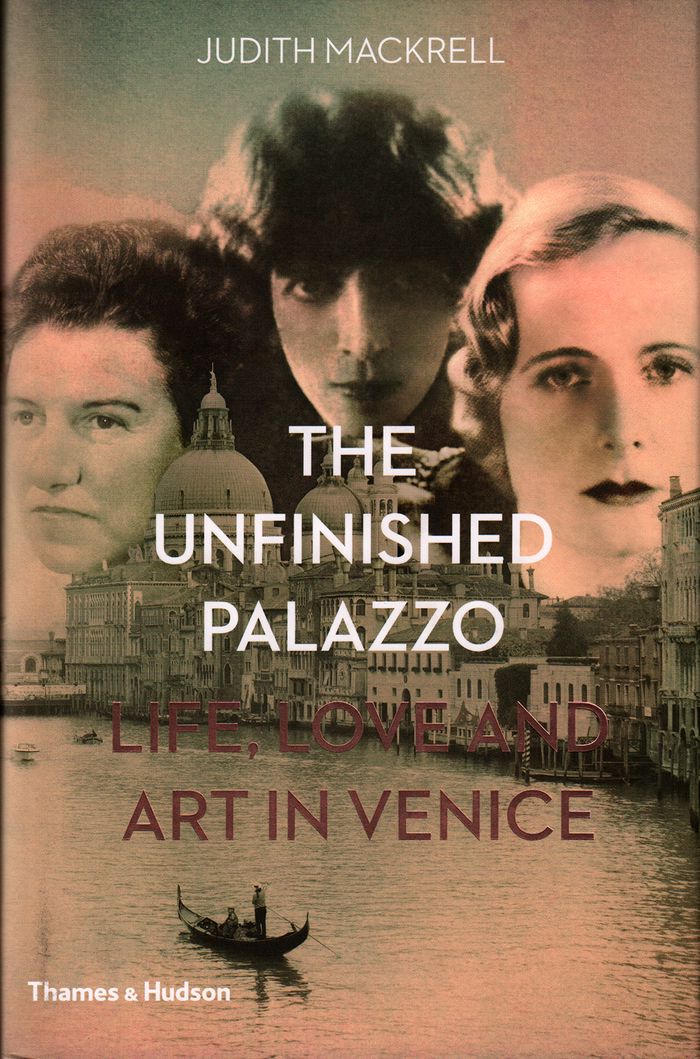
The unfinished palazzo: stories of Luisa Casati, Doris Castlerosse and Peggy Guggenheim
Actions:
Price:
$45.95
(available to order)
Summary:
Commissioned in 1750, the Palazzo Venier was planned as a testimony to the power and wealth of a great Venetian family, but the fortunes of the Veniers waned midconstruction and the project was abandoned. Empty, unfinished, and decaying, the building was considered an eyesore until the early twentieth century when it attracted and inspired three women at key moments in their lives: Luisa Casati, Doris Castlerosse, and Peggy Guggenheim. Luisa Casati turned her home into an aesthete’s fantasy where she hosted parties as extravagant and decadent as Renaissance court operas, spending small fortunes on her own costumes in her quest to become a “living work of art” and muse. Doris Castlerosse strove to make her mark in London and Venice during the glamorous, hedonistic interwar years, hosting film stars and royalty at glittering parties. In the postwar years, Peggy Gugenheim turned the Palazzo into a model of modernist simplicity that served as a home for her exquisite collection of modern art that today draws tourists and art lovers from around the world. Each vivid life story is accompanied by previously unseen materials from family archives, weaving an intricate history of these legendary art world eccentrics.
The unfinished palazzo: stories of Luisa Casati, Doris Castlerosse and Peggy Guggenheim
Actions:
Price:
$45.95
(available to order)
Summary:
Commissioned in 1750, the Palazzo Venier was planned as a testimony to the power and wealth of a great Venetian family, but the fortunes of the Veniers waned midconstruction and the project was abandoned. Empty, unfinished, and decaying, the building was considered an eyesore until the early twentieth century when it attracted and inspired three women at key moments in their lives: Luisa Casati, Doris Castlerosse, and Peggy Guggenheim. Luisa Casati turned her home into an aesthete’s fantasy where she hosted parties as extravagant and decadent as Renaissance court operas, spending small fortunes on her own costumes in her quest to become a “living work of art” and muse. Doris Castlerosse strove to make her mark in London and Venice during the glamorous, hedonistic interwar years, hosting film stars and royalty at glittering parties. In the postwar years, Peggy Gugenheim turned the Palazzo into a model of modernist simplicity that served as a home for her exquisite collection of modern art that today draws tourists and art lovers from around the world. Each vivid life story is accompanied by previously unseen materials from family archives, weaving an intricate history of these legendary art world eccentrics.
Form:
books
books
Publication:
September 2017
September 2017
Subject:
History until 1900
History until 1900
Form:
books
books

Actions:
Price:
$26.00
(available to order)
Summary:
Newark's volatile past is infamous. The city has become synonymous with the Black Power movement and urban crisis. Its history reveals a vibrant and contentious political culture punctuated by traditional civic pride and an understudied tradition of protest in the black community. Newark charts this important city's place in the nation, from its founding in 1666 by a(...)
$26.00
(available to order)
Summary:
Newark's volatile past is infamous. The city has become synonymous with the Black Power movement and urban crisis. Its history reveals a vibrant and contentious political culture punctuated by traditional civic pride and an understudied tradition of protest in the black community. Newark charts this important city's place in the nation, from its founding in 1666 by a(...)
Title:
Newark: a history of race, rights, and riots in America
Actions:
Price:
$26.00
(available to order)
Summary:
Newark's volatile past is infamous. The city has become synonymous with the Black Power movement and urban crisis. Its history reveals a vibrant and contentious political culture punctuated by traditional civic pride and an understudied tradition of protest in the black community. Newark charts this important city's place in the nation, from its founding in 1666 by a dissident Puritan as a refuge from intolerance, through the days of Jim Crow and World War II civil rights activism, to the height of postwar integration and the election of its first black mayor. In this broad and balanced history of Newark, Kevin Mumford applies the concept of the public sphere to the problem of race relations, demonstrating how political ideas and print culture were instrumental in shaping African American consciousness. He draws on both public and personal archives, interpreting official documents-such as newspapers, commission testimony, and government records-alongside interviews, political flyers, meeting minutes, and rare photos. From the migration out of the south to the rise of public housing and ethnic conflict, Newark explains the impact of African Americans on the reconstruction of American cities in the twentieth century.
Newark: a history of race, rights, and riots in America
Actions:
Price:
$26.00
(available to order)
Summary:
Newark's volatile past is infamous. The city has become synonymous with the Black Power movement and urban crisis. Its history reveals a vibrant and contentious political culture punctuated by traditional civic pride and an understudied tradition of protest in the black community. Newark charts this important city's place in the nation, from its founding in 1666 by a dissident Puritan as a refuge from intolerance, through the days of Jim Crow and World War II civil rights activism, to the height of postwar integration and the election of its first black mayor. In this broad and balanced history of Newark, Kevin Mumford applies the concept of the public sphere to the problem of race relations, demonstrating how political ideas and print culture were instrumental in shaping African American consciousness. He draws on both public and personal archives, interpreting official documents-such as newspapers, commission testimony, and government records-alongside interviews, political flyers, meeting minutes, and rare photos. From the migration out of the south to the rise of public housing and ethnic conflict, Newark explains the impact of African Americans on the reconstruction of American cities in the twentieth century.
Form:
books
books
Publication:
November 2008, New York
November 2008, New York
Subject:
Critical Theory
Critical Theory
Form:
books
books
Price:
$97.00
(available to order)
Summary:
While the achievements of New York City’s most renowned postwar artists—de Kooning, Pollock, Rothko, Franz Kline—have been studied in depth, a large cadre of lesser-known but influential artists came of age between 1952 and 1965. Also understudied are the early, experimental works by more wellknown figures such as Mark di Suvero, Jim Dine, Dan Flavin, and Claes Oldenburg.(...)
$97.00
(available to order)
Summary:
While the achievements of New York City’s most renowned postwar artists—de Kooning, Pollock, Rothko, Franz Kline—have been studied in depth, a large cadre of lesser-known but influential artists came of age between 1952 and 1965. Also understudied are the early, experimental works by more wellknown figures such as Mark di Suvero, Jim Dine, Dan Flavin, and Claes Oldenburg.(...)
Publication:
December 2016
December 2016
Title:
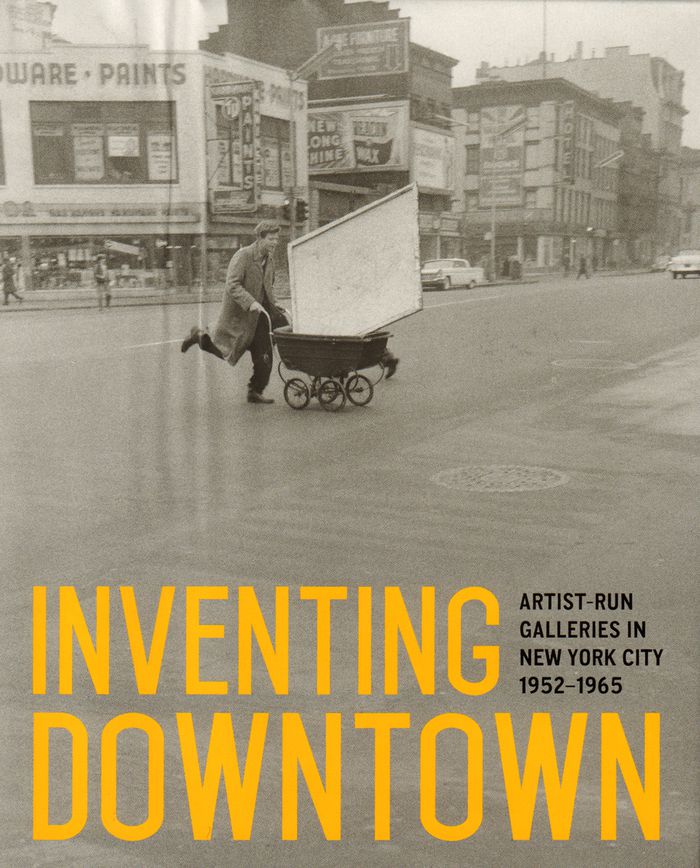
Inventing downtown: artist-run galleries in New York City, 1952-1965
Actions:
Price:
$97.00
(available to order)
Summary:
While the achievements of New York City’s most renowned postwar artists—de Kooning, Pollock, Rothko, Franz Kline—have been studied in depth, a large cadre of lesser-known but influential artists came of age between 1952 and 1965. Also understudied are the early, experimental works by more wellknown figures such as Mark di Suvero, Jim Dine, Dan Flavin, and Claes Oldenburg. Focusing on innovative artist-run galleries, this book invites readers to reevaluate the period—uncovering its diversity, creativity, and nuances, and tracing the spaces’ influence during the decades that followed. Inventing Downtown charts the development of artist-run galleries in Lower Manhattan from the early 1950s to the mid-1960s, showing how the area’s multicultural spirit played a major role in shaping the artworks exhibited there. The book explores 14 key spaces in which styles such as Pop, Minimalism, and performance and installation art thrived. Excerpts from 33 revealing interviews with artists, critics, and dealers, conducted by Billy Klüver and Julie Martin, offer unique personal insight into the era’s creative milieu. Taken together, the book’s essays and interviews provide a distinctly new assessment of how downtown New York’s fertile environment nurtured an innovative art scene.
Inventing downtown: artist-run galleries in New York City, 1952-1965
Actions:
Price:
$97.00
(available to order)
Summary:
While the achievements of New York City’s most renowned postwar artists—de Kooning, Pollock, Rothko, Franz Kline—have been studied in depth, a large cadre of lesser-known but influential artists came of age between 1952 and 1965. Also understudied are the early, experimental works by more wellknown figures such as Mark di Suvero, Jim Dine, Dan Flavin, and Claes Oldenburg. Focusing on innovative artist-run galleries, this book invites readers to reevaluate the period—uncovering its diversity, creativity, and nuances, and tracing the spaces’ influence during the decades that followed. Inventing Downtown charts the development of artist-run galleries in Lower Manhattan from the early 1950s to the mid-1960s, showing how the area’s multicultural spirit played a major role in shaping the artworks exhibited there. The book explores 14 key spaces in which styles such as Pop, Minimalism, and performance and installation art thrived. Excerpts from 33 revealing interviews with artists, critics, and dealers, conducted by Billy Klüver and Julie Martin, offer unique personal insight into the era’s creative milieu. Taken together, the book’s essays and interviews provide a distinctly new assessment of how downtown New York’s fertile environment nurtured an innovative art scene.
Form:
books
books
Publication:
December 2016
December 2016
Form:
books
books
Actions:
Price:
$23.50
(available in store)
Summary:
One of twentieth-century America’s most influential patrons of the arts, Peggy Guggenheim (1898–1979) brought to wide public attention the work of such modern masters as Jackson Pollock and Man Ray. In her time, there was no stronger advocate for the groundbreaking and the avant-garde. Her midtown gallery was the acknowledged center of the postwar New York art scene, and(...)
$23.50
(available in store)
Summary:
One of twentieth-century America’s most influential patrons of the arts, Peggy Guggenheim (1898–1979) brought to wide public attention the work of such modern masters as Jackson Pollock and Man Ray. In her time, there was no stronger advocate for the groundbreaking and the avant-garde. Her midtown gallery was the acknowledged center of the postwar New York art scene, and(...)
Title:
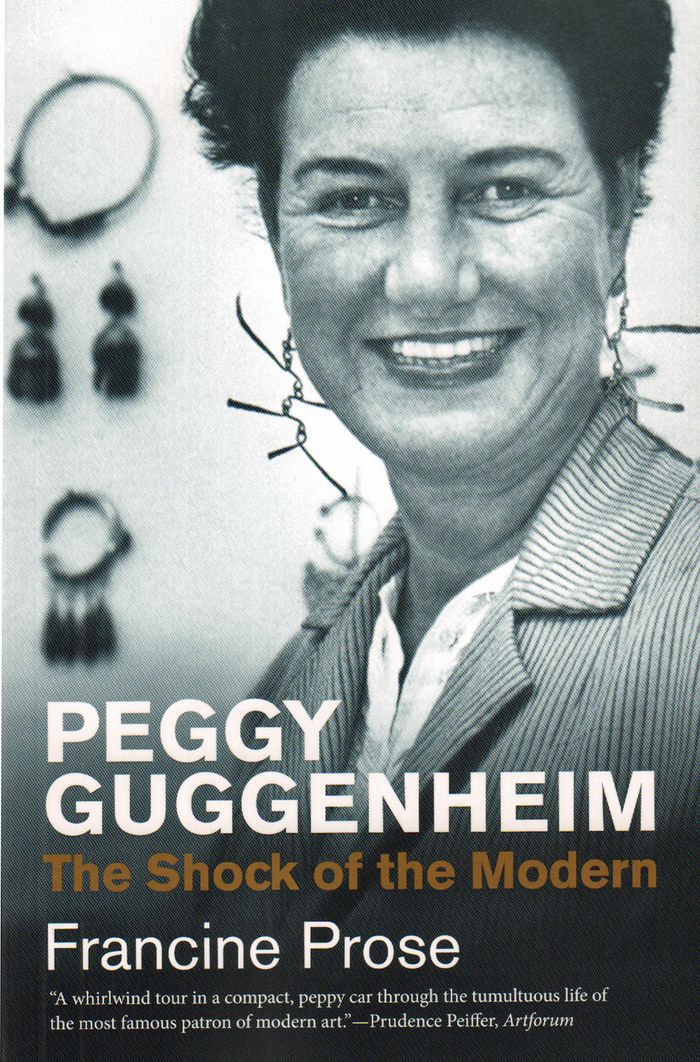
Peggy Guggenheim: the shock of the modern
Actions:
Price:
$23.50
(available in store)
Summary:
One of twentieth-century America’s most influential patrons of the arts, Peggy Guggenheim (1898–1979) brought to wide public attention the work of such modern masters as Jackson Pollock and Man Ray. In her time, there was no stronger advocate for the groundbreaking and the avant-garde. Her midtown gallery was the acknowledged center of the postwar New York art scene, and her museum on the Grand Canal in Venice remains one of the world’s great collections of modern art. Yet as renowned as she was for the art and artists she so tirelessly championed, Guggenheim was equally famous for her unconventional personal life, and for her ironic, playful desire to shock. Francine Prose offers a singular reading of Guggenheim’s life. The lively and insightful narrative follows Guggenheim through virtually every aspect of her extraordinary life, from her unique collecting habits and paradigm-changing discoveries, to her celebrity friendships, failed marriages, and scandalous affairs, and Prose delivers a colorful portrait of a defiantly uncompromising woman who maintained a powerful upper hand in a male-dominated world. Prose also explores the ways in which Guggenheim’s image was filtered through the lens of insidious antisemitism.
Peggy Guggenheim: the shock of the modern
Actions:
Price:
$23.50
(available in store)
Summary:
One of twentieth-century America’s most influential patrons of the arts, Peggy Guggenheim (1898–1979) brought to wide public attention the work of such modern masters as Jackson Pollock and Man Ray. In her time, there was no stronger advocate for the groundbreaking and the avant-garde. Her midtown gallery was the acknowledged center of the postwar New York art scene, and her museum on the Grand Canal in Venice remains one of the world’s great collections of modern art. Yet as renowned as she was for the art and artists she so tirelessly championed, Guggenheim was equally famous for her unconventional personal life, and for her ironic, playful desire to shock. Francine Prose offers a singular reading of Guggenheim’s life. The lively and insightful narrative follows Guggenheim through virtually every aspect of her extraordinary life, from her unique collecting habits and paradigm-changing discoveries, to her celebrity friendships, failed marriages, and scandalous affairs, and Prose delivers a colorful portrait of a defiantly uncompromising woman who maintained a powerful upper hand in a male-dominated world. Prose also explores the ways in which Guggenheim’s image was filtered through the lens of insidious antisemitism.
Form:
books
books
Publication:
November 2016
November 2016
Subject:
Art Theory
Art Theory
Form:
books
books

Price:
$90.00
(available to order)
Summary:
A true Renaissance man with a clear, unified aesthetic vision, the Swiss artist, designer, architect and writer Max Bill combined the virtues of homo faber and homo ludens throughout his intensely productive career, launching the Concrete art movement and establishing himself as the single most decisive influence on postwar Swiss graphic design. This gorgeously designed,(...)
$90.00
(available to order)
Summary:
A true Renaissance man with a clear, unified aesthetic vision, the Swiss artist, designer, architect and writer Max Bill combined the virtues of homo faber and homo ludens throughout his intensely productive career, launching the Concrete art movement and establishing himself as the single most decisive influence on postwar Swiss graphic design. This gorgeously designed,(...)
Title:
Max Bill
Actions:
Price:
$90.00
(available to order)
Summary:
A true Renaissance man with a clear, unified aesthetic vision, the Swiss artist, designer, architect and writer Max Bill combined the virtues of homo faber and homo ludens throughout his intensely productive career, launching the Concrete art movement and establishing himself as the single most decisive influence on postwar Swiss graphic design. This gorgeously designed, hefty volume—the most thorough Bill overview ever published in English, and the only monograph in print—presents Bill’s oeuvre both chronologically and thematically, across every facet of his multifaceted oeuvre: painting, graphic art, sculpture, architecture, book and magazine design, industrial and furniture design, graphic design and advertising typography—from large-format posters to small inserts in periodicals—as well as his designs for exhibition spaces. Bill stands out for his enormous influence on Latin American geometric art (through his 1951 retrospective at the São Paulo Museum of Modern Art), as well as for his essays, his work as an educator and his political and social concerns. All these aspects of his life and work are covered in this profusely illustrated catalogue, along with essays by scholars and a selection of previously unpublished essays by Bill himself.
Max Bill
Actions:
Price:
$90.00
(available to order)
Summary:
A true Renaissance man with a clear, unified aesthetic vision, the Swiss artist, designer, architect and writer Max Bill combined the virtues of homo faber and homo ludens throughout his intensely productive career, launching the Concrete art movement and establishing himself as the single most decisive influence on postwar Swiss graphic design. This gorgeously designed, hefty volume—the most thorough Bill overview ever published in English, and the only monograph in print—presents Bill’s oeuvre both chronologically and thematically, across every facet of his multifaceted oeuvre: painting, graphic art, sculpture, architecture, book and magazine design, industrial and furniture design, graphic design and advertising typography—from large-format posters to small inserts in periodicals—as well as his designs for exhibition spaces. Bill stands out for his enormous influence on Latin American geometric art (through his 1951 retrospective at the São Paulo Museum of Modern Art), as well as for his essays, his work as an educator and his political and social concerns. All these aspects of his life and work are covered in this profusely illustrated catalogue, along with essays by scholars and a selection of previously unpublished essays by Bill himself.
Form:
books
books
Publication:
February 2016
February 2016
Subject:
Design Monographs
Design Monographs


