


1693 Results
Form:
books
books
Title:
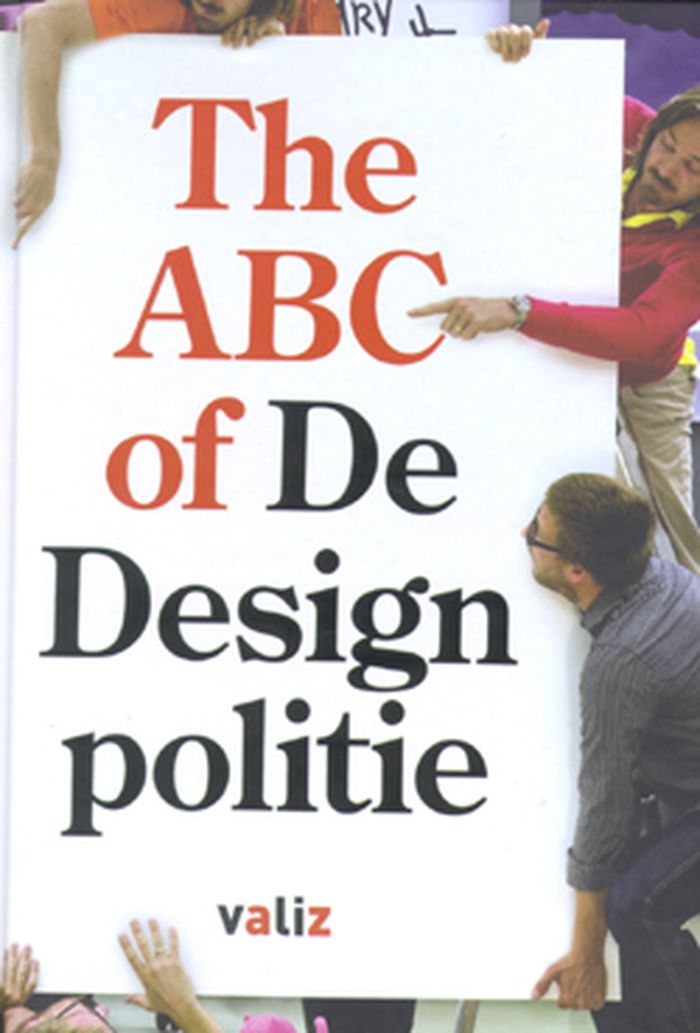
The ABC of de design politie
The ABC of de design politie
Actions:
Price:
$60.00
(available to order)
Summary:
ABC of De Designpolitie is an index of Designpolitie's reflections on design, catalogued in humorously alphabetical order (with failed projects filed under "Damn," or an account of their simplified methods under "Rocket Science"). More of a workbook, a process book or an inspirational resource than a portfolio, ABC collates Designpolitie projects (implemented and(...)
$60.00
(available to order)
Summary:
ABC of De Designpolitie is an index of Designpolitie's reflections on design, catalogued in humorously alphabetical order (with failed projects filed under "Damn," or an account of their simplified methods under "Rocket Science"). More of a workbook, a process book or an inspirational resource than a portfolio, ABC collates Designpolitie projects (implemented and(...)
Title:
The ABC of de design politie
Actions:
Price:
$60.00
(available to order)
Summary:
ABC of De Designpolitie is an index of Designpolitie's reflections on design, catalogued in humorously alphabetical order (with failed projects filed under "Damn," or an account of their simplified methods under "Rocket Science"). More of a workbook, a process book or an inspirational resource than a portfolio, ABC collates Designpolitie projects (implemented and otherwise), schemes, photographs, musings and articles in a style that is both serious and replete with irony and self-mockery--a natural extension of the firm's own ethos.
The ABC of de design politie
Actions:
Price:
$60.00
(available to order)
Summary:
ABC of De Designpolitie is an index of Designpolitie's reflections on design, catalogued in humorously alphabetical order (with failed projects filed under "Damn," or an account of their simplified methods under "Rocket Science"). More of a workbook, a process book or an inspirational resource than a portfolio, ABC collates Designpolitie projects (implemented and otherwise), schemes, photographs, musings and articles in a style that is both serious and replete with irony and self-mockery--a natural extension of the firm's own ethos.
Form:
books
books
Publication:
November 2008, London
November 2008, London
Subject:
Interior Design
Interior Design
Form:
books
books
Title:
Formless furniture
Formless furniture
Actions:
Price:
$48.00
(available to order)
Summary:
In the mid-1960s, artists like Robert Morris, Joseph Beuys, Michelangelo Pistoletto and Lynda Benglis began to experiment with formlessness in their materials. The maxim Form follows material, however, was not only proclaimed in the era's avant-garde art: it had a distinct impact on furniture design as well--for example, on Gunnar A. Andersen's experimental polyurethane(...)
$48.00
(available to order)
Summary:
In the mid-1960s, artists like Robert Morris, Joseph Beuys, Michelangelo Pistoletto and Lynda Benglis began to experiment with formlessness in their materials. The maxim Form follows material, however, was not only proclaimed in the era's avant-garde art: it had a distinct impact on furniture design as well--for example, on Gunnar A. Andersen's experimental polyurethane(...)
Title:
Formless furniture
Actions:
Price:
$48.00
(available to order)
Summary:
In the mid-1960s, artists like Robert Morris, Joseph Beuys, Michelangelo Pistoletto and Lynda Benglis began to experiment with formlessness in their materials. The maxim Form follows material, however, was not only proclaimed in the era's avant-garde art: it had a distinct impact on furniture design as well--for example, on Gunnar A. Andersen's experimental polyurethane Portrait of My Mother's Chesterfield Chair of 1964 and Zanotta's famous Sacco beanbag chair of 1968. Edited by Peter Noever, Director of Vienna's MAK museum of applied and contemporary art, this volume is the first to concentrate on formlessness in furniture design. Featuring work from the 1960s through today by such revolutionary figures as Frank Gehry, Gaetano Pesce, Ron Arad and Karim Rashid, it illuminates connections between the historical avant-garde and the applied arts, and tracks the various manifestations of design formlessness to have emerged over the past half century.
Formless furniture
Actions:
Price:
$48.00
(available to order)
Summary:
In the mid-1960s, artists like Robert Morris, Joseph Beuys, Michelangelo Pistoletto and Lynda Benglis began to experiment with formlessness in their materials. The maxim Form follows material, however, was not only proclaimed in the era's avant-garde art: it had a distinct impact on furniture design as well--for example, on Gunnar A. Andersen's experimental polyurethane Portrait of My Mother's Chesterfield Chair of 1964 and Zanotta's famous Sacco beanbag chair of 1968. Edited by Peter Noever, Director of Vienna's MAK museum of applied and contemporary art, this volume is the first to concentrate on formlessness in furniture design. Featuring work from the 1960s through today by such revolutionary figures as Frank Gehry, Gaetano Pesce, Ron Arad and Karim Rashid, it illuminates connections between the historical avant-garde and the applied arts, and tracks the various manifestations of design formlessness to have emerged over the past half century.
Form:
books
books
Publication:
June 2008
June 2008
Subject:
Interior Design
Interior Design
Form:
books
books

Actions:
Price:
$45.50
(available to order)
Summary:
Martin J. Murray brings together a wide range of urban theory and local knowledge to draw a nuanced portrait of contemporary Johannesburg. In Taming the Disorderly City, he provides a focused intellectual and political critique of the often-ambivalent urban dynamics that have emerged after the end of apartheid. Exploring the behaviors of the rich and poor, each empowered(...)
$45.50
(available to order)
Summary:
Martin J. Murray brings together a wide range of urban theory and local knowledge to draw a nuanced portrait of contemporary Johannesburg. In Taming the Disorderly City, he provides a focused intellectual and political critique of the often-ambivalent urban dynamics that have emerged after the end of apartheid. Exploring the behaviors of the rich and poor, each empowered(...)
Title:
Catalog: the illustrated history of mail-order shopping
Actions:
Price:
$45.50
(available to order)
Summary:
Martin J. Murray brings together a wide range of urban theory and local knowledge to draw a nuanced portrait of contemporary Johannesburg. In Taming the Disorderly City, he provides a focused intellectual and political critique of the often-ambivalent urban dynamics that have emerged after the end of apartheid. Exploring the behaviors of the rich and poor, each empowered in their own way, as they rebuild a new Johannesburg, we see the entrepreneurial city: high-rises, shopping districts, and gated communities surrounded by and intermingled with poverty. In graceful prose, Murray offers a compelling portrait of the everyday lives of the urban poor as seen through the lens of real-estate capitalism and revitalization efforts.
Catalog: the illustrated history of mail-order shopping
Actions:
Price:
$45.50
(available to order)
Summary:
Martin J. Murray brings together a wide range of urban theory and local knowledge to draw a nuanced portrait of contemporary Johannesburg. In Taming the Disorderly City, he provides a focused intellectual and political critique of the often-ambivalent urban dynamics that have emerged after the end of apartheid. Exploring the behaviors of the rich and poor, each empowered in their own way, as they rebuild a new Johannesburg, we see the entrepreneurial city: high-rises, shopping districts, and gated communities surrounded by and intermingled with poverty. In graceful prose, Murray offers a compelling portrait of the everyday lives of the urban poor as seen through the lens of real-estate capitalism and revitalization efforts.
Form:
books
books
Publication:
November 2008, New York
November 2008, New York
Subject:
Interior Design
Interior Design
Form:
books
books
Price:
$50.00
(available to order)
Summary:
In "To Each His Home: Inspired Interiors as Unique as their Owners", photographer Bilyana Dimitrova takes readers on a tour of eight extraordinary homes that unabashedly express the personalities of their free-spirited owners. Dimitrova’s carefully crafted color photographs, accompanied by brief interviews with each homeowner, create vivid portraits of these one-of-a-kind(...)
$50.00
(available to order)
Summary:
In "To Each His Home: Inspired Interiors as Unique as their Owners", photographer Bilyana Dimitrova takes readers on a tour of eight extraordinary homes that unabashedly express the personalities of their free-spirited owners. Dimitrova’s carefully crafted color photographs, accompanied by brief interviews with each homeowner, create vivid portraits of these one-of-a-kind(...)
Title:
To each his home: inspired interiors as unique as their owners
Actions:
Price:
$50.00
(available to order)
Summary:
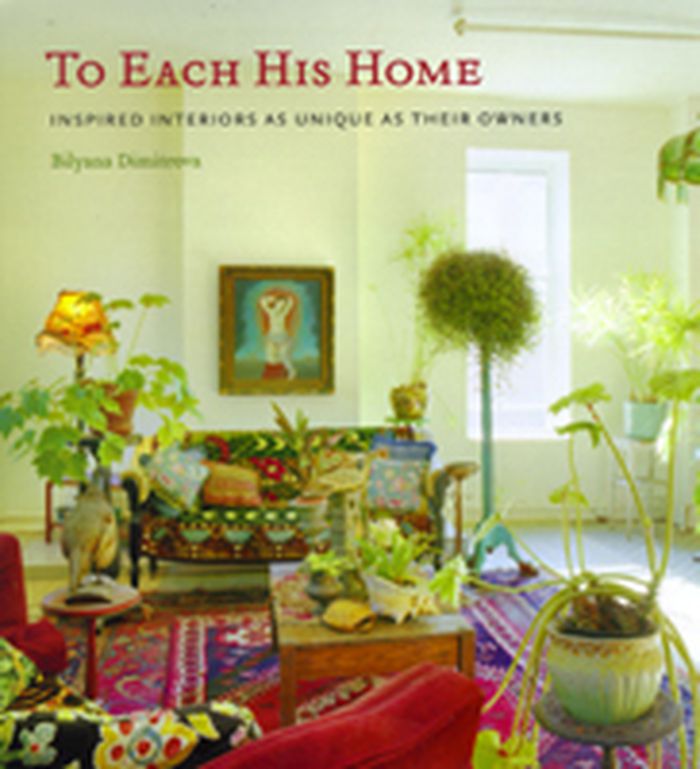
In "To Each His Home: Inspired Interiors as Unique as their Owners", photographer Bilyana Dimitrova takes readers on a tour of eight extraordinary homes that unabashedly express the personalities of their free-spirited owners. Dimitrova’s carefully crafted color photographs, accompanied by brief interviews with each homeowner, create vivid portraits of these one-of-a-kind American spaces. Highly varied in nature, the distinctive and captivating homes featured in this book have one remarkable thing in common: none are the product of a professional interior designer. The homeowners in "To Each His Home" do not rely on professional training or draw inspiration from shelter magazines. Instead they allow their own likes and dislikes to guide their choices of the furniture and fabrics, colors and configurations.
To each his home: inspired interiors as unique as their owners
Actions:
Price:
$50.00
(available to order)
Summary:
In "To Each His Home: Inspired Interiors as Unique as their Owners", photographer Bilyana Dimitrova takes readers on a tour of eight extraordinary homes that unabashedly express the personalities of their free-spirited owners. Dimitrova’s carefully crafted color photographs, accompanied by brief interviews with each homeowner, create vivid portraits of these one-of-a-kind American spaces. Highly varied in nature, the distinctive and captivating homes featured in this book have one remarkable thing in common: none are the product of a professional interior designer. The homeowners in "To Each His Home" do not rely on professional training or draw inspiration from shelter magazines. Instead they allow their own likes and dislikes to guide their choices of the furniture and fabrics, colors and configurations.
Form:
books
books
Publication:
October 2008, New York
October 2008, New York
Subject:
Interior Design
Interior Design
Form:
books
books

Title:
Camp Nest (Place Space)
Camp Nest (Place Space)
Actions:
Price:
$22.95
(available to order)
Summary:
AMMO’s Place Space books by the incomparable Todd Oldham, launches a new design series that celebrates singular places and the uncommonly devoted people who create them, each accompanied by an essay.
$22.95
(available to order)
Summary:
AMMO’s Place Space books by the incomparable Todd Oldham, launches a new design series that celebrates singular places and the uncommonly devoted people who create them, each accompanied by an essay.
Title:
Camp Nest (Place Space)
Actions:
Price:
$22.95
(available to order)
Summary:
AMMO’s Place Space books by the incomparable Todd Oldham, launches a new design series that celebrates singular places and the uncommonly devoted people who create them, each accompanied by an essay.
Camp Nest (Place Space)
Actions:
Price:
$22.95
(available to order)
Summary:
AMMO’s Place Space books by the incomparable Todd Oldham, launches a new design series that celebrates singular places and the uncommonly devoted people who create them, each accompanied by an essay.
Form:
books
books
Publication:
June 2008, New York
June 2008, New York
Subject:
Interior Design
Interior Design
Form:
books
books
Title:
John Waters (Place Space)
John Waters (Place Space)
Actions:
Price:
$22.95
(available to order)
Summary:
AMMO’s Place Space books by the incomparable Todd Oldham, launches a new design series that celebrates singular places and the uncommonly devoted people who create them, each accompanied by an essay.
$22.95
(available to order)
Summary:
AMMO’s Place Space books by the incomparable Todd Oldham, launches a new design series that celebrates singular places and the uncommonly devoted people who create them, each accompanied by an essay.
Title:
John Waters (Place Space)
Actions:
Price:
$22.95
(available to order)
Summary:
AMMO’s Place Space books by the incomparable Todd Oldham, launches a new design series that celebrates singular places and the uncommonly devoted people who create them, each accompanied by an essay.
John Waters (Place Space)
Actions:
Price:
$22.95
(available to order)
Summary:
AMMO’s Place Space books by the incomparable Todd Oldham, launches a new design series that celebrates singular places and the uncommonly devoted people who create them, each accompanied by an essay.
Form:
books
books
Publication:
June 2008, New York
June 2008, New York
Subject:
Interior Design
Interior Design
Form:
books
books
Actions:
Price:
$22.95
(available to order)
Summary:
AMMO’s Place Space books by the incomparable Todd Oldham, launches a new design series that celebrates singular places and the uncommonly devoted people who create them, each accompanied by an essay. In "Home studio home", designer Todd Oldham focuses his eye on some quirky and inspired art students’ digs at the Rhode Island School of Design. Todd’s photography showcases(...)
$22.95
(available to order)
Summary:
AMMO’s Place Space books by the incomparable Todd Oldham, launches a new design series that celebrates singular places and the uncommonly devoted people who create them, each accompanied by an essay. In "Home studio home", designer Todd Oldham focuses his eye on some quirky and inspired art students’ digs at the Rhode Island School of Design. Todd’s photography showcases(...)
Title:
Home studio home, Providence, RI (Place Space)
Actions:
Price:
$22.95
(available to order)
Summary:
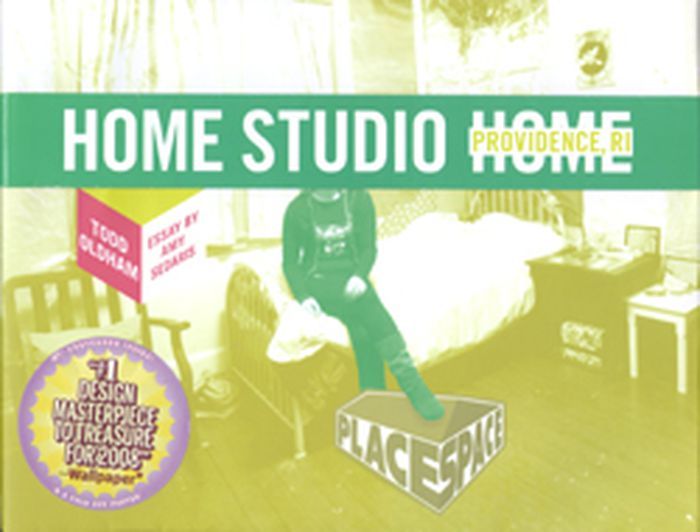
AMMO’s Place Space books by the incomparable Todd Oldham, launches a new design series that celebrates singular places and the uncommonly devoted people who create them, each accompanied by an essay. In "Home studio home", designer Todd Oldham focuses his eye on some quirky and inspired art students’ digs at the Rhode Island School of Design. Todd’s photography showcases a treasure trove of ideas, pop culture archives, and a soothing sense of bedlam that permeates these maverick dwellings. A testament to ingenuity on a budget without any parental restrictions, "Home studio home" celebrates unique and unfettered creativity. The book comes wrapped in a custom designed poster for your home, with additional tear out postcards, and essays by both Todd Oldham and Amy Sedaris.
Home studio home, Providence, RI (Place Space)
Actions:
Price:
$22.95
(available to order)
Summary:
AMMO’s Place Space books by the incomparable Todd Oldham, launches a new design series that celebrates singular places and the uncommonly devoted people who create them, each accompanied by an essay. In "Home studio home", designer Todd Oldham focuses his eye on some quirky and inspired art students’ digs at the Rhode Island School of Design. Todd’s photography showcases a treasure trove of ideas, pop culture archives, and a soothing sense of bedlam that permeates these maverick dwellings. A testament to ingenuity on a budget without any parental restrictions, "Home studio home" celebrates unique and unfettered creativity. The book comes wrapped in a custom designed poster for your home, with additional tear out postcards, and essays by both Todd Oldham and Amy Sedaris.
Form:
books
books
Publication:
May 2008, Los Angeles
May 2008, Los Angeles
Subject:
Interior Design
Interior Design
Form:
books
books
Title:
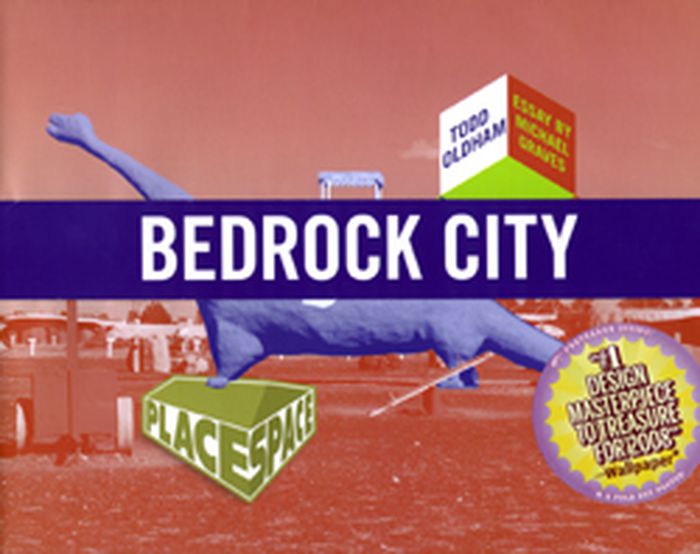
Bedrock City (Place Space)
Bedrock City (Place Space)
Actions:
Price:
$22.95
(available to order)
Summary:
AMMO’s Place Space books by the incomparable Todd Oldham, launches a new design series that celebrates singular places and the uncommonly devoted people who create them, each accompanied by an essay.
$22.95
(available to order)
Summary:
AMMO’s Place Space books by the incomparable Todd Oldham, launches a new design series that celebrates singular places and the uncommonly devoted people who create them, each accompanied by an essay.
Title:
Bedrock City (Place Space)
Actions:
Price:
$22.95
(available to order)
Summary:
AMMO’s Place Space books by the incomparable Todd Oldham, launches a new design series that celebrates singular places and the uncommonly devoted people who create them, each accompanied by an essay.
Bedrock City (Place Space)
Actions:
Price:
$22.95
(available to order)
Summary:
AMMO’s Place Space books by the incomparable Todd Oldham, launches a new design series that celebrates singular places and the uncommonly devoted people who create them, each accompanied by an essay.
Form:
books
books
Publication:
May 2008, New York
May 2008, New York
Subject:
Interior Design
Interior Design
Form:
books
books

Title:
Wiener Werkstatte, 1903-1932
Wiener Werkstatte, 1903-1932
Actions:
Price:
$17.95
(available to order)
Summary:
En 1903 furent créés les ateliers sécessionnistes viennois d'art décoratif Wiener Werkstätt ainsi que la Galerie Nationale d'art moderne...
$17.95
(available to order)
Summary:
En 1903 furent créés les ateliers sécessionnistes viennois d'art décoratif Wiener Werkstätt ainsi que la Galerie Nationale d'art moderne...
Subject:
Interior Design
Interior Design
Publication:
March 2008, Hong Kong, Köln, London, Los Angeles, Madrid
March 2008, Hong Kong, Köln, London, Los Angeles, Madrid
Title:
Wiener Werkstatte, 1903-1932
Actions:
Price:
$17.95
(available to order)
Summary:
En 1903 furent créés les ateliers sécessionnistes viennois d'art décoratif Wiener Werkstätt ainsi que la Galerie Nationale d'art moderne...
Wiener Werkstatte, 1903-1932
Actions:
Price:
$17.95
(available to order)
Summary:
En 1903 furent créés les ateliers sécessionnistes viennois d'art décoratif Wiener Werkstätt ainsi que la Galerie Nationale d'art moderne...
Form:
books
books
Publication:
March 2008, Hong Kong, Köln, London, Los Angeles, Madrid
March 2008, Hong Kong, Köln, London, Los Angeles, Madrid
Subject:
Interior Design
Interior Design
Form:
books
books
Actions:
Price:
$34.95
(available to order)
Summary:
This book contains hightlights from Russian artist Vladimir Arkhipov's collection of unique artifacts. Objects made by ordinary Russians inspired by a lack of immediate access to manufactured goods during the collapse of the Soviet Union. The archive includes hundreds of objects created with often idiosyncratic functional qualities made for both inside and outside the(...)
$34.95
(available to order)
Summary:
This book contains hightlights from Russian artist Vladimir Arkhipov's collection of unique artifacts. Objects made by ordinary Russians inspired by a lack of immediate access to manufactured goods during the collapse of the Soviet Union. The archive includes hundreds of objects created with often idiosyncratic functional qualities made for both inside and outside the(...)
Title:
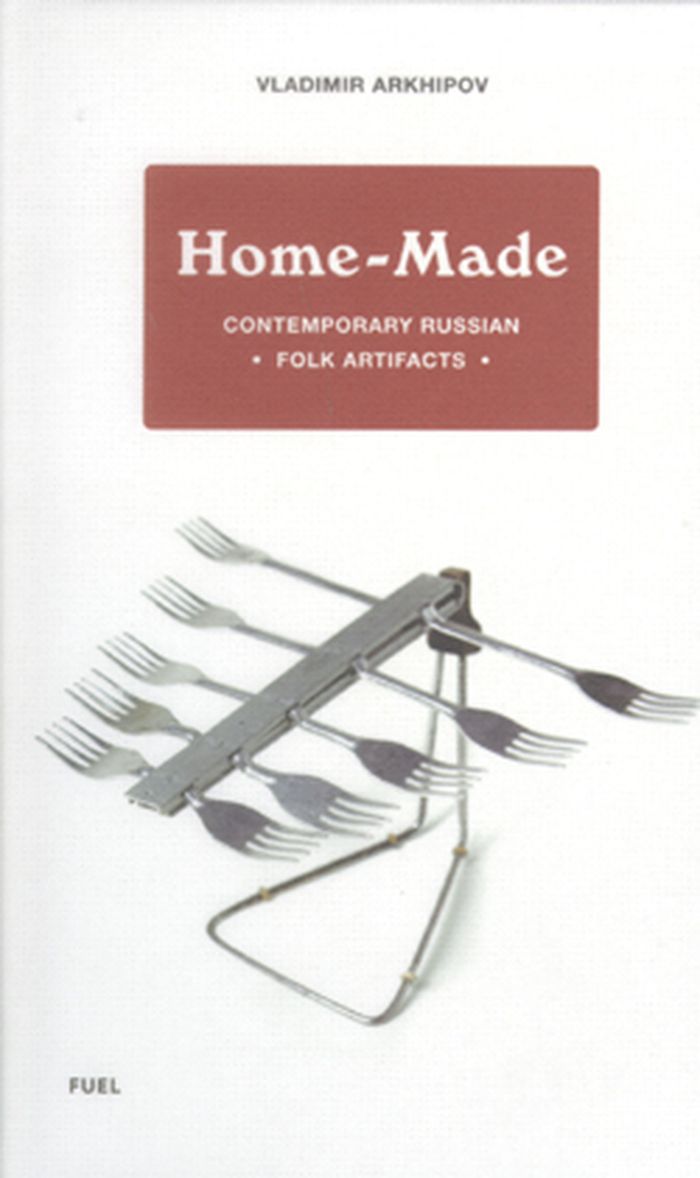
Home-Made: contemporary russian folk atifacts
Actions:
Price:
$34.95
(available to order)
Summary:
This book contains hightlights from Russian artist Vladimir Arkhipov's collection of unique artifacts. Objects made by ordinary Russians inspired by a lack of immediate access to manufactured goods during the collapse of the Soviet Union. The archive includes hundreds of objects created with often idiosyncratic functional qualities made for both inside and outside the home, such as a tiny bathtub plug carefully fashioned from a boot heel; a back massager made from an old wooden abacus; a road sign used as a street cleaner's shovel; and a doormat made from beer bottle tops. Featuring over 220 individuals artifeacts of Soviet culture, each accompanied by a photograph of the creator, their story of how the object came about, its function and the materials used to create it.
Home-Made: contemporary russian folk atifacts
Actions:
Price:
$34.95
(available to order)
Summary:
This book contains hightlights from Russian artist Vladimir Arkhipov's collection of unique artifacts. Objects made by ordinary Russians inspired by a lack of immediate access to manufactured goods during the collapse of the Soviet Union. The archive includes hundreds of objects created with often idiosyncratic functional qualities made for both inside and outside the home, such as a tiny bathtub plug carefully fashioned from a boot heel; a back massager made from an old wooden abacus; a road sign used as a street cleaner's shovel; and a doormat made from beer bottle tops. Featuring over 220 individuals artifeacts of Soviet culture, each accompanied by a photograph of the creator, their story of how the object came about, its function and the materials used to create it.
Form:
books
books
Publication:
June 2006, London
June 2006, London
Subject:
Interior Design
Interior Design


