


19461 Results
Form:
exhibitions
exhibitions
Actions:
Description:
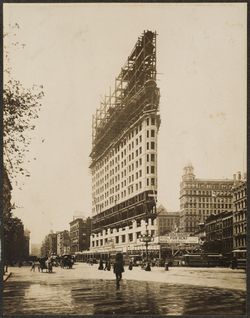
Architects of the Image: Photography in the Heroic Age of Construction explores the relationships between camera images and the making of large-scale architectural and engineering structures that stirred public imagination in the first hundred years of photography. The exhibition is predicated on the notion of the photographer as architect, an analogy that suggests(...)
Architects of the Image: Photography in the Heroic Age of Construction explores the relationships between camera images and the making of large-scale architectural and engineering structures that stirred public imagination in the first hundred years of photography. The exhibition is predicated on the notion of the photographer as architect, an analogy that suggests(...)
Date:
11 October 1995 to 4 February 1996
11 October 1995 to 4 February 1996
Title:
Architects of the Image: Photography in the Heroic Age of Construction
Actions:
Description:
Architects of the Image: Photography in the Heroic Age of Construction explores the relationships between camera images and the making of large-scale architectural and engineering structures that stirred public imagination in the first hundred years of photography. The exhibition is predicated on the notion of the photographer as architect, an analogy that suggests(...)
Architects of the Image: Photography in the Heroic Age of Construction
Actions:
Description:
Architects of the Image: Photography in the Heroic Age of Construction explores the relationships between camera images and the making of large-scale architectural and engineering structures that stirred public imagination in the first hundred years of photography. The exhibition is predicated on the notion of the photographer as architect, an analogy that suggests(...)
Form:
exhibitions
exhibitions
Date:
11 October 1995 to
4 February 1996
11 October 1995 to
4 February 1996
Form:
exhibitions
exhibitions
Actions:
Description:
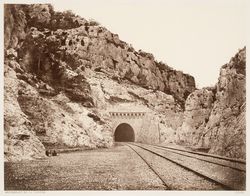
Édouard Baldus, more than any other photographer, defined the modern landscape and established the standard for architectural photography. The Photographs of Édouard Baldus: Landscapes and Monuments of France chronicles the Golden Age of France as seen by the photographer. The Photographs of Édouard Baldus is organized by chronological sections to reveal the evolution of(...)
Édouard Baldus, more than any other photographer, defined the modern landscape and established the standard for architectural photography. The Photographs of Édouard Baldus: Landscapes and Monuments of France chronicles the Golden Age of France as seen by the photographer. The Photographs of Édouard Baldus is organized by chronological sections to reveal the evolution of(...)
Location:
Main galleries
Main galleries
Date:
25 January 1995 to 23 April 1995
25 January 1995 to 23 April 1995
Title:
The Photographs of Édouard Baldus: Landscapes and Monuments of France
Actions:
Description:
Édouard Baldus, more than any other photographer, defined the modern landscape and established the standard for architectural photography. The Photographs of Édouard Baldus: Landscapes and Monuments of France chronicles the Golden Age of France as seen by the photographer. The Photographs of Édouard Baldus is organized by chronological sections to reveal the evolution of(...)
The Photographs of Édouard Baldus: Landscapes and Monuments of France
Actions:
Description:
Édouard Baldus, more than any other photographer, defined the modern landscape and established the standard for architectural photography. The Photographs of Édouard Baldus: Landscapes and Monuments of France chronicles the Golden Age of France as seen by the photographer. The Photographs of Édouard Baldus is organized by chronological sections to reveal the evolution of(...)
Form:
exhibitions
exhibitions
Date:
25 January 1995 to
23 April 1995
25 January 1995 to
23 April 1995
Location:
Main galleries
Main galleries
Form:
exhibitions
exhibitions
Actions:
Description:
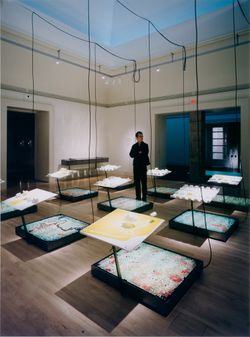
The American Lawn: Surface of Everyday Life reveals the lawn as a domestic symbol, civic showplace, economic force, and national icon. Bungalows in tract developments, suburban corporate headquarters, and the White House are all alike in that they sit behind a lawn: a carefully contrived patch of “nature” that lies open to the sky and to a multitude of uses and(...)
The American Lawn: Surface of Everyday Life reveals the lawn as a domestic symbol, civic showplace, economic force, and national icon. Bungalows in tract developments, suburban corporate headquarters, and the White House are all alike in that they sit behind a lawn: a carefully contrived patch of “nature” that lies open to the sky and to a multitude of uses and(...)
Location:
Main galleries, octagonal gallery, and hall cases
Main galleries, octagonal gallery, and hall cases
Date:
16 June 1998 to 8 November 1998
16 June 1998 to 8 November 1998
Title:
The American Lawn: Surface of Everyday Life
Actions:
Description:
The American Lawn: Surface of Everyday Life reveals the lawn as a domestic symbol, civic showplace, economic force, and national icon. Bungalows in tract developments, suburban corporate headquarters, and the White House are all alike in that they sit behind a lawn: a carefully contrived patch of “nature” that lies open to the sky and to a multitude of uses and(...)
The American Lawn: Surface of Everyday Life
Actions:
Description:
The American Lawn: Surface of Everyday Life reveals the lawn as a domestic symbol, civic showplace, economic force, and national icon. Bungalows in tract developments, suburban corporate headquarters, and the White House are all alike in that they sit behind a lawn: a carefully contrived patch of “nature” that lies open to the sky and to a multitude of uses and(...)
Form:
exhibitions
exhibitions
Date:
16 June 1998 to
8 November 1998
16 June 1998 to
8 November 1998
Location:
Main galleries, octagonal gallery, and hall cases
Main galleries, octagonal gallery, and hall cases
Form:
exhibitions
exhibitions
Description:
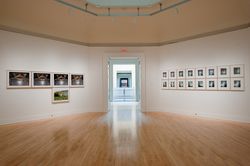
This exhibition features Italian photographer Guido Guidis photographs of the Brion family mausoleum in Italy, considered to be architect Carlo Scarpa’s masterpiece. The artist’s 54 colour photographs reveal the beauty of the funerary complex, its clean architectural lines, and the poetic nature of Scarpa’s work. By concentrating on particular architectural features,(...)
This exhibition features Italian photographer Guido Guidis photographs of the Brion family mausoleum in Italy, considered to be architect Carlo Scarpa’s masterpiece. The artist’s 54 colour photographs reveal the beauty of the funerary complex, its clean architectural lines, and the poetic nature of Scarpa’s work. By concentrating on particular architectural features,(...)
Location:
Octagonal gallery
Octagonal gallery
Date:
11 September 2009 to 10 January 2010
11 September 2009 to 10 January 2010
Title:
Carlo Scarpa's Tomba Brion: Photographs by Guido Guidi, 1997-2007
Actions:
Description:
This exhibition features Italian photographer Guido Guidis photographs of the Brion family mausoleum in Italy, considered to be architect Carlo Scarpa’s masterpiece. The artist’s 54 colour photographs reveal the beauty of the funerary complex, its clean architectural lines, and the poetic nature of Scarpa’s work. By concentrating on particular architectural features,(...)
Carlo Scarpa's Tomba Brion: Photographs by Guido Guidi, 1997-2007
Actions:
Description:
This exhibition features Italian photographer Guido Guidis photographs of the Brion family mausoleum in Italy, considered to be architect Carlo Scarpa’s masterpiece. The artist’s 54 colour photographs reveal the beauty of the funerary complex, its clean architectural lines, and the poetic nature of Scarpa’s work. By concentrating on particular architectural features,(...)
Form:
exhibitions
exhibitions
Date:
11 September 2009 to
10 January 2010
11 September 2009 to
10 January 2010
Location:
Octagonal gallery
Octagonal gallery
Form:
exhibitions
exhibitions
Description:
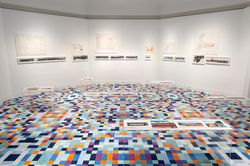
Ábalos Herreros constructed landscapes—or, more precisely, assembled them—by crudely juxtaposing a cast of semi-familiar characters. Novel to Spanish architecture in the 1980s, this pragmatic method of appropriation was developed and consistently employed as part of their design process. Borrowing, incorporating and transforming allowed ÁbalosHerreros to absorb the(...)
Ábalos Herreros constructed landscapes—or, more precisely, assembled them—by crudely juxtaposing a cast of semi-familiar characters. Novel to Spanish architecture in the 1980s, this pragmatic method of appropriation was developed and consistently employed as part of their design process. Borrowing, incorporating and transforming allowed ÁbalosHerreros to absorb the(...)
Location:
Octagonal gallery
Octagonal gallery
Date:
23 July 2015 to 13 September 2015
23 July 2015 to 13 September 2015
Title:
Landscapes of the Hyperreal: Ábalos&Herreros selected by SO – IL
Actions:
Description:
Ábalos Herreros constructed landscapes—or, more precisely, assembled them—by crudely juxtaposing a cast of semi-familiar characters. Novel to Spanish architecture in the 1980s, this pragmatic method of appropriation was developed and consistently employed as part of their design process. Borrowing, incorporating and transforming allowed ÁbalosHerreros to absorb the(...)
Landscapes of the Hyperreal: Ábalos&Herreros selected by SO – IL
Actions:
Description:
Ábalos Herreros constructed landscapes—or, more precisely, assembled them—by crudely juxtaposing a cast of semi-familiar characters. Novel to Spanish architecture in the 1980s, this pragmatic method of appropriation was developed and consistently employed as part of their design process. Borrowing, incorporating and transforming allowed ÁbalosHerreros to absorb the(...)
Form:
exhibitions
exhibitions
Date:
23 July 2015 to
13 September 2015
23 July 2015 to
13 September 2015
Location:
Octagonal gallery
Octagonal gallery
Form:
exhibitions
exhibitions
Actions:
Description:
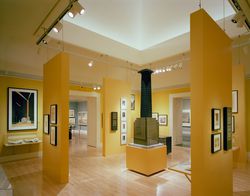
Americanism, the pattern of idealization, imitation and criticisms with which European architects greeted American urban models and building practices, is the subject of Scenes of the World to Come: European Architecture and the American Challenge, 1893–1960. The skyscrapers, massive industrial plants, and new sense of mobility and efficiency of North America became a(...)
Americanism, the pattern of idealization, imitation and criticisms with which European architects greeted American urban models and building practices, is the subject of Scenes of the World to Come: European Architecture and the American Challenge, 1893–1960. The skyscrapers, massive industrial plants, and new sense of mobility and efficiency of North America became a(...)
Location:
Main galleries
Main galleries
Date:
14 June 1995 to 14 September 1995
14 June 1995 to 14 September 1995
Title:
Scenes of the World to Come: European Architecture and the American Challenge, 1893–1960
Actions:
Description:
Americanism, the pattern of idealization, imitation and criticisms with which European architects greeted American urban models and building practices, is the subject of Scenes of the World to Come: European Architecture and the American Challenge, 1893–1960. The skyscrapers, massive industrial plants, and new sense of mobility and efficiency of North America became a(...)
Scenes of the World to Come: European Architecture and the American Challenge, 1893–1960
Actions:
Description:
Americanism, the pattern of idealization, imitation and criticisms with which European architects greeted American urban models and building practices, is the subject of Scenes of the World to Come: European Architecture and the American Challenge, 1893–1960. The skyscrapers, massive industrial plants, and new sense of mobility and efficiency of North America became a(...)
Form:
exhibitions
exhibitions
Date:
14 June 1995 to
14 September 1995
14 June 1995 to
14 September 1995
Location:
Main galleries
Main galleries
Form:
exhibitions
exhibitions
Actions:
Description:
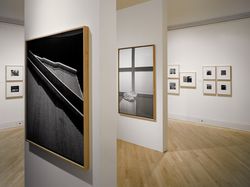
Richard Pare – Tadao Ando: The Colours of Light explores the relationship between the work of Japanese architect Tadao Ando, one of the major protagonists of a new sense of poetry in the architecture of our time, and the work of British photographer Richard Pare, pioneer in the study of the place of photography in the representation of architecture. Rather than to(...)
Richard Pare – Tadao Ando: The Colours of Light explores the relationship between the work of Japanese architect Tadao Ando, one of the major protagonists of a new sense of poetry in the architecture of our time, and the work of British photographer Richard Pare, pioneer in the study of the place of photography in the representation of architecture. Rather than to(...)
Location:
Octagonal gallery
Octagonal gallery
Date:
26 March 1997 to 1 June 1997
26 March 1997 to 1 June 1997
Title:
Richard Pare – Tadao Ando: The Colours of Light
Actions:
Description:
Richard Pare – Tadao Ando: The Colours of Light explores the relationship between the work of Japanese architect Tadao Ando, one of the major protagonists of a new sense of poetry in the architecture of our time, and the work of British photographer Richard Pare, pioneer in the study of the place of photography in the representation of architecture. Rather than to(...)
Richard Pare – Tadao Ando: The Colours of Light
Actions:
Description:
Richard Pare – Tadao Ando: The Colours of Light explores the relationship between the work of Japanese architect Tadao Ando, one of the major protagonists of a new sense of poetry in the architecture of our time, and the work of British photographer Richard Pare, pioneer in the study of the place of photography in the representation of architecture. Rather than to(...)
Form:
exhibitions
exhibitions
Date:
26 March 1997 to
1 June 1997
26 March 1997 to
1 June 1997
Location:
Octagonal gallery
Octagonal gallery
Form:
exhibitions
exhibitions
Description:
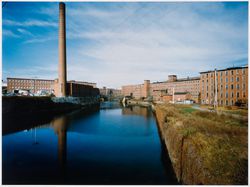
Commissioned by the CCA, for three years, French photographer Serge Hambourg recorded over four hundred historic mills and factories throughout New England. By capturing their surroundings as well as by focusing on the stark beauty of their interiors and exteriors, the images trace the evolution of this building type. The photographs included in the exhibition range from(...)
Commissioned by the CCA, for three years, French photographer Serge Hambourg recorded over four hundred historic mills and factories throughout New England. By capturing their surroundings as well as by focusing on the stark beauty of their interiors and exteriors, the images trace the evolution of this building type. The photographs included in the exhibition range from(...)
Location:
Octagonal gallery ante-room
Octagonal gallery ante-room
Date:
6 December 1989 to 11 February 1990
6 December 1989 to 11 February 1990
Title:
Mills and Factories of New England: Photographs by Serge Hambourg
Actions:
Description:
Commissioned by the CCA, for three years, French photographer Serge Hambourg recorded over four hundred historic mills and factories throughout New England. By capturing their surroundings as well as by focusing on the stark beauty of their interiors and exteriors, the images trace the evolution of this building type. The photographs included in the exhibition range from(...)
Mills and Factories of New England: Photographs by Serge Hambourg
Actions:
Description:
Commissioned by the CCA, for three years, French photographer Serge Hambourg recorded over four hundred historic mills and factories throughout New England. By capturing their surroundings as well as by focusing on the stark beauty of their interiors and exteriors, the images trace the evolution of this building type. The photographs included in the exhibition range from(...)
Form:
exhibitions
exhibitions
Date:
6 December 1989 to
11 February 1990
6 December 1989 to
11 February 1990
Location:
Octagonal gallery ante-room
Octagonal gallery ante-room
Form:
photographs
photographs
Actions:
Reference number:
ARCH256357
Description:
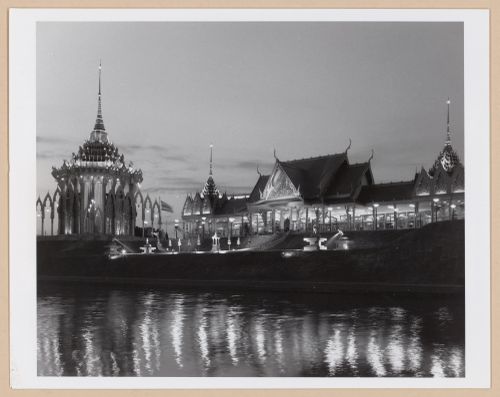
"Le Pavillon de la Thailande à l'Expo 67 / Le pavillon de la Thaïlande comprend deux édifices, dont la réplique d'un temple bouddhique d'environ 80 pieds de hauteur. Construit par des artisans thaïlandais à Bangkok même, ce somptueux palais doré a été assemblé dans l'ïle [sic] Notre-Dame. L'ensemble du pavillon comporte en outre un bâtiment cruciforme de même inspiration, quoique de style plus moderne, à l'intérieur duquel on a aménagé un restaurant et une salle d'exposition. En contrebas du pavillon, les visiteurs peuvent admirer une réplique de la célèbre barque royale ancrée dans une pièce d'eau. / Thailand Pavilion at Expo '67 / The main building of the Thailand pavilion is a fine reproduction of an 18th century Buddhist Shrine with a roof of gilded tiles and a towering spire. Both ancient and modern Thailand have their place in the display, and there are exhibits of fine art, handicrafts and other aspects of the culture of the country."--Description.
ARCH256357
Description:
"Le Pavillon de la Thailande à l'Expo 67 / Le pavillon de la Thaïlande comprend deux édifices, dont la réplique d'un temple bouddhique d'environ 80 pieds de hauteur. Construit par des artisans thaïlandais à Bangkok même, ce somptueux palais doré a été assemblé dans l'ïle [sic] Notre-Dame. L'ensemble du pavillon comporte en outre un bâtiment cruciforme de même inspiration, quoique de style plus moderne, à l'intérieur duquel on a aménagé un restaurant et une salle d'exposition. En contrebas du pavillon, les visiteurs peuvent admirer une réplique de la célèbre barque royale ancrée dans une pièce d'eau. / Thailand Pavilion at Expo '67 / The main building of the Thailand pavilion is a fine reproduction of an 18th century Buddhist Shrine with a roof of gilded tiles and a towering spire. Both ancient and modern Thailand have their place in the display, and there are exhibits of fine art, handicrafts and other aspects of the culture of the country."--Description.
People:
Date:
1967
1967
Title:
Night view of the Thailand Pavilion, Expo 67, Montréal, Québec
Actions:
ARCH256357
Description:
"Le Pavillon de la Thailande à l'Expo 67 / Le pavillon de la Thaïlande comprend deux édifices, dont la réplique d'un temple bouddhique d'environ 80 pieds de hauteur. Construit par des artisans thaïlandais à Bangkok même, ce somptueux palais doré a été assemblé dans l'ïle [sic] Notre-Dame. L'ensemble du pavillon comporte en outre un bâtiment cruciforme de même inspiration, quoique de style plus moderne, à l'intérieur duquel on a aménagé un restaurant et une salle d'exposition. En contrebas du pavillon, les visiteurs peuvent admirer une réplique de la célèbre barque royale ancrée dans une pièce d'eau. / Thailand Pavilion at Expo '67 / The main building of the Thailand pavilion is a fine reproduction of an 18th century Buddhist Shrine with a roof of gilded tiles and a towering spire. Both ancient and modern Thailand have their place in the display, and there are exhibits of fine art, handicrafts and other aspects of the culture of the country."--Description.
Night view of the Thailand Pavilion, Expo 67, Montréal, Québec
Actions:
ARCH256357
Description:
"Le Pavillon de la Thailande à l'Expo 67 / Le pavillon de la Thaïlande comprend deux édifices, dont la réplique d'un temple bouddhique d'environ 80 pieds de hauteur. Construit par des artisans thaïlandais à Bangkok même, ce somptueux palais doré a été assemblé dans l'ïle [sic] Notre-Dame. L'ensemble du pavillon comporte en outre un bâtiment cruciforme de même inspiration, quoique de style plus moderne, à l'intérieur duquel on a aménagé un restaurant et une salle d'exposition. En contrebas du pavillon, les visiteurs peuvent admirer une réplique de la célèbre barque royale ancrée dans une pièce d'eau. / Thailand Pavilion at Expo '67 / The main building of the Thailand pavilion is a fine reproduction of an 18th century Buddhist Shrine with a roof of gilded tiles and a towering spire. Both ancient and modern Thailand have their place in the display, and there are exhibits of fine art, handicrafts and other aspects of the culture of the country."--Description.
Form:
photographs
photographs
Date:
1967
1967
People:
Form:
events
events
Actions:
Description:
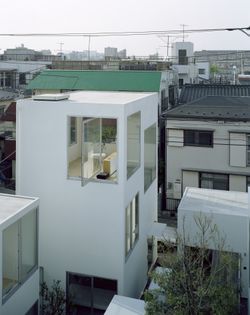
Japanese architect Ryue Nishizawa speaks about his work and the CCA exhibition Some Ideas on Living in London and Tokyo by Stephen Taylor and Ryue Nishizawa (2008). The exhibition marks the first North American presentation of residential projects by Stephen Taylor and Ryue Nishizawa and reveals their distinctive solutions to the challenges of building homes in existing(...)
Japanese architect Ryue Nishizawa speaks about his work and the CCA exhibition Some Ideas on Living in London and Tokyo by Stephen Taylor and Ryue Nishizawa (2008). The exhibition marks the first North American presentation of residential projects by Stephen Taylor and Ryue Nishizawa and reveals their distinctive solutions to the challenges of building homes in existing(...)
Location:
Paul Desmarais Theatre
Paul Desmarais Theatre
Date:
14 May 2008
14 May 2008
Title:
Ryue Nishizawa: Some Ideas on Living
Actions:
Description:
Japanese architect Ryue Nishizawa speaks about his work and the CCA exhibition Some Ideas on Living in London and Tokyo by Stephen Taylor and Ryue Nishizawa (2008). The exhibition marks the first North American presentation of residential projects by Stephen Taylor and Ryue Nishizawa and reveals their distinctive solutions to the challenges of building homes in existing(...)
Ryue Nishizawa: Some Ideas on Living
Actions:
Description:
Japanese architect Ryue Nishizawa speaks about his work and the CCA exhibition Some Ideas on Living in London and Tokyo by Stephen Taylor and Ryue Nishizawa (2008). The exhibition marks the first North American presentation of residential projects by Stephen Taylor and Ryue Nishizawa and reveals their distinctive solutions to the challenges of building homes in existing(...)
Form:
events
events
Date:
14 May 2008
14 May 2008
Location:
Paul Desmarais Theatre
Paul Desmarais Theatre


