


1069 Results
Form:
books
books

Title:
Office (Object Lessons)
Office (Object Lessons)
Actions:
Price:
$21.95
(available in store)
Summary:
From its origins in the late 19th century to its decline in the 21st, Sheila Liming's ''Office'' narrates a cultural history of a place that has arguably been the primary site of labor in the postmodern economy. During the post-war decades of the 20th century, the office rose to prominence in culture, achieving an iconic status that is reflected in television, film,(...)
$21.95
(available in store)
Summary:
From its origins in the late 19th century to its decline in the 21st, Sheila Liming's ''Office'' narrates a cultural history of a place that has arguably been the primary site of labor in the postmodern economy. During the post-war decades of the 20th century, the office rose to prominence in culture, achieving an iconic status that is reflected in television, film,(...)
Title:
Office (Object Lessons)
Actions:
Price:
$21.95
(available in store)
Summary:
From its origins in the late 19th century to its decline in the 21st, Sheila Liming's ''Office'' narrates a cultural history of a place that has arguably been the primary site of labor in the postmodern economy. During the post-war decades of the 20th century, the office rose to prominence in culture, achieving an iconic status that is reflected in television, film, literature, and throughout the history of advertising. Most people are well versed in the clichés of office culture, despite evidence that an increasing number of us no longer work in offices. With the development of computing technology in the 1980s and 90s, the office underwent many changes. Microsoft debuted its suite of multitasking applications known as Microsoft Office in 1989, firing the first shot in the war for the office's survival. This book therefore poses the question: how did culture become organized around the idea of the office, and how will it change if the office becomes extinct?
Office (Object Lessons)
Actions:
Price:
$21.95
(available in store)
Summary:
From its origins in the late 19th century to its decline in the 21st, Sheila Liming's ''Office'' narrates a cultural history of a place that has arguably been the primary site of labor in the postmodern economy. During the post-war decades of the 20th century, the office rose to prominence in culture, achieving an iconic status that is reflected in television, film, literature, and throughout the history of advertising. Most people are well versed in the clichés of office culture, despite evidence that an increasing number of us no longer work in offices. With the development of computing technology in the 1980s and 90s, the office underwent many changes. Microsoft debuted its suite of multitasking applications known as Microsoft Office in 1989, firing the first shot in the war for the office's survival. This book therefore poses the question: how did culture become organized around the idea of the office, and how will it change if the office becomes extinct?
Form:
books
books
Publication:
November 2020
November 2020
Subject:
Commercial interiors, Building types
Commercial interiors, Building types
Form:
books
books
Actions:
Price:
$54.00
(available to order)
Summary:
Over the past 30 years, Canadian artists Carole Conde and Karl Beveridge have developed a collaborative practice of working with organized labor to reveal the increasingly complex relationships between paid work and global, ethical and environmental concerns. This volume, with 112 color reproductions of Conde and Beveridge's major projects, is the first comprehensive(...)
$54.00
(available to order)
Summary:
Over the past 30 years, Canadian artists Carole Conde and Karl Beveridge have developed a collaborative practice of working with organized labor to reveal the increasingly complex relationships between paid work and global, ethical and environmental concerns. This volume, with 112 color reproductions of Conde and Beveridge's major projects, is the first comprehensive(...)
Title:
Condé and Beveridge: class works
Actions:
Price:
$54.00
(available to order)
Summary:
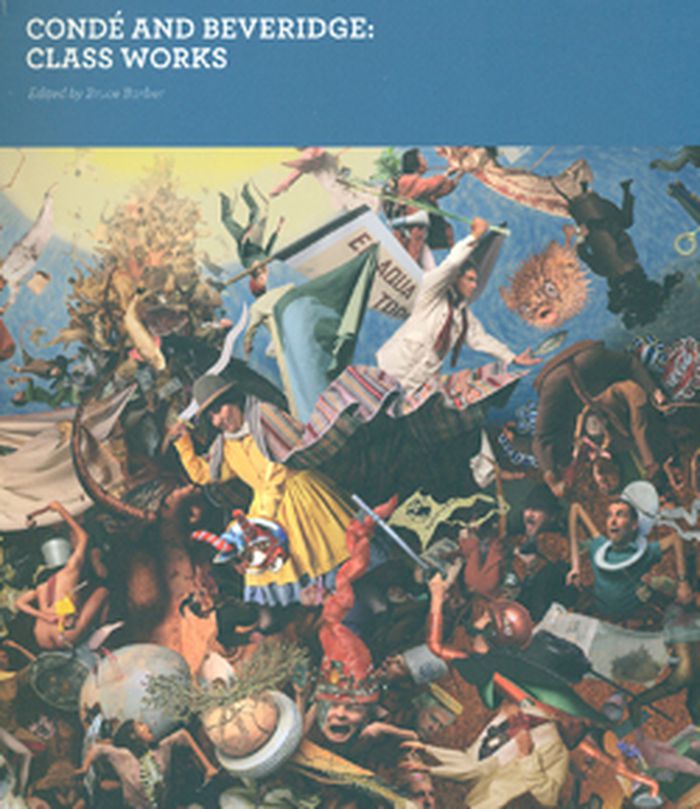
Over the past 30 years, Canadian artists Carole Conde and Karl Beveridge have developed a collaborative practice of working with organized labor to reveal the increasingly complex relationships between paid work and global, ethical and environmental concerns. This volume, with 112 color reproductions of Conde and Beveridge's major projects, is the first comprehensive examination of the pair's influential work. Their collaboration began in 1976 when--through their involvement with the New York collaborative Art & Language and the nascent Conceptual art movement--they turned from solo production and formalist art-making to social engagement, which combines left-oriented discourses with the artists' formal and technical innovations, and which presaged the currently prevalent practice in which art-making is understood as an articulation of human conditions and a tool of community formation. This volume includes a chronology of their practice and essays by Jan Allen, D'Arcy Martin, Declan McGonagle, Allan Sekula, Dot Tuer and Bruce Barber and an extensive interview by Clive Robertson.
Condé and Beveridge: class works
Actions:
Price:
$54.00
(available to order)
Summary:
Over the past 30 years, Canadian artists Carole Conde and Karl Beveridge have developed a collaborative practice of working with organized labor to reveal the increasingly complex relationships between paid work and global, ethical and environmental concerns. This volume, with 112 color reproductions of Conde and Beveridge's major projects, is the first comprehensive examination of the pair's influential work. Their collaboration began in 1976 when--through their involvement with the New York collaborative Art & Language and the nascent Conceptual art movement--they turned from solo production and formalist art-making to social engagement, which combines left-oriented discourses with the artists' formal and technical innovations, and which presaged the currently prevalent practice in which art-making is understood as an articulation of human conditions and a tool of community formation. This volume includes a chronology of their practice and essays by Jan Allen, D'Arcy Martin, Declan McGonagle, Allan Sekula, Dot Tuer and Bruce Barber and an extensive interview by Clive Robertson.
Form:
books
books
Publication:
February 2009
February 2009
Subject:
Contemporary Art Monographs
Contemporary Art Monographs
Form:
books
books
Title:
Ezra Stoller, photographer
Ezra Stoller, photographer
Actions:
Price:
$69.95
(available to order)
Summary:
Ezra Stoller's iconic photographs of 20th-century architectural masterpieces, such as Frank Lloyd Wright's Fallingwater and Mies van der Rohe's Seagram Building, are often cited in aiding the rise of modernism in America. Stoller (1915–2004) elevated architectural photography to an art form, capturing the mood of numerous buildings in their best light. Living and(...)
$69.95
(available to order)
Summary:
Ezra Stoller's iconic photographs of 20th-century architectural masterpieces, such as Frank Lloyd Wright's Fallingwater and Mies van der Rohe's Seagram Building, are often cited in aiding the rise of modernism in America. Stoller (1915–2004) elevated architectural photography to an art form, capturing the mood of numerous buildings in their best light. Living and(...)
Title:
Ezra Stoller, photographer
Actions:
Price:
$69.95
(available to order)
Summary:
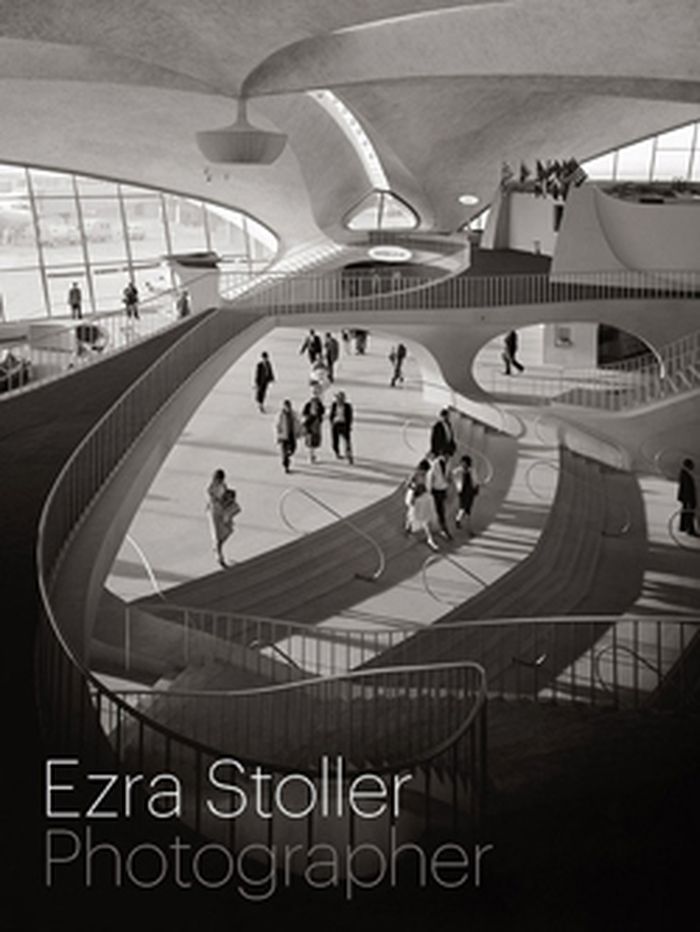
Ezra Stoller's iconic photographs of 20th-century architectural masterpieces, such as Frank Lloyd Wright's Fallingwater and Mies van der Rohe's Seagram Building, are often cited in aiding the rise of modernism in America. Stoller (1915–2004) elevated architectural photography to an art form, capturing the mood of numerous buildings in their best light. Living and working in New York from the early 1940s to the mid-1970s, Stoller photographed buildings by such architects as Alvar Aalto, Eero Saarinen, Marcel Breuer, Paul Rudolph, and Louis I. Kahn. His striking images earned him the admiration of critics and contemporaries, but few people are aware of the stunning breadth of his oeuvre, which also included domestic and industrial spaces and important editorial depictions of American labor in the 1950s and 1960s. Ezra Stoller, Photographer, a survey of Stoller's artistic accomplishments, examines the photographer's full range with a fresh eye and unprecedented scope, offering a unique commentary on postwar America's changing landscape.
Ezra Stoller, photographer
Actions:
Price:
$69.95
(available to order)
Summary:
Ezra Stoller's iconic photographs of 20th-century architectural masterpieces, such as Frank Lloyd Wright's Fallingwater and Mies van der Rohe's Seagram Building, are often cited in aiding the rise of modernism in America. Stoller (1915–2004) elevated architectural photography to an art form, capturing the mood of numerous buildings in their best light. Living and working in New York from the early 1940s to the mid-1970s, Stoller photographed buildings by such architects as Alvar Aalto, Eero Saarinen, Marcel Breuer, Paul Rudolph, and Louis I. Kahn. His striking images earned him the admiration of critics and contemporaries, but few people are aware of the stunning breadth of his oeuvre, which also included domestic and industrial spaces and important editorial depictions of American labor in the 1950s and 1960s. Ezra Stoller, Photographer, a survey of Stoller's artistic accomplishments, examines the photographer's full range with a fresh eye and unprecedented scope, offering a unique commentary on postwar America's changing landscape.
Form:
books
books
Publication:
November 2012
November 2012
Subject:
Photography monographs
Photography monographs
Form:
books
books

Title:
Simulation city
Simulation city
Actions:
Price:
$42.95
(available in store)
Summary:
Dubai, in its newness, has redefined the notion of authenticity: city and spectacle have been intertwined. Mall culture, airports, and theme parks may seem strange and vacuous in other cities, but in Dubai, they are the essence of life. Shortly before the outbreak of the global pandemic, Dirk Gebhardt and Lars Harmsen visited Dubai. Nowhere in the world had they seen(...)
$42.95
(available in store)
Summary:
Dubai, in its newness, has redefined the notion of authenticity: city and spectacle have been intertwined. Mall culture, airports, and theme parks may seem strange and vacuous in other cities, but in Dubai, they are the essence of life. Shortly before the outbreak of the global pandemic, Dirk Gebhardt and Lars Harmsen visited Dubai. Nowhere in the world had they seen(...)
Subject:
Architecture since 1900, Middle-East
Architecture since 1900, Middle-East
Publication:
July 2022
July 2022
Title:
Simulation city
Actions:
Price:
$42.95
(available in store)
Summary:
Dubai, in its newness, has redefined the notion of authenticity: city and spectacle have been intertwined. Mall culture, airports, and theme parks may seem strange and vacuous in other cities, but in Dubai, they are the essence of life. Shortly before the outbreak of the global pandemic, Dirk Gebhardt and Lars Harmsen visited Dubai. Nowhere in the world had they seen drama and comedy so powerfully together as in Dubai’s theme parks. In the drive to bring more tourists to the UAE, develop the real estate industry, and retain a huge labor force of expatriate workers, Dubai itself resembles and operates in many ways like a theme park. In his essay Simulation City: The Theming of Dubai Jason Carlow explores the uncanny atmosphere of spectacle, spatial control, and remarkable societal and cultural overlaps and adjacencies that have become an integral part of life for many residents of and visitors to contemporary Dubai.
Simulation city
Actions:
Price:
$42.95
(available in store)
Summary:
Dubai, in its newness, has redefined the notion of authenticity: city and spectacle have been intertwined. Mall culture, airports, and theme parks may seem strange and vacuous in other cities, but in Dubai, they are the essence of life. Shortly before the outbreak of the global pandemic, Dirk Gebhardt and Lars Harmsen visited Dubai. Nowhere in the world had they seen drama and comedy so powerfully together as in Dubai’s theme parks. In the drive to bring more tourists to the UAE, develop the real estate industry, and retain a huge labor force of expatriate workers, Dubai itself resembles and operates in many ways like a theme park. In his essay Simulation City: The Theming of Dubai Jason Carlow explores the uncanny atmosphere of spectacle, spatial control, and remarkable societal and cultural overlaps and adjacencies that have become an integral part of life for many residents of and visitors to contemporary Dubai.
Form:
books
books
Publication:
July 2022
July 2022
Subject:
Architecture since 1900, Middle-East
Architecture since 1900, Middle-East
Form:
books
books
Actions:
Price:
$29.95
(available to order)
Summary:
Tell Me What You Want, What You Really, Really Want brings together a selection of recent writings by art critic Jan Verwoert for the first time. Published in collaboration with Piet Zwart Institute, Willem de Kooning Academy in Rotterdam, the book galvanizes central themes Verwoert has been developing in pursuit of a language to describes art’s transformative potential(...)
$29.95
(available to order)
Summary:
Tell Me What You Want, What You Really, Really Want brings together a selection of recent writings by art critic Jan Verwoert for the first time. Published in collaboration with Piet Zwart Institute, Willem de Kooning Academy in Rotterdam, the book galvanizes central themes Verwoert has been developing in pursuit of a language to describes art’s transformative potential(...)
Title:
Tell me what you want, what you really, really want
Actions:
Price:
$29.95
(available to order)
Summary:
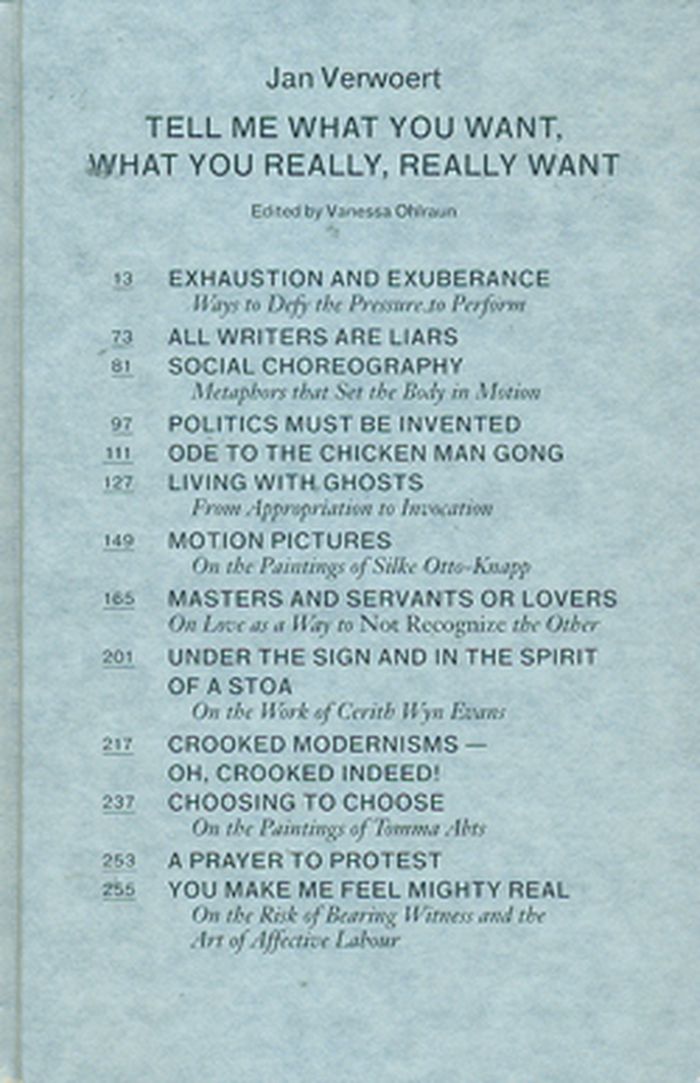
Tell Me What You Want, What You Really, Really Want brings together a selection of recent writings by art critic Jan Verwoert for the first time. Published in collaboration with Piet Zwart Institute, Willem de Kooning Academy in Rotterdam, the book galvanizes central themes Verwoert has been developing in pursuit of a language to describes art’s transformative potential in conceptual, performative, and emotional terms. He analyzes the power of public gestures to constitute communities as well as the pressure to perform that governs the sphere of creative labor, in order to show how particular artists perform gestures and invoke community differently. Exploring the emotional power games that shape social relations, Verwoert looks for an alternative ethos of action and feeling, asking: How can a modernist approach to artistic form as a means of social critique be expanded to fully avow its subliminal affective undercurrents, and produce a pleasurably crooked form of criticality in art and writing?
Tell me what you want, what you really, really want
Actions:
Price:
$29.95
(available to order)
Summary:
Tell Me What You Want, What You Really, Really Want brings together a selection of recent writings by art critic Jan Verwoert for the first time. Published in collaboration with Piet Zwart Institute, Willem de Kooning Academy in Rotterdam, the book galvanizes central themes Verwoert has been developing in pursuit of a language to describes art’s transformative potential in conceptual, performative, and emotional terms. He analyzes the power of public gestures to constitute communities as well as the pressure to perform that governs the sphere of creative labor, in order to show how particular artists perform gestures and invoke community differently. Exploring the emotional power games that shape social relations, Verwoert looks for an alternative ethos of action and feeling, asking: How can a modernist approach to artistic form as a means of social critique be expanded to fully avow its subliminal affective undercurrents, and produce a pleasurably crooked form of criticality in art and writing?
Form:
books
books
Publication:
October 2010
October 2010
Subject:
Art Theory
Art Theory
Form:
books
books
Actions:
Price:
$32.00
(available to order)
Summary:
When the “sharing economy” launched a decade ago, proponents claimed that it would transform the experience of work—giving earners flexibility, autonomy, and a decent income. It was touted as a cure for social isolation and rampant ecological degradation. But this novel form of work soon sprouted a dark side: exploited Uber drivers, neighborhoods ruined by Airbnb, racial(...)
$32.00
(available to order)
Summary:
When the “sharing economy” launched a decade ago, proponents claimed that it would transform the experience of work—giving earners flexibility, autonomy, and a decent income. It was touted as a cure for social isolation and rampant ecological degradation. But this novel form of work soon sprouted a dark side: exploited Uber drivers, neighborhoods ruined by Airbnb, racial(...)
Title:
After the gig: how the sharing economy got hijacked, and how to win it back
Actions:
Price:
$32.00
(available to order)
Summary:
When the “sharing economy” launched a decade ago, proponents claimed that it would transform the experience of work—giving earners flexibility, autonomy, and a decent income. It was touted as a cure for social isolation and rampant ecological degradation. But this novel form of work soon sprouted a dark side: exploited Uber drivers, neighborhoods ruined by Airbnb, racial discrimination, and rising carbon emissions. Several of the most prominent platforms are now faced with existential crises as they prioritize growth over fairness and long-term viability. Based on nearly a decade of pioneering research, this publication dives into what went wrong with this contemporary reimagining of labor. It examines multiple types of data from thirteen cases to identify the unique features and potential of sharing platforms that prior research has failed to pinpoint. Juliet B. Schor presents a compelling argument that we can engineer a reboot: through regulatory reforms and cooperative platforms owned and controlled by users, an equitable and truly shared economy is still possible.
After the gig: how the sharing economy got hijacked, and how to win it back
Actions:
Price:
$32.00
(available to order)
Summary:
When the “sharing economy” launched a decade ago, proponents claimed that it would transform the experience of work—giving earners flexibility, autonomy, and a decent income. It was touted as a cure for social isolation and rampant ecological degradation. But this novel form of work soon sprouted a dark side: exploited Uber drivers, neighborhoods ruined by Airbnb, racial discrimination, and rising carbon emissions. Several of the most prominent platforms are now faced with existential crises as they prioritize growth over fairness and long-term viability. Based on nearly a decade of pioneering research, this publication dives into what went wrong with this contemporary reimagining of labor. It examines multiple types of data from thirteen cases to identify the unique features and potential of sharing platforms that prior research has failed to pinpoint. Juliet B. Schor presents a compelling argument that we can engineer a reboot: through regulatory reforms and cooperative platforms owned and controlled by users, an equitable and truly shared economy is still possible.
Form:
books
books
Publication:
July 2021
July 2021
Subject:
Critical Theory
Critical Theory
Form:
books
books

Actions:
Price:
$78.00
(available in store)
Summary:
"You gotta love it", says 65-year-old Bill Delaney, beauty salesman in the greater Los Angeles area. Yes, you gotta love it. You gotta love the hustle, the getting-up-and-going-out, the repeating sales pitches, the flirting and the haggling; the unending calls, all week, Monday to Sunday, all day, morning till night. You gotta love the dance, the rush, and the territory.(...)
$78.00
(available in store)
Summary:
"You gotta love it", says 65-year-old Bill Delaney, beauty salesman in the greater Los Angeles area. Yes, you gotta love it. You gotta love the hustle, the getting-up-and-going-out, the repeating sales pitches, the flirting and the haggling; the unending calls, all week, Monday to Sunday, all day, morning till night. You gotta love the dance, the rush, and the territory.(...)
Title:
Too Many Products Too Much Pressure
Actions:
Price:
$78.00
(available in store)
Summary:
"You gotta love it", says 65-year-old Bill Delaney, beauty salesman in the greater Los Angeles area. Yes, you gotta love it. You gotta love the hustle, the getting-up-and-going-out, the repeating sales pitches, the flirting and the haggling; the unending calls, all week, Monday to Sunday, all day, morning till night. You gotta love the dance, the rush, and the territory. In 1980, as a young photographer just beginning her MFA in San Francisco and developing a keen interest in documenting labor, Janet Delaney embarked for a week on the job with her soon-to-retire father. The days are long and exhausting, but there is, in the incessant driving, carrying and chatting, a restless, pulsing energy streaming from Delaney’s photographs. Picturing the beauty parlors with a critical distance (she did, after all, grow up in a time of questioning constricted gender roles and capitalist consumer culture), using frontal, wide shots and often harsh flash, Delaney created a witty documentation of a day in the life of a salesman.
Too Many Products Too Much Pressure
Actions:
Price:
$78.00
(available in store)
Summary:
"You gotta love it", says 65-year-old Bill Delaney, beauty salesman in the greater Los Angeles area. Yes, you gotta love it. You gotta love the hustle, the getting-up-and-going-out, the repeating sales pitches, the flirting and the haggling; the unending calls, all week, Monday to Sunday, all day, morning till night. You gotta love the dance, the rush, and the territory. In 1980, as a young photographer just beginning her MFA in San Francisco and developing a keen interest in documenting labor, Janet Delaney embarked for a week on the job with her soon-to-retire father. The days are long and exhausting, but there is, in the incessant driving, carrying and chatting, a restless, pulsing energy streaming from Delaney’s photographs. Picturing the beauty parlors with a critical distance (she did, after all, grow up in a time of questioning constricted gender roles and capitalist consumer culture), using frontal, wide shots and often harsh flash, Delaney created a witty documentation of a day in the life of a salesman.
Form:
books
books
Publication:
December 2025
December 2025
Subject:
Photography monographs
Photography monographs
Form:
books
books
Price:
$225.95
(available to order)
Summary:
The current phase of capitalist development manifests itself through a very diverse range of spatial byproducts: data centers, warehouses, container terminals, logistics parks, and many others. These architectural episodes express specific power relations, exacerbate issues of labor, and generate dramatic processes of subjectivity. Most importantly, these architectures,(...)
$225.95
(available to order)
Summary:
The current phase of capitalist development manifests itself through a very diverse range of spatial byproducts: data centers, warehouses, container terminals, logistics parks, and many others. These architectural episodes express specific power relations, exacerbate issues of labor, and generate dramatic processes of subjectivity. Most importantly, these architectures,(...)
Title:
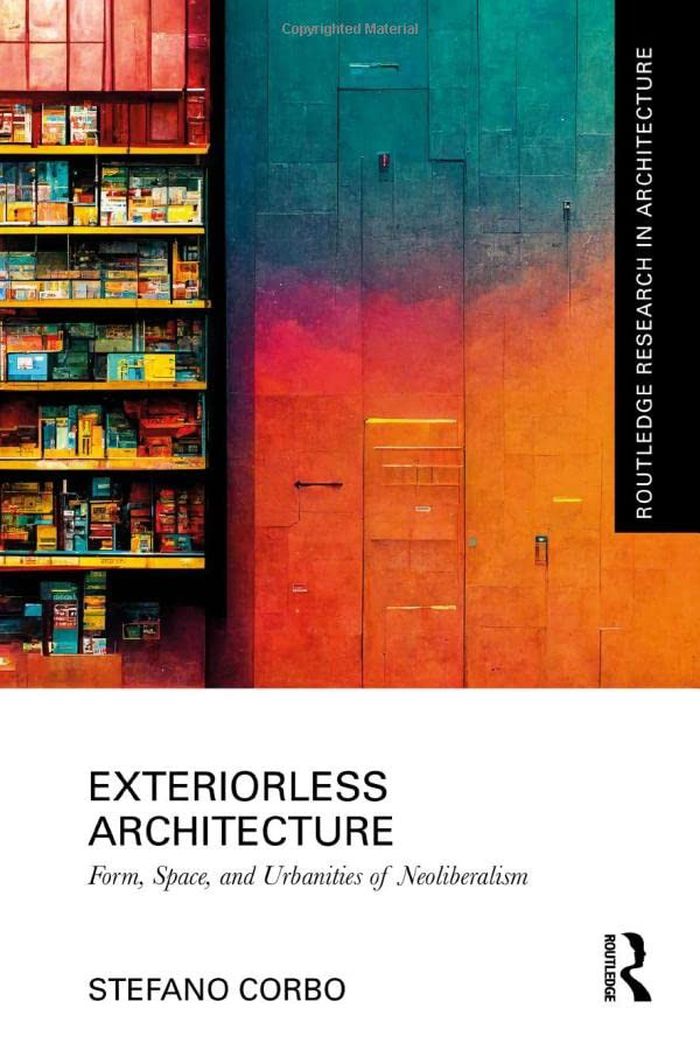
Exteriorless architecture: Form, space, and urbanities of neoliberalism
Actions:
Price:
$225.95
(available to order)
Summary:
The current phase of capitalist development manifests itself through a very diverse range of spatial byproducts: data centers, warehouses, container terminals, logistics parks, and many others. These architectural episodes express specific power relations, exacerbate issues of labor, and generate dramatic processes of subjectivity. Most importantly, these architectures, despite their formal and typological heterogeneity, belong to a common paradigm: the exteriorless. How can an architecture of the exteriorless be defined? How does it differentiate from examples and manifestations of the past? How do notions of legibility, form versus function, typological articulation come into play? In situating the spatialities of contemporary capitalism within the larger debate on Anthropocene, Post-Anthropocene, and Capitalocene, the book attempts to answer those questions by delineating three main characteristics for an architecture of the exteriorless: its physical and symbolic role as interface; its ambiguous condition of being at the same time local and global, isolated and connected, compressed and expanded; and, lastly, its contribution to new forms of urbanity in absence of the traditional city.
Exteriorless architecture: Form, space, and urbanities of neoliberalism
Actions:
Price:
$225.95
(available to order)
Summary:
The current phase of capitalist development manifests itself through a very diverse range of spatial byproducts: data centers, warehouses, container terminals, logistics parks, and many others. These architectural episodes express specific power relations, exacerbate issues of labor, and generate dramatic processes of subjectivity. Most importantly, these architectures, despite their formal and typological heterogeneity, belong to a common paradigm: the exteriorless. How can an architecture of the exteriorless be defined? How does it differentiate from examples and manifestations of the past? How do notions of legibility, form versus function, typological articulation come into play? In situating the spatialities of contemporary capitalism within the larger debate on Anthropocene, Post-Anthropocene, and Capitalocene, the book attempts to answer those questions by delineating three main characteristics for an architecture of the exteriorless: its physical and symbolic role as interface; its ambiguous condition of being at the same time local and global, isolated and connected, compressed and expanded; and, lastly, its contribution to new forms of urbanity in absence of the traditional city.
Form:
books
books
Publication:
June 2023
June 2023
Subject:
Architectural Theory
Architectural Theory
Form:
books
books

Price:
$35.95
(available in store)
Summary:
No other art movement has so profoundly influenced radical politics as the Situationist International. But beyond the clichés about its purported leader Guy Debord, the "society of the spectacle," détournement and dérive, lies a more complex story about key historical shifts in the composition of capital, work, labor, art, and revolutionary theory during the 1950s and(...)
$35.95
(available in store)
Summary:
No other art movement has so profoundly influenced radical politics as the Situationist International. But beyond the clichés about its purported leader Guy Debord, the "society of the spectacle," détournement and dérive, lies a more complex story about key historical shifts in the composition of capital, work, labor, art, and revolutionary theory during the 1950s and(...)
Title:
With and against: TheSituationist International in the age of automation
Actions:
Price:
$35.95
(available in store)
Summary:
No other art movement has so profoundly influenced radical politics as the Situationist International. But beyond the clichés about its purported leader Guy Debord, the "society of the spectacle," détournement and dérive, lies a more complex story about key historical shifts in the composition of capital, work, labor, art, and revolutionary theory during the 1950s and 60s. ''With and Against'' reframes the history of the Situationist International as a struggle to come to terms with the then-emerging ideologies of cybernetics and automation. Through each of the book's four chapters, Dominique Routhier dissects Situationist pamphlets, documents, artworks, and objects that refract elements of a "cybernetic hypothesis": the theoretically hyperbolic belief that technological progress, computers and automation make class struggle and the idea of revolution obsolete. With equal attention to aesthetic detail and to the broader contours of political economy, this book serves as a critical intervention in art history as well a call to reconsider, more broadly, the contemporary lessons of the most political of all artistic avantgardes.
With and against: TheSituationist International in the age of automation
Actions:
Price:
$35.95
(available in store)
Summary:
No other art movement has so profoundly influenced radical politics as the Situationist International. But beyond the clichés about its purported leader Guy Debord, the "society of the spectacle," détournement and dérive, lies a more complex story about key historical shifts in the composition of capital, work, labor, art, and revolutionary theory during the 1950s and 60s. ''With and Against'' reframes the history of the Situationist International as a struggle to come to terms with the then-emerging ideologies of cybernetics and automation. Through each of the book's four chapters, Dominique Routhier dissects Situationist pamphlets, documents, artworks, and objects that refract elements of a "cybernetic hypothesis": the theoretically hyperbolic belief that technological progress, computers and automation make class struggle and the idea of revolution obsolete. With equal attention to aesthetic detail and to the broader contours of political economy, this book serves as a critical intervention in art history as well a call to reconsider, more broadly, the contemporary lessons of the most political of all artistic avantgardes.
Form:
books
books
Publication:
October 2023
October 2023
Subject:
Critical Theory
Critical Theory
Form:
books
books
Price:
$37.95
(available to order)
Summary:
In "The politics of collecting," Eunsong Kim traces how racial capitalism and colonialism situated the rise of US museum collections and conceptual art forms. Investigating historical legal and property claims, she argues that regimes of expropriation--rather than merit or good taste--are responsible for popular ideas of formal innovation and artistic genius. In doing so,(...)
$37.95
(available to order)
Summary:
In "The politics of collecting," Eunsong Kim traces how racial capitalism and colonialism situated the rise of US museum collections and conceptual art forms. Investigating historical legal and property claims, she argues that regimes of expropriation--rather than merit or good taste--are responsible for popular ideas of formal innovation and artistic genius. In doing so,(...)
Title:
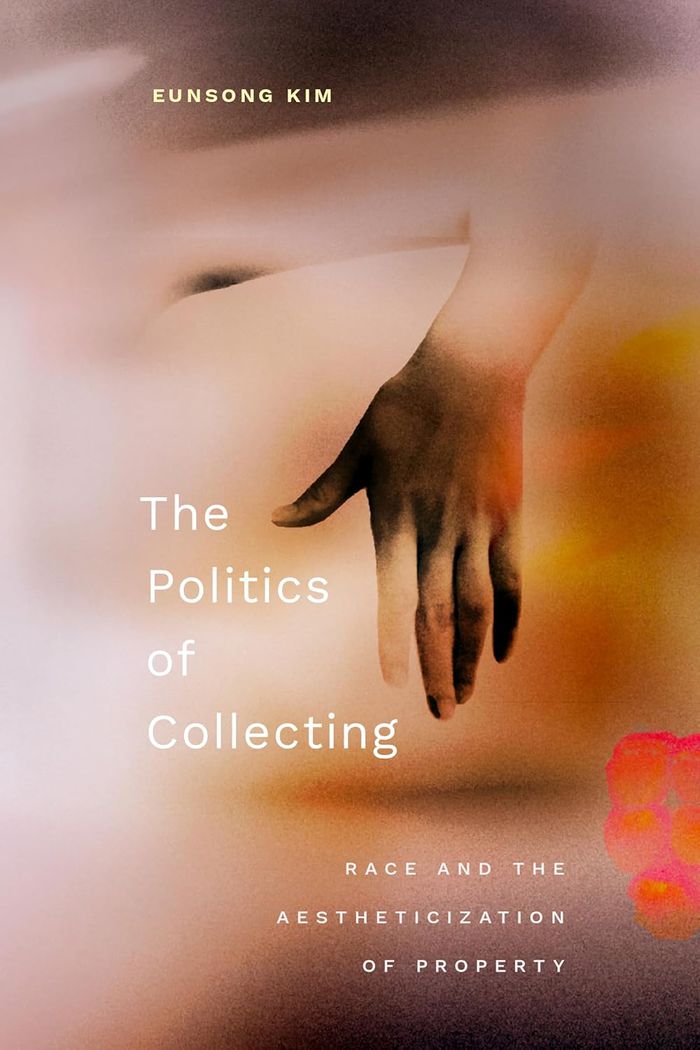
The politics of collecting: Race and the aestheticization of property
Actions:
Price:
$37.95
(available to order)
Summary:
In "The politics of collecting," Eunsong Kim traces how racial capitalism and colonialism situated the rise of US museum collections and conceptual art forms. Investigating historical legal and property claims, she argues that regimes of expropriation--rather than merit or good taste--are responsible for popular ideas of formal innovation and artistic genius. In doing so, she details how Marcel Duchamp's canonization has more to do with his patron's donations to museums than it does the quality of Duchamp's work, and she uncovers the racialized and financialized logic behind the Archive of New Poetry's collecting practices. Ranging from the conception of philanthropy devised by the robber barons of the late nineteenth century to ongoing digitization projects, Kim provides a new history of contemporary art that accounts for the complicated entanglement of race, capital, and labor behind storied art institutions and artists. Drawing on history, theory, and economics, Kim challenges received notions of artistic success and talent and calls for a new vision of art beyond the cultural institution.
The politics of collecting: Race and the aestheticization of property
Actions:
Price:
$37.95
(available to order)
Summary:
In "The politics of collecting," Eunsong Kim traces how racial capitalism and colonialism situated the rise of US museum collections and conceptual art forms. Investigating historical legal and property claims, she argues that regimes of expropriation--rather than merit or good taste--are responsible for popular ideas of formal innovation and artistic genius. In doing so, she details how Marcel Duchamp's canonization has more to do with his patron's donations to museums than it does the quality of Duchamp's work, and she uncovers the racialized and financialized logic behind the Archive of New Poetry's collecting practices. Ranging from the conception of philanthropy devised by the robber barons of the late nineteenth century to ongoing digitization projects, Kim provides a new history of contemporary art that accounts for the complicated entanglement of race, capital, and labor behind storied art institutions and artists. Drawing on history, theory, and economics, Kim challenges received notions of artistic success and talent and calls for a new vision of art beyond the cultural institution.
Form:
books
books
Publication:
August 2024
August 2024
Subject:
Archive, library and the digital
Archive, library and the digital


