


5383 Results
Form:
textual records
textual records
Actions:
Reference number:
ARCH158275
Description:
Chemise comprenant, entre autres, une invitation modifiée à participer au concours de Recherche et développement de l’IRAC et de l’OAQ dans le cadre du Festival d’architecture de l’IRAC tenu en juin 1997 ; une correspondance relative à la soumission par Roger D’Astous de son projet pour la Bibliothèque nationale du Japon (1996) ; un texte de Roger D’Astous expliquant l’aspect innovateur de son projet ; un communiqué de presse donnant le nom des gagnants dont notamment celui de Roger D’Astous, dans la catégorie de projets architecturaux novateurs qui ont un fort potentiel à générer des activités technologiques novatrices ; et une attestation à l’effet que Roger D’Astous s’est vu octroyer un trophée comme gagnant de la catégorie Grands projets d’architecture porteurs de technologies.
ARCH158275
Description:
Chemise comprenant, entre autres, une invitation modifiée à participer au concours de Recherche et développement de l’IRAC et de l’OAQ dans le cadre du Festival d’architecture de l’IRAC tenu en juin 1997 ; une correspondance relative à la soumission par Roger D’Astous de son projet pour la Bibliothèque nationale du Japon (1996) ; un texte de Roger D’Astous expliquant l’aspect innovateur de son projet ; un communiqué de presse donnant le nom des gagnants dont notamment celui de Roger D’Astous, dans la catégorie de projets architecturaux novateurs qui ont un fort potentiel à générer des activités technologiques novatrices ; et une attestation à l’effet que Roger D’Astous s’est vu octroyer un trophée comme gagnant de la catégorie Grands projets d’architecture porteurs de technologies.
People:
Date:
1996-1997, surtout 1997
1996-1997, surtout 1997
Title:
Invitation modifiée à participer au concours de Recherche et développement de l’IRAC
Actions:
ARCH158275
Description:
Chemise comprenant, entre autres, une invitation modifiée à participer au concours de Recherche et développement de l’IRAC et de l’OAQ dans le cadre du Festival d’architecture de l’IRAC tenu en juin 1997 ; une correspondance relative à la soumission par Roger D’Astous de son projet pour la Bibliothèque nationale du Japon (1996) ; un texte de Roger D’Astous expliquant l’aspect innovateur de son projet ; un communiqué de presse donnant le nom des gagnants dont notamment celui de Roger D’Astous, dans la catégorie de projets architecturaux novateurs qui ont un fort potentiel à générer des activités technologiques novatrices ; et une attestation à l’effet que Roger D’Astous s’est vu octroyer un trophée comme gagnant de la catégorie Grands projets d’architecture porteurs de technologies.
Invitation modifiée à participer au concours de Recherche et développement de l’IRAC
Actions:
ARCH158275
Description:
Chemise comprenant, entre autres, une invitation modifiée à participer au concours de Recherche et développement de l’IRAC et de l’OAQ dans le cadre du Festival d’architecture de l’IRAC tenu en juin 1997 ; une correspondance relative à la soumission par Roger D’Astous de son projet pour la Bibliothèque nationale du Japon (1996) ; un texte de Roger D’Astous expliquant l’aspect innovateur de son projet ; un communiqué de presse donnant le nom des gagnants dont notamment celui de Roger D’Astous, dans la catégorie de projets architecturaux novateurs qui ont un fort potentiel à générer des activités technologiques novatrices ; et une attestation à l’effet que Roger D’Astous s’est vu octroyer un trophée comme gagnant de la catégorie Grands projets d’architecture porteurs de technologies.
Form:
textual records
textual records
Date:
1996-1997, surtout 1997
1996-1997, surtout 1997
People:
Form:
drawings
drawings
Actions:
Reference number:
PH1984:0009:001-070
Description:
Album comprises a half title page and a full title page and 70 photogravures (each titled Hotel de Ville): 001 - Statue de la Ville de Paris décorant le motif de l'horloge (facade principale) 002 - Provenant du Motif de l'Horloge 003 - Grandes Gargouilles. Facade Boccador 004 - Provenant du Motif de l'Horloge. Facade principale 005 - Couronnement du Motif de l'Horloge. Facade principale 006 - Culot des Niches. Facade Boccador 007 - Encorbellement des échauquettes (facade principale) 008 - Pendeloques. Facade Lobau 009 - Lucarne de la Cour Louis XIV. Décoration de l'Attique 010 - Cheminée des Pavillons (facade principale) 011 - Frise de l'Entablement. Facade sur le Quai 012 - Culot des Niches. Facade Boccador 013 - Arabesques des Lucarnes Henri II Cour Louis XIV 014 - Lucarne de la Cour Louis XIV. Décoration de l'Attique 015 - Arabesques des Lucarnes Henri II. Cour Louis XIV 016 - Pendeloques. Facade Lobau 017 - Tympan de Lucarne. Facade principale 018 - Frise de l'entablement. Facade sur le Quai 019 - Pendeloques. Facade Lobau 020 - Facade principale. Pavillon. Côté du Quai. Juillet 1882 021 - Facade principale. 14 juillet 1882 022 - Provenant des Arcs Doubleaux. Cour Louis XIV 023 - Rosace Ancienne de l'Escalier. Cour Louis XIV 024 - Frise de l'Entablement. Facade sur le Quai 025 - Tympan de Lucarne. Facade principale 026 - Couronnement des Niches du Rez-de-Chaussée. Facade Boccador 027 - Rosace Ancienne de l'Escalier. Cour Louis XIV 028 - Tympan de Lucarne. Facade principale 029 - Frise de l'entablement. Facade Lobau 030 - Fronton de l'Attique. Facade Lobau 031 - Cariatides décorant l'escalier circulaire des grandes cours 032 - Culot des Niches sous les passages communiquant aux grandes cours 033 - Oeil de boeuf en plomb du Campanile 034 - Chapiteaux du 1er étage. Cour Louis XIV 035 - Étage d'Attique des escaliers circulaires des grandes cours 036 - 1. Arcs Doubleaux. Cour Louis XIV 2. Motif des plafonds. Escaliers Henri II 037 - Plafonds du Rez-de-chaussée. Cour Louis XIV 038 - Clef des Arcs du 1er étage. Pavillons d'Angles 039 - Cour des Bureaux 040 - Cour des Bureaux 041 - Lucarne. Cour Louis XIV 042 - Tympan de l'Arc du Milieu de la facade Boccador 043 - Statue de Boccador au dessus du guichet de droite de la facade principale 044 - Ornements des Arcades du Rez-de-Chaussée. Cour Louis XIV 045 - Figure du Motif de l'Horloge 046 - Figure du Motif de l'Horloge 047 - Culot des Niches sous les passages communiquant aux grandes cours 048 - Oeil de boeuf Cour Louis XIV 049 - Frises de l'Entablement. Facade sur le Quai 050 - Escalier Circulaire. Cour du Prefet 051 - Haut de l'Escalier Circulaire. Cour du Préfet 052 - Bas de l'Escalier Circulaire 053 - Beffroi 054 - Comble du Pavillon Boccador 055 - Baies d'Attique au dessus de la Salle des Fêtes. Place Lobau 056 - Cour du Préfet 057 - Facade Principale. Pavillon du Milieu 058 - Cour Louis XIV 059 - Pavillon de la Partie Centrale. Place Lobau 060 - Vue d'Ensemble prise du Quai 061 - Cour du Nord Escalier Henri II 062 - Facade Lobau. Guichets 063 - Facade Lobau. Guichets 064 - Cour du Sud. Automne 065 - Cour du Sud. Été 066 - Pavillon d'Angle avec Retour sur la Place Lobau 067 - Ecusson dans la Cour du Sud 068 - Portes des guichets sur la place de l'Hotel de Ville 069 - Gargouilles (facade Boccador) 070 - Facade sur le Quai
PH1984:0009:001-070
Description:
Album comprises a half title page and a full title page and 70 photogravures (each titled Hotel de Ville): 001 - Statue de la Ville de Paris décorant le motif de l'horloge (facade principale) 002 - Provenant du Motif de l'Horloge 003 - Grandes Gargouilles. Facade Boccador 004 - Provenant du Motif de l'Horloge. Facade principale 005 - Couronnement du Motif de l'Horloge. Facade principale 006 - Culot des Niches. Facade Boccador 007 - Encorbellement des échauquettes (facade principale) 008 - Pendeloques. Facade Lobau 009 - Lucarne de la Cour Louis XIV. Décoration de l'Attique 010 - Cheminée des Pavillons (facade principale) 011 - Frise de l'Entablement. Facade sur le Quai 012 - Culot des Niches. Facade Boccador 013 - Arabesques des Lucarnes Henri II Cour Louis XIV 014 - Lucarne de la Cour Louis XIV. Décoration de l'Attique 015 - Arabesques des Lucarnes Henri II. Cour Louis XIV 016 - Pendeloques. Facade Lobau 017 - Tympan de Lucarne. Facade principale 018 - Frise de l'entablement. Facade sur le Quai 019 - Pendeloques. Facade Lobau 020 - Facade principale. Pavillon. Côté du Quai. Juillet 1882 021 - Facade principale. 14 juillet 1882 022 - Provenant des Arcs Doubleaux. Cour Louis XIV 023 - Rosace Ancienne de l'Escalier. Cour Louis XIV 024 - Frise de l'Entablement. Facade sur le Quai 025 - Tympan de Lucarne. Facade principale 026 - Couronnement des Niches du Rez-de-Chaussée. Facade Boccador 027 - Rosace Ancienne de l'Escalier. Cour Louis XIV 028 - Tympan de Lucarne. Facade principale 029 - Frise de l'entablement. Facade Lobau 030 - Fronton de l'Attique. Facade Lobau 031 - Cariatides décorant l'escalier circulaire des grandes cours 032 - Culot des Niches sous les passages communiquant aux grandes cours 033 - Oeil de boeuf en plomb du Campanile 034 - Chapiteaux du 1er étage. Cour Louis XIV 035 - Étage d'Attique des escaliers circulaires des grandes cours 036 - 1. Arcs Doubleaux. Cour Louis XIV 2. Motif des plafonds. Escaliers Henri II 037 - Plafonds du Rez-de-chaussée. Cour Louis XIV 038 - Clef des Arcs du 1er étage. Pavillons d'Angles 039 - Cour des Bureaux 040 - Cour des Bureaux 041 - Lucarne. Cour Louis XIV 042 - Tympan de l'Arc du Milieu de la facade Boccador 043 - Statue de Boccador au dessus du guichet de droite de la facade principale 044 - Ornements des Arcades du Rez-de-Chaussée. Cour Louis XIV 045 - Figure du Motif de l'Horloge 046 - Figure du Motif de l'Horloge 047 - Culot des Niches sous les passages communiquant aux grandes cours 048 - Oeil de boeuf Cour Louis XIV 049 - Frises de l'Entablement. Facade sur le Quai 050 - Escalier Circulaire. Cour du Prefet 051 - Haut de l'Escalier Circulaire. Cour du Préfet 052 - Bas de l'Escalier Circulaire 053 - Beffroi 054 - Comble du Pavillon Boccador 055 - Baies d'Attique au dessus de la Salle des Fêtes. Place Lobau 056 - Cour du Préfet 057 - Facade Principale. Pavillon du Milieu 058 - Cour Louis XIV 059 - Pavillon de la Partie Centrale. Place Lobau 060 - Vue d'Ensemble prise du Quai 061 - Cour du Nord Escalier Henri II 062 - Facade Lobau. Guichets 063 - Facade Lobau. Guichets 064 - Cour du Sud. Automne 065 - Cour du Sud. Été 066 - Pavillon d'Angle avec Retour sur la Place Lobau 067 - Ecusson dans la Cour du Sud 068 - Portes des guichets sur la place de l'Hotel de Ville 069 - Gargouilles (facade Boccador) 070 - Facade sur le Quai
People:
Subject:
architecture, ornament, sculpture
architecture, ornament, sculpture
Date:
published 1884
published 1884
Title:
Reconstruction De L'Hotel de Ville Paris
Actions:
PH1984:0009:001-070
Description:
Album comprises a half title page and a full title page and 70 photogravures (each titled Hotel de Ville): 001 - Statue de la Ville de Paris décorant le motif de l'horloge (facade principale) 002 - Provenant du Motif de l'Horloge 003 - Grandes Gargouilles. Facade Boccador 004 - Provenant du Motif de l'Horloge. Facade principale 005 - Couronnement du Motif de l'Horloge. Facade principale 006 - Culot des Niches. Facade Boccador 007 - Encorbellement des échauquettes (facade principale) 008 - Pendeloques. Facade Lobau 009 - Lucarne de la Cour Louis XIV. Décoration de l'Attique 010 - Cheminée des Pavillons (facade principale) 011 - Frise de l'Entablement. Facade sur le Quai 012 - Culot des Niches. Facade Boccador 013 - Arabesques des Lucarnes Henri II Cour Louis XIV 014 - Lucarne de la Cour Louis XIV. Décoration de l'Attique 015 - Arabesques des Lucarnes Henri II. Cour Louis XIV 016 - Pendeloques. Facade Lobau 017 - Tympan de Lucarne. Facade principale 018 - Frise de l'entablement. Facade sur le Quai 019 - Pendeloques. Facade Lobau 020 - Facade principale. Pavillon. Côté du Quai. Juillet 1882 021 - Facade principale. 14 juillet 1882 022 - Provenant des Arcs Doubleaux. Cour Louis XIV 023 - Rosace Ancienne de l'Escalier. Cour Louis XIV 024 - Frise de l'Entablement. Facade sur le Quai 025 - Tympan de Lucarne. Facade principale 026 - Couronnement des Niches du Rez-de-Chaussée. Facade Boccador 027 - Rosace Ancienne de l'Escalier. Cour Louis XIV 028 - Tympan de Lucarne. Facade principale 029 - Frise de l'entablement. Facade Lobau 030 - Fronton de l'Attique. Facade Lobau 031 - Cariatides décorant l'escalier circulaire des grandes cours 032 - Culot des Niches sous les passages communiquant aux grandes cours 033 - Oeil de boeuf en plomb du Campanile 034 - Chapiteaux du 1er étage. Cour Louis XIV 035 - Étage d'Attique des escaliers circulaires des grandes cours 036 - 1. Arcs Doubleaux. Cour Louis XIV 2. Motif des plafonds. Escaliers Henri II 037 - Plafonds du Rez-de-chaussée. Cour Louis XIV 038 - Clef des Arcs du 1er étage. Pavillons d'Angles 039 - Cour des Bureaux 040 - Cour des Bureaux 041 - Lucarne. Cour Louis XIV 042 - Tympan de l'Arc du Milieu de la facade Boccador 043 - Statue de Boccador au dessus du guichet de droite de la facade principale 044 - Ornements des Arcades du Rez-de-Chaussée. Cour Louis XIV 045 - Figure du Motif de l'Horloge 046 - Figure du Motif de l'Horloge 047 - Culot des Niches sous les passages communiquant aux grandes cours 048 - Oeil de boeuf Cour Louis XIV 049 - Frises de l'Entablement. Facade sur le Quai 050 - Escalier Circulaire. Cour du Prefet 051 - Haut de l'Escalier Circulaire. Cour du Préfet 052 - Bas de l'Escalier Circulaire 053 - Beffroi 054 - Comble du Pavillon Boccador 055 - Baies d'Attique au dessus de la Salle des Fêtes. Place Lobau 056 - Cour du Préfet 057 - Facade Principale. Pavillon du Milieu 058 - Cour Louis XIV 059 - Pavillon de la Partie Centrale. Place Lobau 060 - Vue d'Ensemble prise du Quai 061 - Cour du Nord Escalier Henri II 062 - Facade Lobau. Guichets 063 - Facade Lobau. Guichets 064 - Cour du Sud. Automne 065 - Cour du Sud. Été 066 - Pavillon d'Angle avec Retour sur la Place Lobau 067 - Ecusson dans la Cour du Sud 068 - Portes des guichets sur la place de l'Hotel de Ville 069 - Gargouilles (facade Boccador) 070 - Facade sur le Quai
Reconstruction De L'Hotel de Ville Paris
Actions:
PH1984:0009:001-070
Description:
Album comprises a half title page and a full title page and 70 photogravures (each titled Hotel de Ville): 001 - Statue de la Ville de Paris décorant le motif de l'horloge (facade principale) 002 - Provenant du Motif de l'Horloge 003 - Grandes Gargouilles. Facade Boccador 004 - Provenant du Motif de l'Horloge. Facade principale 005 - Couronnement du Motif de l'Horloge. Facade principale 006 - Culot des Niches. Facade Boccador 007 - Encorbellement des échauquettes (facade principale) 008 - Pendeloques. Facade Lobau 009 - Lucarne de la Cour Louis XIV. Décoration de l'Attique 010 - Cheminée des Pavillons (facade principale) 011 - Frise de l'Entablement. Facade sur le Quai 012 - Culot des Niches. Facade Boccador 013 - Arabesques des Lucarnes Henri II Cour Louis XIV 014 - Lucarne de la Cour Louis XIV. Décoration de l'Attique 015 - Arabesques des Lucarnes Henri II. Cour Louis XIV 016 - Pendeloques. Facade Lobau 017 - Tympan de Lucarne. Facade principale 018 - Frise de l'entablement. Facade sur le Quai 019 - Pendeloques. Facade Lobau 020 - Facade principale. Pavillon. Côté du Quai. Juillet 1882 021 - Facade principale. 14 juillet 1882 022 - Provenant des Arcs Doubleaux. Cour Louis XIV 023 - Rosace Ancienne de l'Escalier. Cour Louis XIV 024 - Frise de l'Entablement. Facade sur le Quai 025 - Tympan de Lucarne. Facade principale 026 - Couronnement des Niches du Rez-de-Chaussée. Facade Boccador 027 - Rosace Ancienne de l'Escalier. Cour Louis XIV 028 - Tympan de Lucarne. Facade principale 029 - Frise de l'entablement. Facade Lobau 030 - Fronton de l'Attique. Facade Lobau 031 - Cariatides décorant l'escalier circulaire des grandes cours 032 - Culot des Niches sous les passages communiquant aux grandes cours 033 - Oeil de boeuf en plomb du Campanile 034 - Chapiteaux du 1er étage. Cour Louis XIV 035 - Étage d'Attique des escaliers circulaires des grandes cours 036 - 1. Arcs Doubleaux. Cour Louis XIV 2. Motif des plafonds. Escaliers Henri II 037 - Plafonds du Rez-de-chaussée. Cour Louis XIV 038 - Clef des Arcs du 1er étage. Pavillons d'Angles 039 - Cour des Bureaux 040 - Cour des Bureaux 041 - Lucarne. Cour Louis XIV 042 - Tympan de l'Arc du Milieu de la facade Boccador 043 - Statue de Boccador au dessus du guichet de droite de la facade principale 044 - Ornements des Arcades du Rez-de-Chaussée. Cour Louis XIV 045 - Figure du Motif de l'Horloge 046 - Figure du Motif de l'Horloge 047 - Culot des Niches sous les passages communiquant aux grandes cours 048 - Oeil de boeuf Cour Louis XIV 049 - Frises de l'Entablement. Facade sur le Quai 050 - Escalier Circulaire. Cour du Prefet 051 - Haut de l'Escalier Circulaire. Cour du Préfet 052 - Bas de l'Escalier Circulaire 053 - Beffroi 054 - Comble du Pavillon Boccador 055 - Baies d'Attique au dessus de la Salle des Fêtes. Place Lobau 056 - Cour du Préfet 057 - Facade Principale. Pavillon du Milieu 058 - Cour Louis XIV 059 - Pavillon de la Partie Centrale. Place Lobau 060 - Vue d'Ensemble prise du Quai 061 - Cour du Nord Escalier Henri II 062 - Facade Lobau. Guichets 063 - Facade Lobau. Guichets 064 - Cour du Sud. Automne 065 - Cour du Sud. Été 066 - Pavillon d'Angle avec Retour sur la Place Lobau 067 - Ecusson dans la Cour du Sud 068 - Portes des guichets sur la place de l'Hotel de Ville 069 - Gargouilles (facade Boccador) 070 - Facade sur le Quai
Form:
drawings
drawings
Date:
published 1884
published 1884
People:
Subject:
architecture, ornament, sculpture
architecture, ornament, sculpture
Level of archival description:
Sub-series
Sub-series
Actions:
Reference number:
AP149.S2.SS3
Description:
File related to various documents used as documentation and reference material for the Minimum Cost Housing Group's publications and research projects. The material in this file was produced between the late 1940s and 1999. The file contains an important collection of photocopies of book chapters, periodical, published reports, commercial leaflets, photographs and slides on various subjects related to the research field of the Minimum Cost Housing Group, and also a collection of maps of cities planning in India. The published reports in this series include the following: - Assessment of construction materials for use in emergency housing carried out on behalf of OXFAM (An) / A.K. Green - Brazil : sites and services project: staff appraisal report / World Bank - Cocoon / Hollingshead - Evaluation report on the village sanitation scheme of the Gandhi Smarak Nidhi in Maharashtra / Programme Evaluation Organisation, Planning Commission Govt. of India - International Drinking Water Supply and Sanitation Decade : end of decade review (as at December 1990) (The) (World Health Organization) - Lucknow urban development project : an approach document / Lucknow Development Authority - Preliminary investigations into the use of atomised sprays for handwashing and showering / T.C. Porter and M.E. Rump (Building Research Establishment Note) - Project completion report: India: Madhya Pradesh Urban Development Project (loan 2329-IN) (World Bank) - Racing alone: a visionary architect's quest for houses made with earth and fire / Nader Khalili (advertisement brochure for a book, including text of introduction; actual book in CCA collection) - Reflexiones sobre el tema de la vivienda (CENAC) - Report on toilet units / J.W. Grainge and J.W. Slupsky - Technology development for a zero-gravity whole body shower / A.A. Rosener [and 5 others] - Urban sector survey: Republic of Zambia (World Bank), v. 1-2 - Workshop on implications of the recommendations of National commission on urbanisation on planning practice and education / Department of Urban and Regional Planning, School of Planning and Architecture, New Delhi
AP149.S2.SS3
Description:
File related to various documents used as documentation and reference material for the Minimum Cost Housing Group's publications and research projects. The material in this file was produced between the late 1940s and 1999. The file contains an important collection of photocopies of book chapters, periodical, published reports, commercial leaflets, photographs and slides on various subjects related to the research field of the Minimum Cost Housing Group, and also a collection of maps of cities planning in India. The published reports in this series include the following: - Assessment of construction materials for use in emergency housing carried out on behalf of OXFAM (An) / A.K. Green - Brazil : sites and services project: staff appraisal report / World Bank - Cocoon / Hollingshead - Evaluation report on the village sanitation scheme of the Gandhi Smarak Nidhi in Maharashtra / Programme Evaluation Organisation, Planning Commission Govt. of India - International Drinking Water Supply and Sanitation Decade : end of decade review (as at December 1990) (The) (World Health Organization) - Lucknow urban development project : an approach document / Lucknow Development Authority - Preliminary investigations into the use of atomised sprays for handwashing and showering / T.C. Porter and M.E. Rump (Building Research Establishment Note) - Project completion report: India: Madhya Pradesh Urban Development Project (loan 2329-IN) (World Bank) - Racing alone: a visionary architect's quest for houses made with earth and fire / Nader Khalili (advertisement brochure for a book, including text of introduction; actual book in CCA collection) - Reflexiones sobre el tema de la vivienda (CENAC) - Report on toilet units / J.W. Grainge and J.W. Slupsky - Technology development for a zero-gravity whole body shower / A.A. Rosener [and 5 others] - Urban sector survey: Republic of Zambia (World Bank), v. 1-2 - Workshop on implications of the recommendations of National commission on urbanisation on planning practice and education / Department of Urban and Regional Planning, School of Planning and Architecture, New Delhi
People:
Date:
late 1940s-1999
late 1940s-1999
Title:
Reference and research for publications
Actions:
AP149.S2.SS3
Description:
File related to various documents used as documentation and reference material for the Minimum Cost Housing Group's publications and research projects. The material in this file was produced between the late 1940s and 1999. The file contains an important collection of photocopies of book chapters, periodical, published reports, commercial leaflets, photographs and slides on various subjects related to the research field of the Minimum Cost Housing Group, and also a collection of maps of cities planning in India. The published reports in this series include the following: - Assessment of construction materials for use in emergency housing carried out on behalf of OXFAM (An) / A.K. Green - Brazil : sites and services project: staff appraisal report / World Bank - Cocoon / Hollingshead - Evaluation report on the village sanitation scheme of the Gandhi Smarak Nidhi in Maharashtra / Programme Evaluation Organisation, Planning Commission Govt. of India - International Drinking Water Supply and Sanitation Decade : end of decade review (as at December 1990) (The) (World Health Organization) - Lucknow urban development project : an approach document / Lucknow Development Authority - Preliminary investigations into the use of atomised sprays for handwashing and showering / T.C. Porter and M.E. Rump (Building Research Establishment Note) - Project completion report: India: Madhya Pradesh Urban Development Project (loan 2329-IN) (World Bank) - Racing alone: a visionary architect's quest for houses made with earth and fire / Nader Khalili (advertisement brochure for a book, including text of introduction; actual book in CCA collection) - Reflexiones sobre el tema de la vivienda (CENAC) - Report on toilet units / J.W. Grainge and J.W. Slupsky - Technology development for a zero-gravity whole body shower / A.A. Rosener [and 5 others] - Urban sector survey: Republic of Zambia (World Bank), v. 1-2 - Workshop on implications of the recommendations of National commission on urbanisation on planning practice and education / Department of Urban and Regional Planning, School of Planning and Architecture, New Delhi
Reference and research for publications
Actions:
AP149.S2.SS3
Description:
File related to various documents used as documentation and reference material for the Minimum Cost Housing Group's publications and research projects. The material in this file was produced between the late 1940s and 1999. The file contains an important collection of photocopies of book chapters, periodical, published reports, commercial leaflets, photographs and slides on various subjects related to the research field of the Minimum Cost Housing Group, and also a collection of maps of cities planning in India. The published reports in this series include the following: - Assessment of construction materials for use in emergency housing carried out on behalf of OXFAM (An) / A.K. Green - Brazil : sites and services project: staff appraisal report / World Bank - Cocoon / Hollingshead - Evaluation report on the village sanitation scheme of the Gandhi Smarak Nidhi in Maharashtra / Programme Evaluation Organisation, Planning Commission Govt. of India - International Drinking Water Supply and Sanitation Decade : end of decade review (as at December 1990) (The) (World Health Organization) - Lucknow urban development project : an approach document / Lucknow Development Authority - Preliminary investigations into the use of atomised sprays for handwashing and showering / T.C. Porter and M.E. Rump (Building Research Establishment Note) - Project completion report: India: Madhya Pradesh Urban Development Project (loan 2329-IN) (World Bank) - Racing alone: a visionary architect's quest for houses made with earth and fire / Nader Khalili (advertisement brochure for a book, including text of introduction; actual book in CCA collection) - Reflexiones sobre el tema de la vivienda (CENAC) - Report on toilet units / J.W. Grainge and J.W. Slupsky - Technology development for a zero-gravity whole body shower / A.A. Rosener [and 5 others] - Urban sector survey: Republic of Zambia (World Bank), v. 1-2 - Workshop on implications of the recommendations of National commission on urbanisation on planning practice and education / Department of Urban and Regional Planning, School of Planning and Architecture, New Delhi
Level of archival description:
Sub-series
Sub-series
Date:
late 1940s-1999
late 1940s-1999
People:
Form:
drawings
drawings
Actions:
Reference number:
DR1967:0012
Description:
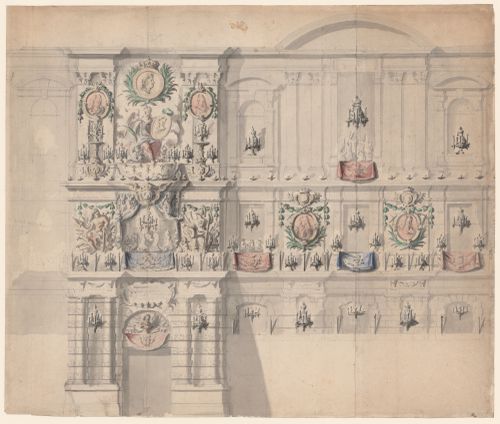
The drawing shows an elevation of the Porte Jean Goujon (now known as the Porte Barbet de Jouy) on the southern, quai-side façade of the Louvre, as well as part of the façade to the east of the portal. On the ground floor, candelabras line the windows and niches. The entry portal features a sculptural bust – likely a representation of Louis XIV – and a red banner with the king’s coat of arms. Above the portal’s tympanum is a large ovoid cartouche with faint script in black chalk that may read « Plate pour l’inscription, » indicating that the text had not yet been finalized at the time of the drawing’s creation. The heavily-decorated middle register features two over-life-size mythical and allegorical figures on either side of a balcony. To the left is Hercules, with his club, and to the right is an allegorical representation of Bellona. The balcony is hung with a blue tapestry woven with the king’s interlocking L monogram. Blue curtains with fleurs-de-lys hang over the balcony, revealing the revelers inside the building. These ornamental elements continue along the façade, which is hung with two large, circular portrait reliefs that likely show Louis XIV’s son, Grand Dauphin Louis, and grandson, Louis, the Duke of Burgundy, who was the father of the Duke of Brittany whose birth was being celebrated. Green watercolor paint is used to highlight the foliage festoons and palms that frame the portraits. On the top register of the portal is a seated allegorical figure holding a palm and a portrait, perhaps of the infant Louis, Duke of Brittany. Above her is a large, crowned medallion with the profile of Louis XIV in the guise of a Roman emperor surrounded by green palms. On either side of this central scene are large candelabras and circular portraits of the Grand Dauphin and the Duke of Burgundy. The architectural elements of the façade are carefully drawn in black chalk and faithfully render the architecture of the Louvre in the early eighteenth century.
DR1967:0012
Description:
The drawing shows an elevation of the Porte Jean Goujon (now known as the Porte Barbet de Jouy) on the southern, quai-side façade of the Louvre, as well as part of the façade to the east of the portal. On the ground floor, candelabras line the windows and niches. The entry portal features a sculptural bust – likely a representation of Louis XIV – and a red banner with the king’s coat of arms. Above the portal’s tympanum is a large ovoid cartouche with faint script in black chalk that may read « Plate pour l’inscription, » indicating that the text had not yet been finalized at the time of the drawing’s creation. The heavily-decorated middle register features two over-life-size mythical and allegorical figures on either side of a balcony. To the left is Hercules, with his club, and to the right is an allegorical representation of Bellona. The balcony is hung with a blue tapestry woven with the king’s interlocking L monogram. Blue curtains with fleurs-de-lys hang over the balcony, revealing the revelers inside the building. These ornamental elements continue along the façade, which is hung with two large, circular portrait reliefs that likely show Louis XIV’s son, Grand Dauphin Louis, and grandson, Louis, the Duke of Burgundy, who was the father of the Duke of Brittany whose birth was being celebrated. Green watercolor paint is used to highlight the foliage festoons and palms that frame the portraits. On the top register of the portal is a seated allegorical figure holding a palm and a portrait, perhaps of the infant Louis, Duke of Brittany. Above her is a large, crowned medallion with the profile of Louis XIV in the guise of a Roman emperor surrounded by green palms. On either side of this central scene are large candelabras and circular portraits of the Grand Dauphin and the Duke of Burgundy. The architectural elements of the façade are carefully drawn in black chalk and faithfully render the architecture of the Louvre in the early eighteenth century.
People:
Subject:
temporary architecture
temporary architecture
Date:
circa 1704
circa 1704
Title:
Design for ceremonial decorations at the Louvre
Actions:
DR1967:0012
Description:
The drawing shows an elevation of the Porte Jean Goujon (now known as the Porte Barbet de Jouy) on the southern, quai-side façade of the Louvre, as well as part of the façade to the east of the portal. On the ground floor, candelabras line the windows and niches. The entry portal features a sculptural bust – likely a representation of Louis XIV – and a red banner with the king’s coat of arms. Above the portal’s tympanum is a large ovoid cartouche with faint script in black chalk that may read « Plate pour l’inscription, » indicating that the text had not yet been finalized at the time of the drawing’s creation. The heavily-decorated middle register features two over-life-size mythical and allegorical figures on either side of a balcony. To the left is Hercules, with his club, and to the right is an allegorical representation of Bellona. The balcony is hung with a blue tapestry woven with the king’s interlocking L monogram. Blue curtains with fleurs-de-lys hang over the balcony, revealing the revelers inside the building. These ornamental elements continue along the façade, which is hung with two large, circular portrait reliefs that likely show Louis XIV’s son, Grand Dauphin Louis, and grandson, Louis, the Duke of Burgundy, who was the father of the Duke of Brittany whose birth was being celebrated. Green watercolor paint is used to highlight the foliage festoons and palms that frame the portraits. On the top register of the portal is a seated allegorical figure holding a palm and a portrait, perhaps of the infant Louis, Duke of Brittany. Above her is a large, crowned medallion with the profile of Louis XIV in the guise of a Roman emperor surrounded by green palms. On either side of this central scene are large candelabras and circular portraits of the Grand Dauphin and the Duke of Burgundy. The architectural elements of the façade are carefully drawn in black chalk and faithfully render the architecture of the Louvre in the early eighteenth century.
Design for ceremonial decorations at the Louvre
Actions:
DR1967:0012
Description:
The drawing shows an elevation of the Porte Jean Goujon (now known as the Porte Barbet de Jouy) on the southern, quai-side façade of the Louvre, as well as part of the façade to the east of the portal. On the ground floor, candelabras line the windows and niches. The entry portal features a sculptural bust – likely a representation of Louis XIV – and a red banner with the king’s coat of arms. Above the portal’s tympanum is a large ovoid cartouche with faint script in black chalk that may read « Plate pour l’inscription, » indicating that the text had not yet been finalized at the time of the drawing’s creation. The heavily-decorated middle register features two over-life-size mythical and allegorical figures on either side of a balcony. To the left is Hercules, with his club, and to the right is an allegorical representation of Bellona. The balcony is hung with a blue tapestry woven with the king’s interlocking L monogram. Blue curtains with fleurs-de-lys hang over the balcony, revealing the revelers inside the building. These ornamental elements continue along the façade, which is hung with two large, circular portrait reliefs that likely show Louis XIV’s son, Grand Dauphin Louis, and grandson, Louis, the Duke of Burgundy, who was the father of the Duke of Brittany whose birth was being celebrated. Green watercolor paint is used to highlight the foliage festoons and palms that frame the portraits. On the top register of the portal is a seated allegorical figure holding a palm and a portrait, perhaps of the infant Louis, Duke of Brittany. Above her is a large, crowned medallion with the profile of Louis XIV in the guise of a Roman emperor surrounded by green palms. On either side of this central scene are large candelabras and circular portraits of the Grand Dauphin and the Duke of Burgundy. The architectural elements of the façade are carefully drawn in black chalk and faithfully render the architecture of the Louvre in the early eighteenth century.
Form:
drawings
drawings
Date:
circa 1704
circa 1704
People:
Subject:
temporary architecture
temporary architecture
Title:
Le Nouvel Opéra de Paris par Charles Garnier. Monographie du Nouvel Opéra de Paris. Volume II
Le Nouvel Opéra de Paris par Charles Garnier. Monographie du Nouvel Opéra de Paris. Volume II
Actions:
Reference number:
PH1979:0162.06
Description:
This album has title pages (as follows): Le Nouvel Opéra de Paris par Charles Garnier. Architecte Membre de l'Institut. Volume II. Paris, Librairie Générale de l'Architecture et des travaux publics. Ducher et Cie Éditeurs. 51, rue des Écoles, 51, 1880. Monographie du Nouvel Opéra de Paris. Table des planches Volume II 1. - Plan et élévation du vestibule circulaire 2. - Vestibule après la descente à couvert 3. - Grand vestibule au rez-de-chaussée. - Entrée du public à pied 4. - Vestibules des Bureaux des billets 5. - Vestibules du Contrôle 6. - Grand Escalier d'honneur. - Dessous de la première rampe 7. - Grand Escalier d'honneur. - Coupe 8. - Grand Escalier d'honneur. - Vue perspective 9-10. - Grand Escalier d'honneur. - détails de la partie inférieure (chromo) 11-12. - Grand Escalier d'honneur. - Détails de la partie supérieure (chromo) 13. - Grand Escalier d'honneur. - Détails divers 14-15. - Avant-foyer. - Plan et élévation d'une porte (chromo) 16-17. - Avant-foyer. - Trumeaux, Tympans et Voûte (chromo) 18-19. - Avant-foyer. - Détails de la Voûte (chromo) 20-21. - Avant-foyer. - Pavements en Mosaïque (chromo) 22-23. - Grand foyer et salons octogonaux. Parquets (chromo) 24-25. - Grand foyer. - Détails d'une travée (chromo) 26-27. - Salons octogonaux. - Cheminée (chromo) 28-29. - Salons octogonaux. - Porte (chromo) 30. - Vestibule du glacier 31-32. - Loggia. - Détails d'une travée (chromo) 33-34. - Loggia. - Détails du plafond (chromo) 35. - Petits Salons aux extrémités du grand Foyer 36. - Petits Salons et grand Foyer. - Coupe et détails divers 37. - Galerie du glacier. - Détails 38-39. - Pavements en Mosaïque (chromo) 40-41. - Pavements en Mosaïque (chromo) 42-43. - Salle. - Loges d'avant-scène (chromo) 44-45. - Salle. - Voussures au-dessus des Loges d'avant-scène (chromo) 46-47. - Salle. - Voussure du plafond (chromo) 48-49. - Salle. - Plafond des quatrièmes loges (chromo) 50-51. - Foyer de la danse. - Élévation et plan (chromo) 52-53. - Foyer de la danse. - Plafond (chromo) 54. - Foyer du chant. - Coupes et détails 55. - Magasin des costumes. - Plans, coupes et détails 56. - Loges d'artistes. - Salle des choristes 57. - Bibliothèque circulaire. - Détails des vitrines 58. - Machinerie. - Dessous de la Scène 59. - Machinerie. - Corridors et magasins de Décors 60. - Machinerie. - Grils et comble de la Scène
PH1979:0162.06
Description:
This album has title pages (as follows): Le Nouvel Opéra de Paris par Charles Garnier. Architecte Membre de l'Institut. Volume II. Paris, Librairie Générale de l'Architecture et des travaux publics. Ducher et Cie Éditeurs. 51, rue des Écoles, 51, 1880. Monographie du Nouvel Opéra de Paris. Table des planches Volume II 1. - Plan et élévation du vestibule circulaire 2. - Vestibule après la descente à couvert 3. - Grand vestibule au rez-de-chaussée. - Entrée du public à pied 4. - Vestibules des Bureaux des billets 5. - Vestibules du Contrôle 6. - Grand Escalier d'honneur. - Dessous de la première rampe 7. - Grand Escalier d'honneur. - Coupe 8. - Grand Escalier d'honneur. - Vue perspective 9-10. - Grand Escalier d'honneur. - détails de la partie inférieure (chromo) 11-12. - Grand Escalier d'honneur. - Détails de la partie supérieure (chromo) 13. - Grand Escalier d'honneur. - Détails divers 14-15. - Avant-foyer. - Plan et élévation d'une porte (chromo) 16-17. - Avant-foyer. - Trumeaux, Tympans et Voûte (chromo) 18-19. - Avant-foyer. - Détails de la Voûte (chromo) 20-21. - Avant-foyer. - Pavements en Mosaïque (chromo) 22-23. - Grand foyer et salons octogonaux. Parquets (chromo) 24-25. - Grand foyer. - Détails d'une travée (chromo) 26-27. - Salons octogonaux. - Cheminée (chromo) 28-29. - Salons octogonaux. - Porte (chromo) 30. - Vestibule du glacier 31-32. - Loggia. - Détails d'une travée (chromo) 33-34. - Loggia. - Détails du plafond (chromo) 35. - Petits Salons aux extrémités du grand Foyer 36. - Petits Salons et grand Foyer. - Coupe et détails divers 37. - Galerie du glacier. - Détails 38-39. - Pavements en Mosaïque (chromo) 40-41. - Pavements en Mosaïque (chromo) 42-43. - Salle. - Loges d'avant-scène (chromo) 44-45. - Salle. - Voussures au-dessus des Loges d'avant-scène (chromo) 46-47. - Salle. - Voussure du plafond (chromo) 48-49. - Salle. - Plafond des quatrièmes loges (chromo) 50-51. - Foyer de la danse. - Élévation et plan (chromo) 52-53. - Foyer de la danse. - Plafond (chromo) 54. - Foyer du chant. - Coupes et détails 55. - Magasin des costumes. - Plans, coupes et détails 56. - Loges d'artistes. - Salle des choristes 57. - Bibliothèque circulaire. - Détails des vitrines 58. - Machinerie. - Dessous de la Scène 59. - Machinerie. - Corridors et magasins de Décors 60. - Machinerie. - Grils et comble de la Scène
People:
Date:
1880
1880
Title:
Le Nouvel Opéra de Paris par Charles Garnier. Monographie du Nouvel Opéra de Paris. Volume II
Actions:
PH1979:0162.06
Description:
This album has title pages (as follows): Le Nouvel Opéra de Paris par Charles Garnier. Architecte Membre de l'Institut. Volume II. Paris, Librairie Générale de l'Architecture et des travaux publics. Ducher et Cie Éditeurs. 51, rue des Écoles, 51, 1880. Monographie du Nouvel Opéra de Paris. Table des planches Volume II 1. - Plan et élévation du vestibule circulaire 2. - Vestibule après la descente à couvert 3. - Grand vestibule au rez-de-chaussée. - Entrée du public à pied 4. - Vestibules des Bureaux des billets 5. - Vestibules du Contrôle 6. - Grand Escalier d'honneur. - Dessous de la première rampe 7. - Grand Escalier d'honneur. - Coupe 8. - Grand Escalier d'honneur. - Vue perspective 9-10. - Grand Escalier d'honneur. - détails de la partie inférieure (chromo) 11-12. - Grand Escalier d'honneur. - Détails de la partie supérieure (chromo) 13. - Grand Escalier d'honneur. - Détails divers 14-15. - Avant-foyer. - Plan et élévation d'une porte (chromo) 16-17. - Avant-foyer. - Trumeaux, Tympans et Voûte (chromo) 18-19. - Avant-foyer. - Détails de la Voûte (chromo) 20-21. - Avant-foyer. - Pavements en Mosaïque (chromo) 22-23. - Grand foyer et salons octogonaux. Parquets (chromo) 24-25. - Grand foyer. - Détails d'une travée (chromo) 26-27. - Salons octogonaux. - Cheminée (chromo) 28-29. - Salons octogonaux. - Porte (chromo) 30. - Vestibule du glacier 31-32. - Loggia. - Détails d'une travée (chromo) 33-34. - Loggia. - Détails du plafond (chromo) 35. - Petits Salons aux extrémités du grand Foyer 36. - Petits Salons et grand Foyer. - Coupe et détails divers 37. - Galerie du glacier. - Détails 38-39. - Pavements en Mosaïque (chromo) 40-41. - Pavements en Mosaïque (chromo) 42-43. - Salle. - Loges d'avant-scène (chromo) 44-45. - Salle. - Voussures au-dessus des Loges d'avant-scène (chromo) 46-47. - Salle. - Voussure du plafond (chromo) 48-49. - Salle. - Plafond des quatrièmes loges (chromo) 50-51. - Foyer de la danse. - Élévation et plan (chromo) 52-53. - Foyer de la danse. - Plafond (chromo) 54. - Foyer du chant. - Coupes et détails 55. - Magasin des costumes. - Plans, coupes et détails 56. - Loges d'artistes. - Salle des choristes 57. - Bibliothèque circulaire. - Détails des vitrines 58. - Machinerie. - Dessous de la Scène 59. - Machinerie. - Corridors et magasins de Décors 60. - Machinerie. - Grils et comble de la Scène
Le Nouvel Opéra de Paris par Charles Garnier. Monographie du Nouvel Opéra de Paris. Volume II
Actions:
PH1979:0162.06
Description:
This album has title pages (as follows): Le Nouvel Opéra de Paris par Charles Garnier. Architecte Membre de l'Institut. Volume II. Paris, Librairie Générale de l'Architecture et des travaux publics. Ducher et Cie Éditeurs. 51, rue des Écoles, 51, 1880. Monographie du Nouvel Opéra de Paris. Table des planches Volume II 1. - Plan et élévation du vestibule circulaire 2. - Vestibule après la descente à couvert 3. - Grand vestibule au rez-de-chaussée. - Entrée du public à pied 4. - Vestibules des Bureaux des billets 5. - Vestibules du Contrôle 6. - Grand Escalier d'honneur. - Dessous de la première rampe 7. - Grand Escalier d'honneur. - Coupe 8. - Grand Escalier d'honneur. - Vue perspective 9-10. - Grand Escalier d'honneur. - détails de la partie inférieure (chromo) 11-12. - Grand Escalier d'honneur. - Détails de la partie supérieure (chromo) 13. - Grand Escalier d'honneur. - Détails divers 14-15. - Avant-foyer. - Plan et élévation d'une porte (chromo) 16-17. - Avant-foyer. - Trumeaux, Tympans et Voûte (chromo) 18-19. - Avant-foyer. - Détails de la Voûte (chromo) 20-21. - Avant-foyer. - Pavements en Mosaïque (chromo) 22-23. - Grand foyer et salons octogonaux. Parquets (chromo) 24-25. - Grand foyer. - Détails d'une travée (chromo) 26-27. - Salons octogonaux. - Cheminée (chromo) 28-29. - Salons octogonaux. - Porte (chromo) 30. - Vestibule du glacier 31-32. - Loggia. - Détails d'une travée (chromo) 33-34. - Loggia. - Détails du plafond (chromo) 35. - Petits Salons aux extrémités du grand Foyer 36. - Petits Salons et grand Foyer. - Coupe et détails divers 37. - Galerie du glacier. - Détails 38-39. - Pavements en Mosaïque (chromo) 40-41. - Pavements en Mosaïque (chromo) 42-43. - Salle. - Loges d'avant-scène (chromo) 44-45. - Salle. - Voussures au-dessus des Loges d'avant-scène (chromo) 46-47. - Salle. - Voussure du plafond (chromo) 48-49. - Salle. - Plafond des quatrièmes loges (chromo) 50-51. - Foyer de la danse. - Élévation et plan (chromo) 52-53. - Foyer de la danse. - Plafond (chromo) 54. - Foyer du chant. - Coupes et détails 55. - Magasin des costumes. - Plans, coupes et détails 56. - Loges d'artistes. - Salle des choristes 57. - Bibliothèque circulaire. - Détails des vitrines 58. - Machinerie. - Dessous de la Scène 59. - Machinerie. - Corridors et magasins de Décors 60. - Machinerie. - Grils et comble de la Scène
Date:
1880
1880
People:
Form:
drawings, works of art
drawings, works of art
Actions:
Reference number:
DR1974:0002:003:001-105
Description:
- This album consists primarily of design development drawings and the architect's copies of the working drawings for Hôtel Soltykoff. The hôtel consisted of a single rectangular pavilion with a central porte cochère and a rear courtyard with an outbuilding. The principal façade facing rue Saint-Arnaud (now rue Volney) and the interior were lavishly decorated. The structure of the hôtel consisted of load-bearing masonry combined with cast-iron columns, iron beams, and interior wood framing. The exterior was finished with cut stone. The album contains plans, elevations, details and sections, and full-scale drawings of the architectural elements, ornamentation, as well as joinery. Many of the drawings and transfer lithographs are inscribed with both the date of the drawing/original and the date of contract. Revisions, which are also often dated, have been made either directly on the drawing or on pieces of paper attached to the sheets. Inscriptions indicate that in some cases these revisions were added after the construction of the building. Also included are preliminary drawings (DR1974:0002:003:028 R/V), and detailed interior views, some of which are partially coloured with watercolour (DR1974:0002:003:049, DR1974:0002:003:069, DR1974:0002:003:078). The drawings and transfer lithographs have been grouped, possibly by the compiler of the album, according to the part of the building represented, and by the type of construction: stonework, woodwork, framework, and ironwork. Unbound material inserted into the album includes four large unbound full-scale preliminary sketches for architectural ornament, possibly for Hôtel Soltykoff (DR1974:0002:003:061 - DR1974:0002:003:064) and two drawings for a terrace and staircase, apparently not for Hôtel Soltykoff (DR1974:0002:003:003 and DR1974:0002:003:042).
DR1974:0002:003:001-105
Description:
- This album consists primarily of design development drawings and the architect's copies of the working drawings for Hôtel Soltykoff. The hôtel consisted of a single rectangular pavilion with a central porte cochère and a rear courtyard with an outbuilding. The principal façade facing rue Saint-Arnaud (now rue Volney) and the interior were lavishly decorated. The structure of the hôtel consisted of load-bearing masonry combined with cast-iron columns, iron beams, and interior wood framing. The exterior was finished with cut stone. The album contains plans, elevations, details and sections, and full-scale drawings of the architectural elements, ornamentation, as well as joinery. Many of the drawings and transfer lithographs are inscribed with both the date of the drawing/original and the date of contract. Revisions, which are also often dated, have been made either directly on the drawing or on pieces of paper attached to the sheets. Inscriptions indicate that in some cases these revisions were added after the construction of the building. Also included are preliminary drawings (DR1974:0002:003:028 R/V), and detailed interior views, some of which are partially coloured with watercolour (DR1974:0002:003:049, DR1974:0002:003:069, DR1974:0002:003:078). The drawings and transfer lithographs have been grouped, possibly by the compiler of the album, according to the part of the building represented, and by the type of construction: stonework, woodwork, framework, and ironwork. Unbound material inserted into the album includes four large unbound full-scale preliminary sketches for architectural ornament, possibly for Hôtel Soltykoff (DR1974:0002:003:061 - DR1974:0002:003:064) and two drawings for a terrace and staircase, apparently not for Hôtel Soltykoff (DR1974:0002:003:003 and DR1974:0002:003:042).
People:
Subject:
architecture
architecture
Date:
1854-1858, printed 1854-1858
1854-1858, printed 1854-1858
Title:
Album of prints and drawings for Hôtel Soltykoff, rue Saint-Arnaud, Paris
Actions:
DR1974:0002:003:001-105
Description:
- This album consists primarily of design development drawings and the architect's copies of the working drawings for Hôtel Soltykoff. The hôtel consisted of a single rectangular pavilion with a central porte cochère and a rear courtyard with an outbuilding. The principal façade facing rue Saint-Arnaud (now rue Volney) and the interior were lavishly decorated. The structure of the hôtel consisted of load-bearing masonry combined with cast-iron columns, iron beams, and interior wood framing. The exterior was finished with cut stone. The album contains plans, elevations, details and sections, and full-scale drawings of the architectural elements, ornamentation, as well as joinery. Many of the drawings and transfer lithographs are inscribed with both the date of the drawing/original and the date of contract. Revisions, which are also often dated, have been made either directly on the drawing or on pieces of paper attached to the sheets. Inscriptions indicate that in some cases these revisions were added after the construction of the building. Also included are preliminary drawings (DR1974:0002:003:028 R/V), and detailed interior views, some of which are partially coloured with watercolour (DR1974:0002:003:049, DR1974:0002:003:069, DR1974:0002:003:078). The drawings and transfer lithographs have been grouped, possibly by the compiler of the album, according to the part of the building represented, and by the type of construction: stonework, woodwork, framework, and ironwork. Unbound material inserted into the album includes four large unbound full-scale preliminary sketches for architectural ornament, possibly for Hôtel Soltykoff (DR1974:0002:003:061 - DR1974:0002:003:064) and two drawings for a terrace and staircase, apparently not for Hôtel Soltykoff (DR1974:0002:003:003 and DR1974:0002:003:042).
Album of prints and drawings for Hôtel Soltykoff, rue Saint-Arnaud, Paris
Actions:
DR1974:0002:003:001-105
Description:
- This album consists primarily of design development drawings and the architect's copies of the working drawings for Hôtel Soltykoff. The hôtel consisted of a single rectangular pavilion with a central porte cochère and a rear courtyard with an outbuilding. The principal façade facing rue Saint-Arnaud (now rue Volney) and the interior were lavishly decorated. The structure of the hôtel consisted of load-bearing masonry combined with cast-iron columns, iron beams, and interior wood framing. The exterior was finished with cut stone. The album contains plans, elevations, details and sections, and full-scale drawings of the architectural elements, ornamentation, as well as joinery. Many of the drawings and transfer lithographs are inscribed with both the date of the drawing/original and the date of contract. Revisions, which are also often dated, have been made either directly on the drawing or on pieces of paper attached to the sheets. Inscriptions indicate that in some cases these revisions were added after the construction of the building. Also included are preliminary drawings (DR1974:0002:003:028 R/V), and detailed interior views, some of which are partially coloured with watercolour (DR1974:0002:003:049, DR1974:0002:003:069, DR1974:0002:003:078). The drawings and transfer lithographs have been grouped, possibly by the compiler of the album, according to the part of the building represented, and by the type of construction: stonework, woodwork, framework, and ironwork. Unbound material inserted into the album includes four large unbound full-scale preliminary sketches for architectural ornament, possibly for Hôtel Soltykoff (DR1974:0002:003:061 - DR1974:0002:003:064) and two drawings for a terrace and staircase, apparently not for Hôtel Soltykoff (DR1974:0002:003:003 and DR1974:0002:003:042).
Form:
drawings, works of art
drawings, works of art
Date:
1854-1858, printed 1854-1858
1854-1858, printed 1854-1858
People:
Subject:
architecture
architecture
Form:
photographs
photographs
Reference number:
PH1978:0040.01
Description:
First of a series of five illustrated volumes, this album contains mounted plates, engravings and maps, and depicts bridges, viaducts, railways and roads mainly in France (one in Corsica), and two in Constantine, Algeria. Album (Tome I) is titled as follows: Les Travaux Publics de la France. Route et Ponts - Chemins de fer - Rivières et canaux/ Ports de mer - Phares et balises/ par/ MM. F. Lucas et V. Fournié - Ed. Collignon - H. de Lagrené/ Voisin Bey - E. Allard/ ouvrage publié sous les auspices/ du Ministère des Travaux Publics et sous la direction de/ M. Léonce Reynaud/ Inspecteur général des Ponts et Chaussées/ Tome Premier: Routes et Ponts/ par/ Félix Lucas et Victor Fournié/ Ingénieurs en Chef des Ponts et Chaussées/ avec 50 planches phototypées, 100 gravures et une carte en chromolithographie/ Paris/ J. Rothschild, Éditeur 13 rue des Saints-Pères, 13 M DCCC LXXXIII and the album is divided as follows: Préface, dated 'novembre 1879' - Léonce Reynaud (biographical note on Léonce Reynaud) with lithograph glued and signed by Jules Lefebre and Léon Gaucherel - Routes et Ponts. Introduction - Chapitre Premier. Époque Gallo-Romaine - Chapitre II. Le Moyen Age et les Temps Modernes - Chapitre III. Époque contemporaine - Chapitre IV. Statistique - Explications des planches - Table des matières - Table alphabétique des matières, des figures et des 50 planches. The 50 plates are listed as follows: I Défilé de la CLue de Saint-André, près de Nice (Alpes-Maritimes) II Gorges de La Loue (Doubs) III Route Nationale no 20, dans les Pyrénées (Ariège) IV Souterrain de Duranus (Alpes-Maritimes) V Défil de Lantosque (Alpes-Maritimes) VI Grotte du Mas-d'Azil ou de l'Arize (Ariège) VII Chemin de la Corniche à Marseille VIII Route de la Grande Chartreuse (Isère) IX Détroit du Cieix (Savoie) XI Route dans la Vallée du Tech (Pyrénées-Orientales) XII Pont de Valentré, sur le Lot, à Cahors XIII Pont-neuf, sur la Seine, à Paris XIV Pont de Bétharram (Basses-Pyrénées) XV Pont du Gouedic (Côtes-du-Nord) XVI Ponte Nuovo (Corse) XVII Pont de Lavaur (Tarn) XVIII Pont Saint-Louis XIX Pont de Bordeaux XX Pont de Vieille-Brioude (Haute-Loire) XXI Viaduc de Dinan (Côtes-du-Nord) XXII Pont des Invalides, sur la Seine, à Paris XXIII Pont de l'Alma, sur la Seine, à Paris XXIV Viaduc sur le Torrent de Saint-Ferréol (Alpes-Maritimes) XXV Pont de Mascas, sur la Vésubie (Alpes-Maritimes) XXVI Pont de Saint-Sauveur (Hautes-Pyrénées) XXVII Pont-Viaduc du Point-du-Jour, à Paris XXVIII Pont-neuf à Albi (Tarn) XXIX Pont de Chaabet-El-Akhra (Constantine) XXX Viaduc du Duzon (Ardèche) XXXI Pont de Pau (Pont de Jurançon) XXXII Ponts de Claix (Isère) XXXIII Pont de la Trinité XXXIV Pont des Saints-Pères, à Paris XXXV Pont d'Arcole, à Paris XXXVI Pont Saint-Esprit, sur le Rhone (Gard) XXXVII Pont de Solferino, à Paris XXXVIII Pont de la Grande-Jatte (Seine) XXXIX Pont Saint-Louis, à Paris XL Pont du Var, près de Nice (Alpes-Maritimes) XLI Pont d'El Kantara, à Constantine XLII Pont de Vichy, sur l'Allier (Allier) XLIII Pont Garibaldi, sur le Paillon, à Nice XLIV Pont de Clichy-La-Garenne (Seine) XLV Pont de Grenelle, sur la Seine, à Paris XLVI Pont Sully, sur la Seine, à Paris XLVII Pont de La Roche-Bernard (Morbihan) XLVIII Pont de Saint-Christophe sur le Scorff (Morbihan) XLIX Pont de La Mescla, sur le Var (Alpes-Maritimes) L Pont tournant des bassins de Radoub de Marseille
PH1978:0040.01
Description:
First of a series of five illustrated volumes, this album contains mounted plates, engravings and maps, and depicts bridges, viaducts, railways and roads mainly in France (one in Corsica), and two in Constantine, Algeria. Album (Tome I) is titled as follows: Les Travaux Publics de la France. Route et Ponts - Chemins de fer - Rivières et canaux/ Ports de mer - Phares et balises/ par/ MM. F. Lucas et V. Fournié - Ed. Collignon - H. de Lagrené/ Voisin Bey - E. Allard/ ouvrage publié sous les auspices/ du Ministère des Travaux Publics et sous la direction de/ M. Léonce Reynaud/ Inspecteur général des Ponts et Chaussées/ Tome Premier: Routes et Ponts/ par/ Félix Lucas et Victor Fournié/ Ingénieurs en Chef des Ponts et Chaussées/ avec 50 planches phototypées, 100 gravures et une carte en chromolithographie/ Paris/ J. Rothschild, Éditeur 13 rue des Saints-Pères, 13 M DCCC LXXXIII and the album is divided as follows: Préface, dated 'novembre 1879' - Léonce Reynaud (biographical note on Léonce Reynaud) with lithograph glued and signed by Jules Lefebre and Léon Gaucherel - Routes et Ponts. Introduction - Chapitre Premier. Époque Gallo-Romaine - Chapitre II. Le Moyen Age et les Temps Modernes - Chapitre III. Époque contemporaine - Chapitre IV. Statistique - Explications des planches - Table des matières - Table alphabétique des matières, des figures et des 50 planches. The 50 plates are listed as follows: I Défilé de la CLue de Saint-André, près de Nice (Alpes-Maritimes) II Gorges de La Loue (Doubs) III Route Nationale no 20, dans les Pyrénées (Ariège) IV Souterrain de Duranus (Alpes-Maritimes) V Défil de Lantosque (Alpes-Maritimes) VI Grotte du Mas-d'Azil ou de l'Arize (Ariège) VII Chemin de la Corniche à Marseille VIII Route de la Grande Chartreuse (Isère) IX Détroit du Cieix (Savoie) XI Route dans la Vallée du Tech (Pyrénées-Orientales) XII Pont de Valentré, sur le Lot, à Cahors XIII Pont-neuf, sur la Seine, à Paris XIV Pont de Bétharram (Basses-Pyrénées) XV Pont du Gouedic (Côtes-du-Nord) XVI Ponte Nuovo (Corse) XVII Pont de Lavaur (Tarn) XVIII Pont Saint-Louis XIX Pont de Bordeaux XX Pont de Vieille-Brioude (Haute-Loire) XXI Viaduc de Dinan (Côtes-du-Nord) XXII Pont des Invalides, sur la Seine, à Paris XXIII Pont de l'Alma, sur la Seine, à Paris XXIV Viaduc sur le Torrent de Saint-Ferréol (Alpes-Maritimes) XXV Pont de Mascas, sur la Vésubie (Alpes-Maritimes) XXVI Pont de Saint-Sauveur (Hautes-Pyrénées) XXVII Pont-Viaduc du Point-du-Jour, à Paris XXVIII Pont-neuf à Albi (Tarn) XXIX Pont de Chaabet-El-Akhra (Constantine) XXX Viaduc du Duzon (Ardèche) XXXI Pont de Pau (Pont de Jurançon) XXXII Ponts de Claix (Isère) XXXIII Pont de la Trinité XXXIV Pont des Saints-Pères, à Paris XXXV Pont d'Arcole, à Paris XXXVI Pont Saint-Esprit, sur le Rhone (Gard) XXXVII Pont de Solferino, à Paris XXXVIII Pont de la Grande-Jatte (Seine) XXXIX Pont Saint-Louis, à Paris XL Pont du Var, près de Nice (Alpes-Maritimes) XLI Pont d'El Kantara, à Constantine XLII Pont de Vichy, sur l'Allier (Allier) XLIII Pont Garibaldi, sur le Paillon, à Nice XLIV Pont de Clichy-La-Garenne (Seine) XLV Pont de Grenelle, sur la Seine, à Paris XLVI Pont Sully, sur la Seine, à Paris XLVII Pont de La Roche-Bernard (Morbihan) XLVIII Pont de Saint-Christophe sur le Scorff (Morbihan) XLIX Pont de La Mescla, sur le Var (Alpes-Maritimes) L Pont tournant des bassins de Radoub de Marseille
People:
Subject:
engineering, topographic
engineering, topographic
Date:
between 1876-1883
between 1876-1883
Title:
Les Travaux Publics de la France. Tome 1. Routes et Ponts
Actions:
PH1978:0040.01
Description:
First of a series of five illustrated volumes, this album contains mounted plates, engravings and maps, and depicts bridges, viaducts, railways and roads mainly in France (one in Corsica), and two in Constantine, Algeria. Album (Tome I) is titled as follows: Les Travaux Publics de la France. Route et Ponts - Chemins de fer - Rivières et canaux/ Ports de mer - Phares et balises/ par/ MM. F. Lucas et V. Fournié - Ed. Collignon - H. de Lagrené/ Voisin Bey - E. Allard/ ouvrage publié sous les auspices/ du Ministère des Travaux Publics et sous la direction de/ M. Léonce Reynaud/ Inspecteur général des Ponts et Chaussées/ Tome Premier: Routes et Ponts/ par/ Félix Lucas et Victor Fournié/ Ingénieurs en Chef des Ponts et Chaussées/ avec 50 planches phototypées, 100 gravures et une carte en chromolithographie/ Paris/ J. Rothschild, Éditeur 13 rue des Saints-Pères, 13 M DCCC LXXXIII and the album is divided as follows: Préface, dated 'novembre 1879' - Léonce Reynaud (biographical note on Léonce Reynaud) with lithograph glued and signed by Jules Lefebre and Léon Gaucherel - Routes et Ponts. Introduction - Chapitre Premier. Époque Gallo-Romaine - Chapitre II. Le Moyen Age et les Temps Modernes - Chapitre III. Époque contemporaine - Chapitre IV. Statistique - Explications des planches - Table des matières - Table alphabétique des matières, des figures et des 50 planches. The 50 plates are listed as follows: I Défilé de la CLue de Saint-André, près de Nice (Alpes-Maritimes) II Gorges de La Loue (Doubs) III Route Nationale no 20, dans les Pyrénées (Ariège) IV Souterrain de Duranus (Alpes-Maritimes) V Défil de Lantosque (Alpes-Maritimes) VI Grotte du Mas-d'Azil ou de l'Arize (Ariège) VII Chemin de la Corniche à Marseille VIII Route de la Grande Chartreuse (Isère) IX Détroit du Cieix (Savoie) XI Route dans la Vallée du Tech (Pyrénées-Orientales) XII Pont de Valentré, sur le Lot, à Cahors XIII Pont-neuf, sur la Seine, à Paris XIV Pont de Bétharram (Basses-Pyrénées) XV Pont du Gouedic (Côtes-du-Nord) XVI Ponte Nuovo (Corse) XVII Pont de Lavaur (Tarn) XVIII Pont Saint-Louis XIX Pont de Bordeaux XX Pont de Vieille-Brioude (Haute-Loire) XXI Viaduc de Dinan (Côtes-du-Nord) XXII Pont des Invalides, sur la Seine, à Paris XXIII Pont de l'Alma, sur la Seine, à Paris XXIV Viaduc sur le Torrent de Saint-Ferréol (Alpes-Maritimes) XXV Pont de Mascas, sur la Vésubie (Alpes-Maritimes) XXVI Pont de Saint-Sauveur (Hautes-Pyrénées) XXVII Pont-Viaduc du Point-du-Jour, à Paris XXVIII Pont-neuf à Albi (Tarn) XXIX Pont de Chaabet-El-Akhra (Constantine) XXX Viaduc du Duzon (Ardèche) XXXI Pont de Pau (Pont de Jurançon) XXXII Ponts de Claix (Isère) XXXIII Pont de la Trinité XXXIV Pont des Saints-Pères, à Paris XXXV Pont d'Arcole, à Paris XXXVI Pont Saint-Esprit, sur le Rhone (Gard) XXXVII Pont de Solferino, à Paris XXXVIII Pont de la Grande-Jatte (Seine) XXXIX Pont Saint-Louis, à Paris XL Pont du Var, près de Nice (Alpes-Maritimes) XLI Pont d'El Kantara, à Constantine XLII Pont de Vichy, sur l'Allier (Allier) XLIII Pont Garibaldi, sur le Paillon, à Nice XLIV Pont de Clichy-La-Garenne (Seine) XLV Pont de Grenelle, sur la Seine, à Paris XLVI Pont Sully, sur la Seine, à Paris XLVII Pont de La Roche-Bernard (Morbihan) XLVIII Pont de Saint-Christophe sur le Scorff (Morbihan) XLIX Pont de La Mescla, sur le Var (Alpes-Maritimes) L Pont tournant des bassins de Radoub de Marseille
Les Travaux Publics de la France. Tome 1. Routes et Ponts
Actions:
PH1978:0040.01
Description:
First of a series of five illustrated volumes, this album contains mounted plates, engravings and maps, and depicts bridges, viaducts, railways and roads mainly in France (one in Corsica), and two in Constantine, Algeria. Album (Tome I) is titled as follows: Les Travaux Publics de la France. Route et Ponts - Chemins de fer - Rivières et canaux/ Ports de mer - Phares et balises/ par/ MM. F. Lucas et V. Fournié - Ed. Collignon - H. de Lagrené/ Voisin Bey - E. Allard/ ouvrage publié sous les auspices/ du Ministère des Travaux Publics et sous la direction de/ M. Léonce Reynaud/ Inspecteur général des Ponts et Chaussées/ Tome Premier: Routes et Ponts/ par/ Félix Lucas et Victor Fournié/ Ingénieurs en Chef des Ponts et Chaussées/ avec 50 planches phototypées, 100 gravures et une carte en chromolithographie/ Paris/ J. Rothschild, Éditeur 13 rue des Saints-Pères, 13 M DCCC LXXXIII and the album is divided as follows: Préface, dated 'novembre 1879' - Léonce Reynaud (biographical note on Léonce Reynaud) with lithograph glued and signed by Jules Lefebre and Léon Gaucherel - Routes et Ponts. Introduction - Chapitre Premier. Époque Gallo-Romaine - Chapitre II. Le Moyen Age et les Temps Modernes - Chapitre III. Époque contemporaine - Chapitre IV. Statistique - Explications des planches - Table des matières - Table alphabétique des matières, des figures et des 50 planches. The 50 plates are listed as follows: I Défilé de la CLue de Saint-André, près de Nice (Alpes-Maritimes) II Gorges de La Loue (Doubs) III Route Nationale no 20, dans les Pyrénées (Ariège) IV Souterrain de Duranus (Alpes-Maritimes) V Défil de Lantosque (Alpes-Maritimes) VI Grotte du Mas-d'Azil ou de l'Arize (Ariège) VII Chemin de la Corniche à Marseille VIII Route de la Grande Chartreuse (Isère) IX Détroit du Cieix (Savoie) XI Route dans la Vallée du Tech (Pyrénées-Orientales) XII Pont de Valentré, sur le Lot, à Cahors XIII Pont-neuf, sur la Seine, à Paris XIV Pont de Bétharram (Basses-Pyrénées) XV Pont du Gouedic (Côtes-du-Nord) XVI Ponte Nuovo (Corse) XVII Pont de Lavaur (Tarn) XVIII Pont Saint-Louis XIX Pont de Bordeaux XX Pont de Vieille-Brioude (Haute-Loire) XXI Viaduc de Dinan (Côtes-du-Nord) XXII Pont des Invalides, sur la Seine, à Paris XXIII Pont de l'Alma, sur la Seine, à Paris XXIV Viaduc sur le Torrent de Saint-Ferréol (Alpes-Maritimes) XXV Pont de Mascas, sur la Vésubie (Alpes-Maritimes) XXVI Pont de Saint-Sauveur (Hautes-Pyrénées) XXVII Pont-Viaduc du Point-du-Jour, à Paris XXVIII Pont-neuf à Albi (Tarn) XXIX Pont de Chaabet-El-Akhra (Constantine) XXX Viaduc du Duzon (Ardèche) XXXI Pont de Pau (Pont de Jurançon) XXXII Ponts de Claix (Isère) XXXIII Pont de la Trinité XXXIV Pont des Saints-Pères, à Paris XXXV Pont d'Arcole, à Paris XXXVI Pont Saint-Esprit, sur le Rhone (Gard) XXXVII Pont de Solferino, à Paris XXXVIII Pont de la Grande-Jatte (Seine) XXXIX Pont Saint-Louis, à Paris XL Pont du Var, près de Nice (Alpes-Maritimes) XLI Pont d'El Kantara, à Constantine XLII Pont de Vichy, sur l'Allier (Allier) XLIII Pont Garibaldi, sur le Paillon, à Nice XLIV Pont de Clichy-La-Garenne (Seine) XLV Pont de Grenelle, sur la Seine, à Paris XLVI Pont Sully, sur la Seine, à Paris XLVII Pont de La Roche-Bernard (Morbihan) XLVIII Pont de Saint-Christophe sur le Scorff (Morbihan) XLIX Pont de La Mescla, sur le Var (Alpes-Maritimes) L Pont tournant des bassins de Radoub de Marseille
Form:
photographs
photographs
Date:
between 1876-1883
between 1876-1883
People:
Subject:
engineering, topographic
engineering, topographic
Form:
textual records
textual records
Actions:
Reference number:
ARCH203944
Description:
Contient : - Soulie, Jean-Paul. "La vie noctune de Montréal trouvera un nouveau cadre dans le complexe Desjardins" (La Presse, 24 mars 1973) ; - "Dévoilement de la maquette de l'hôtel Méridien-Montréal" ([vers 1974]); - "Un hôtel à saveur québécoise" ([vers 1974]) ; - "A search for perfection - in project big..." (The Montreal Star, 17 août 1974) ; - Marsan, Jean-Claude. "Le Complexe Desjardins -2 : La première véritable place" (Le Devoir, 20 mars 1976) ; - "Pour fêter l'ouverture du Complexe" (La Presse, 25 mars 1976) : présentation du programme des activités socioculturelles marquant l'ouverture du Complexe, 3 au 18 avril 1976) ; - Nadeau, Michel. "Le Complexe Desjardins aura coûté deux fois plus que prévu : $206 millions" (Le Devoir, 2 avril 1976) ; - "Alfred Rouleau : Briser la frontière entre l'est et l'ouest" (La Presse, 5 avril 1976) ; - Ryan, Claude. "Le complexe Desjardins, et après" (Le Devoir, 5 avril 1976) ; - Ensemble! Journal d'information coopérative, 22 avril 1976 (numéro entièrement consacré au Complexe Desjardins peu après son inauguration) ; - "Le Complexe Desjardins", supplément, (Le Devoir, 14 mai 1976) ; - London, Mark. "Lessons to learn in giant Complexe" (The Montreal Star, 12 mars 1977) ; - Pomerantz, Richard. "Not all city plazas meet expectations" (The Montreal Star, 18 août 1979) ; - "Début des travaux au Palais des congrès" (Le Devoir, 19 octobre 1979) [Photographie avec le Complexe Desjardins en arrière-plan] ; - Beaudry, Pierre. "Le plus beau miracle du frère André" (Le Devoir, 13 novembre 1985) ; - Bonhomme, Jean-Pierre. "Après dix années, le Complexe Desjardins se porte très bien" (La Presse, 12 avril 1986) ; - Turcotte, Claude. "La coopération au milieu de la tourmente" (Le Devoir, 9-10 mars 1996) ; - Turcotte, Claude. "Tout commence à Lévis" (Le Devoir, 18-19 mars 2000) ; - Beaudry, Pierre. "Lettre ouverte au maire de Montréal (II)" (Le Devoir. n.d.) ; - Ouellet, Jean. "Le complexe de la place" (Source non identifiée, n.d.).
ARCH203944
Description:
Contient : - Soulie, Jean-Paul. "La vie noctune de Montréal trouvera un nouveau cadre dans le complexe Desjardins" (La Presse, 24 mars 1973) ; - "Dévoilement de la maquette de l'hôtel Méridien-Montréal" ([vers 1974]); - "Un hôtel à saveur québécoise" ([vers 1974]) ; - "A search for perfection - in project big..." (The Montreal Star, 17 août 1974) ; - Marsan, Jean-Claude. "Le Complexe Desjardins -2 : La première véritable place" (Le Devoir, 20 mars 1976) ; - "Pour fêter l'ouverture du Complexe" (La Presse, 25 mars 1976) : présentation du programme des activités socioculturelles marquant l'ouverture du Complexe, 3 au 18 avril 1976) ; - Nadeau, Michel. "Le Complexe Desjardins aura coûté deux fois plus que prévu : $206 millions" (Le Devoir, 2 avril 1976) ; - "Alfred Rouleau : Briser la frontière entre l'est et l'ouest" (La Presse, 5 avril 1976) ; - Ryan, Claude. "Le complexe Desjardins, et après" (Le Devoir, 5 avril 1976) ; - Ensemble! Journal d'information coopérative, 22 avril 1976 (numéro entièrement consacré au Complexe Desjardins peu après son inauguration) ; - "Le Complexe Desjardins", supplément, (Le Devoir, 14 mai 1976) ; - London, Mark. "Lessons to learn in giant Complexe" (The Montreal Star, 12 mars 1977) ; - Pomerantz, Richard. "Not all city plazas meet expectations" (The Montreal Star, 18 août 1979) ; - "Début des travaux au Palais des congrès" (Le Devoir, 19 octobre 1979) [Photographie avec le Complexe Desjardins en arrière-plan] ; - Beaudry, Pierre. "Le plus beau miracle du frère André" (Le Devoir, 13 novembre 1985) ; - Bonhomme, Jean-Pierre. "Après dix années, le Complexe Desjardins se porte très bien" (La Presse, 12 avril 1986) ; - Turcotte, Claude. "La coopération au milieu de la tourmente" (Le Devoir, 9-10 mars 1996) ; - Turcotte, Claude. "Tout commence à Lévis" (Le Devoir, 18-19 mars 2000) ; - Beaudry, Pierre. "Lettre ouverte au maire de Montréal (II)" (Le Devoir. n.d.) ; - Ouellet, Jean. "Le complexe de la place" (Source non identifiée, n.d.).
People:
Date:
1973-2000
1973-2000
Title:
Coupures de journaux et cahiers spéciaux, Complexe Desjardins, Montréal, Québec
Actions:
ARCH203944
Description:
Contient : - Soulie, Jean-Paul. "La vie noctune de Montréal trouvera un nouveau cadre dans le complexe Desjardins" (La Presse, 24 mars 1973) ; - "Dévoilement de la maquette de l'hôtel Méridien-Montréal" ([vers 1974]); - "Un hôtel à saveur québécoise" ([vers 1974]) ; - "A search for perfection - in project big..." (The Montreal Star, 17 août 1974) ; - Marsan, Jean-Claude. "Le Complexe Desjardins -2 : La première véritable place" (Le Devoir, 20 mars 1976) ; - "Pour fêter l'ouverture du Complexe" (La Presse, 25 mars 1976) : présentation du programme des activités socioculturelles marquant l'ouverture du Complexe, 3 au 18 avril 1976) ; - Nadeau, Michel. "Le Complexe Desjardins aura coûté deux fois plus que prévu : $206 millions" (Le Devoir, 2 avril 1976) ; - "Alfred Rouleau : Briser la frontière entre l'est et l'ouest" (La Presse, 5 avril 1976) ; - Ryan, Claude. "Le complexe Desjardins, et après" (Le Devoir, 5 avril 1976) ; - Ensemble! Journal d'information coopérative, 22 avril 1976 (numéro entièrement consacré au Complexe Desjardins peu après son inauguration) ; - "Le Complexe Desjardins", supplément, (Le Devoir, 14 mai 1976) ; - London, Mark. "Lessons to learn in giant Complexe" (The Montreal Star, 12 mars 1977) ; - Pomerantz, Richard. "Not all city plazas meet expectations" (The Montreal Star, 18 août 1979) ; - "Début des travaux au Palais des congrès" (Le Devoir, 19 octobre 1979) [Photographie avec le Complexe Desjardins en arrière-plan] ; - Beaudry, Pierre. "Le plus beau miracle du frère André" (Le Devoir, 13 novembre 1985) ; - Bonhomme, Jean-Pierre. "Après dix années, le Complexe Desjardins se porte très bien" (La Presse, 12 avril 1986) ; - Turcotte, Claude. "La coopération au milieu de la tourmente" (Le Devoir, 9-10 mars 1996) ; - Turcotte, Claude. "Tout commence à Lévis" (Le Devoir, 18-19 mars 2000) ; - Beaudry, Pierre. "Lettre ouverte au maire de Montréal (II)" (Le Devoir. n.d.) ; - Ouellet, Jean. "Le complexe de la place" (Source non identifiée, n.d.).
Coupures de journaux et cahiers spéciaux, Complexe Desjardins, Montréal, Québec
Actions:
ARCH203944
Description:
Contient : - Soulie, Jean-Paul. "La vie noctune de Montréal trouvera un nouveau cadre dans le complexe Desjardins" (La Presse, 24 mars 1973) ; - "Dévoilement de la maquette de l'hôtel Méridien-Montréal" ([vers 1974]); - "Un hôtel à saveur québécoise" ([vers 1974]) ; - "A search for perfection - in project big..." (The Montreal Star, 17 août 1974) ; - Marsan, Jean-Claude. "Le Complexe Desjardins -2 : La première véritable place" (Le Devoir, 20 mars 1976) ; - "Pour fêter l'ouverture du Complexe" (La Presse, 25 mars 1976) : présentation du programme des activités socioculturelles marquant l'ouverture du Complexe, 3 au 18 avril 1976) ; - Nadeau, Michel. "Le Complexe Desjardins aura coûté deux fois plus que prévu : $206 millions" (Le Devoir, 2 avril 1976) ; - "Alfred Rouleau : Briser la frontière entre l'est et l'ouest" (La Presse, 5 avril 1976) ; - Ryan, Claude. "Le complexe Desjardins, et après" (Le Devoir, 5 avril 1976) ; - Ensemble! Journal d'information coopérative, 22 avril 1976 (numéro entièrement consacré au Complexe Desjardins peu après son inauguration) ; - "Le Complexe Desjardins", supplément, (Le Devoir, 14 mai 1976) ; - London, Mark. "Lessons to learn in giant Complexe" (The Montreal Star, 12 mars 1977) ; - Pomerantz, Richard. "Not all city plazas meet expectations" (The Montreal Star, 18 août 1979) ; - "Début des travaux au Palais des congrès" (Le Devoir, 19 octobre 1979) [Photographie avec le Complexe Desjardins en arrière-plan] ; - Beaudry, Pierre. "Le plus beau miracle du frère André" (Le Devoir, 13 novembre 1985) ; - Bonhomme, Jean-Pierre. "Après dix années, le Complexe Desjardins se porte très bien" (La Presse, 12 avril 1986) ; - Turcotte, Claude. "La coopération au milieu de la tourmente" (Le Devoir, 9-10 mars 1996) ; - Turcotte, Claude. "Tout commence à Lévis" (Le Devoir, 18-19 mars 2000) ; - Beaudry, Pierre. "Lettre ouverte au maire de Montréal (II)" (Le Devoir. n.d.) ; - Ouellet, Jean. "Le complexe de la place" (Source non identifiée, n.d.).
Form:
textual records
textual records
Date:
1973-2000
1973-2000
People:
Form:
drawings, textual records, works of art
drawings, textual records, works of art
Actions:
Reference number:
DR1974:0002:010:001-048
Description:
- This album contains original designs - mostly preliminary drawings - by Charles and possibly Hubert Rohault de Fleury for theatres and miscellaneous projects, record drawings and prints of French, and perhaps Italian, theatres, and prints for a diverse collection of other French subjects. Drawings and prints for theatres include: traced plans, perhaps of Italian theatres; preliminary plans for theatres designed by Charles Rohault de Fleury; a plan of Théâtre de variétés, Paris, signed by the architect, Jacques Cellérier; prints of Théâtre de l'Odéon, Paris, designed by Charles de Wailly and Marie-Joseph Peyre; a print of Théâtre de la Porte Saint-Martin, Paris, designed by Nicolas Lenoir; a proposal for an opera house, Paris, by Hector Horeau with a plan and perspective; and an engraving of the inscription for the first stone of the Grand-Théâtre, Lyon, designed by Antoine-Marie Chenavard and Jean Pollet. The remaining prints in the album date from the 18th and 19th centuries and include: a competition entry by Louis-Pierre Baltard for a monument at Bordeaux dedicated to the triumphs of the Republican army and to peace; a stable for the Czarina commissioned by Peter I and designed by François Bruant; decorations by Victor Louis for the "fêtes de paix" of 1763 and the inauguration of an equestrian statue of Louis XV for the Théâtre italien dedicated to the Marquis de Marigny; a funerary temple by Louis-Jean Desprez dedicated to Voltaire; a stable with two manèges by Jean François de Neufforge; a competition entry for an obelisk for Pont-Neuf, Paris, by Thomas Pierre Baraguay; a plan and two engravings of the Cirque for the Confédération générale, 14 July 1790, on the Champ-de-Mars; an advertising flyer for Louis Ambroise Dubut's book, "Architecture civile: maison de ville et de campagne"; and a prospectus and print of the Néothermes, rue de la Victoire, Paris, designed by Jean Charles Bringol. Three design drawings are for two projects by Charles Rohault de Fleury - an iron arcade for boulevard du Temple, Paris, and a bathroom or public bath (DR1974:0002:010:013, DR1974:0002:010:014 and DR1974:0002:010:044). A finished drawing for entrance gates (DR1974:0002:010:047) and unidentified sketches and notes (DR1974:0002:010:019 - DR1974:0002:010:022) are by either Hubert or Charles Rohault de Fleury.
DR1974:0002:010:001-048
Description:
- This album contains original designs - mostly preliminary drawings - by Charles and possibly Hubert Rohault de Fleury for theatres and miscellaneous projects, record drawings and prints of French, and perhaps Italian, theatres, and prints for a diverse collection of other French subjects. Drawings and prints for theatres include: traced plans, perhaps of Italian theatres; preliminary plans for theatres designed by Charles Rohault de Fleury; a plan of Théâtre de variétés, Paris, signed by the architect, Jacques Cellérier; prints of Théâtre de l'Odéon, Paris, designed by Charles de Wailly and Marie-Joseph Peyre; a print of Théâtre de la Porte Saint-Martin, Paris, designed by Nicolas Lenoir; a proposal for an opera house, Paris, by Hector Horeau with a plan and perspective; and an engraving of the inscription for the first stone of the Grand-Théâtre, Lyon, designed by Antoine-Marie Chenavard and Jean Pollet. The remaining prints in the album date from the 18th and 19th centuries and include: a competition entry by Louis-Pierre Baltard for a monument at Bordeaux dedicated to the triumphs of the Republican army and to peace; a stable for the Czarina commissioned by Peter I and designed by François Bruant; decorations by Victor Louis for the "fêtes de paix" of 1763 and the inauguration of an equestrian statue of Louis XV for the Théâtre italien dedicated to the Marquis de Marigny; a funerary temple by Louis-Jean Desprez dedicated to Voltaire; a stable with two manèges by Jean François de Neufforge; a competition entry for an obelisk for Pont-Neuf, Paris, by Thomas Pierre Baraguay; a plan and two engravings of the Cirque for the Confédération générale, 14 July 1790, on the Champ-de-Mars; an advertising flyer for Louis Ambroise Dubut's book, "Architecture civile: maison de ville et de campagne"; and a prospectus and print of the Néothermes, rue de la Victoire, Paris, designed by Jean Charles Bringol. Three design drawings are for two projects by Charles Rohault de Fleury - an iron arcade for boulevard du Temple, Paris, and a bathroom or public bath (DR1974:0002:010:013, DR1974:0002:010:014 and DR1974:0002:010:044). A finished drawing for entrance gates (DR1974:0002:010:047) and unidentified sketches and notes (DR1974:0002:010:019 - DR1974:0002:010:022) are by either Hubert or Charles Rohault de Fleury.
People:
Subject:
architecture, temporary architecture, interior design, military, urban planning
architecture, temporary architecture, interior design, military, urban planning
Date:
drawings executed ca. 1790-1868, manuscripts 1802-1868, printed 1717-1868
drawings executed ca. 1790-1868, manuscripts 1802-1868, printed 1717-1868
Title:
Album of drawings, prints, and manuscripts of theatres and of French projects for buildings, monuments and temporary structures, and drawings and prints by Hubert and Charles Rohault de Fleury for theatres and miscellaneous projects
Actions:
DR1974:0002:010:001-048
Description:
- This album contains original designs - mostly preliminary drawings - by Charles and possibly Hubert Rohault de Fleury for theatres and miscellaneous projects, record drawings and prints of French, and perhaps Italian, theatres, and prints for a diverse collection of other French subjects. Drawings and prints for theatres include: traced plans, perhaps of Italian theatres; preliminary plans for theatres designed by Charles Rohault de Fleury; a plan of Théâtre de variétés, Paris, signed by the architect, Jacques Cellérier; prints of Théâtre de l'Odéon, Paris, designed by Charles de Wailly and Marie-Joseph Peyre; a print of Théâtre de la Porte Saint-Martin, Paris, designed by Nicolas Lenoir; a proposal for an opera house, Paris, by Hector Horeau with a plan and perspective; and an engraving of the inscription for the first stone of the Grand-Théâtre, Lyon, designed by Antoine-Marie Chenavard and Jean Pollet. The remaining prints in the album date from the 18th and 19th centuries and include: a competition entry by Louis-Pierre Baltard for a monument at Bordeaux dedicated to the triumphs of the Republican army and to peace; a stable for the Czarina commissioned by Peter I and designed by François Bruant; decorations by Victor Louis for the "fêtes de paix" of 1763 and the inauguration of an equestrian statue of Louis XV for the Théâtre italien dedicated to the Marquis de Marigny; a funerary temple by Louis-Jean Desprez dedicated to Voltaire; a stable with two manèges by Jean François de Neufforge; a competition entry for an obelisk for Pont-Neuf, Paris, by Thomas Pierre Baraguay; a plan and two engravings of the Cirque for the Confédération générale, 14 July 1790, on the Champ-de-Mars; an advertising flyer for Louis Ambroise Dubut's book, "Architecture civile: maison de ville et de campagne"; and a prospectus and print of the Néothermes, rue de la Victoire, Paris, designed by Jean Charles Bringol. Three design drawings are for two projects by Charles Rohault de Fleury - an iron arcade for boulevard du Temple, Paris, and a bathroom or public bath (DR1974:0002:010:013, DR1974:0002:010:014 and DR1974:0002:010:044). A finished drawing for entrance gates (DR1974:0002:010:047) and unidentified sketches and notes (DR1974:0002:010:019 - DR1974:0002:010:022) are by either Hubert or Charles Rohault de Fleury.
Album of drawings, prints, and manuscripts of theatres and of French projects for buildings, monuments and temporary structures, and drawings and prints by Hubert and Charles Rohault de Fleury for theatres and miscellaneous projects
Actions:
DR1974:0002:010:001-048
Description:
- This album contains original designs - mostly preliminary drawings - by Charles and possibly Hubert Rohault de Fleury for theatres and miscellaneous projects, record drawings and prints of French, and perhaps Italian, theatres, and prints for a diverse collection of other French subjects. Drawings and prints for theatres include: traced plans, perhaps of Italian theatres; preliminary plans for theatres designed by Charles Rohault de Fleury; a plan of Théâtre de variétés, Paris, signed by the architect, Jacques Cellérier; prints of Théâtre de l'Odéon, Paris, designed by Charles de Wailly and Marie-Joseph Peyre; a print of Théâtre de la Porte Saint-Martin, Paris, designed by Nicolas Lenoir; a proposal for an opera house, Paris, by Hector Horeau with a plan and perspective; and an engraving of the inscription for the first stone of the Grand-Théâtre, Lyon, designed by Antoine-Marie Chenavard and Jean Pollet. The remaining prints in the album date from the 18th and 19th centuries and include: a competition entry by Louis-Pierre Baltard for a monument at Bordeaux dedicated to the triumphs of the Republican army and to peace; a stable for the Czarina commissioned by Peter I and designed by François Bruant; decorations by Victor Louis for the "fêtes de paix" of 1763 and the inauguration of an equestrian statue of Louis XV for the Théâtre italien dedicated to the Marquis de Marigny; a funerary temple by Louis-Jean Desprez dedicated to Voltaire; a stable with two manèges by Jean François de Neufforge; a competition entry for an obelisk for Pont-Neuf, Paris, by Thomas Pierre Baraguay; a plan and two engravings of the Cirque for the Confédération générale, 14 July 1790, on the Champ-de-Mars; an advertising flyer for Louis Ambroise Dubut's book, "Architecture civile: maison de ville et de campagne"; and a prospectus and print of the Néothermes, rue de la Victoire, Paris, designed by Jean Charles Bringol. Three design drawings are for two projects by Charles Rohault de Fleury - an iron arcade for boulevard du Temple, Paris, and a bathroom or public bath (DR1974:0002:010:013, DR1974:0002:010:014 and DR1974:0002:010:044). A finished drawing for entrance gates (DR1974:0002:010:047) and unidentified sketches and notes (DR1974:0002:010:019 - DR1974:0002:010:022) are by either Hubert or Charles Rohault de Fleury.
Form:
drawings, textual records, works of art
drawings, textual records, works of art
Date:
drawings executed ca. 1790-1868, manuscripts 1802-1868, printed 1717-1868
drawings executed ca. 1790-1868, manuscripts 1802-1868, printed 1717-1868
People:
Subject:
architecture, temporary architecture, interior design, military, urban planning
architecture, temporary architecture, interior design, military, urban planning
Form:
photographs
photographs
Actions:
Reference number:
ARCH268879
Description:
Contains photographic materials on projects by Abalos & Herreros: - Coria, Arzumendi (135 negatives, including 22 strips: interior and exterior views); - Hotel?, M-30? (51 negatives, including 8 strips: interior and exterior views); - Coria (14 negatives, including 1 strip: interior and exterior views, and plans); - Vivienda unifamiliar, Urbanizacion Navahonda (161 negatives, including 33 strips: plans, sketches, construction and exterior views); - Casa Alonso (28 negatives, including 7 strips: interior and exterior views, and views of a medal); - Siete viviendas de protección oficial y bajos comerciales (95 negatives, including 7 strips: interior and exterior views); - Dos viviendas y local comercial (82 negatives, including 7 strips: interior and exterior views); - Hotel de Carretera (37 negatives, including 6 strips: exterior views); - Casa Sanchez Ocaña Plasencia (6 negatives, including 1 strip: exterior views); - Auditorio al aire libre en la casa de campo (2 negatives, including 1 strip: exterior and construction views); - C.O.A.D.E., Badajoz (12 negatives: interior and exterior views, and a portrait); - Centro Cultural, Cobeña, AP164.S1.1986.D4 (8 negatives, including 2 strips: views of model); - Polideportivo y piscina cubierta de Vallecas, AP164.S1.1986.D1 (4 negatives, including 1 strip: exterior views); - Estación depuradora de aguas residuales "El Endrinal", Villalba, AP164.S1.1986.D5.SD1 (5 negatives, including 1 strip: exterior views); - Estación depuradora de aguas residuales, Majadahonda, AP164.S1.1986.D5.SD2 (48 negatives, including 15 strips: interior and exterior views); - Estación depuradora de aguas residuales "El Chaparral", Guadarrama, AP164.S1.1986.D5.SD3 (2 negatives: exterior views); - Ordenación de la Plaza Castilla, AP164.S1.1986.D6 (122 negatives, including 23 strips: views of model, exterior views, and a portrait); - Ordenación de Nueva Montaña Quijano en Santander, AP164.S1.1987.D1 (35 negatives, including 9 strips: exterior and aerial views); - Viviendas, locales y garajes en la M-30, AP164.S1.1988.D3 (24 negatives, including 4 strips: exterior views); - Parque de las Naciones, AP164.S1.1988.D5 (3 negatives, including 1 strip: views of model); - Edificio de oficinas de RENFE, AP164.S1.1989.D3 (126 negatives, including 32 strips: interior and exterior views); - Vivienda y ciudad, avenida Diagonal, Barcelona, AP164.S1.1989.D4 (24 negatives, including 4 strips; 1 photograph: construction and exterior views, and a portrait); - Polideportivo los Zumacales, AP164.S1.1990.D1 (67 negatives, including 19 strips: construction, interior and exterior views); - Polideportivo Parquesol, AP164.S1.1990.D2 (46 negatives, including 15 strips: construction, interior and exterior views); - Edificio administrativo por el Ministerio del Interior, AP164.S1.1990.D3 (71 negatives, including 15 strips: construction, interior and exterior views); - RENFE Burgos, AP164.S1.1990.D4 (16 negatives, including 3 strips: exterior views); - Polideportivo Madrigal de las Altas Torres, AP164.S1.1990.D6 (101 negatives, including 23 strips: views of model, exterior views and a portrait); - Cityvips, Fuencarral, AP164.S1.1990.D7 (39 negatives, including 11 strips, 1 photograph: interior and exterior views); - Concurso Embajada de Francia, AP164.S1.1991.D1 (26 negatives, including 7 strips: views of model); - Palencia Parque Europa, AP164.S1.1991.D2 (158 negatives, including 34 strips: construction, model and exterior views); - Madrid Sur, AP164.S1.1991.D3 (76 negatives, including 20 strips: exterior views); - Puerto Málaga, AP164.S1.1992.D1 (181 negatives, including 41 strips: views of the port and of model); - Ayuntamiento y casa de la cultura de Cobeña, AP164.S1.1992.D2 (81 negatives, including 22 strips: model, interior and exterior views, and portraits); - Grassy, reforma de locales?, AP164.S1.1990.D8 (4 negatives, including 1 strip: exterior views); - Centro cívico y comercial, Majadahonda, AP164.S1.1992.D3 (63 negatives, including 17 strips: exterior views); - Sala municipal y plaza en Colmenarejo, AP164.S1.1997.D11 (9 negatives, including 2 strips: exterior views).
ARCH268879
Description:
Contains photographic materials on projects by Abalos & Herreros: - Coria, Arzumendi (135 negatives, including 22 strips: interior and exterior views); - Hotel?, M-30? (51 negatives, including 8 strips: interior and exterior views); - Coria (14 negatives, including 1 strip: interior and exterior views, and plans); - Vivienda unifamiliar, Urbanizacion Navahonda (161 negatives, including 33 strips: plans, sketches, construction and exterior views); - Casa Alonso (28 negatives, including 7 strips: interior and exterior views, and views of a medal); - Siete viviendas de protección oficial y bajos comerciales (95 negatives, including 7 strips: interior and exterior views); - Dos viviendas y local comercial (82 negatives, including 7 strips: interior and exterior views); - Hotel de Carretera (37 negatives, including 6 strips: exterior views); - Casa Sanchez Ocaña Plasencia (6 negatives, including 1 strip: exterior views); - Auditorio al aire libre en la casa de campo (2 negatives, including 1 strip: exterior and construction views); - C.O.A.D.E., Badajoz (12 negatives: interior and exterior views, and a portrait); - Centro Cultural, Cobeña, AP164.S1.1986.D4 (8 negatives, including 2 strips: views of model); - Polideportivo y piscina cubierta de Vallecas, AP164.S1.1986.D1 (4 negatives, including 1 strip: exterior views); - Estación depuradora de aguas residuales "El Endrinal", Villalba, AP164.S1.1986.D5.SD1 (5 negatives, including 1 strip: exterior views); - Estación depuradora de aguas residuales, Majadahonda, AP164.S1.1986.D5.SD2 (48 negatives, including 15 strips: interior and exterior views); - Estación depuradora de aguas residuales "El Chaparral", Guadarrama, AP164.S1.1986.D5.SD3 (2 negatives: exterior views); - Ordenación de la Plaza Castilla, AP164.S1.1986.D6 (122 negatives, including 23 strips: views of model, exterior views, and a portrait); - Ordenación de Nueva Montaña Quijano en Santander, AP164.S1.1987.D1 (35 negatives, including 9 strips: exterior and aerial views); - Viviendas, locales y garajes en la M-30, AP164.S1.1988.D3 (24 negatives, including 4 strips: exterior views); - Parque de las Naciones, AP164.S1.1988.D5 (3 negatives, including 1 strip: views of model); - Edificio de oficinas de RENFE, AP164.S1.1989.D3 (126 negatives, including 32 strips: interior and exterior views); - Vivienda y ciudad, avenida Diagonal, Barcelona, AP164.S1.1989.D4 (24 negatives, including 4 strips; 1 photograph: construction and exterior views, and a portrait); - Polideportivo los Zumacales, AP164.S1.1990.D1 (67 negatives, including 19 strips: construction, interior and exterior views); - Polideportivo Parquesol, AP164.S1.1990.D2 (46 negatives, including 15 strips: construction, interior and exterior views); - Edificio administrativo por el Ministerio del Interior, AP164.S1.1990.D3 (71 negatives, including 15 strips: construction, interior and exterior views); - RENFE Burgos, AP164.S1.1990.D4 (16 negatives, including 3 strips: exterior views); - Polideportivo Madrigal de las Altas Torres, AP164.S1.1990.D6 (101 negatives, including 23 strips: views of model, exterior views and a portrait); - Cityvips, Fuencarral, AP164.S1.1990.D7 (39 negatives, including 11 strips, 1 photograph: interior and exterior views); - Concurso Embajada de Francia, AP164.S1.1991.D1 (26 negatives, including 7 strips: views of model); - Palencia Parque Europa, AP164.S1.1991.D2 (158 negatives, including 34 strips: construction, model and exterior views); - Madrid Sur, AP164.S1.1991.D3 (76 negatives, including 20 strips: exterior views); - Puerto Málaga, AP164.S1.1992.D1 (181 negatives, including 41 strips: views of the port and of model); - Ayuntamiento y casa de la cultura de Cobeña, AP164.S1.1992.D2 (81 negatives, including 22 strips: model, interior and exterior views, and portraits); - Grassy, reforma de locales?, AP164.S1.1990.D8 (4 negatives, including 1 strip: exterior views); - Centro cívico y comercial, Majadahonda, AP164.S1.1992.D3 (63 negatives, including 17 strips: exterior views); - Sala municipal y plaza en Colmenarejo, AP164.S1.1997.D11 (9 negatives, including 2 strips: exterior views).
People:
Date:
between 1979 and 2000
between 1979 and 2000
Title:
Ring binder with photographic materials related to thirty-six projects by Abalos & Herreros
Actions:
ARCH268879
Description:
Contains photographic materials on projects by Abalos & Herreros: - Coria, Arzumendi (135 negatives, including 22 strips: interior and exterior views); - Hotel?, M-30? (51 negatives, including 8 strips: interior and exterior views); - Coria (14 negatives, including 1 strip: interior and exterior views, and plans); - Vivienda unifamiliar, Urbanizacion Navahonda (161 negatives, including 33 strips: plans, sketches, construction and exterior views); - Casa Alonso (28 negatives, including 7 strips: interior and exterior views, and views of a medal); - Siete viviendas de protección oficial y bajos comerciales (95 negatives, including 7 strips: interior and exterior views); - Dos viviendas y local comercial (82 negatives, including 7 strips: interior and exterior views); - Hotel de Carretera (37 negatives, including 6 strips: exterior views); - Casa Sanchez Ocaña Plasencia (6 negatives, including 1 strip: exterior views); - Auditorio al aire libre en la casa de campo (2 negatives, including 1 strip: exterior and construction views); - C.O.A.D.E., Badajoz (12 negatives: interior and exterior views, and a portrait); - Centro Cultural, Cobeña, AP164.S1.1986.D4 (8 negatives, including 2 strips: views of model); - Polideportivo y piscina cubierta de Vallecas, AP164.S1.1986.D1 (4 negatives, including 1 strip: exterior views); - Estación depuradora de aguas residuales "El Endrinal", Villalba, AP164.S1.1986.D5.SD1 (5 negatives, including 1 strip: exterior views); - Estación depuradora de aguas residuales, Majadahonda, AP164.S1.1986.D5.SD2 (48 negatives, including 15 strips: interior and exterior views); - Estación depuradora de aguas residuales "El Chaparral", Guadarrama, AP164.S1.1986.D5.SD3 (2 negatives: exterior views); - Ordenación de la Plaza Castilla, AP164.S1.1986.D6 (122 negatives, including 23 strips: views of model, exterior views, and a portrait); - Ordenación de Nueva Montaña Quijano en Santander, AP164.S1.1987.D1 (35 negatives, including 9 strips: exterior and aerial views); - Viviendas, locales y garajes en la M-30, AP164.S1.1988.D3 (24 negatives, including 4 strips: exterior views); - Parque de las Naciones, AP164.S1.1988.D5 (3 negatives, including 1 strip: views of model); - Edificio de oficinas de RENFE, AP164.S1.1989.D3 (126 negatives, including 32 strips: interior and exterior views); - Vivienda y ciudad, avenida Diagonal, Barcelona, AP164.S1.1989.D4 (24 negatives, including 4 strips; 1 photograph: construction and exterior views, and a portrait); - Polideportivo los Zumacales, AP164.S1.1990.D1 (67 negatives, including 19 strips: construction, interior and exterior views); - Polideportivo Parquesol, AP164.S1.1990.D2 (46 negatives, including 15 strips: construction, interior and exterior views); - Edificio administrativo por el Ministerio del Interior, AP164.S1.1990.D3 (71 negatives, including 15 strips: construction, interior and exterior views); - RENFE Burgos, AP164.S1.1990.D4 (16 negatives, including 3 strips: exterior views); - Polideportivo Madrigal de las Altas Torres, AP164.S1.1990.D6 (101 negatives, including 23 strips: views of model, exterior views and a portrait); - Cityvips, Fuencarral, AP164.S1.1990.D7 (39 negatives, including 11 strips, 1 photograph: interior and exterior views); - Concurso Embajada de Francia, AP164.S1.1991.D1 (26 negatives, including 7 strips: views of model); - Palencia Parque Europa, AP164.S1.1991.D2 (158 negatives, including 34 strips: construction, model and exterior views); - Madrid Sur, AP164.S1.1991.D3 (76 negatives, including 20 strips: exterior views); - Puerto Málaga, AP164.S1.1992.D1 (181 negatives, including 41 strips: views of the port and of model); - Ayuntamiento y casa de la cultura de Cobeña, AP164.S1.1992.D2 (81 negatives, including 22 strips: model, interior and exterior views, and portraits); - Grassy, reforma de locales?, AP164.S1.1990.D8 (4 negatives, including 1 strip: exterior views); - Centro cívico y comercial, Majadahonda, AP164.S1.1992.D3 (63 negatives, including 17 strips: exterior views); - Sala municipal y plaza en Colmenarejo, AP164.S1.1997.D11 (9 negatives, including 2 strips: exterior views).
Ring binder with photographic materials related to thirty-six projects by Abalos & Herreros
Actions:
ARCH268879
Description:
Contains photographic materials on projects by Abalos & Herreros: - Coria, Arzumendi (135 negatives, including 22 strips: interior and exterior views); - Hotel?, M-30? (51 negatives, including 8 strips: interior and exterior views); - Coria (14 negatives, including 1 strip: interior and exterior views, and plans); - Vivienda unifamiliar, Urbanizacion Navahonda (161 negatives, including 33 strips: plans, sketches, construction and exterior views); - Casa Alonso (28 negatives, including 7 strips: interior and exterior views, and views of a medal); - Siete viviendas de protección oficial y bajos comerciales (95 negatives, including 7 strips: interior and exterior views); - Dos viviendas y local comercial (82 negatives, including 7 strips: interior and exterior views); - Hotel de Carretera (37 negatives, including 6 strips: exterior views); - Casa Sanchez Ocaña Plasencia (6 negatives, including 1 strip: exterior views); - Auditorio al aire libre en la casa de campo (2 negatives, including 1 strip: exterior and construction views); - C.O.A.D.E., Badajoz (12 negatives: interior and exterior views, and a portrait); - Centro Cultural, Cobeña, AP164.S1.1986.D4 (8 negatives, including 2 strips: views of model); - Polideportivo y piscina cubierta de Vallecas, AP164.S1.1986.D1 (4 negatives, including 1 strip: exterior views); - Estación depuradora de aguas residuales "El Endrinal", Villalba, AP164.S1.1986.D5.SD1 (5 negatives, including 1 strip: exterior views); - Estación depuradora de aguas residuales, Majadahonda, AP164.S1.1986.D5.SD2 (48 negatives, including 15 strips: interior and exterior views); - Estación depuradora de aguas residuales "El Chaparral", Guadarrama, AP164.S1.1986.D5.SD3 (2 negatives: exterior views); - Ordenación de la Plaza Castilla, AP164.S1.1986.D6 (122 negatives, including 23 strips: views of model, exterior views, and a portrait); - Ordenación de Nueva Montaña Quijano en Santander, AP164.S1.1987.D1 (35 negatives, including 9 strips: exterior and aerial views); - Viviendas, locales y garajes en la M-30, AP164.S1.1988.D3 (24 negatives, including 4 strips: exterior views); - Parque de las Naciones, AP164.S1.1988.D5 (3 negatives, including 1 strip: views of model); - Edificio de oficinas de RENFE, AP164.S1.1989.D3 (126 negatives, including 32 strips: interior and exterior views); - Vivienda y ciudad, avenida Diagonal, Barcelona, AP164.S1.1989.D4 (24 negatives, including 4 strips; 1 photograph: construction and exterior views, and a portrait); - Polideportivo los Zumacales, AP164.S1.1990.D1 (67 negatives, including 19 strips: construction, interior and exterior views); - Polideportivo Parquesol, AP164.S1.1990.D2 (46 negatives, including 15 strips: construction, interior and exterior views); - Edificio administrativo por el Ministerio del Interior, AP164.S1.1990.D3 (71 negatives, including 15 strips: construction, interior and exterior views); - RENFE Burgos, AP164.S1.1990.D4 (16 negatives, including 3 strips: exterior views); - Polideportivo Madrigal de las Altas Torres, AP164.S1.1990.D6 (101 negatives, including 23 strips: views of model, exterior views and a portrait); - Cityvips, Fuencarral, AP164.S1.1990.D7 (39 negatives, including 11 strips, 1 photograph: interior and exterior views); - Concurso Embajada de Francia, AP164.S1.1991.D1 (26 negatives, including 7 strips: views of model); - Palencia Parque Europa, AP164.S1.1991.D2 (158 negatives, including 34 strips: construction, model and exterior views); - Madrid Sur, AP164.S1.1991.D3 (76 negatives, including 20 strips: exterior views); - Puerto Málaga, AP164.S1.1992.D1 (181 negatives, including 41 strips: views of the port and of model); - Ayuntamiento y casa de la cultura de Cobeña, AP164.S1.1992.D2 (81 negatives, including 22 strips: model, interior and exterior views, and portraits); - Grassy, reforma de locales?, AP164.S1.1990.D8 (4 negatives, including 1 strip: exterior views); - Centro cívico y comercial, Majadahonda, AP164.S1.1992.D3 (63 negatives, including 17 strips: exterior views); - Sala municipal y plaza en Colmenarejo, AP164.S1.1997.D11 (9 negatives, including 2 strips: exterior views).
Form:
photographs
photographs
Date:
between 1979 and 2000
between 1979 and 2000
People:


