


1059 Results
Form:
books
books
Title:
Forensic architecture
Forensic architecture
Actions:
Price:
$49.95
(available to order)
Summary:
In recent years, the group Forensic Architecture began using novel research methods to undertake a series of investigations into human rights abuses. Today, the group provides crucial evidence for international courts and works with a wide range of activist groups, NGOs, Amnesty International, and the UN. Forensic Architecture has not only shed new light on human rights(...)
$49.95
(available to order)
Summary:
In recent years, the group Forensic Architecture began using novel research methods to undertake a series of investigations into human rights abuses. Today, the group provides crucial evidence for international courts and works with a wide range of activist groups, NGOs, Amnesty International, and the UN. Forensic Architecture has not only shed new light on human rights(...)
Title:
Forensic architecture
Actions:
Price:
$49.95
(available to order)
Summary:
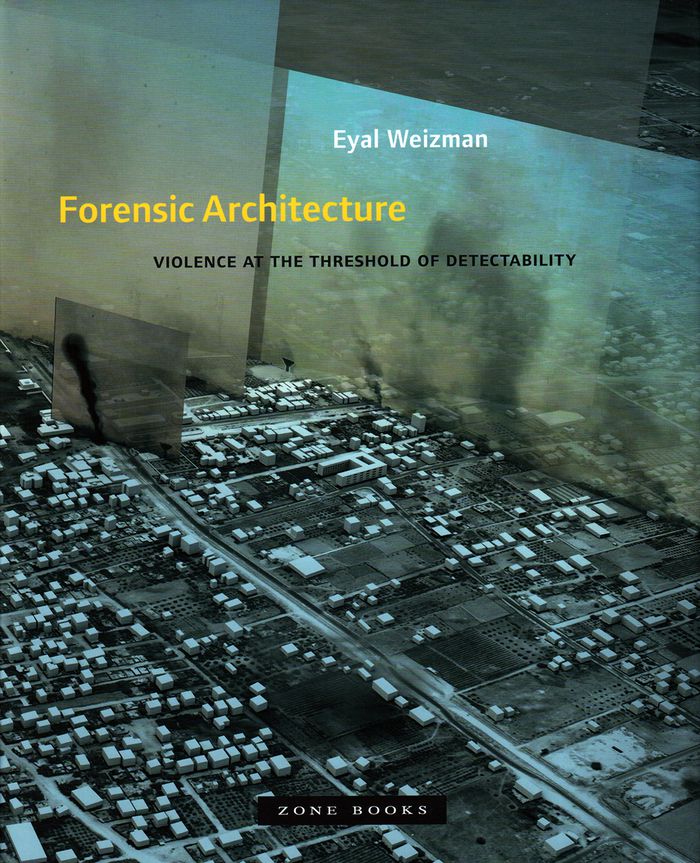
In recent years, the group Forensic Architecture began using novel research methods to undertake a series of investigations into human rights abuses. Today, the group provides crucial evidence for international courts and works with a wide range of activist groups, NGOs, Amnesty International, and the UN. Forensic Architecture has not only shed new light on human rights violations and state crimes across the globe, but has also created a new form of investigative practice that bears its name. The group uses architecture as an optical device to investigate armed conflicts and environmental destruction, as well as to cross-reference a variety of evidence sources, such as new media, remote sensing, material analysis, witness testimony, and crowd-sourcing. In "Forensic architecture", Eyal Weizman, the group’s founder, provides, for the first time, an in-depth introduction to the history, practice, assumptions, potentials, and double binds of this practice. The book includes an extensive array of images, maps, and detailed documentation that records the intricate work the group has performed. Traversing multiple scales and durations, the case studies in this volume include the analysis of the shrapnel fragments in a room struck by drones in Pakistan, the reconstruction of a contested shooting in the West Bank, the architectural recreation of a secret Syrian detention center from the memory of its survivors, a blow-by-blow account of a day-long battle in Gaza, and an investigation of environmental violence and climate change in the Guatemalan highlands and elsewhere.
Forensic architecture
Actions:
Price:
$49.95
(available to order)
Summary:
In recent years, the group Forensic Architecture began using novel research methods to undertake a series of investigations into human rights abuses. Today, the group provides crucial evidence for international courts and works with a wide range of activist groups, NGOs, Amnesty International, and the UN. Forensic Architecture has not only shed new light on human rights violations and state crimes across the globe, but has also created a new form of investigative practice that bears its name. The group uses architecture as an optical device to investigate armed conflicts and environmental destruction, as well as to cross-reference a variety of evidence sources, such as new media, remote sensing, material analysis, witness testimony, and crowd-sourcing. In "Forensic architecture", Eyal Weizman, the group’s founder, provides, for the first time, an in-depth introduction to the history, practice, assumptions, potentials, and double binds of this practice. The book includes an extensive array of images, maps, and detailed documentation that records the intricate work the group has performed. Traversing multiple scales and durations, the case studies in this volume include the analysis of the shrapnel fragments in a room struck by drones in Pakistan, the reconstruction of a contested shooting in the West Bank, the architectural recreation of a secret Syrian detention center from the memory of its survivors, a blow-by-blow account of a day-long battle in Gaza, and an investigation of environmental violence and climate change in the Guatemalan highlands and elsewhere.
Form:
books
books
Publication:
April 2017
April 2017
Subject:
Architectural Theory
Architectural Theory
Form:
books
books
Price:
$44.95
(available to order)
Summary:
This book attempts to chart the history of art and its interaction with written language. It examines the use of words (or language) in many genres of art – most often painting, but including prints, the book as art, sculpture, installation, and performance. This book asks what does it mean when a painting is 'invaded' by language? How do the two forms converse and(...)
$44.95
(available to order)
Summary:
This book attempts to chart the history of art and its interaction with written language. It examines the use of words (or language) in many genres of art – most often painting, but including prints, the book as art, sculpture, installation, and performance. This book asks what does it mean when a painting is 'invaded' by language? How do the two forms converse and(...)
Title:
Art, word and image : 2,000 years of visual/textual interaction
Actions:
Price:
$44.95
(available to order)
Summary:
This book attempts to chart the history of art and its interaction with written language. It examines the use of words (or language) in many genres of art – most often painting, but including prints, the book as art, sculpture, installation, and performance. This book asks what does it mean when a painting is 'invaded' by language? How do the two forms converse and combine, and what messages are intended for the viewer? In addition, other important themes that are also addressed include the naming or titling of paintings, the uses of narrative in art, and the literary connections and aspirations of artists. The book is constructed around three wide-ranging essays by John Dixon Hunt, David Lomas and Michael Corris. These essays discuss the use and significance of words in art – from Classical Greece and Assyria, through to the Middle Ages and the Renaissance, to modern times and today’s digital media, where the words and image question has become a central issue. The essays cover a variety of movements (Pre-Raphaelites, Cubists, Surrealists, and Lettrists, for example) and many artists, among them Duchamp, Picasso, Ernst, Twombly, Michaux, Warhol and Kruger. The book also includes ‘spotlight’ essays on artists whose work engages substantially with questions of word and image: Blake, Klee, Schwitters, Haack, Pettibon, McCahon and Walla. With contributions by Jeremy Adler, Stephen Barber, Rex Butler and Laurence Simmons, Michael Corris, John Dixon Hunt, Michael R. Leaman, David Lomas, Joseph Viscomi, Hamza Walker, Barbara Weyandt and Michael White.
Art, word and image : 2,000 years of visual/textual interaction
Actions:
Price:
$44.95
(available to order)
Summary:
This book attempts to chart the history of art and its interaction with written language. It examines the use of words (or language) in many genres of art – most often painting, but including prints, the book as art, sculpture, installation, and performance. This book asks what does it mean when a painting is 'invaded' by language? How do the two forms converse and combine, and what messages are intended for the viewer? In addition, other important themes that are also addressed include the naming or titling of paintings, the uses of narrative in art, and the literary connections and aspirations of artists. The book is constructed around three wide-ranging essays by John Dixon Hunt, David Lomas and Michael Corris. These essays discuss the use and significance of words in art – from Classical Greece and Assyria, through to the Middle Ages and the Renaissance, to modern times and today’s digital media, where the words and image question has become a central issue. The essays cover a variety of movements (Pre-Raphaelites, Cubists, Surrealists, and Lettrists, for example) and many artists, among them Duchamp, Picasso, Ernst, Twombly, Michaux, Warhol and Kruger. The book also includes ‘spotlight’ essays on artists whose work engages substantially with questions of word and image: Blake, Klee, Schwitters, Haack, Pettibon, McCahon and Walla. With contributions by Jeremy Adler, Stephen Barber, Rex Butler and Laurence Simmons, Michael Corris, John Dixon Hunt, Michael R. Leaman, David Lomas, Joseph Viscomi, Hamza Walker, Barbara Weyandt and Michael White.
Form:
books
books
Publication:
September 2011
September 2011
Subject:
Art Theory
Art Theory
Form:
books
books
Actions:
Price:
$37.95
(available to order)
Summary:
In ''Beyond the World's End,'' T. J. Demos explores cultural practices that provide radical propositions for living in a world beset by environmental and political crises. Rethinking relationships between aesthetics and an expanded political ecology that foregrounds just futurity, Demos examines how contemporary artists are diversely addressing urgent themes, including(...)
$37.95
(available to order)
Summary:
In ''Beyond the World's End,'' T. J. Demos explores cultural practices that provide radical propositions for living in a world beset by environmental and political crises. Rethinking relationships between aesthetics and an expanded political ecology that foregrounds just futurity, Demos examines how contemporary artists are diversely addressing urgent themes, including(...)
Title:
Beyond the world's end: arts of living at the crossing
Actions:
Price:
$37.95
(available to order)
Summary:
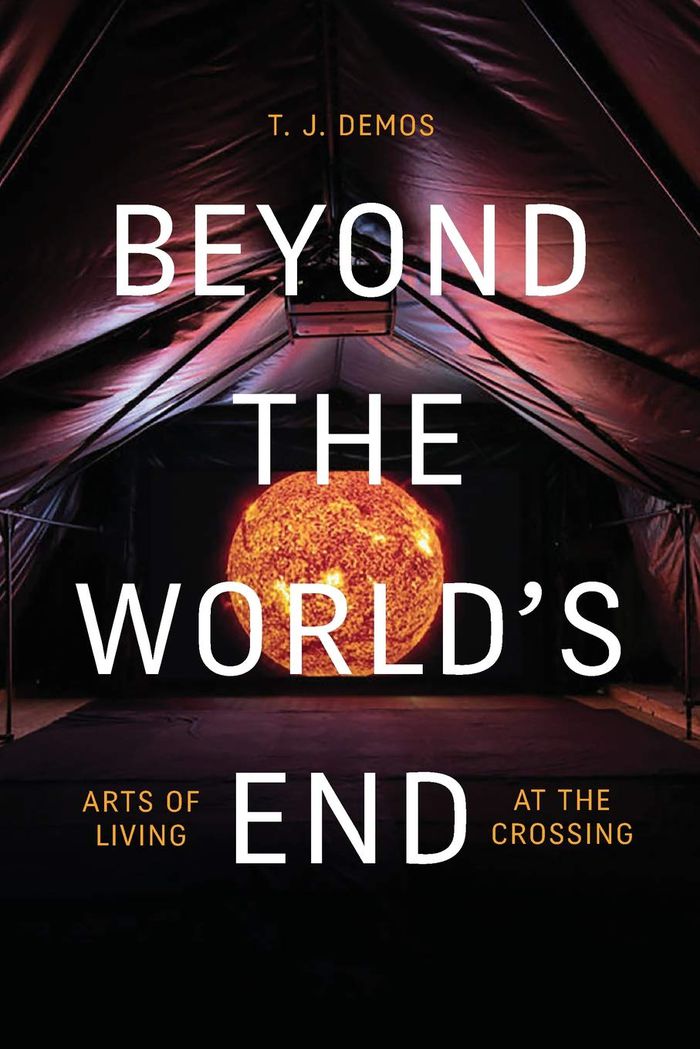
In ''Beyond the World's End,'' T. J. Demos explores cultural practices that provide radical propositions for living in a world beset by environmental and political crises. Rethinking relationships between aesthetics and an expanded political ecology that foregrounds just futurity, Demos examines how contemporary artists are diversely addressing urgent themes, including John Akomfrah's cinematic entanglements of racial capitalism with current environmental threats, the visual politics of climate refugees in work by Forensic Architecture and Teddy Cruz and Fonna Forman, and moving images of Afrofuturist climate justice in projects by Arthur Jafa and Martine Syms. Demos considers video and mixed-media art that responds to resource extraction in works by Angela Melitopoulos, Allora & Calzadilla, and Ursula Biemann, as well as the multispecies ecologies of Terike Haapoja and Public Studio. Throughout Demos contends that contemporary intersections of aesthetics and politics, as exemplified in the Standing Rock #NoDAPL campaign and the Zad's autonomous zone in France, are creating the imaginaries that will be crucial to building a socially just and flourishing future.
Beyond the world's end: arts of living at the crossing
Actions:
Price:
$37.95
(available to order)
Summary:
In ''Beyond the World's End,'' T. J. Demos explores cultural practices that provide radical propositions for living in a world beset by environmental and political crises. Rethinking relationships between aesthetics and an expanded political ecology that foregrounds just futurity, Demos examines how contemporary artists are diversely addressing urgent themes, including John Akomfrah's cinematic entanglements of racial capitalism with current environmental threats, the visual politics of climate refugees in work by Forensic Architecture and Teddy Cruz and Fonna Forman, and moving images of Afrofuturist climate justice in projects by Arthur Jafa and Martine Syms. Demos considers video and mixed-media art that responds to resource extraction in works by Angela Melitopoulos, Allora & Calzadilla, and Ursula Biemann, as well as the multispecies ecologies of Terike Haapoja and Public Studio. Throughout Demos contends that contemporary intersections of aesthetics and politics, as exemplified in the Standing Rock #NoDAPL campaign and the Zad's autonomous zone in France, are creating the imaginaries that will be crucial to building a socially just and flourishing future.
Form:
books
books
Publication:
September 2020
September 2020
Subject:
Environment and environmental theory
Environment and environmental theory
Form:
books
books
Actions:
Price:
$90.00
(available to order)
Summary:
"Things as they are" presents the story of photojournalism over fifty years, from 1955 until today. It takes us from the golden era of the illustrated press—the heyday of Life magazine and Picture Post, and the moment of the Museum of Modern Art’s defining Family of Man exhibition—to the explosion of digital media in the twenty-first century. This history is told through(...)
$90.00
(available to order)
Summary:
"Things as they are" presents the story of photojournalism over fifty years, from 1955 until today. It takes us from the golden era of the illustrated press—the heyday of Life magazine and Picture Post, and the moment of the Museum of Modern Art’s defining Family of Man exhibition—to the explosion of digital media in the twenty-first century. This history is told through(...)
Publication:
March 2006, New York
March 2006, New York
Title:
Things as they are : photojournalism in context since 1955
Actions:
Price:
$90.00
(available to order)
Summary:
"Things as they are" presents the story of photojournalism over fifty years, from 1955 until today. It takes us from the golden era of the illustrated press—the heyday of Life magazine and Picture Post, and the moment of the Museum of Modern Art’s defining Family of Man exhibition—to the explosion of digital media in the twenty-first century. This history is told through the presentation of 125 photojournalism features shot and published throughout the world. These stories are presented in context—shown on the pages of newspapers and magazines, as the public originally experienced them. In this way, "Things as they are" reveals how the events of the world, the art of photographers, and the interests of publishers and the press converged on the printed page. It traces how photojournalism has developed over time alongside changing technology, media, fashions in photography—and a changing world. It includes photo-essays by photographers such as W. Eugene Smith, Sebastião Salgado, Mary Ellen Mark, and James Nachtwey, each accompanied by commentary. An international panel of one hundred photographers, editors, art directors, historians, and magazine collectors has made the final selections for the book. They have chosen stories that exemplify the highest quality of work published around the world during each period as well as stories that have played a key role in shaping the history of photojournalism itself, demonstrating important innovations in photography and in publishing. The book includes a preface by Michiel Munneke, director of World Press Photo; a foreword by Christian Caujolle, curator and founder of Agence Vu Press; an introduction by Mary Panzer that considers the past, present, and future of photojournalism; and a timeline of the period illustrated with iconic winners of the annual World Press Photo awards.
Things as they are : photojournalism in context since 1955
Actions:
Price:
$90.00
(available to order)
Summary:
"Things as they are" presents the story of photojournalism over fifty years, from 1955 until today. It takes us from the golden era of the illustrated press—the heyday of Life magazine and Picture Post, and the moment of the Museum of Modern Art’s defining Family of Man exhibition—to the explosion of digital media in the twenty-first century. This history is told through the presentation of 125 photojournalism features shot and published throughout the world. These stories are presented in context—shown on the pages of newspapers and magazines, as the public originally experienced them. In this way, "Things as they are" reveals how the events of the world, the art of photographers, and the interests of publishers and the press converged on the printed page. It traces how photojournalism has developed over time alongside changing technology, media, fashions in photography—and a changing world. It includes photo-essays by photographers such as W. Eugene Smith, Sebastião Salgado, Mary Ellen Mark, and James Nachtwey, each accompanied by commentary. An international panel of one hundred photographers, editors, art directors, historians, and magazine collectors has made the final selections for the book. They have chosen stories that exemplify the highest quality of work published around the world during each period as well as stories that have played a key role in shaping the history of photojournalism itself, demonstrating important innovations in photography and in publishing. The book includes a preface by Michiel Munneke, director of World Press Photo; a foreword by Christian Caujolle, curator and founder of Agence Vu Press; an introduction by Mary Panzer that considers the past, present, and future of photojournalism; and a timeline of the period illustrated with iconic winners of the annual World Press Photo awards.
Form:
books
books
Publication:
March 2006, New York
March 2006, New York
Form:
books
books
Price:
$39.95
(available to order)
Summary:
Beginning with agoraphobia and claustrophobia in the late nineteenth century, followed by shell shock and panic fear after World War I, phobias and anxiety came to be seen as the mental condition of modern life. They became incorporated into the media and arts, in particular the (...)
$39.95
(available to order)
Summary:
Beginning with agoraphobia and claustrophobia in the late nineteenth century, followed by shell shock and panic fear after World War I, phobias and anxiety came to be seen as the mental condition of modern life. They became incorporated into the media and arts, in particular the (...)
Title:
Warped space : art, architecture, and anxiety in modern culture
Actions:
Price:
$39.95
(available to order)
Summary:
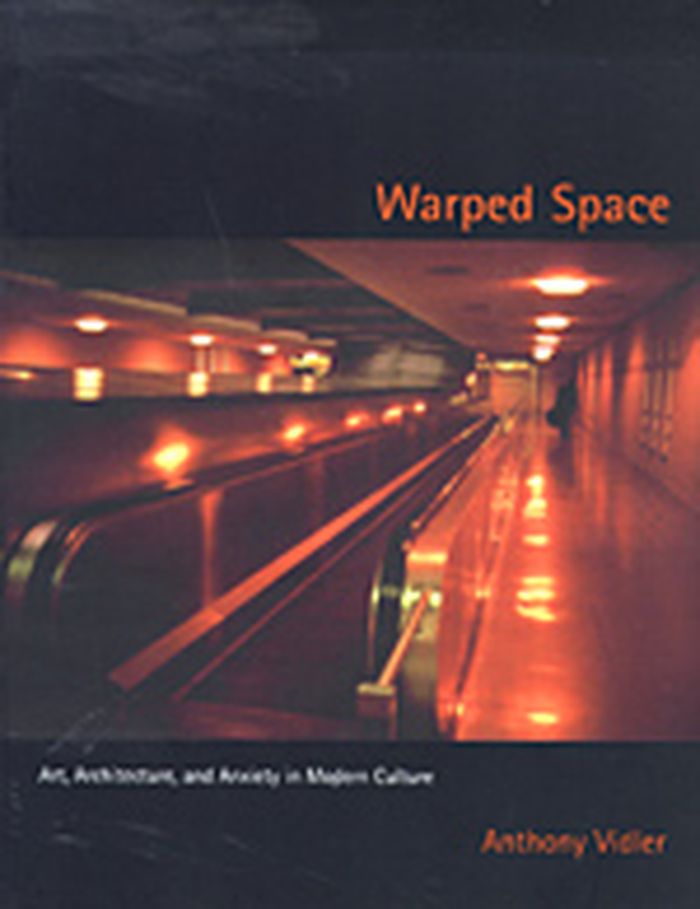
Beginning with agoraphobia and claustrophobia in the late nineteenth century, followed by shell shock and panic fear after World War I, phobias and anxiety came to be seen as the mental condition of modern life. They became incorporated into the media and arts, in particular the spatial arts of architecture, urbanism, and film. This "spatial warping" is now being reshaped by digitalization and virtual reality. Anthony Vidler is concerned with two forms of warped space. The first, a psychological space, is the repository of neuroses and phobias. This space is not empty but full of disturbing forms, including those of architecture and the city. The second kind of warping is produced when artists break the boundaries of genre to depict space in new ways. Vidler traces the emergence of a psychological idea of space from Pascal and Freud to the identification of agoraphobia and claustrophobia in the nineteenth century to twentieth-century theories of spatial alienation and estrangement in the writings of Georg Simmel, Siegfried Kracauer, and Walter Benjamin. Focusing on current conditions of displacement and placelessness, he examines ways in which contemporary artists and architects have produced new forms of spatial warping. The discussion ranges from theorists such as Jacques Lacan and Gilles Deleuze to artists such as Vito Acconci, Mike Kelley, Martha Rosler, and Rachel Whiteread. Finally, Vidler looks at the architectural experiments of Frank Gehry, Coop Himmelblau, Daniel Libeskind, Greg Lynn, Morphosis, and Eric Owen Moss in the light of new digital techniques that, while relying on traditional perspective, have radically transformed the composition, production, and experience of architecture.
Warped space : art, architecture, and anxiety in modern culture
Actions:
Price:
$39.95
(available to order)
Summary:
Beginning with agoraphobia and claustrophobia in the late nineteenth century, followed by shell shock and panic fear after World War I, phobias and anxiety came to be seen as the mental condition of modern life. They became incorporated into the media and arts, in particular the spatial arts of architecture, urbanism, and film. This "spatial warping" is now being reshaped by digitalization and virtual reality. Anthony Vidler is concerned with two forms of warped space. The first, a psychological space, is the repository of neuroses and phobias. This space is not empty but full of disturbing forms, including those of architecture and the city. The second kind of warping is produced when artists break the boundaries of genre to depict space in new ways. Vidler traces the emergence of a psychological idea of space from Pascal and Freud to the identification of agoraphobia and claustrophobia in the nineteenth century to twentieth-century theories of spatial alienation and estrangement in the writings of Georg Simmel, Siegfried Kracauer, and Walter Benjamin. Focusing on current conditions of displacement and placelessness, he examines ways in which contemporary artists and architects have produced new forms of spatial warping. The discussion ranges from theorists such as Jacques Lacan and Gilles Deleuze to artists such as Vito Acconci, Mike Kelley, Martha Rosler, and Rachel Whiteread. Finally, Vidler looks at the architectural experiments of Frank Gehry, Coop Himmelblau, Daniel Libeskind, Greg Lynn, Morphosis, and Eric Owen Moss in the light of new digital techniques that, while relying on traditional perspective, have radically transformed the composition, production, and experience of architecture.
Form:
books
books
Publication:
April 2002, Cambridge, Mass.
April 2002, Cambridge, Mass.
Subject:
Architectural Theory
Architectural Theory
Form:
books
books
Actions:
Price:
$74.95
(available to order)
Summary:
In an era of globalisation, there is an unprecedented scale and nature of contemporary migrant flows, as well as the flow of goods, capital, ideas, images and technology. This sheer number and mobility of contemporary migrants clearly has massively disruptive effects on traditional modes of dwelling however they were manifest in everyday life. But contemporary migrancy(...)
$74.95
(available to order)
Summary:
In an era of globalisation, there is an unprecedented scale and nature of contemporary migrant flows, as well as the flow of goods, capital, ideas, images and technology. This sheer number and mobility of contemporary migrants clearly has massively disruptive effects on traditional modes of dwelling however they were manifest in everyday life. But contemporary migrancy(...)
Title:
Drifting : architecture and migrancy
Actions:
Price:
$74.95
(available to order)
Summary:
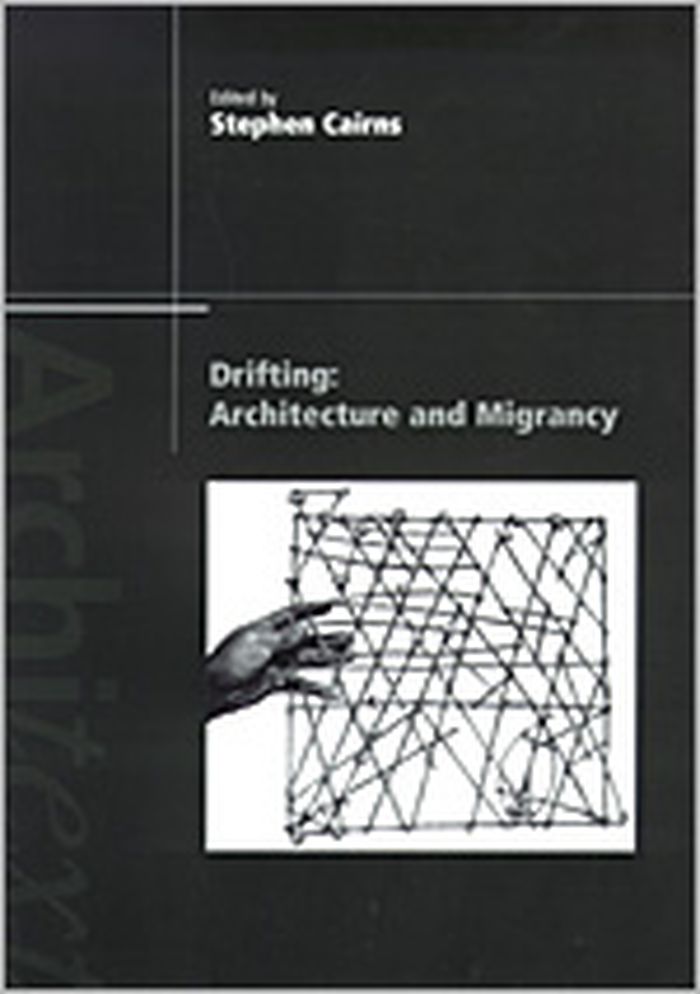
In an era of globalisation, there is an unprecedented scale and nature of contemporary migrant flows, as well as the flow of goods, capital, ideas, images and technology. This sheer number and mobility of contemporary migrants clearly has massively disruptive effects on traditional modes of dwelling however they were manifest in everyday life. But contemporary migrancy also has important consequences for the way dwelling is conceptualised more generally. This book is concerned with the modes of dwelling that emerge through migrancy; it is also concerned with the effects these modes of dwelling have for dominant conceptions of space and place; and finally, it is interested in the kinds of architectures that become possible if those effects are taken seriously. This book inspects the intersections between architectures of place and flows of migrancy. It does so without seeking to defend the idea of place, nor lament its passing. Rather, this book is an exploration of the often complex and unorthodox modes of dwelling that are emerging precisely from within the ruins of the idea of place. This exploration is informed by post-structuralist analyses of architecture and urbanism, and their representation in media such as film. It focuses on the Pacific Rim as an intensified zone of global flows. Within the Pacific Rim there are complex tensions between the new economies of Asia and the settler nations of Canada, the US, Australia and New Zealand. These tensions produce difficulties for the narrative of the nation state, and herald conditions that no longer conform to the geo-political norms of the old world.
Drifting : architecture and migrancy
Actions:
Price:
$74.95
(available to order)
Summary:
In an era of globalisation, there is an unprecedented scale and nature of contemporary migrant flows, as well as the flow of goods, capital, ideas, images and technology. This sheer number and mobility of contemporary migrants clearly has massively disruptive effects on traditional modes of dwelling however they were manifest in everyday life. But contemporary migrancy also has important consequences for the way dwelling is conceptualised more generally. This book is concerned with the modes of dwelling that emerge through migrancy; it is also concerned with the effects these modes of dwelling have for dominant conceptions of space and place; and finally, it is interested in the kinds of architectures that become possible if those effects are taken seriously. This book inspects the intersections between architectures of place and flows of migrancy. It does so without seeking to defend the idea of place, nor lament its passing. Rather, this book is an exploration of the often complex and unorthodox modes of dwelling that are emerging precisely from within the ruins of the idea of place. This exploration is informed by post-structuralist analyses of architecture and urbanism, and their representation in media such as film. It focuses on the Pacific Rim as an intensified zone of global flows. Within the Pacific Rim there are complex tensions between the new economies of Asia and the settler nations of Canada, the US, Australia and New Zealand. These tensions produce difficulties for the narrative of the nation state, and herald conditions that no longer conform to the geo-political norms of the old world.
Form:
books
books
Publication:
September 2003, London / New York
September 2003, London / New York
Subject:
Architectural Theory
Architectural Theory
Form:
books
books
Price:
$49.50
(available to order)
Summary:
Beginning with agoraphobia and claustrophobia in the late nineteenth century, followed by shell shock and panic fear after World War I, phobias and anxiety came to be seen as the mental condition of modern life. They became incorporated into the media and arts, in particular the (...)
$49.50
(available to order)
Summary:
Beginning with agoraphobia and claustrophobia in the late nineteenth century, followed by shell shock and panic fear after World War I, phobias and anxiety came to be seen as the mental condition of modern life. They became incorporated into the media and arts, in particular the (...)
Title:
Warped space : art, architecture, and anxiety in modern culture
Actions:
Price:
$49.50
(available to order)
Summary:
Beginning with agoraphobia and claustrophobia in the late nineteenth century, followed by shell shock and panic fear after World War I, phobias and anxiety came to be seen as the mental condition of modern life. They became incorporated into the media and arts, in particular the spatial arts of architecture, urbanism, and film. This "spatial warping" is now being reshaped by digitalization and virtual reality. Anthony Vidler is concerned with two forms of warped space. The first, a psychological space, is the repository of neuroses and phobias. This space is not empty but full of disturbing forms, including those of architecture and the city. The second kind of warping is produced when artists break the boundaries of genre to depict space in new ways. Vidler traces the emergence of a psychological idea of space from Pascal and Freud to the identification of agoraphobia and claustrophobia in the nineteenth century to twentieth-century theories of spatial alienation and estrangement in the writings of Georg Simmel, Siegfried Kracauer, and Walter Benjamin. Focusing on current conditions of displacement and placelessness, he examines ways in which contemporary artists and architects have produced new forms of spatial warping. The discussion ranges from theorists such as Jacques Lacan and Gilles Deleuze to artists such as Vito Acconci, Mike Kelley, Martha Rosler, and Rachel Whiteread. Finally, Vidler looks at the architectural experiments of Frank Gehry, Coop Himmelblau, Daniel Libeskind, Greg Lynn, Morphosis, and Eric Owen Moss in the light of new digital techniques that, while relying on traditional perspective, have radically transformed the composition, production, and experience of architecture.
Warped space : art, architecture, and anxiety in modern culture
Actions:
Price:
$49.50
(available to order)
Summary:
Beginning with agoraphobia and claustrophobia in the late nineteenth century, followed by shell shock and panic fear after World War I, phobias and anxiety came to be seen as the mental condition of modern life. They became incorporated into the media and arts, in particular the spatial arts of architecture, urbanism, and film. This "spatial warping" is now being reshaped by digitalization and virtual reality. Anthony Vidler is concerned with two forms of warped space. The first, a psychological space, is the repository of neuroses and phobias. This space is not empty but full of disturbing forms, including those of architecture and the city. The second kind of warping is produced when artists break the boundaries of genre to depict space in new ways. Vidler traces the emergence of a psychological idea of space from Pascal and Freud to the identification of agoraphobia and claustrophobia in the nineteenth century to twentieth-century theories of spatial alienation and estrangement in the writings of Georg Simmel, Siegfried Kracauer, and Walter Benjamin. Focusing on current conditions of displacement and placelessness, he examines ways in which contemporary artists and architects have produced new forms of spatial warping. The discussion ranges from theorists such as Jacques Lacan and Gilles Deleuze to artists such as Vito Acconci, Mike Kelley, Martha Rosler, and Rachel Whiteread. Finally, Vidler looks at the architectural experiments of Frank Gehry, Coop Himmelblau, Daniel Libeskind, Greg Lynn, Morphosis, and Eric Owen Moss in the light of new digital techniques that, while relying on traditional perspective, have radically transformed the composition, production, and experience of architecture.
Form:
books
books
Publication:
June 2000, Cambridge, Mass.
June 2000, Cambridge, Mass.
Subject:
Architectural Theory
Architectural Theory
Form:
books
books
Price:
$52.00
(available to order)
Summary:
Getting the picture, constructing (and deconstructing) the picture, finding the picture, viewing the picture, being in the picture , changing the pictures --these are all phrases that apply to the fascinating world of 'putting people in the picture' in visual research within the Social Sciences. Putting People in the Picture: Visual Methodologies for Social Change focuses(...)
$52.00
(available to order)
Summary:
Getting the picture, constructing (and deconstructing) the picture, finding the picture, viewing the picture, being in the picture , changing the pictures --these are all phrases that apply to the fascinating world of 'putting people in the picture' in visual research within the Social Sciences. Putting People in the Picture: Visual Methodologies for Social Change focuses(...)
Subject:
Theory of Photography
Theory of Photography
Publication:
May 2008, Rotterdam
May 2008, Rotterdam
Title:
Putting people in the picture: visual methodologies for social change
Actions:
Price:
$52.00
(available to order)
Summary:
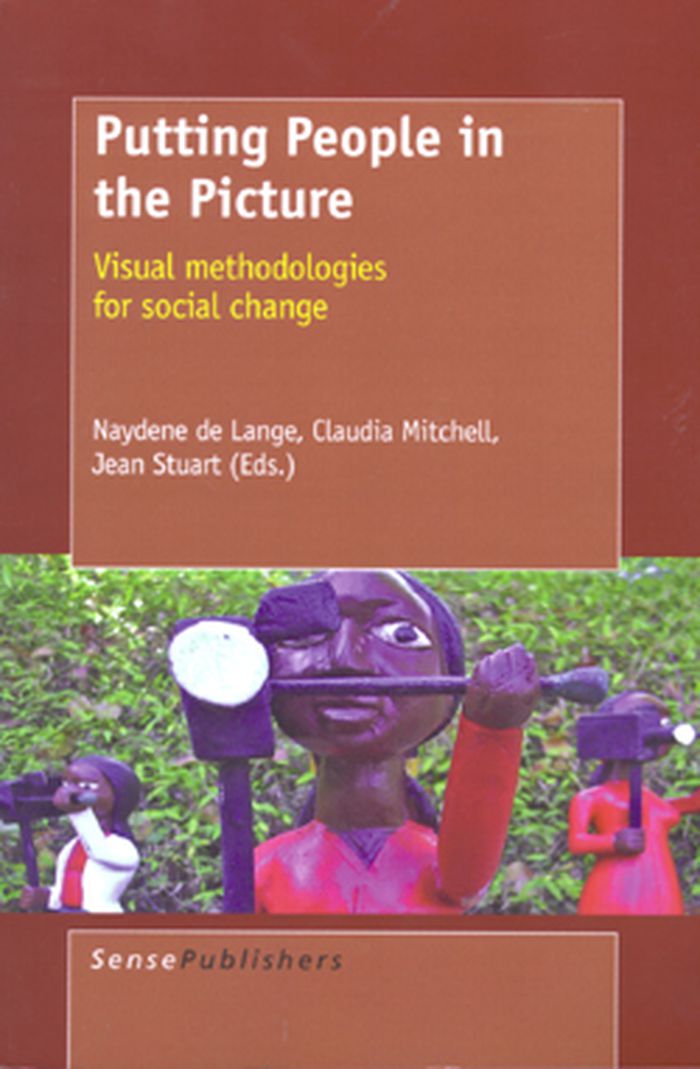
Getting the picture, constructing (and deconstructing) the picture, finding the picture, viewing the picture, being in the picture , changing the pictures --these are all phrases that apply to the fascinating world of 'putting people in the picture' in visual research within the Social Sciences. Putting People in the Picture: Visual Methodologies for Social Change focuses on the ways in which researchers, practitioners and activists are using such techniques as photo voice, collaborative video, drawings and other visual and arts-based tools as modes of inquiry, as modes of representation and as modes of disseminating findings in social research. The various chapters address methodological, analytical, interpretive, aesthetic, technical and ethical concerns in using visual methodologies in work with young people, teachers, community health care workers -- and even the self-as-researcher. The range of issues addressed in the work is broad, and includes work in the areas of HIV & AIDS, schooling, poverty, gender violence, race, and children's visions for the future. While the studies are situated within a variety of social contexts, the focus is primarily on work in Southern Africa. The book takes up some of the theoretical and practical challenges offered by Visual Sociology, Image- based Research, Media Studies, Rural Development, and Community-based and Participatory Research, and in so doing offers audiences an array of visual approaches to studying and bringing about social change.
Putting people in the picture: visual methodologies for social change
Actions:
Price:
$52.00
(available to order)
Summary:
Getting the picture, constructing (and deconstructing) the picture, finding the picture, viewing the picture, being in the picture , changing the pictures --these are all phrases that apply to the fascinating world of 'putting people in the picture' in visual research within the Social Sciences. Putting People in the Picture: Visual Methodologies for Social Change focuses on the ways in which researchers, practitioners and activists are using such techniques as photo voice, collaborative video, drawings and other visual and arts-based tools as modes of inquiry, as modes of representation and as modes of disseminating findings in social research. The various chapters address methodological, analytical, interpretive, aesthetic, technical and ethical concerns in using visual methodologies in work with young people, teachers, community health care workers -- and even the self-as-researcher. The range of issues addressed in the work is broad, and includes work in the areas of HIV & AIDS, schooling, poverty, gender violence, race, and children's visions for the future. While the studies are situated within a variety of social contexts, the focus is primarily on work in Southern Africa. The book takes up some of the theoretical and practical challenges offered by Visual Sociology, Image- based Research, Media Studies, Rural Development, and Community-based and Participatory Research, and in so doing offers audiences an array of visual approaches to studying and bringing about social change.
Form:
books
books
Publication:
May 2008, Rotterdam
May 2008, Rotterdam
Subject:
Theory of Photography
Theory of Photography
Form:
books
books
Actions:
Price:
$12.50
(available to order)
Summary:
Sally Stein reconsiders Dorothea Lange’s iconic portrait of maternity and modern emblem of family values in light of Lange’s long-overlooked ‘Padonna’ pictures and proposes that ‘Migrant Mother’ should in fact be seen as a disruptive image of women’s conflictual relation to home, and the world. Stein is an American academic and cultural theorist living in Los Angeles. The(...)
$12.50
(available to order)
Summary:
Sally Stein reconsiders Dorothea Lange’s iconic portrait of maternity and modern emblem of family values in light of Lange’s long-overlooked ‘Padonna’ pictures and proposes that ‘Migrant Mother’ should in fact be seen as a disruptive image of women’s conflictual relation to home, and the world. Stein is an American academic and cultural theorist living in Los Angeles. The(...)
Title:
Dorothea Lange: Migrant mother, Migrant gender
Actions:
Price:
$12.50
(available to order)
Summary:
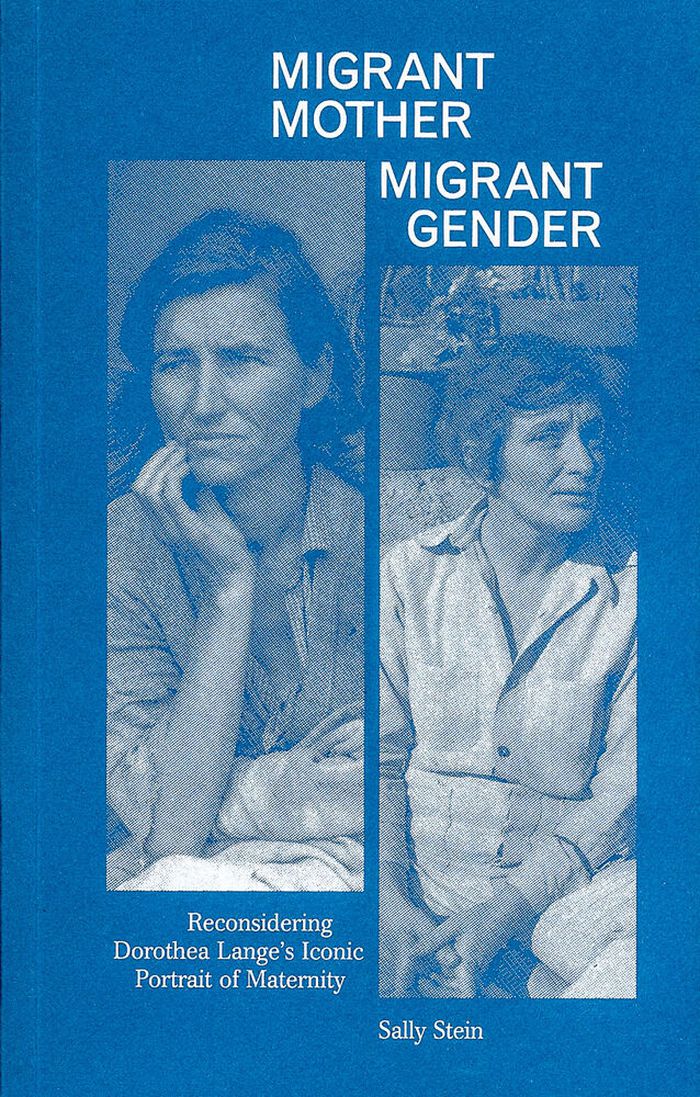
Sally Stein reconsiders Dorothea Lange’s iconic portrait of maternity and modern emblem of family values in light of Lange’s long-overlooked ‘Padonna’ pictures and proposes that ‘Migrant Mother’ should in fact be seen as a disruptive image of women’s conflictual relation to home, and the world. Stein is an American academic and cultural theorist living in Los Angeles. The interrelated topics she most often engages concern the multiple effects of documentary imagery, the politics of gender, and the status and meaning of black and white and color imagery on our perceptions, beliefs, even actions as consumers and citizens. Dr. Stein, Professor Emerita, UC Irvine, is an independent scholar based in Los Angeles who continues to research and write about 20thcentury photography in the U.S. and its relation to broader questions of culture and society. She has written about New Deal FSA photographers—particularly Dorothea Lange, Marion Post Wolcott, Jack Delano—as well as the contested image of FDR. Her numerous essays about popular mass media – Ladies Home Journal, Life and Look – extend her ongoing study of the various aspects of the rise of color photography. The interrelated topics she most often engages concern the multiple effects of documentary imagery, the politics of gender, and the status and meaning of black and white and color imagery on our perceptions, beliefs, even actions as consumers and citizens.
Dorothea Lange: Migrant mother, Migrant gender
Actions:
Price:
$12.50
(available to order)
Summary:
Sally Stein reconsiders Dorothea Lange’s iconic portrait of maternity and modern emblem of family values in light of Lange’s long-overlooked ‘Padonna’ pictures and proposes that ‘Migrant Mother’ should in fact be seen as a disruptive image of women’s conflictual relation to home, and the world. Stein is an American academic and cultural theorist living in Los Angeles. The interrelated topics she most often engages concern the multiple effects of documentary imagery, the politics of gender, and the status and meaning of black and white and color imagery on our perceptions, beliefs, even actions as consumers and citizens. Dr. Stein, Professor Emerita, UC Irvine, is an independent scholar based in Los Angeles who continues to research and write about 20thcentury photography in the U.S. and its relation to broader questions of culture and society. She has written about New Deal FSA photographers—particularly Dorothea Lange, Marion Post Wolcott, Jack Delano—as well as the contested image of FDR. Her numerous essays about popular mass media – Ladies Home Journal, Life and Look – extend her ongoing study of the various aspects of the rise of color photography. The interrelated topics she most often engages concern the multiple effects of documentary imagery, the politics of gender, and the status and meaning of black and white and color imagery on our perceptions, beliefs, even actions as consumers and citizens.
Form:
books
books
Publication:
February 2020
February 2020
Subject:
Theory of Photography
Theory of Photography
Form:
books
books
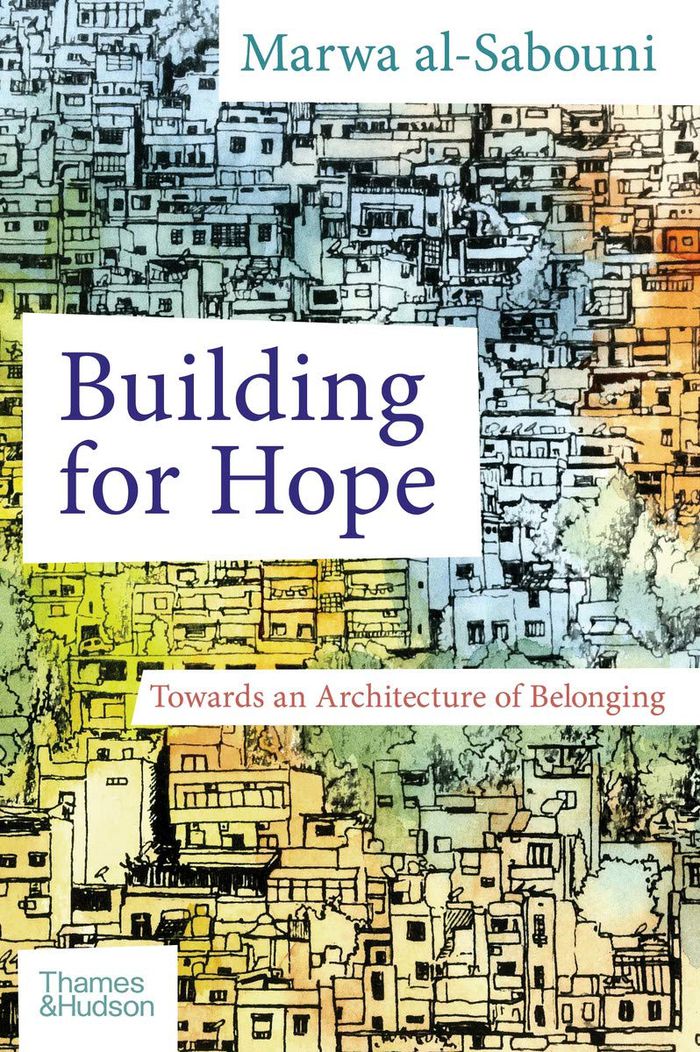
Title:
Building for hope
Building for hope
Actions:
Price:
$39.95
(available to order)
Summary:
This new book by Syrian architect Marwa al-Sabouni, seeks to understand how cities and buildings- scarred by conflict, blight, and pandemic- can be healed through design and urban mindfulness. When Marwa al-Sabouni published Battle for Home in 2016, she was a little-known architect, living in battle-ravaged Homs, Syria, unable to practice her profession. She turned her(...)
$39.95
(available to order)
Summary:
This new book by Syrian architect Marwa al-Sabouni, seeks to understand how cities and buildings- scarred by conflict, blight, and pandemic- can be healed through design and urban mindfulness. When Marwa al-Sabouni published Battle for Home in 2016, she was a little-known architect, living in battle-ravaged Homs, Syria, unable to practice her profession. She turned her(...)
Title:
Building for hope
Actions:
Price:
$39.95
(available to order)
Summary:
This new book by Syrian architect Marwa al-Sabouni, seeks to understand how cities and buildings- scarred by conflict, blight, and pandemic- can be healed through design and urban mindfulness. When Marwa al-Sabouni published Battle for Home in 2016, she was a little-known architect, living in battle-ravaged Homs, Syria, unable to practice her profession. She turned her fierce intelligence to chronicling how her city and country were undone through decades of architectural mismanagement and mistakes. Once published, Marwa al-Sabouni’s book and story attracted the attention of international media- CNN, The New York Times- and received critical acclaim worldwide. The United Nations called on her for insights and expertise. She became a TED fellow, was invited to speak to audiences around the world, and some suggested she be nominated for architecture’s highest honor, the Pritzker Prize. Al-Sabouni’s deep understanding of Middle Eastern heritage and architecture gives her insight into a wide range of cities, informing her views on how cities work best, how they might fail, and what can be done to harmonize the lives of all their inhabitants. In this new book, al-Sabouni draws together several narratives: her personal and professional observations of some of the world’s most fascinating cities, from Detroit to Helsinki; the lessons that Western societies might learn from Islamic culture and design; and philosophical reflections on how our personal and communal spaces can provide the basic foundations for happiness. Through this tapestry of personal experience, unblinking perspective, and insight, al-Sabouni offers real-world solutions- and hope- for how peace might be created through mindful urban planning.
Building for hope
Actions:
Price:
$39.95
(available to order)
Summary:
This new book by Syrian architect Marwa al-Sabouni, seeks to understand how cities and buildings- scarred by conflict, blight, and pandemic- can be healed through design and urban mindfulness. When Marwa al-Sabouni published Battle for Home in 2016, she was a little-known architect, living in battle-ravaged Homs, Syria, unable to practice her profession. She turned her fierce intelligence to chronicling how her city and country were undone through decades of architectural mismanagement and mistakes. Once published, Marwa al-Sabouni’s book and story attracted the attention of international media- CNN, The New York Times- and received critical acclaim worldwide. The United Nations called on her for insights and expertise. She became a TED fellow, was invited to speak to audiences around the world, and some suggested she be nominated for architecture’s highest honor, the Pritzker Prize. Al-Sabouni’s deep understanding of Middle Eastern heritage and architecture gives her insight into a wide range of cities, informing her views on how cities work best, how they might fail, and what can be done to harmonize the lives of all their inhabitants. In this new book, al-Sabouni draws together several narratives: her personal and professional observations of some of the world’s most fascinating cities, from Detroit to Helsinki; the lessons that Western societies might learn from Islamic culture and design; and philosophical reflections on how our personal and communal spaces can provide the basic foundations for happiness. Through this tapestry of personal experience, unblinking perspective, and insight, al-Sabouni offers real-world solutions- and hope- for how peace might be created through mindful urban planning.
Form:
books
books
Publication:
April 2021
April 2021
Subject:
Architectural Theory
Architectural Theory


