


1071 Results
Form:
books
books
Title:
Tangent e : Alain Paiement
Tangent e : Alain Paiement
Actions:
Price:
$24.95
(available in store)
Summary:
Le rapport particulier entre la photographie et l'architecture, entre la photographie et l'espace, le point de contact priviligié où une droite touche un volume, font l'objet de cette nouvelle série d'expositions et de publications qui met en place des conversations visuelles entre des artistes contemporains et un ensemble de photographies choisies parmi la vaste(...)
$24.95
(available in store)
Summary:
Le rapport particulier entre la photographie et l'architecture, entre la photographie et l'espace, le point de contact priviligié où une droite touche un volume, font l'objet de cette nouvelle série d'expositions et de publications qui met en place des conversations visuelles entre des artistes contemporains et un ensemble de photographies choisies parmi la vaste(...)
Subject:
CCA Publications
CCA Publications
Publication:
April 2003, Montréal
April 2003, Montréal
Title:
Tangent e : Alain Paiement
Actions:
Price:
$24.95
(available in store)
Summary:
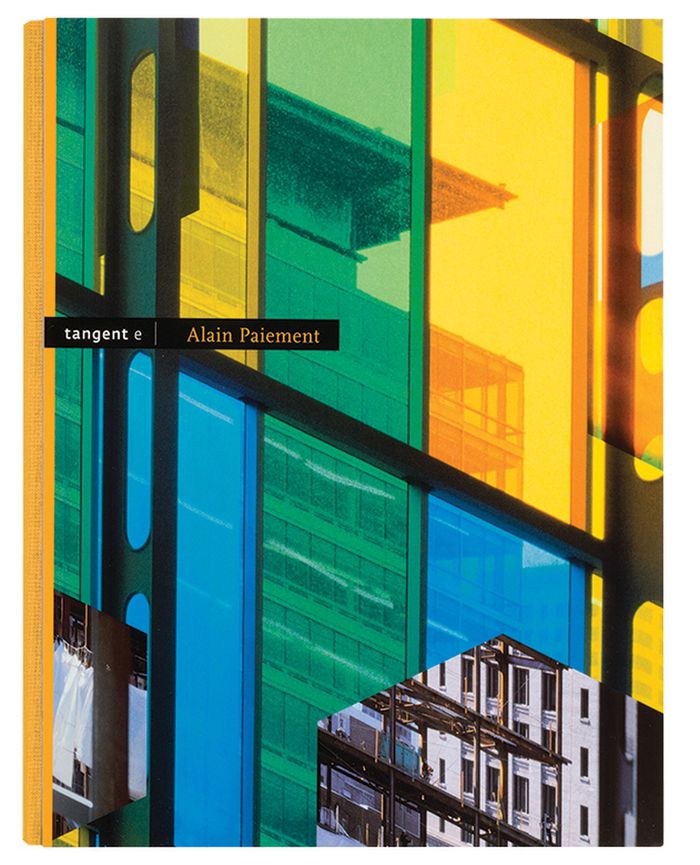
Le rapport particulier entre la photographie et l'architecture, entre la photographie et l'espace, le point de contact priviligié où une droite touche un volume, font l'objet de cette nouvelle série d'expositions et de publications qui met en place des conversations visuelles entre des artistes contemporains et un ensemble de photographies choisies parmi la vaste collection du CCA. "Tangente" est inaugurée par le travail d'Alain Paiement. Dans le cadre d’un entretien entre Hubertus von Amelunxen et Alain Paiement, le livre présente les nouvelles œuvres d’Alain Paiement ainsi que les photographies choisies par l’artiste dans la collection du CCA. The special relationship between photography and architecture, between photography and space, the specific encounter when the tangent touches the circle is explored in this new series of exhibitions and publications in which contemporary artists are invited to enter into visual conversations with a body of photographs selected from the extensive collection of the CCA. "Tangent" is inaugured with the work of Alain Paiement. The book takes the form of a conversation between Hubertus von Amelunxen and Alain Paiement, and presents the new works by Paiement as well as the photographs he himself chose from the CCA collection.
Tangent e : Alain Paiement
Actions:
Price:
$24.95
(available in store)
Summary:
Le rapport particulier entre la photographie et l'architecture, entre la photographie et l'espace, le point de contact priviligié où une droite touche un volume, font l'objet de cette nouvelle série d'expositions et de publications qui met en place des conversations visuelles entre des artistes contemporains et un ensemble de photographies choisies parmi la vaste collection du CCA. "Tangente" est inaugurée par le travail d'Alain Paiement. Dans le cadre d’un entretien entre Hubertus von Amelunxen et Alain Paiement, le livre présente les nouvelles œuvres d’Alain Paiement ainsi que les photographies choisies par l’artiste dans la collection du CCA. The special relationship between photography and architecture, between photography and space, the specific encounter when the tangent touches the circle is explored in this new series of exhibitions and publications in which contemporary artists are invited to enter into visual conversations with a body of photographs selected from the extensive collection of the CCA. "Tangent" is inaugured with the work of Alain Paiement. The book takes the form of a conversation between Hubertus von Amelunxen and Alain Paiement, and presents the new works by Paiement as well as the photographs he himself chose from the CCA collection.
Form:
books
books
Publication:
April 2003, Montréal
April 2003, Montréal
Subject:
CCA Publications
CCA Publications
Form:
books
books
Title:
Lefebvre for architects
Lefebvre for architects
Actions:
Price:
$51.70
(available in store)
Summary:
Contemporary discomfort with romanticism and Utopia arguably obstructs the shift of Lefebvre’s thinking from being objects of theoretical interest into positions of actually influencing practices. Attempting to understand and act upon architecture and the city with Lefebvre but without Utopia and romanticism risks muting the impact of his ideas. Although Utopia may seem(...)
$51.70
(available in store)
Summary:
Contemporary discomfort with romanticism and Utopia arguably obstructs the shift of Lefebvre’s thinking from being objects of theoretical interest into positions of actually influencing practices. Attempting to understand and act upon architecture and the city with Lefebvre but without Utopia and romanticism risks muting the impact of his ideas. Although Utopia may seem(...)
Title:
Lefebvre for architects
Actions:
Price:
$51.70
(available in store)
Summary:
Contemporary discomfort with romanticism and Utopia arguably obstructs the shift of Lefebvre’s thinking from being objects of theoretical interest into positions of actually influencing practices. Attempting to understand and act upon architecture and the city with Lefebvre but without Utopia and romanticism risks muting the impact of his ideas. Although Utopia may seem to have no place in the present, Lefebvre reveals this as little more than a self-serving affirmation that ‘there is no alternative’ to social and political detachment. Demanding the impossible may end in failure but as Lefebvre shows us, doing so is the first step towards other possibilities. To think with Lefebvre is to think about Utopia, doing so makes contact with what is most enduring about his project for the city and its inhabitants, and with what is most radical about it as well. "Lefebvre for architects" offers a concise account of the relevance of Henri Lefebvre’s writing for the theory and practice of architecture, planning and urban design. This book is accessible for students and practitioners who wish to fully engage with the design possibilities offered by Lefebvre’s philosophy.
Lefebvre for architects
Actions:
Price:
$51.70
(available in store)
Summary:
Contemporary discomfort with romanticism and Utopia arguably obstructs the shift of Lefebvre’s thinking from being objects of theoretical interest into positions of actually influencing practices. Attempting to understand and act upon architecture and the city with Lefebvre but without Utopia and romanticism risks muting the impact of his ideas. Although Utopia may seem to have no place in the present, Lefebvre reveals this as little more than a self-serving affirmation that ‘there is no alternative’ to social and political detachment. Demanding the impossible may end in failure but as Lefebvre shows us, doing so is the first step towards other possibilities. To think with Lefebvre is to think about Utopia, doing so makes contact with what is most enduring about his project for the city and its inhabitants, and with what is most radical about it as well. "Lefebvre for architects" offers a concise account of the relevance of Henri Lefebvre’s writing for the theory and practice of architecture, planning and urban design. This book is accessible for students and practitioners who wish to fully engage with the design possibilities offered by Lefebvre’s philosophy.
Form:
books
books
Publication:
February 1993
February 1993
Subject:
Architectural Theory
Architectural Theory
Form:
books
books
Actions:
Price:
$54.95
(available to order)
Summary:
C’est en 1937 que Le Corbusier découvre Roquebrune-Cap-Martin et la villa de Jean Badovici E-1027, dessinée en grande partie par l’irlandaise Eileen Gray entre 1927 et 1929. Il y revient en 1938 et en 1939. Impressionné par l’ingéniosité et le charme de la villa il passe des moments agréables face à la mer et mène une vie tranquille et simple, au contact de la(...)
$54.95
(available to order)
Summary:
C’est en 1937 que Le Corbusier découvre Roquebrune-Cap-Martin et la villa de Jean Badovici E-1027, dessinée en grande partie par l’irlandaise Eileen Gray entre 1927 et 1929. Il y revient en 1938 et en 1939. Impressionné par l’ingéniosité et le charme de la villa il passe des moments agréables face à la mer et mène une vie tranquille et simple, au contact de la(...)
Title:
Le Corbusier, peintre à Cap-Martin
Actions:
Price:
$54.95
(available to order)
Summary:
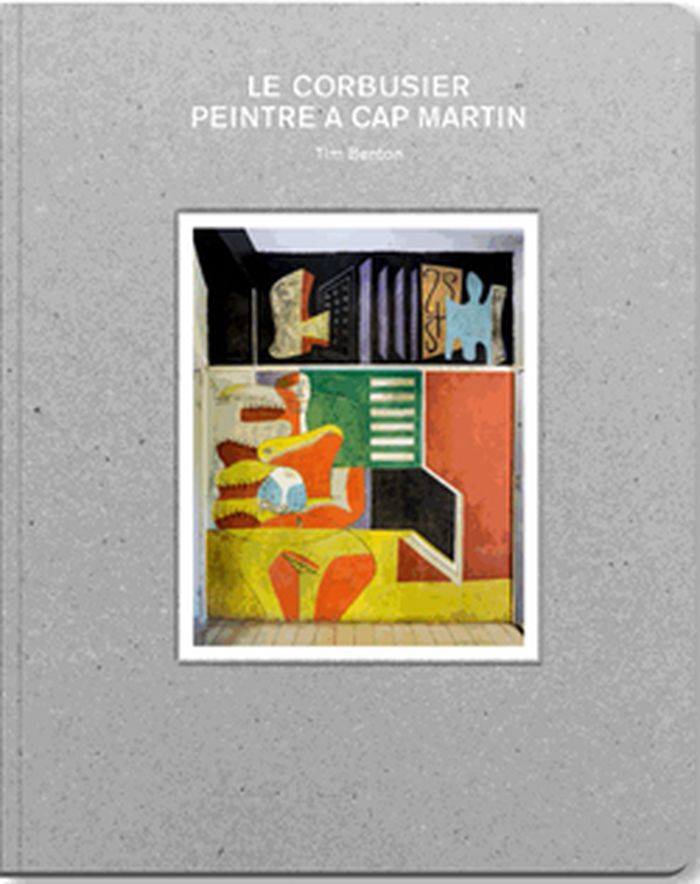
C’est en 1937 que Le Corbusier découvre Roquebrune-Cap-Martin et la villa de Jean Badovici E-1027, dessinée en grande partie par l’irlandaise Eileen Gray entre 1927 et 1929. Il y revient en 1938 et en 1939. Impressionné par l’ingéniosité et le charme de la villa il passe des moments agréables face à la mer et mène une vie tranquille et simple, au contact de la nature.Alors que la peinture murale est en complète contradiction avec sa définition de l’architecture comme « pur jeu de lumière et de volumes », Le Corbusier va réaliser sur ce site divers muraux, tant dans la villa d’Eileen Gray que sur les murs de L’Étoile de mer et sur les parois de son Cabanon. L’auteur revient sur les différents facteurs ayant conduit à cette conversion et replace cette évolution de l’architecte dans le contexte plus général de la peinture murale à cette période. Cet ouvrage documente, pour la première fois, l’ensemble de cet œuvre peint et dessiné, toujours existant pour la majeure partie, et donne également à voir un Le Corbusier plus libre et véritable amoureux de la Méditerranée.
Le Corbusier, peintre à Cap-Martin
Actions:
Price:
$54.95
(available to order)
Summary:
C’est en 1937 que Le Corbusier découvre Roquebrune-Cap-Martin et la villa de Jean Badovici E-1027, dessinée en grande partie par l’irlandaise Eileen Gray entre 1927 et 1929. Il y revient en 1938 et en 1939. Impressionné par l’ingéniosité et le charme de la villa il passe des moments agréables face à la mer et mène une vie tranquille et simple, au contact de la nature.Alors que la peinture murale est en complète contradiction avec sa définition de l’architecture comme « pur jeu de lumière et de volumes », Le Corbusier va réaliser sur ce site divers muraux, tant dans la villa d’Eileen Gray que sur les murs de L’Étoile de mer et sur les parois de son Cabanon. L’auteur revient sur les différents facteurs ayant conduit à cette conversion et replace cette évolution de l’architecte dans le contexte plus général de la peinture murale à cette période. Cet ouvrage documente, pour la première fois, l’ensemble de cet œuvre peint et dessiné, toujours existant pour la majeure partie, et donne également à voir un Le Corbusier plus libre et véritable amoureux de la Méditerranée.
Form:
books
books
Publication:
October 2015
October 2015
Subject:
Architecture Monographs
Architecture Monographs
Form:
books
books
Price:
$40.00
(available to order)
Summary:
Ce recueil regroupe les textes de 41 communications présentées lors du colloque « Le patrimoine religieux du Québec : de l'objet cultuel à l'objet culturel », tenu à Québec les 12, 13 et 14 novembre 2004. Quelque 450 personnes, praticiens, chercheurs ou passionnés du patrimoine religieux s'y réunissaient pour réfléchir sur les enjeux fondamentaux de ce patrimoine menacé,(...)
$40.00
(available to order)
Summary:
Ce recueil regroupe les textes de 41 communications présentées lors du colloque « Le patrimoine religieux du Québec : de l'objet cultuel à l'objet culturel », tenu à Québec les 12, 13 et 14 novembre 2004. Quelque 450 personnes, praticiens, chercheurs ou passionnés du patrimoine religieux s'y réunissaient pour réfléchir sur les enjeux fondamentaux de ce patrimoine menacé,(...)
Title:
Le patrimoine religieux du Québec : entre le culturel et le culturel
Actions:
Price:
$40.00
(available to order)
Summary:
Ce recueil regroupe les textes de 41 communications présentées lors du colloque « Le patrimoine religieux du Québec : de l'objet cultuel à l'objet culturel », tenu à Québec les 12, 13 et 14 novembre 2004. Quelque 450 personnes, praticiens, chercheurs ou passionnés du patrimoine religieux s'y réunissaient pour réfléchir sur les enjeux fondamentaux de ce patrimoine menacé, entre autres, par une diminution marquée de la pratique religieuse et par le vieillissement des propriétaires et gardiens traditionnels de ces biens matériels et immatériels. Cette vaste mobilisation démontre l'attachement profond des Québécois à leur patrimoine religieux, vecteur d'affirmation et de fierté collective, qu'ils désirent conserver, valoriser et transmettre. Dans ce contexte, la « patrimonialisation », c'est-à-dire la conversion de ces biens d'Église, à vocation cultuelle, en biens culturels destinés à la société civile, semble être le seul moyen de sauvegarder cet héritage. Or cette nécessaire relation entre le cultuel et le culturel est plus qu'un lieu de passage, c'est un « espace de contact », un champ relationnel qui met en œuvre des négociations, des stratégies d'appropriation et des postures de résistance. Par les échanges et les mélanges qu'il engendre, cet espace devient « un entre-lieu » de la culture, un espace de création où se réalisent de nouveaux consensus, de nouvelles pratiques culturelles et de nouvelles identités.
Le patrimoine religieux du Québec : entre le culturel et le culturel
Actions:
Price:
$40.00
(available to order)
Summary:
Ce recueil regroupe les textes de 41 communications présentées lors du colloque « Le patrimoine religieux du Québec : de l'objet cultuel à l'objet culturel », tenu à Québec les 12, 13 et 14 novembre 2004. Quelque 450 personnes, praticiens, chercheurs ou passionnés du patrimoine religieux s'y réunissaient pour réfléchir sur les enjeux fondamentaux de ce patrimoine menacé, entre autres, par une diminution marquée de la pratique religieuse et par le vieillissement des propriétaires et gardiens traditionnels de ces biens matériels et immatériels. Cette vaste mobilisation démontre l'attachement profond des Québécois à leur patrimoine religieux, vecteur d'affirmation et de fierté collective, qu'ils désirent conserver, valoriser et transmettre. Dans ce contexte, la « patrimonialisation », c'est-à-dire la conversion de ces biens d'Église, à vocation cultuelle, en biens culturels destinés à la société civile, semble être le seul moyen de sauvegarder cet héritage. Or cette nécessaire relation entre le cultuel et le culturel est plus qu'un lieu de passage, c'est un « espace de contact », un champ relationnel qui met en œuvre des négociations, des stratégies d'appropriation et des postures de résistance. Par les échanges et les mélanges qu'il engendre, cet espace devient « un entre-lieu » de la culture, un espace de création où se réalisent de nouveaux consensus, de nouvelles pratiques culturelles et de nouvelles identités.
Form:
books
books
Publication:
October 2005, Québec
October 2005, Québec
Subject:
Architecture du Québec
Architecture du Québec
Form:
books
books
Actions:
Price:
$41.95
(available to order)
Summary:
Sustainable design has made great strides in recent years; unfortunately, it still falls short of fully integrating nature into our built environment. Through a groundbreaking new paradigm of "restorative environmental design," Stephen R. Kellert proposes a new architectural model of sustainability. In "Building for life", Kellert examines the fundamental(...)
$41.95
(available to order)
Summary:
Sustainable design has made great strides in recent years; unfortunately, it still falls short of fully integrating nature into our built environment. Through a groundbreaking new paradigm of "restorative environmental design," Stephen R. Kellert proposes a new architectural model of sustainability. In "Building for life", Kellert examines the fundamental(...)
Title:
Building for life : designing and understanding the human-nature connection
Actions:
Price:
$41.95
(available to order)
Summary:
Sustainable design has made great strides in recent years; unfortunately, it still falls short of fully integrating nature into our built environment. Through a groundbreaking new paradigm of "restorative environmental design," Stephen R. Kellert proposes a new architectural model of sustainability. In "Building for life", Kellert examines the fundamental interconnectedness of people and nature, and how the loss of this connection results in a diminished quality of life. This work illustrates how architects and designers can use simple methods to address our innate needs for contact with nature. Through the use of natural lighting, ventilation, and materials, as well as more unexpected methodologies-the use of metaphor, perspective, enticement, and symbol-architects can greatly enhance our daily lives. These design techniques foster intellectual development, relaxation, and physical and emotional well-being. In the works of architects like Frank Lloyd Wright, Eero Saarinen, Cesar Pelli, Norman Foster, and Michael Hopkins, Kellert sees the success of these strategies and presents models for moving forward. Ultimately, Kellert views our fractured relationship with nature as a design problem rather than an unavoidable aspect of modern life, and he proposes many practical and creative solutions for cultivating a more rewarding experience of nature in our built environment.
Building for life : designing and understanding the human-nature connection
Actions:
Price:
$41.95
(available to order)
Summary:
Sustainable design has made great strides in recent years; unfortunately, it still falls short of fully integrating nature into our built environment. Through a groundbreaking new paradigm of "restorative environmental design," Stephen R. Kellert proposes a new architectural model of sustainability. In "Building for life", Kellert examines the fundamental interconnectedness of people and nature, and how the loss of this connection results in a diminished quality of life. This work illustrates how architects and designers can use simple methods to address our innate needs for contact with nature. Through the use of natural lighting, ventilation, and materials, as well as more unexpected methodologies-the use of metaphor, perspective, enticement, and symbol-architects can greatly enhance our daily lives. These design techniques foster intellectual development, relaxation, and physical and emotional well-being. In the works of architects like Frank Lloyd Wright, Eero Saarinen, Cesar Pelli, Norman Foster, and Michael Hopkins, Kellert sees the success of these strategies and presents models for moving forward. Ultimately, Kellert views our fractured relationship with nature as a design problem rather than an unavoidable aspect of modern life, and he proposes many practical and creative solutions for cultivating a more rewarding experience of nature in our built environment.
Form:
books
books
Publication:
September 2005, Washington
September 2005, Washington
Subject:
Green Architecture
Green Architecture
Form:
books
books
Actions:
Price:
$71.95
(available to order)
Summary:
Karl Blossfeldt (1865-1932) achieved overnight fame in the late 1920s with the first publication of his photographs of plants. Those photographs, which revealed the inner structures of the organic forms, immediately made him a pioneer of New Objectivity, an(...)
$71.95
(available to order)
Summary:
Karl Blossfeldt (1865-1932) achieved overnight fame in the late 1920s with the first publication of his photographs of plants. Those photographs, which revealed the inner structures of the organic forms, immediately made him a pioneer of New Objectivity, an(...)
Subject:
Photography monographs
Photography monographs
Publication:
March 2001, Cambridge, Mass.
March 2001, Cambridge, Mass.
Title:
Karl Blossfeldt : working collages
Actions:
Price:
$71.95
(available to order)
Summary:
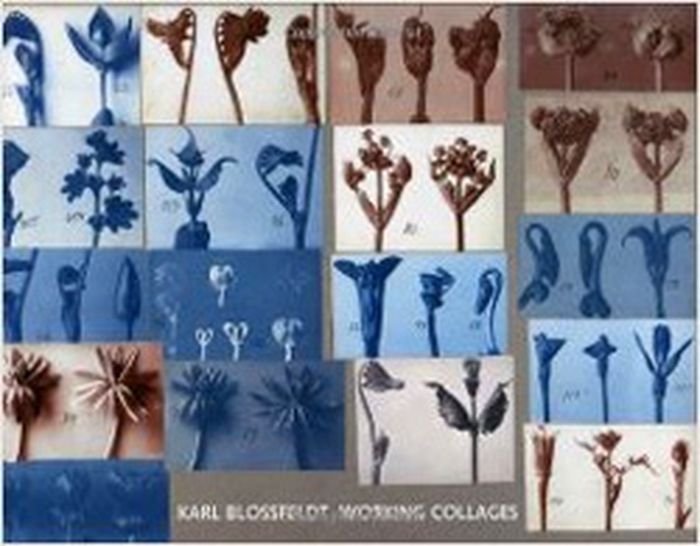
Karl Blossfeldt (1865-1932) achieved overnight fame in the late 1920s with the first publication of his photographs of plants. Those photographs, which revealed the inner structures of the organic forms, immediately made him a pioneer of New Objectivity, an innovative movement in art and photography of the 1920s and 1930s. Blossfeldt, however, was neither a trained photographer nor a botanist. He was a sculptor and art professor who did his photographic work to generate teaching material for his students. The publication of this book is the result of an extraordinary event, the 1997 discovery in Blossfeldt’s estate of sixty-one previously unknown collages, in virtually mint condition, of photographic contact prints arranged on large cardboard sheets. Blossfeldt apparently used these to study the relation and similarity of the photographs and to compare them graphically and aesthetically. On some Blossfeldt had made marks or handwritten notations. Others show lines for cropping. The collages, published here for the first time, unveil a hidden treasure of modern photography and cast fresh light on the systematic approach Blossfeldt used in his photographic studies. All collages are reproduced in four colours. Introducing the book is an essay by Swiss art historian Ulrike Meyer-Stump, a contributing curator to the exhibitions at the Kunsthaus in Zurich.
Karl Blossfeldt : working collages
Actions:
Price:
$71.95
(available to order)
Summary:
Karl Blossfeldt (1865-1932) achieved overnight fame in the late 1920s with the first publication of his photographs of plants. Those photographs, which revealed the inner structures of the organic forms, immediately made him a pioneer of New Objectivity, an innovative movement in art and photography of the 1920s and 1930s. Blossfeldt, however, was neither a trained photographer nor a botanist. He was a sculptor and art professor who did his photographic work to generate teaching material for his students. The publication of this book is the result of an extraordinary event, the 1997 discovery in Blossfeldt’s estate of sixty-one previously unknown collages, in virtually mint condition, of photographic contact prints arranged on large cardboard sheets. Blossfeldt apparently used these to study the relation and similarity of the photographs and to compare them graphically and aesthetically. On some Blossfeldt had made marks or handwritten notations. Others show lines for cropping. The collages, published here for the first time, unveil a hidden treasure of modern photography and cast fresh light on the systematic approach Blossfeldt used in his photographic studies. All collages are reproduced in four colours. Introducing the book is an essay by Swiss art historian Ulrike Meyer-Stump, a contributing curator to the exhibitions at the Kunsthaus in Zurich.
Form:
books
books
Publication:
March 2001, Cambridge, Mass.
March 2001, Cambridge, Mass.
Subject:
Photography monographs
Photography monographs
Form:
books
books
Title:
Mary Ellen Mark: Encounters
Mary Ellen Mark: Encounters
Actions:
Price:
$73.00
(available to order)
Summary:
The images of American photographer Mary Ellen Mark are icons of documentary and humanistic photography. Focusing her camera on the socially disadvantaged and those on the fringes of society, she told the stories of her protagonists without prejudice. In the context of the emerging women’s movement in the USA during the 1960s and 70s, and as a freelance photographer at a(...)
$73.00
(available to order)
Summary:
The images of American photographer Mary Ellen Mark are icons of documentary and humanistic photography. Focusing her camera on the socially disadvantaged and those on the fringes of society, she told the stories of her protagonists without prejudice. In the context of the emerging women’s movement in the USA during the 1960s and 70s, and as a freelance photographer at a(...)
Title:
Mary Ellen Mark: Encounters
Actions:
Price:
$73.00
(available to order)
Summary:
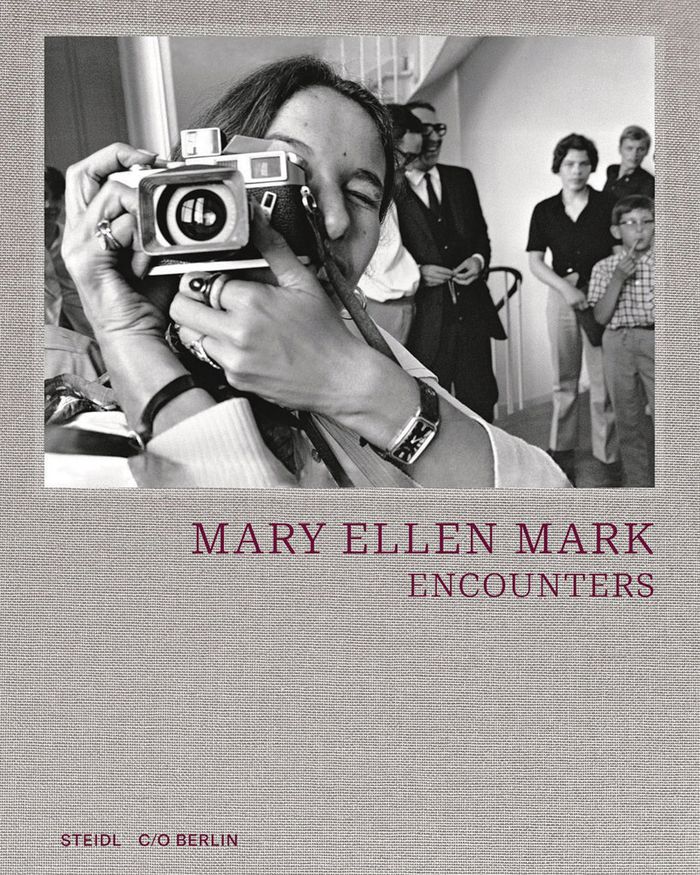
The images of American photographer Mary Ellen Mark are icons of documentary and humanistic photography. Focusing her camera on the socially disadvantaged and those on the fringes of society, she told the stories of her protagonists without prejudice. In the context of the emerging women’s movement in the USA during the 1960s and 70s, and as a freelance photographer at a time when print media was suffering its first major crisis, Mark fought her way to the forefront of female voices in photojournalism. Encounters provides an expansive cross-section of the photographer’s full body of work. The book focuses on five iconic series that contributed significantly to Mark’s reputation: Ward 81 in which she photographed residents at an Oregon psychiatric hospital for women; a reportage on prostitutes on Falkland Road in Mumbai; a tribute to Mother Teresa’s charitable work; Indian Circus, documenting traveling circus families; and the long-term project Streetwise, in which Mark followed the life of Erin Blackwell (Tiny) for more than 30 years. For the first time, this book contextualizes these works within Mark’s œuvre and presents them alongside original magazine spreads and archival material—including contact sheets, letters and notebooks—to reveal the breadth of her accomplishments and singularly compassionate eye.
Mary Ellen Mark: Encounters
Actions:
Price:
$73.00
(available to order)
Summary:
The images of American photographer Mary Ellen Mark are icons of documentary and humanistic photography. Focusing her camera on the socially disadvantaged and those on the fringes of society, she told the stories of her protagonists without prejudice. In the context of the emerging women’s movement in the USA during the 1960s and 70s, and as a freelance photographer at a time when print media was suffering its first major crisis, Mark fought her way to the forefront of female voices in photojournalism. Encounters provides an expansive cross-section of the photographer’s full body of work. The book focuses on five iconic series that contributed significantly to Mark’s reputation: Ward 81 in which she photographed residents at an Oregon psychiatric hospital for women; a reportage on prostitutes on Falkland Road in Mumbai; a tribute to Mother Teresa’s charitable work; Indian Circus, documenting traveling circus families; and the long-term project Streetwise, in which Mark followed the life of Erin Blackwell (Tiny) for more than 30 years. For the first time, this book contextualizes these works within Mark’s œuvre and presents them alongside original magazine spreads and archival material—including contact sheets, letters and notebooks—to reveal the breadth of her accomplishments and singularly compassionate eye.
Form:
books
books
Publication:
December 2023
December 2023
Subject:
Photography monographs
Photography monographs
Form:
books
books
Actions:
Price:
$46.95
(available to order)
Summary:
The author, Gerhard Mack, explores the architecture of each individual museum in detail, and highlights current tendencies in museum building in his seminal essay "Time Rediscovered". This is complemented by an introduction by Harald Szeemann, who(...)
$46.95
(available to order)
Summary:
The author, Gerhard Mack, explores the architecture of each individual museum in detail, and highlights current tendencies in museum building in his seminal essay "Time Rediscovered". This is complemented by an introduction by Harald Szeemann, who(...)
Title:
Art museums into the 21st century
Actions:
Price:
$46.95
(available to order)
Summary:
The author, Gerhard Mack, explores the architecture of each individual museum in detail, and highlights current tendencies in museum building in his seminal essay "Time Rediscovered". This is complemented by an introduction by Harald Szeemann, who as curator of the Kunsthaus in Zürich, was appointed director for Fine Arts at the Biennale in Venice this year. The museums examined in this book are Kunsthaus in Bregenz, the Museum of the Beyeler Fondation near Basel, the Guggenheim Museum in Bilbao, the Getty Center in Los Angeles and the Moderna und Arkitektur Museet in Stockholm all opening within a year of one another. The Tate Gallery of Modern Art which is being built by Herzog & de Meuron in a former power station on the Thames in London is to be completed in May 1999. Conversations with the architects Frank O. Gehry, Jacques Herzog, Richard Meier, Rafael Moneo, Jean Nouvel, Renzo Piano and Peter Zumthor reveal the wide spectrum of design concerns in contemporary museum design and building. In the Pavilion at the Beyeler Fondation, the interaction of nature, light and the presentation of art is an impressive experience. Jean Nouvel perceives the museum as a public place, bringing the various areas of 'urban chaos' into contact with each other. A total of eight projects are presented.
Art museums into the 21st century
Actions:
Price:
$46.95
(available to order)
Summary:
The author, Gerhard Mack, explores the architecture of each individual museum in detail, and highlights current tendencies in museum building in his seminal essay "Time Rediscovered". This is complemented by an introduction by Harald Szeemann, who as curator of the Kunsthaus in Zürich, was appointed director for Fine Arts at the Biennale in Venice this year. The museums examined in this book are Kunsthaus in Bregenz, the Museum of the Beyeler Fondation near Basel, the Guggenheim Museum in Bilbao, the Getty Center in Los Angeles and the Moderna und Arkitektur Museet in Stockholm all opening within a year of one another. The Tate Gallery of Modern Art which is being built by Herzog & de Meuron in a former power station on the Thames in London is to be completed in May 1999. Conversations with the architects Frank O. Gehry, Jacques Herzog, Richard Meier, Rafael Moneo, Jean Nouvel, Renzo Piano and Peter Zumthor reveal the wide spectrum of design concerns in contemporary museum design and building. In the Pavilion at the Beyeler Fondation, the interaction of nature, light and the presentation of art is an impressive experience. Jean Nouvel perceives the museum as a public place, bringing the various areas of 'urban chaos' into contact with each other. A total of eight projects are presented.
Form:
books
books
Publication:
January 1900, Basel
January 1900, Basel
Subject:
Museums and Universal Exhibitions
Museums and Universal Exhibitions
Form:
books
books
Title:
Terre rare
Terre rare
Actions:
Price:
$54.95
(available in store)
Summary:
Dans un ciel étoilé, une sphère éclatante traverse la nuit, attirant le regard de façon hypnotique. Alternant plans rapprochés et visions plus larges, le dessin de Clément Vuillier joue avec des contrastes extrêmes et des transformations graphiques pour suivre le voyage de cet objet mystérieux à travers le cosmos. La sphère s'approche enfin d'un astre rocailleux, sorte de(...)
$54.95
(available in store)
Summary:
Dans un ciel étoilé, une sphère éclatante traverse la nuit, attirant le regard de façon hypnotique. Alternant plans rapprochés et visions plus larges, le dessin de Clément Vuillier joue avec des contrastes extrêmes et des transformations graphiques pour suivre le voyage de cet objet mystérieux à travers le cosmos. La sphère s'approche enfin d'un astre rocailleux, sorte de(...)
Title:
Terre rare
Actions:
Price:
$54.95
(available in store)
Summary:
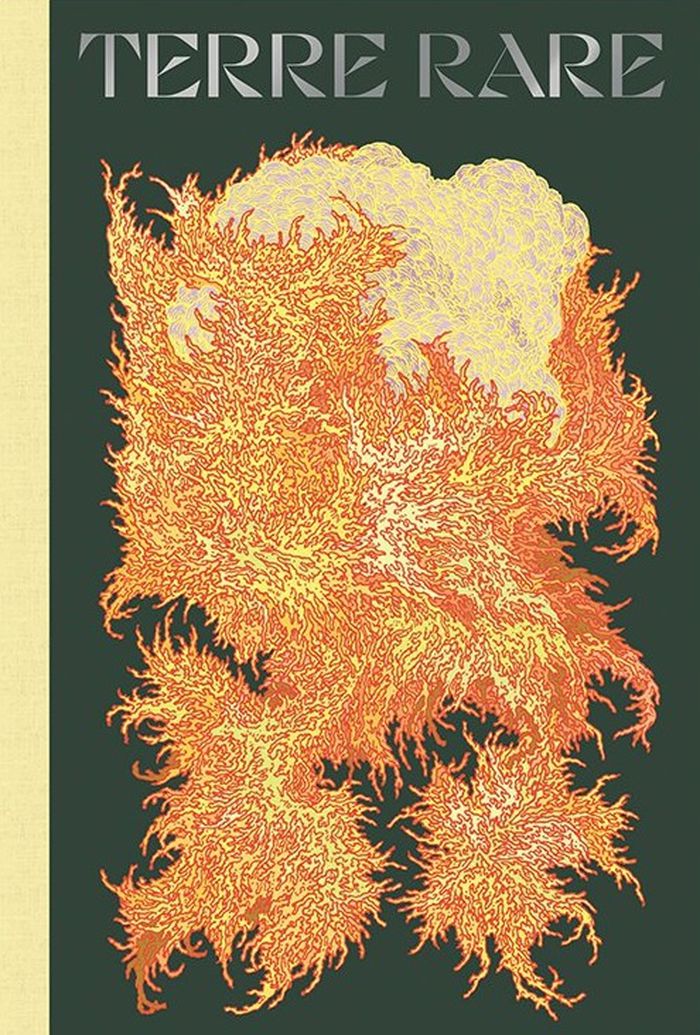
Dans un ciel étoilé, une sphère éclatante traverse la nuit, attirant le regard de façon hypnotique. Alternant plans rapprochés et visions plus larges, le dessin de Clément Vuillier joue avec des contrastes extrêmes et des transformations graphiques pour suivre le voyage de cet objet mystérieux à travers le cosmos. La sphère s'approche enfin d'un astre rocailleux, sorte de lune grise et morte en apparence. Pourtant, sous la surface de ce désert minéral, palpitent des pierres précieuses et colorées. Lorsqu'elle a fait le tour de cette lune aux trésors enfouis, la sphère s'arrête, s'ouvre, et déverse une multitude d'autres sphères, versions miniatures d'elle-même qui, au contact de la roche, explosent, laminant le sol, faisant jaillir des volcans de roches, jusqu'à la grande explosion finale, ne laissant derrière elles que des blocs éclatés dérivant en apesanteur. L'astre rocheux n'est plus, ses trésors enfouis non plus et, traversant cet amas de roches brisées, la sphère reprend son chemin vers le coeur mis à nu de l'astéroïde. Elle s'ouvre, s'en empare, avant de reprendre sa course céleste, ne laissant derrière être que des poussières flottant au milieu du vide, comme les ruines d'un monde détruit pour assouvir les besoins d'une civilisation dont nous ne saurons rien.
Terre rare
Actions:
Price:
$54.95
(available in store)
Summary:
Dans un ciel étoilé, une sphère éclatante traverse la nuit, attirant le regard de façon hypnotique. Alternant plans rapprochés et visions plus larges, le dessin de Clément Vuillier joue avec des contrastes extrêmes et des transformations graphiques pour suivre le voyage de cet objet mystérieux à travers le cosmos. La sphère s'approche enfin d'un astre rocailleux, sorte de lune grise et morte en apparence. Pourtant, sous la surface de ce désert minéral, palpitent des pierres précieuses et colorées. Lorsqu'elle a fait le tour de cette lune aux trésors enfouis, la sphère s'arrête, s'ouvre, et déverse une multitude d'autres sphères, versions miniatures d'elle-même qui, au contact de la roche, explosent, laminant le sol, faisant jaillir des volcans de roches, jusqu'à la grande explosion finale, ne laissant derrière elles que des blocs éclatés dérivant en apesanteur. L'astre rocheux n'est plus, ses trésors enfouis non plus et, traversant cet amas de roches brisées, la sphère reprend son chemin vers le coeur mis à nu de l'astéroïde. Elle s'ouvre, s'en empare, avant de reprendre sa course céleste, ne laissant derrière être que des poussières flottant au milieu du vide, comme les ruines d'un monde détruit pour assouvir les besoins d'une civilisation dont nous ne saurons rien.
Form:
books
books
Publication:
October 2022
October 2022
Subject:
Illustration
Illustration
Form:
books
books
Title:
Paul Rudolph : the late work
Paul Rudolph : the late work
Actions:
Price:
$62.00
(available to order)
Summary:
The light- and breeze-filled modern houses in Florida of the 1950s -- featured in Paul Rudolph: The Florida Houses -- and the hard-lined silhouette of Yale's Art and Architecture Building (1962) are the two images that come to mind when one thinks of Paul Rudolph. Yet few people know the work of the last decades of his life, from the 1970s through the 90s. Published here(...)
$62.00
(available to order)
Summary:
The light- and breeze-filled modern houses in Florida of the 1950s -- featured in Paul Rudolph: The Florida Houses -- and the hard-lined silhouette of Yale's Art and Architecture Building (1962) are the two images that come to mind when one thinks of Paul Rudolph. Yet few people know the work of the last decades of his life, from the 1970s through the 90s. Published here(...)
Title:
Paul Rudolph : the late work
Actions:
Price:
$62.00
(available to order)
Summary:
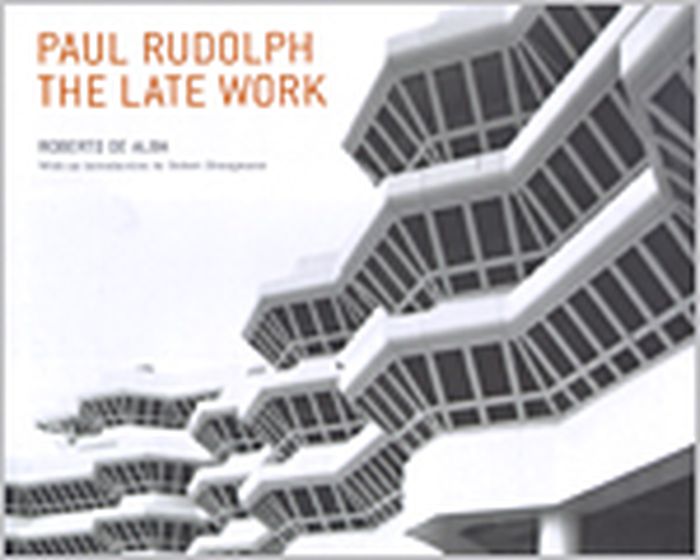
The light- and breeze-filled modern houses in Florida of the 1950s -- featured in Paul Rudolph: The Florida Houses -- and the hard-lined silhouette of Yale's Art and Architecture Building (1962) are the two images that come to mind when one thinks of Paul Rudolph. Yet few people know the work of the last decades of his life, from the 1970s through the 90s. Published here for the first time, Rudolph's final works are explored through his masterful pencil drawings, models, and photographs, as well as the last interview of his life with architect Peter Blake. In a book that considers these projects in the context of his early success, Roberto de Alba explores the architect's buildings designed from 1969 to 1996 and includes an astonishing variety of projects, many built, such as houses, towers, bungalows, chapels, corporate buildings, and urban plans of a monumental scale. All show the complicated interplay of space, light, and mass that are the trademarks of Rudolph's genius. Through de Alba's close contact with the architect before his death, Rudolph's own vision is conveyed in descriptive texts and accompanying images. Paul Rudolph: The Late Work is designed as a companion volume to The Florida Houses, and is the second in a planned three-volume set of the complete works of this legendary architect.
Paul Rudolph : the late work
Actions:
Price:
$62.00
(available to order)
Summary:
The light- and breeze-filled modern houses in Florida of the 1950s -- featured in Paul Rudolph: The Florida Houses -- and the hard-lined silhouette of Yale's Art and Architecture Building (1962) are the two images that come to mind when one thinks of Paul Rudolph. Yet few people know the work of the last decades of his life, from the 1970s through the 90s. Published here for the first time, Rudolph's final works are explored through his masterful pencil drawings, models, and photographs, as well as the last interview of his life with architect Peter Blake. In a book that considers these projects in the context of his early success, Roberto de Alba explores the architect's buildings designed from 1969 to 1996 and includes an astonishing variety of projects, many built, such as houses, towers, bungalows, chapels, corporate buildings, and urban plans of a monumental scale. All show the complicated interplay of space, light, and mass that are the trademarks of Rudolph's genius. Through de Alba's close contact with the architect before his death, Rudolph's own vision is conveyed in descriptive texts and accompanying images. Paul Rudolph: The Late Work is designed as a companion volume to The Florida Houses, and is the second in a planned three-volume set of the complete works of this legendary architect.
Form:
books
books
Publication:
February 2003, New York
February 2003, New York
Subject:
Architecture Monographs
Architecture Monographs


