


35831 Results
Level of archival description:
Project
Project
Reference number:
AP178.S1.1991.PR05
Description:
This project series documents the Urban plan for the city centre of Montreuil, France, also known as Coeur de ville. The office archivist identified this project as 24/90. The office assigned the date 1991 to this project. During the sixties and the seventies, the construction of a mall and office towers created a rupture in the downtown of Montreuil and caused traffic problems. Siza was chosen to find architectural and urban solutions to these challenges. Luis Mendes started as a collaborator at Siza's office and finished as the architect in charge for this project. Several other architects helped during the 20 years of the Coeur de ville project, including Laurent Beaudoin, Emanuelle Beaudoin, Michel Corajoud and Christian Devillers. The concept of substitution urbanization was introduced, in order to repair the rupture created in the sixties and seventies and to introduce urban continuity in Montreuil. The Coeur de ville project proposal included a new spacial reorganization, the Victor Hugo housing building, a theater, and public spaces. In 2006, the buildings C1 and C2 were built. The master plan purposes were to readapt the area to the singularity of the territory, reintroduce the cultural and commercial functions of the area, and to create connections between the districts. Due to a change of municipal administration in the middle of the project, only part of the plan was realized, including two housing buildings and part of the urban renewal. Siza received the Grand Prix spécial du jury de l'urbanisme in 2005 for his contribution to the Coeur de Ville project This project series includes two subseries. Plano Centre Ville de Montreuil and Edificio de Habitaçäo Montreuil (Hamo). The Plano Centre Ville de Montreuil documents the master plans and general documentations of the project. The Edificio de Habitaçäo Montreuil documents the housing project of Siza in Montreuil.
AP178.S1.1991.PR05
Description:
This project series documents the Urban plan for the city centre of Montreuil, France, also known as Coeur de ville. The office archivist identified this project as 24/90. The office assigned the date 1991 to this project. During the sixties and the seventies, the construction of a mall and office towers created a rupture in the downtown of Montreuil and caused traffic problems. Siza was chosen to find architectural and urban solutions to these challenges. Luis Mendes started as a collaborator at Siza's office and finished as the architect in charge for this project. Several other architects helped during the 20 years of the Coeur de ville project, including Laurent Beaudoin, Emanuelle Beaudoin, Michel Corajoud and Christian Devillers. The concept of substitution urbanization was introduced, in order to repair the rupture created in the sixties and seventies and to introduce urban continuity in Montreuil. The Coeur de ville project proposal included a new spacial reorganization, the Victor Hugo housing building, a theater, and public spaces. In 2006, the buildings C1 and C2 were built. The master plan purposes were to readapt the area to the singularity of the territory, reintroduce the cultural and commercial functions of the area, and to create connections between the districts. Due to a change of municipal administration in the middle of the project, only part of the plan was realized, including two housing buildings and part of the urban renewal. Siza received the Grand Prix spécial du jury de l'urbanisme in 2005 for his contribution to the Coeur de Ville project This project series includes two subseries. Plano Centre Ville de Montreuil and Edificio de Habitaçäo Montreuil (Hamo). The Plano Centre Ville de Montreuil documents the master plans and general documentations of the project. The Edificio de Habitaçäo Montreuil documents the housing project of Siza in Montreuil.
People:
Date:
1991-2003
1991-2003
Title:
Coeur de ville, Montreuil, France, (1991)
Actions:
AP178.S1.1991.PR05
Description:
This project series documents the Urban plan for the city centre of Montreuil, France, also known as Coeur de ville. The office archivist identified this project as 24/90. The office assigned the date 1991 to this project. During the sixties and the seventies, the construction of a mall and office towers created a rupture in the downtown of Montreuil and caused traffic problems. Siza was chosen to find architectural and urban solutions to these challenges. Luis Mendes started as a collaborator at Siza's office and finished as the architect in charge for this project. Several other architects helped during the 20 years of the Coeur de ville project, including Laurent Beaudoin, Emanuelle Beaudoin, Michel Corajoud and Christian Devillers. The concept of substitution urbanization was introduced, in order to repair the rupture created in the sixties and seventies and to introduce urban continuity in Montreuil. The Coeur de ville project proposal included a new spacial reorganization, the Victor Hugo housing building, a theater, and public spaces. In 2006, the buildings C1 and C2 were built. The master plan purposes were to readapt the area to the singularity of the territory, reintroduce the cultural and commercial functions of the area, and to create connections between the districts. Due to a change of municipal administration in the middle of the project, only part of the plan was realized, including two housing buildings and part of the urban renewal. Siza received the Grand Prix spécial du jury de l'urbanisme in 2005 for his contribution to the Coeur de Ville project This project series includes two subseries. Plano Centre Ville de Montreuil and Edificio de Habitaçäo Montreuil (Hamo). The Plano Centre Ville de Montreuil documents the master plans and general documentations of the project. The Edificio de Habitaçäo Montreuil documents the housing project of Siza in Montreuil.
Coeur de ville, Montreuil, France, (1991)
Actions:
AP178.S1.1991.PR05
Description:
This project series documents the Urban plan for the city centre of Montreuil, France, also known as Coeur de ville. The office archivist identified this project as 24/90. The office assigned the date 1991 to this project. During the sixties and the seventies, the construction of a mall and office towers created a rupture in the downtown of Montreuil and caused traffic problems. Siza was chosen to find architectural and urban solutions to these challenges. Luis Mendes started as a collaborator at Siza's office and finished as the architect in charge for this project. Several other architects helped during the 20 years of the Coeur de ville project, including Laurent Beaudoin, Emanuelle Beaudoin, Michel Corajoud and Christian Devillers. The concept of substitution urbanization was introduced, in order to repair the rupture created in the sixties and seventies and to introduce urban continuity in Montreuil. The Coeur de ville project proposal included a new spacial reorganization, the Victor Hugo housing building, a theater, and public spaces. In 2006, the buildings C1 and C2 were built. The master plan purposes were to readapt the area to the singularity of the territory, reintroduce the cultural and commercial functions of the area, and to create connections between the districts. Due to a change of municipal administration in the middle of the project, only part of the plan was realized, including two housing buildings and part of the urban renewal. Siza received the Grand Prix spécial du jury de l'urbanisme in 2005 for his contribution to the Coeur de Ville project This project series includes two subseries. Plano Centre Ville de Montreuil and Edificio de Habitaçäo Montreuil (Hamo). The Plano Centre Ville de Montreuil documents the master plans and general documentations of the project. The Edificio de Habitaçäo Montreuil documents the housing project of Siza in Montreuil.
Level of archival description:
Project
Project
Date:
1991-2003
1991-2003
People:
Form:
textual records
textual records
Title:
PCM / Oct. 1978
PCM / Oct. 1978
Actions:
Reference number:
ARCH267580
Description:
This group consists of notes and information about the architectural team PLLL (Prus; LeMoyne & Associates; Lebelle, Marchand, Geoffroy; Hébert & Lalonde) and about the client, the Ministrère des Travaux Publics et de l'Approvisionnement du Québec.
ARCH267580
Description:
This group consists of notes and information about the architectural team PLLL (Prus; LeMoyne & Associates; Lebelle, Marchand, Geoffroy; Hébert & Lalonde) and about the client, the Ministrère des Travaux Publics et de l'Approvisionnement du Québec.
People:
Date:
1978
1978
Title:
PCM / Oct. 1978
Actions:
ARCH267580
Description:
This group consists of notes and information about the architectural team PLLL (Prus; LeMoyne & Associates; Lebelle, Marchand, Geoffroy; Hébert & Lalonde) and about the client, the Ministrère des Travaux Publics et de l'Approvisionnement du Québec.
PCM / Oct. 1978
Actions:
ARCH267580
Description:
This group consists of notes and information about the architectural team PLLL (Prus; LeMoyne & Associates; Lebelle, Marchand, Geoffroy; Hébert & Lalonde) and about the client, the Ministrère des Travaux Publics et de l'Approvisionnement du Québec.
Form:
textual records
textual records
Date:
1978
1978
People:
Form:
archives
Level of archival description:
Fonds
archives
Level of archival description:
Fonds
Title:
Luc Laporte fonds
Luc Laporte fonds
Actions:
Reference number:
AP068
Synopsis:
Le Fond Luc Laporte documente les propositions et les réalisations issus de l'atelier de Luc Laporte pour le secteur est du Vieux-Port de Montréal.
AP068
Synopsis:
Le Fond Luc Laporte documente les propositions et les réalisations issus de l'atelier de Luc Laporte pour le secteur est du Vieux-Port de Montréal.
People:
Date:
1991-1993
1991-1993
Title:
Luc Laporte fonds
Actions:
AP068
Synopsis:
Le Fond Luc Laporte documente les propositions et les réalisations issus de l'atelier de Luc Laporte pour le secteur est du Vieux-Port de Montréal.
Luc Laporte fonds
Actions:
AP068
Synopsis:
Le Fond Luc Laporte documente les propositions et les réalisations issus de l'atelier de Luc Laporte pour le secteur est du Vieux-Port de Montréal.
Form:
archives
Level of archival description:
Fonds
archives
Level of archival description:
Fonds
Date:
1991-1993
1991-1993
People:
Form:
textual records
textual records
Actions:
Reference number:
ARCH258634
Description:
Correspondance avec des fournisseurs et J. A. A. Brodeur, président du Comité exécutif et H. A. Terrault, directeur des Travaux publics. Comprend aussi des rapports de la Commission des Architectes, une liste des soumissions, des coupures de presse.
ARCH258634
Description:
Correspondance avec des fournisseurs et J. A. A. Brodeur, président du Comité exécutif et H. A. Terrault, directeur des Travaux publics. Comprend aussi des rapports de la Commission des Architectes, une liste des soumissions, des coupures de presse.
People:
Date:
1922-1924
1922-1924
Title:
Correspondance avec des fournisseurs
Actions:
ARCH258634
Description:
Correspondance avec des fournisseurs et J. A. A. Brodeur, président du Comité exécutif et H. A. Terrault, directeur des Travaux publics. Comprend aussi des rapports de la Commission des Architectes, une liste des soumissions, des coupures de presse.
Correspondance avec des fournisseurs
Actions:
ARCH258634
Description:
Correspondance avec des fournisseurs et J. A. A. Brodeur, président du Comité exécutif et H. A. Terrault, directeur des Travaux publics. Comprend aussi des rapports de la Commission des Architectes, une liste des soumissions, des coupures de presse.
Form:
textual records
textual records
Date:
1922-1924
1922-1924
People:
Form:
works of art
works of art
Actions:
Reference number:
DR1974:0002:029:001-044
Description:
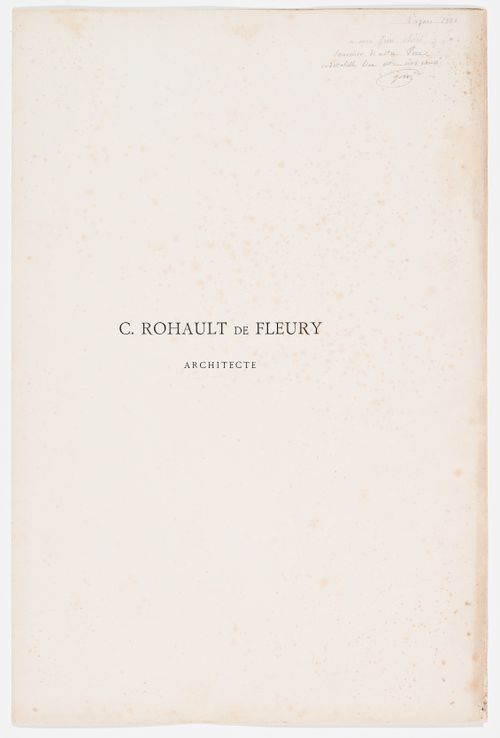
- This published portfolio contains 42 prints of Charles Rohault de Fleury's architectural works - mostly plans, elevations, sections and detail drawings, but also some perspective views, and a biographical note on the architect. Prints for domestic architecture in Paris include: Hôtel Soltykoff, Hôtel Sauvage, Hôtels Fontenilliat, and an hôtel on avenue Montaigne. There are two photogravures by P. Dujardin of the interior of Hôtel Sauvage. Prints for public buildings in Paris include: the Muséum national d'histoire naturelle, the Théâtre-Italien, the Hippodrome national, the façade of Pavillon de Rohan, a plan for the opera house for the Théâtre impérial de l'opéra, and the Chambre des Notaires. The album contains a print of two tombs and a mausoleum, a print for the Hôtel de Prefecture, Poitiers, a plan for Saint-Augustin, Paris, and a photogravure of Charles Rohault de Fleury in profile.
DR1974:0002:029:001-044
Description:
- This published portfolio contains 42 prints of Charles Rohault de Fleury's architectural works - mostly plans, elevations, sections and detail drawings, but also some perspective views, and a biographical note on the architect. Prints for domestic architecture in Paris include: Hôtel Soltykoff, Hôtel Sauvage, Hôtels Fontenilliat, and an hôtel on avenue Montaigne. There are two photogravures by P. Dujardin of the interior of Hôtel Sauvage. Prints for public buildings in Paris include: the Muséum national d'histoire naturelle, the Théâtre-Italien, the Hippodrome national, the façade of Pavillon de Rohan, a plan for the opera house for the Théâtre impérial de l'opéra, and the Chambre des Notaires. The album contains a print of two tombs and a mausoleum, a print for the Hôtel de Prefecture, Poitiers, a plan for Saint-Augustin, Paris, and a photogravure of Charles Rohault de Fleury in profile.
People:
Subject:
architecture, landscape architecture, engineering
architecture, landscape architecture, engineering
Date:
published 1884
published 1884
Title:
OEUVRE / DE / C. ROHAULT DE FLEURY / ARCHITECTE
Actions:
DR1974:0002:029:001-044
Description:
- This published portfolio contains 42 prints of Charles Rohault de Fleury's architectural works - mostly plans, elevations, sections and detail drawings, but also some perspective views, and a biographical note on the architect. Prints for domestic architecture in Paris include: Hôtel Soltykoff, Hôtel Sauvage, Hôtels Fontenilliat, and an hôtel on avenue Montaigne. There are two photogravures by P. Dujardin of the interior of Hôtel Sauvage. Prints for public buildings in Paris include: the Muséum national d'histoire naturelle, the Théâtre-Italien, the Hippodrome national, the façade of Pavillon de Rohan, a plan for the opera house for the Théâtre impérial de l'opéra, and the Chambre des Notaires. The album contains a print of two tombs and a mausoleum, a print for the Hôtel de Prefecture, Poitiers, a plan for Saint-Augustin, Paris, and a photogravure of Charles Rohault de Fleury in profile.
OEUVRE / DE / C. ROHAULT DE FLEURY / ARCHITECTE
Actions:
DR1974:0002:029:001-044
Description:
- This published portfolio contains 42 prints of Charles Rohault de Fleury's architectural works - mostly plans, elevations, sections and detail drawings, but also some perspective views, and a biographical note on the architect. Prints for domestic architecture in Paris include: Hôtel Soltykoff, Hôtel Sauvage, Hôtels Fontenilliat, and an hôtel on avenue Montaigne. There are two photogravures by P. Dujardin of the interior of Hôtel Sauvage. Prints for public buildings in Paris include: the Muséum national d'histoire naturelle, the Théâtre-Italien, the Hippodrome national, the façade of Pavillon de Rohan, a plan for the opera house for the Théâtre impérial de l'opéra, and the Chambre des Notaires. The album contains a print of two tombs and a mausoleum, a print for the Hôtel de Prefecture, Poitiers, a plan for Saint-Augustin, Paris, and a photogravure of Charles Rohault de Fleury in profile.
Form:
works of art
works of art
Date:
published 1884
published 1884
People:
Subject:
architecture, landscape architecture, engineering
architecture, landscape architecture, engineering
Form:
events
events
Title:
Learning from... Los Angeles
Learning from... Los Angeles
Actions:
Description:
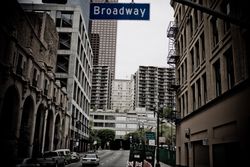
Los Angeles-based historian and tour guide Richard Schave examines developments in Los Angeles in the 35 years since the landmark urban tour film Reyner Banham Loves Los Angeles (UK,1972). Schave, a former student of Banham, elaborates on his professor’s research by showing excerpts of the film in comparison with his own documentary photography. In particular, he explores(...)
Los Angeles-based historian and tour guide Richard Schave examines developments in Los Angeles in the 35 years since the landmark urban tour film Reyner Banham Loves Los Angeles (UK,1972). Schave, a former student of Banham, elaborates on his professor’s research by showing excerpts of the film in comparison with his own documentary photography. In particular, he explores(...)
Location:
Paul Desmarais Theatre
Paul Desmarais Theatre
Date:
28 May 2009
28 May 2009
Title:
Learning from... Los Angeles
Actions:
Description:
Los Angeles-based historian and tour guide Richard Schave examines developments in Los Angeles in the 35 years since the landmark urban tour film Reyner Banham Loves Los Angeles (UK,1972). Schave, a former student of Banham, elaborates on his professor’s research by showing excerpts of the film in comparison with his own documentary photography. In particular, he explores(...)
Learning from... Los Angeles
Actions:
Description:
Los Angeles-based historian and tour guide Richard Schave examines developments in Los Angeles in the 35 years since the landmark urban tour film Reyner Banham Loves Los Angeles (UK,1972). Schave, a former student of Banham, elaborates on his professor’s research by showing excerpts of the film in comparison with his own documentary photography. In particular, he explores(...)
Form:
events
events
Date:
28 May 2009
28 May 2009
Location:
Paul Desmarais Theatre
Paul Desmarais Theatre
Level of archival description:
Project
Project
Reference number:
AP178.S1.1995.PR07
Description:
This project series documents the Renovação e extensão do Museu Stedelijk in Amsterdam, The Netherlands. While the records were held in the office’s archives this project was assigned the number 57/90. The office assigned the date 1995 to this project. At the beginning of the nineties, Rem Koolhaas, Wim Quist, Carel Weeber, and Robert Venturi were invited to propose a design for the extension and renovations of the Stedelijk Museum. Robert Venturi was the architect selected, but the project was suspended in 1993 due to the infeasibility of the program and budget restrictions. The following year, five applicants, including Siza, were asked to present a new design to a committee. In December 1995, Siza was officially announced as the new design architect for the project by the city of Amsterdam. The firm A+D+P was selected as the executive architect. Siza's first proposal was presented in 1998. His master plan included the demolition of the Marmottenhuis, the renovation of the 19th-century patios, and the relocation of the public toilets to the basement in order to create exhibition halls. The master plan also included the construction of three new wings and two underground passages to connect the newer and older buildings. A new wing, located to one side of Sandbergplein, included offices in the basement and on the ground floor as well as exhibition halls on the first floor. A new building surrounding the museum garden included storage space in the basement, a restaurant on the ground floor, and exhibition halls at the first floor. Construction work was projected to start in June 2000, however due to budget restrictions the project was not realized and a new competition was held in 2004. The firm Benthem Crouwel Architects realized the project. Documenting this project are sketches, studies, preliminary drawings, plans, and working drawings. Textual materials include project documentation and correspondence. Photographic materials document the models and project site.
AP178.S1.1995.PR07
Description:
This project series documents the Renovação e extensão do Museu Stedelijk in Amsterdam, The Netherlands. While the records were held in the office’s archives this project was assigned the number 57/90. The office assigned the date 1995 to this project. At the beginning of the nineties, Rem Koolhaas, Wim Quist, Carel Weeber, and Robert Venturi were invited to propose a design for the extension and renovations of the Stedelijk Museum. Robert Venturi was the architect selected, but the project was suspended in 1993 due to the infeasibility of the program and budget restrictions. The following year, five applicants, including Siza, were asked to present a new design to a committee. In December 1995, Siza was officially announced as the new design architect for the project by the city of Amsterdam. The firm A+D+P was selected as the executive architect. Siza's first proposal was presented in 1998. His master plan included the demolition of the Marmottenhuis, the renovation of the 19th-century patios, and the relocation of the public toilets to the basement in order to create exhibition halls. The master plan also included the construction of three new wings and two underground passages to connect the newer and older buildings. A new wing, located to one side of Sandbergplein, included offices in the basement and on the ground floor as well as exhibition halls on the first floor. A new building surrounding the museum garden included storage space in the basement, a restaurant on the ground floor, and exhibition halls at the first floor. Construction work was projected to start in June 2000, however due to budget restrictions the project was not realized and a new competition was held in 2004. The firm Benthem Crouwel Architects realized the project. Documenting this project are sketches, studies, preliminary drawings, plans, and working drawings. Textual materials include project documentation and correspondence. Photographic materials document the models and project site.
People:
Date:
1989-2002
1989-2002
Title:
Renovação e extensão do Museu Stedelijk [Restoration and extension of Stedelijk Museum], Amsterdam, The Netherlands (1995)
Actions:
AP178.S1.1995.PR07
Description:
This project series documents the Renovação e extensão do Museu Stedelijk in Amsterdam, The Netherlands. While the records were held in the office’s archives this project was assigned the number 57/90. The office assigned the date 1995 to this project. At the beginning of the nineties, Rem Koolhaas, Wim Quist, Carel Weeber, and Robert Venturi were invited to propose a design for the extension and renovations of the Stedelijk Museum. Robert Venturi was the architect selected, but the project was suspended in 1993 due to the infeasibility of the program and budget restrictions. The following year, five applicants, including Siza, were asked to present a new design to a committee. In December 1995, Siza was officially announced as the new design architect for the project by the city of Amsterdam. The firm A+D+P was selected as the executive architect. Siza's first proposal was presented in 1998. His master plan included the demolition of the Marmottenhuis, the renovation of the 19th-century patios, and the relocation of the public toilets to the basement in order to create exhibition halls. The master plan also included the construction of three new wings and two underground passages to connect the newer and older buildings. A new wing, located to one side of Sandbergplein, included offices in the basement and on the ground floor as well as exhibition halls on the first floor. A new building surrounding the museum garden included storage space in the basement, a restaurant on the ground floor, and exhibition halls at the first floor. Construction work was projected to start in June 2000, however due to budget restrictions the project was not realized and a new competition was held in 2004. The firm Benthem Crouwel Architects realized the project. Documenting this project are sketches, studies, preliminary drawings, plans, and working drawings. Textual materials include project documentation and correspondence. Photographic materials document the models and project site.
Renovação e extensão do Museu Stedelijk [Restoration and extension of Stedelijk Museum], Amsterdam, The Netherlands (1995)
Actions:
AP178.S1.1995.PR07
Description:
This project series documents the Renovação e extensão do Museu Stedelijk in Amsterdam, The Netherlands. While the records were held in the office’s archives this project was assigned the number 57/90. The office assigned the date 1995 to this project. At the beginning of the nineties, Rem Koolhaas, Wim Quist, Carel Weeber, and Robert Venturi were invited to propose a design for the extension and renovations of the Stedelijk Museum. Robert Venturi was the architect selected, but the project was suspended in 1993 due to the infeasibility of the program and budget restrictions. The following year, five applicants, including Siza, were asked to present a new design to a committee. In December 1995, Siza was officially announced as the new design architect for the project by the city of Amsterdam. The firm A+D+P was selected as the executive architect. Siza's first proposal was presented in 1998. His master plan included the demolition of the Marmottenhuis, the renovation of the 19th-century patios, and the relocation of the public toilets to the basement in order to create exhibition halls. The master plan also included the construction of three new wings and two underground passages to connect the newer and older buildings. A new wing, located to one side of Sandbergplein, included offices in the basement and on the ground floor as well as exhibition halls on the first floor. A new building surrounding the museum garden included storage space in the basement, a restaurant on the ground floor, and exhibition halls at the first floor. Construction work was projected to start in June 2000, however due to budget restrictions the project was not realized and a new competition was held in 2004. The firm Benthem Crouwel Architects realized the project. Documenting this project are sketches, studies, preliminary drawings, plans, and working drawings. Textual materials include project documentation and correspondence. Photographic materials document the models and project site.
Level of archival description:
Project
Project
Date:
1989-2002
1989-2002
People:
Level of archival description:
Project
Project
Actions:
Reference number:
AP013.S1.D251
Description:
File documents an executed project for hospital additions in Halifax, Nova Scotia. Material in this file was produced between 1944 and 1948. File contains index cards, survey drawings, owner's drawings, preliminary and design development drawings, preliminary drawings, structural drawings, working drawings, detail drawings, mechanical drawings, electrical drawings, photographs, and textual documents.
AP013.S1.D251
Description:
File documents an executed project for hospital additions in Halifax, Nova Scotia. Material in this file was produced between 1944 and 1948. File contains index cards, survey drawings, owner's drawings, preliminary and design development drawings, preliminary drawings, structural drawings, working drawings, detail drawings, mechanical drawings, electrical drawings, photographs, and textual documents.
People:
Date:
1944-1948
1944-1948
Title:
Building Additions to Camp Hill Hospital, Ross Millar Memorial Infirmary
Actions:
AP013.S1.D251
Description:
File documents an executed project for hospital additions in Halifax, Nova Scotia. Material in this file was produced between 1944 and 1948. File contains index cards, survey drawings, owner's drawings, preliminary and design development drawings, preliminary drawings, structural drawings, working drawings, detail drawings, mechanical drawings, electrical drawings, photographs, and textual documents.
Building Additions to Camp Hill Hospital, Ross Millar Memorial Infirmary
Actions:
AP013.S1.D251
Description:
File documents an executed project for hospital additions in Halifax, Nova Scotia. Material in this file was produced between 1944 and 1948. File contains index cards, survey drawings, owner's drawings, preliminary and design development drawings, preliminary drawings, structural drawings, working drawings, detail drawings, mechanical drawings, electrical drawings, photographs, and textual documents.
Level of archival description:
Project
Project
Date:
1944-1948
1944-1948
People:
Form:
events
events
Actions:
Description:
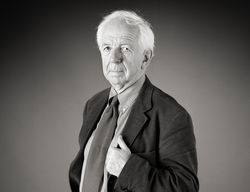
Hubert Damisch, 2003-2004 CCA Mellon Senior Fellow, examines Blur – the cloud building created by New York architects Diller + Scofidio on lake Neuchâtel in Switzerland, which is the most recent and radical expression of the desire for fluidity and evanescence in architecture – and the consequences that it might have on the future of structural thought. Damisch examines(...)
Hubert Damisch, 2003-2004 CCA Mellon Senior Fellow, examines Blur – the cloud building created by New York architects Diller + Scofidio on lake Neuchâtel in Switzerland, which is the most recent and radical expression of the desire for fluidity and evanescence in architecture – and the consequences that it might have on the future of structural thought. Damisch examines(...)
Location:
Paul Desmarais Theatre
Paul Desmarais Theatre
Date:
8 May 2003
8 May 2003
Title:
Hubert Damisch: “Effacer l’architecture?”
Actions:
Description:
Hubert Damisch, 2003-2004 CCA Mellon Senior Fellow, examines Blur – the cloud building created by New York architects Diller + Scofidio on lake Neuchâtel in Switzerland, which is the most recent and radical expression of the desire for fluidity and evanescence in architecture – and the consequences that it might have on the future of structural thought. Damisch examines(...)
Hubert Damisch: “Effacer l’architecture?”
Actions:
Description:
Hubert Damisch, 2003-2004 CCA Mellon Senior Fellow, examines Blur – the cloud building created by New York architects Diller + Scofidio on lake Neuchâtel in Switzerland, which is the most recent and radical expression of the desire for fluidity and evanescence in architecture – and the consequences that it might have on the future of structural thought. Damisch examines(...)
Form:
events
events
Date:
8 May 2003
8 May 2003
Location:
Paul Desmarais Theatre
Paul Desmarais Theatre
Form:
archives
Level of archival description:
Fonds
archives
Level of archival description:
Fonds
Title:
Aditya Prakash fonds
Aditya Prakash fonds
Reference number:
AP206
Synopsis:
The Aditya Prakash fonds documents the professional practice of modernist Indian architect Aditya Prakash from his studies in London in 1947 to his death in 2008. His seminal work as a junior architect on the Chandigarh Capitol Project in the 1950s is recorded along with documentation from his solo career after 1960, including approximately 82 architectural projects. His professional work as an artist, photographer, writer, academic and theatre enthusiast are also well documented through drawings, photographic materials and textual records.
AP206
Synopsis:
The Aditya Prakash fonds documents the professional practice of modernist Indian architect Aditya Prakash from his studies in London in 1947 to his death in 2008. His seminal work as a junior architect on the Chandigarh Capitol Project in the 1950s is recorded along with documentation from his solo career after 1960, including approximately 82 architectural projects. His professional work as an artist, photographer, writer, academic and theatre enthusiast are also well documented through drawings, photographic materials and textual records.
People:
Date:
1947-2008
1947-2008
Title:
Aditya Prakash fonds
Actions:
AP206
Synopsis:
The Aditya Prakash fonds documents the professional practice of modernist Indian architect Aditya Prakash from his studies in London in 1947 to his death in 2008. His seminal work as a junior architect on the Chandigarh Capitol Project in the 1950s is recorded along with documentation from his solo career after 1960, including approximately 82 architectural projects. His professional work as an artist, photographer, writer, academic and theatre enthusiast are also well documented through drawings, photographic materials and textual records.
Aditya Prakash fonds
Actions:
AP206
Synopsis:
The Aditya Prakash fonds documents the professional practice of modernist Indian architect Aditya Prakash from his studies in London in 1947 to his death in 2008. His seminal work as a junior architect on the Chandigarh Capitol Project in the 1950s is recorded along with documentation from his solo career after 1960, including approximately 82 architectural projects. His professional work as an artist, photographer, writer, academic and theatre enthusiast are also well documented through drawings, photographic materials and textual records.
Form:
archives
Level of archival description:
Fonds
archives
Level of archival description:
Fonds
Date:
1947-2008
1947-2008
People:


