


1124 Results
Form:
audio
audio
Actions:
Description:
1 online resource.
Author:
Subject:
Publication:
[Place of publication not identified] : Lateral Addition, 2018.
[Place of publication not identified] : Lateral Addition, 2018.
Form:
audio
audio
Publication:
[Place of publication not identified] : Lateral Addition, 2018.
[Place of publication not identified] : Lateral Addition, 2018.
Author:
Subject:
Form:
books
books

Actions:
Price:
$45.50
(available to order)
Summary:
In the 1960s art fell out of time; both artists and critics lost their temporal bearings in response to what E. M. Cioran called "not being entitled to time." This anxiety and uneasiness about time, which Pamela Lee calls "chronophobia," cut across movements, media, and genres, and was figured in works ranging from kinetic sculptures to Andy Warhol films. Despite its(...)
$45.50
(available to order)
Summary:
In the 1960s art fell out of time; both artists and critics lost their temporal bearings in response to what E. M. Cioran called "not being entitled to time." This anxiety and uneasiness about time, which Pamela Lee calls "chronophobia," cut across movements, media, and genres, and was figured in works ranging from kinetic sculptures to Andy Warhol films. Despite its(...)
Title:
Chronophobia : on time in the art of the 1960's
Actions:
Price:
$45.50
(available to order)
Summary:
In the 1960s art fell out of time; both artists and critics lost their temporal bearings in response to what E. M. Cioran called "not being entitled to time." This anxiety and uneasiness about time, which Pamela Lee calls "chronophobia," cut across movements, media, and genres, and was figured in works ranging from kinetic sculptures to Andy Warhol films. Despite its pervasiveness, the subject of time and 1960s art has gone largely unexamined in historical accounts of the period. Chronophobia is the first critical attempt to define this obsession and analyze it in relation to art and technology. Lee discusses the chronophobia of art relative to the emergence of the Information Age in postwar culture. The accompanying rapid technological transformations, including the advent of computers and automation processes, produced for many an acute sense of historical unknowing; the seemingly accelerated pace of life began to outstrip any attempts to make sense of the present. Lee sees the attitude of 1960s art to time as a historical prelude to our current fixation on time and speed within digital culture. Reflecting upon the 1960s cultural anxiety about temporality, she argues, helps us historicize our current relation to technology and time.
Chronophobia : on time in the art of the 1960's
Actions:
Price:
$45.50
(available to order)
Summary:
In the 1960s art fell out of time; both artists and critics lost their temporal bearings in response to what E. M. Cioran called "not being entitled to time." This anxiety and uneasiness about time, which Pamela Lee calls "chronophobia," cut across movements, media, and genres, and was figured in works ranging from kinetic sculptures to Andy Warhol films. Despite its pervasiveness, the subject of time and 1960s art has gone largely unexamined in historical accounts of the period. Chronophobia is the first critical attempt to define this obsession and analyze it in relation to art and technology. Lee discusses the chronophobia of art relative to the emergence of the Information Age in postwar culture. The accompanying rapid technological transformations, including the advent of computers and automation processes, produced for many an acute sense of historical unknowing; the seemingly accelerated pace of life began to outstrip any attempts to make sense of the present. Lee sees the attitude of 1960s art to time as a historical prelude to our current fixation on time and speed within digital culture. Reflecting upon the 1960s cultural anxiety about temporality, she argues, helps us historicize our current relation to technology and time.
Form:
books
books
Publication:
May 2004, Cambridge, Mass.
May 2004, Cambridge, Mass.
Subject:
Contemporary Art Monographs
Contemporary Art Monographs
Form:
books
books
Price:
$32.95
(available to order)
Summary:
Cell phones, automatic teller machines, and the Internet have incontrovertibly become part of our daily lives, indistinguishable from other components of our habitual everyday activity. Life does not seem to have been fundamentally changed by these hi-tech, information-giving tools of convenience--or has it? Have we, unawares, become accustomed to a new way of living? And(...)
$32.95
(available to order)
Summary:
Cell phones, automatic teller machines, and the Internet have incontrovertibly become part of our daily lives, indistinguishable from other components of our habitual everyday activity. Life does not seem to have been fundamentally changed by these hi-tech, information-giving tools of convenience--or has it? Have we, unawares, become accustomed to a new way of living? And(...)
Subject:
Architectural Theory
Architectural Theory
Publication:
September 2004, Berlin
September 2004, Berlin
Title:
Dot city : relational urbanism and new media in the Bauhaus Kolleg
Actions:
Price:
$32.95
(available to order)
Summary:
Cell phones, automatic teller machines, and the Internet have incontrovertibly become part of our daily lives, indistinguishable from other components of our habitual everyday activity. Life does not seem to have been fundamentally changed by these hi-tech, information-giving tools of convenience--or has it? Have we, unawares, become accustomed to a new way of living? And how can designers make creative use of these new digital possibilities? This publication of the Fourth International Bauhaus Kolleg--a year-long thematic graduate session run by the Bauhaus Dessau Foundation--offers strategies for employing digital media to integrate the unpredictable and the unplanned into urban existence. "Dot.City" asks and answers many questions: Can the use of information and communication technology counteract the continuous processes of devaluation, the loss of urban identity, the lack of multifunctional networks? Can the activation and implementation of new social techniques of knowledge production compensate for missing economical impulses and functions? How do such processes generate new species of urban values? Is it possible to re-program local social resources using intelligent network technologies? What do urban action areas designed for this purpose look like? And how can urban information spheres and physical urban spaces penetrate each other?
Dot city : relational urbanism and new media in the Bauhaus Kolleg
Actions:
Price:
$32.95
(available to order)
Summary:
Cell phones, automatic teller machines, and the Internet have incontrovertibly become part of our daily lives, indistinguishable from other components of our habitual everyday activity. Life does not seem to have been fundamentally changed by these hi-tech, information-giving tools of convenience--or has it? Have we, unawares, become accustomed to a new way of living? And how can designers make creative use of these new digital possibilities? This publication of the Fourth International Bauhaus Kolleg--a year-long thematic graduate session run by the Bauhaus Dessau Foundation--offers strategies for employing digital media to integrate the unpredictable and the unplanned into urban existence. "Dot.City" asks and answers many questions: Can the use of information and communication technology counteract the continuous processes of devaluation, the loss of urban identity, the lack of multifunctional networks? Can the activation and implementation of new social techniques of knowledge production compensate for missing economical impulses and functions? How do such processes generate new species of urban values? Is it possible to re-program local social resources using intelligent network technologies? What do urban action areas designed for this purpose look like? And how can urban information spheres and physical urban spaces penetrate each other?
Form:
books
books
Publication:
September 2004, Berlin
September 2004, Berlin
Subject:
Architectural Theory
Architectural Theory
Form:
books
books
Actions:
Price:
$56.00
(available in store)
Summary:
''Collective Intelligence'' is an innovative monograph that documents the last ten years of Polish-born conceptual artist Agnieszka Kurant’s interdisciplinary practice. It includes newly commissioned texts by renowned thinkers in science, philosophy, art, technology, anthropology, and economics. Kurant’s experimental work investigates collective and nonhuman(...)
$56.00
(available in store)
Summary:
''Collective Intelligence'' is an innovative monograph that documents the last ten years of Polish-born conceptual artist Agnieszka Kurant’s interdisciplinary practice. It includes newly commissioned texts by renowned thinkers in science, philosophy, art, technology, anthropology, and economics. Kurant’s experimental work investigates collective and nonhuman(...)
Subject:
Contemporary Art Monographs
Contemporary Art Monographs
Publication:
December 2025
December 2025
Title:
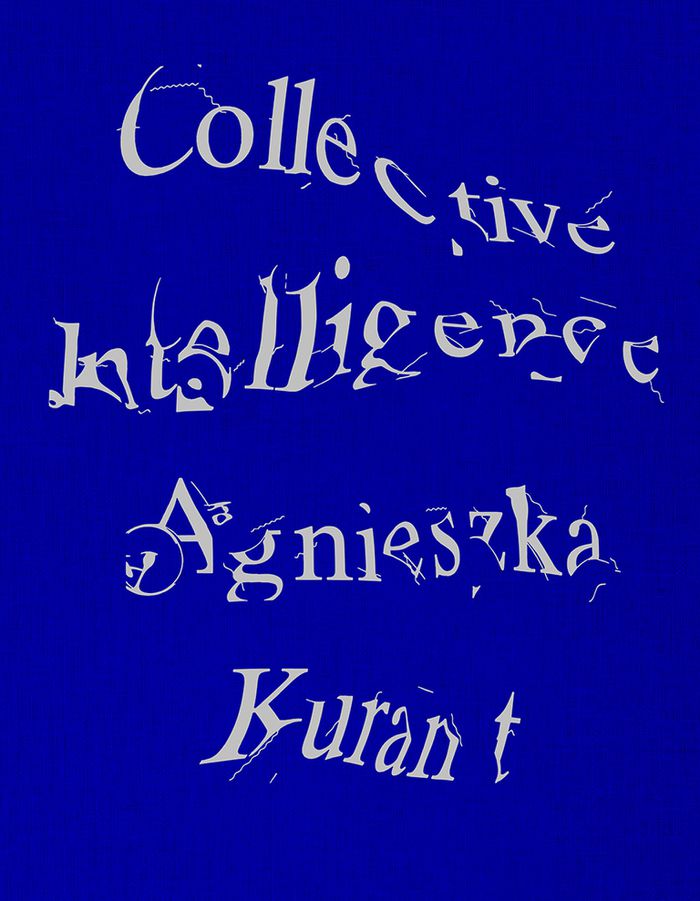
Agnieszka Kurant: Collective intelligence
Actions:
Price:
$56.00
(available in store)
Summary:
''Collective Intelligence'' is an innovative monograph that documents the last ten years of Polish-born conceptual artist Agnieszka Kurant’s interdisciplinary practice. It includes newly commissioned texts by renowned thinkers in science, philosophy, art, technology, anthropology, and economics. Kurant’s experimental work investigates collective and nonhuman intelligences and their impact on transformations of the human, the future of labor and creativity, and the exploitations within digital capitalism. Questioning the ideology of individualism, Kurant proposes that we rethink human and more-than-human worlds from a perspective of plural subjectivity, and, through this fundamental shift in perspective, posits the possibility of alternative political imaginaries. Her work probes the replacement of individual authorship with collective intelligence—a phenomenon observed in slime molds, termite colonies, social movements, cities, the internet, and inside our brains. In her collaborative practice, the artist investigates artificial intelligence, emergence, cybernetics, automation, artificial life, mining industries, and energy circuits to explore our collective evolution and the shifting status of objects in relation to agency, value, circulation, and redistribution. Through crowdsourcing the production of her artworks to thousands of humans and nonhumans, Kurant creates unstable, hybrid forms that constantly evolve. Her works, oscillating between biological, digital, and geological, embody the crumbling distinctions between what is natural and artificial, real and synthetic, and life and nonlife.
Agnieszka Kurant: Collective intelligence
Actions:
Price:
$56.00
(available in store)
Summary:
''Collective Intelligence'' is an innovative monograph that documents the last ten years of Polish-born conceptual artist Agnieszka Kurant’s interdisciplinary practice. It includes newly commissioned texts by renowned thinkers in science, philosophy, art, technology, anthropology, and economics. Kurant’s experimental work investigates collective and nonhuman intelligences and their impact on transformations of the human, the future of labor and creativity, and the exploitations within digital capitalism. Questioning the ideology of individualism, Kurant proposes that we rethink human and more-than-human worlds from a perspective of plural subjectivity, and, through this fundamental shift in perspective, posits the possibility of alternative political imaginaries. Her work probes the replacement of individual authorship with collective intelligence—a phenomenon observed in slime molds, termite colonies, social movements, cities, the internet, and inside our brains. In her collaborative practice, the artist investigates artificial intelligence, emergence, cybernetics, automation, artificial life, mining industries, and energy circuits to explore our collective evolution and the shifting status of objects in relation to agency, value, circulation, and redistribution. Through crowdsourcing the production of her artworks to thousands of humans and nonhumans, Kurant creates unstable, hybrid forms that constantly evolve. Her works, oscillating between biological, digital, and geological, embody the crumbling distinctions between what is natural and artificial, real and synthetic, and life and nonlife.
Form:
books
books
Publication:
December 2025
December 2025
Subject:
Contemporary Art Monographs
Contemporary Art Monographs
Form:
books
books
Actions:
Price:
$39.00
(available to order)
Summary:
Writing in the context of two Polaroid Corporation bankruptcies, not to mention the obsolescence of its film, Peter Buse argues that Polaroid was, and is, distinguished by its process—by the fact that, as the New York Times put it in 1947, “the camera does the rest.” Polaroid was often dismissed as a toy, but Buse takes it seriously, showing how it(...)
$39.00
(available to order)
Summary:
Writing in the context of two Polaroid Corporation bankruptcies, not to mention the obsolescence of its film, Peter Buse argues that Polaroid was, and is, distinguished by its process—by the fact that, as the New York Times put it in 1947, “the camera does the rest.” Polaroid was often dismissed as a toy, but Buse takes it seriously, showing how it(...)
Title:
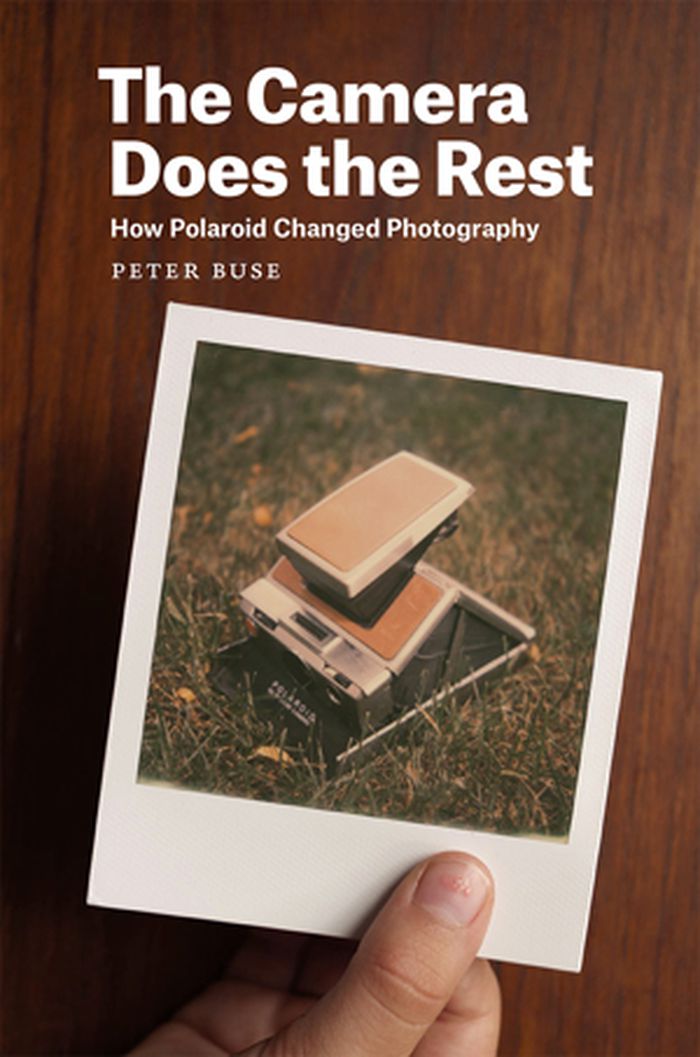
The camera does the rest: how Polaroid changed photography
Actions:
Price:
$39.00
(available to order)
Summary:
Writing in the context of two Polaroid Corporation bankruptcies, not to mention the obsolescence of its film, Peter Buse argues that Polaroid was, and is, distinguished by its process—by the fact that, as the New York Times put it in 1947, “the camera does the rest.” Polaroid was often dismissed as a toy, but Buse takes it seriously, showing how it encouraged photographic play as well as new forms of artistic practice. Drawing on unprecedented access to the archives of the Polaroid Corporation, Buse reveals Polaroid as photography at its most intimate, where the photographer, photograph, and subject sit in close proximity in both time and space—making Polaroid not only the perfect party camera but also the tool for frankly salacious pictures taking. Along the way, Buse tells the story of the Polaroid Corporation and its ultimately doomed hard-copy wager against the rising tide of digital imaging technology. He explores the continuities and the differences between Polaroid and digital, reflecting on what Polaroid can tell us about how we snap photos today. Richly illustrated, The Camera Does the Rest will delight historians, art critics, analog fanatics, photographers, and all those who miss the thrill of waiting to see what develops.
The camera does the rest: how Polaroid changed photography
Actions:
Price:
$39.00
(available to order)
Summary:
Writing in the context of two Polaroid Corporation bankruptcies, not to mention the obsolescence of its film, Peter Buse argues that Polaroid was, and is, distinguished by its process—by the fact that, as the New York Times put it in 1947, “the camera does the rest.” Polaroid was often dismissed as a toy, but Buse takes it seriously, showing how it encouraged photographic play as well as new forms of artistic practice. Drawing on unprecedented access to the archives of the Polaroid Corporation, Buse reveals Polaroid as photography at its most intimate, where the photographer, photograph, and subject sit in close proximity in both time and space—making Polaroid not only the perfect party camera but also the tool for frankly salacious pictures taking. Along the way, Buse tells the story of the Polaroid Corporation and its ultimately doomed hard-copy wager against the rising tide of digital imaging technology. He explores the continuities and the differences between Polaroid and digital, reflecting on what Polaroid can tell us about how we snap photos today. Richly illustrated, The Camera Does the Rest will delight historians, art critics, analog fanatics, photographers, and all those who miss the thrill of waiting to see what develops.
Form:
books
books
Publication:
April 2016
April 2016
Subject:
Theory of Photography
Theory of Photography
Form:
books
books
Actions:
Price:
$68.75
(available to order)
Summary:
The research exhibition ''BioMedia: The age of media with life-like behavior'' at ZKM | Center for Art and Media Karlsruhe presents works that intersect the realms of art, science, and technology. The media systems on show, which range from digital, computer-generated, and computer-simulated systems to complex adaptive robots and interactive installations, simulate(...)
$68.75
(available to order)
Summary:
The research exhibition ''BioMedia: The age of media with life-like behavior'' at ZKM | Center for Art and Media Karlsruhe presents works that intersect the realms of art, science, and technology. The media systems on show, which range from digital, computer-generated, and computer-simulated systems to complex adaptive robots and interactive installations, simulate(...)
Publication:
February 2023
February 2023
Title:
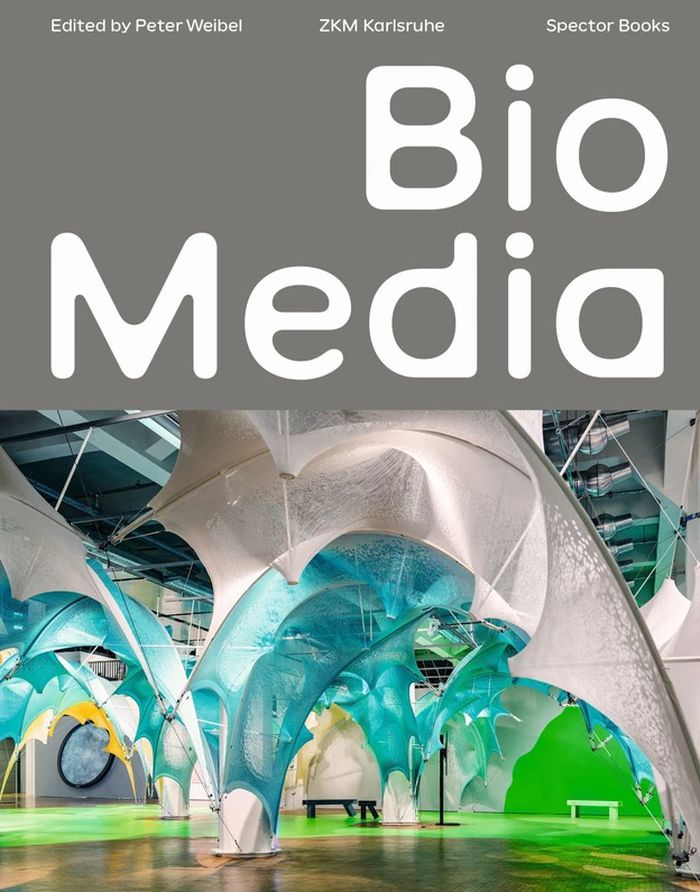
BioMedia: The age of media with life-like behavior
Actions:
Price:
$68.75
(available to order)
Summary:
The research exhibition ''BioMedia: The age of media with life-like behavior'' at ZKM | Center for Art and Media Karlsruhe presents works that intersect the realms of art, science, and technology. The media systems on show, which range from digital, computer-generated, and computer-simulated systems to complex adaptive robots and interactive installations, simulate various different aspects of life beyond movement and raise fundamental questions about the interaction between human and non-human beings and what inorganic life might mean in the future. The term ''BioMedia'' or biomimetic media is used here to refer to media that exhibit life-like forms of behaviour. Over sixty artists have contributed works illustrating the exhibition themes. The book accompanying the show focuses on the artworks, which are described in detail in richly illustrated texts.
BioMedia: The age of media with life-like behavior
Actions:
Price:
$68.75
(available to order)
Summary:
The research exhibition ''BioMedia: The age of media with life-like behavior'' at ZKM | Center for Art and Media Karlsruhe presents works that intersect the realms of art, science, and technology. The media systems on show, which range from digital, computer-generated, and computer-simulated systems to complex adaptive robots and interactive installations, simulate various different aspects of life beyond movement and raise fundamental questions about the interaction between human and non-human beings and what inorganic life might mean in the future. The term ''BioMedia'' or biomimetic media is used here to refer to media that exhibit life-like forms of behaviour. Over sixty artists have contributed works illustrating the exhibition themes. The book accompanying the show focuses on the artworks, which are described in detail in richly illustrated texts.
Form:
books
books
Publication:
February 2023
February 2023
Form:
books
books

Title:
Texte zur kunst #139: Sports
Texte zur kunst #139: Sports
Actions:
Price:
$30.00
(available in store)
Summary:
Johan Huizinga’s phrase "magic circle" circumscribes cultural fields whose logic manifests itself in rules and rituals that mark a distance from normative societal orders. At the same time, the economic and political realities surrounding the "magic circle" act upon it, are renegotiated within it, and sometimes result in rule changes of the sort that this issue of Texte(...)
$30.00
(available in store)
Summary:
Johan Huizinga’s phrase "magic circle" circumscribes cultural fields whose logic manifests itself in rules and rituals that mark a distance from normative societal orders. At the same time, the economic and political realities surrounding the "magic circle" act upon it, are renegotiated within it, and sometimes result in rule changes of the sort that this issue of Texte(...)
Title:
Texte zur kunst #139: Sports
Actions:
Price:
$30.00
(available in store)
Summary:
Johan Huizinga’s phrase "magic circle" circumscribes cultural fields whose logic manifests itself in rules and rituals that mark a distance from normative societal orders. At the same time, the economic and political realities surrounding the "magic circle" act upon it, are renegotiated within it, and sometimes result in rule changes of the sort that this issue of Texte zur kunst scrutinizes by comparing two of the practices Huizing approaches with his concept: art and sports. The contributions examine a variety of historical moments and cultural phenomena, including Impressionism’s revolt against the academic disciplining of art; physical-performance-focused artistic practices that dismantle misogynistic traditions; platform capitalism’s effects on the politics of the body supported by digital technology; and the use of technically generated imagery to enforce fairness in sports competition.
Texte zur kunst #139: Sports
Actions:
Price:
$30.00
(available in store)
Summary:
Johan Huizinga’s phrase "magic circle" circumscribes cultural fields whose logic manifests itself in rules and rituals that mark a distance from normative societal orders. At the same time, the economic and political realities surrounding the "magic circle" act upon it, are renegotiated within it, and sometimes result in rule changes of the sort that this issue of Texte zur kunst scrutinizes by comparing two of the practices Huizing approaches with his concept: art and sports. The contributions examine a variety of historical moments and cultural phenomena, including Impressionism’s revolt against the academic disciplining of art; physical-performance-focused artistic practices that dismantle misogynistic traditions; platform capitalism’s effects on the politics of the body supported by digital technology; and the use of technically generated imagery to enforce fairness in sports competition.
Form:
books
books
Publication:
September 2025
September 2025
Subject:
Magazines
Magazines
Form:
books
books
Actions:
Price:
$16.95
(available to order)
Summary:
London-based Graphic Thought Facility (GTF) has emerged as one of today’s most progressive and versatile design firms. Established in 1990, it has a reputation for a non-conformist approach to graphic design. The firm's originality results from its combination of a handmade aesthetic, knowledge of digital technology, and an interest in new materials and production(...)
$16.95
(available to order)
Summary:
London-based Graphic Thought Facility (GTF) has emerged as one of today’s most progressive and versatile design firms. Established in 1990, it has a reputation for a non-conformist approach to graphic design. The firm's originality results from its combination of a handmade aesthetic, knowledge of digital technology, and an interest in new materials and production(...)
Title:
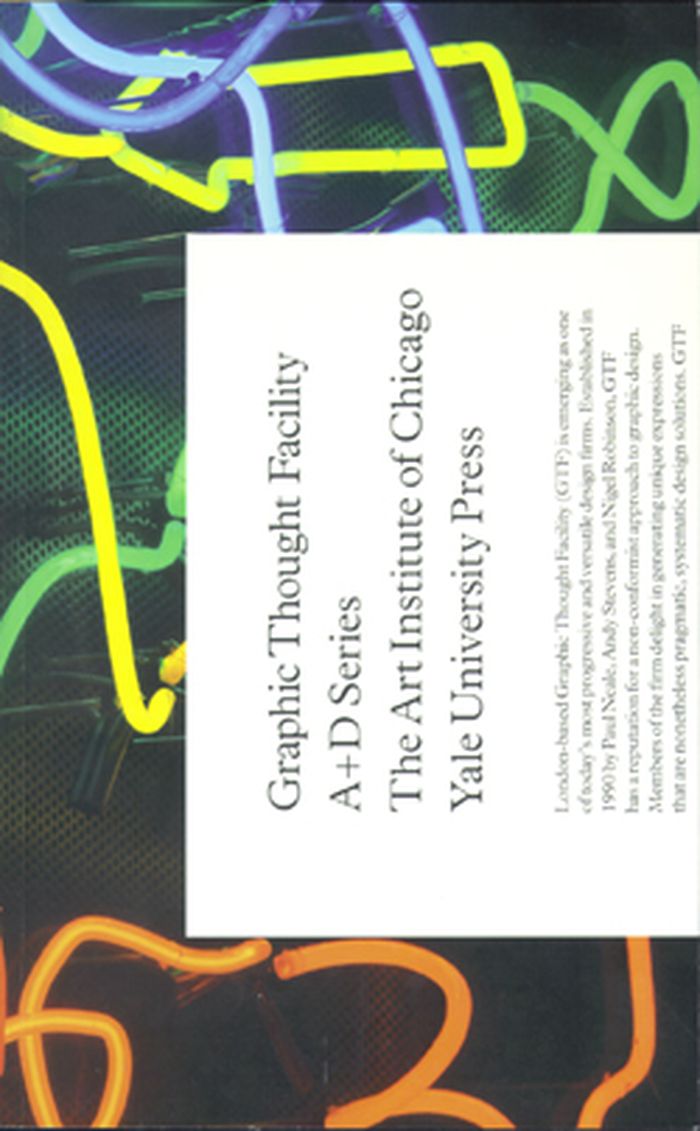
Graphic Through Facility : A+D series
Actions:
Price:
$16.95
(available to order)
Summary:
London-based Graphic Thought Facility (GTF) has emerged as one of today’s most progressive and versatile design firms. Established in 1990, it has a reputation for a non-conformist approach to graphic design. The firm's originality results from its combination of a handmade aesthetic, knowledge of digital technology, and an interest in new materials and production methods. This catalogue includes photographs and essays that highlight GTF’s most notable projects and commissions, which range from graphic identity to marketing materials to exhibition and catalogue design. Whether providing innovative design materials for the Institute of Contemporary Arts, London,Shakespeare’s Globe Theatre, the Tate Museum, the furniture and interior design store Habitat, or designers such as Ron Arad and Tord Boontje, GTF encourages us to appreciate the visual richness of the world around us.
Graphic Through Facility : A+D series
Actions:
Price:
$16.95
(available to order)
Summary:
London-based Graphic Thought Facility (GTF) has emerged as one of today’s most progressive and versatile design firms. Established in 1990, it has a reputation for a non-conformist approach to graphic design. The firm's originality results from its combination of a handmade aesthetic, knowledge of digital technology, and an interest in new materials and production methods. This catalogue includes photographs and essays that highlight GTF’s most notable projects and commissions, which range from graphic identity to marketing materials to exhibition and catalogue design. Whether providing innovative design materials for the Institute of Contemporary Arts, London,Shakespeare’s Globe Theatre, the Tate Museum, the furniture and interior design store Habitat, or designers such as Ron Arad and Tord Boontje, GTF encourages us to appreciate the visual richness of the world around us.
Form:
books
books
Publication:
May 2008, Chicago
May 2008, Chicago
Subject:
Graphic Designers, Monographs
Graphic Designers, Monographs
Form:
books
books

Title:
Objects of fascination
Objects of fascination
Actions:
Price:
$50.00
(available to order)
Summary:
During the pandemic, 45 people were invited to take part in a "serious game": each participant selected the image of a personal object of fascination, out of which a shape was extracted, redrawn, scaled and sent to a CNC machine to be cut out of a 5 mm thick aluminium sheet and become a low table. Each table is here presented through the original image that generated it,(...)
$50.00
(available to order)
Summary:
During the pandemic, 45 people were invited to take part in a "serious game": each participant selected the image of a personal object of fascination, out of which a shape was extracted, redrawn, scaled and sent to a CNC machine to be cut out of a 5 mm thick aluminium sheet and become a low table. Each table is here presented through the original image that generated it,(...)
Title:
Objects of fascination
Actions:
Price:
$50.00
(available to order)
Summary:
During the pandemic, 45 people were invited to take part in a "serious game": each participant selected the image of a personal object of fascination, out of which a shape was extracted, redrawn, scaled and sent to a CNC machine to be cut out of a 5 mm thick aluminium sheet and become a low table. Each table is here presented through the original image that generated it, the selected contour, a text by its author and photographs of the prototype taken by Maxime Delvaux and printed in silver. 'Objects of Fascination' explores digital technology and craftsmanship through found forms. It can be seen as a collection of personal worldviews by an emerging generation of architects, as much as an attempt to give a physical form to the multiplicity of our collective cultural background.
Objects of fascination
Actions:
Price:
$50.00
(available to order)
Summary:
During the pandemic, 45 people were invited to take part in a "serious game": each participant selected the image of a personal object of fascination, out of which a shape was extracted, redrawn, scaled and sent to a CNC machine to be cut out of a 5 mm thick aluminium sheet and become a low table. Each table is here presented through the original image that generated it, the selected contour, a text by its author and photographs of the prototype taken by Maxime Delvaux and printed in silver. 'Objects of Fascination' explores digital technology and craftsmanship through found forms. It can be seen as a collection of personal worldviews by an emerging generation of architects, as much as an attempt to give a physical form to the multiplicity of our collective cultural background.
Form:
books
books
Publication:
January 2022
January 2022
Subject:
Industrial Design
Industrial Design
Form:
books
books

Actions:
Price:
$49.95
(available to order)
Summary:
Today the human impact on our planet can hardly be underestimated. Climate change, population explosion, genetic manipulation, digital networks, plastic islands floating in the oceans. This book explores our changing notion of nature. How nature has become one of the most successful products of our time, much of what we perceive as nature is merely a simulation(...)
$49.95
(available to order)
Summary:
Today the human impact on our planet can hardly be underestimated. Climate change, population explosion, genetic manipulation, digital networks, plastic islands floating in the oceans. This book explores our changing notion of nature. How nature has become one of the most successful products of our time, much of what we perceive as nature is merely a simulation(...)
Title:
Next nature: nature changes along with us
Actions:
Price:
$49.95
(available to order)
Summary:
Today the human impact on our planet can hardly be underestimated. Climate change, population explosion, genetic manipulation, digital networks, plastic islands floating in the oceans. This book explores our changing notion of nature. How nature has become one of the most successful products of our time, much of what we perceive as nature is merely a simulation although a romanticized idea of a balanced, harmonic, inherently good and threatened entity. How evolution continues nonetheless. How technology - traditionally created to protect us from the forces of nature - gives rise to a next nature, that is just as wild, cruel, unpredictable and threatening as ever. How we are playing with fire again and again. How we should be careful in doing so, yet how this is also what makes us human.
Next nature: nature changes along with us
Actions:
Price:
$49.95
(available to order)
Summary:
Today the human impact on our planet can hardly be underestimated. Climate change, population explosion, genetic manipulation, digital networks, plastic islands floating in the oceans. This book explores our changing notion of nature. How nature has become one of the most successful products of our time, much of what we perceive as nature is merely a simulation although a romanticized idea of a balanced, harmonic, inherently good and threatened entity. How evolution continues nonetheless. How technology - traditionally created to protect us from the forces of nature - gives rise to a next nature, that is just as wild, cruel, unpredictable and threatening as ever. How we are playing with fire again and again. How we should be careful in doing so, yet how this is also what makes us human.
Form:
books
books
Publication:
May 2011
May 2011
Subject:
Landscape Theory
Landscape Theory


