


1124 Results
Form:
books
books
Actions:
Price:
$52.00
(available in store)
Summary:
This highly visual investigation shows the complex nature and enormous impact of recent developments in our information society: a transformation produced by the irresistible combined expansion of digital technology and telecommunication networks. The urban space is a privileged laboratory for observing and experiencing the density of signs and their multiple frameworks:(...)
$52.00
(available in store)
Summary:
This highly visual investigation shows the complex nature and enormous impact of recent developments in our information society: a transformation produced by the irresistible combined expansion of digital technology and telecommunication networks. The urban space is a privileged laboratory for observing and experiencing the density of signs and their multiple frameworks:(...)
Title:
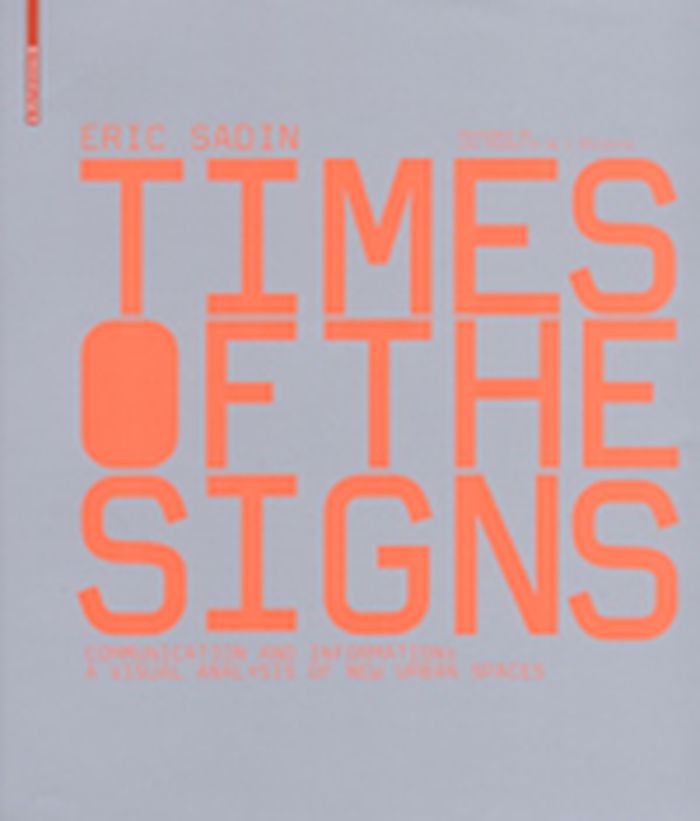
Times of the signs, communication and information : a visual analysis of new urban spaces
Actions:
Price:
$52.00
(available in store)
Summary:
This highly visual investigation shows the complex nature and enormous impact of recent developments in our information society: a transformation produced by the irresistible combined expansion of digital technology and telecommunication networks. The urban space is a privileged laboratory for observing and experiencing the density of signs and their multiple frameworks: Signage, Giant Screens, Signboards, Flags, Poster Displays, Architecture and Advertisement, Surveillance Technologies, Tracking Devices, etc. Eric Sadin started this project during a residence in Kyoto, Japan, then enlarged the focus of the inquiry to further Asian, European, and American cities as Tokyo, Seoul, Shanghai, Hong Kong, Bangkok, Bombay, Paris, London, Rio de Janeiro, Mexico City, New York. The result is a fascinating visual journey in 2000 colour illustrations with explanatory captions, structured into some 100 topics and analysed in brilliant theoretical texts providing the necessary background.
Times of the signs, communication and information : a visual analysis of new urban spaces
Actions:
Price:
$52.00
(available in store)
Summary:
This highly visual investigation shows the complex nature and enormous impact of recent developments in our information society: a transformation produced by the irresistible combined expansion of digital technology and telecommunication networks. The urban space is a privileged laboratory for observing and experiencing the density of signs and their multiple frameworks: Signage, Giant Screens, Signboards, Flags, Poster Displays, Architecture and Advertisement, Surveillance Technologies, Tracking Devices, etc. Eric Sadin started this project during a residence in Kyoto, Japan, then enlarged the focus of the inquiry to further Asian, European, and American cities as Tokyo, Seoul, Shanghai, Hong Kong, Bangkok, Bombay, Paris, London, Rio de Janeiro, Mexico City, New York. The result is a fascinating visual journey in 2000 colour illustrations with explanatory captions, structured into some 100 topics and analysed in brilliant theoretical texts providing the necessary background.
Form:
books
books
Publication:
August 2007, Basel, Boston, Berlin
August 2007, Basel, Boston, Berlin
Subject:
Signage
Signage
Form:
books
books
Title:
Steven Holl
Steven Holl
Actions:
Price:
$41.95
(available to order)
Summary:
Steven Holl is revered among architects and students for his quiet and consistent modernist buildings. His reputation among generations of students was cemented during his early tenure at Columbia University and his founding of Storefront for Art and Architecture. His Pamphlet Architecture series furthered his standing as a leader of the avant-garde. With his embrace of(...)
$41.95
(available to order)
Summary:
Steven Holl is revered among architects and students for his quiet and consistent modernist buildings. His reputation among generations of students was cemented during his early tenure at Columbia University and his founding of Storefront for Art and Architecture. His Pamphlet Architecture series furthered his standing as a leader of the avant-garde. With his embrace of(...)
Title:
Steven Holl
Actions:
Price:
$41.95
(available to order)
Summary:
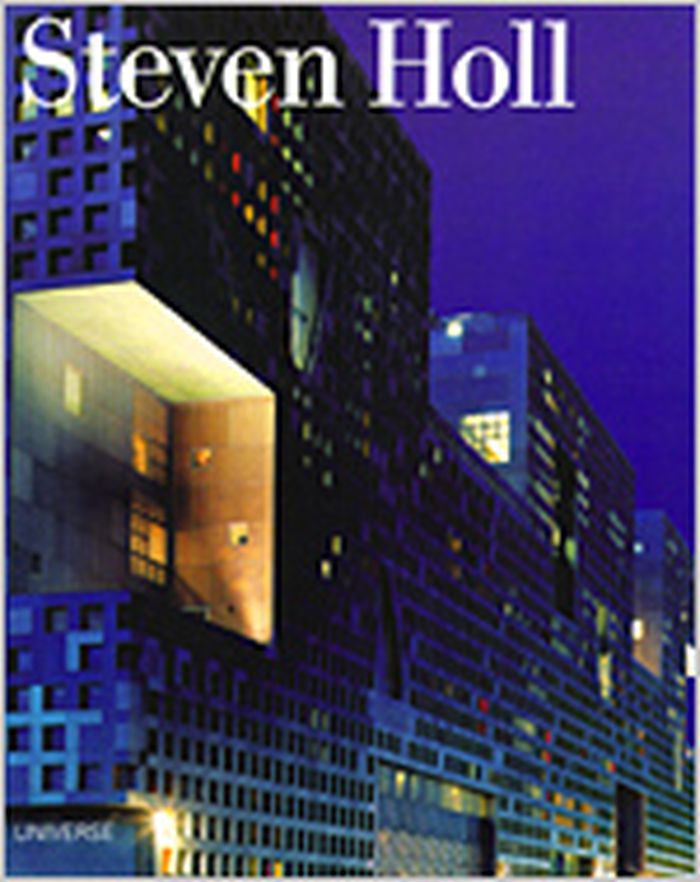
Steven Holl is revered among architects and students for his quiet and consistent modernist buildings. His reputation among generations of students was cemented during his early tenure at Columbia University and his founding of Storefront for Art and Architecture. His Pamphlet Architecture series furthered his standing as a leader of the avant-garde. With his embrace of computer technology, Holl smoothly transitioned from the 1980s into the digital design era of the 1990s. At the same time, his practice expanded globally and his housing projects in Japan opened to international acclaim. Recently, the ultramodern design of his Kiasma Museum of Contemporary Art earned high praise for its revitalizing influence on Helsinki's city center. Remarkably, this monograph is the only book available that documents Holl's full career, covering his early houses of the 1970's to his latest designs for museums currently under construction.
Steven Holl
Actions:
Price:
$41.95
(available to order)
Summary:
Steven Holl is revered among architects and students for his quiet and consistent modernist buildings. His reputation among generations of students was cemented during his early tenure at Columbia University and his founding of Storefront for Art and Architecture. His Pamphlet Architecture series furthered his standing as a leader of the avant-garde. With his embrace of computer technology, Holl smoothly transitioned from the 1980s into the digital design era of the 1990s. At the same time, his practice expanded globally and his housing projects in Japan opened to international acclaim. Recently, the ultramodern design of his Kiasma Museum of Contemporary Art earned high praise for its revitalizing influence on Helsinki's city center. Remarkably, this monograph is the only book available that documents Holl's full career, covering his early houses of the 1970's to his latest designs for museums currently under construction.
Form:
books
books
Publication:
November 2003, New York
November 2003, New York
Subject:
Architecture Monographs
Architecture Monographs
Form:
books
books
Title:
Militant media: CRA 2
Militant media: CRA 2
Actions:
Price:
$43.00
(available to order)
Summary:
Since its founding in 2005, the Centre for Research Architecture (CRA) at Goldsmiths, University of London, has brought together a diverse group of architects, artists, urbanists, geographers, lawyers, scientists, journalists and activists to develop research methodologies and investigative techniques to address contemporary spatial politics. Militant Media, the second(...)
$43.00
(available to order)
Summary:
Since its founding in 2005, the Centre for Research Architecture (CRA) at Goldsmiths, University of London, has brought together a diverse group of architects, artists, urbanists, geographers, lawyers, scientists, journalists and activists to develop research methodologies and investigative techniques to address contemporary spatial politics. Militant Media, the second(...)
Title:
Militant media: CRA 2
Actions:
Price:
$43.00
(available to order)
Summary:
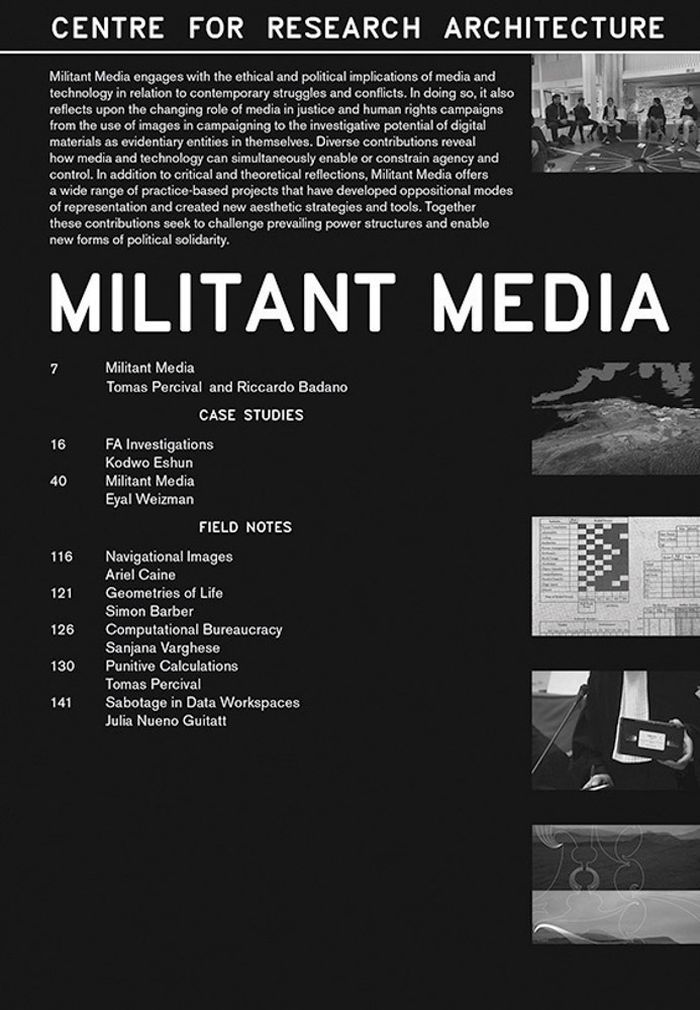
Since its founding in 2005, the Centre for Research Architecture (CRA) at Goldsmiths, University of London, has brought together a diverse group of architects, artists, urbanists, geographers, lawyers, scientists, journalists and activists to develop research methodologies and investigative techniques to address contemporary spatial politics. Militant Media, the second volume in CRA’s series of publications, engages with the ethical and political implications of media and technology in relation to contemporary conflicts. In doing so, it also reflects upon the changing role of media in justice and human rights campaigns, examining a range of topics from the use of images in campaigning to the investigative potential of digital materials. In addition to critical and theoretical reflections, Militant Media offers a wide range of practice-based projects that have developed oppositional modes of representation and created new aesthetic strategies and tools.
Militant media: CRA 2
Actions:
Price:
$43.00
(available to order)
Summary:
Since its founding in 2005, the Centre for Research Architecture (CRA) at Goldsmiths, University of London, has brought together a diverse group of architects, artists, urbanists, geographers, lawyers, scientists, journalists and activists to develop research methodologies and investigative techniques to address contemporary spatial politics. Militant Media, the second volume in CRA’s series of publications, engages with the ethical and political implications of media and technology in relation to contemporary conflicts. In doing so, it also reflects upon the changing role of media in justice and human rights campaigns, examining a range of topics from the use of images in campaigning to the investigative potential of digital materials. In addition to critical and theoretical reflections, Militant Media offers a wide range of practice-based projects that have developed oppositional modes of representation and created new aesthetic strategies and tools.
Form:
books
books
Publication:
December 2024
December 2024
Subject:
Critical Theory
Critical Theory
Form:
books
books
Title:
Index architecture
Index architecture
Actions:
Price:
$41.95
(available in store)
Summary:
"Index architecture" documents the extensive cross-fertilization of ideas that can occur between architectural practice and education. Through work developed by students and faculty at Columbia University's School of Architecture, it offers not only an archive of avant-garde work but a record of architectural discourse at a time when the design studio has been radically(...)
$41.95
(available in store)
Summary:
"Index architecture" documents the extensive cross-fertilization of ideas that can occur between architectural practice and education. Through work developed by students and faculty at Columbia University's School of Architecture, it offers not only an archive of avant-garde work but a record of architectural discourse at a time when the design studio has been radically(...)
Subject:
Architectural Theory
Architectural Theory
Publication:
May 2003, Cambridge / London
May 2003, Cambridge / London
Title:
Index architecture
Actions:
Price:
$41.95
(available in store)
Summary:
"Index architecture" documents the extensive cross-fertilization of ideas that can occur between architectural practice and education. Through work developed by students and faculty at Columbia University's School of Architecture, it offers not only an archive of avant-garde work but a record of architectural discourse at a time when the design studio has been radically altered by digital technology. Writings, interviews, and images are organized according to an alphabetical "index" of key terms. Cross-referencing allows for a rich reading of concepts currently discussed in the field. The contributing critics and theorists include Stan Allen, Karen Bausman, Lise Anne Couture, Kathryn Dean, Evan Douglis, Kenneth Frampton, Leslie Gill, Thomas Hanrahan, Laurie Hawkinson, Steven Holl, Jeffrey Kipnis, Sulan Kolatan, Greg Lynn, William MacDonald, Reinhold Martin, Mary Mcleod, Victoria Meyers, Hani Rashid, Jesse Reiser, Bernard Tschumi, Nanako Umemoto, and Mark Wigley.
Index architecture
Actions:
Price:
$41.95
(available in store)
Summary:
"Index architecture" documents the extensive cross-fertilization of ideas that can occur between architectural practice and education. Through work developed by students and faculty at Columbia University's School of Architecture, it offers not only an archive of avant-garde work but a record of architectural discourse at a time when the design studio has been radically altered by digital technology. Writings, interviews, and images are organized according to an alphabetical "index" of key terms. Cross-referencing allows for a rich reading of concepts currently discussed in the field. The contributing critics and theorists include Stan Allen, Karen Bausman, Lise Anne Couture, Kathryn Dean, Evan Douglis, Kenneth Frampton, Leslie Gill, Thomas Hanrahan, Laurie Hawkinson, Steven Holl, Jeffrey Kipnis, Sulan Kolatan, Greg Lynn, William MacDonald, Reinhold Martin, Mary Mcleod, Victoria Meyers, Hani Rashid, Jesse Reiser, Bernard Tschumi, Nanako Umemoto, and Mark Wigley.
Form:
books
books
Publication:
May 2003, Cambridge / London
May 2003, Cambridge / London
Subject:
Architectural Theory
Architectural Theory
Form:
books
books
Actions:
Price:
$55.00
(available in store)
Summary:
Using CGI, Canadian artist Benjamin Freedman presents a captivating image sequence which meticulously reconstructs his childhood memories of a family road trip to Maine in 1999. Blurring the line between reality and simulation, these surreal images toy with the ephemerality of memory and its inseparability from fantasy. Freedman’s recreated scenes of roadside diners,(...)
$55.00
(available in store)
Summary:
Using CGI, Canadian artist Benjamin Freedman presents a captivating image sequence which meticulously reconstructs his childhood memories of a family road trip to Maine in 1999. Blurring the line between reality and simulation, these surreal images toy with the ephemerality of memory and its inseparability from fantasy. Freedman’s recreated scenes of roadside diners,(...)
Title:
Benjamin Freedman: Positive illusions
Actions:
Price:
$55.00
(available in store)
Summary:
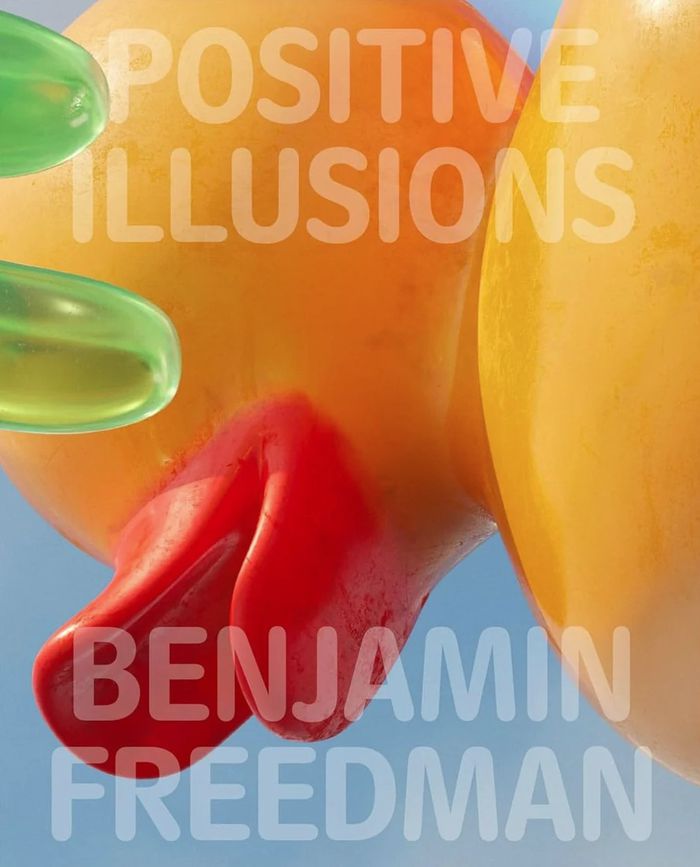
Using CGI, Canadian artist Benjamin Freedman presents a captivating image sequence which meticulously reconstructs his childhood memories of a family road trip to Maine in 1999. Blurring the line between reality and simulation, these surreal images toy with the ephemerality of memory and its inseparability from fantasy. Freedman’s recreated scenes of roadside diners, pools, and picnics create a visceral and sensory dreamscape, evoking the sounds and smells attached to his childhood recollections. These digitally constructed images explore how technology permits us to revisit and reimagine the past in ways that feel both familiar and uncanny. Distinctions between personal recollection and collective nostalgia are compromised, creating an idiosyncratic visual realm saturated with shared emotions and histories. Freedman’s use of digital tools to recapture nostalgic scenes underscores the fluidity of memory while also challenging traditional conventions of the photographic medium.
Benjamin Freedman: Positive illusions
Actions:
Price:
$55.00
(available in store)
Summary:
Using CGI, Canadian artist Benjamin Freedman presents a captivating image sequence which meticulously reconstructs his childhood memories of a family road trip to Maine in 1999. Blurring the line between reality and simulation, these surreal images toy with the ephemerality of memory and its inseparability from fantasy. Freedman’s recreated scenes of roadside diners, pools, and picnics create a visceral and sensory dreamscape, evoking the sounds and smells attached to his childhood recollections. These digitally constructed images explore how technology permits us to revisit and reimagine the past in ways that feel both familiar and uncanny. Distinctions between personal recollection and collective nostalgia are compromised, creating an idiosyncratic visual realm saturated with shared emotions and histories. Freedman’s use of digital tools to recapture nostalgic scenes underscores the fluidity of memory while also challenging traditional conventions of the photographic medium.
Form:
books
books
Publication:
May 2025
May 2025
Subject:
Photography monographs
Photography monographs
Form:
books
books
Title:
Italian collage
Italian collage
Actions:
Price:
$54.95
(available to order)
Summary:
Several Italian architects have recently taken up the technique of collage again to present their ideas. The three masters of this tendency are Carmelo Baglivo, Luca Galofaro and Beniamino Servino, while the younger generation includes authors such as Davide Trabucco and robocoop. If collage has been one of the favorite techniques in Italian architecture since the(...)
$54.95
(available to order)
Summary:
Several Italian architects have recently taken up the technique of collage again to present their ideas. The three masters of this tendency are Carmelo Baglivo, Luca Galofaro and Beniamino Servino, while the younger generation includes authors such as Davide Trabucco and robocoop. If collage has been one of the favorite techniques in Italian architecture since the(...)
Subject:
Contemporary Architecture
Contemporary Architecture
Publication:
December 2020
December 2020
Title:
Italian collage
Actions:
Price:
$54.95
(available to order)
Summary:
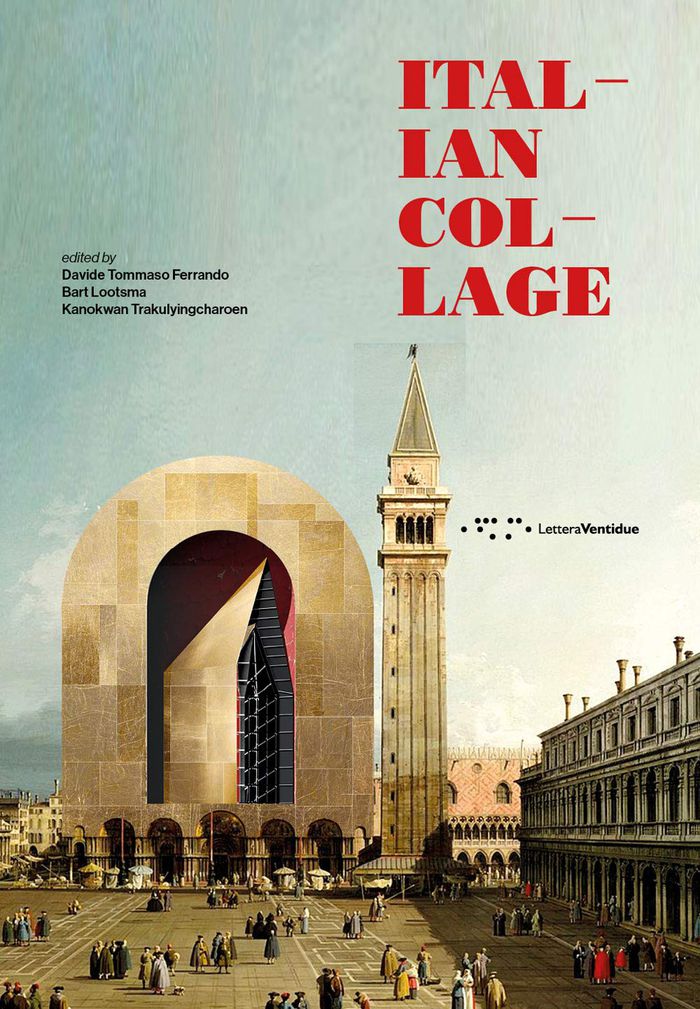
Several Italian architects have recently taken up the technique of collage again to present their ideas. The three masters of this tendency are Carmelo Baglivo, Luca Galofaro and Beniamino Servino, while the younger generation includes authors such as Davide Trabucco and robocoop. If collage has been one of the favorite techniques in Italian architecture since the nineteen sixties, the current collagists are new in ways that relate to developments in digital technology. They use software like Photoshop to create their images, recur to social media like Facebook to post their work and they can refer to the whole history of architectural and non-architectural imagery, which is instantly accessible on the Web. Their collages can be visual comments as well as daring fantasies. The book presents a rich selection of images and original texts dedicated to this phenomenon.
Italian collage
Actions:
Price:
$54.95
(available to order)
Summary:
Several Italian architects have recently taken up the technique of collage again to present their ideas. The three masters of this tendency are Carmelo Baglivo, Luca Galofaro and Beniamino Servino, while the younger generation includes authors such as Davide Trabucco and robocoop. If collage has been one of the favorite techniques in Italian architecture since the nineteen sixties, the current collagists are new in ways that relate to developments in digital technology. They use software like Photoshop to create their images, recur to social media like Facebook to post their work and they can refer to the whole history of architectural and non-architectural imagery, which is instantly accessible on the Web. Their collages can be visual comments as well as daring fantasies. The book presents a rich selection of images and original texts dedicated to this phenomenon.
Form:
books
books
Publication:
December 2020
December 2020
Subject:
Contemporary Architecture
Contemporary Architecture
Form:
books
books
Title:
Space between people
Space between people
Actions:
Price:
$32.95
(available to order)
Summary:
If architecture is the construction of space between people, what happens when that space exists in a virtual world? That question is the starting point for this collection of revolutionary projects by a new generation of designers. The book begins by examining the important issues that have emerged as technology reshapes our idea of place and proceeds to present the four(...)
$32.95
(available to order)
Summary:
If architecture is the construction of space between people, what happens when that space exists in a virtual world? That question is the starting point for this collection of revolutionary projects by a new generation of designers. The book begins by examining the important issues that have emerged as technology reshapes our idea of place and proceeds to present the four(...)
Title:
Space between people
Actions:
Price:
$32.95
(available to order)
Summary:
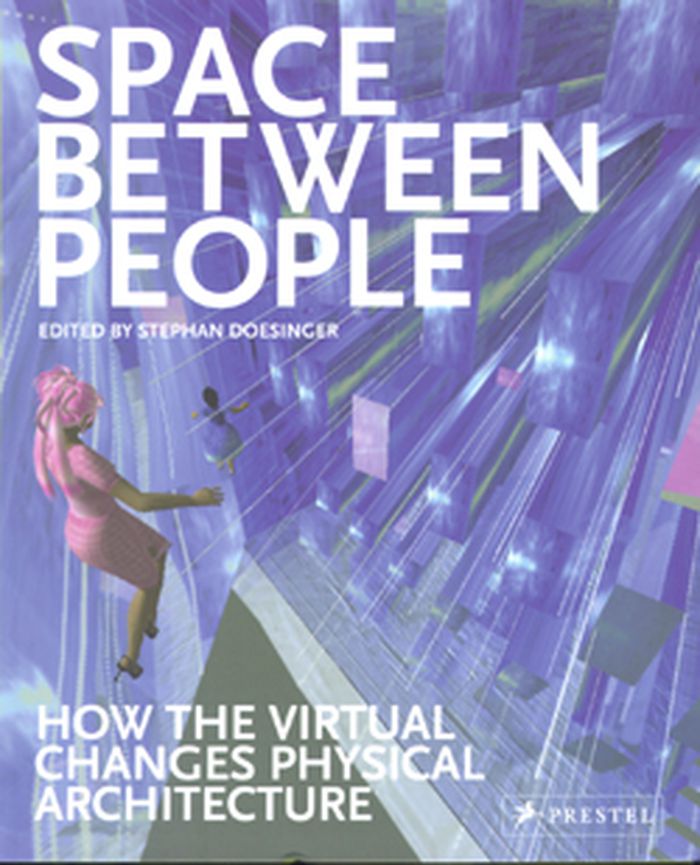
If architecture is the construction of space between people, what happens when that space exists in a virtual world? That question is the starting point for this collection of revolutionary projects by a new generation of designers. The book begins by examining the important issues that have emerged as technology reshapes our idea of place and proceeds to present the four winning projects from the first architecture competition held within the explosively popular Internet community known as Second Life. Chosen for their inventiveness and aesthetic excellence, these structures a cloud that can be inhabited; a meta-museum; an interactive sound scape; and a snow palace of discarded objects illustrate the mind-bending possibilities of digital design. In the book s final section, media artists share their real-time experiences conceptualizing and creating projects for the virtual world.
Space between people
Actions:
Price:
$32.95
(available to order)
Summary:
If architecture is the construction of space between people, what happens when that space exists in a virtual world? That question is the starting point for this collection of revolutionary projects by a new generation of designers. The book begins by examining the important issues that have emerged as technology reshapes our idea of place and proceeds to present the four winning projects from the first architecture competition held within the explosively popular Internet community known as Second Life. Chosen for their inventiveness and aesthetic excellence, these structures a cloud that can be inhabited; a meta-museum; an interactive sound scape; and a snow palace of discarded objects illustrate the mind-bending possibilities of digital design. In the book s final section, media artists share their real-time experiences conceptualizing and creating projects for the virtual world.
Form:
books
books
Publication:
April 2008, New York
April 2008, New York
Subject:
Architectural Theory
Architectural Theory
Form:
books
books
Title:
Textile tectonics
Textile tectonics
Actions:
Price:
$45.00
(available to order)
Summary:
Until recently, thanks to the unforgiving geometric rigors of modernism, biomorphism in design and architecture was seen a purely decorative feature - as in Art Nouveau, for example. This publication turns this idea on its head, offering a glimpse into the future of architectural design, in which the veins of leaves, formations of foam, Celtic knotwork and even hair(...)
$45.00
(available to order)
Summary:
Until recently, thanks to the unforgiving geometric rigors of modernism, biomorphism in design and architecture was seen a purely decorative feature - as in Art Nouveau, for example. This publication turns this idea on its head, offering a glimpse into the future of architectural design, in which the veins of leaves, formations of foam, Celtic knotwork and even hair(...)
Title:
Textile tectonics
Actions:
Price:
$45.00
(available to order)
Summary:
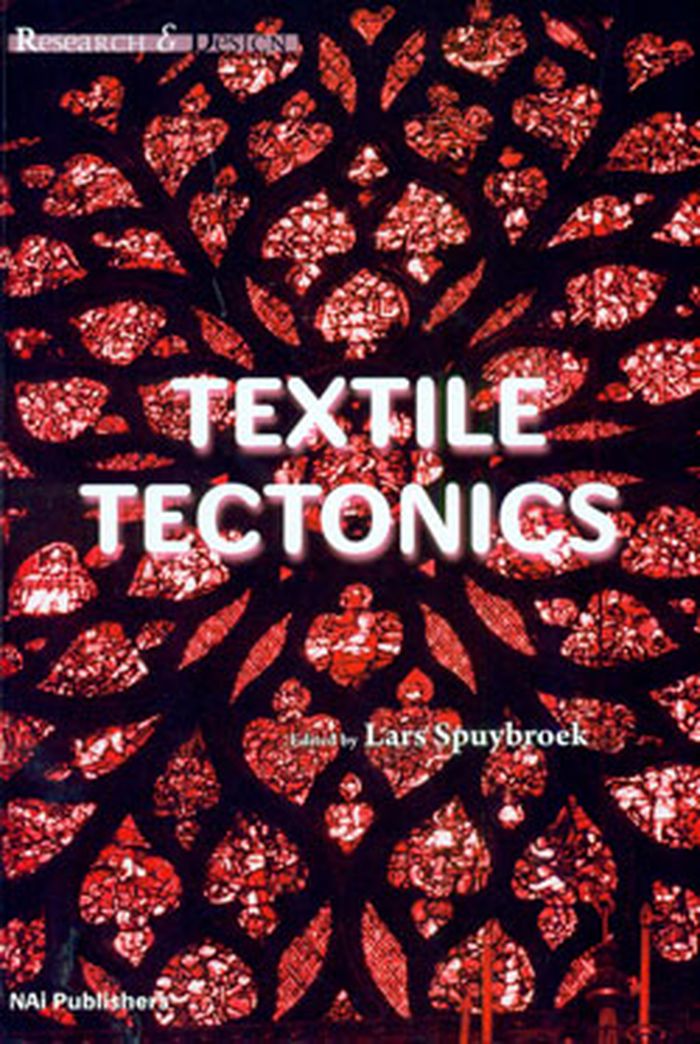
Until recently, thanks to the unforgiving geometric rigors of modernism, biomorphism in design and architecture was seen a purely decorative feature - as in Art Nouveau, for example. This publication turns this idea on its head, offering a glimpse into the future of architectural design, in which the veins of leaves, formations of foam, Celtic knotwork and even hair braiding can be transformed into viable structures through the wonders of digital design technology. For the architect and researcher Lars Spuybroek, such natural, ornamental and folkloristic pattern could entirely replace standardized geometric design to determine the structural basis and aesthetic character of tomorrow's buildings. Here, Spuybroek presents both a theoretical framework and an inspiring taxonomy of patterns and structures, followed by more than 100 illustrated designs for skyscrapers and façades based on organizational principles ranging from rose windows to knitting patterns.
Textile tectonics
Actions:
Price:
$45.00
(available to order)
Summary:
Until recently, thanks to the unforgiving geometric rigors of modernism, biomorphism in design and architecture was seen a purely decorative feature - as in Art Nouveau, for example. This publication turns this idea on its head, offering a glimpse into the future of architectural design, in which the veins of leaves, formations of foam, Celtic knotwork and even hair braiding can be transformed into viable structures through the wonders of digital design technology. For the architect and researcher Lars Spuybroek, such natural, ornamental and folkloristic pattern could entirely replace standardized geometric design to determine the structural basis and aesthetic character of tomorrow's buildings. Here, Spuybroek presents both a theoretical framework and an inspiring taxonomy of patterns and structures, followed by more than 100 illustrated designs for skyscrapers and façades based on organizational principles ranging from rose windows to knitting patterns.
Form:
books
books
Publication:
August 2011
August 2011
Subject:
Materials and Lighting
Materials and Lighting
Form:
books
books
Price:
$46.95
(available to order)
Summary:
Jack Burnham is one of the few critics and theorists alive today who can claim to have radically altered the way we think about works of art. Burnham’s use of the term “system” (borrowed from theoretical biology) in his 1968 essay “System Aesthetics” announced the relational character of conceptual art and newer research-based projects. Trained as an art historian,(...)
$46.95
(available to order)
Summary:
Jack Burnham is one of the few critics and theorists alive today who can claim to have radically altered the way we think about works of art. Burnham’s use of the term “system” (borrowed from theoretical biology) in his 1968 essay “System Aesthetics” announced the relational character of conceptual art and newer research-based projects. Trained as an art historian,(...)
Title:
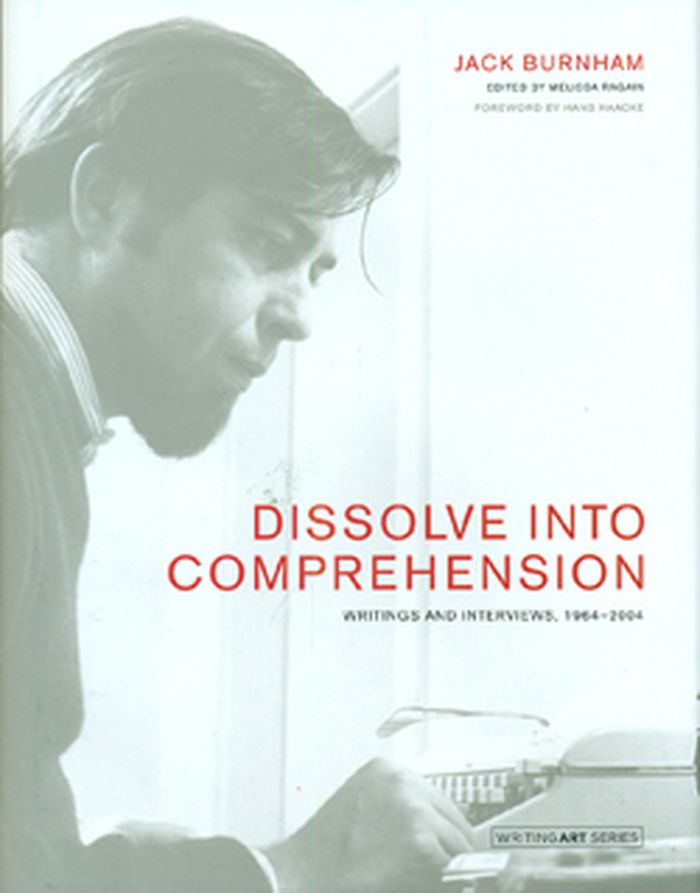
Dissolve into comprenhension: writings and interviews, 1964-2004
Actions:
Price:
$46.95
(available to order)
Summary:
Jack Burnham is one of the few critics and theorists alive today who can claim to have radically altered the way we think about works of art. Burnham’s use of the term “system” (borrowed from theoretical biology) in his 1968 essay “System Aesthetics” announced the relational character of conceptual art and newer research-based projects. Trained as an art historian, Burnham was also a sculptor. His first book, Beyond Modern Sculpture (1968), established him as a leading commentator on art and technology. A postformalist pioneer, an influential figure in new media art history, an early champion of conceptual and ecological art, and the curator of the first exhibition of digital art, Burnham is long overdue for reevaluation. This book offers that opportunity by collecting a substantial and varied selection of his hard-to-find texts, some published here for the first time.
Dissolve into comprenhension: writings and interviews, 1964-2004
Actions:
Price:
$46.95
(available to order)
Summary:
Jack Burnham is one of the few critics and theorists alive today who can claim to have radically altered the way we think about works of art. Burnham’s use of the term “system” (borrowed from theoretical biology) in his 1968 essay “System Aesthetics” announced the relational character of conceptual art and newer research-based projects. Trained as an art historian, Burnham was also a sculptor. His first book, Beyond Modern Sculpture (1968), established him as a leading commentator on art and technology. A postformalist pioneer, an influential figure in new media art history, an early champion of conceptual and ecological art, and the curator of the first exhibition of digital art, Burnham is long overdue for reevaluation. This book offers that opportunity by collecting a substantial and varied selection of his hard-to-find texts, some published here for the first time.
Form:
books
books
Publication:
August 2015
August 2015
Subject:
Art Theory
Art Theory
Form:
books
books
Actions:
Price:
$37.99
(available in store)
Summary:
Digital tools have launched architecture into a dizzying new era, one in which wood, stone, metal, glass, and other traditional materials are augmented by pixels and code. In this ambitious exploration, an eminent thinker examines what, exactly, the building blocks of architecture have meant over the centuries and how technology may-or may not-be changing how we think(...)
$37.99
(available in store)
Summary:
Digital tools have launched architecture into a dizzying new era, one in which wood, stone, metal, glass, and other traditional materials are augmented by pixels and code. In this ambitious exploration, an eminent thinker examines what, exactly, the building blocks of architecture have meant over the centuries and how technology may-or may not-be changing how we think(...)
Title:
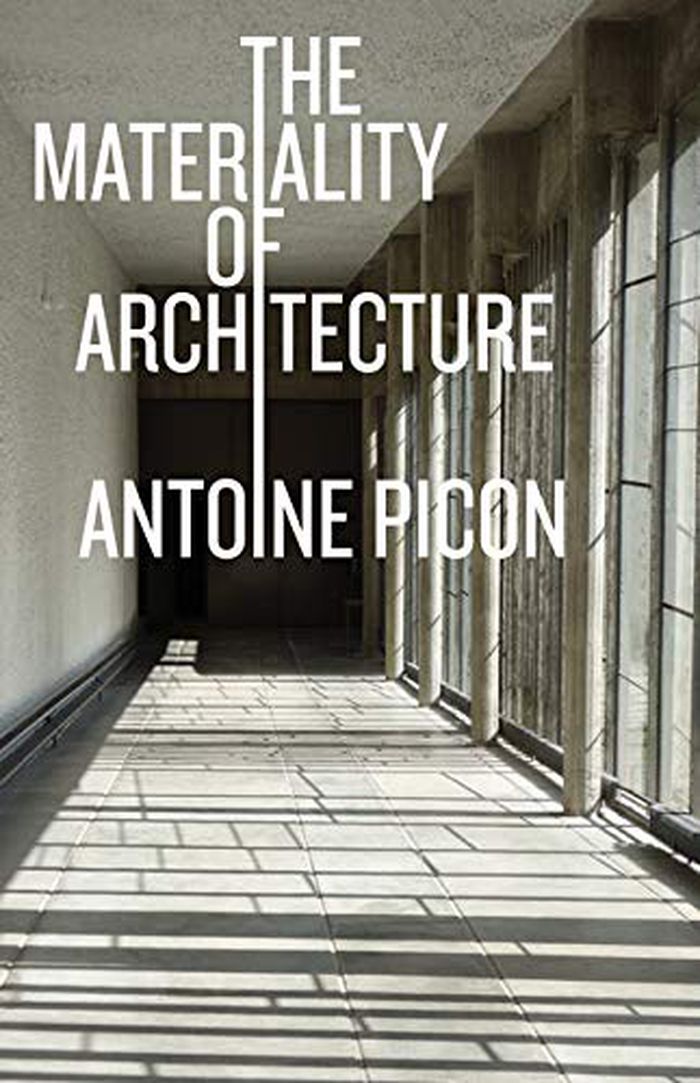
The materiality of architecture
Actions:
Price:
$37.99
(available in store)
Summary:
Digital tools have launched architecture into a dizzying new era, one in which wood, stone, metal, glass, and other traditional materials are augmented by pixels and code. In this ambitious exploration, an eminent thinker examines what, exactly, the building blocks of architecture have meant over the centuries and how technology may-or may not-be changing how we think about them. Antoine Picon argues that materiality is not only about matter and that the silence and inscrutability-the otherness-of raw materials work against humanity's need to live in a meaningful world. He describes how people define who they are, in part, through their specific physical experience of architectural materials and spaces. Indeed, Picon asserts, the entire paradox of the architectural discipline consists in its desire to render matter expressive to human beings. Through a retrospective review of canonical moments in Western European architecture, Picon offers an original perspective on the ways materiality has varied throughout centuries, demonstrating how experiences of the physical world have changed in relation to the evolution of human subjectivity. Ultimately, Picon concludes that computer-based design methods are not an abrupt departure from previous architectural traditions but rather a new way for architects to control material resources. The result reinforces the fundamentally humanistic nature of architectural endeavor with an increasing sense of design freedom and a release from material constraint in the digital era.
The materiality of architecture
Actions:
Price:
$37.99
(available in store)
Summary:
Digital tools have launched architecture into a dizzying new era, one in which wood, stone, metal, glass, and other traditional materials are augmented by pixels and code. In this ambitious exploration, an eminent thinker examines what, exactly, the building blocks of architecture have meant over the centuries and how technology may-or may not-be changing how we think about them. Antoine Picon argues that materiality is not only about matter and that the silence and inscrutability-the otherness-of raw materials work against humanity's need to live in a meaningful world. He describes how people define who they are, in part, through their specific physical experience of architectural materials and spaces. Indeed, Picon asserts, the entire paradox of the architectural discipline consists in its desire to render matter expressive to human beings. Through a retrospective review of canonical moments in Western European architecture, Picon offers an original perspective on the ways materiality has varied throughout centuries, demonstrating how experiences of the physical world have changed in relation to the evolution of human subjectivity. Ultimately, Picon concludes that computer-based design methods are not an abrupt departure from previous architectural traditions but rather a new way for architects to control material resources. The result reinforces the fundamentally humanistic nature of architectural endeavor with an increasing sense of design freedom and a release from material constraint in the digital era.
Form:
books
books
Publication:
January 2021
January 2021
Subject:
Architectural Theory
Architectural Theory


