


1111 Results
Form:
audio
audio
Title:
AWA Legacy : Mini-Stories.
AWA Legacy : Mini-Stories.
Actions:
Description:
1 online resource.
Author:
Subject:
Publication:
[Place of publication not identified] : XX|LA, 2022.
[Place of publication not identified] : XX|LA, 2022.
Form:
audio
audio
Publication:
[Place of publication not identified] : XX|LA, 2022.
[Place of publication not identified] : XX|LA, 2022.
Author:
Subject:
Form:
books
books
Price:
$22.95
(available in store)
Summary:
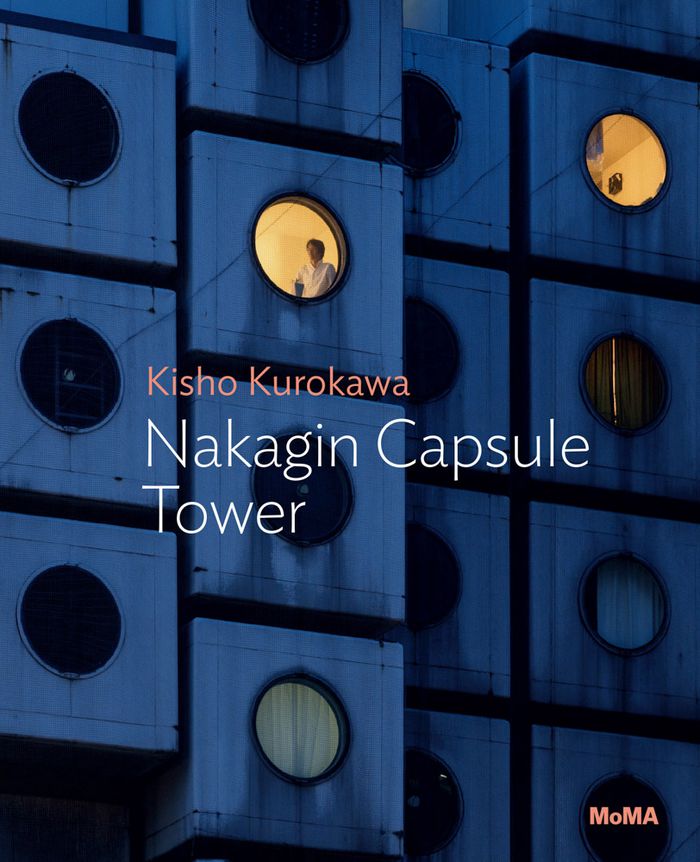
Comprised of two steel and concrete towers outfitted with 140 prefabricated living capsules, the ''Nakagin Capsule Tower'' in Tokyo is one of the most iconic and influential architectural marvels of the postwar period. A touchstone of the Metabolist movement, the tower was designed by the office of Japanese architect Kisho Kurokawa (1934–2007) and completed between 1970(...)
Title:
Kisho Kurokawa: Nakagin Capsule Tower. MoMA one on one series
Actions:
Price:
$22.95
(available in store)
Summary:
Comprised of two steel and concrete towers outfitted with 140 prefabricated living capsules, the ''Nakagin Capsule Tower'' in Tokyo is one of the most iconic and influential architectural marvels of the postwar period. A touchstone of the Metabolist movement, the tower was designed by the office of Japanese architect Kisho Kurokawa (1934–2007) and completed between 1970 and 1972. Each capsule was intended for single occupancy and came outfitted with its own ensuite bathroom, a foldout desk, a telephone, a reel-to-reel tape player, a Sony color television and a "porthole" window overlooking the city. In this volume of the MoMA ''One on One'' series, curator Evangelos Kotsioris delves into the groundbreaking design, construction, evolution and ultimate need for the demolition of this remarkable structure in 2022. It is published in advance of MoMA's exhibition of one of the original capsules, the first to be publicly shown in the United States.
Form:
books
books
Publication:
August 2025
August 2025
Subject:
Architecture Monographs
Architecture Monographs
Form:
books
books
Title:
Why architects still draw
Why architects still draw
Actions:
Price:
$26.95
(available to order)
Summary:
Why would an architect reach for a pencil when drawing software and AutoCAD are a click away? Use a ruler when 3D-scanners and GPS devices are close at hand? In Why Architects Still Draw, Paolo Belardi offers an elegant and ardent defense of drawing by hand as a way of thinking. Belardi is no Luddite; he doesn't urge architects to give up digital devices for watercolors(...)
Title:
Why architects still draw
Actions:
Price:
$26.95
(available to order)
Summary:
Why would an architect reach for a pencil when drawing software and AutoCAD are a click away? Use a ruler when 3D-scanners and GPS devices are close at hand? In Why Architects Still Draw, Paolo Belardi offers an elegant and ardent defense of drawing by hand as a way of thinking. Belardi is no Luddite; he doesn't urge architects to give up digital devices for watercolors and a measuring tape. Rather, he makes a case for drawing as the interface between the idea and the work itself. A drawing, Belardi argues, holds within it the entire final design. It is the paradox of the acorn: a project emerges from a drawing-even from a sketch, rough and inchoate-just as an oak tree emerges from an acorn. Citing examples not just from architecture but also from literature, chemistry, music, archaeology, and art, Belardi shows how drawing is not a passive recording but a moment of invention pregnant with creative possibilities.
Form:
books
books
Publication:
March 2014
March 2014
Subject:
Architectural Theory
Architectural Theory
Form:
books
books

Price:
$52.95
(available to order)
Summary:
The German-American architect Dirk Lohan began to record his conversations with his grandfather Ludwig Mies van der Rohe in the summer of 1969. The tapes, recorded during the final weeks of Mies's life, captured some of the architect's very last words. They were sent to the Museum of Modern Art in New York after his death, though they went missing under unknown(...)
Title:
The lost, last words of Mies van der Rohe: the Lohan tapes from 1969
Actions:
Price:
$52.95
(available to order)
Summary:
The German-American architect Dirk Lohan began to record his conversations with his grandfather Ludwig Mies van der Rohe in the summer of 1969. The tapes, recorded during the final weeks of Mies's life, captured some of the architect's very last words. They were sent to the Museum of Modern Art in New York after his death, though they went missing under unknown circumstances. Only an incomplete typescript remains as a testimony to the conversations. ''The lost, last words of Mies van der Rohe'' presents this text in its entirety for the very first time. The conversations relayed in the typescript reveal the famously reticent Mies speaking about his own life with a level of detail, precision, and candour found nowhere else. They shed new light on Mies's character – not only as a serious, philosophical man but also as a human being alive to the humorous aspects of life. This book features a foreword by Dirk Lohan and an introductory essay by Fritz Neumeyer, the world's foremost scholar on Mies. Neumeyer's commentary and analysis provide keen insights into how Mies developed his architectural thinking during his early career, on his way to becoming the most important modern architects of the twentieth century.
Form:
books
books
Publication:
December 2020
December 2020
Subject:
Architecture Monographs
Architecture Monographs
Form:
books
books
Actions:
Price:
$27.95
(available to order)
Summary:
In this publication, Caleb Kelly explores how the deliberate utilization of the normally undesirable (a crack, a break) has become the site of productive creation. Cracked media, Kelly writes, slides across disciplines, through music, sound, and noise. Cracked media encompasses everything from Cage's silences and indeterminacies, to Paik's often humorous tape works, to(...)
Title:
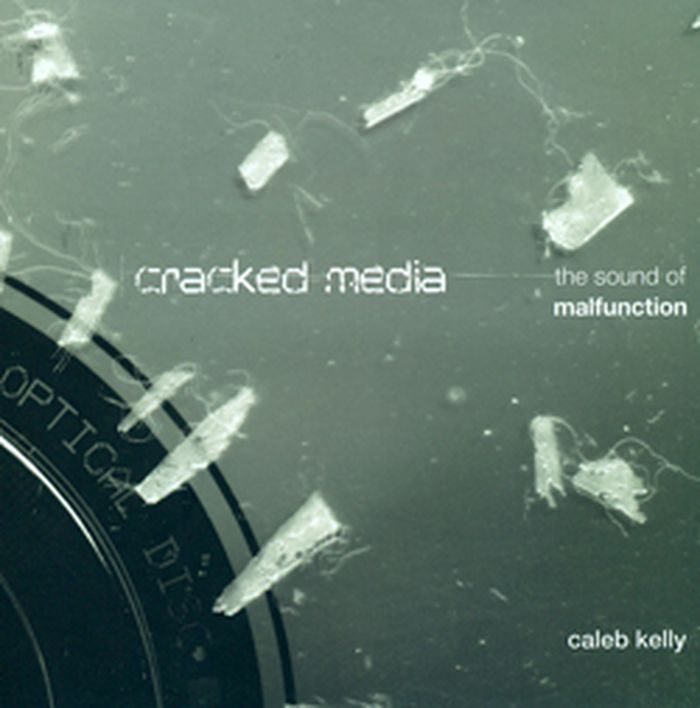
Cracked media : the sound of malfunction
Actions:
Price:
$27.95
(available to order)
Summary:
In this publication, Caleb Kelly explores how the deliberate utilization of the normally undesirable (a crack, a break) has become the site of productive creation. Cracked media, Kelly writes, slides across disciplines, through music, sound, and noise. Cracked media encompasses everything from Cage's silences and indeterminacies, to Paik's often humorous tape works, to the cold and clean sounds of digital glitch in the work of Tone and Oval. Kelly offers a detailed historical account of these practices, arguing that they can be read as precursors to contemporary new media. Kelly looks at the nature of recording technology and the music industry in relation to the crack and the break, and discusses the various manifestations of noise, concluding that neither theories of recording nor theories of noise offer an adequate framework for understanding cracked media. Connecting the historical avant-garde to modern-day turntablism, and predigital destructive techniques to the digital ticks, pops, and clicks of the glitch, Kelly proposes new media theorizations of cracked media that focus on materiality and the everyday.
Form:
books
books
Publication:
September 2009
September 2009
Subject:
Acoustics
Acoustics
Form:
books
books
Actions:
Price:
$54.95
(available to order)
Summary:
Ant Farm manifesto No. 853 bears the title 'Allegorical Time Warp': '... AMERICA, IN AN ALLEGORICAL TIME WARP / USING PRE ELECTRONIC, PRINT AGE TECHNIQUES / WELCOMES RETURNING SPACE HEROES / TICKER TAPE PARADE DOWN FIFTH AVENUE. / ALL I WANT TO DO IS EXPAND MY MIND ...' This book brings together two books bound within a single cover: 'Ant Farm Timeline' and 'Allegorical(...)
Subject:
Architecture Monographs
Architecture Monographs
Publication:
January 2008, New York/Barcelona
January 2008, New York/Barcelona
Title:
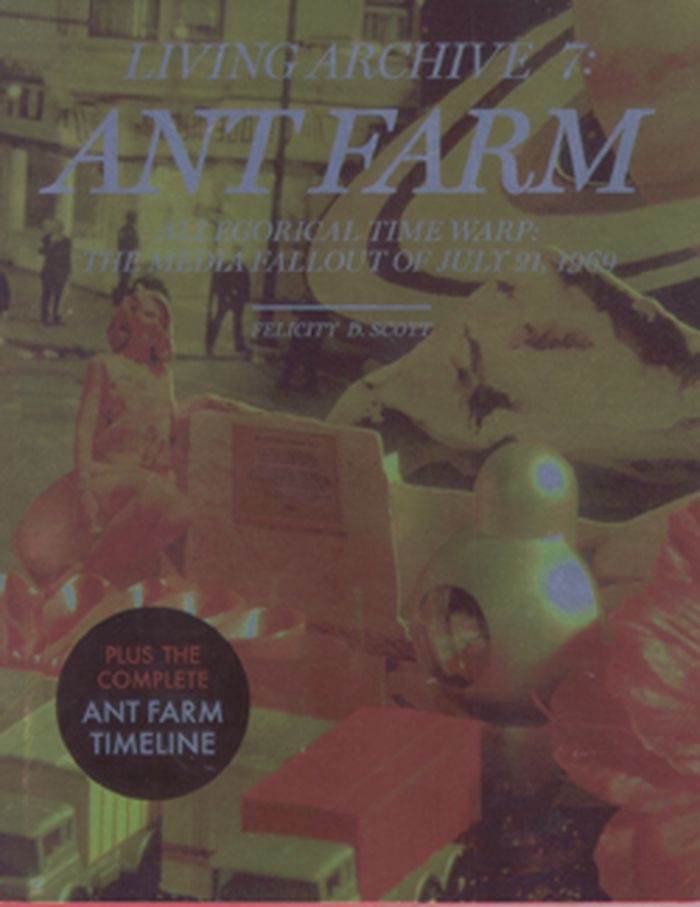
Living archive 7: Ant Farm: allegorical time warp: the media fallout of July 21, 1969
Actions:
Price:
$54.95
(available to order)
Summary:
Ant Farm manifesto No. 853 bears the title 'Allegorical Time Warp': '... AMERICA, IN AN ALLEGORICAL TIME WARP / USING PRE ELECTRONIC, PRINT AGE TECHNIQUES / WELCOMES RETURNING SPACE HEROES / TICKER TAPE PARADE DOWN FIFTH AVENUE. / ALL I WANT TO DO IS EXPAND MY MIND ...' This book brings together two books bound within a single cover: 'Ant Farm Timeline' and 'Allegorical Time Warp: The Media Fallout of July 21, 1969'. In addition, the publication includes a small dossier of archival material related to Ant Farm's Truckstop Network project (1970-72). Introduced by Chip Lord, the timeline tells the story of Ant Farm's multifaceted experimental work over 114 pages, in as many full page illustrations of original material. The 'Allegorical Time Warp' by Felicity D. Scott, focused on the period from 1969 to 1972, tracks the transformations of an architectural project articulated simultaneously in open-ended media systems and closed life-support systems. The work of Ant Farm has been an archetype for a younger generation of artist's collectives. This publication offers to be the long awaited source for the material that surviced the fire of the collective's studio in august 1978.
Form:
books
books
Publication:
January 2008, New York/Barcelona
January 2008, New York/Barcelona
Subject:
Architecture Monographs
Architecture Monographs
Form:
books
books

Actions:
Price:
$32.95
(available to order)
Summary:
The role of popular music is widely recognized in giving voice to radical political views, the plight of the oppressed, and the desire for social change. Avant-garde music, by contrast, is often thought to prioritize the pursuit of new technical or conceptual territory over issues of human and social concern. Yet throughout the activist 1960s, many avant-garde musicians(...)
Title:
Sound commitments : avant-garde music in the sixties
Actions:
Price:
$32.95
(available to order)
Summary:
The role of popular music is widely recognized in giving voice to radical political views, the plight of the oppressed, and the desire for social change. Avant-garde music, by contrast, is often thought to prioritize the pursuit of new technical or conceptual territory over issues of human and social concern. Yet throughout the activist 1960s, many avant-garde musicians were convinced that aesthetic experiment and social progressiveness made natural bedfellows. Intensely involved in the era's social and political upheavals, they often sought to reflect this engagement in their music. Yet how could avant-garde musicians make a meaningful contribution to social change if their music remained the preserve of a tiny, initiated clique? In answer, this publication examines the encounter of avant-garde music and "the Sixties" across a range of genres, aesthetic positions and geographical locations. Through music for the concert hall, tape and electronic music, jazz and improvisation, participatory "events," performance art, and experimental popular music, the essays in this volume explore developments in the United States, France, West Germany, Italy, the Netherlands, the Soviet Union, Japan and parts of the "Third World," delving into the deep richness of avant-garde musicians' response to the decade's defining cultural shifts.
Form:
books
books
Publication:
February 2009, Oxford
February 2009, Oxford
Subject:
Acoustics
Acoustics
Form:
books
books
Actions:
Price:
$17.00
(available to order)
Summary:
Written in his characteristic "mesostics" (linked lines of prose poetry), Composition in Retrospect is a statement of methodology in which composer John Cage examines the central issues of his work: Indeterminacy, nonunderstanding, inconsistency, imitation, variable structure, contingency. Finished only shortly before his death in 1992, Composition in Retrospect completes(...)
Title:
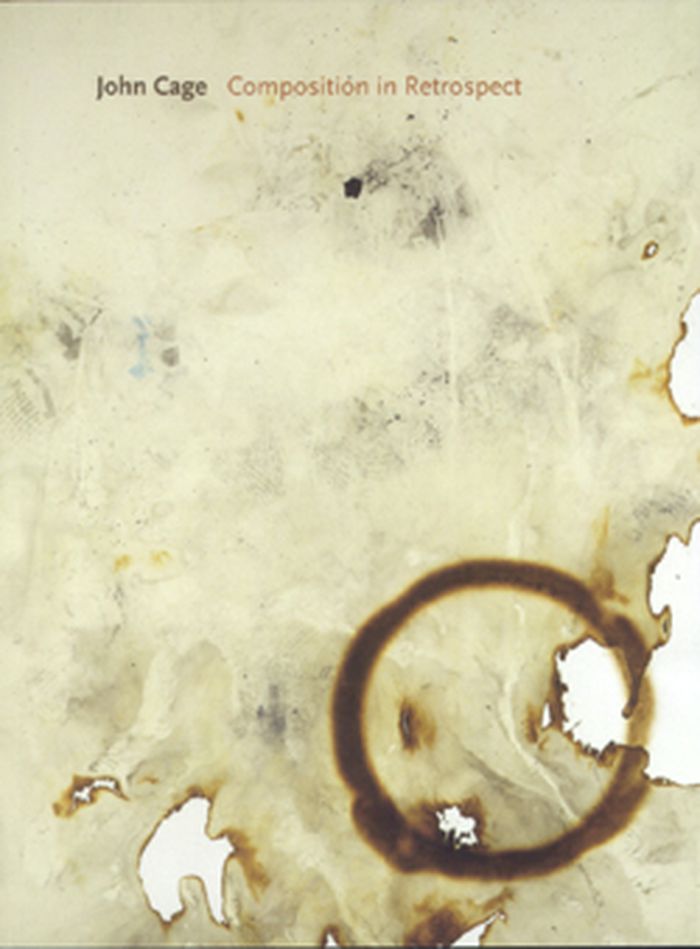
John Cage composition in retrospect
Actions:
Price:
$17.00
(available to order)
Summary:
Written in his characteristic "mesostics" (linked lines of prose poetry), Composition in Retrospect is a statement of methodology in which composer John Cage examines the central issues of his work: Indeterminacy, nonunderstanding, inconsistency, imitation, variable structure, contingency. Finished only shortly before his death in 1992, Composition in Retrospect completes the documentation of Cage's thought that began with his classic book Silence (1961), but it is an introduction and invitation to his work as much as a summary or conclusion. Also included in this volume (at Cage's request) is "Themes and Variations," a piece written in 1982 about friends and heroes such as Jasper Johns, Buckminster Fuller, Marcel Duchamp and Erik Satie. Together these pieces form a book that is both a testament to the artists Cage admired and a clear statement of his own ars poetica. John Cage (1912-1992) was an American composer, writer, artist and mycologist. Having studied with Arnold Schonberg (who proclaimed him "not a composer, but an inventor-of genius") and Henry Cowell in the 30s, Cage went on to devise landmark compositions for percussion and prepared piano before making his hugely influential work 4'33" (1952). Later works privileged composition by chance procedure--"imitating Nature in the manner of her operation"--and the use of ambient noise, electronics and tape manipulation. Cage's influence can be seen in the works of countless composers (especially the New York School "group" of Morton Feldman, Christian Wolff and Earle Brown), artists (such as those affiliated with Fluxus) and writers.
Form:
books
books
Publication:
June 2008, Cambridge
June 2008, Cambridge
Subject:
Contemporary Art Monographs
Contemporary Art Monographs
Form:
audio
audio
Title:
Pulsar Threads.
Pulsar Threads.
Actions:
Description:
1 online resource.
Author:
Subject:
Publication:
[Place of publication not identified] : Lateral Addition, 2024.
[Place of publication not identified] : Lateral Addition, 2024.
Form:
audio
audio
Publication:
[Place of publication not identified] : Lateral Addition, 2024.
[Place of publication not identified] : Lateral Addition, 2024.
Author:
Subject:
Form:
audio
audio
Actions:
Description:
1 online resource.
Author:
Subject:
Publication:
[Place of publication not identified] : Lateral Addition, 2018.
[Place of publication not identified] : Lateral Addition, 2018.
Form:
audio
audio
Publication:
[Place of publication not identified] : Lateral Addition, 2018.
[Place of publication not identified] : Lateral Addition, 2018.
Author:
Subject:


