


1106 Results
Form:
books
books
Holdings:
Description:
168 pages : illustrations (some color) ; 41 cm
Description:
168 pages : illustrations (some color) ; 41 cm
Author:
Subject:
Publication:
New York, NY : HarperCollins Publishers, [2001], ©2001
New York, NY : HarperCollins Publishers, [2001], ©2001
Title:
Churches / Judith Dupré ; introductory interview with Mario Botta.
Actions:
Holdings:
Description:
168 pages : illustrations (some color) ; 41 cm
Churches / Judith Dupré ; introductory interview with Mario Botta.
Actions:
Holdings:
Description:
168 pages : illustrations (some color) ; 41 cm
Form:
books
books
Publication:
New York, NY : HarperCollins Publishers, [2001], ©2001
New York, NY : HarperCollins Publishers, [2001], ©2001
Author:
Subject:
Form:
books
books
Actions:
Price:
$38.00
(available to order)
Summary:
In 1924 two architects, William Van Alen and Craig Severance (former friends and successful partners, but now bitter adversaries), set out to imprint their individual marks on the rapidly evolving skyline of New York City. Each man desired to build the city’s tallest building, or ‘skyscraper.’ Van Alen was a creative genius who envisioned a bold, contemporary building(...)
$38.00
(available to order)
Summary:
In 1924 two architects, William Van Alen and Craig Severance (former friends and successful partners, but now bitter adversaries), set out to imprint their individual marks on the rapidly evolving skyline of New York City. Each man desired to build the city’s tallest building, or ‘skyscraper.’ Van Alen was a creative genius who envisioned a bold, contemporary building(...)
Title:
Higher : a historic race to the sky and the making of a city
Actions:
Price:
$38.00
(available to order)
Summary:
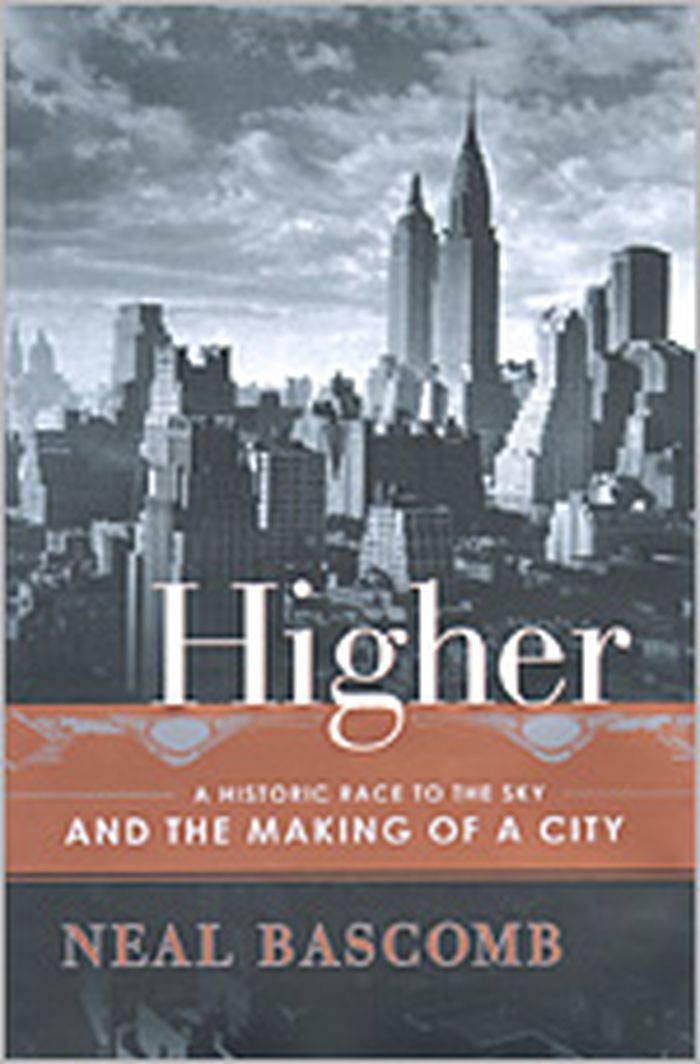
In 1924 two architects, William Van Alen and Craig Severance (former friends and successful partners, but now bitter adversaries), set out to imprint their individual marks on the rapidly evolving skyline of New York City. Each man desired to build the city’s tallest building, or ‘skyscraper.’ Van Alen was a creative genius who envisioned a bold, contemporary building that would move beyond the tired architecture of the previous century. By a stroke of good fortune he found a larger-than-life patron in automobile magnate Walter Chrysler, and they set out to build the legendary Chrysler building. Severance, by comparison, was a brilliant businessman, and he tapped his circle of downtown, old-money investors to begin construction on the Manhattan Company Building at 40 Wall Street. From ground-breaking to bricklaying, Van Alen and Severance fought a duel of wills. Each man was forced to revamp his architectural design in an attempt to push higher, to overcome his rival in mid-construction, as the structures rose, floor by floor, in record time. Yet just as the battle was underway, a third party entered the arena and announced plans to build an even larger building. This project would be overseen by one of Chrysler’s principal rivals--a representative of the General Motors group--and the building ultimately became known as The Empire State Building.
Higher : a historic race to the sky and the making of a city
Actions:
Price:
$38.00
(available to order)
Summary:
In 1924 two architects, William Van Alen and Craig Severance (former friends and successful partners, but now bitter adversaries), set out to imprint their individual marks on the rapidly evolving skyline of New York City. Each man desired to build the city’s tallest building, or ‘skyscraper.’ Van Alen was a creative genius who envisioned a bold, contemporary building that would move beyond the tired architecture of the previous century. By a stroke of good fortune he found a larger-than-life patron in automobile magnate Walter Chrysler, and they set out to build the legendary Chrysler building. Severance, by comparison, was a brilliant businessman, and he tapped his circle of downtown, old-money investors to begin construction on the Manhattan Company Building at 40 Wall Street. From ground-breaking to bricklaying, Van Alen and Severance fought a duel of wills. Each man was forced to revamp his architectural design in an attempt to push higher, to overcome his rival in mid-construction, as the structures rose, floor by floor, in record time. Yet just as the battle was underway, a third party entered the arena and announced plans to build an even larger building. This project would be overseen by one of Chrysler’s principal rivals--a representative of the General Motors group--and the building ultimately became known as The Empire State Building.
Form:
books
books
Publication:
September 2003, New York
September 2003, New York
Subject:
Gratte-ciels
Gratte-ciels
Form:
books
books
Actions:
Price:
$34.95
(available to order)
Summary:
Modern Architecture is a landmark text - the first book in which this American architect put forth the principles of a fundamentally new, organic architecture that would reject the trappings of historical styles while avoiding the geometric abstraction of the machine aesthetic advocated by contemporary European modernists. One of the most important documents in the(...)
$34.95
(available to order)
Summary:
Modern Architecture is a landmark text - the first book in which this American architect put forth the principles of a fundamentally new, organic architecture that would reject the trappings of historical styles while avoiding the geometric abstraction of the machine aesthetic advocated by contemporary European modernists. One of the most important documents in the(...)
Subject:
Architecture Monographs
Architecture Monographs
Publication:
March 2008, Princeton, Oxford
March 2008, Princeton, Oxford
Title:
Modern architecture : being the Kahn Lectures for 1930
Actions:
Price:
$34.95
(available to order)
Summary:
Modern Architecture is a landmark text - the first book in which this American architect put forth the principles of a fundamentally new, organic architecture that would reject the trappings of historical styles while avoiding the geometric abstraction of the machine aesthetic advocated by contemporary European modernists. One of the most important documents in the development of modern architecture and the career of Frank Lloyd Wright, "Modern Architecture" is a provocative and profound polemic against America's architectural eclecticism, commercial skyscrapers, and misguided urban planning. The book is also a work of savvy self-promotion, in which Wright not only advanced his own concept of an organic architecture but also framed it as having anticipated by decades - and bettered -what he saw as the reductive modernism of his European counterparts. Based on the 1931 original, for which Wright supplied the cover illustration, this edition includes a new introduction that puts "Modern Architecture" in its broader architectural, historical, and intellectual context for the first time. The subjects of these lively lectures -from "Machinery, Materials and Men" to "The Tyranny of the Skyscraper" and "The City" - move from a general statement of the conditions of modern culture to particular applications in the fields of architecture and urbanism at ever broadening scales. Wright's vision in "Modern Architecture" is ultimately to equate the truly modern with romanticism, imagination, beauty, and nature - all of which he connects with an underlying sense of American democratic freedom and individualism.
Modern architecture : being the Kahn Lectures for 1930
Actions:
Price:
$34.95
(available to order)
Summary:
Modern Architecture is a landmark text - the first book in which this American architect put forth the principles of a fundamentally new, organic architecture that would reject the trappings of historical styles while avoiding the geometric abstraction of the machine aesthetic advocated by contemporary European modernists. One of the most important documents in the development of modern architecture and the career of Frank Lloyd Wright, "Modern Architecture" is a provocative and profound polemic against America's architectural eclecticism, commercial skyscrapers, and misguided urban planning. The book is also a work of savvy self-promotion, in which Wright not only advanced his own concept of an organic architecture but also framed it as having anticipated by decades - and bettered -what he saw as the reductive modernism of his European counterparts. Based on the 1931 original, for which Wright supplied the cover illustration, this edition includes a new introduction that puts "Modern Architecture" in its broader architectural, historical, and intellectual context for the first time. The subjects of these lively lectures -from "Machinery, Materials and Men" to "The Tyranny of the Skyscraper" and "The City" - move from a general statement of the conditions of modern culture to particular applications in the fields of architecture and urbanism at ever broadening scales. Wright's vision in "Modern Architecture" is ultimately to equate the truly modern with romanticism, imagination, beauty, and nature - all of which he connects with an underlying sense of American democratic freedom and individualism.
Form:
books
books
Publication:
March 2008, Princeton, Oxford
March 2008, Princeton, Oxford
Subject:
Architecture Monographs
Architecture Monographs
Form:
books
books
Actions:
Price:
$21.00
(available to order)
Summary:
For nearly twenty years now, Blair Kamin of the "Chicago Tribune" has explored how architecture captures our imagination and engages our deepest emotions. A winner of the Pulitzer Prize for criticism and writer of the widely read "Cityscapes" blog, Kamin treats his subjects not only as works of art but also as symbols of the cultural and political forces that inspire(...)
$21.00
(available to order)
Summary:
For nearly twenty years now, Blair Kamin of the "Chicago Tribune" has explored how architecture captures our imagination and engages our deepest emotions. A winner of the Pulitzer Prize for criticism and writer of the widely read "Cityscapes" blog, Kamin treats his subjects not only as works of art but also as symbols of the cultural and political forces that inspire(...)
Title:
Terror and wonder : architecture in a tumultuous age
Actions:
Price:
$21.00
(available to order)
Summary:
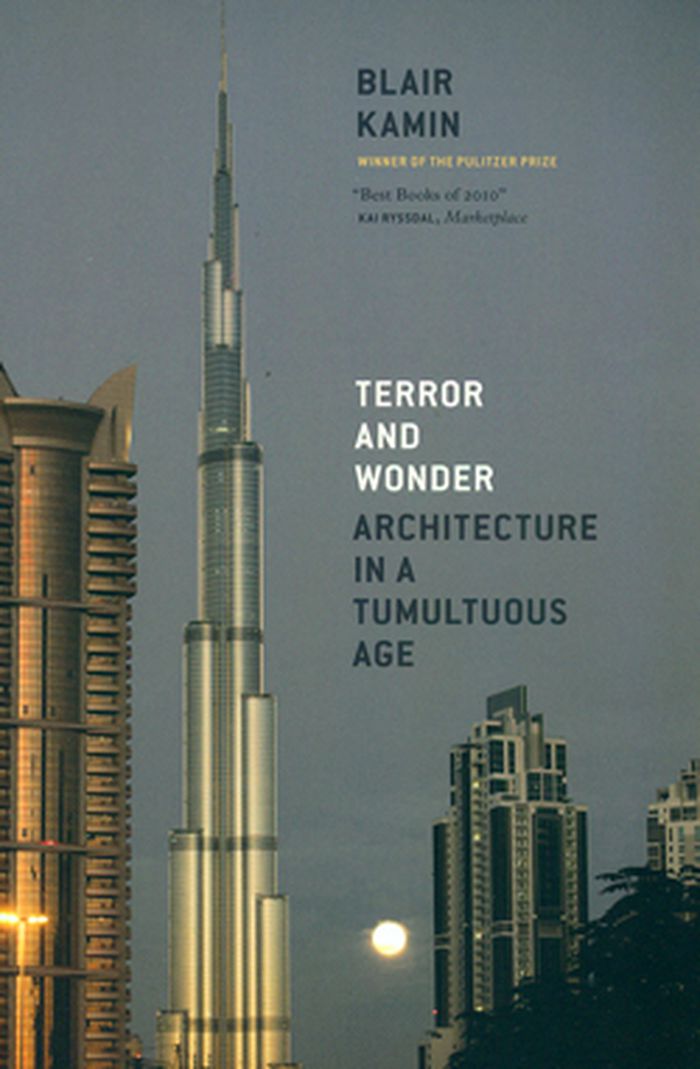
For nearly twenty years now, Blair Kamin of the "Chicago Tribune" has explored how architecture captures our imagination and engages our deepest emotions. A winner of the Pulitzer Prize for criticism and writer of the widely read "Cityscapes" blog, Kamin treats his subjects not only as works of art but also as symbols of the cultural and political forces that inspire them. Terror and Wonder gathers the best of Kamin's writings from the past decade along with new reflections on an era framed by the destruction of the World Trade Center and the opening of the world's tallest skyscraper. Assessing ordinary commercial structures as well as head-turning designs by some of the world's leading architects, Kamin paints a sweeping but finely textured portrait of a tumultuous age torn between the conflicting mandates of architectural spectacle and sustainability. For Kamin, the story of our built environment over the past ten years is, in tangible ways, the story of the decade itself. Terror and Wonder considers how architecture has been central to the main events and crosscurrents in American life since 2001: the devastating and debilitating consequences of 9/11 and Hurricane Katrina; the real estate boom and bust; the use of over-the-top cultural designs as engines of civic renewal; new challenges in saving old buildings; the unlikely rise of energy-saving, green architecture; and growing concern over our nation's crumbling infrastructure.
Terror and wonder : architecture in a tumultuous age
Actions:
Price:
$21.00
(available to order)
Summary:
For nearly twenty years now, Blair Kamin of the "Chicago Tribune" has explored how architecture captures our imagination and engages our deepest emotions. A winner of the Pulitzer Prize for criticism and writer of the widely read "Cityscapes" blog, Kamin treats his subjects not only as works of art but also as symbols of the cultural and political forces that inspire them. Terror and Wonder gathers the best of Kamin's writings from the past decade along with new reflections on an era framed by the destruction of the World Trade Center and the opening of the world's tallest skyscraper. Assessing ordinary commercial structures as well as head-turning designs by some of the world's leading architects, Kamin paints a sweeping but finely textured portrait of a tumultuous age torn between the conflicting mandates of architectural spectacle and sustainability. For Kamin, the story of our built environment over the past ten years is, in tangible ways, the story of the decade itself. Terror and Wonder considers how architecture has been central to the main events and crosscurrents in American life since 2001: the devastating and debilitating consequences of 9/11 and Hurricane Katrina; the real estate boom and bust; the use of over-the-top cultural designs as engines of civic renewal; new challenges in saving old buildings; the unlikely rise of energy-saving, green architecture; and growing concern over our nation's crumbling infrastructure.
Form:
books
books
Publication:
September 2011
September 2011
Subject:
Architectural Theory
Architectural Theory
Form:
books
books
Actions:
Price:
$85.00
(available in store)
Summary:
Published for a major exhibition at The Museum of Modern Art, this catalog reveals new perspectives on the work of Frank Lloyd Wright, a designer so prolific and familiar as to nearly preclude critical reexamination. Structured as a series of inquiries into the Frank Lloyd Wright Foundation Archives at Taliesin West, Arizona (recently acquired by MoMA and Avery(...)
$85.00
(available in store)
Summary:
Published for a major exhibition at The Museum of Modern Art, this catalog reveals new perspectives on the work of Frank Lloyd Wright, a designer so prolific and familiar as to nearly preclude critical reexamination. Structured as a series of inquiries into the Frank Lloyd Wright Foundation Archives at Taliesin West, Arizona (recently acquired by MoMA and Avery(...)
Title:
Frank Lloyd Wright: unpacking the archive
Actions:
Price:
$85.00
(available in store)
Summary:
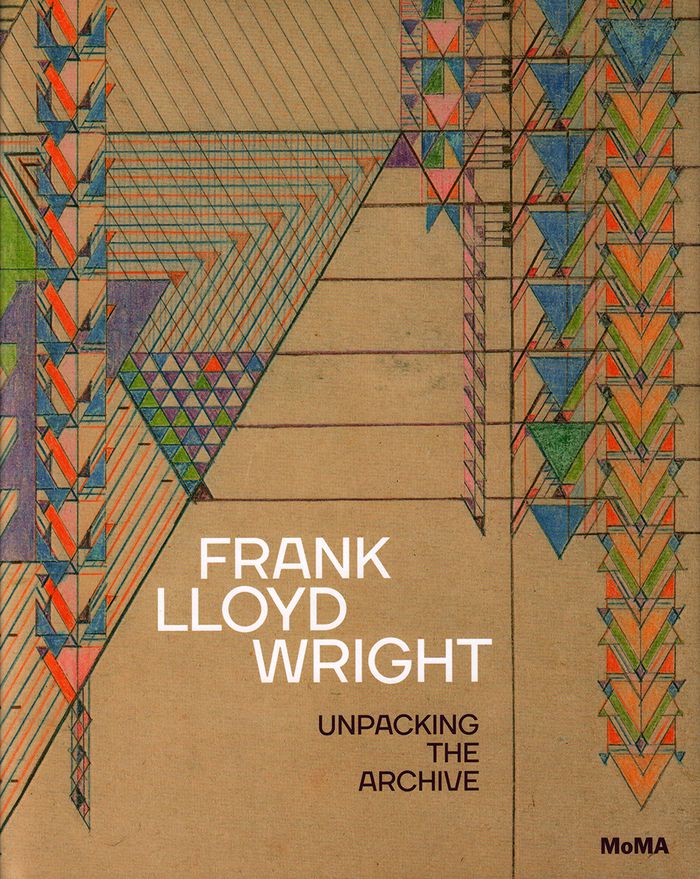
Published for a major exhibition at The Museum of Modern Art, this catalog reveals new perspectives on the work of Frank Lloyd Wright, a designer so prolific and familiar as to nearly preclude critical reexamination. Structured as a series of inquiries into the Frank Lloyd Wright Foundation Archives at Taliesin West, Arizona (recently acquired by MoMA and Avery Architectural & Fine Arts Library, Columbia University), the book is a collection of scholarly explorations rather than an attempt to construct a master narrative. Each chapter centers on a key object from the archive that an invited author has “unpacked”— tracing its meanings and connections, and juxtaposing it with other works from the archive, from MoMA, or from outside collections. Wright’s quest to build a mile-high skyscraper reveals him to be one of the earliest celebrity architects, using television, press relations and other forms of mass media to advance his own self-crafted image. A little-known project for a Rosenwald School for African-American children, together with other projects that engage Japanese and Native American culture, ask provocative questions about Wright’s positions on race and cultural identity. Still other investigations engage the architect’s lifelong dedication to affordable and do-it-yourself housing, as well as the ecological systems, both social and environmental, that informed his approach to cities, landscapes and even ornament. The publication aims to open up Wright’s work to questions, interrogations and debates, and to highlight interpretations by contemporary scholars, both established Wright experts and others considering this iconic figure from new and illuminating perspectives.
Frank Lloyd Wright: unpacking the archive
Actions:
Price:
$85.00
(available in store)
Summary:
Published for a major exhibition at The Museum of Modern Art, this catalog reveals new perspectives on the work of Frank Lloyd Wright, a designer so prolific and familiar as to nearly preclude critical reexamination. Structured as a series of inquiries into the Frank Lloyd Wright Foundation Archives at Taliesin West, Arizona (recently acquired by MoMA and Avery Architectural & Fine Arts Library, Columbia University), the book is a collection of scholarly explorations rather than an attempt to construct a master narrative. Each chapter centers on a key object from the archive that an invited author has “unpacked”— tracing its meanings and connections, and juxtaposing it with other works from the archive, from MoMA, or from outside collections. Wright’s quest to build a mile-high skyscraper reveals him to be one of the earliest celebrity architects, using television, press relations and other forms of mass media to advance his own self-crafted image. A little-known project for a Rosenwald School for African-American children, together with other projects that engage Japanese and Native American culture, ask provocative questions about Wright’s positions on race and cultural identity. Still other investigations engage the architect’s lifelong dedication to affordable and do-it-yourself housing, as well as the ecological systems, both social and environmental, that informed his approach to cities, landscapes and even ornament. The publication aims to open up Wright’s work to questions, interrogations and debates, and to highlight interpretations by contemporary scholars, both established Wright experts and others considering this iconic figure from new and illuminating perspectives.
Form:
books
books
Publication:
June 2017
June 2017
Subject:
Architecture Monographs
Architecture Monographs
Form:
books
books
Actions:
Price:
$90.00
(available to order)
Summary:
Le Corbusier's first trip to the United States in 1935 is generally considered a failure because it produced no commissions. The experience nevertheless had a profound effect on him, both personally and professionally. Sponsored by the Museum of Modern Art in New York, Le Corbusier promoted his ideas through a lecture tour, exhibition, and press conferences, as well as in(...)
$90.00
(available to order)
Summary:
Le Corbusier's first trip to the United States in 1935 is generally considered a failure because it produced no commissions. The experience nevertheless had a profound effect on him, both personally and professionally. Sponsored by the Museum of Modern Art in New York, Le Corbusier promoted his ideas through a lecture tour, exhibition, and press conferences, as well as in(...)
Subject:
Architecture Monographs
Architecture Monographs
Publication:
May 2001, Cambridge, Mass.
May 2001, Cambridge, Mass.
Title:
Le Corbusier in America : travels in the land of the timid
Actions:
Price:
$90.00
(available to order)
Summary:
Le Corbusier's first trip to the United States in 1935 is generally considered a failure because it produced no commissions. The experience nevertheless had a profound effect on him, both personally and professionally. Sponsored by the Museum of Modern Art in New York, Le Corbusier promoted his ideas through a lecture tour, exhibition, and press conferences, as well as in meetings with industrialists, housing reformers, New Deal technocrats, and editors. His lectures were watershed events that advanced the cause of European modernism. Yet he returned to France empty-handed and published a bittersweet account, "Quand les cathédrales étaient blanches: voyage au pays des timides" ("When the Cathedrals Were White: Journey to the Country of Timid People"), which faulted America for lacking the courage to adopt his ideas. In this first major study of Le Corbusier's American tour, Mardges Bacon reconstructs his encounter with America in all its fascinating detail. Through extensive archival research and interviews, she presents a critical history of the tour as well as a nuanced and intimate portrait of the architect. Drawing on the methods of microhistory, she also considers how small ordinary events affect larger biographical, architectural, and cultural developments. Bacon notes that Le Corbusier's dialogue with America was drafted within a spirited European discourse on américanisme. She contends that the trip validated his concept of a "second machine age" that would unite standardized industrial methods with a new humanism. Le Corbusier's subsequent work, she suggests, reflected an "Americanization," evidenced by the introduction of tension structures and the textured skyscraper conceived as an integrated system with functions articulated. She also defines Le Corbusier's role in the debate over New York City high-rise public housing. Appearing here in print for the first time are color reproductions of the pastel drawings that illustrated Le Corbusier's American lectures.
Le Corbusier in America : travels in the land of the timid
Actions:
Price:
$90.00
(available to order)
Summary:
Le Corbusier's first trip to the United States in 1935 is generally considered a failure because it produced no commissions. The experience nevertheless had a profound effect on him, both personally and professionally. Sponsored by the Museum of Modern Art in New York, Le Corbusier promoted his ideas through a lecture tour, exhibition, and press conferences, as well as in meetings with industrialists, housing reformers, New Deal technocrats, and editors. His lectures were watershed events that advanced the cause of European modernism. Yet he returned to France empty-handed and published a bittersweet account, "Quand les cathédrales étaient blanches: voyage au pays des timides" ("When the Cathedrals Were White: Journey to the Country of Timid People"), which faulted America for lacking the courage to adopt his ideas. In this first major study of Le Corbusier's American tour, Mardges Bacon reconstructs his encounter with America in all its fascinating detail. Through extensive archival research and interviews, she presents a critical history of the tour as well as a nuanced and intimate portrait of the architect. Drawing on the methods of microhistory, she also considers how small ordinary events affect larger biographical, architectural, and cultural developments. Bacon notes that Le Corbusier's dialogue with America was drafted within a spirited European discourse on américanisme. She contends that the trip validated his concept of a "second machine age" that would unite standardized industrial methods with a new humanism. Le Corbusier's subsequent work, she suggests, reflected an "Americanization," evidenced by the introduction of tension structures and the textured skyscraper conceived as an integrated system with functions articulated. She also defines Le Corbusier's role in the debate over New York City high-rise public housing. Appearing here in print for the first time are color reproductions of the pastel drawings that illustrated Le Corbusier's American lectures.
Form:
books
books
Publication:
May 2001, Cambridge, Mass.
May 2001, Cambridge, Mass.
Subject:
Architecture Monographs
Architecture Monographs


