


1128 Results
Form:
books
books
Title:
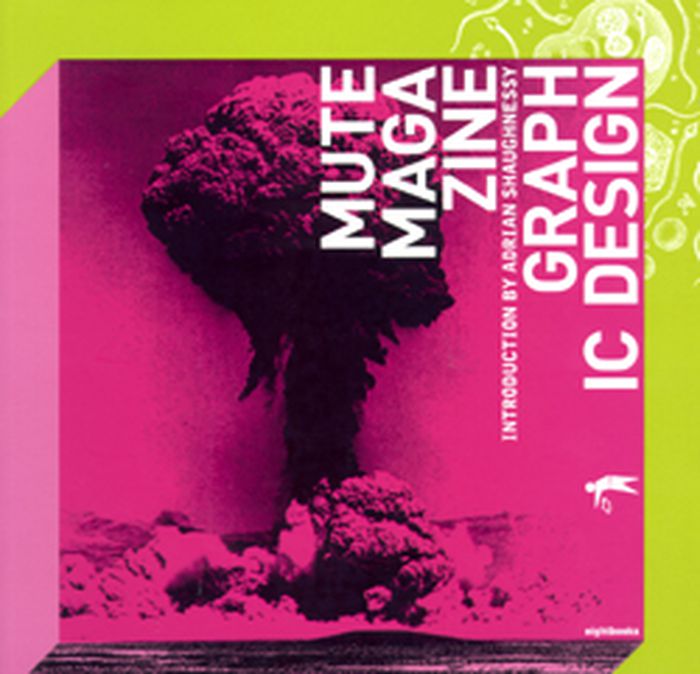
Mute magazine graphic design
Mute magazine graphic design
Actions:
Price:
$37.00
(available to order)
Summary:
In the early 1990s, long before the internet became an integral part of life, a handful of pioneering magazines took it upon themselves to imagine the web into existence. Using fiction, interviews, speculative theory and experimental graphic design, these titles helped create a lexicon and iconography every bit as powerful as the architecture of the World Wide Web.(...)
Subject:
Graphic Design and Typography
Graphic Design and Typography
Publication:
August 2008, London
August 2008, London
Title:
Mute magazine graphic design
Actions:
Price:
$37.00
(available to order)
Summary:
In the early 1990s, long before the internet became an integral part of life, a handful of pioneering magazines took it upon themselves to imagine the web into existence. Using fiction, interviews, speculative theory and experimental graphic design, these titles helped create a lexicon and iconography every bit as powerful as the architecture of the World Wide Web. London-based Mute occupied a central position here, wielding an influence vastly disproportionate to its size. The product of a period of intense creative ferment, Mute engaged boldly with allcomers. The magazine offered a platform to authors Bruce Sterling, Arthur Kroker, Mark Dery, Geert Lovink, Hari Kunzru, James Flint and Lev Manovich, just as it did to artists Keith Tyson, VNS Matrix and the Bureau of Inverse Technology. As new technologies forced a collapse of disciplinary boundaries and the intermingling of communities, Mute became part of a dynamic London scene, featuring many of the artists, writers and photographers who came to epitomise London’s status as a creative hotbed. The resulting collection of magazines defines an era, telling the fascinating tale of one publisher's relationship with the ‘digital revolution’ – the nineties’ very own Big Bang. This book presents a full overview of the magazine over a decade, showing its entire output – logos, covers and spreads. Using generous illustrations and in-depth captions, it details recurrent graphic themes and places Mute's evolution in perspective
Form:
books
books
Publication:
August 2008, London
August 2008, London
Subject:
Graphic Design and Typography
Graphic Design and Typography
Form:
books
books

Price:
$40.00
(available to order)
Summary:
Cities can make us sick. They always have—diseases spread more easily when more people are close to one another. And disease is hardly the only ill that accompanies urban density. Cities have been demonized as breeding grounds for vice and crime from Sodom and Gomorrah on. But cities have flourished nonetheless because they are humanity’s greatest invention, indispensable(...)
Title:
Survival of the city: Living and thriving in an age of isolation
Actions:
Price:
$40.00
(available to order)
Summary:
Cities can make us sick. They always have—diseases spread more easily when more people are close to one another. And disease is hardly the only ill that accompanies urban density. Cities have been demonized as breeding grounds for vice and crime from Sodom and Gomorrah on. But cities have flourished nonetheless because they are humanity’s greatest invention, indispensable engines for creativity, innovation, wealth, and connection, the loom on which the fabric of civilization is woven. But cities now stand at a crossroads. During the global COVID crisis, cities grew silent as people worked from home—if they could work at all. The normal forms of socializing ground to a halt. How permanent are these changes? Advances in digital technology mean that many people can opt out of city life as never before. Will they? Are we on the brink of a post-urban world? City life will survive but individual cities face terrible risks, argue Edward Glaeser and David Cutler, and a wave of urban failure would be absolutely disastrous. In terms of intimacy and inspiration, nothing can replace what cities offer. Great cities have always demanded great management, and our current crisis has exposed fearful gaps in our capacity for good governance. It is possible to drive a city into the ground, pandemic or not. Glaeser and Cutler examine the evolution that is already happening, and describe the possible futures that lie before us.
Form:
books
books
Publication:
September 2021
September 2021
Subject:
Urban Theory
Urban Theory
Form:
books
books
Title:
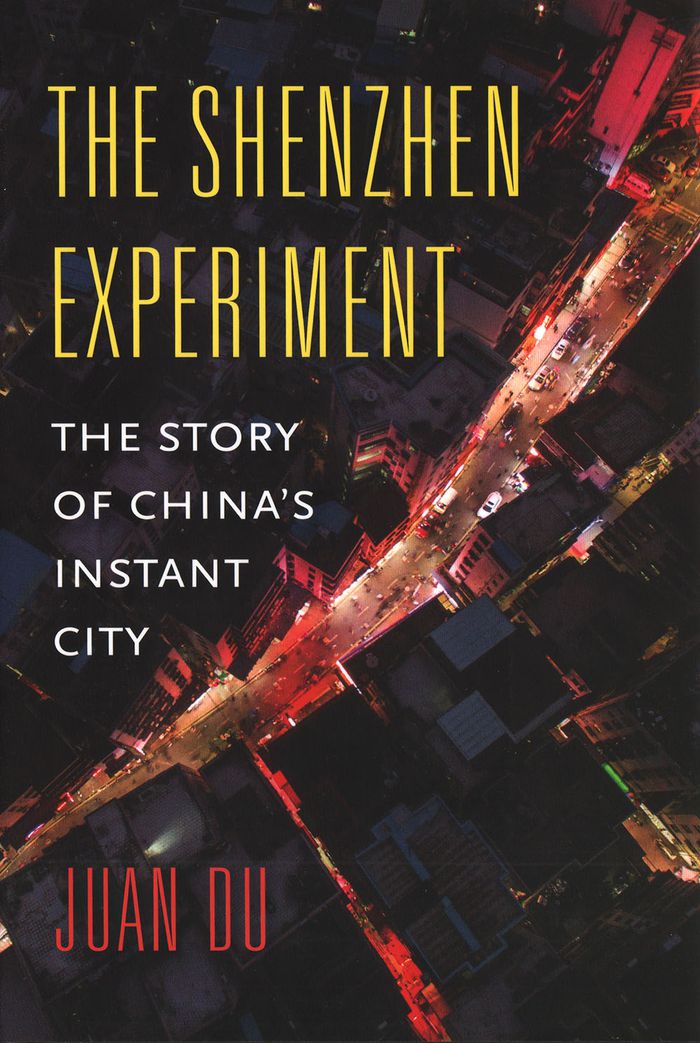
The Shenzhen experiment
The Shenzhen experiment
Actions:
Price:
$50.00
(available to order)
Summary:
Shenzhen is ground zero for the economic transformation China has seen in recent decades. In 1979, driven by China’s widespread poverty, Deng Xiaoping supported a bold proposal to experiment with economic policies in a rural borderland next to Hong Kong. The site was designated as the City of Shenzhen and soon after became China’s first Special Economic Zone (SEZ). Four(...)
Title:
The Shenzhen experiment
Actions:
Price:
$50.00
(available to order)
Summary:
Shenzhen is ground zero for the economic transformation China has seen in recent decades. In 1979, driven by China’s widespread poverty, Deng Xiaoping supported a bold proposal to experiment with economic policies in a rural borderland next to Hong Kong. The site was designated as the City of Shenzhen and soon after became China’s first Special Economic Zone (SEZ). Four decades later, Shenzhen is a megacity of twenty million, an internationally recognized digital technology hub, and the world’s most successful economic zone. Some see it as a modern miracle city that seemingly came from nowhere, attributing its success solely to centralized planning and Shenzhen’s proximity to Hong Kong. The Chinese government has built hundreds of new towns using the Shenzhen model, yet none has come close to replicating the city’s level of economic success. But is it true that Shenzhen has no meaningful history? That the city was planned on a tabula rasa? That the region’s rural past has had no significant impact on the urban present? Juan Du unravels the myth of Shenzhen and shows us how this world-famous “instant city” has a surprising history—filled with oyster fishermen, villages that remain encased within city blocks, a secret informal housing system—and how it has been catapulted to success as much by the ingenuity of its original farmers as by Beijing’s policy makers. “The Shenzhen Experiment” is an important story for all rapidly urbanizing and industrializing nations around the world seeking to replicate China’s economic success in the twenty-first century.
Form:
books
books
Publication:
January 2020
January 2020
Subject:
Contemporary Asian Architecture
Contemporary Asian Architecture
Form:
books
books
Title:
Design by numbers
Design by numbers
Actions:
Price:
$44.95
(available in store)
Summary:
Most art and technology projects pair artists with engineers or scientists: the artist has the conception, and the technical person provides the know-how. John Maeda is an artist and a computer scientist, and he views the computer not as a substitute for brush and paint but as an artistic medium in its own right. Design By Numbers is a reader-friendly tutorial on both the(...)
Subject:
Graphic Designers, Monographs
Graphic Designers, Monographs
Publication:
October 2001, Cambridge, Mass.
October 2001, Cambridge, Mass.
Title:
Design by numbers
Actions:
Price:
$44.95
(available in store)
Summary:
Most art and technology projects pair artists with engineers or scientists: the artist has the conception, and the technical person provides the know-how. John Maeda is an artist and a computer scientist, and he views the computer not as a substitute for brush and paint but as an artistic medium in its own right. Design By Numbers is a reader-friendly tutorial on both the philosophy and nuts-and-bolts techniques of programming for artists. Practicing what he preaches, Maeda composed Design By Numbers using a computational process he developed specifically for the book. He introduces a programming language and development environment, available on the Web, which can be freely downloaded or run directly within any JAVA-enabled Web browser. Appropriately, the new language is called DBN (for "design by numbers"). Designed for "visual" people--artists, designers, anyone who likes to pick up a pencil and doodle--DBN has very few commands and consists of elements resembling those of many other languages, such as LISP, LOGO, C/JAVA, and BASIC. Throughout the book Maeda emphasizes the importance--and delights--of understanding the motivation behind computer programming, as well as the many wonders that emerge from well-written programs. Sympathetic to the "mathematically challenged," he places minimal emphasis on mathematics in the first half of the book. Because computation is inherently mathematical, the books second half uses intermediate mathematical concepts that generally do not go beyond high-school algebra. The reader who masters the skills so clearly set out by Maeda will be ready to exploit the true character of digital media design.
Form:
books
books
Publication:
October 2001, Cambridge, Mass.
October 2001, Cambridge, Mass.
Subject:
Graphic Designers, Monographs
Graphic Designers, Monographs
Form:
books
books
Actions:
Price:
$90.00
(available to order)
Summary:
"Things as they are" presents the story of photojournalism over fifty years, from 1955 until today. It takes us from the golden era of the illustrated press—the heyday of Life magazine and Picture Post, and the moment of the Museum of Modern Art’s defining Family of Man exhibition—to the explosion of digital media in the twenty-first century. This history is told through(...)
Publication:
March 2006, New York
March 2006, New York
Title:
Things as they are : photojournalism in context since 1955
Actions:
Price:
$90.00
(available to order)
Summary:
"Things as they are" presents the story of photojournalism over fifty years, from 1955 until today. It takes us from the golden era of the illustrated press—the heyday of Life magazine and Picture Post, and the moment of the Museum of Modern Art’s defining Family of Man exhibition—to the explosion of digital media in the twenty-first century. This history is told through the presentation of 125 photojournalism features shot and published throughout the world. These stories are presented in context—shown on the pages of newspapers and magazines, as the public originally experienced them. In this way, "Things as they are" reveals how the events of the world, the art of photographers, and the interests of publishers and the press converged on the printed page. It traces how photojournalism has developed over time alongside changing technology, media, fashions in photography—and a changing world. It includes photo-essays by photographers such as W. Eugene Smith, Sebastião Salgado, Mary Ellen Mark, and James Nachtwey, each accompanied by commentary. An international panel of one hundred photographers, editors, art directors, historians, and magazine collectors has made the final selections for the book. They have chosen stories that exemplify the highest quality of work published around the world during each period as well as stories that have played a key role in shaping the history of photojournalism itself, demonstrating important innovations in photography and in publishing. The book includes a preface by Michiel Munneke, director of World Press Photo; a foreword by Christian Caujolle, curator and founder of Agence Vu Press; an introduction by Mary Panzer that considers the past, present, and future of photojournalism; and a timeline of the period illustrated with iconic winners of the annual World Press Photo awards.
Form:
books
books
Publication:
March 2006, New York
March 2006, New York
Form:
books
books
Price:
$120.00
(available to order)
Summary:
Whether from military necessity or unbridled curiosity, mapmakers since early antiquity have attempted to represent the configuration of the land about them. The Greeks paid homage to the landscape and struck its image on their coins. Medieval scholars viewed the (...)
Subject:
Architectural Drawing
Architectural Drawing
Publication:
October 1999, New York
October 1999, New York
Title:
Infinite perspectives : two thousand years of three-dimensional mapmaking
Actions:
Price:
$120.00
(available to order)
Summary:
Whether from military necessity or unbridled curiosity, mapmakers since early antiquity have attempted to represent the configuration of the land about them. The Greeks paid homage to the landscape and struck its image on their coins. Medieval scholars viewed the highest elevations as a boundary between the physical and the spiritual; the images they created of their sacred shrines and historic sites were drawn atop simple caricatures of mountains. Leonardo da Vinci's maps of Tuscany and other more realistic representations of landforms appeared during the Renaissance, thanks to a wealth of scientific study and new artistic methods. In the modern era, new techniques were invented as attempts to portray the three-dimensional world on a flat surface became more sophisticated. Hachuring, a system that involves shading with fine parallel or crossed lines, was developed with the use of copper plates; contour lines slowly replaced this technique in the nineteenth century. Lithography allowed for the introduction of color to the printing process, and multi-color tints were used to impart a sense of elevation. Aerial and satellite photography and the dawn of the digital era have yielded maps of unprecedented realism; today's computer technology allows planetary surfaces to be portrayed in three dimensions with a precision unimaginable to previous generations of mapmakers. "Infinite Perspectives" traces the artistic and scientific evolution of topographic representation from its origins to the present. Over 80 colour plates of some of the most significant maps ever made detail important advances in the portrayal of three dimensions in map form. The final section of the book contains 20 plates presenting a revolutionary cartographic technique that allows viewers wearing ordinary 3D glasses to view planetary surfaces without distortion. This invention, developed by the authors with Dr. Russell Ambroziak and named Infinite Perspective Projection, is currently in use by NASA and the Department of Defense. Included are maps of Mars, the Grand Canyon, and Mount McKinley, as well as one large fold-out map, suitable for framing; two pairs of the necessary 3D viewing glasses are also provided.
Form:
books
books
Publication:
October 1999, New York
October 1999, New York
Subject:
Architectural Drawing
Architectural Drawing
Form:
books
books
Actions:
Holdings:
Description:
383 pages : illustrations (chiefly color), color charts, color maps, portrait ; 24 cm
Description:
383 pages : illustrations (chiefly color), color charts, color maps, portrait ; 24 cm
Author:
Subject:
Publication:
New York, NY : Actar Publishers, 2021., New York : Distributed by Actar D, Inc.
New York, NY : Actar Publishers, 2021., New York : Distributed by Actar D, Inc.
Title:
Green obsession : trees towards cities, humans towards forests / Stefano Boeri Architetti.
Actions:
Holdings:
Description:
383 pages : illustrations (chiefly color), color charts, color maps, portrait ; 24 cm
Green obsession : trees towards cities, humans towards forests / Stefano Boeri Architetti.
Actions:
Holdings:
Description:
383 pages : illustrations (chiefly color), color charts, color maps, portrait ; 24 cm
Form:
books
books
Publication:
New York, NY : Actar Publishers, 2021., New York : Distributed by Actar D, Inc.
New York, NY : Actar Publishers, 2021., New York : Distributed by Actar D, Inc.
Author:
Subject:
Form:
audio
audio
Description:
1 online resource.
Author:
Subject:
Publication:
[Place of publication not identified] : Lateral Addition, 2018.
[Place of publication not identified] : Lateral Addition, 2018.
Title:
June 21, 2018 : Listening for Southwest Key in San Diego.
Actions:
Description:
1 online resource.
June 21, 2018 : Listening for Southwest Key in San Diego.
Actions:
Description:
1 online resource.
Form:
audio
audio
Publication:
[Place of publication not identified] : Lateral Addition, 2018.
[Place of publication not identified] : Lateral Addition, 2018.
Author:
Subject:


