


1150 Results
Form:
books
books
Actions:
Price:
$29.95
(available to order)
Summary:
After World War II, concrete became increasingly popular as a building medium around the world. Brutalism, the fashion for plain, heavy design, reigned. Toronto was particularly affected. The city has concrete buildings of all stripes – international landmarks, metropolitan infrastructure and even the single family home. Hundreds of these structures were built,(...)
$29.95
(available to order)
Summary:
After World War II, concrete became increasingly popular as a building medium around the world. Brutalism, the fashion for plain, heavy design, reigned. Toronto was particularly affected. The city has concrete buildings of all stripes – international landmarks, metropolitan infrastructure and even the single family home. Hundreds of these structures were built,(...)
Subject:
Architecture in Canada
Architecture in Canada
Publication:
November 2007, Toronto
November 2007, Toronto
Title:
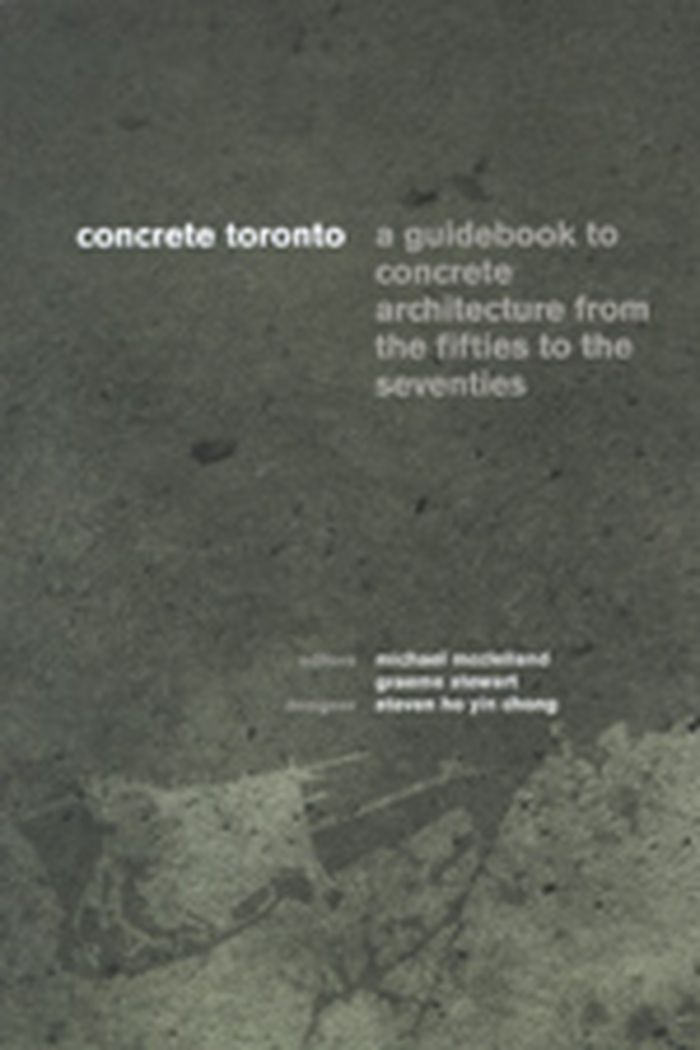
Concrete Toronto : a guidebook to concrete architecture from the fifties to the seventies
Actions:
Price:
$29.95
(available to order)
Summary:
After World War II, concrete became increasingly popular as a building medium around the world. Brutalism, the fashion for plain, heavy design, reigned. Toronto was particularly affected. The city has concrete buildings of all stripes – international landmarks, metropolitan infrastructure and even the single family home. Hundreds of these structures were built, including Viljo Revell’s groundbreaking New City Hall, John Andrew’s seminal Scarborough College and the record-smashing CN Tower. Toronto is a city cast in concrete. However, as architectural fashion has shifted from postmodernism to the glass-and-steel neomodernism of today, these concrete structures have been ignored, misunderstood and, in some cases, demolished. Concrete Toronto acts as a guide to the city’s extensive concrete heritage. A diverse group of experts has been assembled to re-examine the uniqueness and value of these buildings. Included are the insights of many of the original concrete architects, university faculty, local practitioners, journalists and industry experts. Together they explore the past and future of Toronto’s concrete buildings. Included is a wealth of new and archival photos, drawings, interviews, articles, as well as case studies of Toronto’s major concrete architecture.
Concrete Toronto : a guidebook to concrete architecture from the fifties to the seventies
Actions:
Price:
$29.95
(available to order)
Summary:
After World War II, concrete became increasingly popular as a building medium around the world. Brutalism, the fashion for plain, heavy design, reigned. Toronto was particularly affected. The city has concrete buildings of all stripes – international landmarks, metropolitan infrastructure and even the single family home. Hundreds of these structures were built, including Viljo Revell’s groundbreaking New City Hall, John Andrew’s seminal Scarborough College and the record-smashing CN Tower. Toronto is a city cast in concrete. However, as architectural fashion has shifted from postmodernism to the glass-and-steel neomodernism of today, these concrete structures have been ignored, misunderstood and, in some cases, demolished. Concrete Toronto acts as a guide to the city’s extensive concrete heritage. A diverse group of experts has been assembled to re-examine the uniqueness and value of these buildings. Included are the insights of many of the original concrete architects, university faculty, local practitioners, journalists and industry experts. Together they explore the past and future of Toronto’s concrete buildings. Included is a wealth of new and archival photos, drawings, interviews, articles, as well as case studies of Toronto’s major concrete architecture.
Form:
books
books
Publication:
November 2007, Toronto
November 2007, Toronto
Subject:
Architecture in Canada
Architecture in Canada
Form:
books
books
Price:
$80.00
(available in store)
Summary:
Aditya Prakash (1924-2008) belonged to the first generation of Indian modernists that came into its own in the Nehruvian era. Built around a multi-disciplinary oeuvre that was unique amongst his peers, Prakash's life was dedicated to finding the 'one continuous line' which linked art - as the search for the beautiful, architecture - as the enabler of life, and planning -(...)
$80.00
(available in store)
Summary:
Aditya Prakash (1924-2008) belonged to the first generation of Indian modernists that came into its own in the Nehruvian era. Built around a multi-disciplinary oeuvre that was unique amongst his peers, Prakash's life was dedicated to finding the 'one continuous line' which linked art - as the search for the beautiful, architecture - as the enabler of life, and planning -(...)
Title:
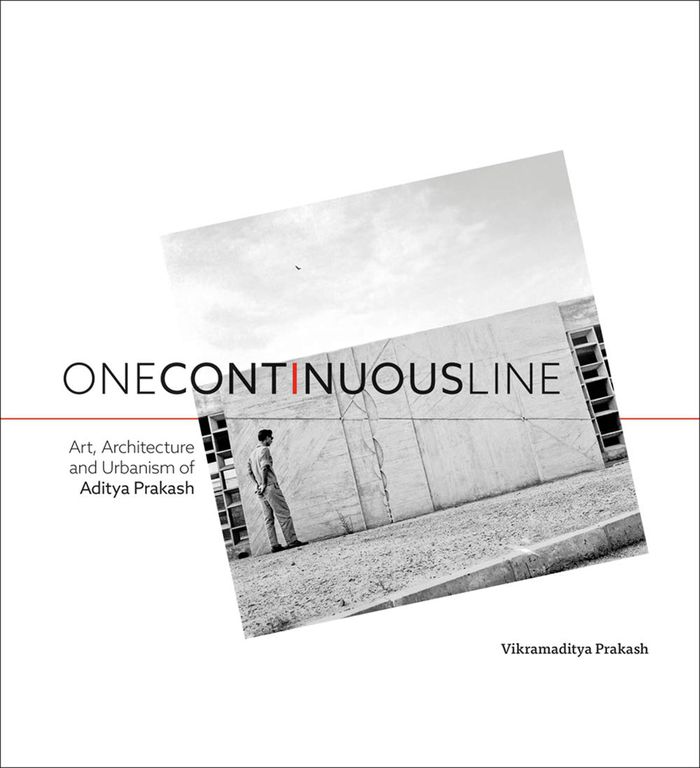
Onecontinuousline: art, architecture and urbanism of Aditya Prakash
Actions:
Price:
$80.00
(available in store)
Summary:
Aditya Prakash (1924-2008) belonged to the first generation of Indian modernists that came into its own in the Nehruvian era. Built around a multi-disciplinary oeuvre that was unique amongst his peers, Prakash's life was dedicated to finding the 'one continuous line' which linked art - as the search for the beautiful, architecture - as the enabler of life, and planning - as the ethic of protecting the interests of poor. nterspersed with a series of visual essays, this book is conceived as an introduction to Prakash's vast body of work. Besides practicing architecture, he was an academic, a prolific painter, sculptor, furniture designer, stage set-designer, poet and public speaker. This volume documents Prakash's education as an architect in Delhi and London, his early modernist works, his deep artistic impulses, his love of theatre, and his efforts to rally a culture of academic inquiry. The narrative describes his successes and failures, his arguments for and against modernism, postmodernism and globalization, and his passion for sustainable urbanism, the animal and the acoustic. The book concludes with an interpretive essay on Prakash's life and legacy, along with illustrations of a portfolio of select works.
Onecontinuousline: art, architecture and urbanism of Aditya Prakash
Actions:
Price:
$80.00
(available in store)
Summary:
Aditya Prakash (1924-2008) belonged to the first generation of Indian modernists that came into its own in the Nehruvian era. Built around a multi-disciplinary oeuvre that was unique amongst his peers, Prakash's life was dedicated to finding the 'one continuous line' which linked art - as the search for the beautiful, architecture - as the enabler of life, and planning - as the ethic of protecting the interests of poor. nterspersed with a series of visual essays, this book is conceived as an introduction to Prakash's vast body of work. Besides practicing architecture, he was an academic, a prolific painter, sculptor, furniture designer, stage set-designer, poet and public speaker. This volume documents Prakash's education as an architect in Delhi and London, his early modernist works, his deep artistic impulses, his love of theatre, and his efforts to rally a culture of academic inquiry. The narrative describes his successes and failures, his arguments for and against modernism, postmodernism and globalization, and his passion for sustainable urbanism, the animal and the acoustic. The book concludes with an interpretive essay on Prakash's life and legacy, along with illustrations of a portfolio of select works.
Form:
books
books
Publication:
January 2021
January 2021
Subject:
Architecture Monographs
Architecture Monographs
Form:
books
books
Price:
$49.95
(available to order)
Summary:
Over the last decade, 'parametricism' has been heralded as a new avant-garde in the industries of architecture, urban design, and industrial design, regarded by many as the next grand style in the history of architecture, heir to postmodernism and deconstruction. From buildings to cities, the built environment is increasingly addressed, designed and constructed using(...)
$49.95
(available to order)
Summary:
Over the last decade, 'parametricism' has been heralded as a new avant-garde in the industries of architecture, urban design, and industrial design, regarded by many as the next grand style in the history of architecture, heir to postmodernism and deconstruction. From buildings to cities, the built environment is increasingly addressed, designed and constructed using(...)
Title:
The politics of parametricism digital technologies in architecture
Actions:
Price:
$49.95
(available to order)
Summary:
Over the last decade, 'parametricism' has been heralded as a new avant-garde in the industries of architecture, urban design, and industrial design, regarded by many as the next grand style in the history of architecture, heir to postmodernism and deconstruction. From buildings to cities, the built environment is increasingly addressed, designed and constructed using digital software based on parametric scripting platforms which claim to be able to process complex physical and social modelling alike. As more and more digital tools are developed into an apparently infinite repertoire of socio-technical functions, critical questions concerning these cultural and technological shifts are often eclipsed by the seductive aesthetic and the alluring futuristic imaginary that parametric design tools and their architectural products and discourses represent. The Politics of Parametricism addresses these issues, offering a collection of new essays written by leading international thinkers in the fields of digital design, architecture, theory and technology. Exploring the social, political, ethical and philosophical issues at stake in the history, practice and processes of parametric architecture and urbanism, each chapter provides different vantage points to interrogate the challenges and opportunities presented by this latest mode of technological production.
The politics of parametricism digital technologies in architecture
Actions:
Price:
$49.95
(available to order)
Summary:
Over the last decade, 'parametricism' has been heralded as a new avant-garde in the industries of architecture, urban design, and industrial design, regarded by many as the next grand style in the history of architecture, heir to postmodernism and deconstruction. From buildings to cities, the built environment is increasingly addressed, designed and constructed using digital software based on parametric scripting platforms which claim to be able to process complex physical and social modelling alike. As more and more digital tools are developed into an apparently infinite repertoire of socio-technical functions, critical questions concerning these cultural and technological shifts are often eclipsed by the seductive aesthetic and the alluring futuristic imaginary that parametric design tools and their architectural products and discourses represent. The Politics of Parametricism addresses these issues, offering a collection of new essays written by leading international thinkers in the fields of digital design, architecture, theory and technology. Exploring the social, political, ethical and philosophical issues at stake in the history, practice and processes of parametric architecture and urbanism, each chapter provides different vantage points to interrogate the challenges and opportunities presented by this latest mode of technological production.
Form:
books
books
Publication:
December 2015
December 2015
Subject:
Digital Architecture
Digital Architecture
Form:
books
books
Actions:
Price:
$34.95
(available to order)
Summary:
Jorge Otero-Pailos shows how architectural phenomenology radically transformed how architects engaged, theorized, and produced history. In the first critical intellectual account of the movement, Otero-Pailos discusses the contributions of leading members, including Jean Labatut, Charles Moore, Christian Norberg-Schulz, and Kenneth Frampton. For architects maturing after(...)
$34.95
(available to order)
Summary:
Jorge Otero-Pailos shows how architectural phenomenology radically transformed how architects engaged, theorized, and produced history. In the first critical intellectual account of the movement, Otero-Pailos discusses the contributions of leading members, including Jean Labatut, Charles Moore, Christian Norberg-Schulz, and Kenneth Frampton. For architects maturing after(...)
Title:
Architecture's historical turn: phenomenology and the rise of the postmodern
Actions:
Price:
$34.95
(available to order)
Summary:
Jorge Otero-Pailos shows how architectural phenomenology radically transformed how architects engaged, theorized, and produced history. In the first critical intellectual account of the movement, Otero-Pailos discusses the contributions of leading members, including Jean Labatut, Charles Moore, Christian Norberg-Schulz, and Kenneth Frampton. For architects maturing after World War II, Otero-Pailos contends, architectural history was a problem rather than a given. Paradoxically, their awareness of modernism’s historicity led some of them to search for an ahistorical experiential constant that might underpin all architectural expression. They drew from phenomenology, exploring the work of Bachelard, Merleau-Ponty, Heidegger, and Ricoeur, which they translated for architectural audiences. Initially, the concept that experience could be a timeless architectural language provided a unifying intellectual basis for the stylistic pluralism that characterized postmodernism. It helped give theory—especially the theory of architectural history—a new importance over practice. However, as Otero-Pailos makes clear, architectural phenomenologists could not accept the idea of theory as an end in itself. In the mid-1980s they were caught in the contradictory and untenable position of having to formulate their own demotion of theory.
Architecture's historical turn: phenomenology and the rise of the postmodern
Actions:
Price:
$34.95
(available to order)
Summary:
Jorge Otero-Pailos shows how architectural phenomenology radically transformed how architects engaged, theorized, and produced history. In the first critical intellectual account of the movement, Otero-Pailos discusses the contributions of leading members, including Jean Labatut, Charles Moore, Christian Norberg-Schulz, and Kenneth Frampton. For architects maturing after World War II, Otero-Pailos contends, architectural history was a problem rather than a given. Paradoxically, their awareness of modernism’s historicity led some of them to search for an ahistorical experiential constant that might underpin all architectural expression. They drew from phenomenology, exploring the work of Bachelard, Merleau-Ponty, Heidegger, and Ricoeur, which they translated for architectural audiences. Initially, the concept that experience could be a timeless architectural language provided a unifying intellectual basis for the stylistic pluralism that characterized postmodernism. It helped give theory—especially the theory of architectural history—a new importance over practice. However, as Otero-Pailos makes clear, architectural phenomenologists could not accept the idea of theory as an end in itself. In the mid-1980s they were caught in the contradictory and untenable position of having to formulate their own demotion of theory.
Form:
books
books
Publication:
April 2010
April 2010
Subject:
Architectural Theory
Architectural Theory
Form:
books
books
Actions:
Price:
$70.00
(available to order)
Summary:
Maurice R. Stein and Larry Miller’s 'Blueprint for Counter Education' is one of the defining (but neglected) works of radical pedagogy of the Vietnam War era. Originally published as a boxed set by Doubleday in 1970, the book was accompanied by large graphic posters that could serve as a portable learning environment for a new process-based model of education, and a(...)
$70.00
(available to order)
Summary:
Maurice R. Stein and Larry Miller’s 'Blueprint for Counter Education' is one of the defining (but neglected) works of radical pedagogy of the Vietnam War era. Originally published as a boxed set by Doubleday in 1970, the book was accompanied by large graphic posters that could serve as a portable learning environment for a new process-based model of education, and a(...)
Title:
Blueprint for counter education
Actions:
Price:
$70.00
(available to order)
Summary:
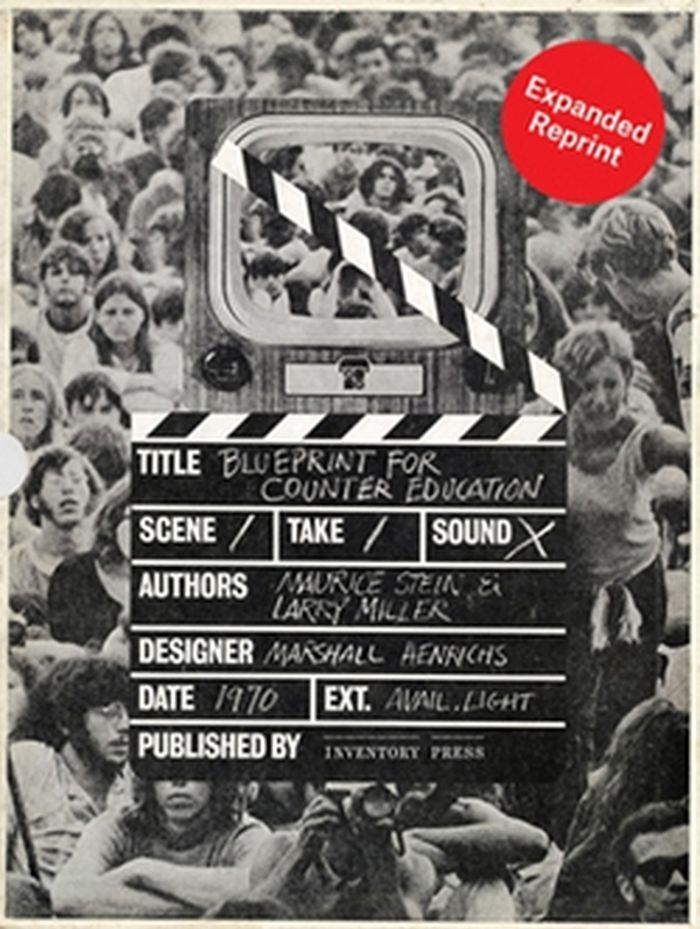
Maurice R. Stein and Larry Miller’s 'Blueprint for Counter Education' is one of the defining (but neglected) works of radical pedagogy of the Vietnam War era. Originally published as a boxed set by Doubleday in 1970, the book was accompanied by large graphic posters that could serve as a portable learning environment for a new process-based model of education, and a bibliography and checklist that map patterns and relationships between radical thought and artistic practices—from the modernist avant-gardes to postmodernism, from the Bauhaus to Black Mountain College, from Theodor Adorno and Walter Benjamin to Buckminster Fuller and Norman O. Brown—with Herbert Marcuse and Marshall McLuhan serving as points of anchorage. 'Blueprint for Counter Education' thus serves as a vital synthesis of the numerous intellectual currents in the countercultural debate on the radical reform of schools, universities and ways of learning. To accompany this new facsimile edition of the book and posters, an 80-page booklet features a conversation with the original Blueprint creators, Maurice R. Stein, Larry Miller and designer Marshall Henrichs, as well as essays from Jeffrey Schnapp, Paul Cronin and notes on the design by Adam Michaels of Project Projects.
Blueprint for counter education
Actions:
Price:
$70.00
(available to order)
Summary:
Maurice R. Stein and Larry Miller’s 'Blueprint for Counter Education' is one of the defining (but neglected) works of radical pedagogy of the Vietnam War era. Originally published as a boxed set by Doubleday in 1970, the book was accompanied by large graphic posters that could serve as a portable learning environment for a new process-based model of education, and a bibliography and checklist that map patterns and relationships between radical thought and artistic practices—from the modernist avant-gardes to postmodernism, from the Bauhaus to Black Mountain College, from Theodor Adorno and Walter Benjamin to Buckminster Fuller and Norman O. Brown—with Herbert Marcuse and Marshall McLuhan serving as points of anchorage. 'Blueprint for Counter Education' thus serves as a vital synthesis of the numerous intellectual currents in the countercultural debate on the radical reform of schools, universities and ways of learning. To accompany this new facsimile edition of the book and posters, an 80-page booklet features a conversation with the original Blueprint creators, Maurice R. Stein, Larry Miller and designer Marshall Henrichs, as well as essays from Jeffrey Schnapp, Paul Cronin and notes on the design by Adam Michaels of Project Projects.
Form:
books
books
Publication:
February 2016
February 2016
Subject:
Museology
Museology
Form:
books
books
Holdings:
Description:
190 pages : illustrations ; 22 cm
Description:
190 pages : illustrations ; 22 cm
Author:
Subject:
Publication:
New York : W.W. Norton, [1994], ©1994
New York : W.W. Norton, [1994], ©1994
Title:
American house styles : a concise guide / John Milnes Baker.
Actions:
Holdings:
Description:
190 pages : illustrations ; 22 cm
American house styles : a concise guide / John Milnes Baker.
Actions:
Holdings:
Description:
190 pages : illustrations ; 22 cm
Form:
books
books
Publication:
New York : W.W. Norton, [1994], ©1994
New York : W.W. Norton, [1994], ©1994
Author:
Subject:
Form:
books
books
Actions:
Price:
$45.00
(available to order)
Summary:
Dating from the early 1970s, ‘'Design and the Building Site'’ is Sérgio Ferro’s most influential theoretical work. Written just after Ferro had arrived in France after fleeing the military dictatorship that took power in Brazil in 1964 and arrested him in 1970 for his involvement in active resistance, the essay reflects much of what he had left behind: encounters with(...)
$45.00
(available to order)
Summary:
Dating from the early 1970s, ‘'Design and the Building Site'’ is Sérgio Ferro’s most influential theoretical work. Written just after Ferro had arrived in France after fleeing the military dictatorship that took power in Brazil in 1964 and arrested him in 1970 for his involvement in active resistance, the essay reflects much of what he had left behind: encounters with(...)
Title:
The building site and the design
Actions:
Price:
$45.00
(available to order)
Summary:
Dating from the early 1970s, ‘'Design and the Building Site'’ is Sérgio Ferro’s most influential theoretical work. Written just after Ferro had arrived in France after fleeing the military dictatorship that took power in Brazil in 1964 and arrested him in 1970 for his involvement in active resistance, the essay reflects much of what he had left behind: encounters with Brasilia’s harsh construction sites; experiences with the collective ''Arquitetura Nova''; work on the editorial committee of the journal ''Teoria e Prática''; and the year Ferro spent in prison, befriending construction workers and reading Freud. The text constitutes a critique of architectural production under capitalism, surveying the political economy of architectural production and its influence on the contemporary practice of architecture. Half a century after its first publication, and in the face of capitalism’s greatest crisis, it has never offered such a pressingly relevant call for action. This edition contextualises and expands on Ferro’s essay with earlier and later texts, clarifying both the contextual and theoretical elements at play in its argument. A preface written by Ferro especially for this first English-language edition recounts his journey from Brasilia’s building sites to the experiments of ''Arquitetura Nova'', as well as a topic he has rarely touched on before: postmodernism.
The building site and the design
Actions:
Price:
$45.00
(available to order)
Summary:
Dating from the early 1970s, ‘'Design and the Building Site'’ is Sérgio Ferro’s most influential theoretical work. Written just after Ferro had arrived in France after fleeing the military dictatorship that took power in Brazil in 1964 and arrested him in 1970 for his involvement in active resistance, the essay reflects much of what he had left behind: encounters with Brasilia’s harsh construction sites; experiences with the collective ''Arquitetura Nova''; work on the editorial committee of the journal ''Teoria e Prática''; and the year Ferro spent in prison, befriending construction workers and reading Freud. The text constitutes a critique of architectural production under capitalism, surveying the political economy of architectural production and its influence on the contemporary practice of architecture. Half a century after its first publication, and in the face of capitalism’s greatest crisis, it has never offered such a pressingly relevant call for action. This edition contextualises and expands on Ferro’s essay with earlier and later texts, clarifying both the contextual and theoretical elements at play in its argument. A preface written by Ferro especially for this first English-language edition recounts his journey from Brasilia’s building sites to the experiments of ''Arquitetura Nova'', as well as a topic he has rarely touched on before: postmodernism.
Form:
books
books
Publication:
April 2025
April 2025
Subject:
Architectural Theory
Architectural Theory
Form:
books
books
Actions:
Price:
$29.95
(available to order)
Summary:
There are all kinds of indications that architecture in the nineties has set off in a new direction after the domination of the two last decades by postmodernism as a style or attitude. This trend, which can be seen in the work of architectural firms like OMA, Jean Nouvel, Dominique Perrault, Herzog & De Meuron and Toyo Ito, can be connected with one of the dominant(...)
$29.95
(available to order)
Summary:
There are all kinds of indications that architecture in the nineties has set off in a new direction after the domination of the two last decades by postmodernism as a style or attitude. This trend, which can be seen in the work of architectural firms like OMA, Jean Nouvel, Dominique Perrault, Herzog & De Meuron and Toyo Ito, can be connected with one of the dominant(...)
Title:
Supermodernism : architecture in the age of globalization / enlarged edition
Actions:
Price:
$29.95
(available to order)
Summary:
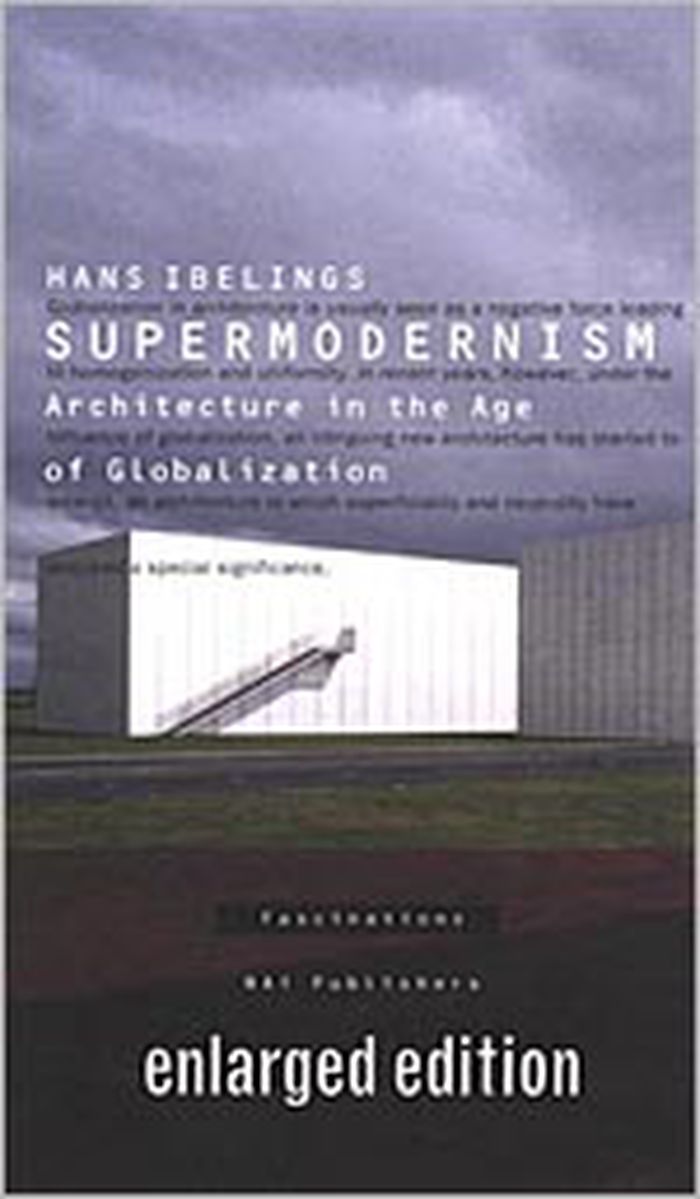
There are all kinds of indications that architecture in the nineties has set off in a new direction after the domination of the two last decades by postmodernism as a style or attitude. This trend, which can be seen in the work of architectural firms like OMA, Jean Nouvel, Dominique Perrault, Herzog & De Meuron and Toyo Ito, can be connected with one of the dominant forces of the present time: the globalization that is taking place in virtually every field. One of the consequences for architecture is the erosion of the postmodern (and deconstructivist) axiom of the uniqueness of the site. The context, let alone contextualism, no longer seems to play an important role in an increasing number of designs and buildings. Semiotic expressiveness - another postmodern theme - is also often lacking in this architecture. The author explores this new trend towards abstract, neutral architecture, which in various respects can be seen as the last word of modern architecture of the postwar International Style. This enlarged edition of "Supermodernism" includes a new final chapter in which Ibelings charts the latest examples of supermodernism, as well as a revised introduction and conclusion in which he responds to the numerous reactions his provocative stance has triggered.
Supermodernism : architecture in the age of globalization / enlarged edition
Actions:
Price:
$29.95
(available to order)
Summary:
There are all kinds of indications that architecture in the nineties has set off in a new direction after the domination of the two last decades by postmodernism as a style or attitude. This trend, which can be seen in the work of architectural firms like OMA, Jean Nouvel, Dominique Perrault, Herzog & De Meuron and Toyo Ito, can be connected with one of the dominant forces of the present time: the globalization that is taking place in virtually every field. One of the consequences for architecture is the erosion of the postmodern (and deconstructivist) axiom of the uniqueness of the site. The context, let alone contextualism, no longer seems to play an important role in an increasing number of designs and buildings. Semiotic expressiveness - another postmodern theme - is also often lacking in this architecture. The author explores this new trend towards abstract, neutral architecture, which in various respects can be seen as the last word of modern architecture of the postwar International Style. This enlarged edition of "Supermodernism" includes a new final chapter in which Ibelings charts the latest examples of supermodernism, as well as a revised introduction and conclusion in which he responds to the numerous reactions his provocative stance has triggered.
Form:
books
books
Publication:
January 1900, Rotterdam
January 1900, Rotterdam
Subject:
Architecture since 1900, Europe
Architecture since 1900, Europe
Form:
books
books
Actions:
Holdings:
Description:
303 pages : illustrations ; 24 cm
Description:
303 pages : illustrations ; 24 cm
Author:
Subject:
Publication:
Paris : Recherches, ©2010 (2001 printing)
Paris : Recherches, ©2010 (2001 printing)
Title:
Les architectes et mai 81 / Jean-Louis Violeau.
Actions:
Holdings:
Description:
303 pages : illustrations ; 24 cm
Les architectes et mai 81 / Jean-Louis Violeau.
Actions:
Holdings:
Description:
303 pages : illustrations ; 24 cm
Form:
books
books
Publication:
Paris : Recherches, ©2010 (2001 printing)
Paris : Recherches, ©2010 (2001 printing)
Author:
Subject:
Form:
books
books
Actions:
Holdings:
Description:
107 pages : illustrations (some coloe) ; 24 cm.
Description:
107 pages : illustrations (some coloe) ; 24 cm.
Author:
Subject:
Publication:
Montréal, Québec : Potential Architecture Books, 2018.
Montréal, Québec : Potential Architecture Books, 2018.
Title:
Du potentiel de l'hétéronomie et de l'autonomie en architecture / sous la direction de Louis Martin et Jonathan Lachance = On the potential of heteronomy and autonomy in architecture / edited by Louis Martin, Jonathan Lachance.
Actions:
Holdings:
Description:
107 pages : illustrations (some coloe) ; 24 cm.
Du potentiel de l'hétéronomie et de l'autonomie en architecture / sous la direction de Louis Martin et Jonathan Lachance = On the potential of heteronomy and autonomy in architecture / edited by Louis Martin, Jonathan Lachance.
Actions:
Holdings:
Description:
107 pages : illustrations (some coloe) ; 24 cm.
Form:
books
books
Publication:
Montréal, Québec : Potential Architecture Books, 2018.
Montréal, Québec : Potential Architecture Books, 2018.
Author:
Subject:


