


12622 Results
Level of archival description:
Project
Project
Actions:
Reference number:
AP018.S1.1978.PR04
Description:
This project series documents the design of a US pre-clearance facility at terminal one of the Toronto International Airport in Mississauga, Ontario in 1978. The office identified the project number as 7805. Since the early 1960s, John B. Parkin Associates, and later John C. Parkin's new firm Parkin Architects Planners, had been commissioned by the government Department of Transport Air Services to complete more than a dozen projects at the Toronto International Airport, including terminals one and two. This project consisted of the design of an area to accommodate pre-clearance screening to the US, which was located between fingers one and two at terminal one. The area is referred to as a node, and contained washrooms, customs areas, immigration areas, and a duty free that was accessible to international traffic. Many gates at terminal one had to be redesignated to accommodate this new facility. The project is recorded through drawings and textual records dating from 1978. The drawings are largely reprographic copies of floor plans and site plans, with sections of the original terminal one building included. Some drawings in this project series were created by the architectural firm Searle, Wilbee, Rowland, which was one of the names used for Parkin's firm after the merger of John B. Parkin Associates with Winnipeg-based firm Smith, Carter and Searle. The textual records include conference reports, correspondence and a feasibility report.
AP018.S1.1978.PR04
Description:
This project series documents the design of a US pre-clearance facility at terminal one of the Toronto International Airport in Mississauga, Ontario in 1978. The office identified the project number as 7805. Since the early 1960s, John B. Parkin Associates, and later John C. Parkin's new firm Parkin Architects Planners, had been commissioned by the government Department of Transport Air Services to complete more than a dozen projects at the Toronto International Airport, including terminals one and two. This project consisted of the design of an area to accommodate pre-clearance screening to the US, which was located between fingers one and two at terminal one. The area is referred to as a node, and contained washrooms, customs areas, immigration areas, and a duty free that was accessible to international traffic. Many gates at terminal one had to be redesignated to accommodate this new facility. The project is recorded through drawings and textual records dating from 1978. The drawings are largely reprographic copies of floor plans and site plans, with sections of the original terminal one building included. Some drawings in this project series were created by the architectural firm Searle, Wilbee, Rowland, which was one of the names used for Parkin's firm after the merger of John B. Parkin Associates with Winnipeg-based firm Smith, Carter and Searle. The textual records include conference reports, correspondence and a feasibility report.
People:
Date:
1978
1978
Title:
US Pre-Clearance Facility, Toronto International Airport, Mississauga, Ontario (1978)
Actions:
AP018.S1.1978.PR04
Description:
This project series documents the design of a US pre-clearance facility at terminal one of the Toronto International Airport in Mississauga, Ontario in 1978. The office identified the project number as 7805. Since the early 1960s, John B. Parkin Associates, and later John C. Parkin's new firm Parkin Architects Planners, had been commissioned by the government Department of Transport Air Services to complete more than a dozen projects at the Toronto International Airport, including terminals one and two. This project consisted of the design of an area to accommodate pre-clearance screening to the US, which was located between fingers one and two at terminal one. The area is referred to as a node, and contained washrooms, customs areas, immigration areas, and a duty free that was accessible to international traffic. Many gates at terminal one had to be redesignated to accommodate this new facility. The project is recorded through drawings and textual records dating from 1978. The drawings are largely reprographic copies of floor plans and site plans, with sections of the original terminal one building included. Some drawings in this project series were created by the architectural firm Searle, Wilbee, Rowland, which was one of the names used for Parkin's firm after the merger of John B. Parkin Associates with Winnipeg-based firm Smith, Carter and Searle. The textual records include conference reports, correspondence and a feasibility report.
US Pre-Clearance Facility, Toronto International Airport, Mississauga, Ontario (1978)
Actions:
AP018.S1.1978.PR04
Description:
This project series documents the design of a US pre-clearance facility at terminal one of the Toronto International Airport in Mississauga, Ontario in 1978. The office identified the project number as 7805. Since the early 1960s, John B. Parkin Associates, and later John C. Parkin's new firm Parkin Architects Planners, had been commissioned by the government Department of Transport Air Services to complete more than a dozen projects at the Toronto International Airport, including terminals one and two. This project consisted of the design of an area to accommodate pre-clearance screening to the US, which was located between fingers one and two at terminal one. The area is referred to as a node, and contained washrooms, customs areas, immigration areas, and a duty free that was accessible to international traffic. Many gates at terminal one had to be redesignated to accommodate this new facility. The project is recorded through drawings and textual records dating from 1978. The drawings are largely reprographic copies of floor plans and site plans, with sections of the original terminal one building included. Some drawings in this project series were created by the architectural firm Searle, Wilbee, Rowland, which was one of the names used for Parkin's firm after the merger of John B. Parkin Associates with Winnipeg-based firm Smith, Carter and Searle. The textual records include conference reports, correspondence and a feasibility report.
Level of archival description:
Project
Project
Date:
1978
1978
People:
Level of archival description:
Sub-series
Sub-series
Reference number:
AP156.S3.SS3
Description:
La sous-série documente les projets d'architecture et d'urbanisme de Pierre Jeanneret, de Le Corbusier et d'autres architectes à Chandigarh, Inde. La sous-série comprend des documents sur des projets comme les résidences gouvernementaux ou privées, certains des bâtiments du Capitol et de l'Université du Punjab. Le matériel dans ce dossier a probablement été produit entre 1945 et 1972. Le sous-série contient des dessins et des reprographies d'études, de dessin conceptuel, de dessin de développement du design, de dessin d'exécution et de dessins de présentation. Il y a aussi 2 albums de plans, l'un contenant des divers plans signés par Pierre Jeanneret de logements et l'autres contenant des plans pour la Musée de la Connaissance de Le Corbusier. La sous-série comprend aussi des documents textuels et quelques photographies reliées à des projets. Sub-series documents architectural and urban planning projects of Pierre Jeanneret, Le Corbusier and other architects in Chandigarh, India. The sub-series contains documents on projects like government or private residences, some of the Capitol's or Punjab University's buildings. Material in this sub-series was produced between 1945 and 1972. The sub-series contains drawings and reprographic copies of studies, conceptual drawings, design developement drawings, working drawings and presentation drawings. There is also 2 albums of plans, one containing various plans signed by Pierre Jeanneret of various dwellings and the other containing plans for the Museum of Knowledge by Le Corbusier. The sub-series contains also textual records and some photographs related to projects.
AP156.S3.SS3
Description:
La sous-série documente les projets d'architecture et d'urbanisme de Pierre Jeanneret, de Le Corbusier et d'autres architectes à Chandigarh, Inde. La sous-série comprend des documents sur des projets comme les résidences gouvernementaux ou privées, certains des bâtiments du Capitol et de l'Université du Punjab. Le matériel dans ce dossier a probablement été produit entre 1945 et 1972. Le sous-série contient des dessins et des reprographies d'études, de dessin conceptuel, de dessin de développement du design, de dessin d'exécution et de dessins de présentation. Il y a aussi 2 albums de plans, l'un contenant des divers plans signés par Pierre Jeanneret de logements et l'autres contenant des plans pour la Musée de la Connaissance de Le Corbusier. La sous-série comprend aussi des documents textuels et quelques photographies reliées à des projets. Sub-series documents architectural and urban planning projects of Pierre Jeanneret, Le Corbusier and other architects in Chandigarh, India. The sub-series contains documents on projects like government or private residences, some of the Capitol's or Punjab University's buildings. Material in this sub-series was produced between 1945 and 1972. The sub-series contains drawings and reprographic copies of studies, conceptual drawings, design developement drawings, working drawings and presentation drawings. There is also 2 albums of plans, one containing various plans signed by Pierre Jeanneret of various dwellings and the other containing plans for the Museum of Knowledge by Le Corbusier. The sub-series contains also textual records and some photographs related to projects.
People:
Date:
1945-1975
1945-1975
Title:
Chandigarh, Inde = Chandigarh, India
Actions:
AP156.S3.SS3
Description:
La sous-série documente les projets d'architecture et d'urbanisme de Pierre Jeanneret, de Le Corbusier et d'autres architectes à Chandigarh, Inde. La sous-série comprend des documents sur des projets comme les résidences gouvernementaux ou privées, certains des bâtiments du Capitol et de l'Université du Punjab. Le matériel dans ce dossier a probablement été produit entre 1945 et 1972. Le sous-série contient des dessins et des reprographies d'études, de dessin conceptuel, de dessin de développement du design, de dessin d'exécution et de dessins de présentation. Il y a aussi 2 albums de plans, l'un contenant des divers plans signés par Pierre Jeanneret de logements et l'autres contenant des plans pour la Musée de la Connaissance de Le Corbusier. La sous-série comprend aussi des documents textuels et quelques photographies reliées à des projets. Sub-series documents architectural and urban planning projects of Pierre Jeanneret, Le Corbusier and other architects in Chandigarh, India. The sub-series contains documents on projects like government or private residences, some of the Capitol's or Punjab University's buildings. Material in this sub-series was produced between 1945 and 1972. The sub-series contains drawings and reprographic copies of studies, conceptual drawings, design developement drawings, working drawings and presentation drawings. There is also 2 albums of plans, one containing various plans signed by Pierre Jeanneret of various dwellings and the other containing plans for the Museum of Knowledge by Le Corbusier. The sub-series contains also textual records and some photographs related to projects.
Chandigarh, Inde = Chandigarh, India
Actions:
AP156.S3.SS3
Description:
La sous-série documente les projets d'architecture et d'urbanisme de Pierre Jeanneret, de Le Corbusier et d'autres architectes à Chandigarh, Inde. La sous-série comprend des documents sur des projets comme les résidences gouvernementaux ou privées, certains des bâtiments du Capitol et de l'Université du Punjab. Le matériel dans ce dossier a probablement été produit entre 1945 et 1972. Le sous-série contient des dessins et des reprographies d'études, de dessin conceptuel, de dessin de développement du design, de dessin d'exécution et de dessins de présentation. Il y a aussi 2 albums de plans, l'un contenant des divers plans signés par Pierre Jeanneret de logements et l'autres contenant des plans pour la Musée de la Connaissance de Le Corbusier. La sous-série comprend aussi des documents textuels et quelques photographies reliées à des projets. Sub-series documents architectural and urban planning projects of Pierre Jeanneret, Le Corbusier and other architects in Chandigarh, India. The sub-series contains documents on projects like government or private residences, some of the Capitol's or Punjab University's buildings. Material in this sub-series was produced between 1945 and 1972. The sub-series contains drawings and reprographic copies of studies, conceptual drawings, design developement drawings, working drawings and presentation drawings. There is also 2 albums of plans, one containing various plans signed by Pierre Jeanneret of various dwellings and the other containing plans for the Museum of Knowledge by Le Corbusier. The sub-series contains also textual records and some photographs related to projects.
Level of archival description:
Sous-série 3
Sous-série 3
Date:
1945-1975
1945-1975
People:
Level of archival description:
Project
Project
Reference number:
AP143.S6.D2
Description:
File documents an unexecuted project for a Low Rise High Density Housing prototype for Fox Hills, Staten Island, New York, United States, and for Brownsville, Brooklyn, New York, United States. The project was featured in the 'Another Chance for Housing: Low-Rise Alternatives' exhibition at the Museum of Modern Art, New York, N.Y., June 12-August 19, 1973. Material in this file was produced in 1973 and is predominantly for Fox Hills, Staten Island, New York, United States. File contains conceptual drawings, textual records, presentation drawings, publication drawings, site measured drawings, and a catalogue.
AP143.S6.D2
Description:
File documents an unexecuted project for a Low Rise High Density Housing prototype for Fox Hills, Staten Island, New York, United States, and for Brownsville, Brooklyn, New York, United States. The project was featured in the 'Another Chance for Housing: Low-Rise Alternatives' exhibition at the Museum of Modern Art, New York, N.Y., June 12-August 19, 1973. Material in this file was produced in 1973 and is predominantly for Fox Hills, Staten Island, New York, United States. File contains conceptual drawings, textual records, presentation drawings, publication drawings, site measured drawings, and a catalogue.
People:
Date:
1973
1973
Title:
Low Rise High Density Housing
Actions:
AP143.S6.D2
Description:
File documents an unexecuted project for a Low Rise High Density Housing prototype for Fox Hills, Staten Island, New York, United States, and for Brownsville, Brooklyn, New York, United States. The project was featured in the 'Another Chance for Housing: Low-Rise Alternatives' exhibition at the Museum of Modern Art, New York, N.Y., June 12-August 19, 1973. Material in this file was produced in 1973 and is predominantly for Fox Hills, Staten Island, New York, United States. File contains conceptual drawings, textual records, presentation drawings, publication drawings, site measured drawings, and a catalogue.
Low Rise High Density Housing
Actions:
AP143.S6.D2
Description:
File documents an unexecuted project for a Low Rise High Density Housing prototype for Fox Hills, Staten Island, New York, United States, and for Brownsville, Brooklyn, New York, United States. The project was featured in the 'Another Chance for Housing: Low-Rise Alternatives' exhibition at the Museum of Modern Art, New York, N.Y., June 12-August 19, 1973. Material in this file was produced in 1973 and is predominantly for Fox Hills, Staten Island, New York, United States. File contains conceptual drawings, textual records, presentation drawings, publication drawings, site measured drawings, and a catalogue.
Level of archival description:
File 2
File 2
Date:
1973
1973
People:
Level of archival description:
Series
Series
Reference number:
AP163.S1
Description:
Series documents Victor Prus's student work at the School of Architecture at Liverpool and his work as assistant professor at the Polish University College of London. Series also includes other material, including drawings and textual material, that was probably produced during the period between 1949 and 1952, when Prus was working in England, including material related to his work as Senior Executive Officer at the Festival of Britain. Material in this series was produced between 1946 and 1952. Series contains conceptual, design development, working and presentation drawings, presentation panels, photographic materials and textual records.
AP163.S1
Description:
Series documents Victor Prus's student work at the School of Architecture at Liverpool and his work as assistant professor at the Polish University College of London. Series also includes other material, including drawings and textual material, that was probably produced during the period between 1949 and 1952, when Prus was working in England, including material related to his work as Senior Executive Officer at the Festival of Britain. Material in this series was produced between 1946 and 1952. Series contains conceptual, design development, working and presentation drawings, presentation panels, photographic materials and textual records.
People:
Date:
1946-1952
1946-1952
Title:
Student and professional work in England
Actions:
AP163.S1
Description:
Series documents Victor Prus's student work at the School of Architecture at Liverpool and his work as assistant professor at the Polish University College of London. Series also includes other material, including drawings and textual material, that was probably produced during the period between 1949 and 1952, when Prus was working in England, including material related to his work as Senior Executive Officer at the Festival of Britain. Material in this series was produced between 1946 and 1952. Series contains conceptual, design development, working and presentation drawings, presentation panels, photographic materials and textual records.
Student and professional work in England
Actions:
AP163.S1
Description:
Series documents Victor Prus's student work at the School of Architecture at Liverpool and his work as assistant professor at the Polish University College of London. Series also includes other material, including drawings and textual material, that was probably produced during the period between 1949 and 1952, when Prus was working in England, including material related to his work as Senior Executive Officer at the Festival of Britain. Material in this series was produced between 1946 and 1952. Series contains conceptual, design development, working and presentation drawings, presentation panels, photographic materials and textual records.
Level of archival description:
Series 1
Series 1
Date:
1946-1952
1946-1952
People:
Form:
drawings, textual records
drawings, textual records
Title:
Correspondence, Clippings
Correspondence, Clippings
Actions:
Reference number:
DR2006:0097
Description:
correspondence, including a letter to Buckminster Fuller, sketches, doodles, financial records, promotional material, newspaper clippings, two copies of a proposal with a cost estimate for a memorial at Auschwitz, an extract of 'County of London Development Plan, 1951 - Analysis' (for the Architectural Association), the 1955-1956 Diploma Final Examination for the AA School of Architecture, a letter to the Editor of 'The Observer', texts for classified ads, biographical notes, an address list, teaching materials, a sheet of unused letterhead, unused addressed envelopes, a synopsis of a lecture by Cedric Price and Bill Cowburn, measurements and sketches for a drawing, a 1955 edition of the 'Broadsheet' student [?] magazine, and printed rules and a brochure for the Cambridge Union Society
DR2006:0097
Description:
correspondence, including a letter to Buckminster Fuller, sketches, doodles, financial records, promotional material, newspaper clippings, two copies of a proposal with a cost estimate for a memorial at Auschwitz, an extract of 'County of London Development Plan, 1951 - Analysis' (for the Architectural Association), the 1955-1956 Diploma Final Examination for the AA School of Architecture, a letter to the Editor of 'The Observer', texts for classified ads, biographical notes, an address list, teaching materials, a sheet of unused letterhead, unused addressed envelopes, a synopsis of a lecture by Cedric Price and Bill Cowburn, measurements and sketches for a drawing, a 1955 edition of the 'Broadsheet' student [?] magazine, and printed rules and a brochure for the Cambridge Union Society
People:
Date:
1951-1962
1951-1962
Title:
Correspondence, Clippings
Actions:
DR2006:0097
Description:
correspondence, including a letter to Buckminster Fuller, sketches, doodles, financial records, promotional material, newspaper clippings, two copies of a proposal with a cost estimate for a memorial at Auschwitz, an extract of 'County of London Development Plan, 1951 - Analysis' (for the Architectural Association), the 1955-1956 Diploma Final Examination for the AA School of Architecture, a letter to the Editor of 'The Observer', texts for classified ads, biographical notes, an address list, teaching materials, a sheet of unused letterhead, unused addressed envelopes, a synopsis of a lecture by Cedric Price and Bill Cowburn, measurements and sketches for a drawing, a 1955 edition of the 'Broadsheet' student [?] magazine, and printed rules and a brochure for the Cambridge Union Society
Correspondence, Clippings
Actions:
DR2006:0097
Description:
correspondence, including a letter to Buckminster Fuller, sketches, doodles, financial records, promotional material, newspaper clippings, two copies of a proposal with a cost estimate for a memorial at Auschwitz, an extract of 'County of London Development Plan, 1951 - Analysis' (for the Architectural Association), the 1955-1956 Diploma Final Examination for the AA School of Architecture, a letter to the Editor of 'The Observer', texts for classified ads, biographical notes, an address list, teaching materials, a sheet of unused letterhead, unused addressed envelopes, a synopsis of a lecture by Cedric Price and Bill Cowburn, measurements and sketches for a drawing, a 1955 edition of the 'Broadsheet' student [?] magazine, and printed rules and a brochure for the Cambridge Union Society
Form:
drawings, textual records
drawings, textual records
Date:
1951-1962
1951-1962
People:
Level of archival description:
Project
Project
Reference number:
AP164.S1.1995.D2
Description:
The project series documents an installation for the 3rd Biennal of Spanish Architecture in 1995. The Biennal traveled to Madrid and Comillas, Spain. The firm identified this project as number 95. Abalos & Herreros worked with Belén Berrocal, Carmen Bolívar, Multimedia Place, Gráfica Futura, Mínguez y Asociados and Fornieles SA. Documenting this project are conceptual and design development drawings, graphic, photographic and reference materials, correspondence, notes, budgets and an audiocassette.
AP164.S1.1995.D2
Description:
The project series documents an installation for the 3rd Biennal of Spanish Architecture in 1995. The Biennal traveled to Madrid and Comillas, Spain. The firm identified this project as number 95. Abalos & Herreros worked with Belén Berrocal, Carmen Bolívar, Multimedia Place, Gráfica Futura, Mínguez y Asociados and Fornieles SA. Documenting this project are conceptual and design development drawings, graphic, photographic and reference materials, correspondence, notes, budgets and an audiocassette.
People:
Date:
1995-1996
1995-1996
Title:
III Bienal Arquitectura Española, Comillas and Madrid, Spain (1995)
Actions:
AP164.S1.1995.D2
Description:
The project series documents an installation for the 3rd Biennal of Spanish Architecture in 1995. The Biennal traveled to Madrid and Comillas, Spain. The firm identified this project as number 95. Abalos & Herreros worked with Belén Berrocal, Carmen Bolívar, Multimedia Place, Gráfica Futura, Mínguez y Asociados and Fornieles SA. Documenting this project are conceptual and design development drawings, graphic, photographic and reference materials, correspondence, notes, budgets and an audiocassette.
III Bienal Arquitectura Española, Comillas and Madrid, Spain (1995)
Actions:
AP164.S1.1995.D2
Description:
The project series documents an installation for the 3rd Biennal of Spanish Architecture in 1995. The Biennal traveled to Madrid and Comillas, Spain. The firm identified this project as number 95. Abalos & Herreros worked with Belén Berrocal, Carmen Bolívar, Multimedia Place, Gráfica Futura, Mínguez y Asociados and Fornieles SA. Documenting this project are conceptual and design development drawings, graphic, photographic and reference materials, correspondence, notes, budgets and an audiocassette.
Level of archival description:
Project
Project
Date:
1995-1996
1995-1996
People:
Form:
drawings
drawings
Actions:
Reference number:
DR1988:0357
Description:
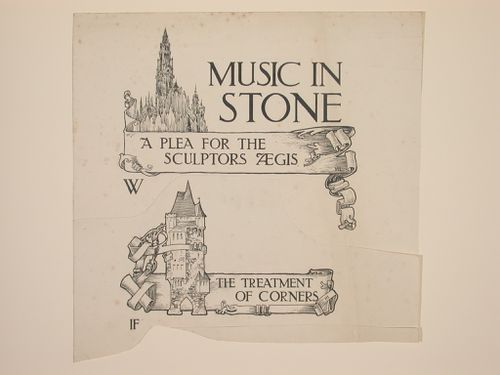
- These reprographic copies show two headings, possibly chapters of a book or article. Both headings were written inside scrolled borders which also incorporate small drawings of buildings. - The style of many of these drawings and reprographic copies by Henry Hyams (DR1988:0332 - DR1988:0414) suggests that they were possibly for periodical illustrations. Hyams contributed articles to the periodicals 'The Builder' and 'The Architect'. Two objects in the CCA collections can be linked to the article "Music in Stone" published prior to 1926 in 'The Architect'; a reprographic copy (DR1988:0357) and a drawing (DR1988:0364) (Who's Who in Architecture, 161).
DR1988:0357
Description:
- These reprographic copies show two headings, possibly chapters of a book or article. Both headings were written inside scrolled borders which also incorporate small drawings of buildings. - The style of many of these drawings and reprographic copies by Henry Hyams (DR1988:0332 - DR1988:0414) suggests that they were possibly for periodical illustrations. Hyams contributed articles to the periodicals 'The Builder' and 'The Architect'. Two objects in the CCA collections can be linked to the article "Music in Stone" published prior to 1926 in 'The Architect'; a reprographic copy (DR1988:0357) and a drawing (DR1988:0364) (Who's Who in Architecture, 161).
People:
Subject:
architecture
architecture
Date:
printed in the 1920s ?
printed in the 1920s ?
Title:
Layout for the head titles "Music in stone..." and "The treatment of corners"
Actions:
DR1988:0357
Description:
- These reprographic copies show two headings, possibly chapters of a book or article. Both headings were written inside scrolled borders which also incorporate small drawings of buildings. - The style of many of these drawings and reprographic copies by Henry Hyams (DR1988:0332 - DR1988:0414) suggests that they were possibly for periodical illustrations. Hyams contributed articles to the periodicals 'The Builder' and 'The Architect'. Two objects in the CCA collections can be linked to the article "Music in Stone" published prior to 1926 in 'The Architect'; a reprographic copy (DR1988:0357) and a drawing (DR1988:0364) (Who's Who in Architecture, 161).
Layout for the head titles "Music in stone..." and "The treatment of corners"
Actions:
DR1988:0357
Description:
- These reprographic copies show two headings, possibly chapters of a book or article. Both headings were written inside scrolled borders which also incorporate small drawings of buildings. - The style of many of these drawings and reprographic copies by Henry Hyams (DR1988:0332 - DR1988:0414) suggests that they were possibly for periodical illustrations. Hyams contributed articles to the periodicals 'The Builder' and 'The Architect'. Two objects in the CCA collections can be linked to the article "Music in Stone" published prior to 1926 in 'The Architect'; a reprographic copy (DR1988:0357) and a drawing (DR1988:0364) (Who's Who in Architecture, 161).
Form:
drawings
drawings
Date:
printed in the 1920s ?
printed in the 1920s ?
People:
Subject:
architecture
architecture
Level of archival description:
Project
Project
Title:
Human Space (2012)
Human Space (2012)
Actions:
Reference number:
AP207.S1.2012.PR06
Description:
The project series documents the installation "Human Wall", designed by Pettena for the Galleria Enrico Fornello in Milan in 2012. The installation consists of a wall made of handmade balls of clay on which the handprints from making the clay balls intentionally remain. "The physicality and action of constructing is also accentuated here by the use of a natural material, clay, whose malleability and lack of homogeneity in themselves generate architecture, an architecture that can however be directed toward a mental use of space." [1] Another edition of this installation was presented at the Utah Museum of Contemporary Art in Salt Lake City in 2012. The project series contains drawings showing the construction of the installation and photographs of the installation. Source: [1] Gianni Pettena website, https://www.giannipettena.it/italiano/opere-1/inst-human-space-2012-1/ (last accessed 27 January 2020)
AP207.S1.2012.PR06
Description:
The project series documents the installation "Human Wall", designed by Pettena for the Galleria Enrico Fornello in Milan in 2012. The installation consists of a wall made of handmade balls of clay on which the handprints from making the clay balls intentionally remain. "The physicality and action of constructing is also accentuated here by the use of a natural material, clay, whose malleability and lack of homogeneity in themselves generate architecture, an architecture that can however be directed toward a mental use of space." [1] Another edition of this installation was presented at the Utah Museum of Contemporary Art in Salt Lake City in 2012. The project series contains drawings showing the construction of the installation and photographs of the installation. Source: [1] Gianni Pettena website, https://www.giannipettena.it/italiano/opere-1/inst-human-space-2012-1/ (last accessed 27 January 2020)
People:
Date:
2011-2015
2011-2015
Title:
Human Space (2012)
Actions:
AP207.S1.2012.PR06
Description:
The project series documents the installation "Human Wall", designed by Pettena for the Galleria Enrico Fornello in Milan in 2012. The installation consists of a wall made of handmade balls of clay on which the handprints from making the clay balls intentionally remain. "The physicality and action of constructing is also accentuated here by the use of a natural material, clay, whose malleability and lack of homogeneity in themselves generate architecture, an architecture that can however be directed toward a mental use of space." [1] Another edition of this installation was presented at the Utah Museum of Contemporary Art in Salt Lake City in 2012. The project series contains drawings showing the construction of the installation and photographs of the installation. Source: [1] Gianni Pettena website, https://www.giannipettena.it/italiano/opere-1/inst-human-space-2012-1/ (last accessed 27 January 2020)
Human Space (2012)
Actions:
AP207.S1.2012.PR06
Description:
The project series documents the installation "Human Wall", designed by Pettena for the Galleria Enrico Fornello in Milan in 2012. The installation consists of a wall made of handmade balls of clay on which the handprints from making the clay balls intentionally remain. "The physicality and action of constructing is also accentuated here by the use of a natural material, clay, whose malleability and lack of homogeneity in themselves generate architecture, an architecture that can however be directed toward a mental use of space." [1] Another edition of this installation was presented at the Utah Museum of Contemporary Art in Salt Lake City in 2012. The project series contains drawings showing the construction of the installation and photographs of the installation. Source: [1] Gianni Pettena website, https://www.giannipettena.it/italiano/opere-1/inst-human-space-2012-1/ (last accessed 27 January 2020)
Level of archival description:
Project
Project
Date:
2011-2015
2011-2015
People:
Form:
photographs
photographs
Reference number:
PH1985:0548:001-030
Description:
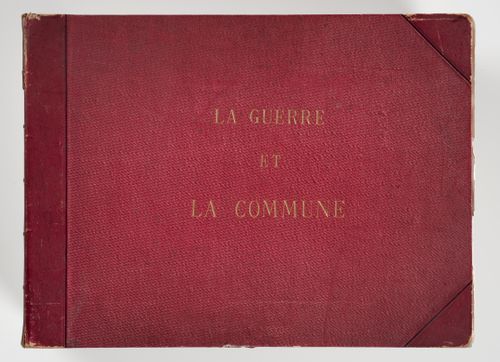
Volume consists of 29 black-and-white photographic prints showing the destruction to the city of Paris during the Paris Commune in 1871, and one print reproducing a painting. The photographs show the architecture of Paris before and after the war. Two of the photographs are photographs of drawings.
PH1985:0548:001-030
Description:
Volume consists of 29 black-and-white photographic prints showing the destruction to the city of Paris during the Paris Commune in 1871, and one print reproducing a painting. The photographs show the architecture of Paris before and after the war. Two of the photographs are photographs of drawings.
People:
Date:
1871
1871
Title:
Views of the destruction of Paris during the Commune, Paris, France
Actions:
PH1985:0548:001-030
Description:
Volume consists of 29 black-and-white photographic prints showing the destruction to the city of Paris during the Paris Commune in 1871, and one print reproducing a painting. The photographs show the architecture of Paris before and after the war. Two of the photographs are photographs of drawings.
Views of the destruction of Paris during the Commune, Paris, France
Actions:
PH1985:0548:001-030
Description:
Volume consists of 29 black-and-white photographic prints showing the destruction to the city of Paris during the Paris Commune in 1871, and one print reproducing a painting. The photographs show the architecture of Paris before and after the war. Two of the photographs are photographs of drawings.
Form:
photographs
photographs
Date:
1871
1871
People:
Level of archival description:
Project
Project
Reference number:
AP075.S1.1991.PR01
Description:
Project series documents Cornelia Hahn Oberlander's landscape project for Northwest Territories Legislative Assembly Building, situated beside Frame Lake, in Yellowknife, Northwest Territories. Oberlander worked on this project in 1991 with architectural firms Matsuzaki Wright Architects and Pin/Matthews. The team was selected for the project after a design competition. Architects chose to have the new assembly build on the edge of the lake, on the volcanic rock of the Canadian Shield. They used the bog of the site as a transitional space between the building and the city. Oberlander concept design was to integrate the building to the landscape with the least intervention, because of the fagile ecology of the area, and preserve the natural beauty of the landscape. In this idea, the planting for the project only comprises native plants and grasses and very few alteration were made to the existing condition of the site. The project was completed in 1994. The project series contains design development drawings, including planting plans, landscape plans, grading plans, site details, site plans, working drawings, including site plans, planting plans and grading plans, and building drawings used as reference. The project is also documented through textual records, such as correspondence, specifications, concept notes by Oberlander, financial documents, meeting notes, reports, research material and site informations, and also photographs of the construction and the completed work. The project series comprises also digital files of the Legislative Assembly development plans and facility program and digital photographs of the building.
AP075.S1.1991.PR01
Description:
Project series documents Cornelia Hahn Oberlander's landscape project for Northwest Territories Legislative Assembly Building, situated beside Frame Lake, in Yellowknife, Northwest Territories. Oberlander worked on this project in 1991 with architectural firms Matsuzaki Wright Architects and Pin/Matthews. The team was selected for the project after a design competition. Architects chose to have the new assembly build on the edge of the lake, on the volcanic rock of the Canadian Shield. They used the bog of the site as a transitional space between the building and the city. Oberlander concept design was to integrate the building to the landscape with the least intervention, because of the fagile ecology of the area, and preserve the natural beauty of the landscape. In this idea, the planting for the project only comprises native plants and grasses and very few alteration were made to the existing condition of the site. The project was completed in 1994. The project series contains design development drawings, including planting plans, landscape plans, grading plans, site details, site plans, working drawings, including site plans, planting plans and grading plans, and building drawings used as reference. The project is also documented through textual records, such as correspondence, specifications, concept notes by Oberlander, financial documents, meeting notes, reports, research material and site informations, and also photographs of the construction and the completed work. The project series comprises also digital files of the Legislative Assembly development plans and facility program and digital photographs of the building.
People:
Date:
1991-2011
1991-2011
Title:
Northwest Territories Legislative Assembly Building, Yellowknife, Northwest Territories (1991-1994)
Actions:
AP075.S1.1991.PR01
Description:
Project series documents Cornelia Hahn Oberlander's landscape project for Northwest Territories Legislative Assembly Building, situated beside Frame Lake, in Yellowknife, Northwest Territories. Oberlander worked on this project in 1991 with architectural firms Matsuzaki Wright Architects and Pin/Matthews. The team was selected for the project after a design competition. Architects chose to have the new assembly build on the edge of the lake, on the volcanic rock of the Canadian Shield. They used the bog of the site as a transitional space between the building and the city. Oberlander concept design was to integrate the building to the landscape with the least intervention, because of the fagile ecology of the area, and preserve the natural beauty of the landscape. In this idea, the planting for the project only comprises native plants and grasses and very few alteration were made to the existing condition of the site. The project was completed in 1994. The project series contains design development drawings, including planting plans, landscape plans, grading plans, site details, site plans, working drawings, including site plans, planting plans and grading plans, and building drawings used as reference. The project is also documented through textual records, such as correspondence, specifications, concept notes by Oberlander, financial documents, meeting notes, reports, research material and site informations, and also photographs of the construction and the completed work. The project series comprises also digital files of the Legislative Assembly development plans and facility program and digital photographs of the building.
Northwest Territories Legislative Assembly Building, Yellowknife, Northwest Territories (1991-1994)
Actions:
AP075.S1.1991.PR01
Description:
Project series documents Cornelia Hahn Oberlander's landscape project for Northwest Territories Legislative Assembly Building, situated beside Frame Lake, in Yellowknife, Northwest Territories. Oberlander worked on this project in 1991 with architectural firms Matsuzaki Wright Architects and Pin/Matthews. The team was selected for the project after a design competition. Architects chose to have the new assembly build on the edge of the lake, on the volcanic rock of the Canadian Shield. They used the bog of the site as a transitional space between the building and the city. Oberlander concept design was to integrate the building to the landscape with the least intervention, because of the fagile ecology of the area, and preserve the natural beauty of the landscape. In this idea, the planting for the project only comprises native plants and grasses and very few alteration were made to the existing condition of the site. The project was completed in 1994. The project series contains design development drawings, including planting plans, landscape plans, grading plans, site details, site plans, working drawings, including site plans, planting plans and grading plans, and building drawings used as reference. The project is also documented through textual records, such as correspondence, specifications, concept notes by Oberlander, financial documents, meeting notes, reports, research material and site informations, and also photographs of the construction and the completed work. The project series comprises also digital files of the Legislative Assembly development plans and facility program and digital photographs of the building.
Level of archival description:
Project
Project
Date:
1991-2011
1991-2011
People:


