


19461 Results
Form:
events
events
Actions:
Description:
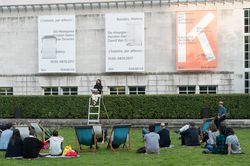
An archive is usually named for one person, but it always contains many other voices. The Kenneth Frampton archive recently arrived at the CCA and it emerges in the exhibition Educating Architects: Four Courses by Kenneth Frampton. The exhibition includes a few letters from over sixty years of correspondence, but there could have been many more—in the archive, there’s(...)
An archive is usually named for one person, but it always contains many other voices. The Kenneth Frampton archive recently arrived at the CCA and it emerges in the exhibition Educating Architects: Four Courses by Kenneth Frampton. The exhibition includes a few letters from over sixty years of correspondence, but there could have been many more—in the archive, there’s(...)
Keyword(s):
Kenneth Frampton, Educating Architects: Four Courses by Kenneth Frampton, Jacqueline Meyer
Kenneth Frampton, Educating Architects: Four Courses by Kenneth Frampton, Jacqueline Meyer
Date:
August 2017 to September 2017
August 2017 to September 2017
Title:
“Dear Ken”: Reading the Archive Out Loud
Actions:
Description:
An archive is usually named for one person, but it always contains many other voices. The Kenneth Frampton archive recently arrived at the CCA and it emerges in the exhibition Educating Architects: Four Courses by Kenneth Frampton. The exhibition includes a few letters from over sixty years of correspondence, but there could have been many more—in the archive, there’s(...)
“Dear Ken”: Reading the Archive Out Loud
Actions:
Description:
An archive is usually named for one person, but it always contains many other voices. The Kenneth Frampton archive recently arrived at the CCA and it emerges in the exhibition Educating Architects: Four Courses by Kenneth Frampton. The exhibition includes a few letters from over sixty years of correspondence, but there could have been many more—in the archive, there’s(...)
Form:
events
events
Date:
August 2017 to
September 2017
August 2017 to
September 2017
Form:
events
events
Description:
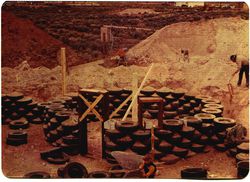
In the Yesterday Today lecture series, American architect Michael Reynolds discusses Earthship houses, which use recycled materials and sustainable energy technologies to create autonomous dwellings. The structure and systems of Earthships are integrated so that all materials have a secondary use, from the greywater system in bathrooms and kitchens to planter boxes in(...)
In the Yesterday Today lecture series, American architect Michael Reynolds discusses Earthship houses, which use recycled materials and sustainable energy technologies to create autonomous dwellings. The structure and systems of Earthships are integrated so that all materials have a secondary use, from the greywater system in bathrooms and kitchens to planter boxes in(...)
Location:
Paul-Desmarais Theatre
Paul-Desmarais Theatre
Date:
15 November 2007
15 November 2007
Title:
Michael Reynolds: The Earthship Sustainable Housing Concept
Actions:
Description:
In the Yesterday Today lecture series, American architect Michael Reynolds discusses Earthship houses, which use recycled materials and sustainable energy technologies to create autonomous dwellings. The structure and systems of Earthships are integrated so that all materials have a secondary use, from the greywater system in bathrooms and kitchens to planter boxes in(...)
Michael Reynolds: The Earthship Sustainable Housing Concept
Actions:
Description:
In the Yesterday Today lecture series, American architect Michael Reynolds discusses Earthship houses, which use recycled materials and sustainable energy technologies to create autonomous dwellings. The structure and systems of Earthships are integrated so that all materials have a secondary use, from the greywater system in bathrooms and kitchens to planter boxes in(...)
Form:
events
events
Date:
15 November 2007
15 November 2007
Location:
Paul-Desmarais Theatre
Paul-Desmarais Theatre
Form:
exhibitions
exhibitions
Actions:
Description:
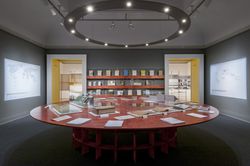
The beginning of the 1950s was a moment of global upheaval. From India to Morocco, from Guatemala to Indochina, the process of decolonization gained momentum and the Cold War began. Architects working or acting as experts in the non-Western areas of the globe could no longer plan as if sites were terrains vague and people were mute subjects. The end of colonial(...)
The beginning of the 1950s was a moment of global upheaval. From India to Morocco, from Guatemala to Indochina, the process of decolonization gained momentum and the Cold War began. Architects working or acting as experts in the non-Western areas of the globe could no longer plan as if sites were terrains vague and people were mute subjects. The end of colonial(...)
Location:
Main galleries Keyword(s):
Casablanca, Chandigarh, Le Corbusier, Jeanneret, Morocco, Punjab, India, Morocco, modernism, Africa, Takashi Homma, Yto Barrada
Main galleries Keyword(s):
Casablanca, Chandigarh, Le Corbusier, Jeanneret, Morocco, Punjab, India, Morocco, modernism, Africa, Takashi Homma, Yto Barrada
Date:
26 November 2013 to 20 April 2014
26 November 2013 to 20 April 2014
Title:
How architects, experts, politicians, international agencies and citizens negotiate modern planning: Casablanca Chandigarh
Actions:
Description:
The beginning of the 1950s was a moment of global upheaval. From India to Morocco, from Guatemala to Indochina, the process of decolonization gained momentum and the Cold War began. Architects working or acting as experts in the non-Western areas of the globe could no longer plan as if sites were terrains vague and people were mute subjects. The end of colonial(...)
How architects, experts, politicians, international agencies and citizens negotiate modern planning: Casablanca Chandigarh
Actions:
Description:
The beginning of the 1950s was a moment of global upheaval. From India to Morocco, from Guatemala to Indochina, the process of decolonization gained momentum and the Cold War began. Architects working or acting as experts in the non-Western areas of the globe could no longer plan as if sites were terrains vague and people were mute subjects. The end of colonial(...)
Form:
exhibitions
exhibitions
Date:
26 November 2013 to
20 April 2014
26 November 2013 to
20 April 2014
Location:
Main galleries Keyword(s):
Casablanca, Chandigarh, Le Corbusier, Jeanneret, Morocco, Punjab, India, Morocco, modernism, Africa, Takashi Homma, Yto Barrada
Main galleries Keyword(s):
Casablanca, Chandigarh, Le Corbusier, Jeanneret, Morocco, Punjab, India, Morocco, modernism, Africa, Takashi Homma, Yto Barrada
Form:
exhibitions
exhibitions
Actions:
Description:
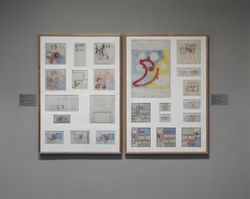
Paul Nelson (1895–1979), American architect, film set designer, painter, critic, and educator, taught and practised architecture in the United States and France for over fifty years. Nelson was a central figure in the development of functionalism in the 1930s and 1940s, which rejected the Beaux-Arts language in favour of technological and functional expression. The Filter(...)
Paul Nelson (1895–1979), American architect, film set designer, painter, critic, and educator, taught and practised architecture in the United States and France for over fifty years. Nelson was a central figure in the development of functionalism in the 1930s and 1940s, which rejected the Beaux-Arts language in favour of technological and functional expression. The Filter(...)
Location:
Main galleries
Main galleries
Date:
27 March 1991 to 26 May 1991
27 March 1991 to 26 May 1991
Title:
The Filter of Reason: The Work of Paul Nelson
Actions:
Description:
Paul Nelson (1895–1979), American architect, film set designer, painter, critic, and educator, taught and practised architecture in the United States and France for over fifty years. Nelson was a central figure in the development of functionalism in the 1930s and 1940s, which rejected the Beaux-Arts language in favour of technological and functional expression. The Filter(...)
The Filter of Reason: The Work of Paul Nelson
Actions:
Description:
Paul Nelson (1895–1979), American architect, film set designer, painter, critic, and educator, taught and practised architecture in the United States and France for over fifty years. Nelson was a central figure in the development of functionalism in the 1930s and 1940s, which rejected the Beaux-Arts language in favour of technological and functional expression. The Filter(...)
Form:
exhibitions
exhibitions
Date:
27 March 1991 to
26 May 1991
27 March 1991 to
26 May 1991
Location:
Main galleries
Main galleries
Form:
exhibitions
exhibitions
Description:
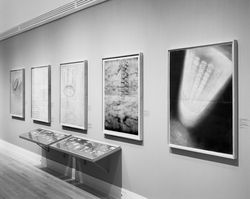
The exhibition explores one of the most adventurous and influential moments in the history of architecture: the explosion of invention and ideas that followed the October Revolution in Russia. The Soviet avant-garde architects were productivist as much as aesthetic in their concerns; they saw architecture and the arts as one, and they were committed to bringing design(...)
The exhibition explores one of the most adventurous and influential moments in the history of architecture: the explosion of invention and ideas that followed the October Revolution in Russia. The Soviet avant-garde architects were productivist as much as aesthetic in their concerns; they saw architecture and the arts as one, and they were committed to bringing design(...)
Location:
Main galleries
Main galleries
Date:
19 June 1991 to 8 September 1991
19 June 1991 to 8 September 1991
Title:
Architectural Drawings of the Russian Avant-Garde, 1917-1935
Actions:
Description:
The exhibition explores one of the most adventurous and influential moments in the history of architecture: the explosion of invention and ideas that followed the October Revolution in Russia. The Soviet avant-garde architects were productivist as much as aesthetic in their concerns; they saw architecture and the arts as one, and they were committed to bringing design(...)
Architectural Drawings of the Russian Avant-Garde, 1917-1935
Actions:
Description:
The exhibition explores one of the most adventurous and influential moments in the history of architecture: the explosion of invention and ideas that followed the October Revolution in Russia. The Soviet avant-garde architects were productivist as much as aesthetic in their concerns; they saw architecture and the arts as one, and they were committed to bringing design(...)
Form:
exhibitions
exhibitions
Date:
19 June 1991 to
8 September 1991
19 June 1991 to
8 September 1991
Location:
Main galleries
Main galleries
Form:
exhibitions
exhibitions
Title:
Empire
Empire
Actions:
Description:
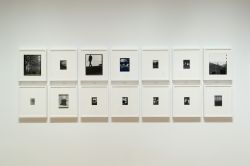
The exhibition presents Empire, a visual essay by American artist John Gossage on the relationship between architecture and power. Gossage’s photographs of government buildings and monuments in Washington, D.C. are juxtaposed with images of Egypt taken by German chemist Hermann Vogel in 1868, exposing the parallel actions of governments, over a century apart, in(...)
The exhibition presents Empire, a visual essay by American artist John Gossage on the relationship between architecture and power. Gossage’s photographs of government buildings and monuments in Washington, D.C. are juxtaposed with images of Egypt taken by German chemist Hermann Vogel in 1868, exposing the parallel actions of governments, over a century apart, in(...)
Location:
Octagonal gallery
Octagonal gallery
Date:
8 December 2005 to 12 March 2006
8 December 2005 to 12 March 2006
Title:
Empire
Actions:
Description:
The exhibition presents Empire, a visual essay by American artist John Gossage on the relationship between architecture and power. Gossage’s photographs of government buildings and monuments in Washington, D.C. are juxtaposed with images of Egypt taken by German chemist Hermann Vogel in 1868, exposing the parallel actions of governments, over a century apart, in(...)
Empire
Actions:
Description:
The exhibition presents Empire, a visual essay by American artist John Gossage on the relationship between architecture and power. Gossage’s photographs of government buildings and monuments in Washington, D.C. are juxtaposed with images of Egypt taken by German chemist Hermann Vogel in 1868, exposing the parallel actions of governments, over a century apart, in(...)
Form:
exhibitions
exhibitions
Date:
8 December 2005 to
12 March 2006
8 December 2005 to
12 March 2006
Location:
Octagonal gallery
Octagonal gallery
Form:
exhibitions
exhibitions
Description:
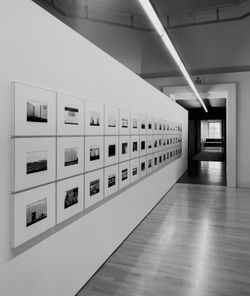
The exhibition presents a work by American artist Lewis Baltz that provokes critical thought on the relationships between architecture, landscape, and photography. The New Industrial Parks is part of a monographic series developed in the 1970s (The Tract Houses, Maryland, Nevada and Park City) that deals with wide-ranging cultural and philosophical questions about(...)
The exhibition presents a work by American artist Lewis Baltz that provokes critical thought on the relationships between architecture, landscape, and photography. The New Industrial Parks is part of a monographic series developed in the 1970s (The Tract Houses, Maryland, Nevada and Park City) that deals with wide-ranging cultural and philosophical questions about(...)
Location:
Octagonal gallery
Octagonal gallery
Date:
18 April 2002 to 29 September 2002
18 April 2002 to 29 September 2002
Title:
Lewis Baltz: The New Industrial Parks Near Irvine, California
Actions:
Description:
The exhibition presents a work by American artist Lewis Baltz that provokes critical thought on the relationships between architecture, landscape, and photography. The New Industrial Parks is part of a monographic series developed in the 1970s (The Tract Houses, Maryland, Nevada and Park City) that deals with wide-ranging cultural and philosophical questions about(...)
Lewis Baltz: The New Industrial Parks Near Irvine, California
Actions:
Description:
The exhibition presents a work by American artist Lewis Baltz that provokes critical thought on the relationships between architecture, landscape, and photography. The New Industrial Parks is part of a monographic series developed in the 1970s (The Tract Houses, Maryland, Nevada and Park City) that deals with wide-ranging cultural and philosophical questions about(...)
Form:
exhibitions
exhibitions
Date:
18 April 2002 to
29 September 2002
18 April 2002 to
29 September 2002
Location:
Octagonal gallery
Octagonal gallery
Form:
exhibitions
exhibitions
Description:
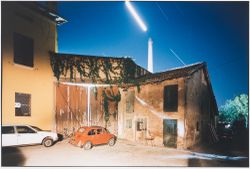
Thirty-two Italian photographers honour Phyllis Lambert, Founding Director and Chair of the CCA, on the occasion of her seventieth birthday. The exhibition reflects the concerns of Italian photographers since the 1970s and provides an overview of contemporary Italian photographic culture. Included are photographers Andrea Abati, Cesare Ballardini, Marina Ballo Charmet,(...)
Thirty-two Italian photographers honour Phyllis Lambert, Founding Director and Chair of the CCA, on the occasion of her seventieth birthday. The exhibition reflects the concerns of Italian photographers since the 1970s and provides an overview of contemporary Italian photographic culture. Included are photographers Andrea Abati, Cesare Ballardini, Marina Ballo Charmet,(...)
Location:
Octagonal gallery
Octagonal gallery
Date:
21 April 1999 to 26 September 1999
21 April 1999 to 26 September 1999
Title:
32 Italian Photographers: A Tribute to Phyllis Lambert
Actions:
Description:
Thirty-two Italian photographers honour Phyllis Lambert, Founding Director and Chair of the CCA, on the occasion of her seventieth birthday. The exhibition reflects the concerns of Italian photographers since the 1970s and provides an overview of contemporary Italian photographic culture. Included are photographers Andrea Abati, Cesare Ballardini, Marina Ballo Charmet,(...)
32 Italian Photographers: A Tribute to Phyllis Lambert
Actions:
Description:
Thirty-two Italian photographers honour Phyllis Lambert, Founding Director and Chair of the CCA, on the occasion of her seventieth birthday. The exhibition reflects the concerns of Italian photographers since the 1970s and provides an overview of contemporary Italian photographic culture. Included are photographers Andrea Abati, Cesare Ballardini, Marina Ballo Charmet,(...)
Form:
exhibitions
exhibitions
Date:
21 April 1999 to
26 September 1999
21 April 1999 to
26 September 1999
Location:
Octagonal gallery
Octagonal gallery
Form:
exhibitions
exhibitions
Description:
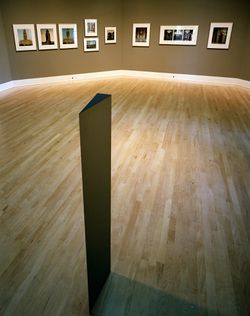
Twenty-two colour photographs reveal Ernest Cormier’s central pavilion of the Université de Montréal as an integral part of the Montréal urban landscape and as a complex, varied spatial experience. The exhibition originated in a commission to Gabor Szilasi by the CCA when research into the Fonds Cormier revealed a major gap in the photographic documentation of the(...)
Twenty-two colour photographs reveal Ernest Cormier’s central pavilion of the Université de Montréal as an integral part of the Montréal urban landscape and as a complex, varied spatial experience. The exhibition originated in a commission to Gabor Szilasi by the CCA when research into the Fonds Cormier revealed a major gap in the photographic documentation of the(...)
Location:
Octagonal gallery
Octagonal gallery
Date:
2 May 1990 to 28 October 1990
2 May 1990 to 28 October 1990
Title:
Sighting the Université de Montréal: Photographs by Gabor Szilasi
Actions:
Description:
Twenty-two colour photographs reveal Ernest Cormier’s central pavilion of the Université de Montréal as an integral part of the Montréal urban landscape and as a complex, varied spatial experience. The exhibition originated in a commission to Gabor Szilasi by the CCA when research into the Fonds Cormier revealed a major gap in the photographic documentation of the(...)
Sighting the Université de Montréal: Photographs by Gabor Szilasi
Actions:
Description:
Twenty-two colour photographs reveal Ernest Cormier’s central pavilion of the Université de Montréal as an integral part of the Montréal urban landscape and as a complex, varied spatial experience. The exhibition originated in a commission to Gabor Szilasi by the CCA when research into the Fonds Cormier revealed a major gap in the photographic documentation of the(...)
Form:
exhibitions
exhibitions
Date:
2 May 1990 to
28 October 1990
2 May 1990 to
28 October 1990
Location:
Octagonal gallery
Octagonal gallery
Form:
events
events
Actions:
Description:
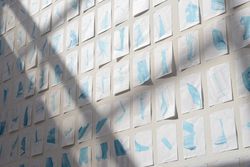
When Gordon Matta-Clark assembled the titles to and documentation of a dozen-odd small, vacant parcels of New York property between 1974 and 1977 (later assembled and exhibited as Reality Properties: Fake Estates in 1992), it was with no well-formed agenda—other than his view that the availability of vacant and underutilized parcels [was] a direct reminder of the fallacy(...)
When Gordon Matta-Clark assembled the titles to and documentation of a dozen-odd small, vacant parcels of New York property between 1974 and 1977 (later assembled and exhibited as Reality Properties: Fake Estates in 1992), it was with no well-formed agenda—other than his view that the availability of vacant and underutilized parcels [was] a direct reminder of the fallacy(...)
Location:
Paul Desmarais Theatre
Paul Desmarais Theatre
Date:
22 September 2016, 6pm
22 September 2016, 6pm
Title:
Nicholas de Monchaux: Local Code
Actions:
Description:
When Gordon Matta-Clark assembled the titles to and documentation of a dozen-odd small, vacant parcels of New York property between 1974 and 1977 (later assembled and exhibited as Reality Properties: Fake Estates in 1992), it was with no well-formed agenda—other than his view that the availability of vacant and underutilized parcels [was] a direct reminder of the fallacy(...)
Nicholas de Monchaux: Local Code
Actions:
Description:
When Gordon Matta-Clark assembled the titles to and documentation of a dozen-odd small, vacant parcels of New York property between 1974 and 1977 (later assembled and exhibited as Reality Properties: Fake Estates in 1992), it was with no well-formed agenda—other than his view that the availability of vacant and underutilized parcels [was] a direct reminder of the fallacy(...)
Form:
events
events
Date:
22 September 2016
6pm
22 September 2016
6pm
Location:
Paul Desmarais Theatre
Paul Desmarais Theatre


